

Between Intuition and System: An Interview with Sarosha Imtiaz
Sarosha Imtiaz is a 2026–2027 One for the Future Honoree, recognized for her work at the intersection of AI, systems design, and craft. Her work sits in a rare space between technical infrastructure and highly human, detail-driven industries, where judgment, intuition, and precision must coexist.
Over the past decade, she has built software for global brands including Shopify, Authentic, and EA, focusing on tools that support complex creative and commercial workflows at scale. She is also the founder of a previously exited AI-powered, no-code marketing platform used by more than 100K eCommerce businesses, designed to simplify how non-technical teams build and operate digital marketing systems.
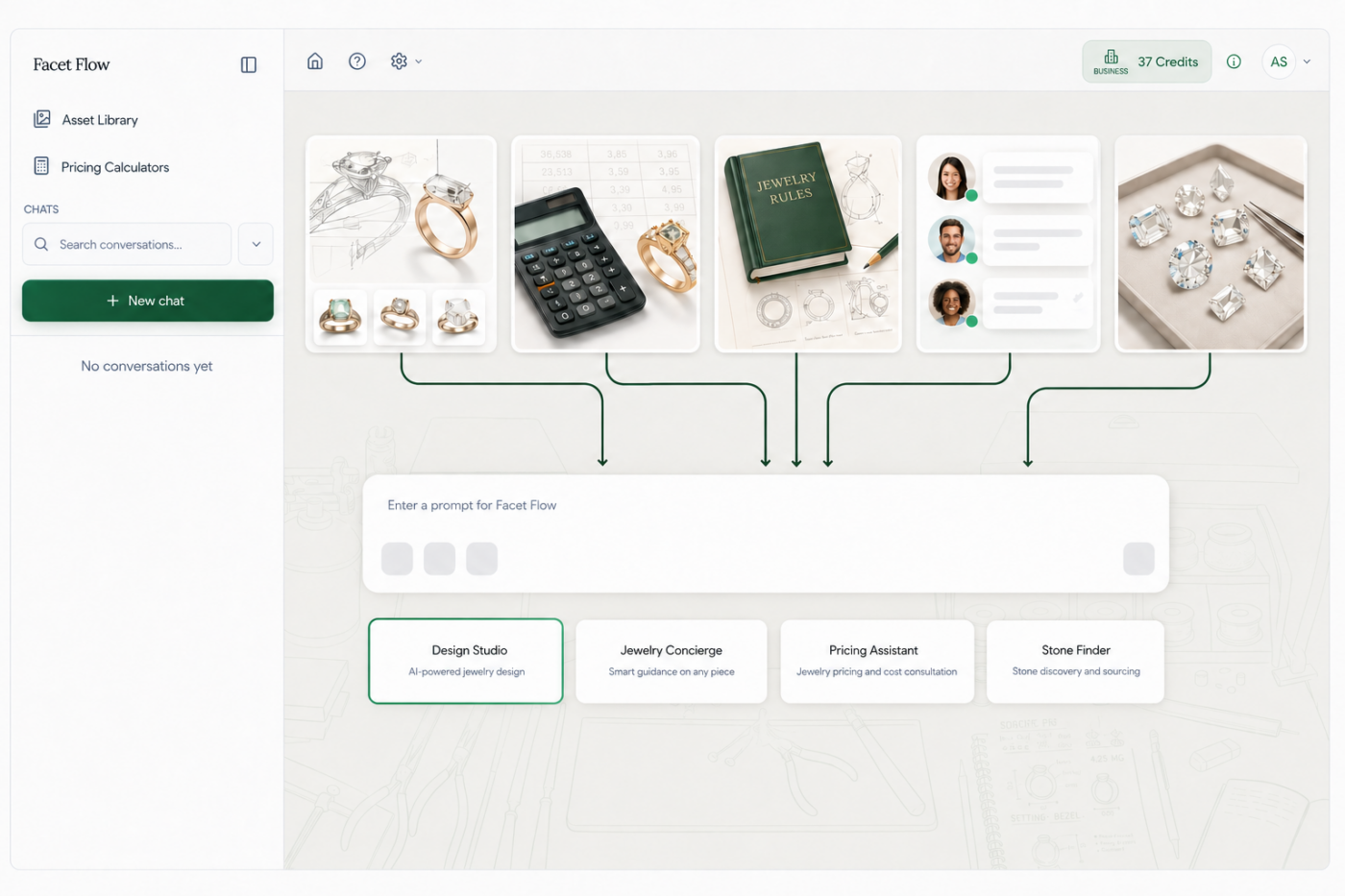
She is currently the founder of Facet Flow, a jewelry technology company rethinking how custom pieces are designed, priced, and produced. The platform captures the often-invisible logic behind jewelry creation—design intent, material constraints, pricing decisions, and production workflows—and turns it into structured systems that preserve context rather than flattening it. Her work explores how AI can support craft without diluting it, enabling teams to move from idea to execution with clarity, consistency, and control while still leaving room for human judgment.
Editing the Invisible
NYCJW: If you had to describe your work in layperson’s terms, what would you say?
SI: I’m building Facet Flow, an operating system for jewelry businesses. We capture the decisions behind a piece – design intent, pricing, and production logic – so teams can move from idea to execution without losing context. Because in jewelry, the hardest part isn’t the idea, it’s getting it made correctly, every time.
NYCJW: Is there a project or idea you’ve put aside for now?
SI: I experimented with video generation for marketing and building repeatable workflows around it, but the results (although promising) weren’t consistent enough across different use cases. I shelved it because it’s a product problem on its own, and not where we’re focused today. I’m less interested in broad video generation, storyboarding and scene creation – there are already strong products there. I’d approach it again through more specific, structured workflows. However, the space is moving fast enough, and it’s one of those ideas that keeps resurfacing.
NYCJW: If your work didn’t exist as software or systems, what other form do you think it would naturally take?
SI: Film editing. Not directing – the edit. Taking raw, messy footage and deciding what stays, what gets cut, and what actually tells the story. It’s less about creating something new and more about shaping what’s already there into something intentional. That’s how I think about jewelry. The surface is emotional. But underneath it’s a sequence of precise decisions. That’s where it either holds or starts to come apart.
Why Iteration Is a Sign of Clarity
NYCJW: What’s a widely accepted belief in your field that you find yourself questioning, even if others don’t?
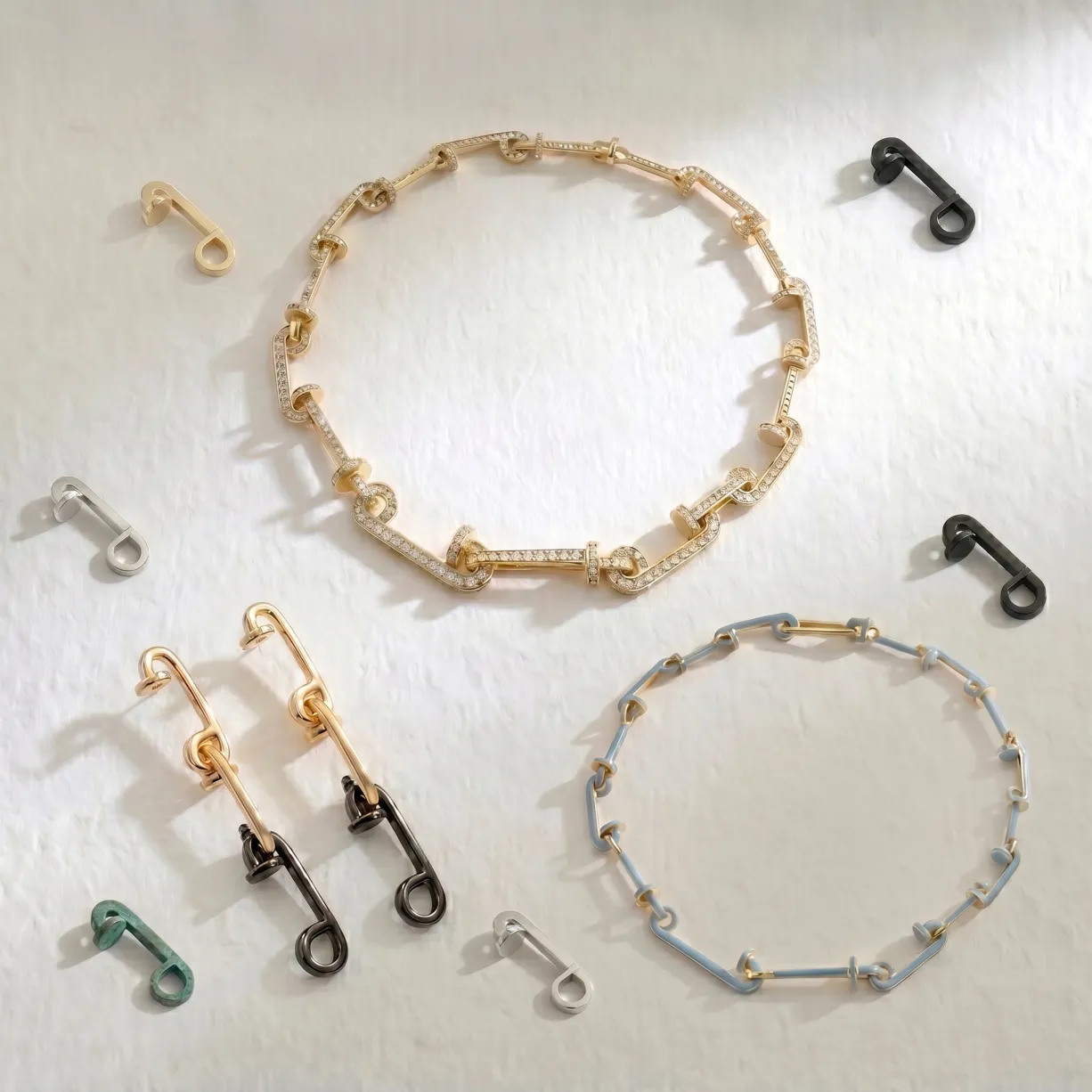
SI: That iteration signals uncertainty. There’s a culture in parts of the industry, especially custom and high-end, where presenting multiple options signals that you don’t know what you’re doing. The designer is supposed to “just know.” I don’t think that’s right. Iteration isn’t uncertainty – it’s information. The best outcomes usually come from people who are willing to test and adjust, not from those who got it right the first try and couldn’t tell you why.

Building Systems That Adapt to Real-World Practice
NYCJW: Can you recall a recent moment where you weren’t sure how something should work creatively or technically?
Initially, we built Facet Flow’s pricing logic around industry benchmarks. This gave jewelers a defensible starting point and protected margins from day one, even if their own data was incomplete. Then the feedback came back. Jewelers wanted their own data in the system too – their history, materials, and pricing patterns. Which made sense, but it meant the model had to do more. Not just apply benchmarks, but reconcile them with inputs that don’t always follow the ideal. The doubt wasn’t about direction; it was about balance. How do you build something grounded in expertise without overriding someone’s lived practice? We landed on a hybrid: your data runs the system, and the benchmarks act as a signal, flagging when something looks off. It took time to get the balance right, and it’s still evolving because the system has to adapt to how people actually work.
A Signet for the Observer
NYCJW: If you could design something for a historical figure or fictional character, who would you choose?
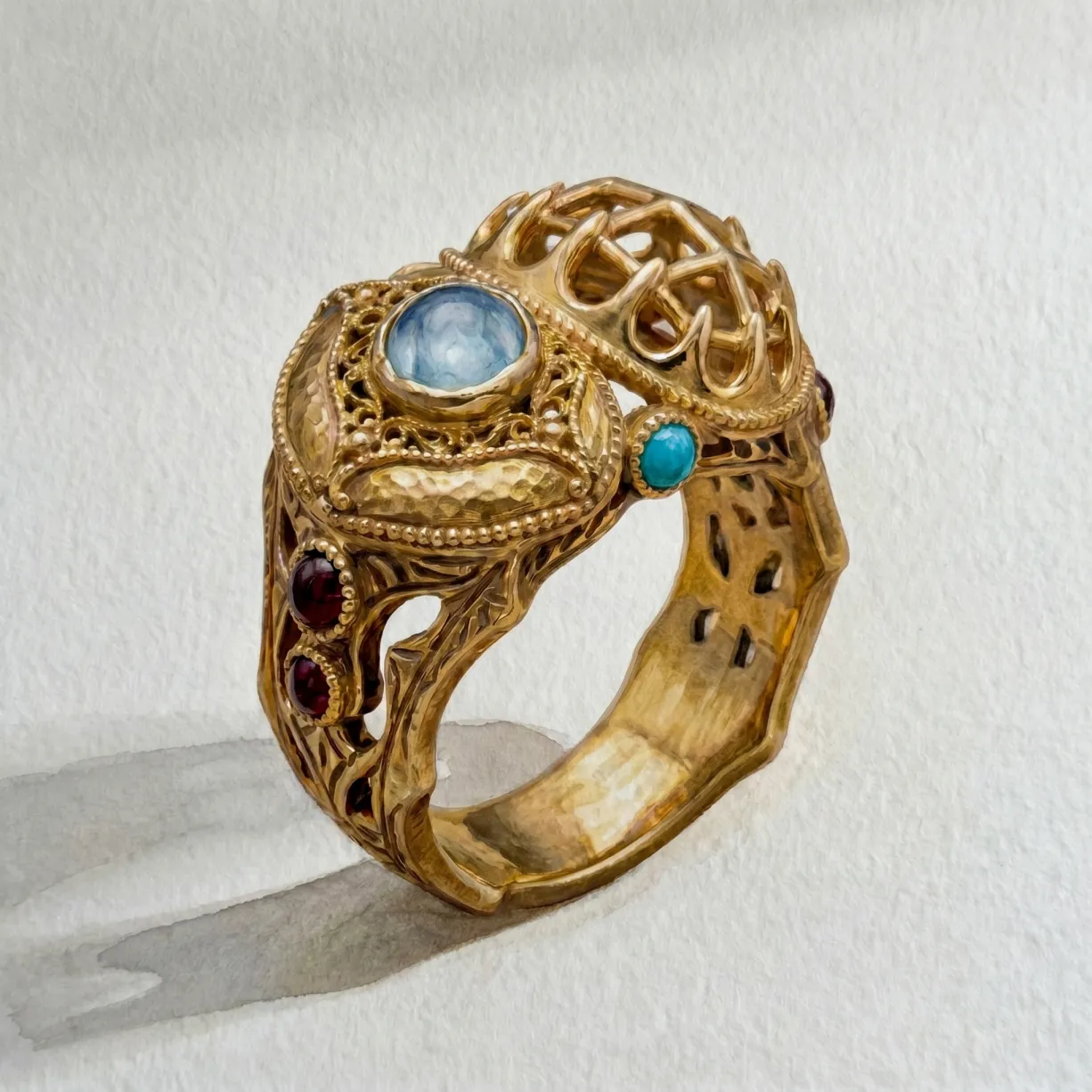
SI: Ibn Battuta, a 14th-century Moroccan explorer who spent 30 years traveling across Africa, the Middle East, and Asia. What’s interesting about him isn’t the distance he covered but that he was obsessed with recording everything: every court, every system, every custom he encountered. He wanted to make sense of what he was seeing, not just experience it. I’d make him a ring. Closer to a signet, something tied to identity and interpretation. Built in layers, where each surface holds a different reference point. The detail isn’t decorative; it’s a record of the places and cultures he moved through. It wouldn’t reveal itself all at once. You’d have to spend time with it to understand how it’s structured.

Finding Signal in Failure
NYCJW: What’s something unconventional—an object, system, or even “broken” thing—that you’ve been paying attention to lately?
SI: Error logs. What breaks is more interesting than what works. Every failed render and misinterpreted prompt shows where the system is guessing instead of knowing. In jewelry, that same gap shows up between design intent and production. That’s what I’m building around.
Control, Friction, and the Space Between Structure and Emergence
NYCJW: When someone interacts with what you’re building, how do you want their relationship with it to feel or shift?
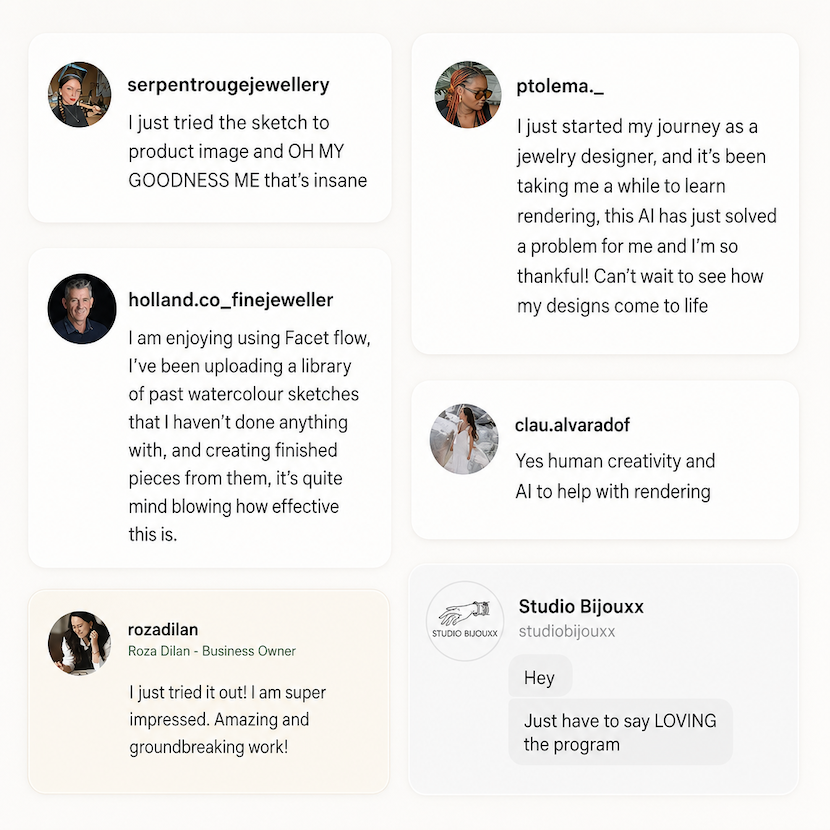
SI: I want people to feel comfortable with AI and in control of the process, not intimidated by it. It should help them move faster, test ideas, and make informed decisions. It gives them more space to explore, because the system handles the parts that usually slow them down.
NYCJW: What’s a question you wish people asked you more often about your work?
SI: “What does this replace?” Because the honest answer is: not much. It doesn’t replace taste, judgment, or experience. But it replaces friction, the back-and-forth, the guesswork, and repeated decisions. That’s where most time gets lost.
NYCJW: Even if it’s subtle, what theme keeps resurfacing in your work? Why do you think it keeps showing up?
SI: Control vs. surrender: how much you define upfront and how much you let emerge. With both jewelry and technology, too much structure kills flexibility. Too little and nothing is reproducible. I keep working in that middle space – systems that are reliable but not rigid. It shows up in building with AI as well. You’re constantly working with something that has its own interpretation of what you mean, so you guide it with constraints and adjust when it doesn’t behave the way you expect.
About One for the Future (OFTF)
One for the Future celebrates the next generation of jewelry and creative industry professionals. Each year, the program recognizes honorees for their innovation, craftsmanship, and/or unique perspectives and connects them with mentorship, exposure, and opportunities to engage with collectors and industry leaders worldwide.
Enjoyed this piece? Explore more jewelry content from Future Heirloom!