

On Vulnerability, Material, and the Language of Jewelry
A 2026–2027 One for the Future honoree, Alice Biolo is an Italian artist based in Glasgow whose practice moves between jewelry and sculpture, where body-related objects become sites for storytelling, transformation, and concealment. Working across wearable and standalone forms, she blends traditional craftsmanship with experimental, often kinetic approaches, creating pieces that reveal themselves only through interaction.
In this conversation, she reflects on the shifting boundaries of jewelry, the presence of doubt within her process, and the recurring role of the “hidden” as both a conceptual and formal thread. She also speaks about material obsessions, unrealised ideas, and the ways her practice continues to oscillate between vulnerability, structure, and play.
Between Narrative and Mechanism
NYCJW: To begin, could you introduce your practice and share the story behind your work?
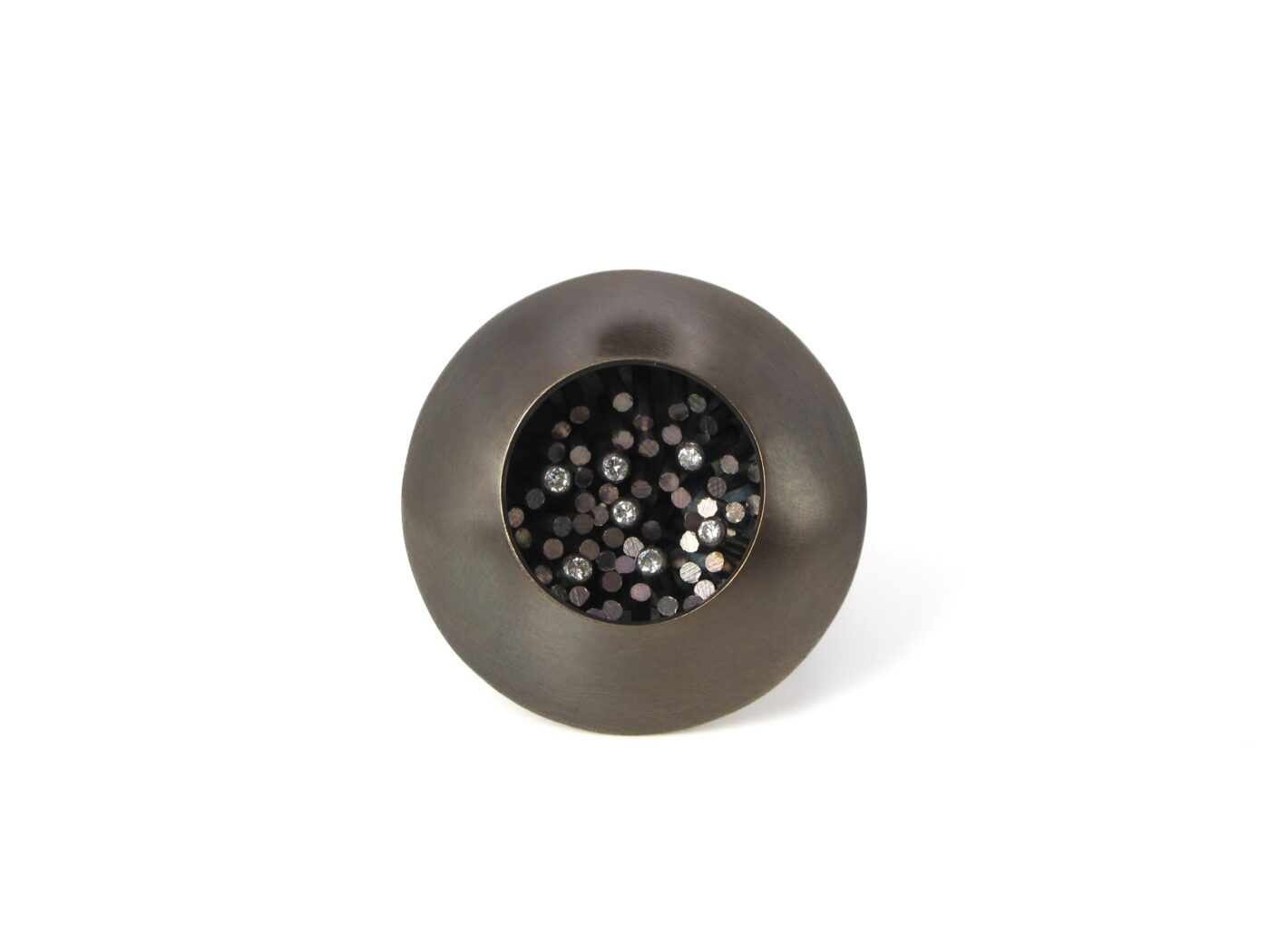
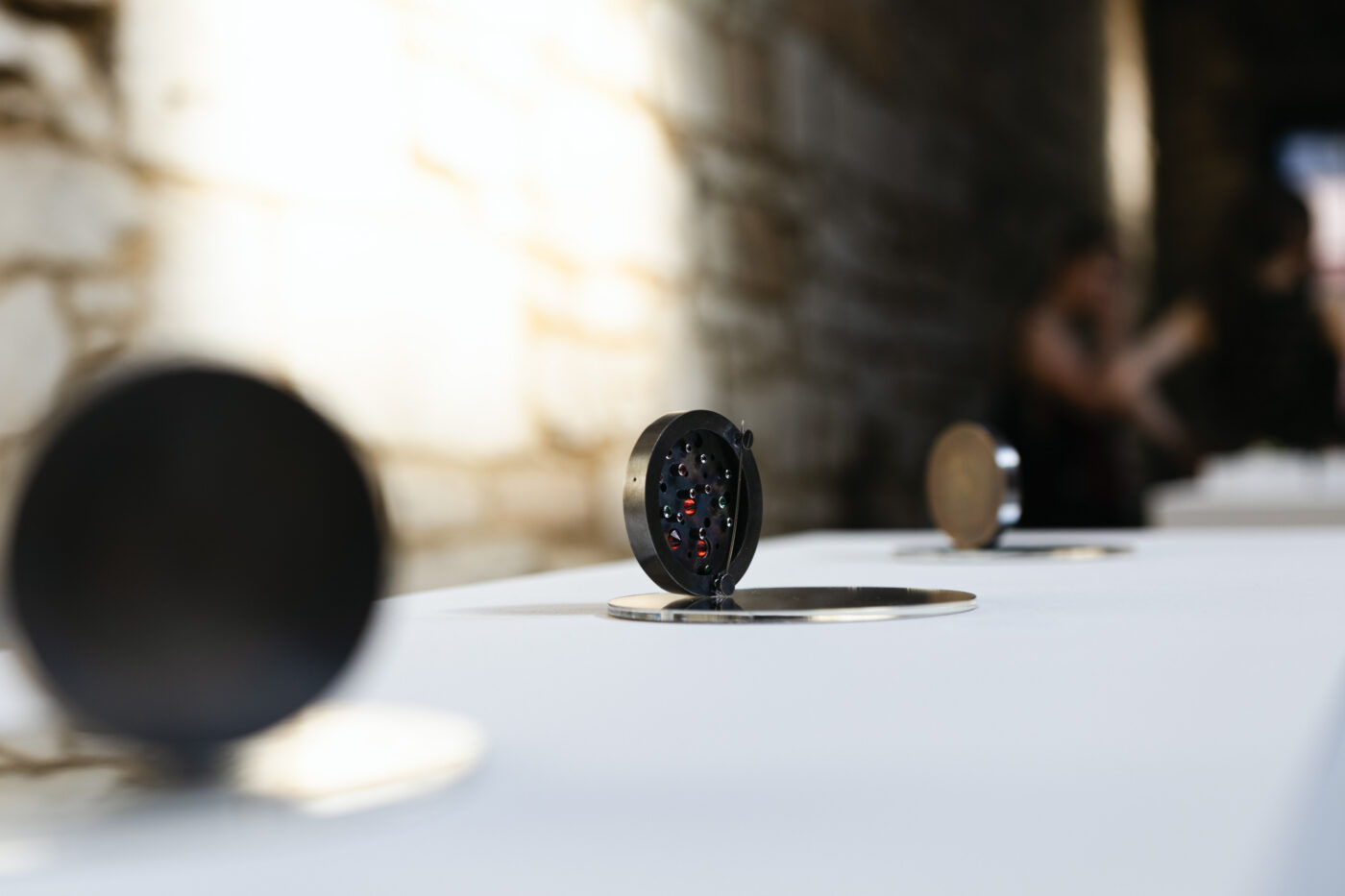
AB: My practice has two distinct but connected sides that are in constant dialogue with one another. The first is my conceptual, narrative-led work, where I mainly create brooches for exhibitions and themed showcases. These pieces explore themes such as mental health, personal narratives, trauma, grief, and insecurity. They are deeply personal works through which I express my inner world and aim to create an emotional connection with the audience. The second side is more light-hearted and wearable, with a stronger focus on technical challenges, materials, movement, and sound rather than direct narrative.
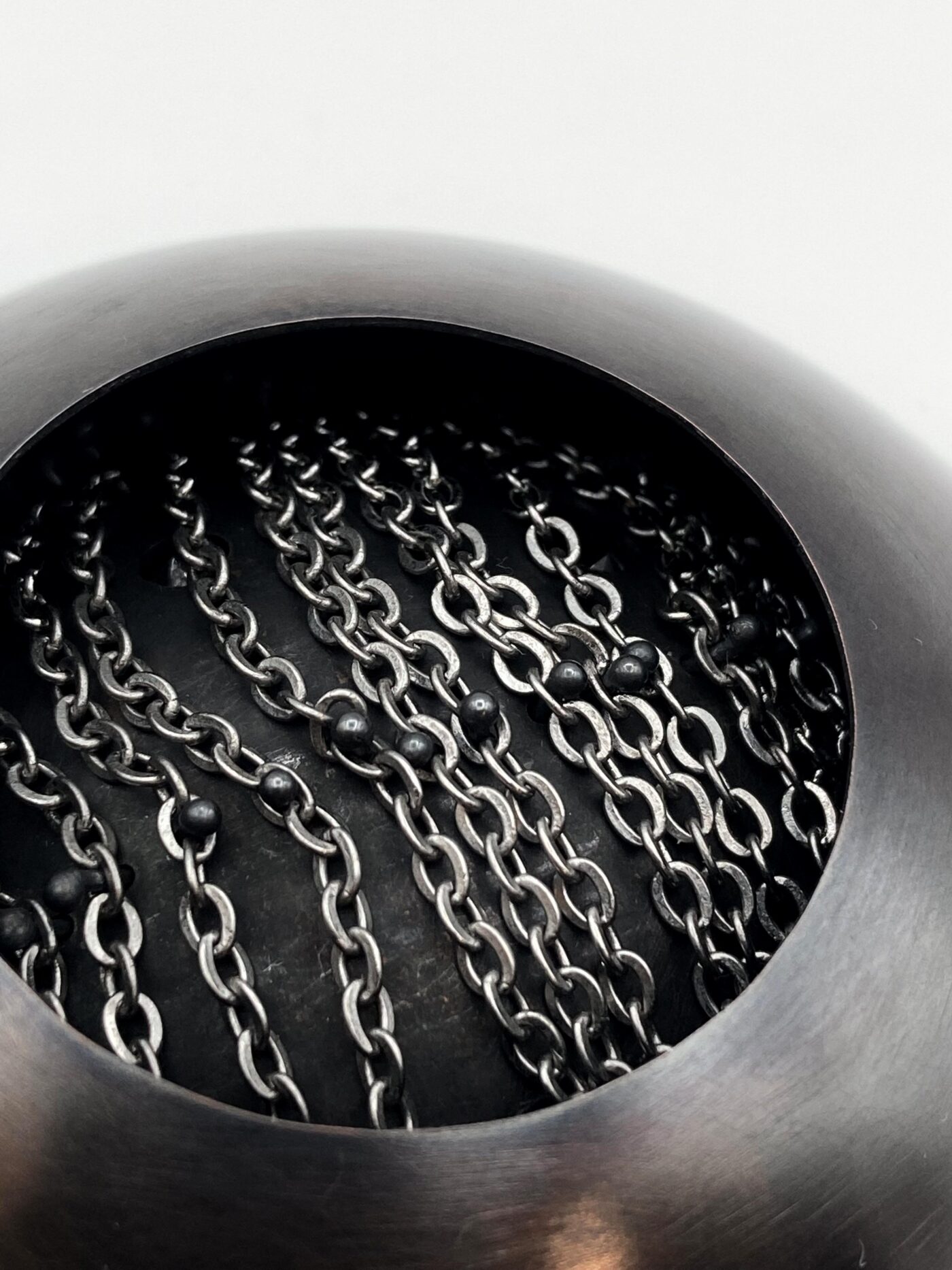
I enjoy creating pieces that surprise the wearer and viewer through kinetic elements and unexpected interactions. Although different in approach, both sides continually influence each other. Ideas often move between them, whether conceptually or technically. My exploration of hidden mechanisms, for example, began in a conceptual piece and later developed into wearable collections, before returning again in later conceptual work. Material exploration is central to everything I do. I enjoy working with both precious and non-precious materials, from silver and gold to stainless steel, found objects such as broken watch parts and letterpress type. Gemstones have also become an increasingly important part of my practice.
Ideas in Suspension
NYCJW: Within that practice, are there ideas or projects you’ve set aside for now? What makes you feel they’re not ready to be realised yet?
AB: I would rather not name one specific shelved project, as once I say it out loud, it feels as though I should immediately commit to making it. There is, however, one idea that has been at the back of my mind since 2024. I have been quietly developing it through mental sketches and fragments of design, but I have not yet fully committed it to paper. I trust that when the time is right, it will come to life. Beyond that, there are probably hundreds of designs I have shelved unconsciously, not because I was not ready for them, but because they were sketched in unusual places and then forgotten. Many live in scattered sketchbooks or phone notes until I rediscover them later. Those moments are always a pleasant surprise, and sometimes a forgotten idea becomes the very next piece I make at the bench.
Between Object and Narrative
NYCJW: Looking beyond your current medium, if your work could exist elsewhere, such as in film, architecture, or writing, what form do you think it would take, and why?
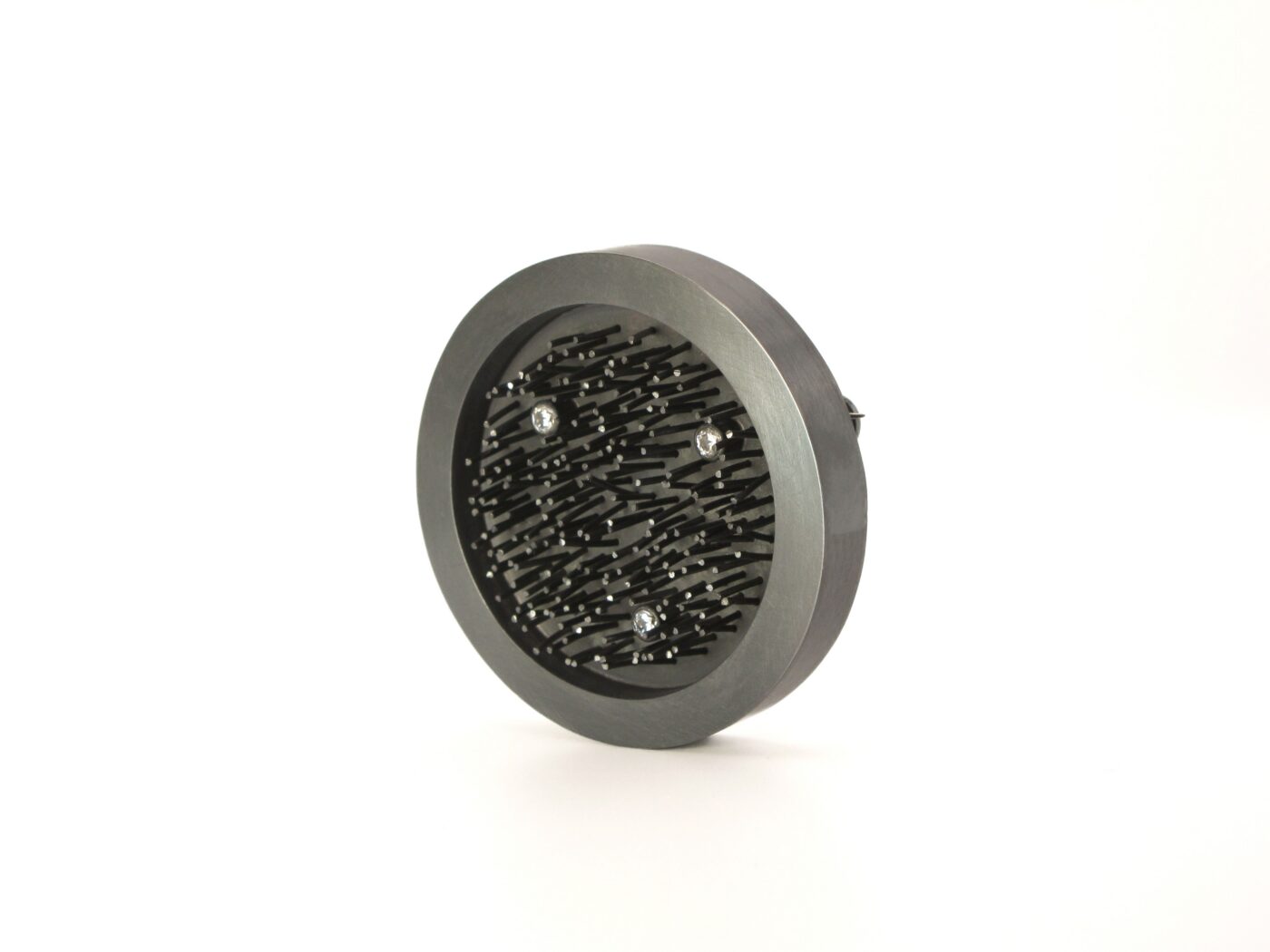
AB: I think my work would exist somewhere between visual art and writing. Many of my pieces are created as standalone objects first and wearable jewelry second. I see my brooches as small sculptures that can exist independently in space, but whose meaning and presence shift once they are worn. When placed on the body, the experience changes: parts of the design may become hidden from the viewer, or kinetic elements begin to move, allowing the object to feel animated and alive. Writing also feels closely connected to my practice. I have written texts and poems to accompany some of my conceptual works, and narrative is central to much of what I create. Whether through written words, spoken explanation, or the object itself, I am often telling a story.
Against Fixed Categories
NYCJW: Are there any conventions or assumptions in the field that you find yourself questioning or resisting?
AB: One convention I quietly disagree with is the need to place jewelry, particularly art jewelry, into a single, clearly defined category. It often occupies an unusual space: not always fully embraced by the fine art world, yet also misunderstood within traditional jewelry contexts, where value may be judged primarily through wearability, craftsmanship, or precious materials. Because of this, many makers can find it difficult to position their work. Pieces may be dismissed as “just jewelry,” rather than recognised as objects capable of carrying conceptual, emotional, or cultural weight.
At the same time, they may challenge conventional expectations of what jewelry should be. I believe art jewelry can exist across multiple disciplines at once: craft, design, sculpture, performance, and visual art. It does not need to fit neatly under one label to be meaningful. I think people should be a little less judgmental and a bit more open-minded when approaching the field. Sometimes the most unexpected piece, made from humble or unconventional materials, can create the strongest emotional connection. A rubber chain necklace, for example, might move someone far more deeply than a diamond ever could.
Working Through Uncertainty
NYCJW: How do you experience creative doubt in your practice, and can you recall a recent moment where you had to work through it?
AB: I think I experience creative doubt almost daily. I can become very excited by a new idea, completely absorbed in it, and convinced I am making my strongest work so far. I will spend hours immersed in the process, only to finish the piece and immediately begin questioning it. Will a gallery or client respond to it? Do I even like it myself? I know I can sometimes look outward for validation, and I am learning to trust my own instincts more. What helps me most is to keep making rather than overthinking.
Doubt can be uncomfortable, but creative paralysis is far more limiting. Continuing to work, even while uncertain, is usually the best way through it. At the same time, I do not think doubt is entirely negative. A certain level of questioning can push you to refine your ideas, notice imperfections, and keep raising your standards. Perfection is impossible, but that leaves room for growth. I try to see insecurity not only as a challenge, but also as something that can motivate me to keep improving.
For Lilith: An Heirloom of Autonomy
NYCJW: If you could create a work for a fictional character or historical figure, who would it be, and what would that piece look or feel like?
AB: I think it would be for Lilith, the first wife of Adam in some traditions, who was created equally from the earth and chose to leave the Garden of Eden rather than be subservient. To me, she represents autonomy, independence, and the strength to reject imposed roles. Although she has often been portrayed as a demon, I see her more as a misunderstood figure shaped by patriarchal narratives. I would create a brooch for her, as it is my favourite medium within jewelry. Rather than designing it from assumptions, I would want to ask her about her deepest secret or something she holds closest to her heart. From that conversation, I would create an heirloom, something intimate, protective, and powerful, carrying both vulnerability and strength.
Material Obsession: Niello
NYCJW: Are there materials, objects, or unexpected sources of inspiration you’re particularly drawn to at the moment?
AB: I have been quite obsessed with niello recently. Niello is a traditional metal alloy, typically made from silver, copper, lead, and sulphur, which creates a rich black or bluish-black surface when applied to metal. I am drawn to both its visual depth and its distinctive texture. I only experimented with it briefly during my time in high school, but over the past few years, I have felt increasingly compelled to return to it and properly learn the process. I am currently planning a trip to visit Gigi Mariani, one of my favourite artists working with niello, and to see his workshop. As for how it will enter my work, I think I need to spend time with the material first. I like to understand a process through making before deciding how it should be used conceptually or formally within my practice.
Permission to Feel
NYCJW: When someone encounters your work, how do you hope it affects them?
AB: I hope people feel invited to share with me what they feel, just as I am sharing something of myself through the work. That exchange has happened a few times during exhibitions, when visitors have come to speak with me and share something deeply personal after hearing the story behind a piece. Those moments affect me profoundly, and at times have moved me to tears. That is, in many ways, the purpose of my conceptual practice. I make work that asks me to be vulnerable, in the hope of opening conversations around subjects people often find difficult to discuss. When someone recognises themselves in a piece and feels able to respond honestly, the work has done what it was meant to do. More than anything, I hope it gives people permission to feel openly, to be sad, joyful, uncertain, reflective, to feel heard, and to feel understood.
On Familiarity and the Brooch
NYCJW: Is there a question about your work that you wish people would ask more often?
AB: I am not entirely sure what question I wish people would ask more often, but I do know the one I could happily hear less: “What are those?” usually while pointing at my brooches. Since brooches fell out of everyday fashion for a time, many people are simply unfamiliar with them as a form of jewelry. They are less commonly seen now than they once were, aside from badges or pins, so for some people the idea of a brooch feels almost unfamiliar. That said, I do think they are beginning to return, and it is exciting to see growing interest in them again. Brooches have so much potential: they can be sculptural, expressive, personal, and worn in countless ways. I look forward to the day when they feel familiar again and no longer need explaining.
The Poetics of the Hidden
NYCJW: More broadly, are there recurring themes or emotions that continue to surface in your practice? Why do you think they return?
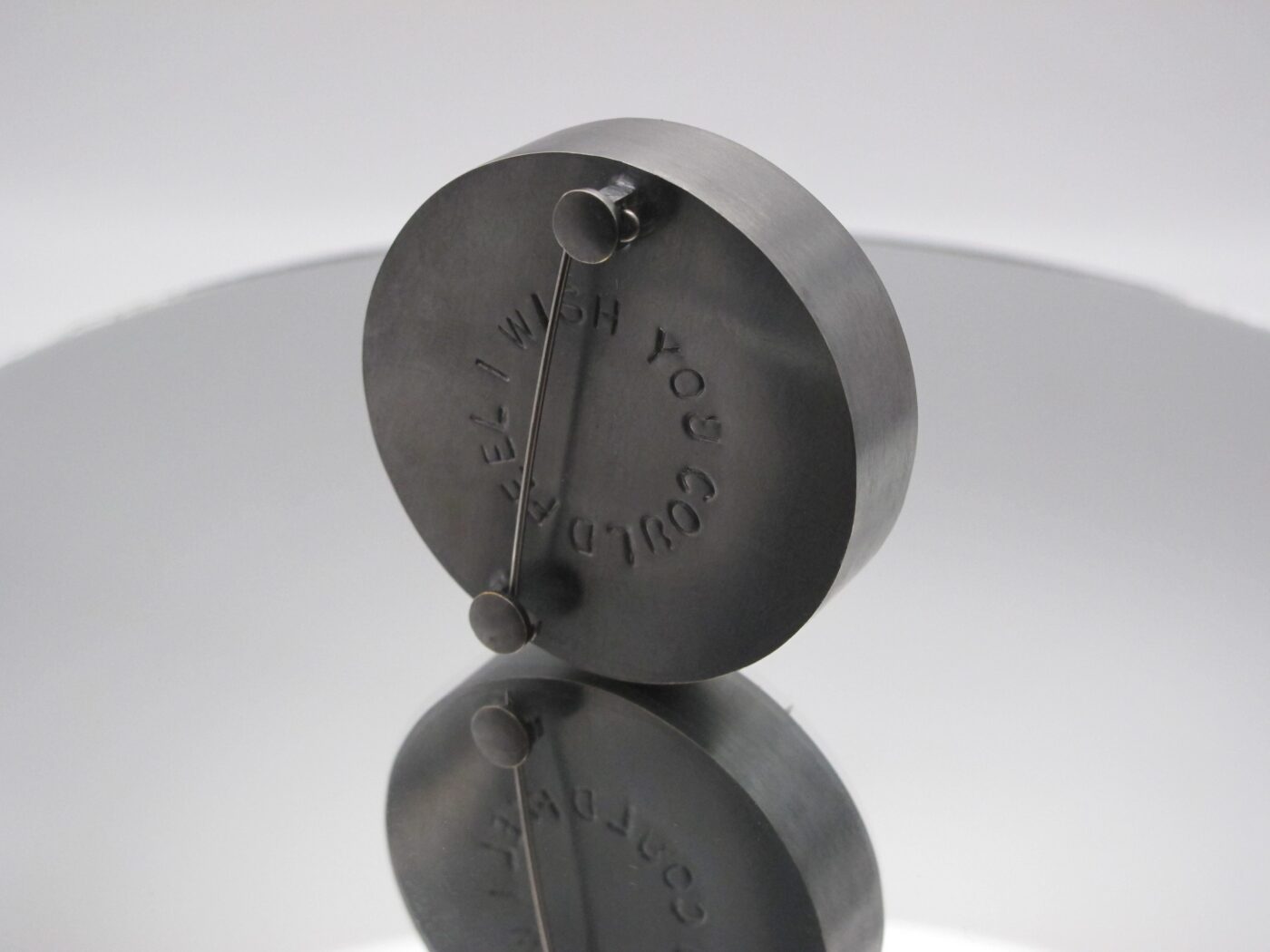
AB: The idea of “hidden” is definitely the most recurring theme in my work, both in my conceptual and wearable pieces. I am drawn to constructing pieces where elements are soldered, inserted, set, or fixed in ways that are not immediately obvious. Some parts only reveal themselves when the work is held, moved, or looked at closely; in certain cases, they are not visible at all; sometimes they are only for me to know they exist. I think this keeps appearing because I am interested in the tension between visibility and intimacy, and in the idea that not everything in an object needs to be immediately understood or seen to have meaning.
About One for the Future (OFTF)
One for the Future celebrates the next generation of jewelry and creative industry professionals. Each year, the program recognizes honorees for their innovation, craftsmanship, and/or unique perspectives. It also provides them with opportunities for mentorship, exposure, and connections with collectors and industry leaders worldwide.
Enjoyed this piece? Explore more jewelry content from Future Heirloom!