I’m Gonna Dance the Way I Feel: Anthony Sonnenberg

It’s no secret: here at NYC Jewelry Week—and especially at Future Heirloom—we’re big fans of maximalist statement jewelry. Ceramicist-turned-jeweler Anthony Sonnenberg’s jewelry works bring statement jewelry to a new level, with creative and colorful material combinations, meticulous craftsmanship, and elegant yet playful proportions.
Future Heirloom Editor Jackie Andrews sat down with Anthony to discuss how he got into jewelry making, what excites him about making wearable sculpture, and how ceramics and jewelry come together harmoniously in his practice. For all of that — plus an exhibition tour of his latest solo show, I’m Gonna Dance The Way I Feel at Mindy Solomon Gallery in Miami, Florida — keep reading.

Sonnenberg’s Orchid Cloud necklace with Rainbow Central Piece; Sterling Silver, over thirty different varieties of precious and semi-precious stones.

“My Jewelry practice is a direct and natural outgrowth of my larger sculptural practice in both the physical and conceptual sense. Jewelry however, allows me to take certain aspects from this larger practice to a new acute degree. The power of beauty, the mechanics and consequences of desire, and the collapsing of time and social hierarchies, all issues I deal with thoroughly in my other practices, are in the jewelry made more direct and intensified. The constant presence of histories both great and small in the form of found object and art historical reference continue, but in a more intimate way as they are explored in direct collaboration with the living body. These presences manifest in many forms that range from the personal, to societal, and the geological, whether it be using recycled heirloom silver, to inset ancient roman coins, to timeless, precious gems and fossils. The goal of the works at surface level seems to be simple: to dazzle and to awe. However, as always in my work, the jewelry also seeks an alternative and more complicated effect, to boost the confidence and self-love we all have within, while at the same time reminding ourselves of the small but precious place every individual occupies in the history of our planet.”

Anthony Sonnenberg’s Artist Statement for I’m Gonna Dance the Way I Feel
Another view of Sonnenberg’s Orchid Cloud necklace with Rainbow Central Piece; Sterling Silver, over thirty different varieties of precious and semi-precious stones.

Future Heirloom: As jewelry is a somewhat recent development in your practice, can you share how you first started
making jewelry?
Anthony Sonnenberg: I started making jewelry as a way of moving forward in a less than perfect situation. About nine years ago, I had just graduated with my MFA, was bouncing unsuccessfully from job to job, had very little money and only had a table in one room of my two room apartment to work from. I had a lot of random beads and bits of metal that I had squirreled away from different projects in grad school (adornment as a concept has been a part of my practice, pretty much from the beginning) and a basic knowledge of low temperature soldering that I had taught myself and which I knew I could source materials from any major home improvement store. Considering all the elements aligning in this moment, jewelry seemed like a no brainer. That is how the proto-bronze flow pieces started.

At the same time, I also returned back to the metal flower making technique which I had also been self-teaching and developing for about five years before. Funnily enough, that part of the practice started in a previous similar situation that I had found myself in after graduating from undergrad. From about 2013-2014, I focused on making jewelry pretty heavily with somewhat mediocre success. I was so limited in access to materials, equipment and space, and there was only so far that I could go. However, this is when the ball definitely started rolling, I knew I was excited about jewelry, I knew it was sort of possible, but I had to put it on the back burner for a while.  The ceramic, sculpture and performance side in my career started getting traction and I put jewelry on hold for a time.

Fast forward to two years ago, I’ve got a career going as a fine artist, I’m in my first teaching job with an actual salary and I buy some sheet silver for the first time. I then discovered that the soldering method I’ve been using for almost a decade works with silver, something that I assumed for many years and for no real reason would not be possible. Along with that many of the road blocks that had cut my previous adventure in jewelry short were now gone and jewelry making has been at the forefront of my mind since then.

FH: What excites you about making jewelry?
AS: The difficulty in this question is of course in where to start. I think it’s best to begin with that which is hardest to put into words. The challenge to mix precision of engineering with a direct formal exploration of the timeless question: what makes something beautiful, that is at the core of jewelry making, can at times obsess me. Once an idea or series of objects align, I can feel the need to make a new piece coming on like a fever. I then have to fight to clear out my schedule to make the time I need to sit down and bring the thing out of my head into the world. In a weird way, it feels like the most primal of all the different modes of my practice. 

The other quality of jewelry making that keeps me excited about it is the apparent, at least from my perspective, underdog status of jewelry in the larger art world. While previous underdogs like ceramics and textiles have been suddenly discovered like manna in the desert over the last decade and a half, the art world still doesn’t seem to know what to do with jewelry with a concept behind it. I know there are certainly many exceptions to my observation, but I have not found much disagreement when discussing this idea with other metal workers. However, the thing about being an underdog is that it leaves the door open for anything to be possible. The stakes are low and since jewelry has been around as long as humans have, there is an endless ocean of past masterpieces to draw and learn from. From my viewpoint as a maker and creative person, sometimes the most fertile creative fields are the ones that no one is looking at.  If historical precedent is to be believed then it is clear that jewelry with purpose will have its day in the spotlight again soon enough, I only hope I’ve caught the train before it leaves the station.

FH: What’s next for your jewelry practice, or your practice overall? Do you have any plans for new jewelry projects that you’re particularly excited about?
AS: The short answer to this question is to keep learning and challenging myself. Right now, I’m in that wonderful stage where it feels like I learn something new and reach a new level with every piece. I want to keep that fire going. I have so much to learn, but I think at the forefront would be adding skills like enameling, engraving, and electroplating into the mix. 
Once again I am, like most makers, faced with the problem of access to essential equipment, as I am not being current attached to any institution with a metals program,  but also feeling lucky to be learning in a time when digital spaces like youtube allow free access to so much practical knowledge that was not there when I first started.
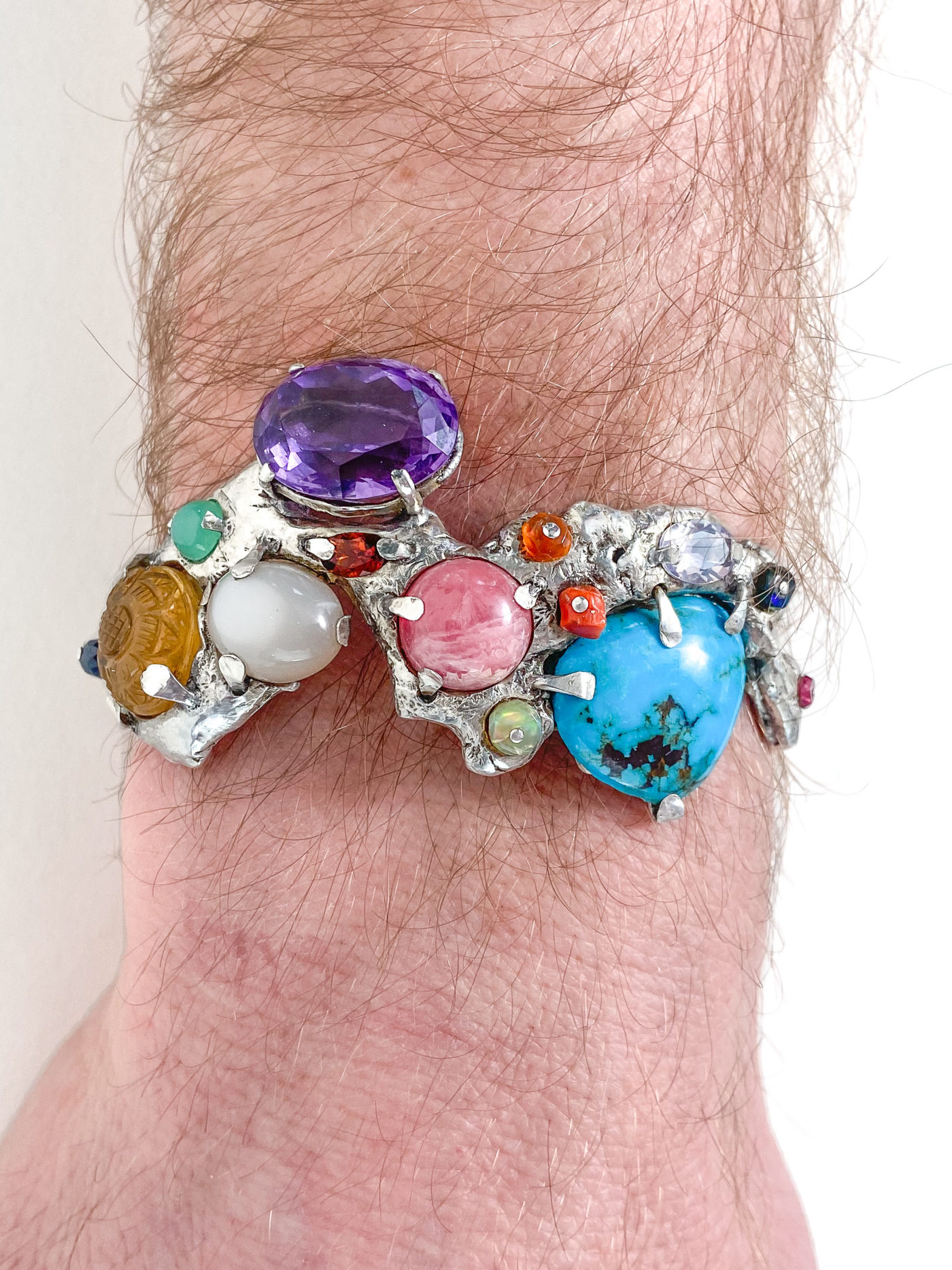
Silver Flow Bracelet (Rainbow with clovers) Sterling Silver, amethyst, citrine, opals, coral, moon stone, turquoise, carnelian, garnet, chrysocolla, rhodochrosite (Top Left) and Double Tier Chandelier (Fabulous Faggot Fantasy); Porcelain over stoneware and found ceramic tchotchkes, glaze, steel, brass, electric lights, 27L x 27w x 40h inches (Top Right and Bottom).

FH: What does The Power of Jewelry mean to you?
AS: It would be fair to say that I come mainly from a ceramics background, and in that background there is a lot of  talk of the potential for intimacy. The way that a ceramic vessel can fit into the domestic sphere and interact with our bodies in ways that are not always glamorous but can yield powerfully meaningful connections between person and object that are essential to life in a way that the more grand arenas of the art world can never really match. Now, while I do think all this is true, I think it is actually much more true for jewelry. 

“What could be more intimate than a necklace or ring that a person wears for their whole life?
History is full of stories of people willing to risk their life in the most unimaginable horrific situations to save a piece of jewelry with no real monetary value but of extreme emotional importance.  A piece of jewelry can speak to the wealth of a nation, the love of a lifetime or be a statement about how you see the world. 

The idea that something so small, and in a sense everyday, can have such an impact is to my mind the essence of what it means to be powerful.”

Anthony Sonnenberg on The Power of Jewelry

FH: Finally, how can our readers best support your work?
AS: I would like to start by thanking you for the generosity of this question, I can’t remember the time someone asked me this. 
This is basic but important to state: the easiest and most direct way to support me (or any artist for that matter) is to buy my work. I always say that every piece I sell means another one is able to get made and my ultimate consistent goal in life is to just keep making.

Beyond that, I am looking for help in finding my place within the jewelry community. So if there are any interested and willing curators, educators, or jewelry historians that would be interested in a studio visit with me, virtual or otherwise, I would really appreciate the opportunity to gain some outside perspective. As a maker, whatever your perspective is, it’s bound to have a blind spot or two. Finding these through critique or conversation is an essential element to the fine tuning of a practice and undoubtedly an important next step for me to embark on. 

Anthony Sonnenberg: I’m Gonna Dance The Way I Feel is on view at Mindy Solomon Gallery in Miami, Florida from October 23 – November 25, 2021. You can view the exhibition on Mindy Solomon’s website here.
You can find more of Anthony Sonnenberg’s work on his website, and follow him on Instagram @anthonysonnenberg.

More About Anthony Sonnenberg
Born in 1986 in Graham, TX, Anthony Sonnenberg earned a BA with an emphasis in Italian and Art History in 2009 and an MFA in Sculpture from the University of Washington, Seattle in 2012. Notable exhibitions include; State of the Art II, Crystal Bridges Museum of American Art, Bentonville, AR (2020); the Contemporary Art Museum, Houston, TX (2019); The Fuller Craft Museum, Brockton, MA (2019); the Craft and Folk Art Museum, Los Angeles, CA (2018); the Art Museum of Southeast Texas, Beaumont, TX (2018); Lawndale Art Center, Houston TX (2015); The Old Jail Art Center, Albany TX (2013); the Texas Biennial (2011 & 2013); Old Post Office Museum and Art Center, Graham, TX (2012); Colab Projects, Austin, TX (2012) and the Seattle Art Museum, Seattle, WA (2011). Mr. Sonnenberg lives in Fayetteville AR and Conway AR, where he is currently the inaugural Artist in Residence at the Windgate Museum of Art at Hendrix College.


Our sincere thanks to Anthony Sonnenberg and Mindy Solomon Gallery for this feature. Interview responses and artist statement by Anthony Sonnenberg. Images courtesy of Anthony Sonnenberg for Mindy Solomon Gallery exhibition, I’m Gonna Dance The Way I Feel. Interview conducted and feature edited, compiled, and formatted by Future Heirloom Editor Jackie Andrews.

The World of Sanct Desiderata: Interview with Julia De Souza

One of our primary goals on Future Heirloom is to uplift emerging makers and brands who are transforming the jewelry world and making lasting impacts on our community. This week, we’re giving you a peek into the World of Sanct Desiderata, one of our favorite New York-based jewelry brands, with a special interview with founder Julia De Souza (she/her) and a look at the brand’s just released and much anticipated documentary Sanct Desiderata/Universe.

Julia De Souza of Sanct Desiderata

“I was born and raised in Costa Rica to a Brazilian mother and a Costa Rican father. I was always interested in art and I started modeling clay since I was a little kid, at 13 years old I had my own jewelry storefront. I founded Sanct Desiderata in the summer of 2012. I wanted to represent my generation and my friends with jewelry that felt fun, interesting and genderless.

Julia De Souza

Future Heirloom: Tell us, why jewelry? 
Julia De Souza of Sanct Desiderata: I think jewelry can tell you so much about history and nature and it’s hard to overlook it, it marks history next to architecture and that’s how I connected them both, you can see what people were doing and thinking and developing, the skills and means they had, and it keep changing so makes it very exciting.

FH: What does the power of jewelry mean to you and your practice?
SD: The power of representation, of statements of history and stories and the power of the artist to create all these pieces for someone else.

A still from Sanct Desiderata’s new documentary.

FH: What’s the most important part of your creative process?
SD: I think the most important part of my creative process is to be able to develop an idea to where I want it to go, it takes time on the paper, being able to sketch to detail what i want to make is fundamental, and even after the design is produced the design can evolve, which is even more fun, I love to imagine huge weird pieces and then get them “down to earth” to a more wearable accessory.

FH: Who is your work for?
SD: My work is for people that like to discover new things everyday. I think when you see my pieces they’re full of meanings and representations, and if you try to figure it out you can see where the piece came from. Curious, lovers of the uncommon and people that like to feel ‘that weight’ of the metal.

FH: What are two things that inspire you?
SD: Nature and humans.
Nature is a big part of my background; I’m from two countries that have a lot of rich natural resources, and especially Costa Rica, which is trying to protect their natural habitat so much. I’ve been an animal and nature lover since I can remember and it was kind of forced in my upbringings to protect and care for beings that were here before us.
Humans are very interesting beings, we have destroyed so much of our environment that it’s hard for me to accept us as inspiration for my art. But we’re all part of this universe and I love to study philosophy concepts and theories of everything to learn how our thoughts have evolved and how we develop as a society. I make jewelry for Humans, hopefully for humans that want to be better with each other and to the planet.

Teaser of Sanct Desiderata’s documentary

FH: What stories are you telling in your work?
SD: I’m probably telling those stories you want to keep telling to your people. My preference for custom work allows me to put a mark into people’s life’s most important moments. I want to be telling Your Personal Story, that’s why people come to me for this special pieces, I love to listen and learn as much as I can. We all have a story to tell, however big or small, and if it’s important to them I want to help them keep them forever next to them, and hopefully pass them along the years, like folk legends. Metal has a status of permanence that’s very rewarding.

My background is in architecture and I appreciate the narrative and process behind every piece that make them what they are. Jewelry, for me, is encapsulated stories, mixed with ancient skills that we have been developing through the centuries, it all feels really magical and transcendental and that’s how I want Sanct Desiderata to be perceived.”

Julia De Souza
Pearl pendants from Sanct Desiderata.

FH: What’s new that you’re excited to share with us?
SD: I’ve just been working on a lot of mini sculptures that have a lot of special gemstones, one of a kind pieces in noble metals. My mini doc is being released this week, we started filming last year and hopefully everybody can see how my jewelry comes to life.

Medallion necklace from Sanct Desiderata.

Head to Sanct Desiderata’s website to view the full documentary on Julia’s practice and inspiration. Follow Sanct Desiderata @stdesiderata.


Thanks to Julia De Souza of Sanct Desiderata for sharing a behind-the-scenes look at her brand, practice, and documentary with us. Images, film stills, and text provided by Sanct Desiderata. Interview edited and compiled by Future Heirloom Editor Jackie Andrews.

Cultivating Connections: Interview with Rosena Sammi of The Jewelry Edit

This week, we’re excited to introduce you to The Jewelry Edit, a jewelry platform that is reshaping the way we shop. Launched in September 2020, The Jewelry Edit is dedicated to supporting and expanding a network of diverse, sustainable, and emerging designers, giving customers a personalized and thoughtful shopping experience, and building meaningful relationships between designers and their customers. There’s much more to come from The Jewelry Edit on Future Heirloom, but first, we asked The Jewelry Edit’s founder, Rosena Sammi, to tell us more about her platform. We spoke with Rosena about her background in the jewelry industry, what led her to start The Jewelry Edit, how the site reflects her own values, and—of course—what jewelry she’s loving currently. Let’s chat with Rosena:

Rosena Sammi

Future Heirloom: The Jewelry Edit isn’t just a shopping site, it’s a catered experience. Can you walk us through how a customer can navigate the site?
Rosena Sammi of The Jewelry Edit: That’s exactly right, it’s a catered experience. The moment you arrive on the site you know that you’re shopping all socially responsible brands. Part of our magic is that we carefully vet and select all the designers we work with to ensure they adhere to our Sustainability Code of Ethics. But you can get even more personal — with a few clicks you can tailor your experience to your specific interests, whether it’s shopping only Black designers or AAPI designers. Then there’s our personalized shopping services — engage with a survey about yourself, upload a selfie, and we will pair you with a personal stylist and apply our proprietary algorithms to determine what jewelry best suits your face and your desires. In other words, it’s all about you. 

FH: You have a really unique Resident Stylist program, where you brought in one of our favorite stylists, Nicole Chapoteau. Could you tell us more about Nicole’s role? 
RS: As Fashion Director at Vanity Fair, Nicole definitely brings red-carpet glamour to The Jewelry Edit. She also brings the experience and perspective of a Black stylist who has been in the accessories industry for many years. One “Edit” I especially loved was when Nicole styled me for a shoot in NYC, which we called NYC Is Back. We were able to showcase some of our most exciting sustainable and diverse talent and capture behind the scenes, real-world examples of the hows and whys around how Nicole does what she does. There’s so much to learn and so many looks to steal and it’s all chronicled in her Edits on our website.

FH: You have such an exciting roster of established and emerging talent mixed together. It’s so wonderful to discover new designers or new work each time we visit. Tell us more about why this is important to the platform and how you discover the talent you feature. 
RS: It’s phenomenally important, not only to us, but to our entire community. We love providing a platform for established and emerging designers who are diverse. The talent that we bring together can be hard to find on your own, but that’s why we’re here. We love being a platform where customers can always come and find someone or something new and exciting. Something we hear so often from our community is that they absolutely love a particular designer but why hadn’t they ever heard of her before? A huge challenge for new designers is finding retail space to be featured and discovered. Department stores often have barriers that prevent some designers from being seen. And that’s especially true when it comes to diverse designers. But again, that’s why we’re here and why we love doing what we do. 
I love curating new talent. I love meeting them, speaking to them and learning about their journeys. I find them through word of mouth, walking the shows and through my connections within the industry. But also by voraciously reading anything and everything on jewelry (including all the great content coming out of NYC Jewelry Week!)

FH: We know that “democratization” of the jewelry buying experience is important to you personally and was an impetus behind launching The Jewelry Edit. We love this! Tell us why and how TJE is breaking down the barriers of a traditional jewelry retail experience:
RS: We need to dismantle a lot of the unnecessary, and frankly bloated, infrastructure that has been built up around buying jewelry. It does nothing but separate you from the jewelry you would love (if only you knew about it and could find it).  
Over the years, buying jewelry has become more and more intimidating. From walking into jewelry stores and feeling you’re not dressed appropriately. To feeling shy or nervous that you’re not asking the “right” questions and that you might be mistaken for someone who doesn’t know “enough”.  
Sometimes you’ll encounter store employees who don’t know much about the designer and can’t really answer the questions you most care about, like: Where was it made? How and with what? Sustainably? Who is the designer and what inspires her? What are her values? Other times you can only get personalized service at luxury fine jewelry stores (especially if you look like you’re about to spend a lot of money!) But then only for a limited set of designers chosen by a multinational conglomerate. 
You deserve more access, more selection, more information, and more insight. My goal was to create something personalized and special that puts the least number of obstacles between you and your perfect pieces from designers you won’t find at the “mall”. Our stylists are ready to answer any and all questions. Many of our clients are trying to choose jewelry for a specific outfit or a special event and they may send their stylist a pic of the dress they’re planning to wear. Others are simply building their jewelry wardrobe and we’ll work with them to review the jewelry they already own so that they can freshen up their collection by mixing in some new pieces. Recently we helped a husband curate a “re-emerge wardrobe” for his wife for their wedding anniversary.
Put simply, interesting and innovative designers with beautiful pieces that speak to you should be available to everyone, minus the obstacles. Welcome to the Jewelry Edit. 

Pieces from The Pearl Edit.

FH: Let’s talk about equity and representation. We think the world wants to purchase and wear jewelry made by all types of people with different visions and different stories to share…seems simple enough, but that hasn’t been the case in mainstream retail. You are seeking out jewelers of all races and backgrounds to be a part of TJE and that’s so refreshing to see. Tell us why this is important to you and the platform.
RS: As a woman of color myself, it’s part of my DNA to be aware and active when it comes to breaking down barriers for minorities. Throughout my own history as a designer, I rarely met a woman of color who was a buyer, merchandiser, owner or CEO. There is a dearth of diverse women in these roles, especially at the major retailers. These are very real obstacles in the way of change and specifically in the way of diverse designers getting shelf space and getting in front of customers. 
While we all have favorite designers that we see across many outlets, isn’t it fun to find something unique too? While we certainly carry many designers well known and even iconic in the industry, we also love to highlight new talent. At The Jewelry Edit we don’t focus on reputations or trends we focus on  connections—making a connection between our client and the designer.

FH: What are you crushing on right now on the site? Tell us who and what. 
RS: The Vervet Earrings by We Dream In Colour is one of my favorites on the site right now. I love the playfulness in the design and the hand crafted details. I also love creating drama with my jewelry and We Dream In Colour always delivers.

I really stepped up my earring game with earlobe wraps from the Parisian designer Jolie Bijoux. They’re an investment piece, but they’re bejeweled candy I can’t keep my eyes off!

The meticulous details in Jennie Kwon’s earrings and rings have me coming back for more every month. Right now it’s her use of colored gemstones that’s helping me amp up my color palette for fall.

Jam + Rico is a brand I recently discovered. The designs are joyful and speak to the designer’s heritage. The Carmen Earrings are now a staple in my wardrobe.

FH: Your background is as a jewelry designer. What led you to shift your focus to TJE?
RS: Jewelry is part of my DNA, as I think it is for most South Asians. It’s such an important part of our cultural identity and it’s always been a passion for me.  After almost a decade practicing law (yes my path to jewelry was a circuitous one!) I embarked on a career in jewelry. Being able to partner my culture with my career was incredibly rewarding. But eventually, after much success working with major department stores, famous boutiques and A-List celebrities, I grew disillusioned. I grew disillusioned with not only the lack of diversity of the people I was working with, but with the rise of fast fashion itself.  In jewelry, fast fashion was nothing more than a race to the bottom.  I was being asked to make things quicker and more cheaply than is fair. And jewelry was moving away from something to be treasured, to something to be disposed of on a season to season basis. I saw the disparity between being offered champagne and coffee table books at heritage brands, and turning a cheap turnstile at a fast fashion store. 

The most common question I would hear was where to buy unique jewelry and how to put it together. So I answered it by creating The Jewelry Edit.

FH: TJE promotes “slow jewelry” in lieu of fast fashion and a throw away lifestyle. You mentioned your disillusionment with that disposability — can you elaborate on how those values play out on The Jewelry Edit?
RS: We have a Code of Ethics that we have all our designers get behind. It ensures that we support and promote designers that are aligned with our mission of working towards a sustainable jewelry industry. 
The relationship between “sustainability” and “jewelry” is complicated, but we need to address it. It’s often difficult for emerging designers to have the budget to ensure their jewelry meets the highest of ethical and sustainable standards. Heritage brands, with all their resources, have only started to take on these goals in recent years. But we want our designers to embrace sustainability on any scale, and we work with them as they navigate the steps they can take towards that goal. Maybe they can use recycled metals, but they aren’t yet able to trace all their stones? Every journey starts with a single step.  We’re proud to be walking together with our designers on that journey.

FH: We love that TJE cultivates a relationship with customers, and values sharing the story of the maker with buyers — it offers something you don’t often see in a retail space. Why was this important to you to include?
RS: Our most treasured jewelry is jewelry that tells a story. And often that story comes in knowing the story behind the jewelry itself. We love connecting customers with jewelry that will mean something to them. With every designer, we have a “why we love them” section, it shows that we really invest in each designer, we know them and we know their craft. Maybe it’s where the piece was made, how it was made, or the inspiration behind it. The more you know about your jewelry the more you can share with other people. When people say to me “that’s a great pair of earrings” I love being able to share with them why I love them too. If you love something you want to share it.  We’ll help you find the pieces you’ll love for years to come. 

FH: Finally, are there any last inside insights you’d like to give our readers? What’s coming up that we should get excited about?
RS: One thing I’m definitely excited about right now is The Jewelry Edit’s panel for NYC Jewelry Week. “The Need For Diversity In The Jewelry Industry: The Importance of Being Seen”. 

See more from The Jewelry Edit on their website, thejewelryedit.com, and follow them on Instagram @jewelryedit. You can read more about Rosena here, and learn more about The Jewelry Edit’s Resident Stylist Nicole Chapoteau here.
Join the NYC Jewelry Week mailing list to be alerted when details about The Jewelry Edit’s panel discussion are released.


Special thanks to Rosena Sammi for taking the time to the share the inside scoop on The Jewelry Edit with us. Interview responses written by Rosena Sammi; interview compiled and edited by Jackie Andrews. Images provided by Rosena Sammi and The Jewelry Edit; photography for the NYC Is Back shoot by Michael Dumler, assisted by Micaela Ribello.

Cosmetic Justice: Exhibition Tour & Interview with Ali Hval

Today we’re thrilled to share a special tour of interdisciplinary artist Ali Hval’s solo show, Cosmetic Justice, currently on view at North Iowa Area City College in Mason City, Iowa. We asked Ali to give us the inside scoop on her latest work, her relationship to jewelry, how she began making her quintessential giant wall jewelry sculptures, and what’s next for her practice. Read on for all of that, plus what material she’s working with next, why she’ll never get sick of rhinestones, and of course, lots of images of her gem-encrusted work. Let’s tour Cosmetic Justice!

Before we dive in, here’s a bit more background on Ali:
Ali Hval is an interdisciplinary artist currently living and working in Iowa City. Her work combines painting, fabric, ceramic, sculpture, and installation. She received her MFA with Honors at the University of Iowa in Painting and Drawing with a minor concentration in Ceramics in 2019. Ali was a 2015 Windgate Fellow through the Center for Craft in Asheville, North Carolina, and is also a 2021 recipient of the Culture & Resilience Grant from the Iowa Arts Council.

Installation shot of Cosmetic Justice at NIACC in Mason City, Iowa. Photography by Alexis Beucler.

My work is a balancing act: one between the sensuality of forms and the innocence and playfulness of the materials I use: sparkling rhinestones, oversized plastic gems, feathery pom-poms, sumptuous fabrics, glossy vinyl, and liquid latex. I am interested in how women collectively and individually discover their sexuality through clothing, experiences, and relationships. My work is an ongoing attempt to explore ways to embrace my sexuality in ways that are liberating opposed to limiting and based solely on conditioned social and familial expectation. There is some in-between area that exists between these two extreme points on a spectrum, a balance I unearth in my work to understand my own relationship to my body. 

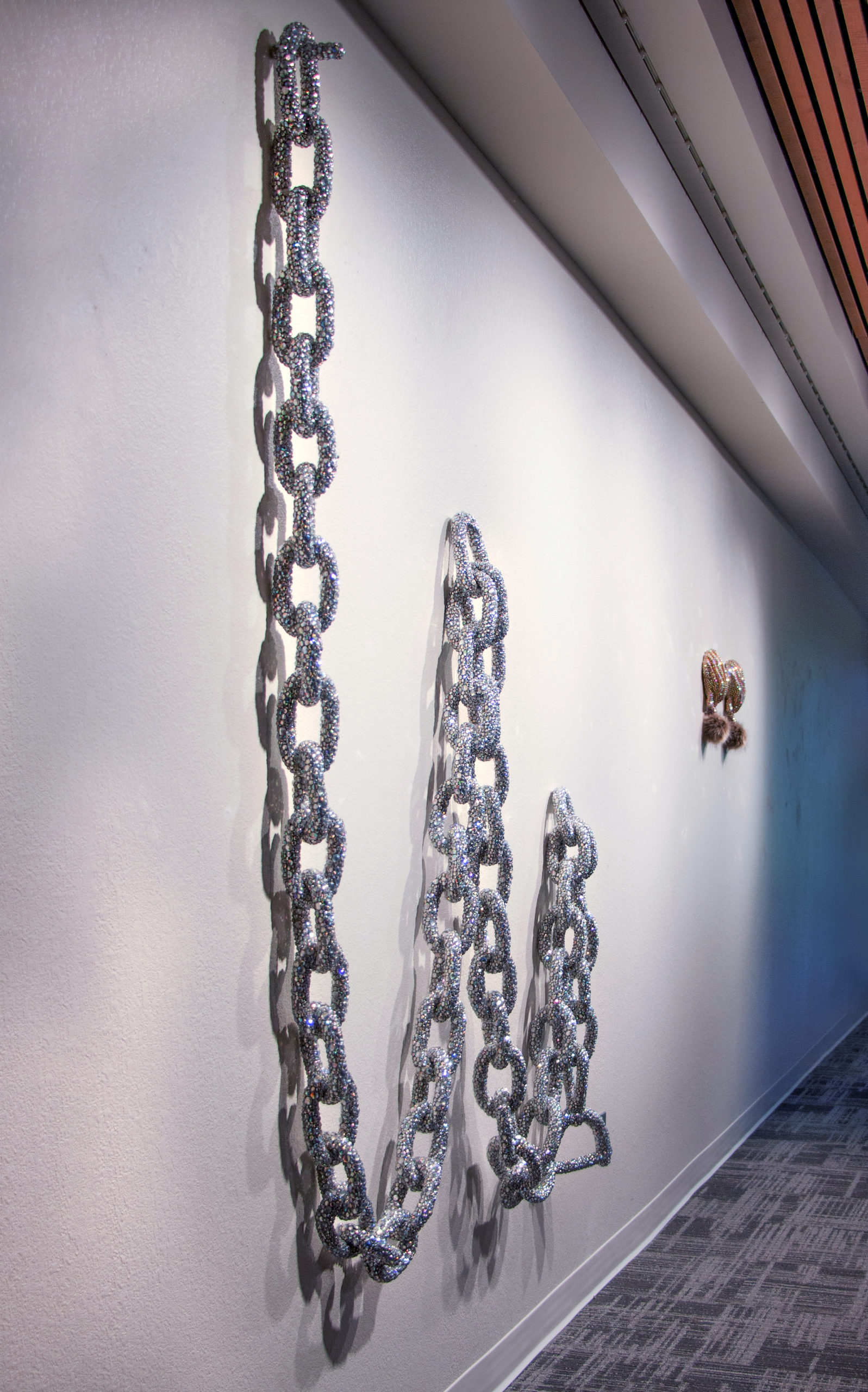
The sculptural wall pieces I make are an unconventional marriage between era-specific jewelry, bodily forms, objects of pleasure, and home decor. They embrace, highlight, and empower sensuality and femininity rather than hiding or denying it, as well as acknowledging the awkwardness, humor, and performance that can come with it. My pieces are interdisciplinary in nature, joining the craft-based mediums of ceramics and fabric with painting and sculpture. I use ceramics in an unconventional way, beginning a piece by sculpting something structural that other parts and pieces will later be attached to. Then, I paint the fired ceramic piece with metallic paint (often mixed with eyeshadow!) and meticulously dot it with tiny rhinestones one by one. Finally, I attach other forms made from a variety of materials, like fabric and beauty supplies, to this ceramic component. The completed forms I use reflect my interest in adornment and the relentless critique and politicization of the body: they imply bodies, brooches, earrings, and nipple tassels, among other adornments.

Ali Hval’s Artist Statement for Cosmetic Justice

Installation shot of Cosmetic Justice at NIACC in Mason City, Iowa. Photography by Alexis Beucler.

Future Heirloom: What led you to start making these oversized jewelry forms? 
Ali Hval: Increasing a piece of jewelry’s scale automatically gives them a more powerful presence. Being quiet and understated never felt like the right move for my work, especially now during a time where women’s bodily autonomy is being threatened. Hanging at the height of an average person, my pieces move beyond being a pair of earrings to asserting an overwhelming presence in a room: they become a stand-in for a body. They are assertive and loud, demanding attention. Covered in materials seen as archetypically feminine, like rhinestones, glossy latex, and glitzy fabrics, these objects call out to a viewer from across the room. The specific forms I use have elements to them which, when increased in size and wrapped in shimmering fabric and rhinestones, become more seductive and bodily. 

A lot of the forms I use are actually drawn from jewelry and accessories I already own, and the ones that aren’t are a culmination of what I unearth from the vast world of that wonderful little thing we call online shopping. A lot of my research for the appearance of these things comes from browsing accessory stores online: I pluck elements from vintage and contemporary jewelry alike, collecting and organizing screen captures into a folder on my phone or computer. I study the chain of a necklace, the post and hook settings of an earring, or the proportions of a bracelet, then work to collage and edit them into three-dimensional works in my studio.

The very first oversized jewelry form I created was a massive pair of five-foot tall tassel earrings inspired by a pair I own: ones with a very similar form, although with slightly different proportions and coloration. The tassels are made from a deep pink fabric that shimmers red and white, and the earring “caps” are ceramic painted in gold and studded with iridescent rainbow rhinestones. Increased to this size and hung on the wall in a pair inches from one another, they resemble nipple tassels as well. After making my first piece like this, I wanted to continue exploring this feeling of how adornment generates awareness of being seen in a space. I am treading this line between something sexual and something more seemingly innocent. A small piece of jewelry enlarged and abstracted becomes performative from across the room, an expression of bodily autonomy and self-awareness of femininity.

Bubblepop Britney, 2020. Ceramic, acrylic, enamel, rhinestones, latex fabric, cotton piping.

Future Heirloom: A quintessential description of your work would be decadent material use. How did you start working with the materials you use most frequently in your work? Do you have a favorite material? 
AH: The first time I ever worked with fabric was as an undergrad student. In art school, one of my professors always repeated the importance of artists being resourceful above everything else. Taking his words to heart, I chopped up my twin-sized bed sheet into squares which I then covered in bleeding black shapes. This became my first floor installation—absolutely punk rock compared to the gilded and sugary-sweet colors saturating my sculptures now. Regardless of what that first piece looked like, I recall enjoying the fluidity of fabric and how easily it could be folded up, carried, and worked on elsewhere. 

Later in grad school, I attended an artist talk by Faith Ringgold, a woman who uses the medium of a quilt. She spoke about how she could have a show ready to travel simply by rolling up her quilts and throwing them in her car trunk. I loved the ease of that and still think about portability and storage in my work, especially as someone who lives alone and makes a lot of sculptures! I think practicality and sustainability is not discussed enough in the production of art. You not only have to enjoy making your work, but also be able to sustain the way you’re making and storing it depending on your living circumstances. There’s only so much of your own art you can hang in your living space, and with my work, I can easily fold up the fabric bits as they are not permanently attached to the ceramic structures. 

Installation shot of Cosmetic Justice at NIACC in Mason City, Iowa. Photography by Alexis Beucler.

I began incorporating shimmery fabrics and sparkly beads throughout undergrad and during my time spent working under the Windgate Fellowship, but rhinestone-bedazzled ceramic was a new addition to my work in graduate school. I loved being able to use ceramics to create a rigid structure that the softer, fabric-based elements of my work could play off. My ceramic components, though thick and heavy, are still fragile. The material lends itself to the delicacy of jewelry, regardless of how large the resulting sculpture is. I keep my ceramic components small and compact enough to be portable—I can dot them with rhinestones at a table in a cafe or even travel with them on a plane safely if they’re covered in enough bubble wrap.

As for a favorite material, I think it’s impossible I’ll ever really get sick of rhinestones. I love how they can transform a surface, smoothing out the imperfections (which I see as a metaphor for how filters and screens alter our online appearance) by distracting from what is below. I use rhinestones so much that at this point in my life, they’ll just randomly fall off my body or from my clothing, leaving a trail of sparkles in my wake (and, unfortunately for them, in my friends’ homes.)

Installation shot of Cosmetic Justice at NIACC in Mason City, Iowa. Photography by Alexis Beucler.

FH: The dramatic, oversized scale of your work is so fun—I’m curious if you would ever consider making wearable works? Why or why not?
AH: A few times, I actually have produced works which are wearable, though they are clothing-adjacent pieces used in a performative context: they are flowing, cumbersome garments with hand-sewn tendrils and long sleeves draping from them. Such garments, however, are not practical for day-to-day wear! I have actually been thinking about making smaller maquettes of my work with porcelain and the tiniest rhinestones. I’ve had sketches for what seems like ages on them, but have not yet gotten around to creating them. I can also envision these smaller pieces being thorough sketches for larger projects that need an abundance of planning. I’m interested in being able to move through ideas a bit faster by shrinking the scale. I would not, however, see them as my actual studio work since they wouldn’t hold space in the same way, which is one thing holding me back from producing them.

Regardless, since my work already holds such an obvious relationship to the body, smaller pieces make sense in that regard. To literally put them on a person’s body would be a more direct and accessible version of that relationship, albeit much smaller. I think another roadblock I have is constructing every part of the jewelry. For example, I don’t just want to create a bedazzled pendant and stick it on a leather rope and call it a necklace; I would need to be thoughtful in how I approach making the necklace strand integrate with the rest of the jewelry.

Installation shot of Cosmetic Justice at NIACC in Mason City, Iowa. Photography by Alexis Beucler.

FH: What feelings/thoughts do you hope to evoke in the viewer with your work?
AH: Some viewers feel uncomfortable when first looking at my work—mostly in that they are trying to figure out what these objects are. Some people immediately jump to, “Earrings, jewelry!” while others cock their heads and think, “Nipple tassels? A chain that is somehow sexy?” The general forms of my work feel familiar, sensual, and bodily, but once engulfed in shiny fabrics and glittering rhinestones, tread the line of being giant jewelry pieces. I hope this relationship between the sensuality of forms and playfulness of materials brings to light the effect that adornment can have on a body. Since my pieces act as stand-ins for a person, I want viewers to think about how a body can change based on how it is adorned.

One thing I have been thinking about in regards to all this is the history and timeline of the high heel. The first high heel recorded was a product of war made for Persian soldiers (in what is now Iran) as far back as the 10th century. Men would wear them to retain a stable position in their stirrups on horseback during war, specifically when they stood up to fire a bow. Centuries later in France, King Louis XIV was documented as wearing a colorful variety of heels, as seen in painted portraits of him. He also encouraged noblemen in his court to wear them. For him, the higher the heel, the more powerful the wearer. As soon as the 18th century rolled around, men and women were both wearing iterations of the high heels we think of today with a block near the wearer’s heel. Naturally, men wanted to seperate themselves from what women wore, and there was a divide in heels for each gender: women’s heels were narrower and more decorative, and men’s more utilitarian. Eventually, society deemed heels as purely decorative and solely reserved for women. Of course, now we see contemporary examples of men wearing heels: David Bowie, for instance, broke a lot of boundaries in gendered fashion. 

There is much more to the trajectory of high heels than what is described above, but it is so intriguing to me how social hierarchies, gender constructs, and adornment altered this one object in the eyes of many. My work feels like a similar conversation to how a wearer can alter the context of something being worn. Instead, how can a material’s context change based on the body it inhabits?

If You Tease, 2021. Ceramic, rhinestones, acrylic, cotton piping, and latex.

FH: Do you have any new jewelry sculptures in the works that you’re particularly excited about?
AH: I recently acquired a grant from the Iowa Arts Council that allowed me to indulge in materials I normally wouldn’t even dare to glance at. One of these materials is a few yards of powder blue liquid latex fabric. I typically work with a color palette imbued with pinks, reds, and purples, as they feel more bodily to me, so powder blue will be a new color for a new series! I’m working on a variation of a pair of nipple tassels with some chains dangling from them that will be wrapped in this blue latex and then tangled into a huge knot. I’m trying to incorporate some new moves in my pieces to disrupt the symmetry of my work.

Detail of If You Tease, 2021. Ceramic, rhinestones, acrylic, cotton piping, and latex.

FH: What is your own relationship to jewelry? Your work, of course, is pretty maximal—is that indicative of your personal style as well, or is it specific to your work?
AH: My day-to-day style is not minimalistic in the least! The jewelry I wear is gold and glitzy, and I do my best to blend atypical pieces with more classic ones into my wardrobe. I shoot for wearing heirloom and vintage pieces, or jewelry which is crafted from more sustainable materials. Most of the vintage jewelry I purchase is sourced from eBay or Etsy, and I can spend tons of time scouring those websites for quirky but timeless looking pieces. My jewelry has dangles, chains, tassels, gemstones, and hoops that function like tiny door knockers—very reminiscent of the work I make. Though my jewelry choices ten years ago were less conscious of my work, now I find myself choosing jewelry which echoes forms I use.

Tether and Lead in Cosmetic Justice. Photography by Alexis Beucler.

FH: What does The Power of Jewelry mean to you?
AH: I have heirloom jewelry passed down to me from my mother’s and father’s side. Even when I thought a certain piece of jewelry wasn’t my “style,” it became part of it since it was the style of my mother, my grandmother, and so on. It adapted into my style while still retaining the unique histories of the previous wearers, just as my family history plays a role in the genetics that give me my appearance and personality. 

To know that I have an ivory ring, pin, and necklace set that my great grandmother wore is not only indicative of old jewelry’s durability, but it connects me to anyone who has held this piece of jewelry in their collection for such a long period of time. Clothing can be a bit more difficult to pass down as everyone is a different size and shape, and clothing cannot always be as sturdy as the metals of jewelry. Jewelry, however, is always the perfect fit. A necklace will fit every wearer. A ring can fit on any finger, and even if it can’t, it can be strung on a gold chain like a bead. Earrings, both clip-on and pierced, are one-size fits all. Jewelry has lasted for centuries and will continue to do so! It traces the generations of a family tree and garners meaning as it traverses time.

The Power of Jewelry is the compelling force that radiates from a piece. It manifests itself visually in that it doesn’t need a tag or sign that tells you its creator, origins, and meanings. I aim to create power in my work by giving it the ability to hold its own space; my pieces do not need to be worn on a body to hold meaning. Rather, they project power through their size and the abundance and repetition of materials I use on them, materials which are viewed as typically being meant for women’s adornment. By doing so, I create sculptures that are empowering, self-aware, and unabashedly feminine. For me, this is The Power of Jewelry.

FH: Finally, how can our readers best support your work?
AH: You can follow me on Instagram @alihval and share anything you like with a friend or colleague! For anyone out there who works in an art department and needs an exhibition full of sparkling gems or a guest lecturer, I’m your lady!

Installation shot of Cosmetic Justice at NIACC in Mason City, Iowa. Photography by Alexis Beucler.

Cosmetic Justice is on view until October 15th at North Iowa Area Community College in Mason City, Iowa. See more of Ali Hval’s work on her website, alihval.com, and follow her on Instagram at @alihval.


Special thanks to Ali Hval for taking the time to share her work and insight into her process with us. Artist statement and interview responses written by Ali Hval; interview conducted and edited by Jackie Andrews. Exhibition images by Alexis Beucler; images provided by Ali Hval.

Behind Exhibitionist: Interview with Curator Jodie Marie Smith

Yesterday, NYCJW Co-founder JB Jones spoke with Jodie Marie Smith, the curator of the current iteration of EXHIBITIONIST, on Instagram Live. Today, we’re sharing a special extended interview with Jodie.

Before we dive in, let’s start with a bit more about Exhibitionist, NYCJW’s online exhibition space. On the Exhibitionist platform, we ask six exceptional jewelers to respond to prompts about their practice and business that relate to their personal history and the ever-changing world around them. For its second iteration, we invited Jodie to curate which jewelers would be involved. 

For those of you who aren’t familiar with Jodie Marie Smith, she is a San Francisco based writer, trend forecaster and creative consultant specialising in the jewellery and luxury industries. With a background in fine jewellery and having recently emigrated from London, Jodie has written for Current Obsession, The Future Lab, Rapaport, 1st Dibs, Adorn Insight, The Adventurine, Jewelry Connoisseur and The Jewellery Cut, amongst others. Her most recent series of articles explores digital jewellery – including NFTs, the metaverse, blockchain technology, digital fashion and dressing, and gen z consumer identities amongst other future-facing topics. 


With that, let’s dive into the interview!

JB Jones: “Non Fungible Tokens (NFT’s) are to the 2020s what IT girls were to the 2000s: ubiquitous and securing online attention wherever their name is attached…” while this doesn’t directly pertain to jewelry,
(read Jodie’s article and see how it does on Current Obsession) I wanted to start with this because it’s about your approach. 

You have a way of taking something that might seem out of reach, and creating an entry point for it for people who didn’t think they cared about NFT’s or in this case, jewelry. It’s within that space, too, that was where EXHIBITIONIST was born – an idea to create a space that is about accessibility and understanding – an entry point into the minds of visionaries in the field and an entry point into their work. 

JB Jones for Future Heirloom: Why was it of interest to you to take on this curation?
Jodie Marie Smith: It was an absolute joy of a project to be part of! To ask jewelers to curate their own selections for an exhibition according to what specific designs mean to them is a really interesting way of showcasing their relationships to their creations. I feel like this format really gives the creators more control and ‘ownership’ in forming their own narrative. It was a big undertaking from each jeweler to provide us with so much information and to muse on the topics we asked about, so I want to extend my thanks to all of them again for that! Also, any opportunity to showcase the jewelers I love is genuinely exciting, I’m thrilled at the idea of people discovering jewelers they hadn’t encountered before or reading their interviews and giving a new perspective on a jeweler they may already be familiar with.

Future Heirloom: Can you give us a glimpse into your curatorial process? How (if at all) do you feel that your curatorial vision aligns with your interests and background in the jewelry industry?
JMS:
My professional background is in fine / high jewellery, and I was living in London for most of my career, so any selection of jewellers I made would have to include high jewellers, (VRAM, Ming Lampson and Gearry Suen) and at least a couple of London based jewellers (Ming and Gearry.) Of the three fine jewellers in this exhibition, I have been a long term supporter of them, since the moment I was introduced to each one, I fell in love and have shouted about them as much as possible for a while.
My personal background is that I’m from a working class family in Northern England, with absolutely no connection to the jewellery world. I can’t pretend that this won’t have shaped my perspective on the jewellery industry, and particularly some of the outdated attitudes which are associated with traditional fine jewellers. Basically, I don’t think that high value materials necessarily have any bearing on what is or isn’t fine or high jewellery. Not all expensive jewellery is created equal! There are pieces which retail for millions which have had less thought put into them than pieces which retail for $500. Craftsmanship and technique – whether through extraordinary feats of talent, engineering, or simply imagination, are what make me gasp. All of this contributes to why this selection of jewelry had to be so diverse – and we also wanted to reflect and appeal to the spectrum of tastes of New York Jewelry Week’s audience!

FH: The jewelers you’ve chosen include a range of techniques and materials, and a mixture of fine and art jewelry approaches. Was that combination of approaches important to your curatorial vision?
JMS:
Of course, as with every initiative NYCJW leads, we wanted to present as diverse a range of six jewellers as we possibly could. Last year, I came to NYCJW with the idea of a global trend panel, as I felt I was sick of hearing the Eurocentric / US market trends dominate every single conversation, as if there were no cultural or geographical nuance to the concept of ‘trends’ at all. Those echo chambers create redundant perspectives for global digital platforms. For Exhibitionist, I wanted to be true to my taste, and that in itself needs to be diverse in the work I do. If I only wrote about / shared / created content which focused on heritage European jewellery houses and ignored everything else going on in this industry, I’d be failing at saying anything new or at all relevant, in my opinion. This diversity doesn’t just mean gender, race, nationality, geography, but in artistic background, style, cultural influences, approaches, markets, taste. Essentially who their consumers are, who their audience is.
Curation is another overused term, but I believe it is a talent in itself that has value – when you place something alongside anything else, a monologue becomes a conversation, and each different element re-contextualises the other. I LOVE the idea of someone who is already a Gearry Suen fan finding the similarly colorful, maximalist joy of Claire Webb through this series, or vice versa. Punk influences are interpreted into jewellery by Chris Habana and Ming Lampson in completely different ways. Disciples of minimalism seeing the thread between forms which VRAM and Theresia Kyalo have sculpted.

FH: What led you to choose these six jewelers?


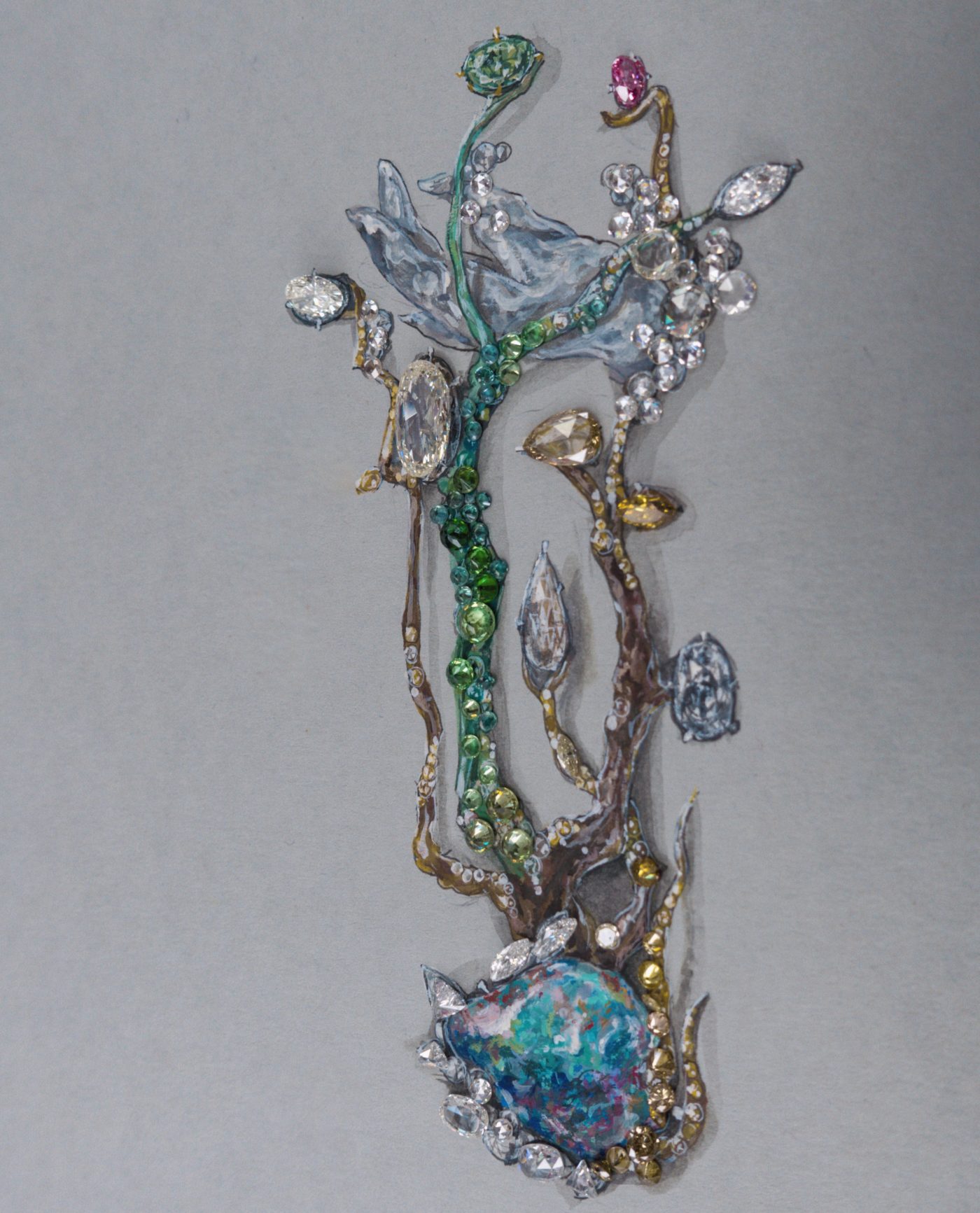
Jodie Marie Smith on Gearry Suen: Though based in London after studying at Central Saint Martins and the Royal College of Art, Gearry was born in China, and many elements of his aesthetic, his artistic practices, his philosophy, are intertwined with his heritage and background. I discovered Gearry early on, right as he graduated in 2020 and was lauded with accolades from The Goldsmiths’ Craft and Design Council Competition, the Goldsmiths Company Award and Theo Fennell’s Gilded Youth awards. My first reaction was non-stop talking to my husband about how amazingly talented this designer is and how important he was going to become, I knew everyone who saw the pieces and images I’d seen would be blown away. I think it’s so rare that a question of taste doesn’t come into a jewellers’ success, I find it hard to imagine anyone who’s ever cared about jewellery in any way wouldn’t agree that his jewellery is objectively mind-blowing. The experimental forms, the surreal references, the gemstone architecture – these are jewellery sculptures. There’s a lot of argument about categorisation in certain quarters of the industry – but no one could deny that Gearry Suen makes art jewellery – museum quality, investment pieces with the highest level of artistry and finish. I mean, they could try, but I’d fight them.

Jodie Marie Smith on Claire Webb: Claire Webb’s jewellery is a relatively recent obsession of mine, but when I say obsession, I’m not being hyperbolic. The first time I saw it, I kept telling anyone who would listen that it was the jewellery from my childhood dreams come to life. The mixtures of shapes, cuts and colours of gems and crystals calls to mind cartoon gemstones in all of the 1950s and 1960s classic Disney films I watched hundreds of times as a child. The neon, electric coloured foils in the Yours by Claire Webb line and the substantial coloured gems, the way they’re set perfectly imperfectly in bulbous, organic looking resin. There is an element of charm that comes with this kind of craft. They’re fantastically, unabashedly fun.

Jodie Marie Smith on Ming Lampson: I’ve never mentioned this to her, but Ming Lampson was the first designer who I can remember that spoke to me with the same enthusiasm and warmth she had for anyone else in the room. That may seem like that should be expected, but that wasn’t my experience as a relative newcomer in the industry until I was in Ming’s office holding her designs, my eyes bulging out of my head with joy. It really meant something to me to be accepted for my passion and knowledge rather than perceived status. Regardless of her character, Ming’s jewellery is breathtaking. If anyone ever gets to see, and even touch her pieces in person, I implore you to. It will be worth whatever you have to do! 

Jodie Marie Smith on VRAM: VRAM! His popularity at this years’ Couture exhibition in Las Vegas says everything. A jewellery journalist and editor favourite, for sure. I think about buying a VRAM piece about once a month, I can’t get these pieces of wearable sculpture out of my head – it’s just a matter of indecision that I haven’t got one yet! To paint a picture of the type of jeweller he is: the man himself is the most stylish man I’ve ever seen – a very successful internet presence could be based on his outfits alone. VRAM’s studio, workshop, atelier, all of it, is in house. He is an artist whose medium is jewellery, primarily the most tactile, ergonomic, just-have-to-touch sinuous yellow gold forms, often left undecorated or with intricate sapphire pavé. VRAM’s singular, distinct vision makes these pieces unmistakeable. 

Jodie Marie Smith on Theresia Kyalo: It’s hard to remember exactly when I first encountered Theresia Kyalo’s work, but I believe it was through working with the Global Trend Panel for last year’s NYCJW, when the writer Mazzi Odu showcased a plethora of African jewellers and the trends she was observing in that locality. I love the simple lines of Theresia’s designs, but the confidence and singularity in the headpieces and face jewellery in particular are so striking. It’s really refining jewellery down to its most concise interpretation – metal forms circling and waving around the contours of the face, head and body. There’s not an ounce of superfluousness here, every piece is very pure, often achieved with just one material. While some of Theresia’s designs are more suited to everyday wear and are more accessible, the dramatic headpieces and face jewellery would not look out of place on any fashion week catwalk or high fashion editorial. I love the strength and confidence displayed here by Theresia in creating this type of jewellery and championing her vision and understanding of the material. For me, although technique, style and execution are enormously different, it’s that same confidence that VRAM has in his hand-crafted yellow gold designs without any gemstone embellishment. It brings me back to the joy and beauty of these metals without adornment (don’t get me wrong, I love gems, hard stones, resins, reused plastics, ingenious material embellishment in jewellery) but there is something so deeply soulful and ancient about forefronting the metal without interruption. 

Jodie Marie Smith on Chris Habana: Selecting Chris Habana to be part of this Exhibitionist series really speaks to my love for more punk inspired, subversive jewellery designs and the way that a new crop of pop culture celebrities are embracing this aesthetic, bleeding this into the mainstream through what are conventionally considered pretty shocking themes. I think there are different performative personas within each of us, and Chris Habana’s jewellery appeals to a sexy, almost agressive and androgynous element of my tatse. The extraordinary pieces which Chris and his team create – particularly for massively popular music videos for people like Doja Cat, Cardi B and Lizzo, stage performances for artists like Lil Nas and Kim Petras, and red carpet moments like The Met Gala for SZA, Saweetie, and Kylie Jenner – are at the forefront of how the public sees body jewellery and jewelled fashion in this moment. I think the term ‘celebrity jeweller’ has come to mean something less cool over time as it’s been used as a marketing speak, and this work doesn’t define his creative output, but even a casual scroll through his instagram proves to me that Chris Habana has been defining where the visual zeitgeist is right now. It’s difficult to estimate how influential he’s been in shaping where jewellery and fashion’s relationship is in 2021, and as we move into 2022. 

FH: The prompts were chosen by NYCJW last year, and you chose to keep those themes this year. Could speak to why you made that decision?
JMS: For me, the looseness of these themes, rather than the conventional formal question structure which is much more leading in interviews, really allowed for a huge breadth of answers from the selection of designers. The more open the questions were, the more we got a true sense of each individual. I feel like NYCJW really gave as close to a blank slate as possible with these themes which each designer spoke to – it’s the interview equivalent of saying tell us about your work, yourself and your recent experience however you see fit. Each individual is fully represented through their answers and their selection of jewellery to showcase each theme – their personalities shine through and I feel that’s often difficult to achieve and showcase in an organised and coherent way for a collective of designers like this.

FH: A central theme in Exhibitionist is reflection on the current moment. Could you speak about how the artists responded to this?
JMS: Each artist had such an interesting response to the “pivot” prompt – though there was definitely a familiar thread running through their individual answers. Without repeating their quotes verbatim, everyone seemed to have had quite profound experiences throughout the last 18 months, most spoke about slowing down, redressing balances, prioritizing what’s significant, and focusing on family and their team. For an artist like Gearry, the timing of the pandemic and all of the restrictions surrounding it completely changed the trajectory of his experience as a newly graduated designer: with so many accolades, he would’ve normally been showing his pieces in exhibitions or privately all around the world, and it’s such a funny thing to think that the inability to see the pieces in person for some may have made their desire to even stronger! The first time the public can go to an exhibit to see his pieces in person in Europe or the UK, there’s going to be a stampede! All of this is to say, everyone in this curation found positives within the extraordinary amount of negatives.

FH: Were there any particularly unexpected or surprising responses to your prompts? If so, what were they?
JMS: I loved Chris Habana’s explanation of The Barbed Wire Necklace:

“The barbed wire charms are quintessentially punk with sharp-ish points that may prick the wearer if not worn properly. I imagine other jewelry brands worrying that ‘sharp’ points may not be consumer friendly but this is a consummate CHRISHABANA piece and many of our friends and fans actually love it! I try not to create designs that are too ‘easy’ or understandable. I think it’s our duty as designers to always elevate the consumer’s idea of what is wearable – to challenge them so that culture can move forward!”

Chris Habana

To me, this is the mindset of an artist, creating without an eye on trends, or conventions, and just trusting their creativity, allowing those who ‘get’ it to enjoy the pure, unfiltered, undiluted version of this idea. 
I wondered why I loved this concept and this answer so much, and by accident, I was reminded of this a few days ago, my husband grabbed my hand to direct me towards something in a gallery in excitement. My placeholder engagement ring (until I find on the perfect *the one* which might never happen as I’m too picky) was chosen to not look too much like a conventional ring – it’s a tension set diamond on the most comfortable, rounded, thick gold band I’ve ever worn, and the diamond is constantly sitting with the culet JUST touching my skin. When he grabs my hand, out of love, excitement, or rushing across a street, the culet ever so slightly digs into my skin. It doesn’t hurt, it barely leaves an impression, sometimes the lightest scratch, but it’s this very powerful feeling of the diamond reminding me it’s there, this symbol of our love and marriage being a beautiful thing that is not sitting there passively, it’s engaging with my body. 

FH: What feelings or impressions do you hope to evoke in the viewer with this group of jewelers?
JMS:
Fundamentally, I wanted this to be an exciting and unexpected selection of jewellers, and I wanted people to experience these pieces as richly as possible through a digital exhibition. Without sounding too pretentious, I would love this to feel like a journey. When the reader navigates this digital exhibition, whichever order you read these interviews and take in the stories shared behind these important designs, I really do feel we got to journey around into the mindsets of each designer. We were so fortunate to have everyone be very generous in sharing so much in depth insight into how these jewellers think, work, and see their creative output. Obviously, every reader’s personal taste comes into play, and some have very specific types of jewellery they are interested in engaging with, but I hope there is something which appeals to everyone and something which surprises everyone at the same time.

FH: Finally, please tell us: what does the Power of Jewelry mean to you?
JMS:
I tried so hard to come up with an answer to this that offered something new, but too many clever people have mused on this before for me to come up with some earth-shattering insights. For me, The Power of Jewelry changes depending on who I am that day, not all of my jewellery looks the same, or have the same purpose. I wear at least 5 pieces of inherited jewellery owned by 5 different women in my family every day, and have done since I was old enough for my Mum to trust me with them. The power of these pieces is pure love, pure femininity, they’re all timeless and span more than 100 years of design. My Mum has worn a minimum of eight gold and gemstone rings everyday for her whole life, nearly all of which have been passed down, and loves big earrings, huge necklaces, she’s ridiculously glamorous, and in wearing these pieces the power of jewellery is about connection to her, and the women of my family.
The Power of that jewellery is very different to the power of the bigger, more androgynous and more statement pieces I have bought or chosen for myself. The power of those is in their distinction, their flamboyance, they represent how I see myself, like by wearing them I’m asserting who I am and how I want to be is reflected in the act of putting them on. My attitude to buying jewellery is somewhat contradictory – by nature of analysing trends as closely as I do, and constantly thinking about how the future will look in my work, I think I’m really averse to them. I never want to buy anything I won’t love in 10, 30, 50 years time. That’s also powerful to me, to say that I am not merely an obsessive consumer of this particular art form, I am engaged with it, I curate which pieces I wear everyday as an extension of my inner self and my external performance of ‘me’. I’m in conversation with jewellery every day.

Jewellery – and I definitely don’t just mean big, expensive, diamond pieces here – is an act of self care, in that with fashion, there is an element of necessity, and everyone has to participate in dressing in clothes, whereas for most, jewellery is a choice you make for yourself about how you are seen and how you feel being seen. I believe the power it holds is that it allows you to define yourself further and more clearly to yourself and to the world through every piece you own and wear.

Jodie Marie Smith

Experience Exhibitionist in full here, and watch the live interview on NYC Jewelry Week’s Instagram. See more from Jodie Marie Smith on her website, and follow her on Instagram at @jodiemariesmith.


Special thanks to Jodie Marie Smith for taking the time to share insight into her curatorial process with us. Live interview conducted and introduced by JB Jones; interview responses written by Jodie Marie Smith; print interview compiled and edited by Jackie Andrews. Images provided by the respective artists for Exhibitionist.

Visions of the New World: Interview with CREATEFREEDOM

One of our primary goals on Future Heirloom is to uplift emerging makers who are transforming the jewelry world and making lasting impacts on our community. Today, we’re kicking off our newest series of interviews with the talented innovators in our One For The Future program: recent graduates, self-starters, and emerging professionals who embody passion, dedication, and a commitment to jewelry. We’re excited to debut this series with Jevon Smith (he/him) and Max Thompson (he/him), the talent behind the New York-based brand CREATEFREEDOM.

But before we jump in to ask Jevon and Max a few questions, here’s a bit more about CREATEFREEDOM:


CREATEFREEDOM serves to explore how freedom exists and how it can be expressed through the individual, the community, and strong interpersonal connections. Each piece that is designed embodies a characteristic of freedom and is constructed to maintain wearability. The debut collection, which was launched on January 9th 2021, covers five broad concepts of freedom: legacy, growth, unity, change, and family. CREATEFREEDOM celebrates the non-conforming wearer while providing an enduring design aesthetic.

Future Heirloom: Tell us, why jewelry? 
CREATEFREEDOM: Jevon has always created his own accessories since a young age and went on to study accessory design at the Fashion Institute of Technology. What brought us to focus on jewelry specifically is both its aspects of wearability and longevity. People who wear jewelry do so on a daily basis and tend to stick to their core pieces which becomes a part of their identity. It’s important that the jewelry they do wear is something that they can identify with, and our brand’s meaning, which is incorporated in the name of each ring and its design, is something people want to represent.

FH: What does the Power of Jewelry mean to you?
CF: In our generation, many of us are now starting to recognize jewelry more for its spiritual and healing properties rather than it being a symbol for wealth and status. Each form of precious metal contains a unique set of metaphysical properties that activate different energies. As we are beginning to value these aspects of jewelry, it has the power to become an extension of ourselves; past, present, and future versions. It serves an extension by reminding us what we are healing from in the past, our values in the present, and what we are working towards developing in the future. Jewelry serves as a personal symbol of what we represent and an affirmation of what we are becoming.

FH: How would you describe your work, in 5 words or less?
CF: Minimal, but intentional statement pieces.

FH: What’s something unusual about your practice that you’d like to share with readers?
CF: What is unusual from our practice is that both of us do not come from a typical jewelry background. Jevon studied Accessory Design, but specialized in footwear and handbags, while Max studied Mathematics and Finance. In general, our life has been about breaking norms and identifying new ways of approaching things since we both did not grow up grounded in, or attached to, certain traditions or cultures. This has translated into our design process and the overall meaning of our brand. It allows us to provide a fresh perspective to the jewelry industry by redefining a new standard of what is acceptable, and creating unique statement pieces for the non-conformist.

FH: How does community play a role in your work?
CF: Community actually plays a big role in our overall process. We have spent a lot of time speaking with the people that have resonated with our brand over social media and in real life. We want to develop a community that recognizes that we are more than a jewelry brand, but a brand that connects with and advocates for them. A lot of our messaging, as well as coming from our own experiences, comes from the conversations we have had within our community. Part of our core values is to provide opportunity to those who have been marginalized and even though we have just started, we have already incorporated it into our process. While we wish to do more going forward, we have already donated some of our proceeds to an organization that assists BIPOC creatives, have talked on panels about Black-owned businesses, and have enrolled in mentorship programs to help creatives. 

FH: What stories are you telling in your work?
CF: CREATEFREEDOM means to destroy and rebuild the narrative society has constructed about what you are and what you should be. Creating a space where you can exist as you are. We think of our brand as an ongoing thesis on how to dismantle barriers and limitations society has imposed. Our first collection touched on five components: legacy, growth, unity, change, and family. While we began by releasing five rings to serve as a foundation, we branched out to earrings and a necklace which repurposed the philosophy and designs from our initial five rings.

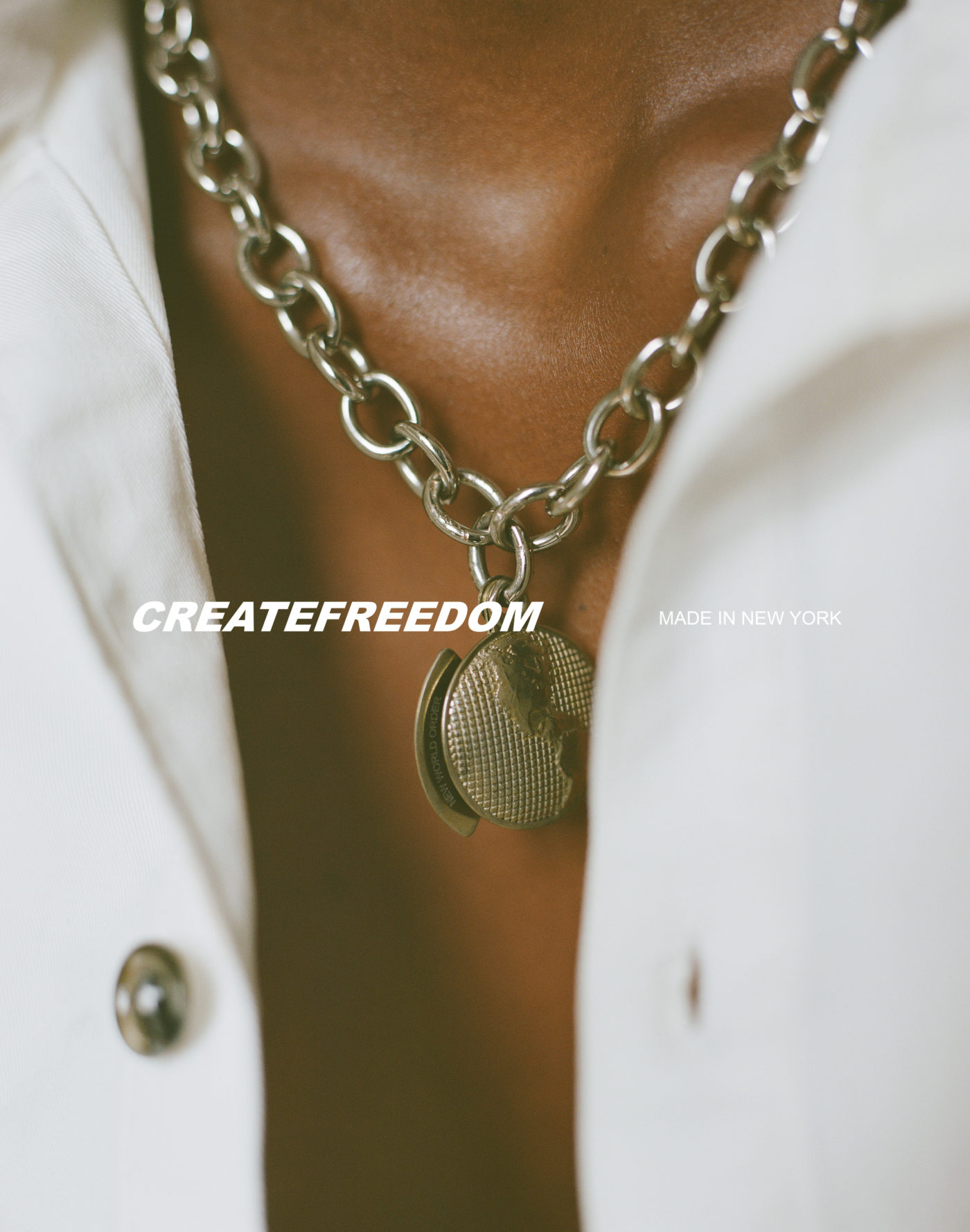
For example, our latest piece, the New World Order Necklace, centers around this idea of change. The idea for our campaign around this new addition was called “VISIONS OF THE NEW WORLD”, and it was focused on reimagining images from both luxury ads and R&B from the late 90s/early 2000s. Hindsight is a powerful tool that we possess because it allows us to revisit the past, learn from it, and make changes in the future that contribute to our growth as a society.

CREATEFREEDOM’s newest campaign, VISIONS OF THE NEW WORLD, launched on September 13th. The campaign reimagines what the new world could look like and draws inspiration from luxury ads and R&B images from the late 90s and early 2000s.

You can follow CREATEFREEDOM on Instagram @CREATEFREEDOMNYC, and see more their work on their website, createfreedomnyc.com


Thanks to Jevon Smith and Max Thompson of CREATEFREEDOM for sharing more about their brand and practice with us. Images provided by CREATEFREEDOM. Interview compiled by Andrea Rosales-Balcarcel and edited by Jackie Andrews. 

The Anatomy of an Indian Bridal Trousseau

We’re excited to share an incredible behind-the-scenes look at the ceremonies, traditions, and jewelry of an Indian-Catholic Wedding, with Tania Kottoor. Tania gave us insight into the designing and planning process of her own wedding in Antigua, Guatemala. This feature includes a combination of Tania’s own writing and her responses to some of our interview questions, diving deeper into some of her choices, paired with stunning images from the ceremonies. We hope you enjoy Tania’s story.

Mylanchi Day

Mylanchi Day, also know as Henna Night, is about the Beautification of the Bride.

Photo by Joseph Nance + Franco Giomi    

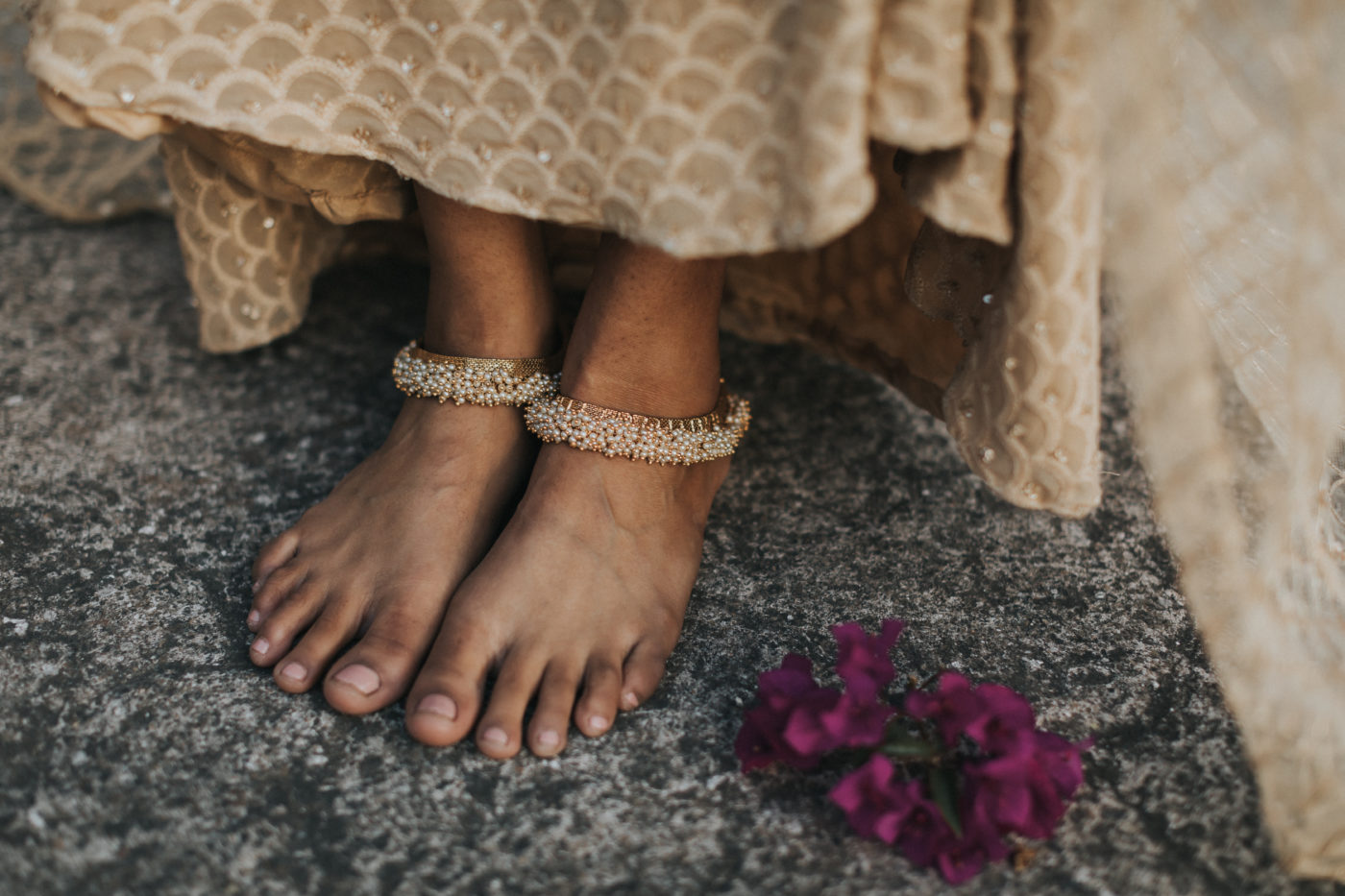
The Bride’s first Mylanchi outfit features Moti jewelry with clusters of tiny ivory pearls riveted in plated gold. The staple Kerala jhumkas, maang-tika, bracelets, nose ring and anklets were hand-selected to complete the regal look.

Photo above and below by Joseph Nance + Franco Giomi  

All of the pieces for this look are from Mahira Jewels, except for the bangles, which were sourced from markets throughout Delhi.

Future Heirloom: Why is jewelry such a significant part of the wedding ceremonies? 

Tania Kottoor: The jewelry that you buy your daughter for her wedding day goes to her and her future household. They’re investment pieces that turn into treasured family heirlooms.

Photo by Joseph Nance + Franco Giomi  

Outfit 2 for Mylanchi Day shown above. Each gold-washed metal ear cuff has five dangling strings adorned with semi precious sapphire stones, as well as crystals at the end of each string. This was a custom piece by Mahira Jewels, detail shots are below.

FH: Could you give us some insight into your personal feelings about the jewelry? Why was it important to you to select what you did?

TK: For the first Mylanchi outfit, the clustering of the pearls was a very specific design from South India and it was very difficult to source in North India. It took me days and days to find exactly what I wanted, but I wanted to make sure my entire outfit evoked my South-Indian heritage. For the second Mylanchi outfit, it was more of a contemporary design to reflect my personal style. I like to play with feminine and androgynous silhouettes. The second outfit along with the ear cuffs reflected that juxtaposition.

Knanaya Catholic Ceremony

For the Knanaya Catholic Ceremony, the Bride wore natural Colombian emeralds in the form of drop earrings and a ring. Both were custom-designed in Brooklyn, NY at Emerald Gem Exchange with owner Siva Muthiah. The creation of these pieces took about six months. The Bride selected the stones from various sourced emeralds and approved the final mold before the ring was created.

For the ring, a 4.36 carat natural Colombian emerald cut emerald was set into a sculptural platinum band that curves around the emerald center stone, surrounded by VS diamond melee. The drop earrings worn by the Bride are natural emerald cut Colombian emeralds, 2.69 carat fused with 18K white gold and surrounded by VS diamonds.

Photo by Leeanna Hari

FH: In South Asian culture, do brides typically seek out custom jewelry for the wedding, or were you looking to create more unique looks? 

TK: Normally brides go to a jewelry store to try on jewelry and see what best suits them and their overall look. Since it’s such a huge expense, jewelry shopping is typically a family affair. At times, jewelry is gifted by the in-laws. Customization is an extension of someone’s personality and I wanted that to be shown through every aspect of the wedding. I took time to conceptualize and design mood boards and sketches of 75 outfits and 6 jewelry pieces. I truly believe bespoke services are the future.
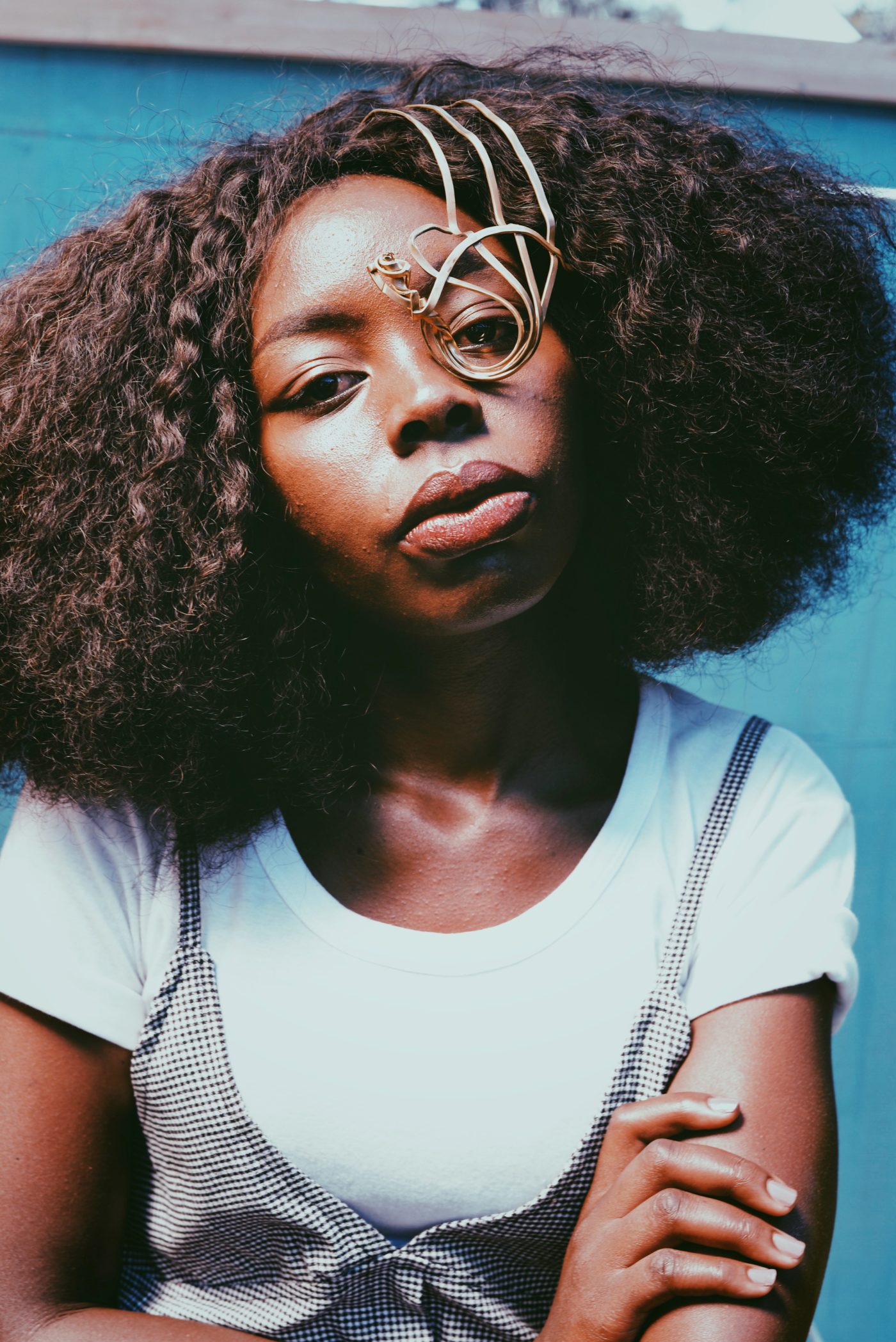
Emerald is known as “The Royal Gem,” to the Maharajas (Kings) and Maharanis (Queens) of India, where jewels are an important part of the nation’s history. The Mughal Emperors who ruled India, meticulously carved Emerald stones for settings into rings, turban ornaments, heavy bib necklaces, and encrusted the handle of daggers. The Vedic scriptures of India associate the emerald with marriage and hope. Emerald is also the symbol of love and fidelity, as well as a powerful emotive symbol of status and power.

During the Knanaya Catholic Ceremony, Tania’s husband ties a Thaali, a pendant with a cross, a symbol of Christianity, on a gold medallion shaped like a heart, shown above and below.

TK: The cross on the Thaali is made with 21 minute buds. My mother-in-law bought it during her trip to Kerala, India. I requested white gold pendant with 21 diamonds. After the wedding, I added the Thaali to a very thin platinum chain for everyday wear. 

The number 21 is the result of 3X7 = the trinity (the Father, the Son and Holy Spirit) + seven sacraments. The threads to tie the Thaali around my neck are taken from the “Manthrakodi (silk sari).” Seven pieces of threads are taken and they are folded into three. This signifies three persons of the trinity and seven sacraments. The husband ties the thaali on the neck of the bride. This kind of knot is known as male knot (Aankettu) symbolizing the stability of marriage. The Thaali is considered to be the most prestigious token of love offered to her by her husband during the ceremony.

Knanaya Catholic Reception

For the Reception, the Bride wore 22 karat yellow gold from ear to wrist. A carved “Rose” set which included a choker necklace, ear studs, and a bracelet. The set, seen below, was hand-crafted in Raipur, India by local artisans. These pieces took about three months to create, due to its intricacy.

Photos above by Leeanna Hari

FH: We know you followed the custom of “Something borrowed, something blue…” when selecting your jeweler. Tell us more!

TK: I followed the emerald route for my “Something New,” which consisted of emerald drop earrings plus a gold choker, studs and a bracelet. The “Something Blue,” would be the sapphire beaded ear cuffs.  My “Something Borrowed” was my grandma’s marquise ruby ring, which was partnered with my mother’s wedding sari that I had repurposed into a strapless gown. This was so important to me, because it connected 3 generations of women in one look.

Shown below: “something borrowed,” a marquise ruby ring from the Bride’s grandmother.


Our sincere thanks to Tania Kottoor for sharing this stunning jewelry story with us and congrats on your nuptials! Please visit Tania’s website here.

Text, quotes, and images provided by Tania Kottoor, edited by Jackie Andrews.