Where Jewelry Remembers: In Conversation with Youzhi Bi

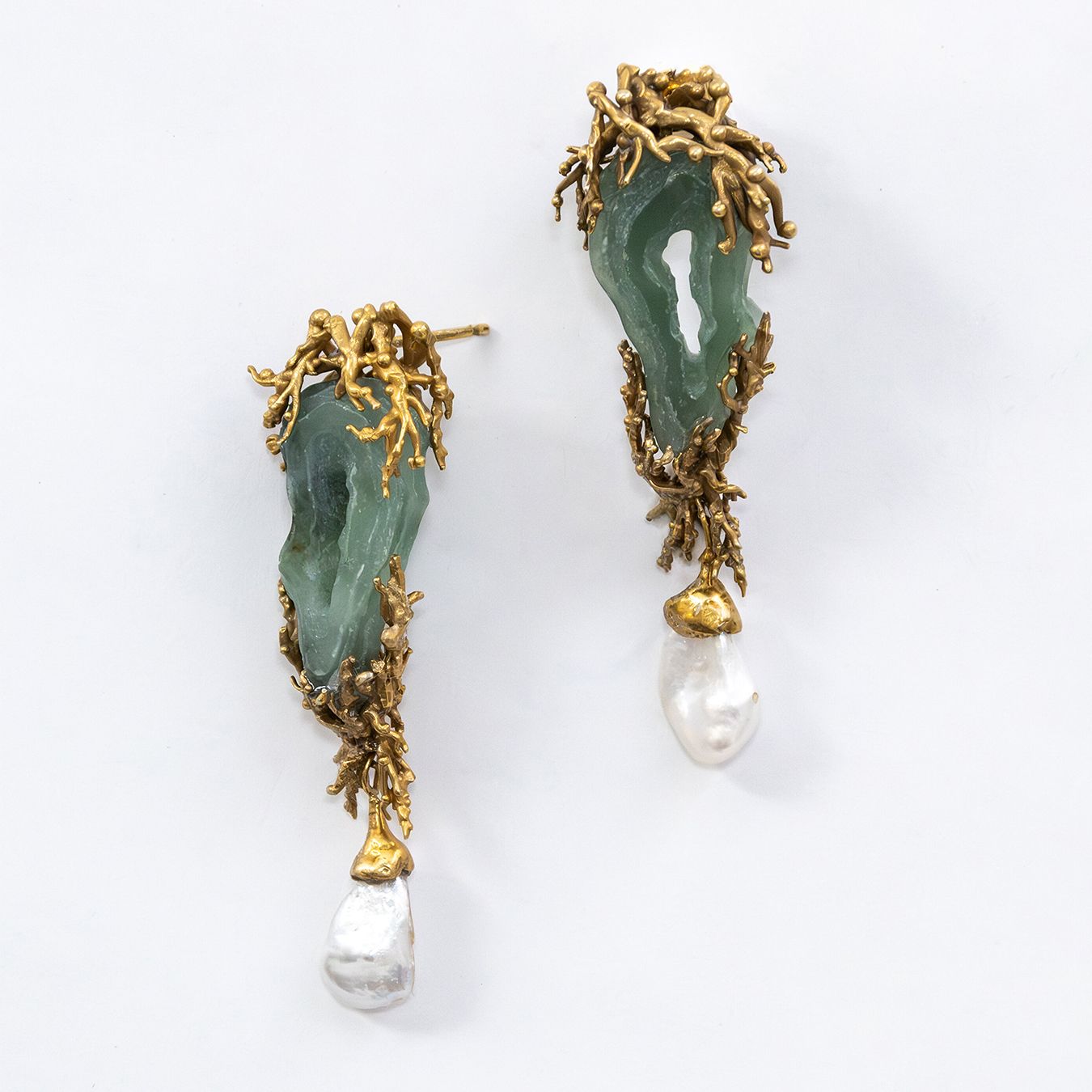
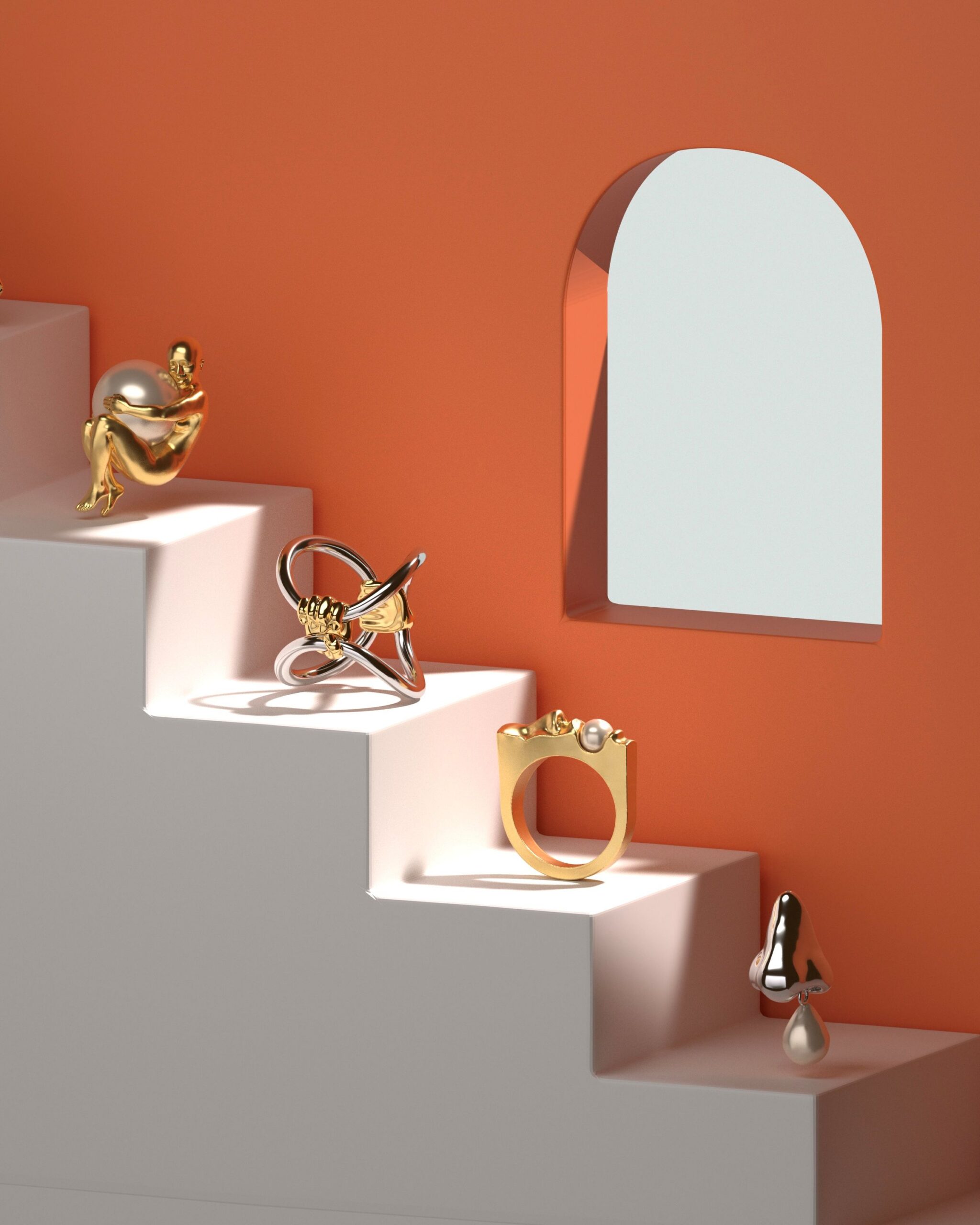
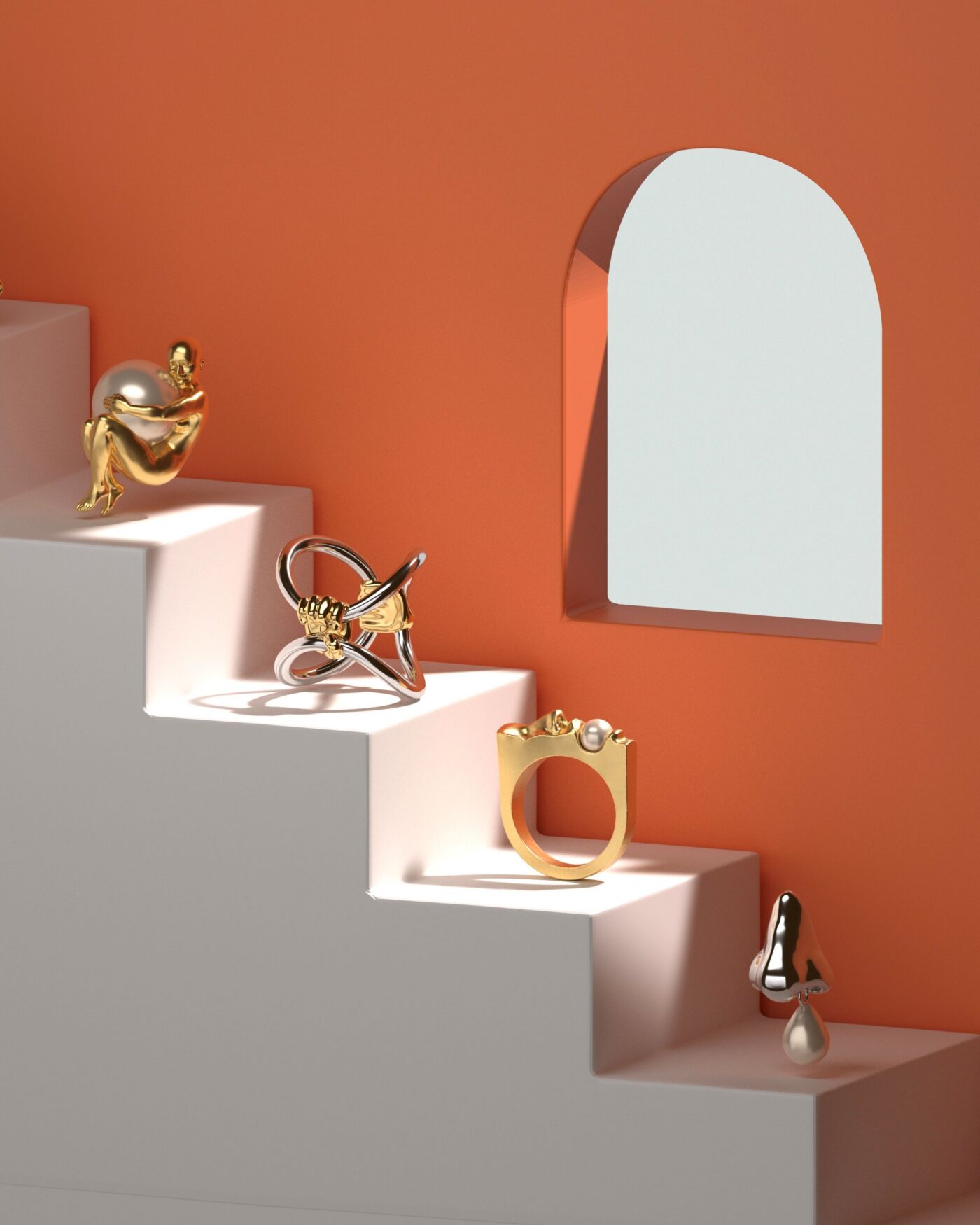
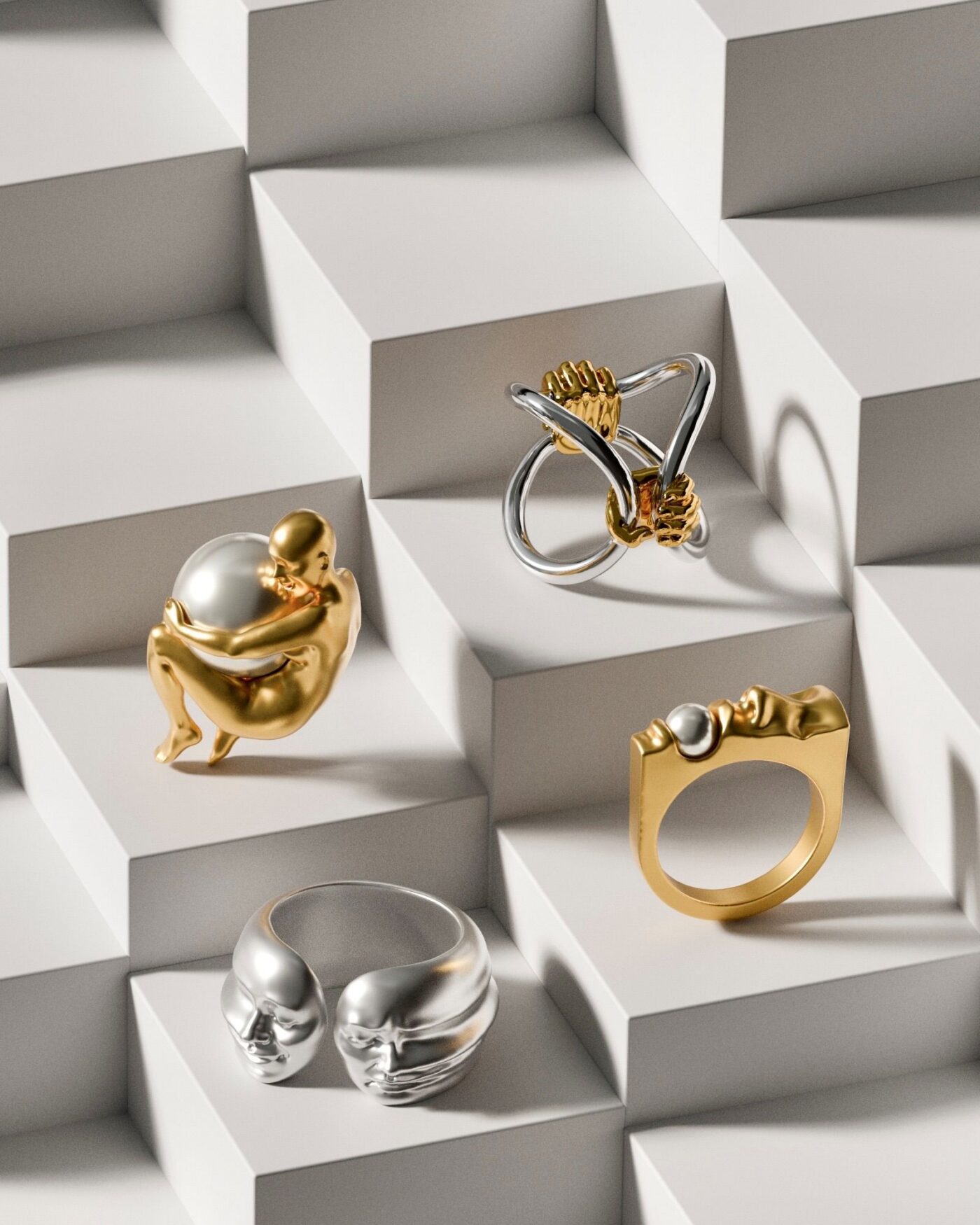
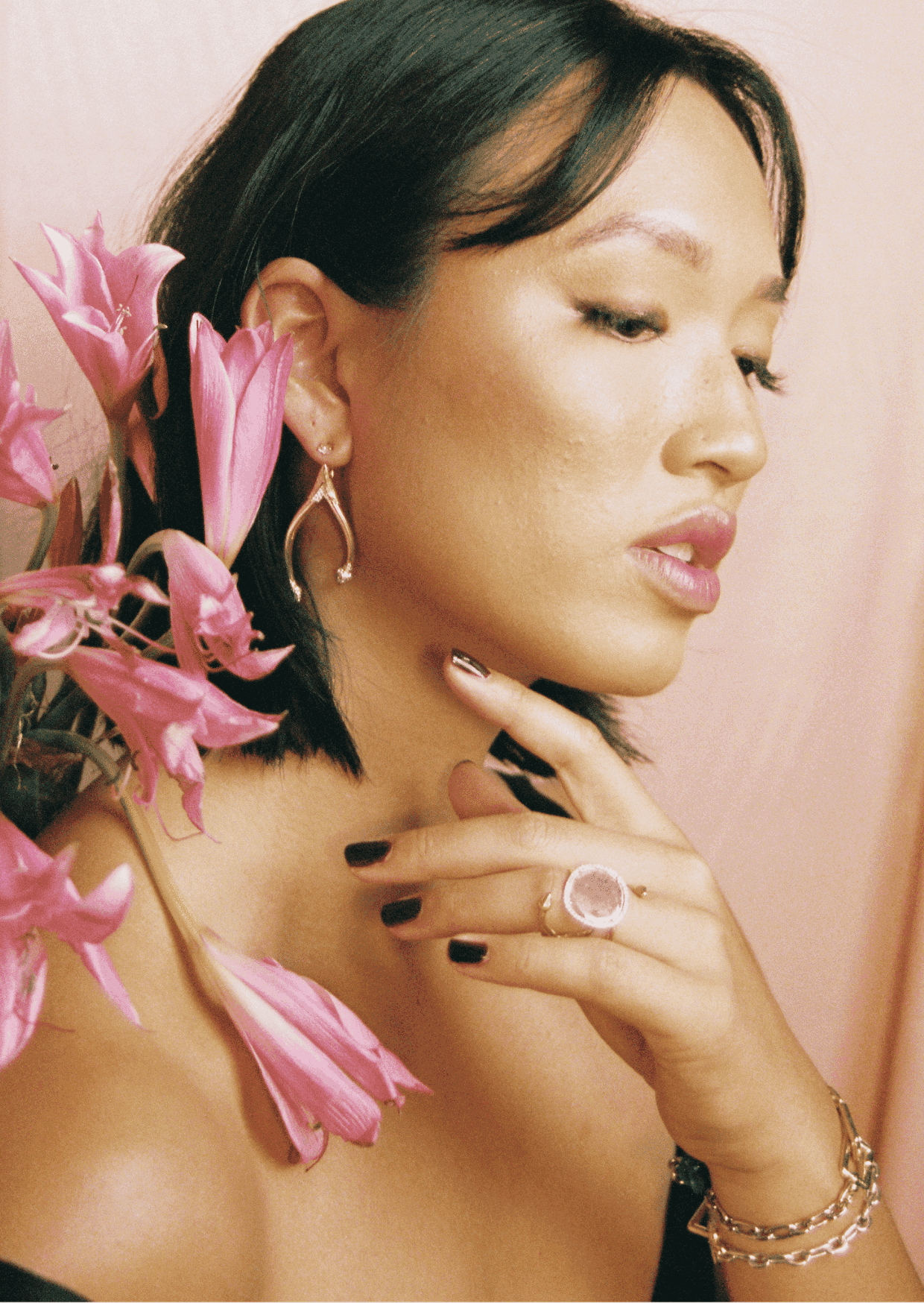
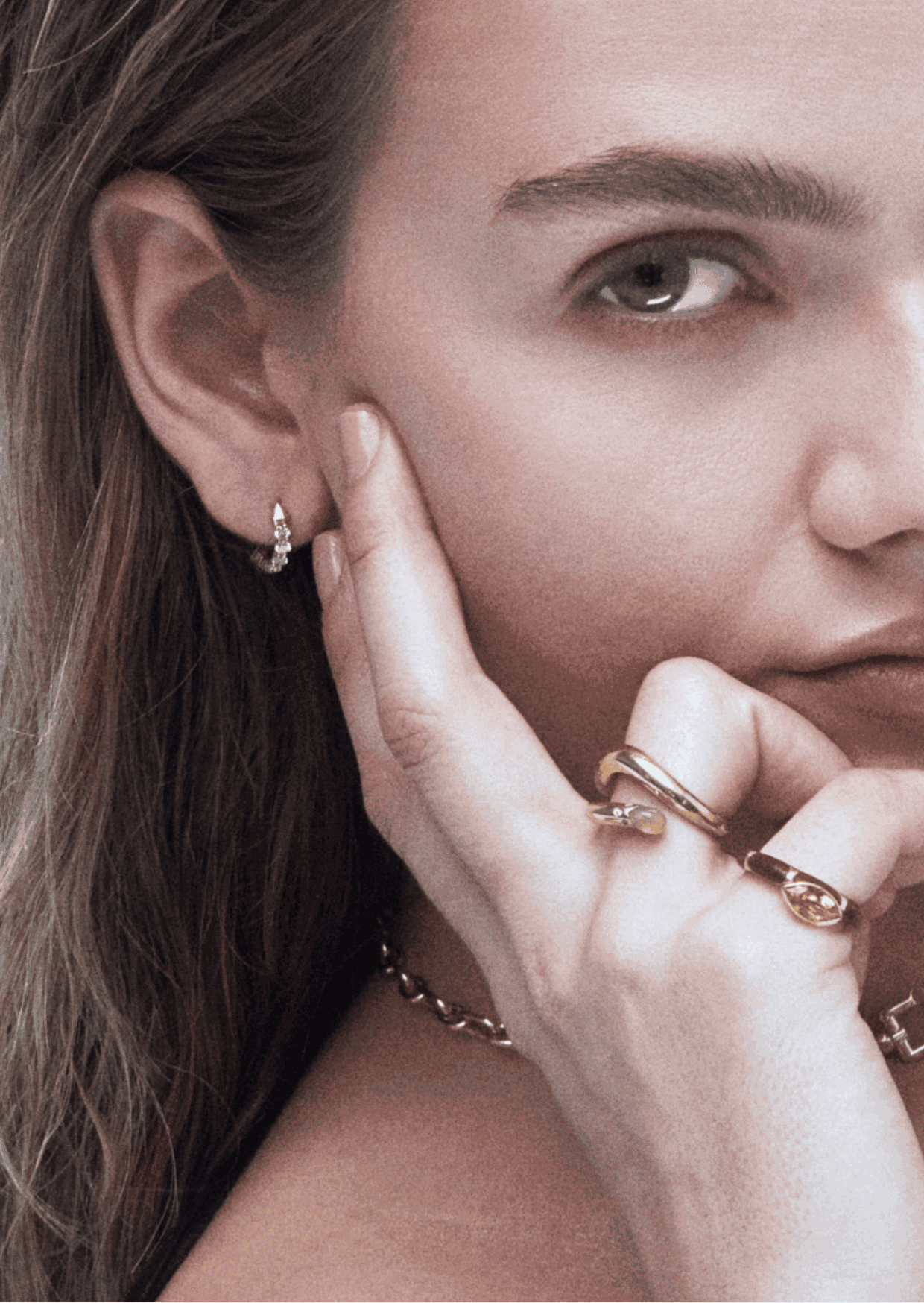
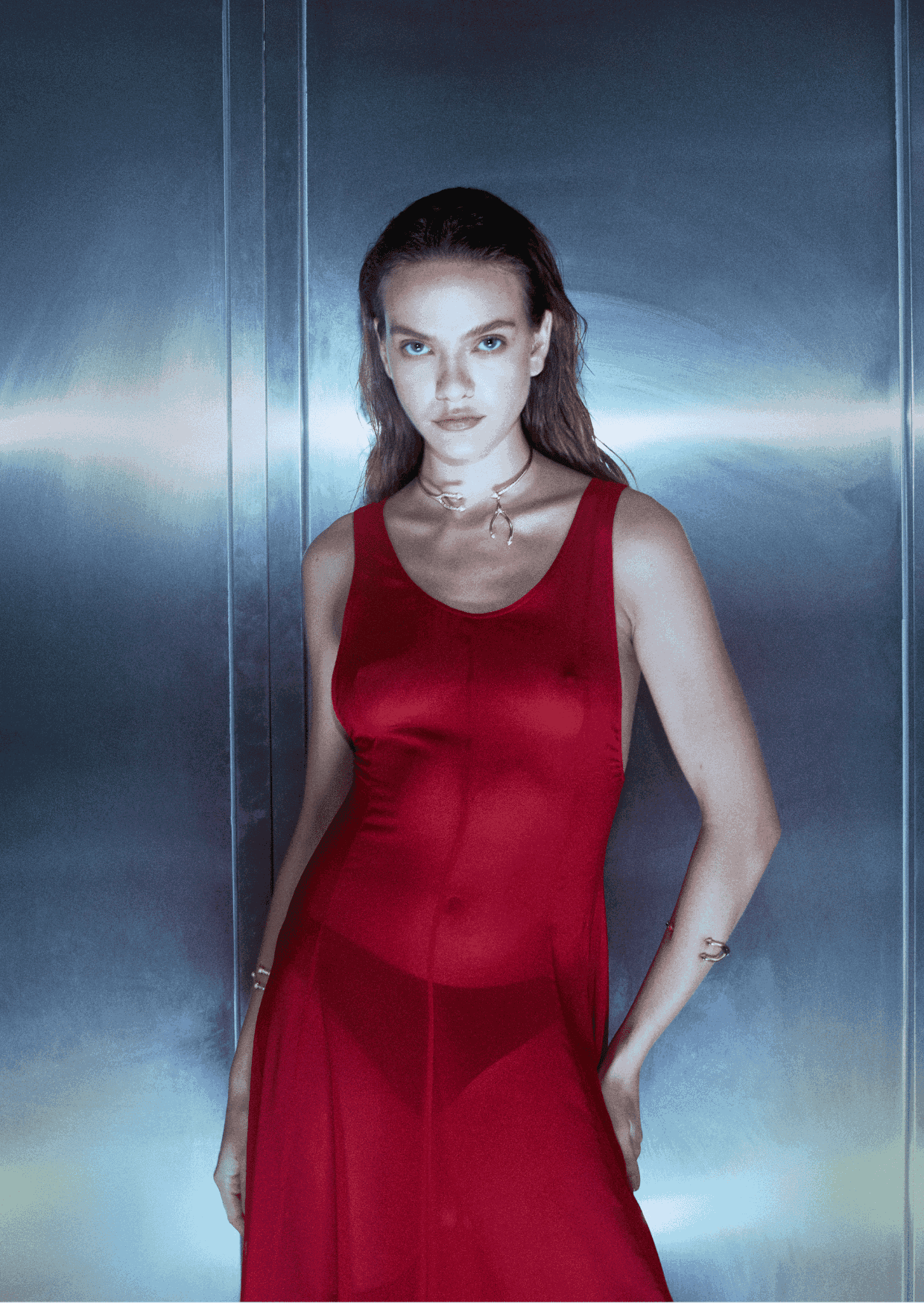
As a 2026-2027 One for the Future honoree, Youzhi Bi is a jewellery artist and curator whose practice sits at the intersection of material experimentation, process-led making, and emotional inquiry. She holds an MA in Jewellery Design and Gold & Silversmithing from the Royal Academy of Fine Arts Antwerp (magna cum laude), and a BA in Jewellery Design and Silversmithing from Sheffield Hallam University (First-Class Honours). Her work explores how jewellery evolves through drawing, transformation, and wear, considering not only how objects are made, but how they continue to change over time and through use. Alongside her practice, she is the founder of B-Design Hub, an independent exhibition space in Shenzhen dedicated to contemporary jewellery and object-based practices.

We sat down with Youzhi Bi to discuss her evolving relationship with making, authorship, and the quiet uncertainty that runs through her work.

How does the story of your jewellery unfold when you think about it in its simplest, most essential form?

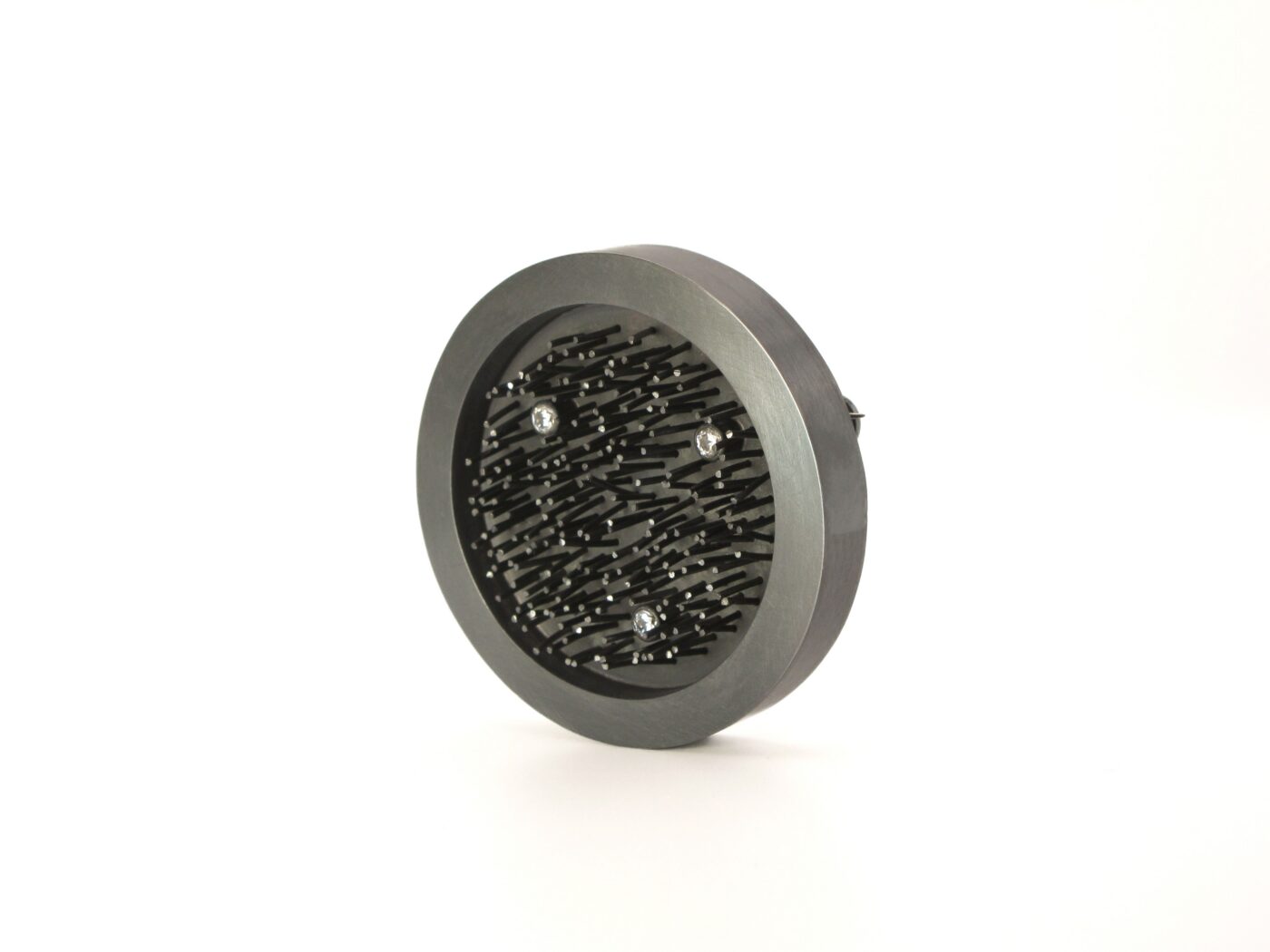
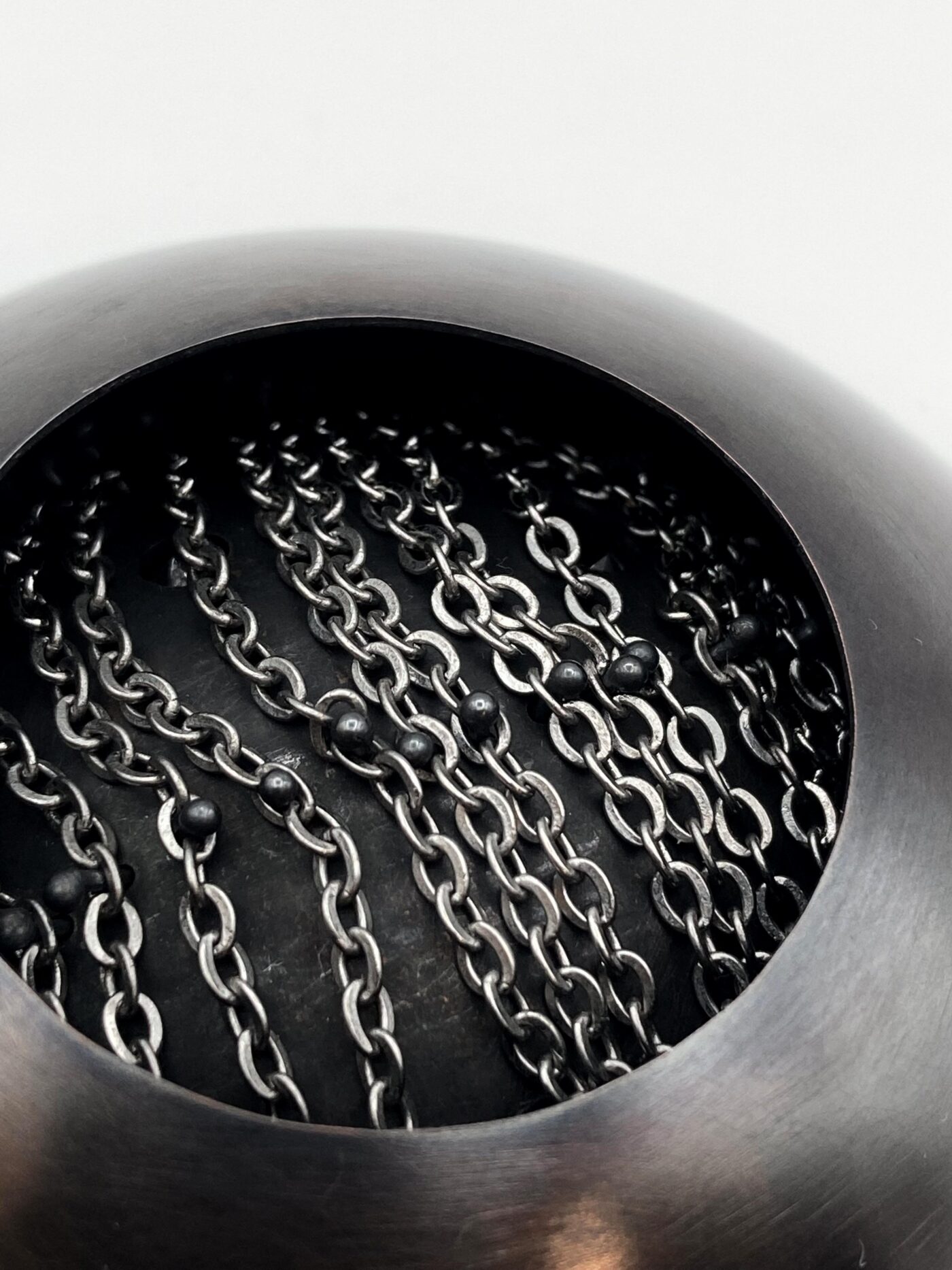
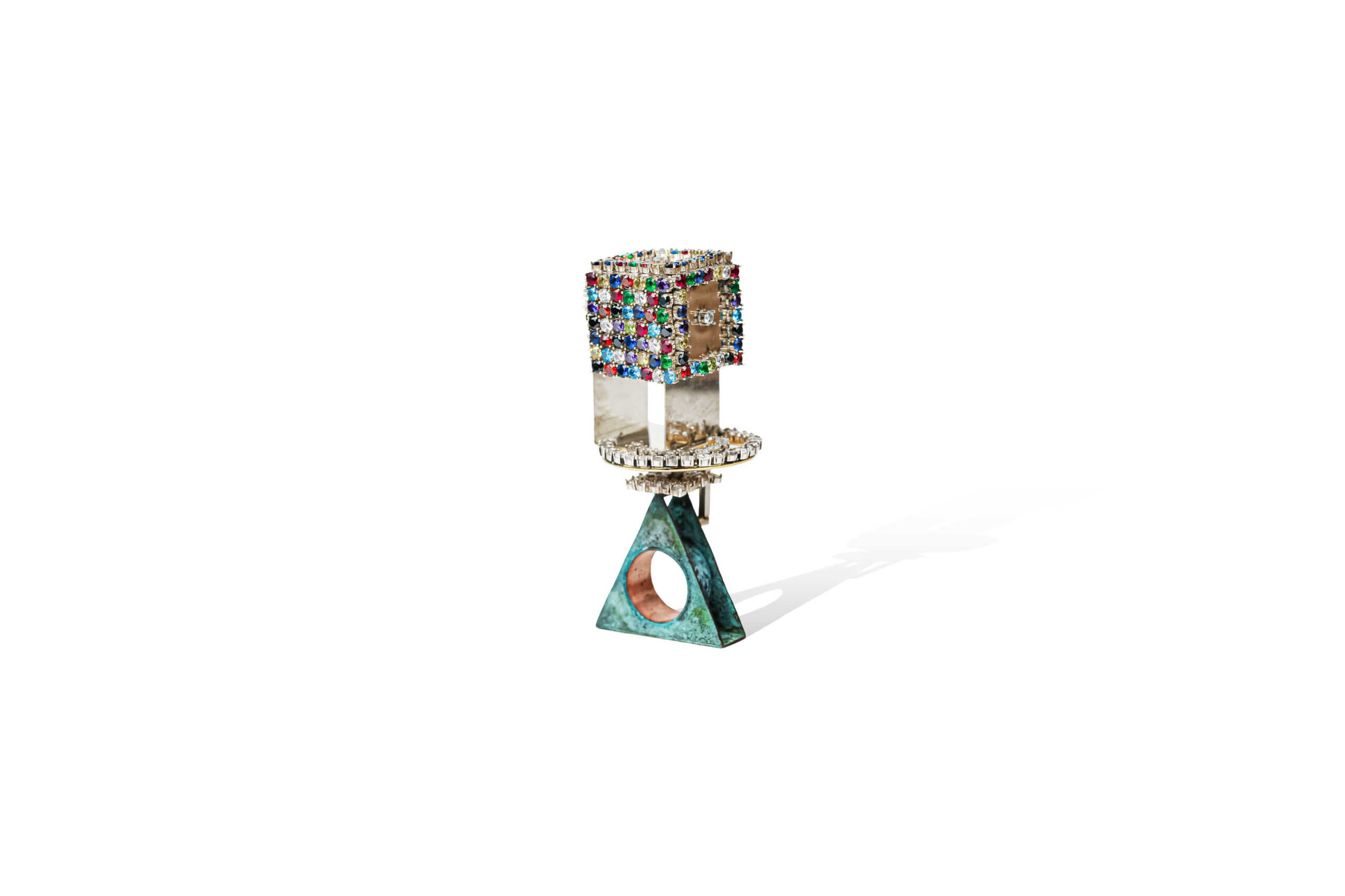
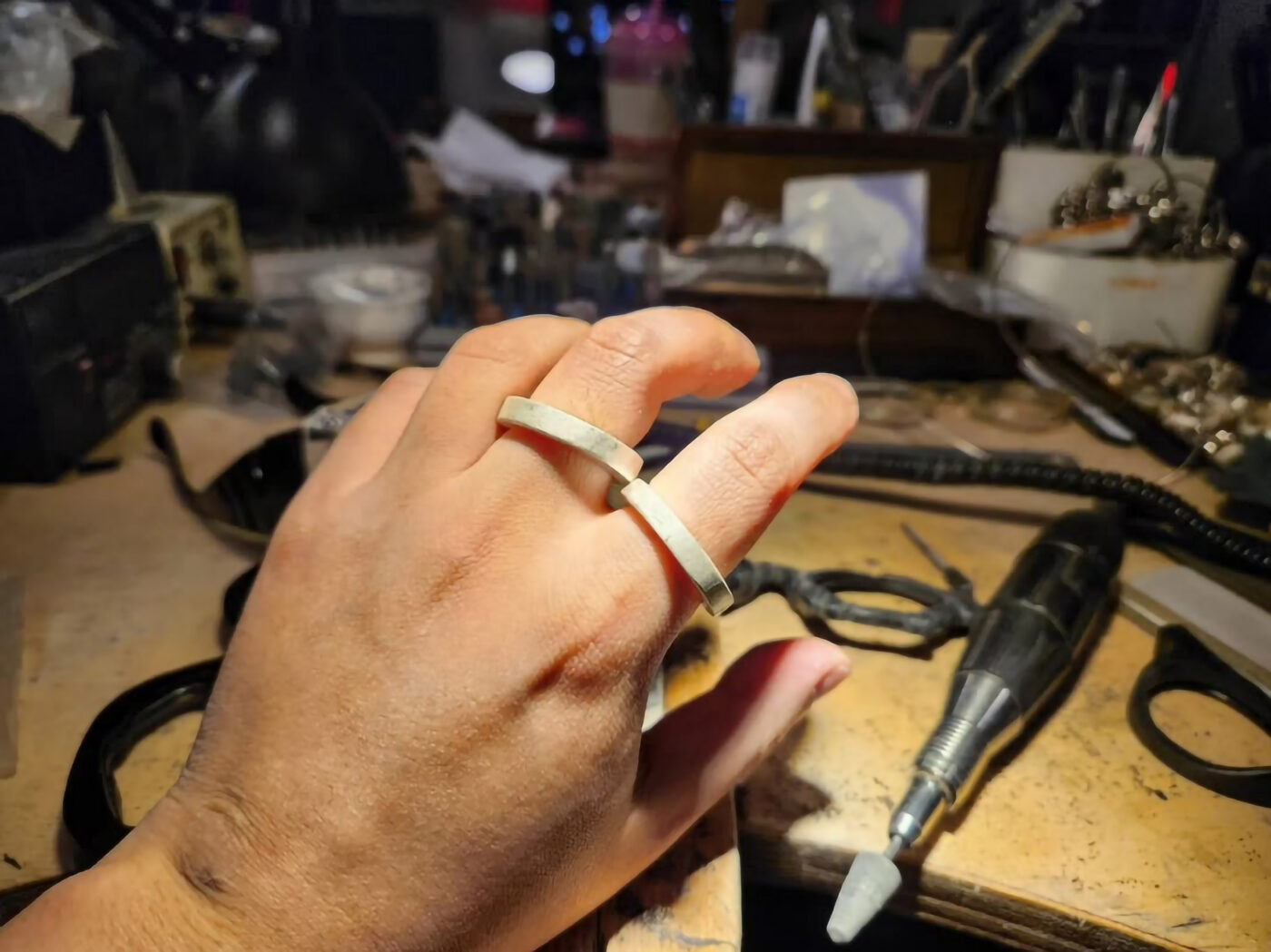
I see jewellery not as a fixed object, but as something that evolves with time and wear.

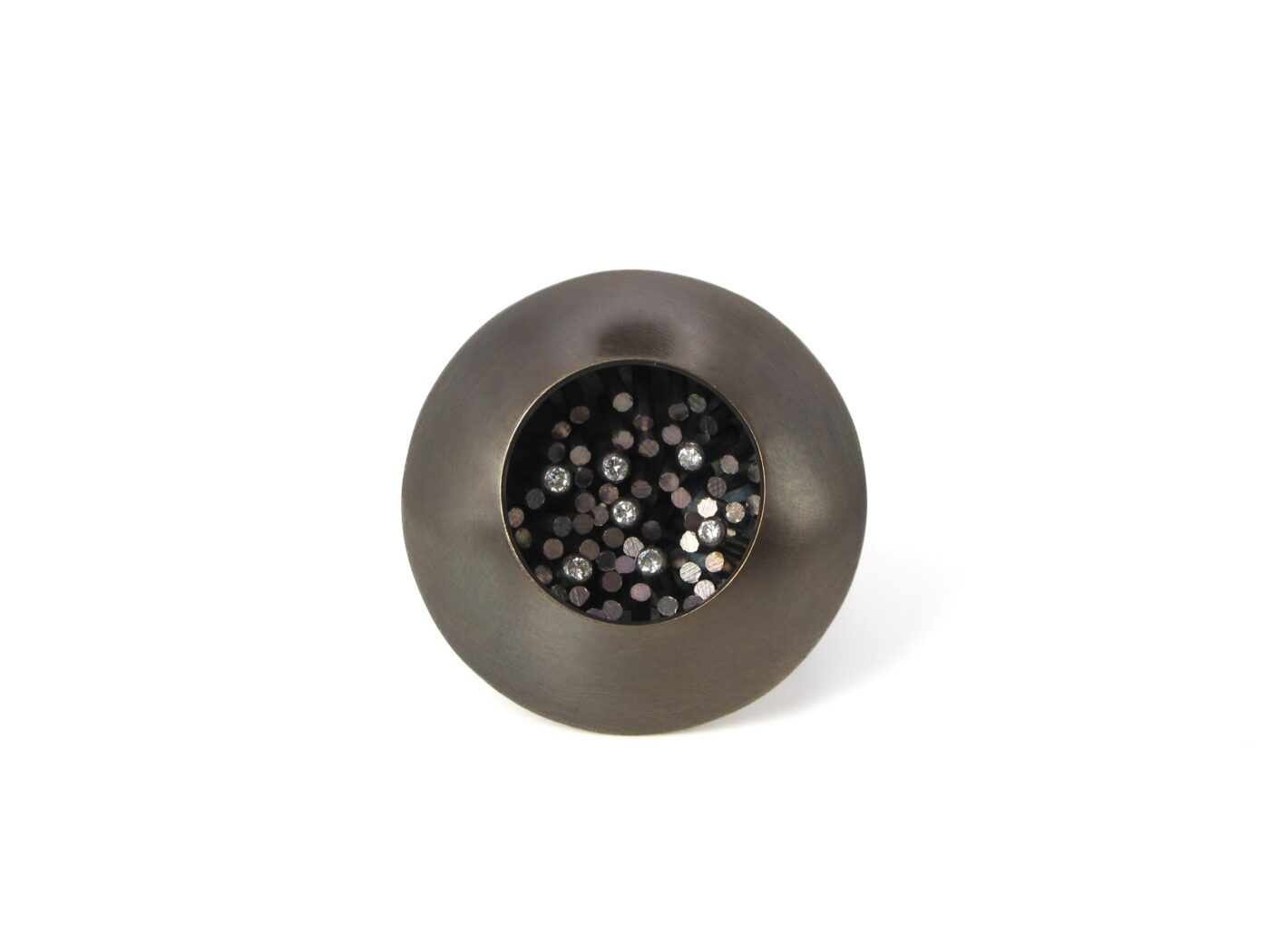
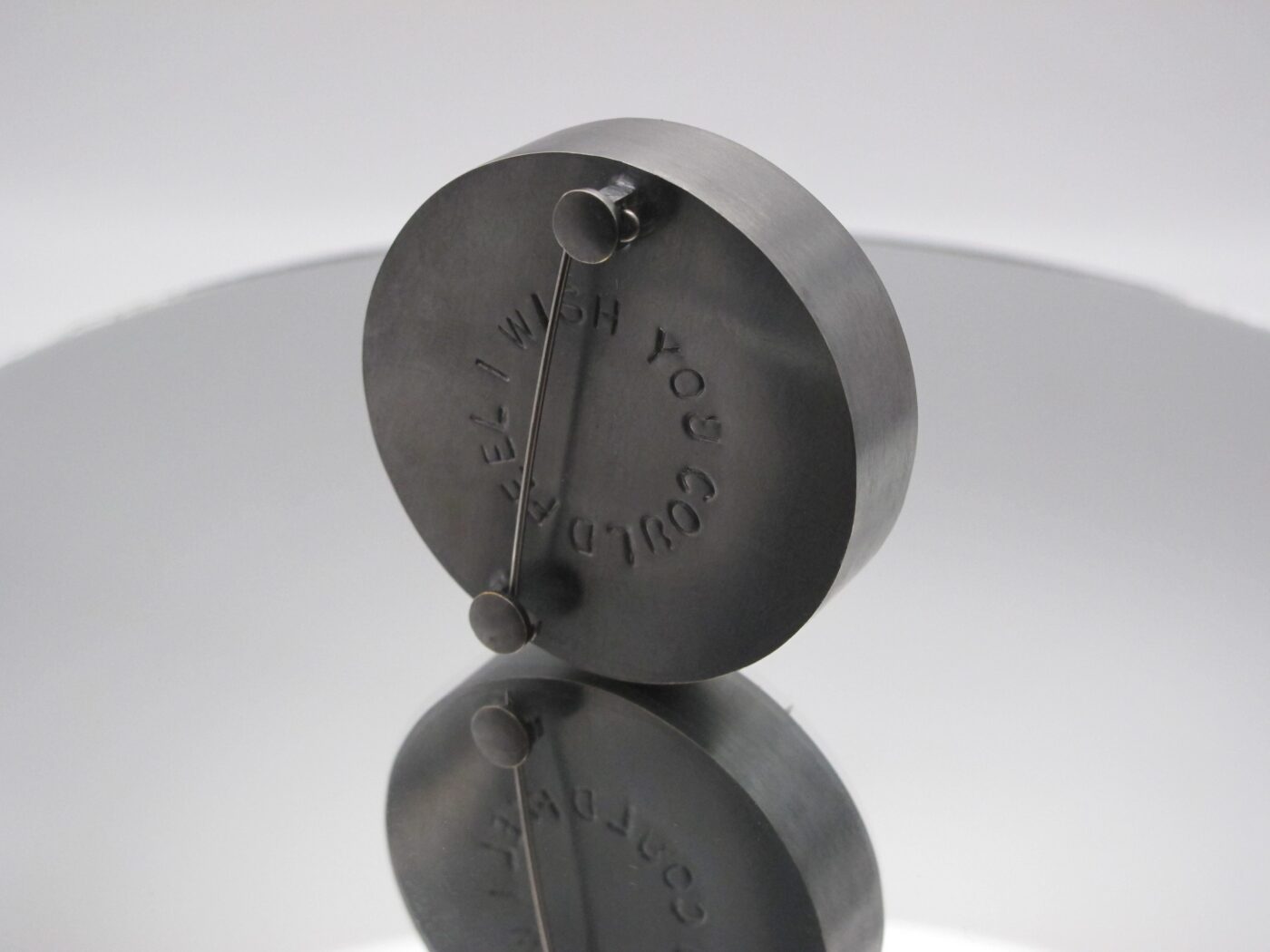
For instance, a scratch on a [piece of] jewellery is not damage – it’s a record.

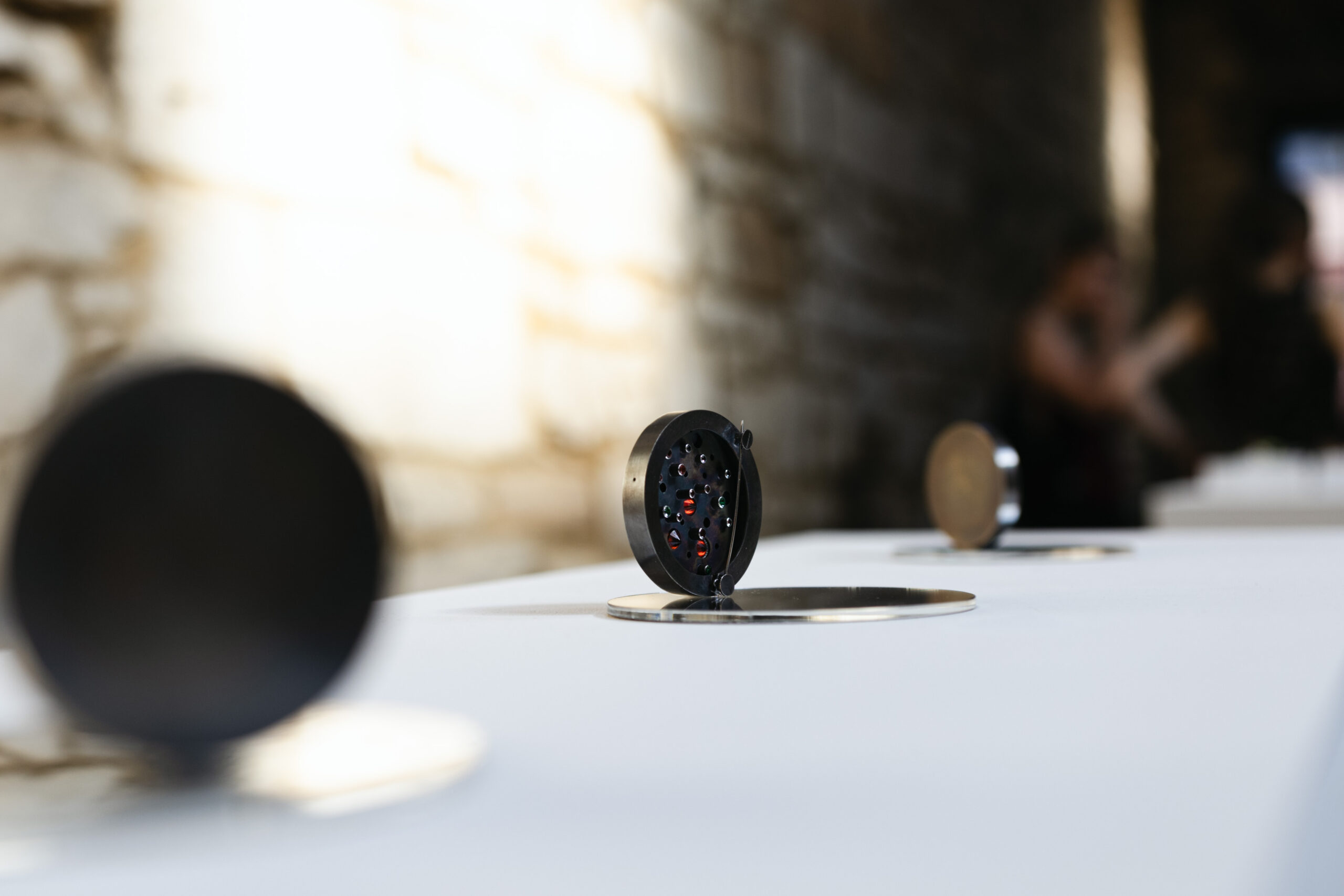
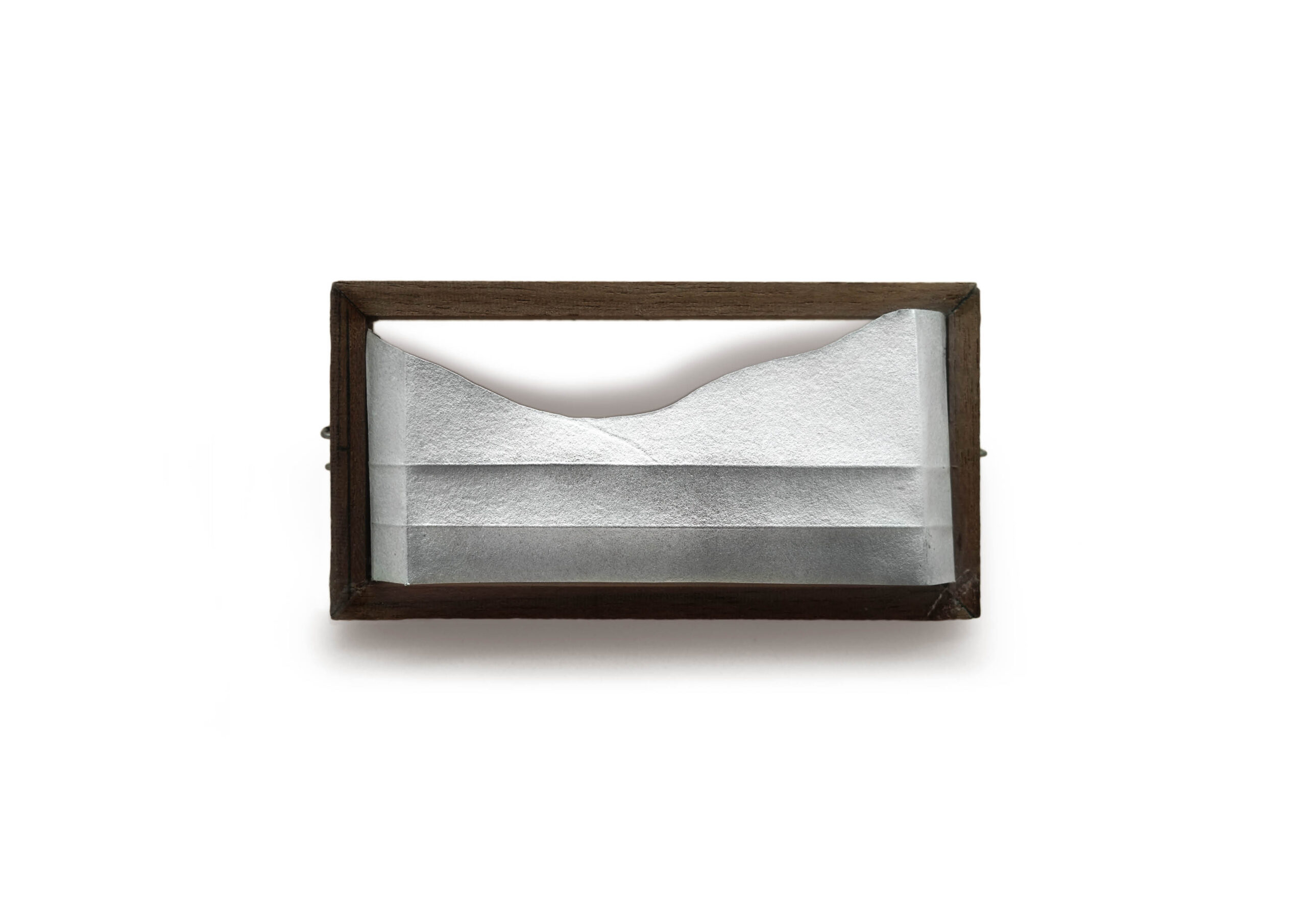
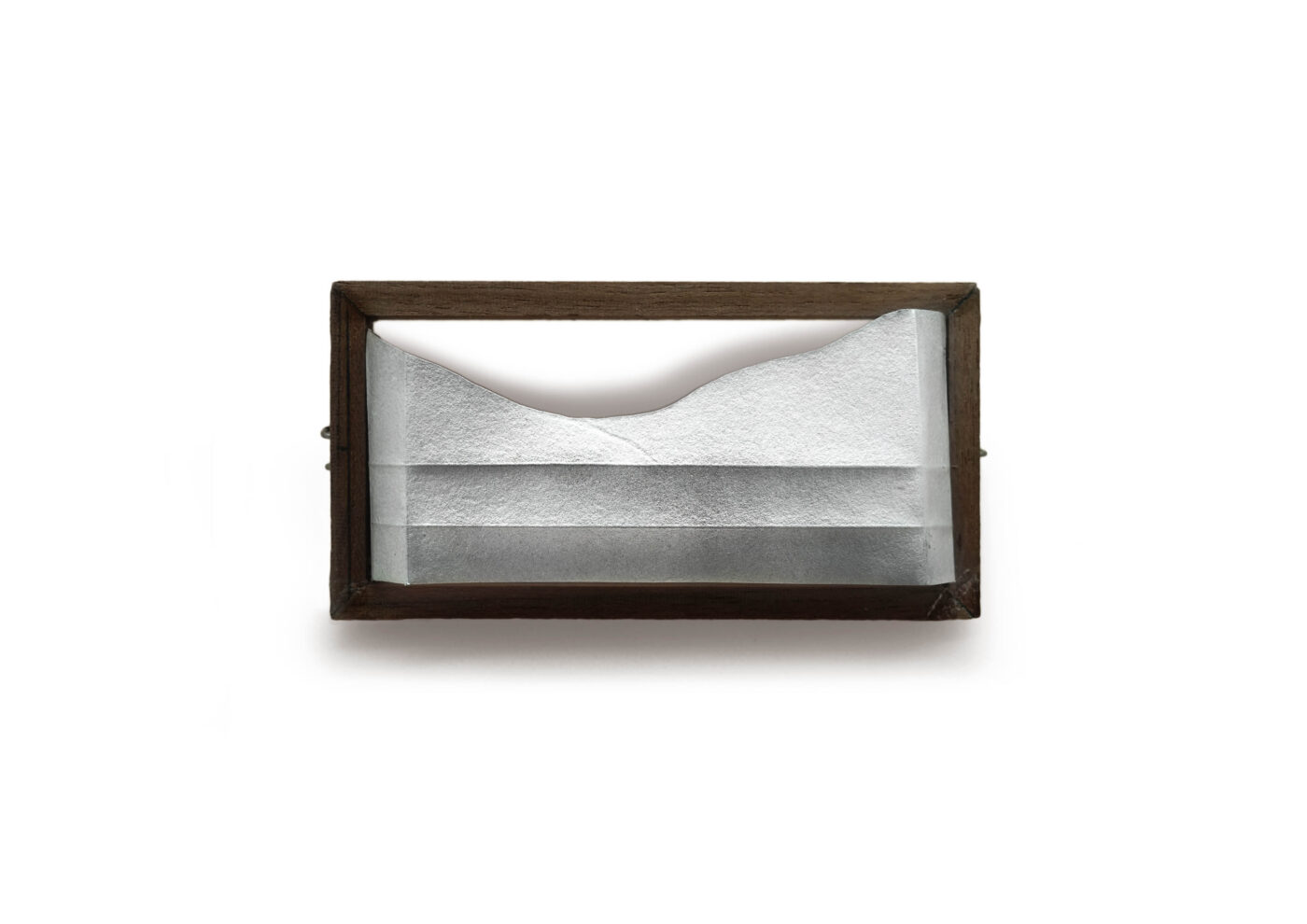
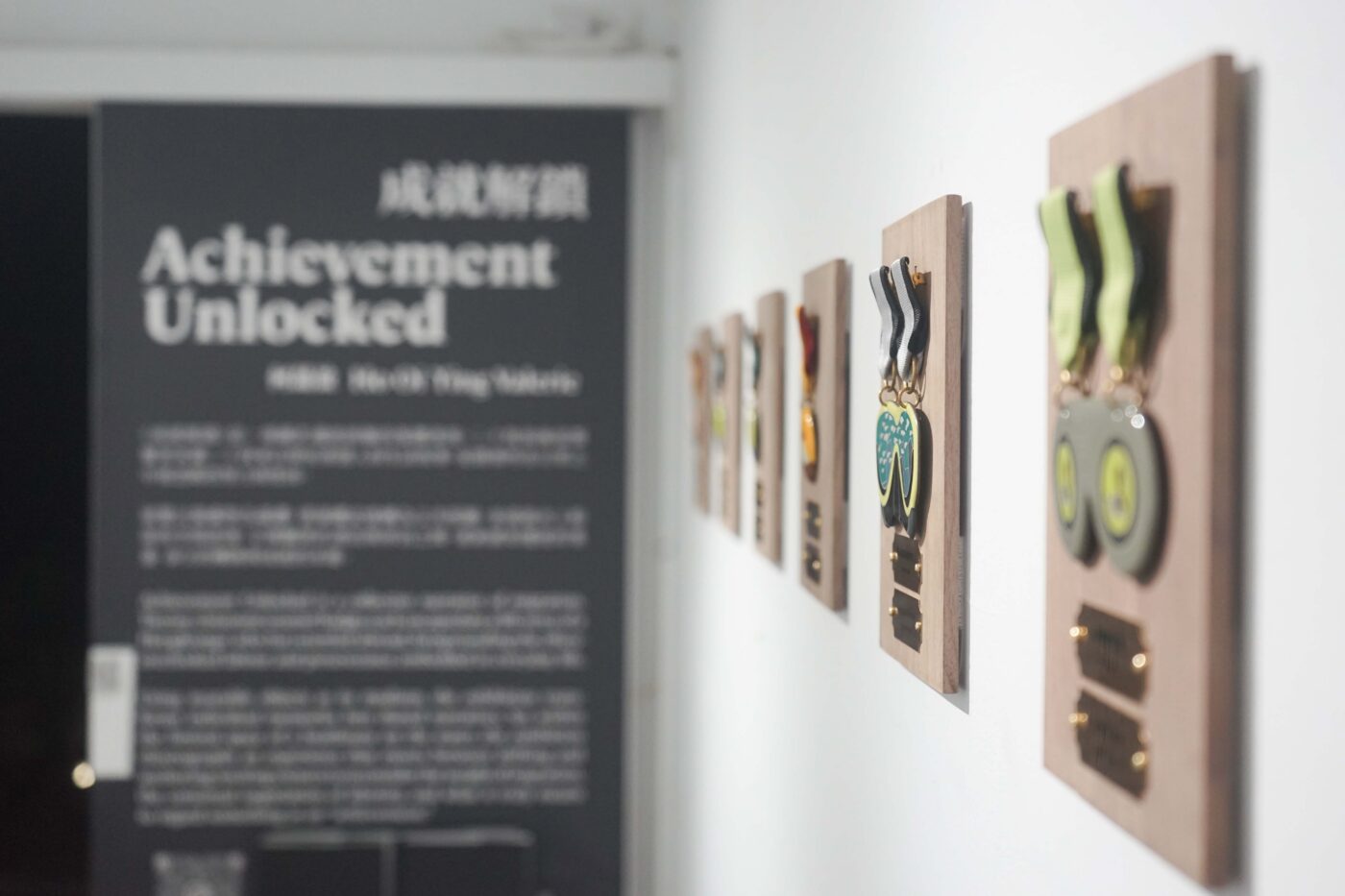
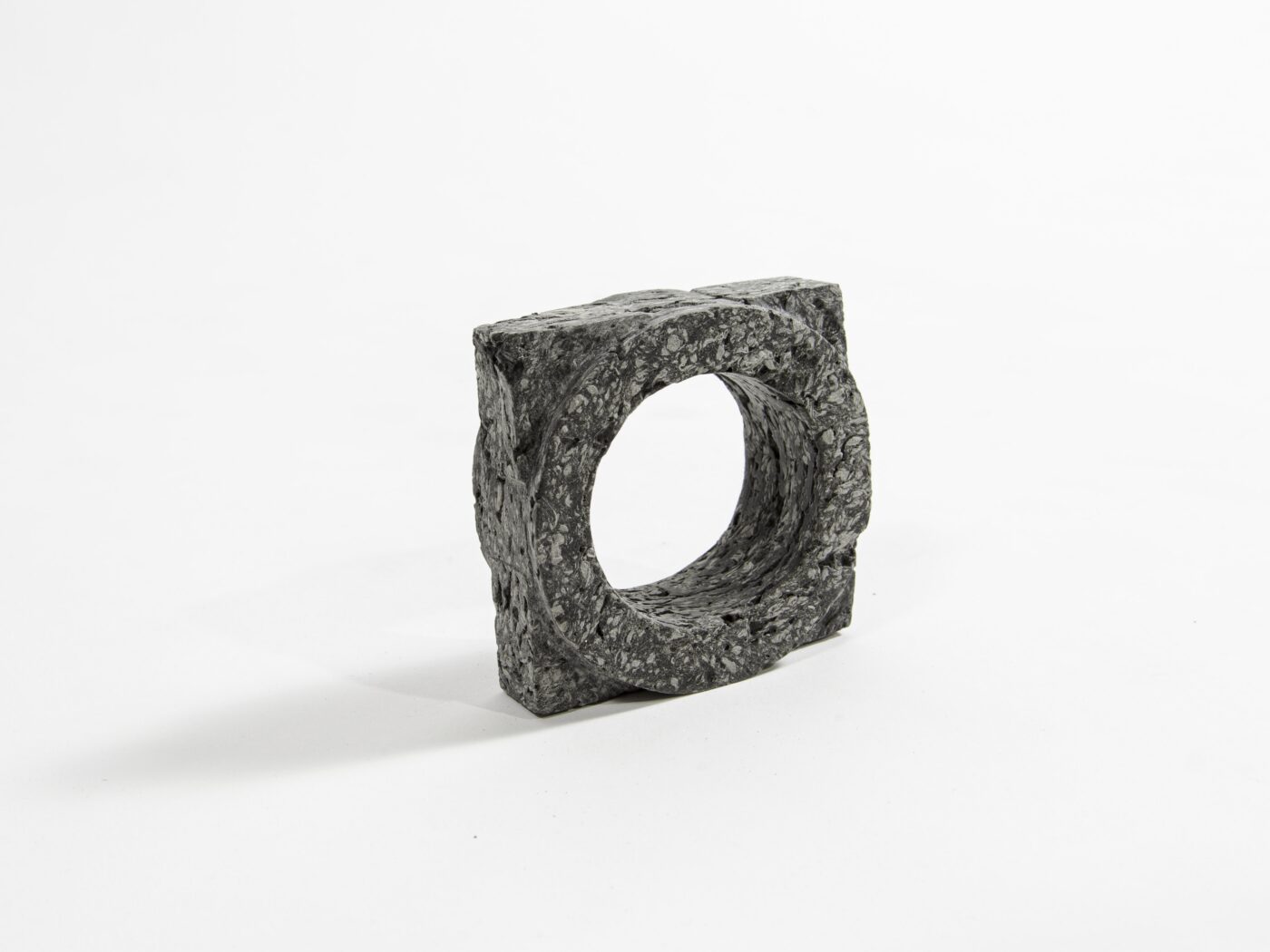
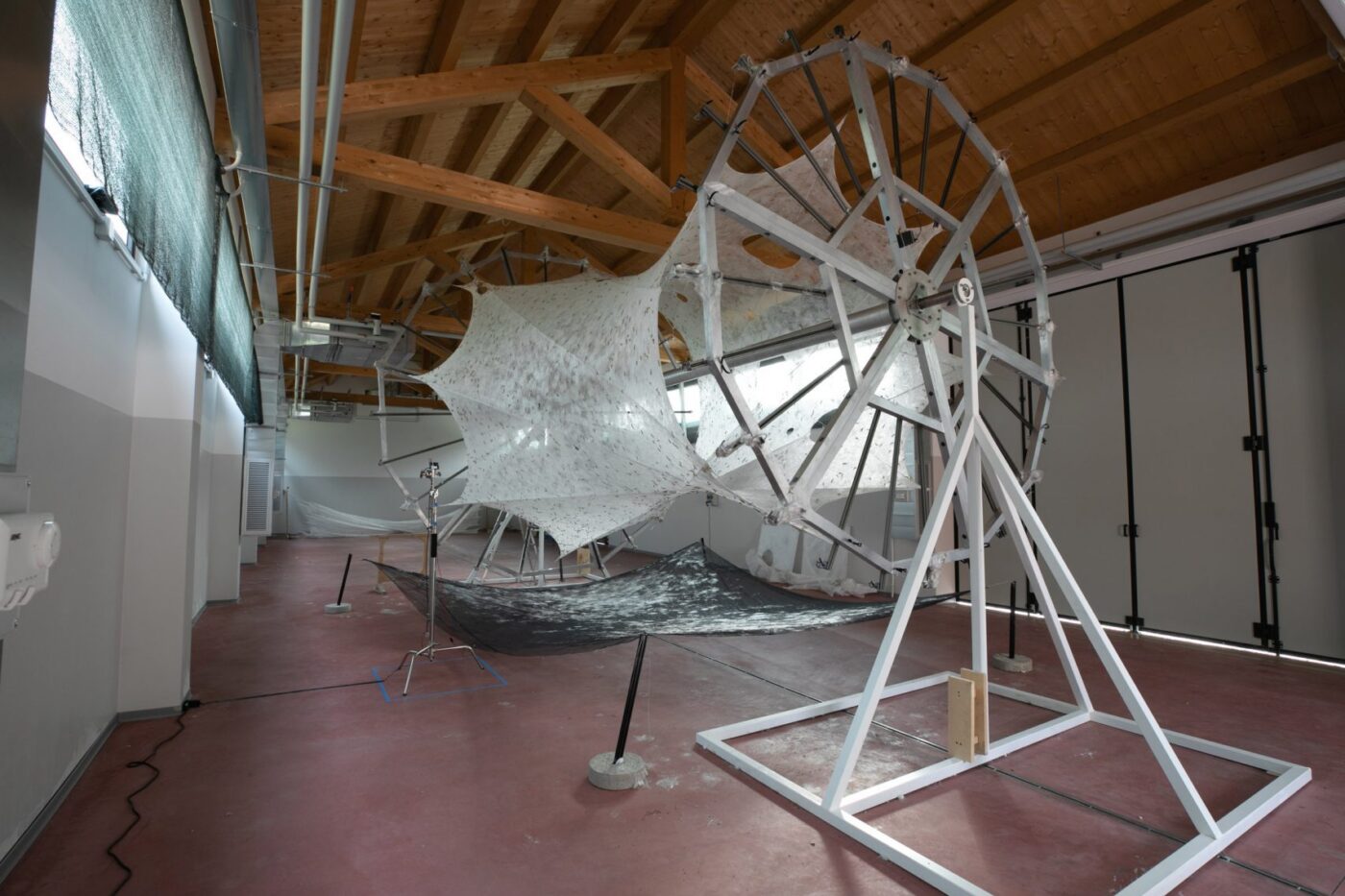
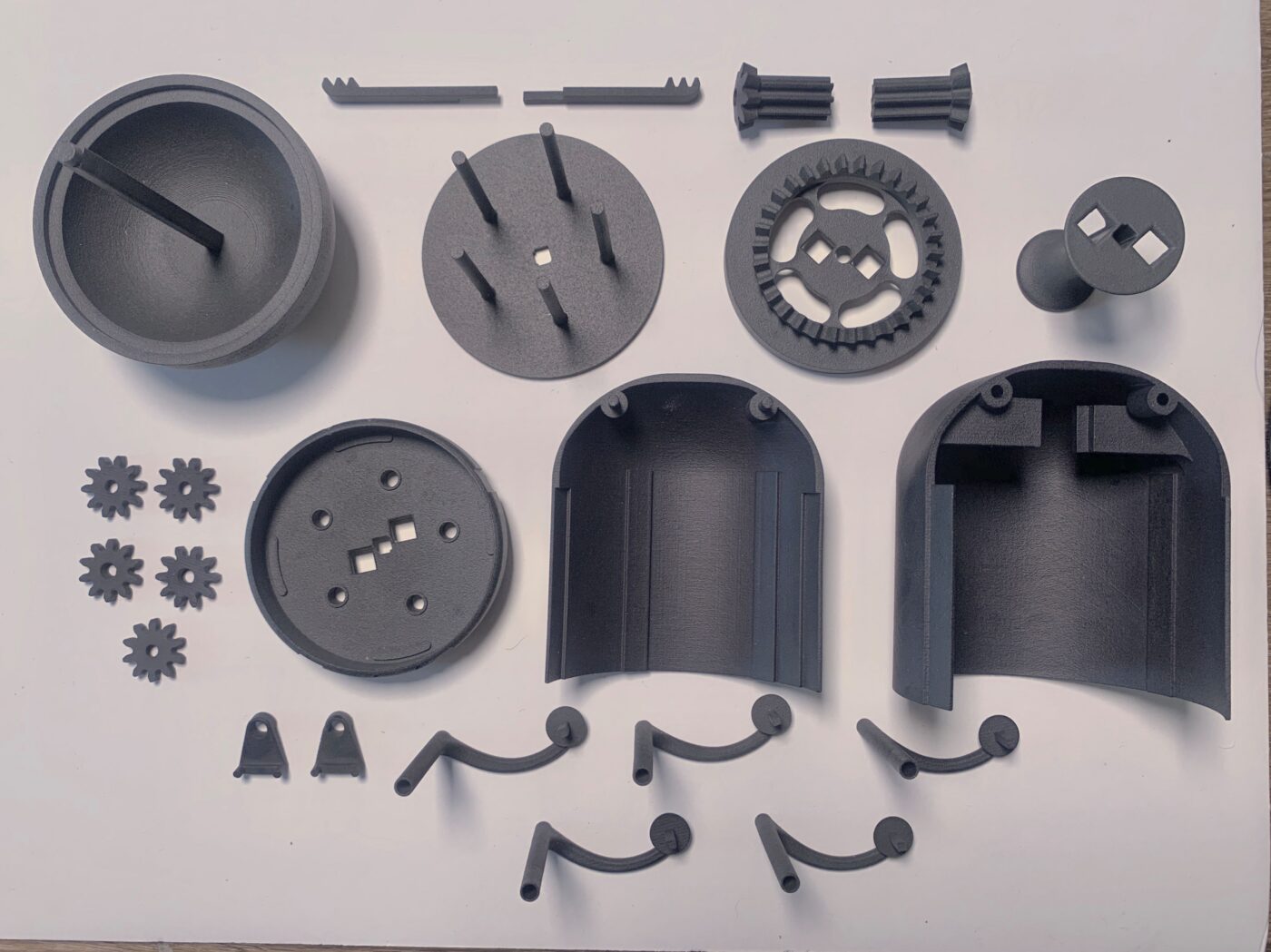
The wooden frame is actually a prototype I made—it’s also the piece people ask about most often.

Building from that sense of evolution in your work, how do you think about pieces that feel unresolved or “not ready”?

Almost all of my work feels “not ready” when I revisit it. I can always see ways it could be more precise or resolved differently.

I tend to be quite perfectionistic and hesitant—but I’ve come to accept that nothing is ever truly finished. I used to shelve almost everything, brewing on a sense of completion. Now, I try to share the work even in its unfinished state—because “not ready” is often where the life is.

If we move from finished work to process and thinking, how would your practice translate into a completely different medium?

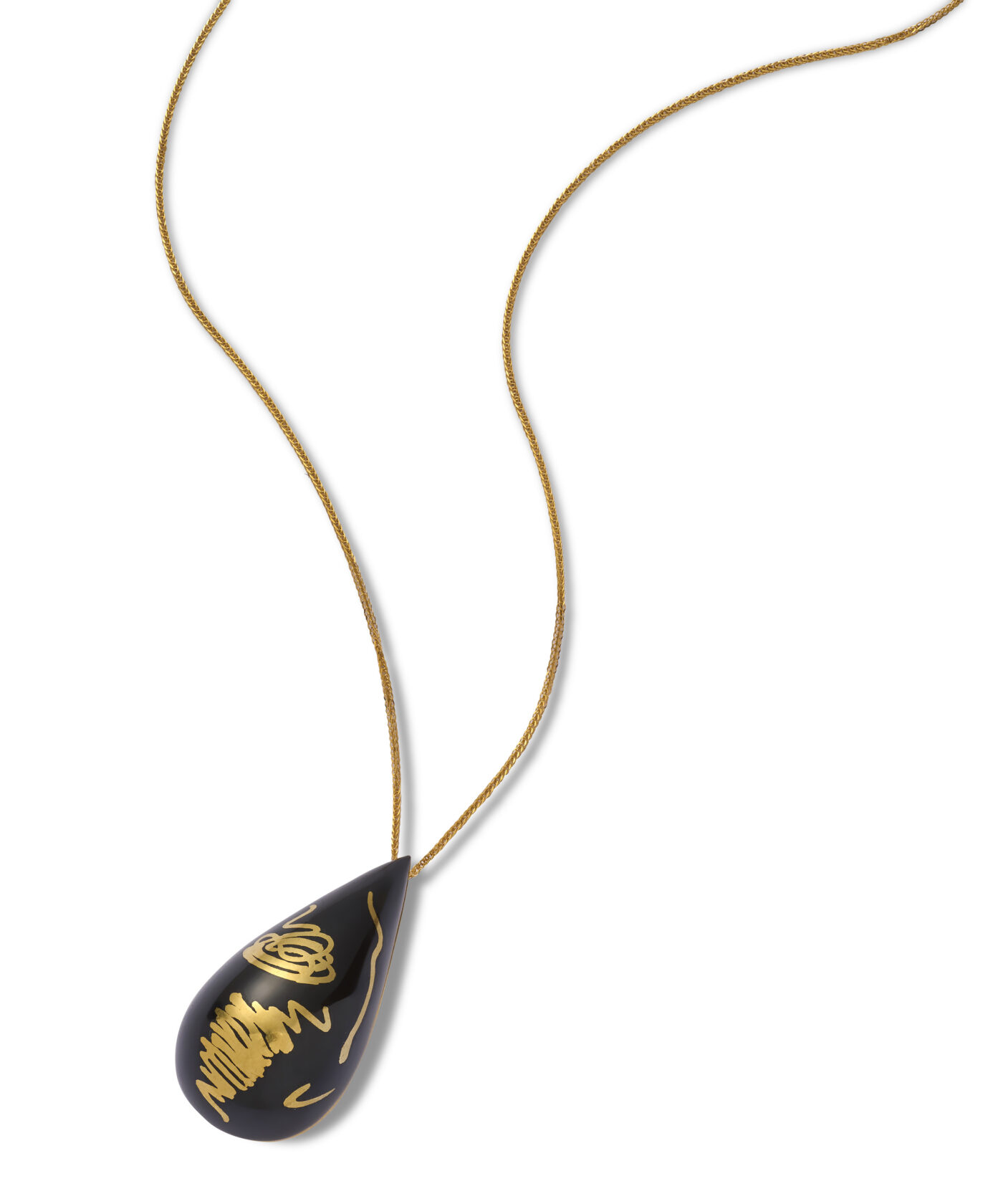
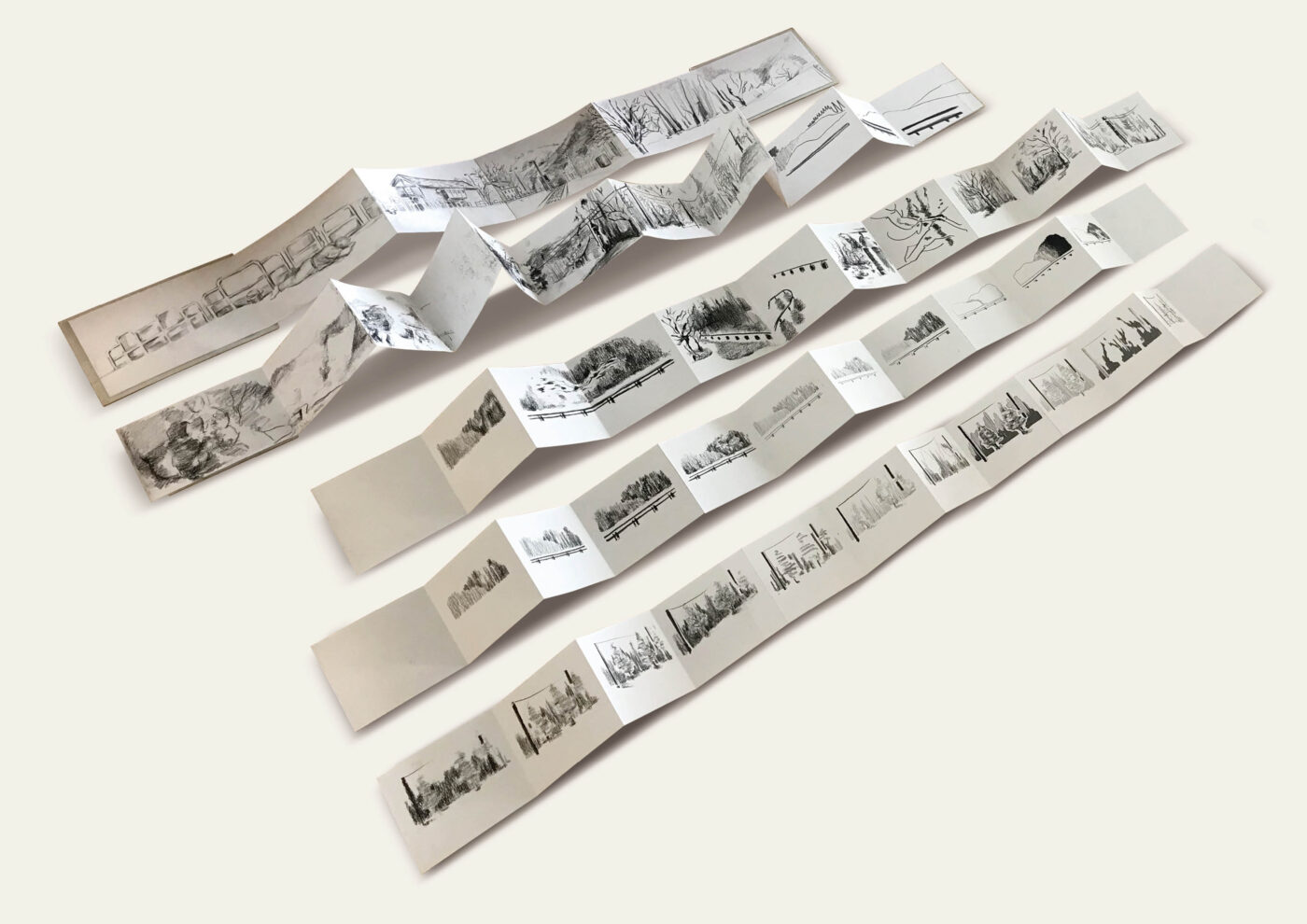
It would be a drawing—not a finished one, but a sketch. I’m drawn to structure, yet I try to resist overly defined forms. I’m more interested in what emerges organically—through interaction or small accidents in the process.

A sketch holds that quality; it carries the traces of thinking, hesitation, erasure, and uncertainty.

Staying with ideas and assumptions in your field, is there a convention in jewellery design that you find yourself questioning or responding to differently?

I have a somewhat contradictory relationship with this.

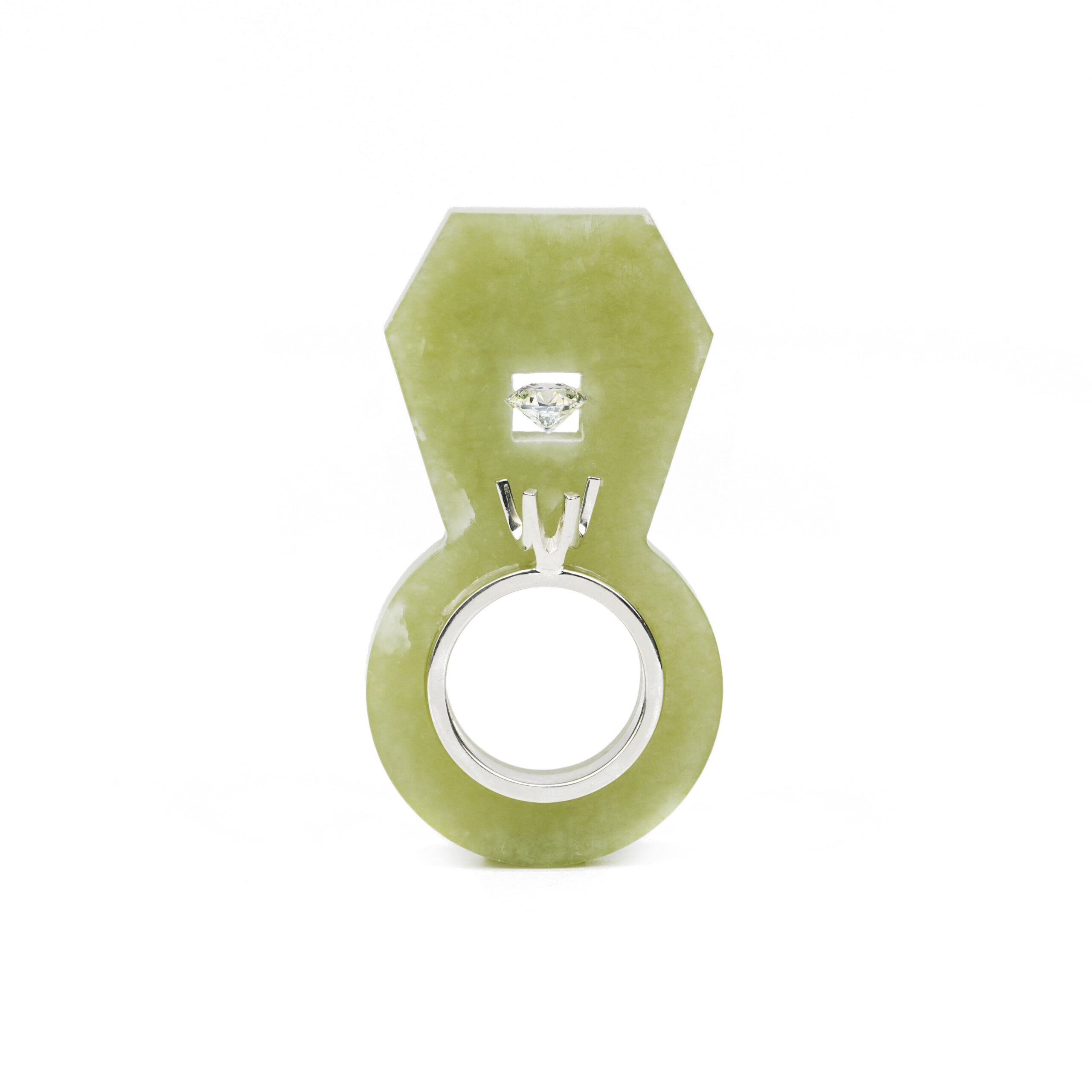
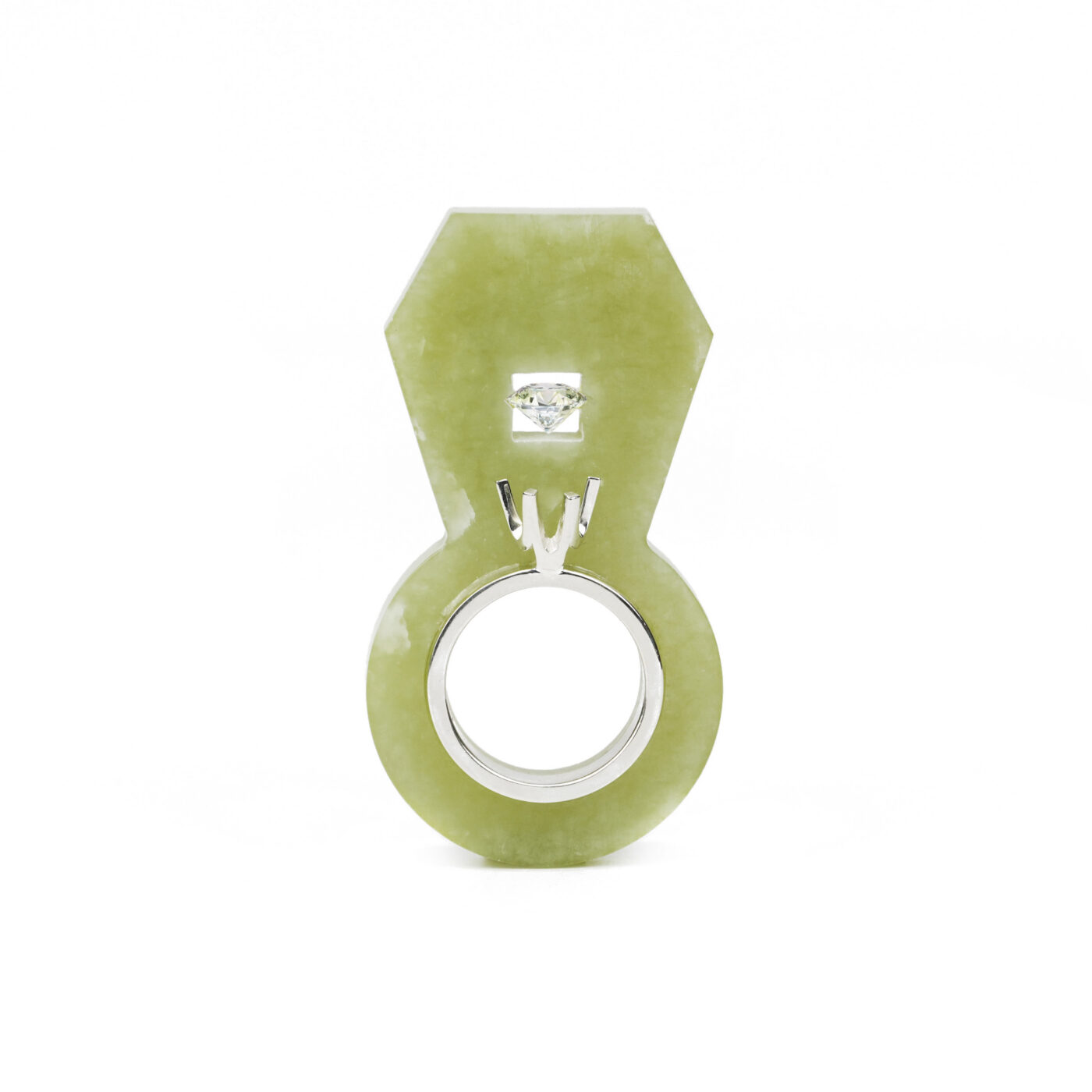
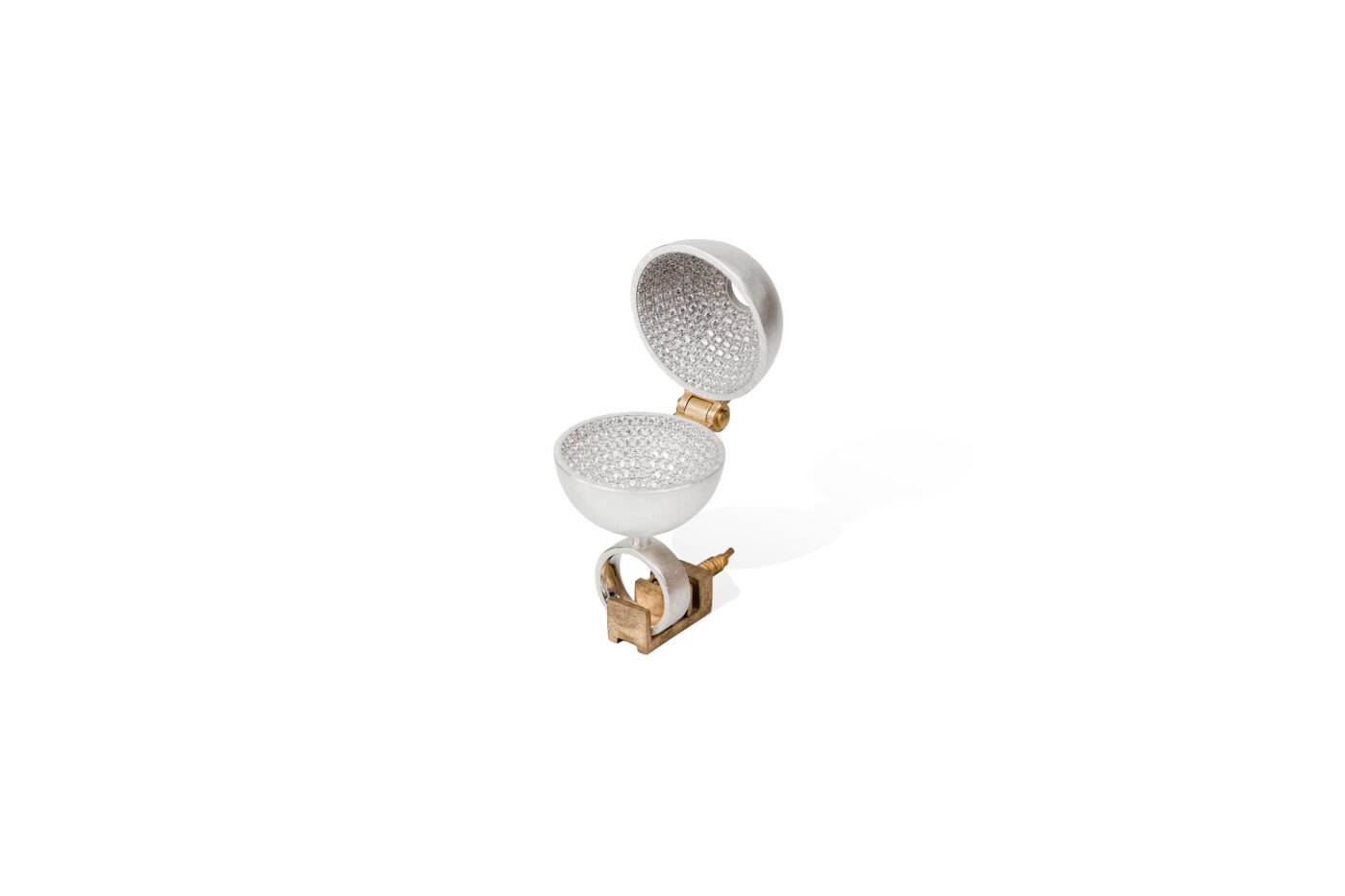
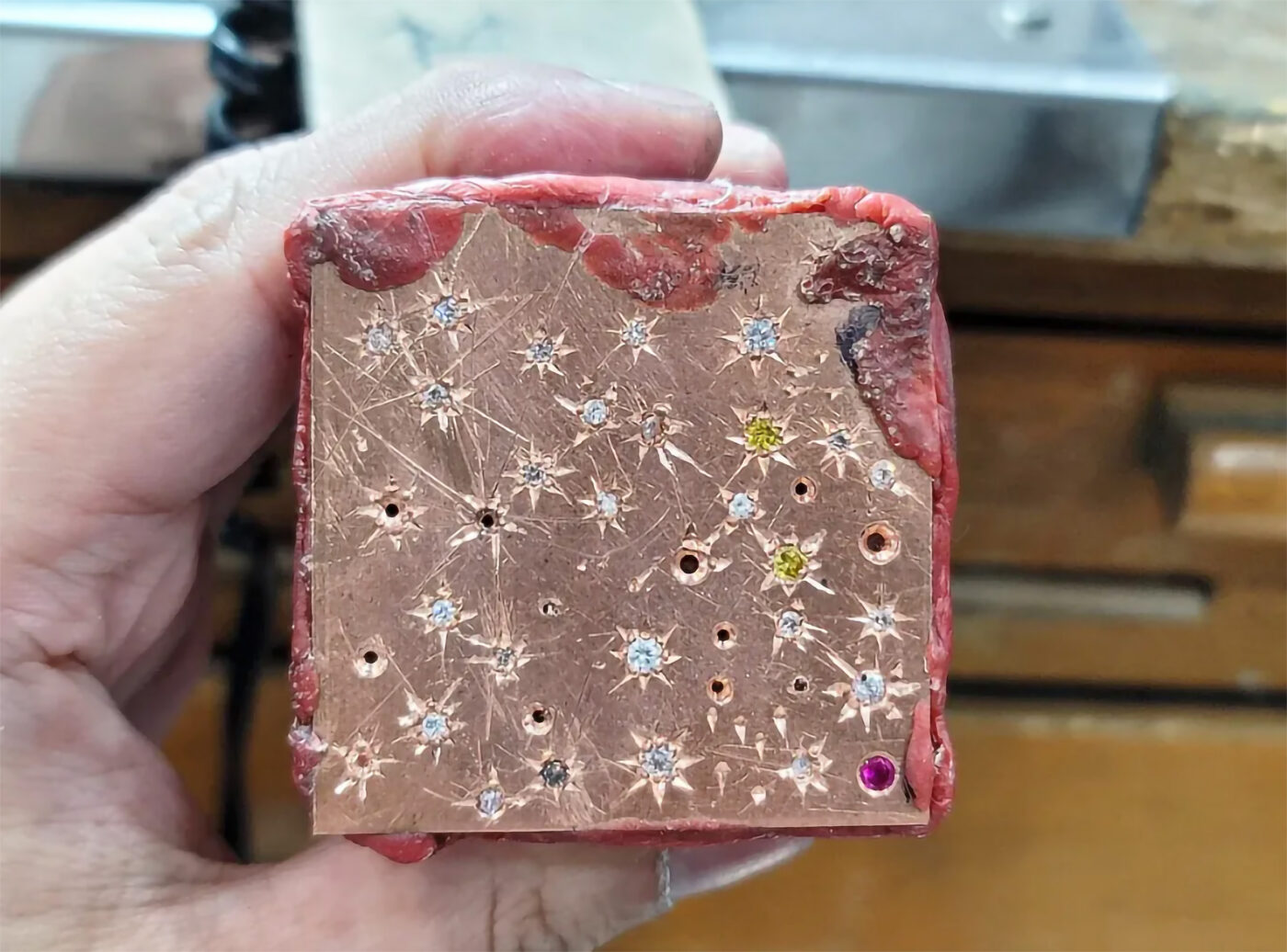
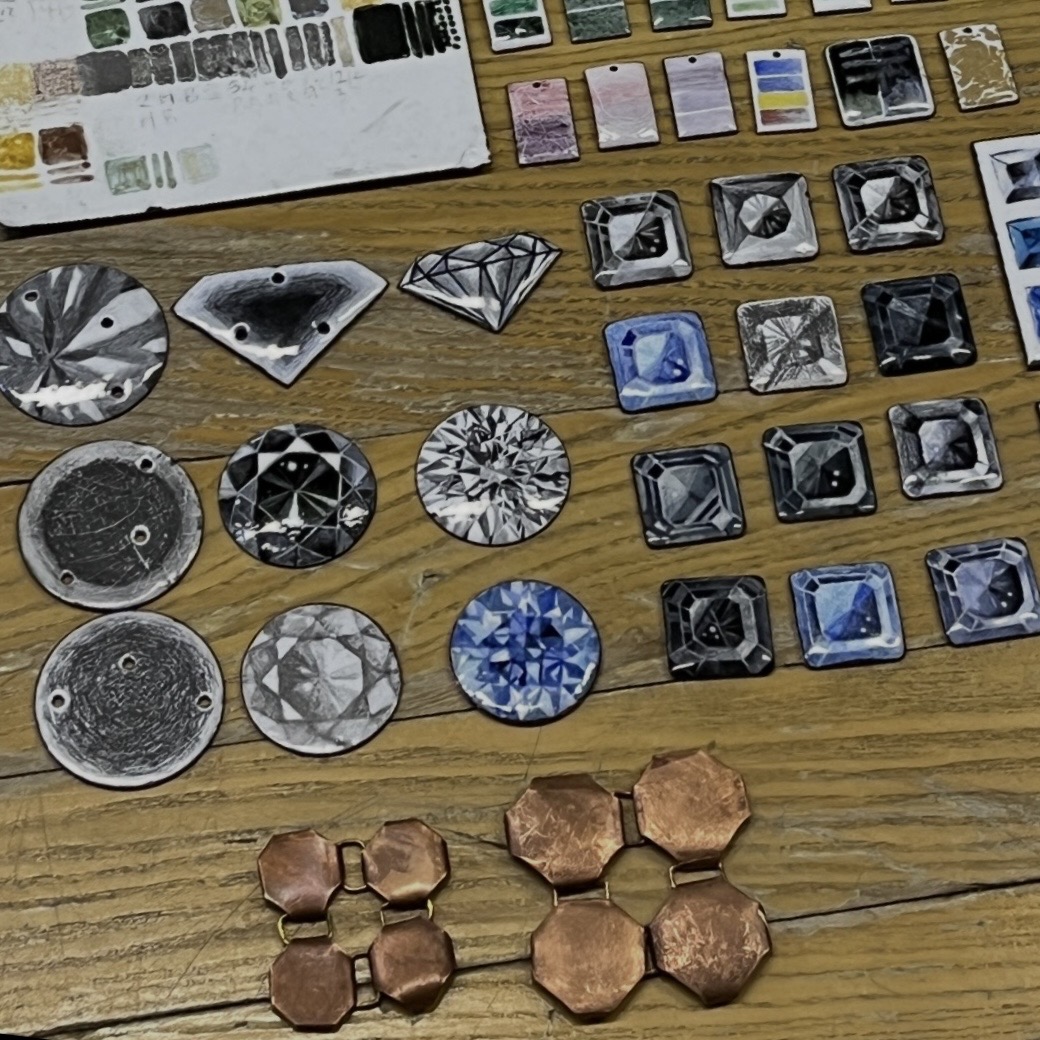
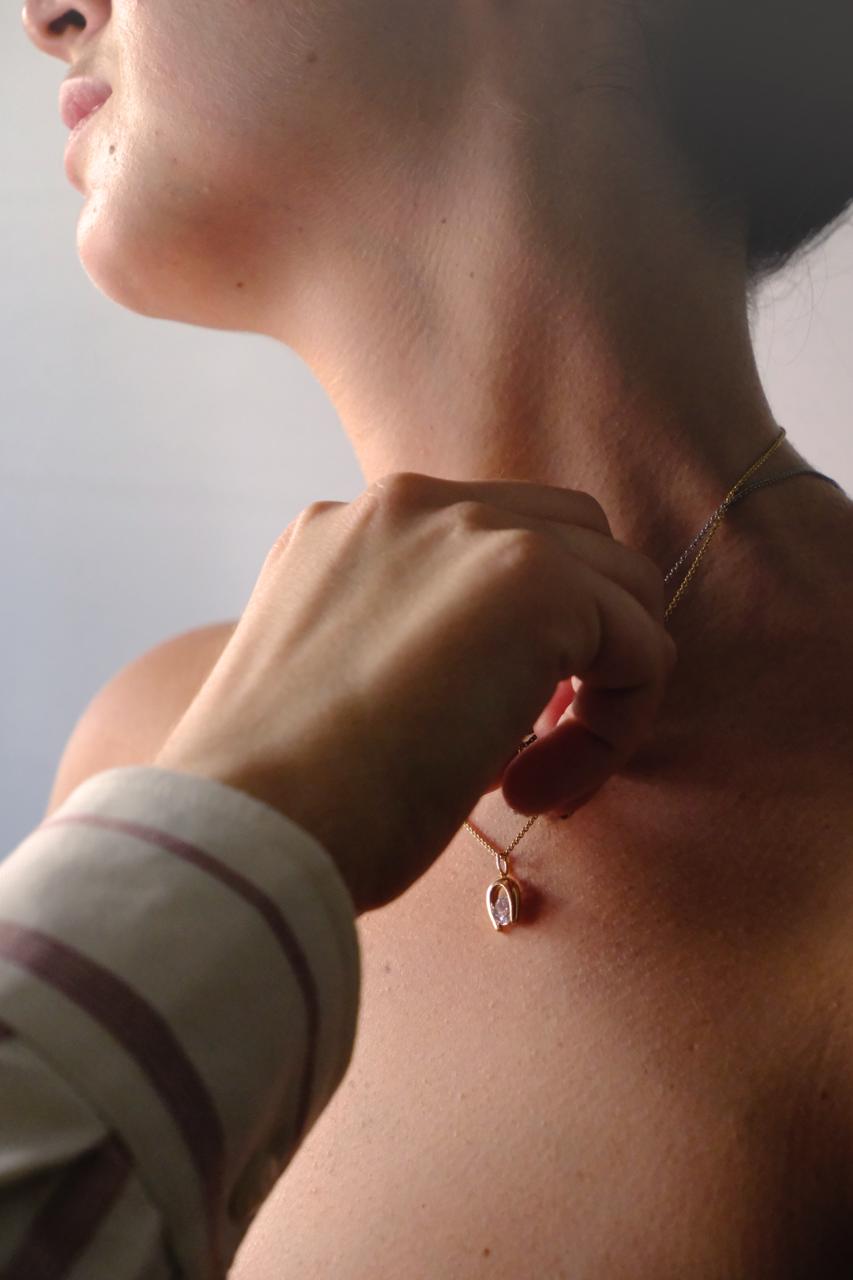
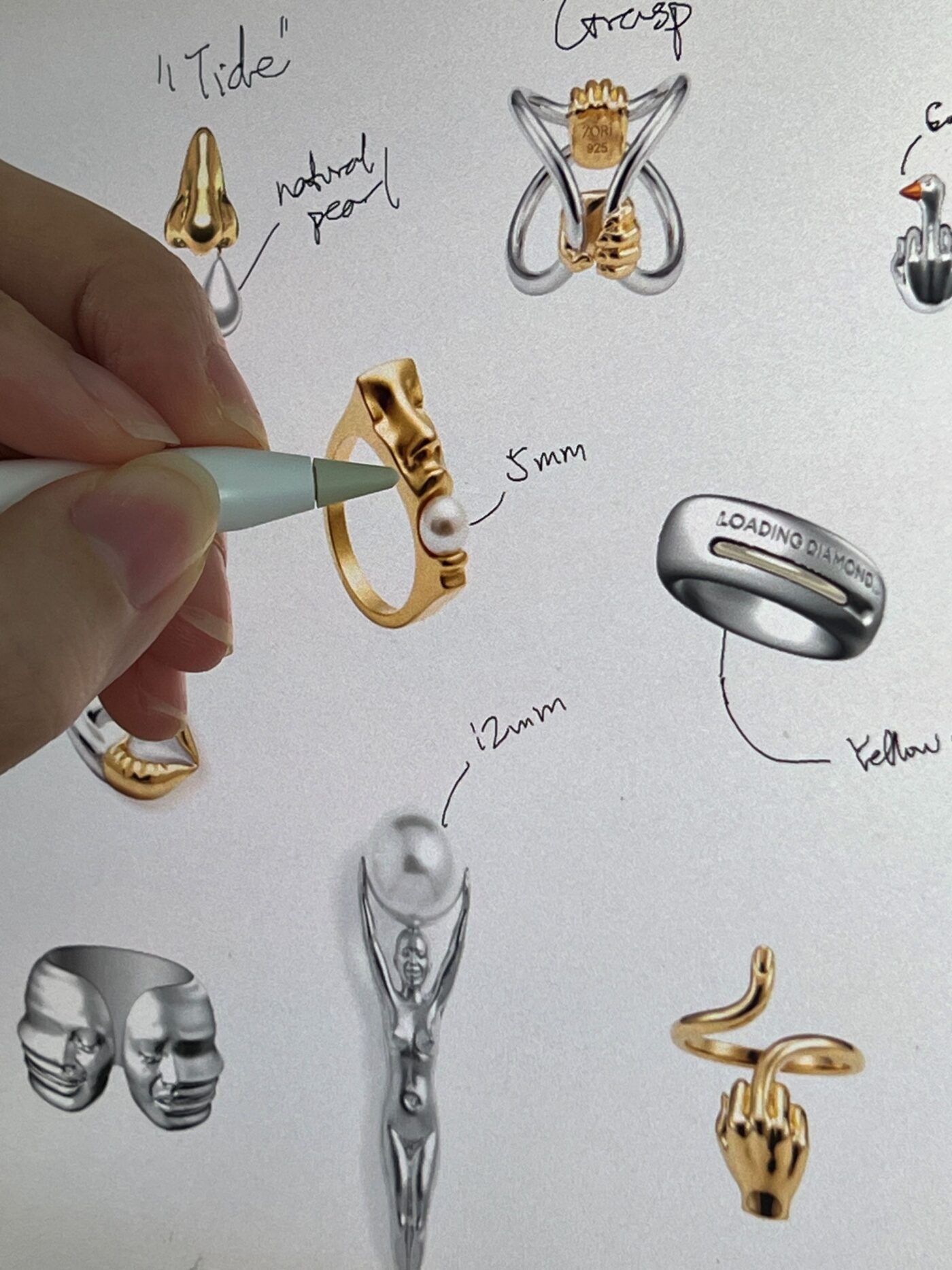
In jewellery design, there’s a common assumption that adding gemstones—especially diamonds—automatically creates value. I’ve never fully agreed with that. During an internship at a fine jewellery brand, I often heard “just add diamonds,” as if that alone could resolve a design. To me, that can feel like a way of masking uncertainty rather than developing the idea itself.

At the same time, when I chose my own wedding ring, I did the opposite. I chose a very classic diamond ring with almost no design to it.

The distinction, for me, is that a wedding ring already functions as a symbol. And symbols are remarkably stable—they don’t need to say much, and they don’t really change over time. I was concerned that if the ring had too much design, my perception of it might shift—I might grow visually tired of it, or begin to question it. A symbol, by contrast, feels more neutral, almost fixed.

So I’m not against gemstones. What I question is how they’re often used in design—as a shortcut to value, or to compensate for an unresolved idea. For me, value should come from how an idea is developed, not from materials that are already culturally agreed to be valuable.

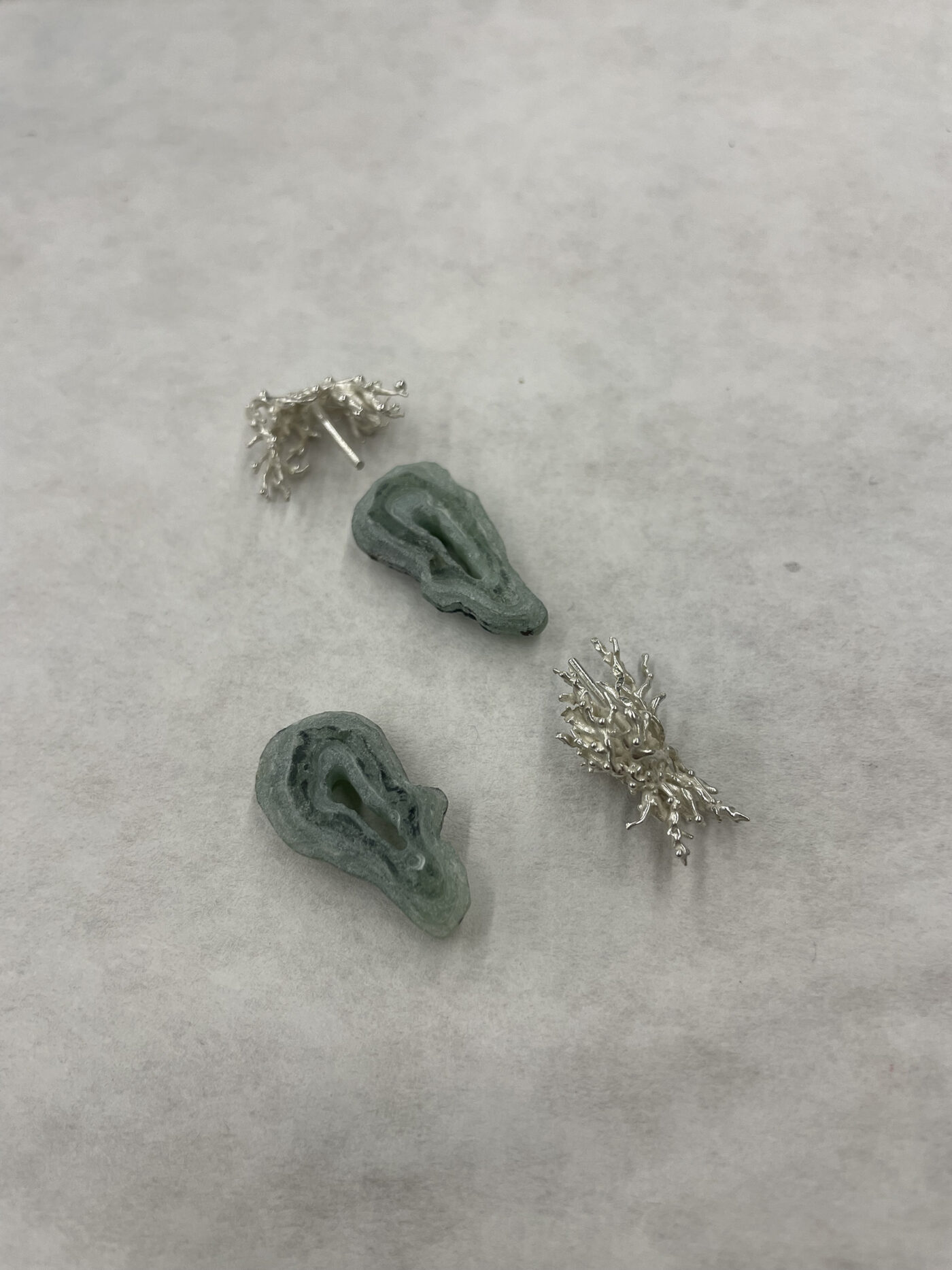
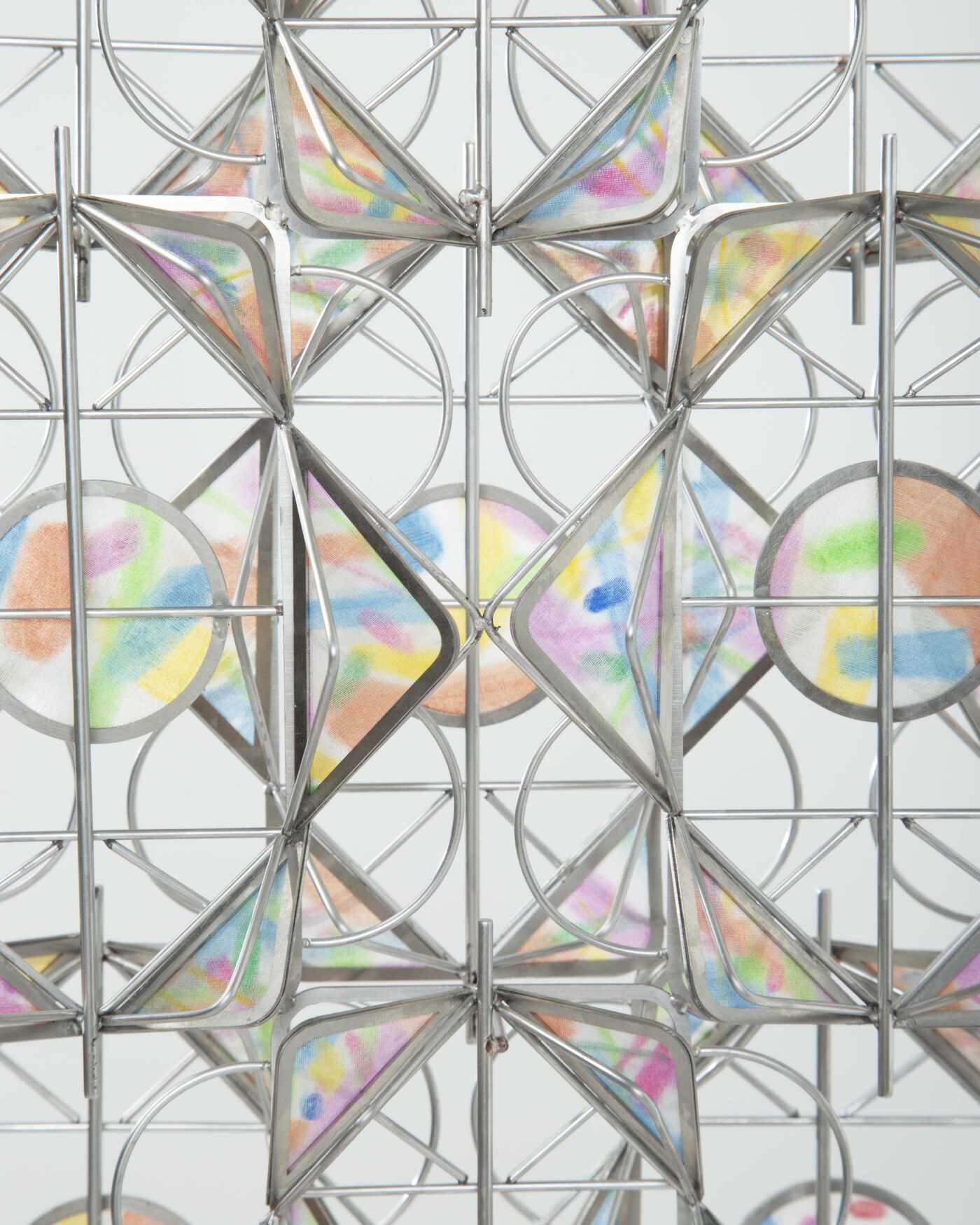
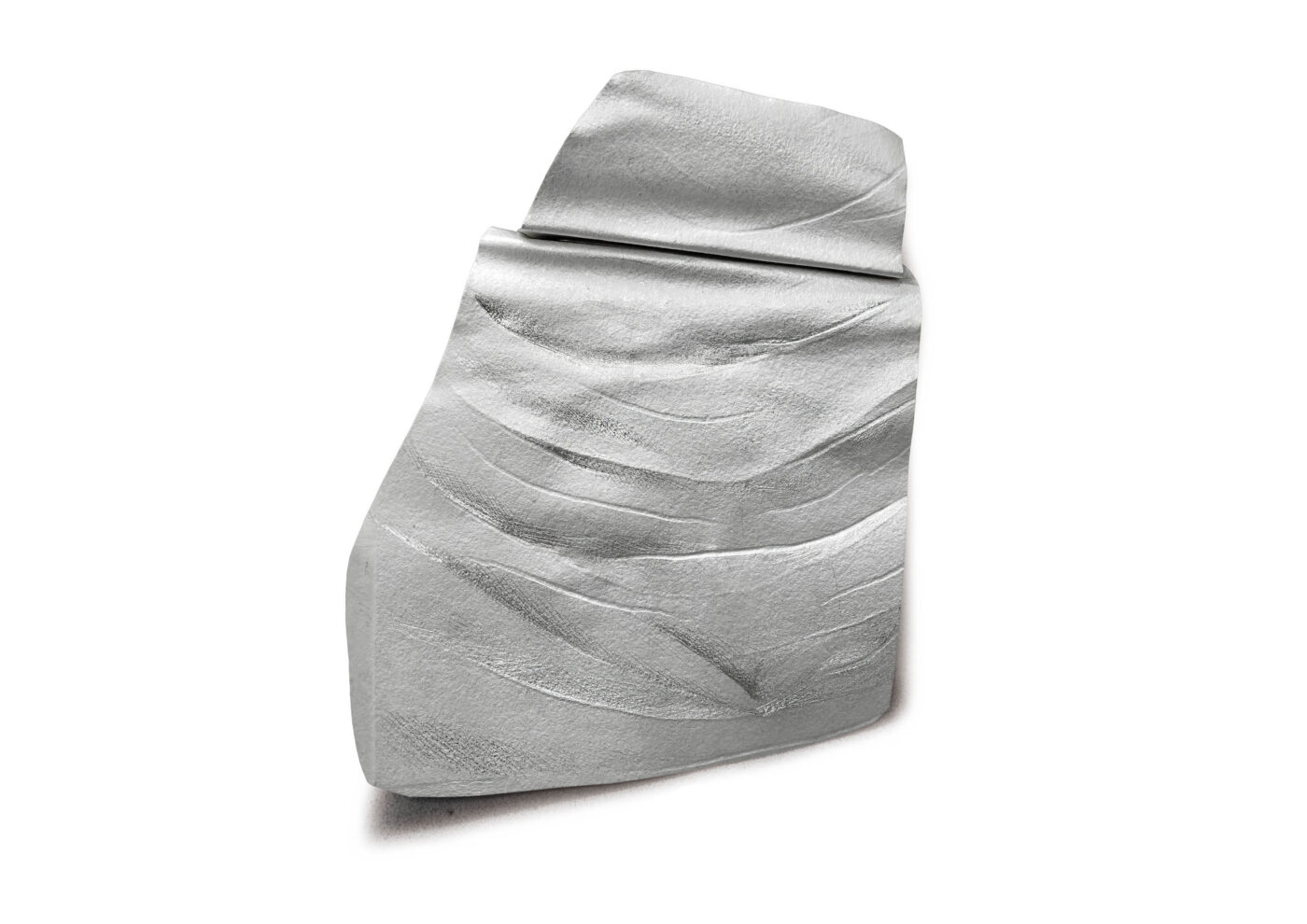
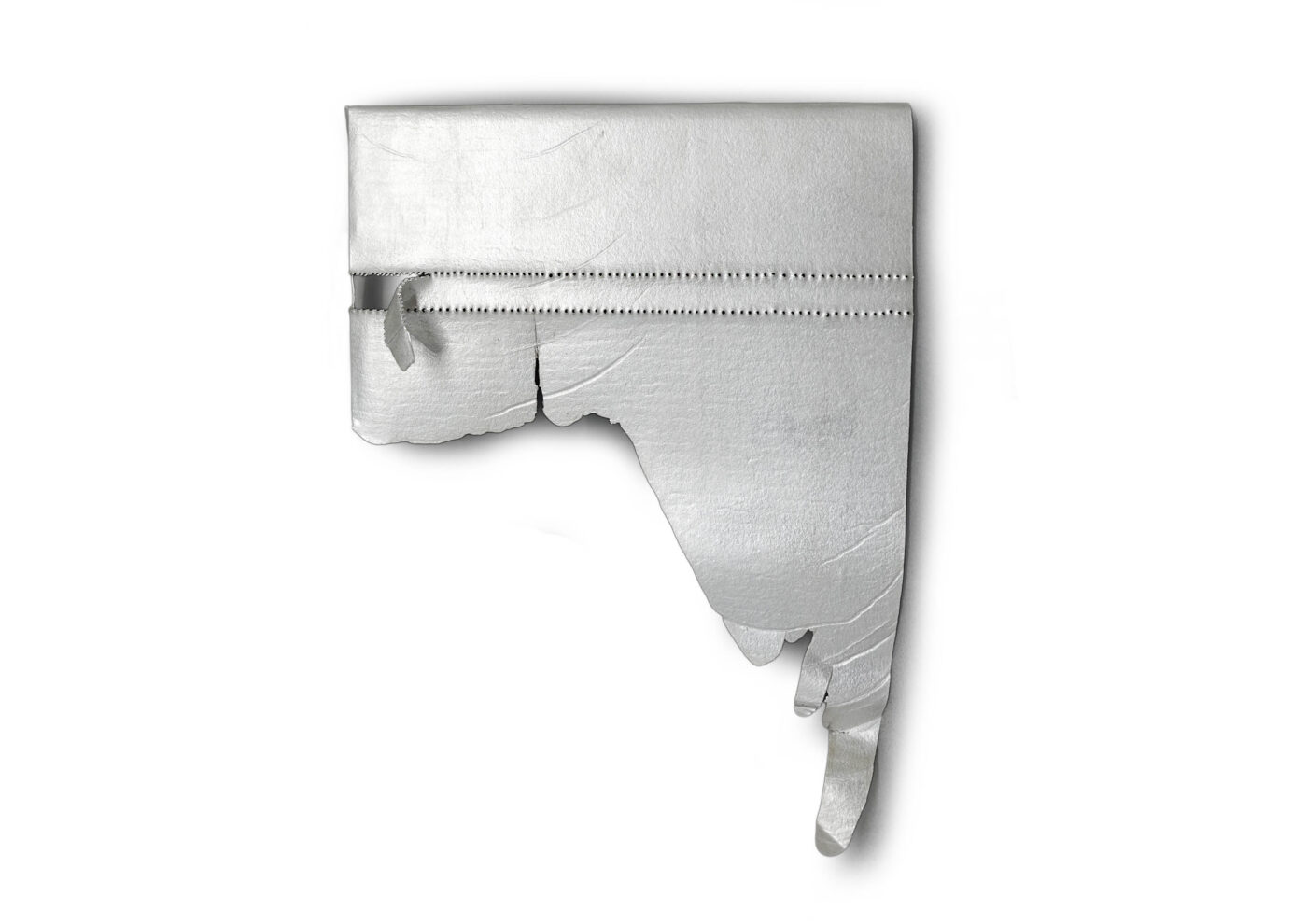
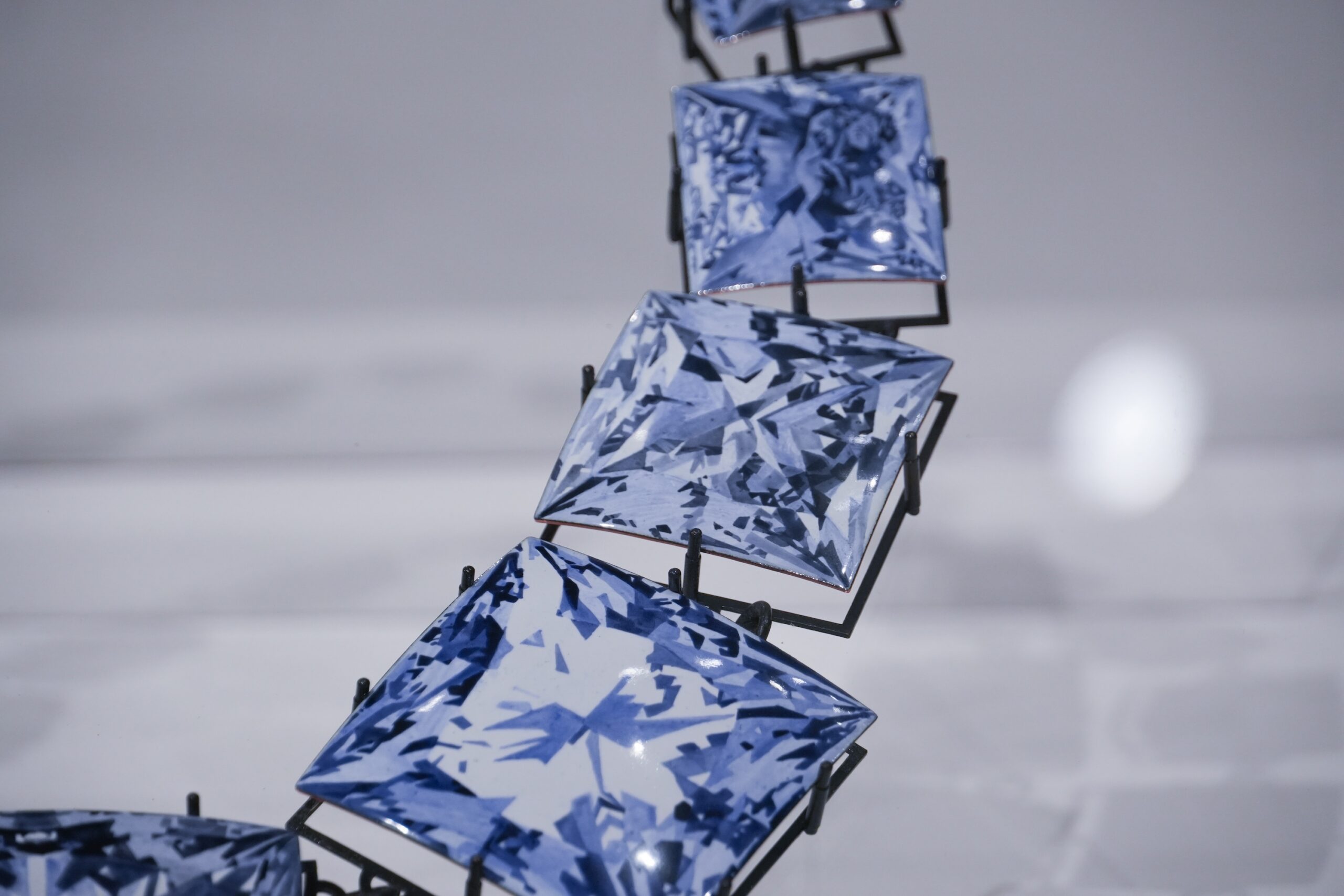
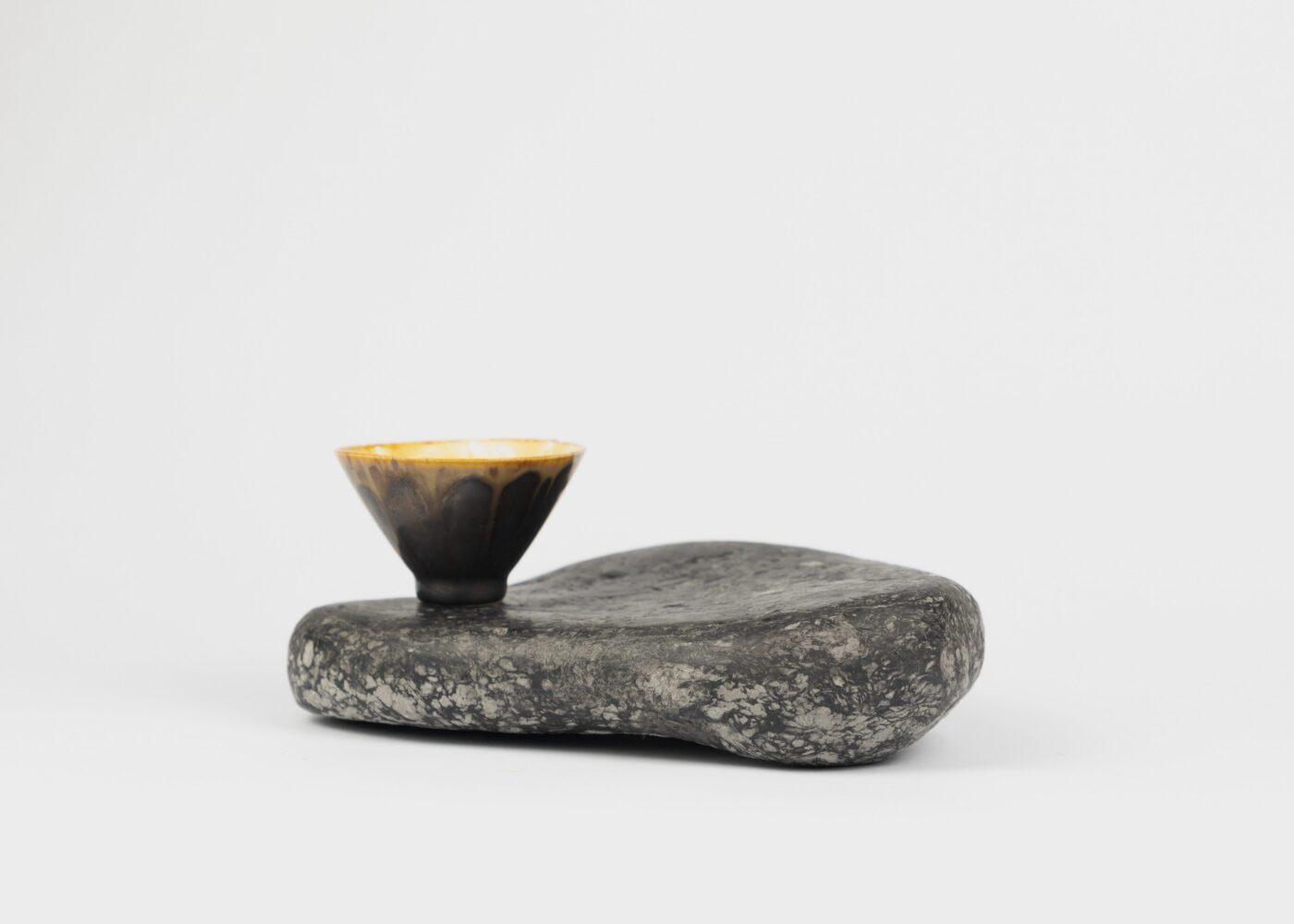
A silver sheet that was accidentally crumpled; I later reinforced the folds by drawing shadows, allowing the material to guide the direction of the piece.

When you are in moments of uncertainty in the making process, how does creative doubt show up in your work?

I often find myself questioning whether I’m intervening too much—whether the concept becomes over-articulated, or the making overly controlled.

In those moments, I try to step back. I shift my focus from directing the outcome to allowing the materials to interact and unfold more freely.

I’ve realized that when everything is fully intentional and authored, the work can start to feel closed. What I’m more interested in is leaving space—for something unexpected to emerge, for the material to speak in ways I couldn’t have planned.

Expanding outward, if you were to create a work for a fictional or historical figure, who would you choose?

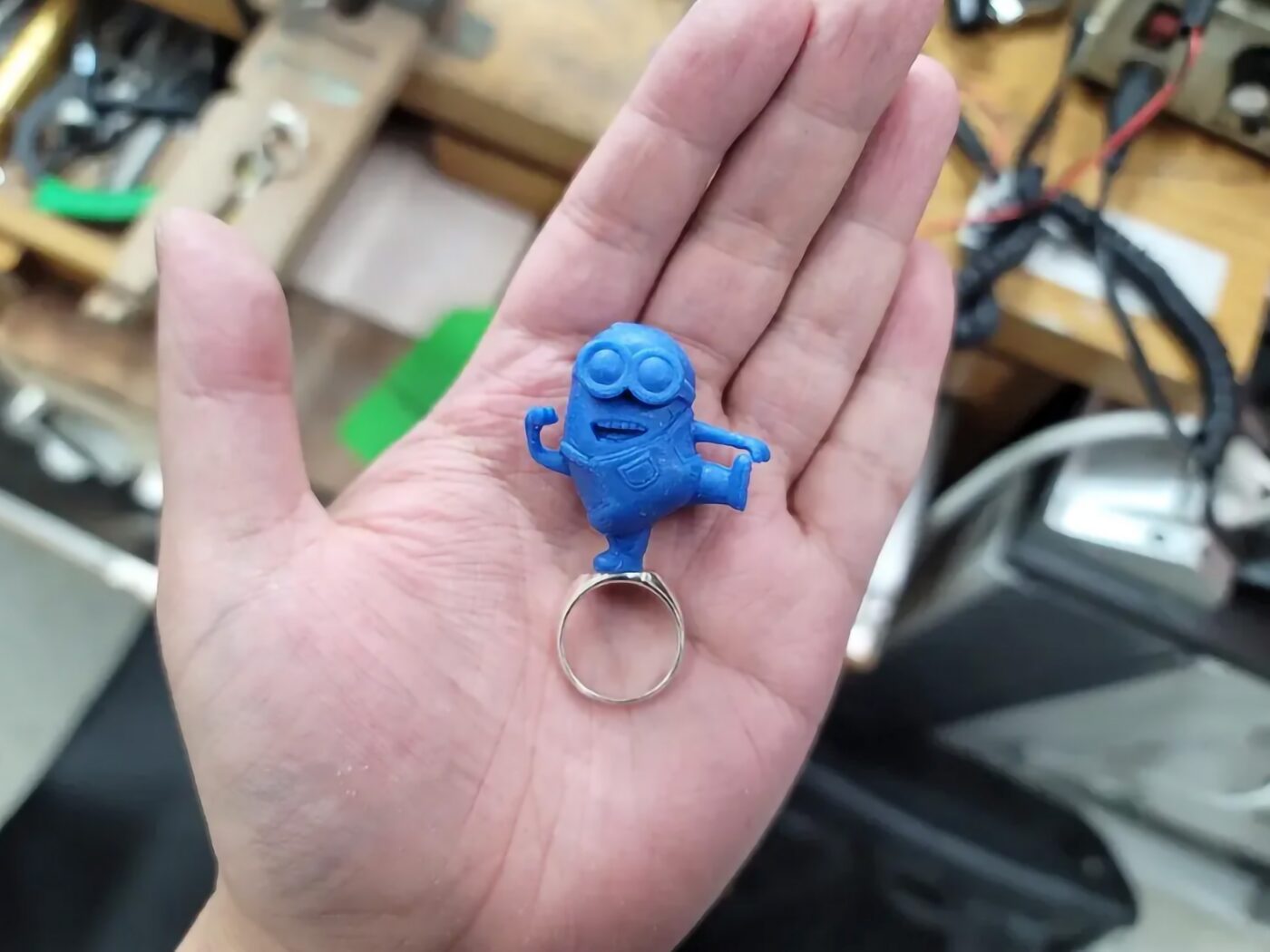
I would create something for Ditto from Pokémon.

I’m interested in how Ditto doesn’t transform independently, but in response to what it encounters—its identity is always shaped by the external, by what it sees, touches, or tries to become. The piece wouldn’t transform perfectly. It might lag, or distort, or hold onto traces of what it was before—so different states exist at the same time. In that sense, the work wouldn’t represent Ditto, but operate like it—where identity is not fixed, but continuously negotiated through interaction.

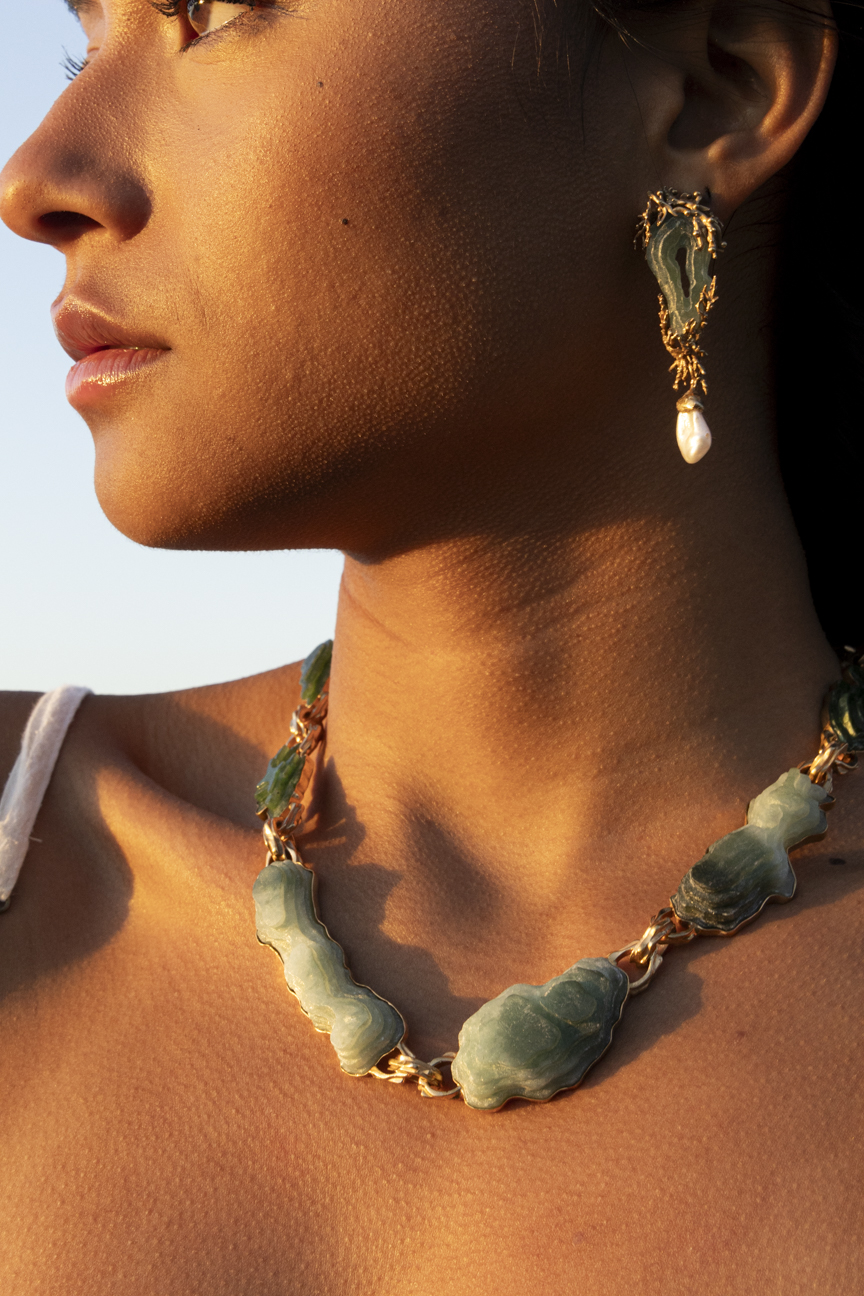
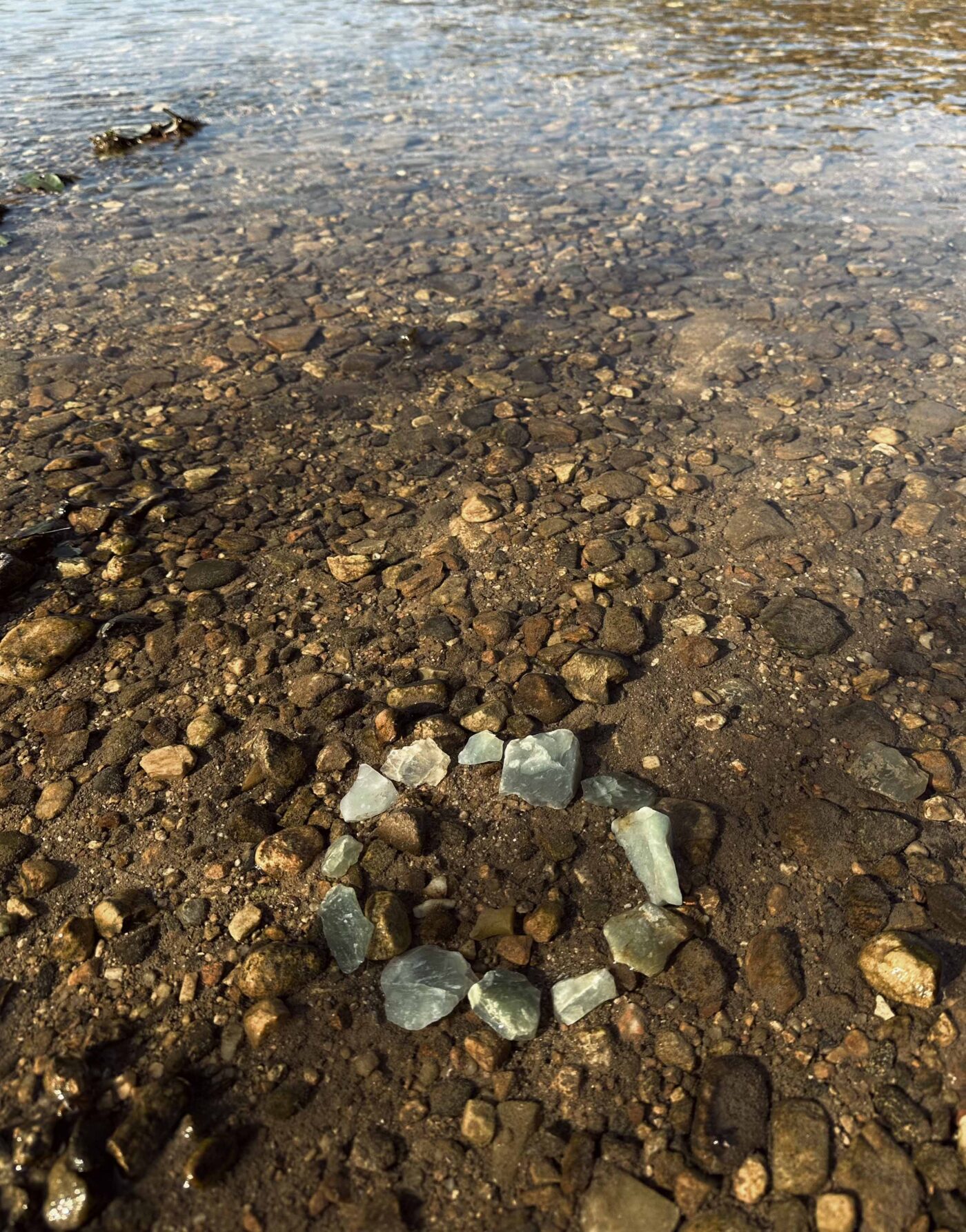
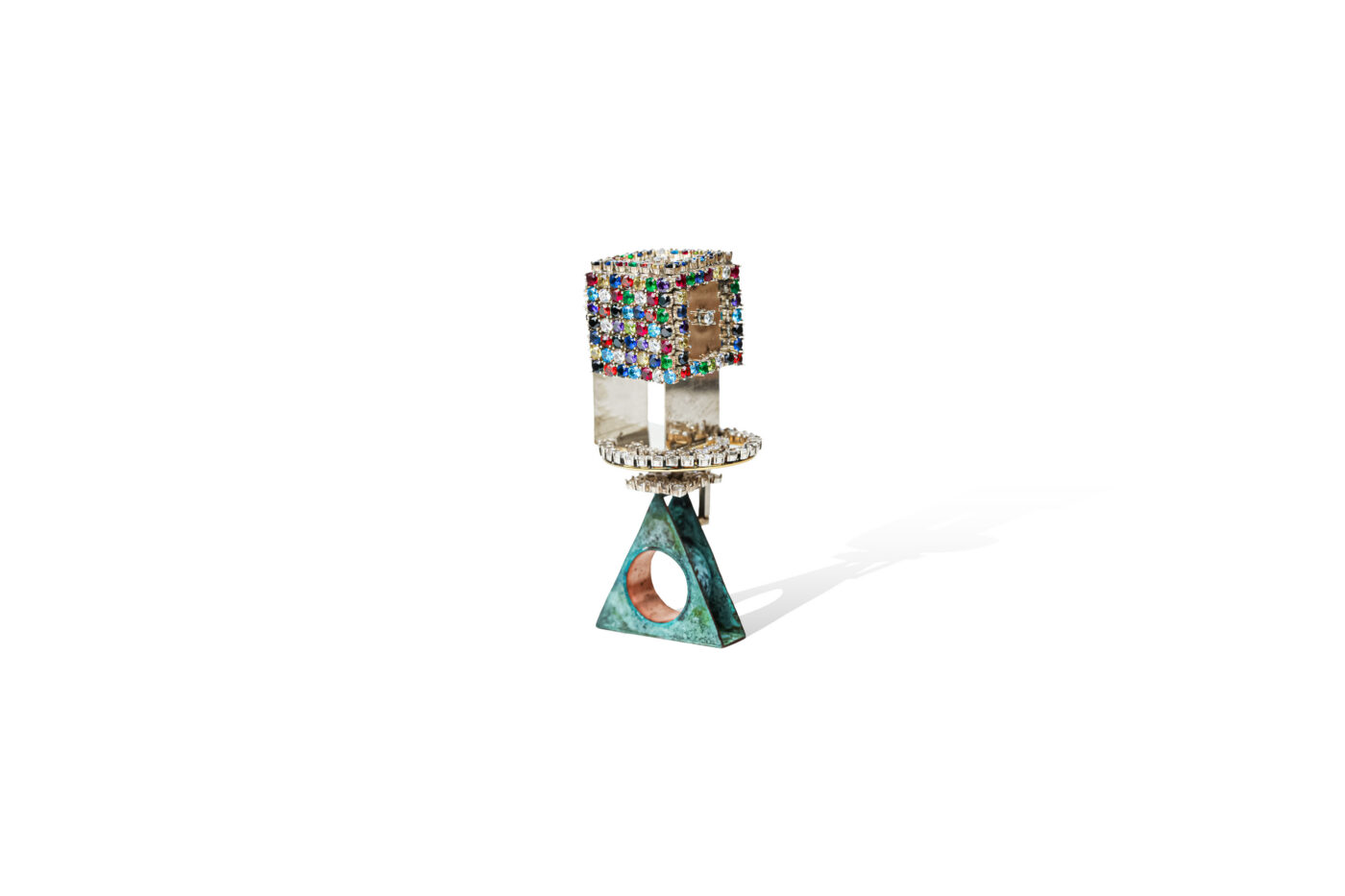
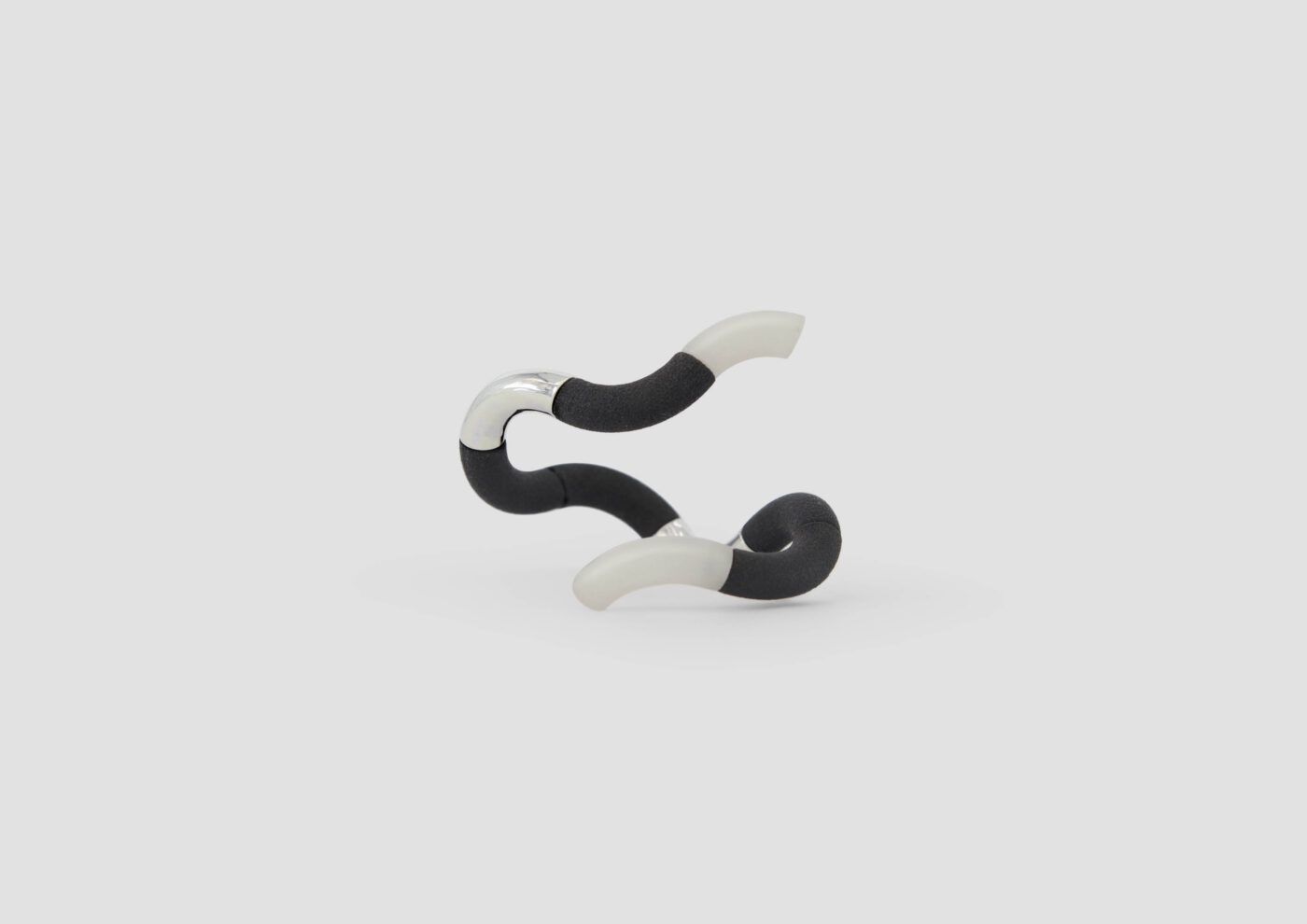
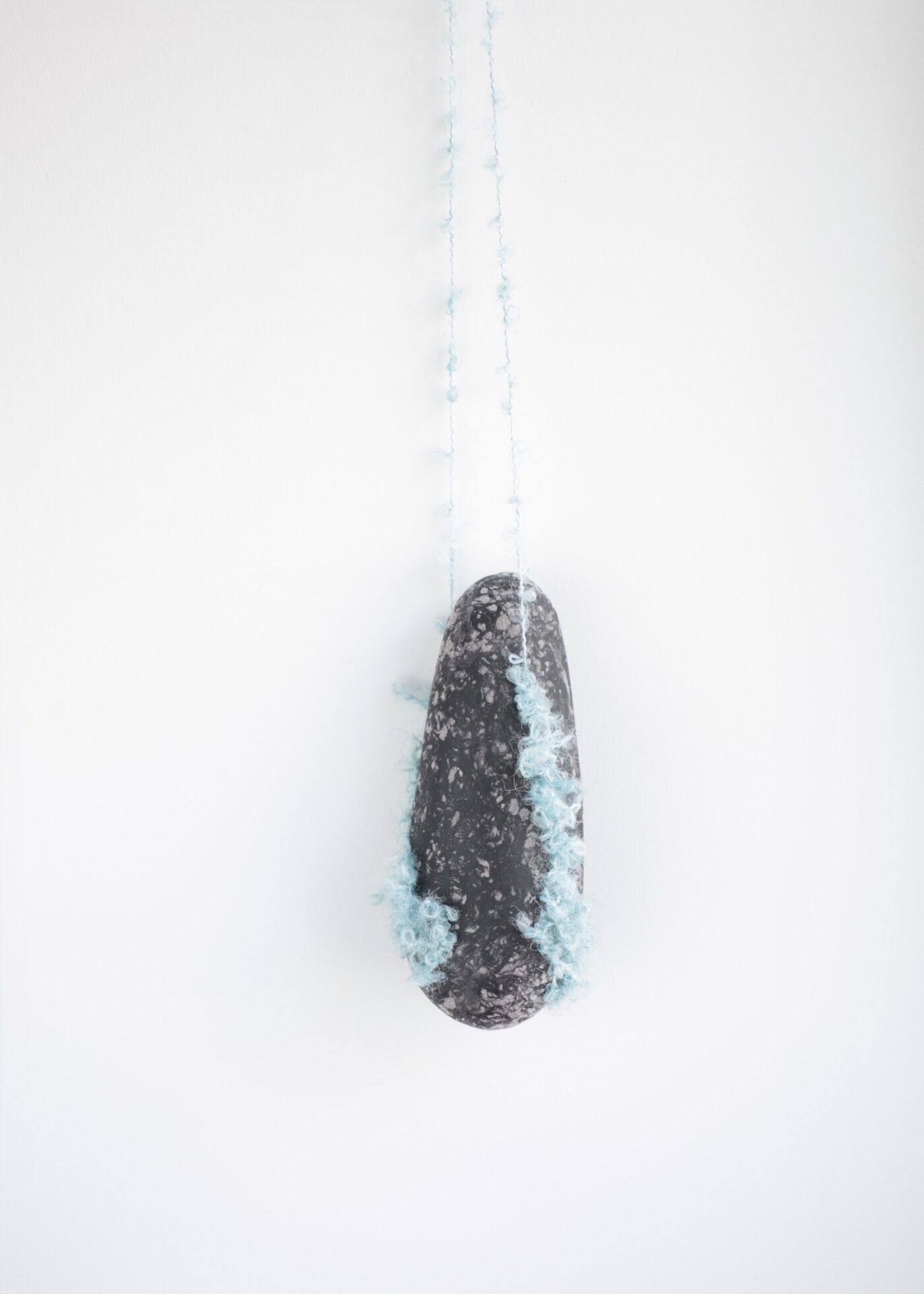
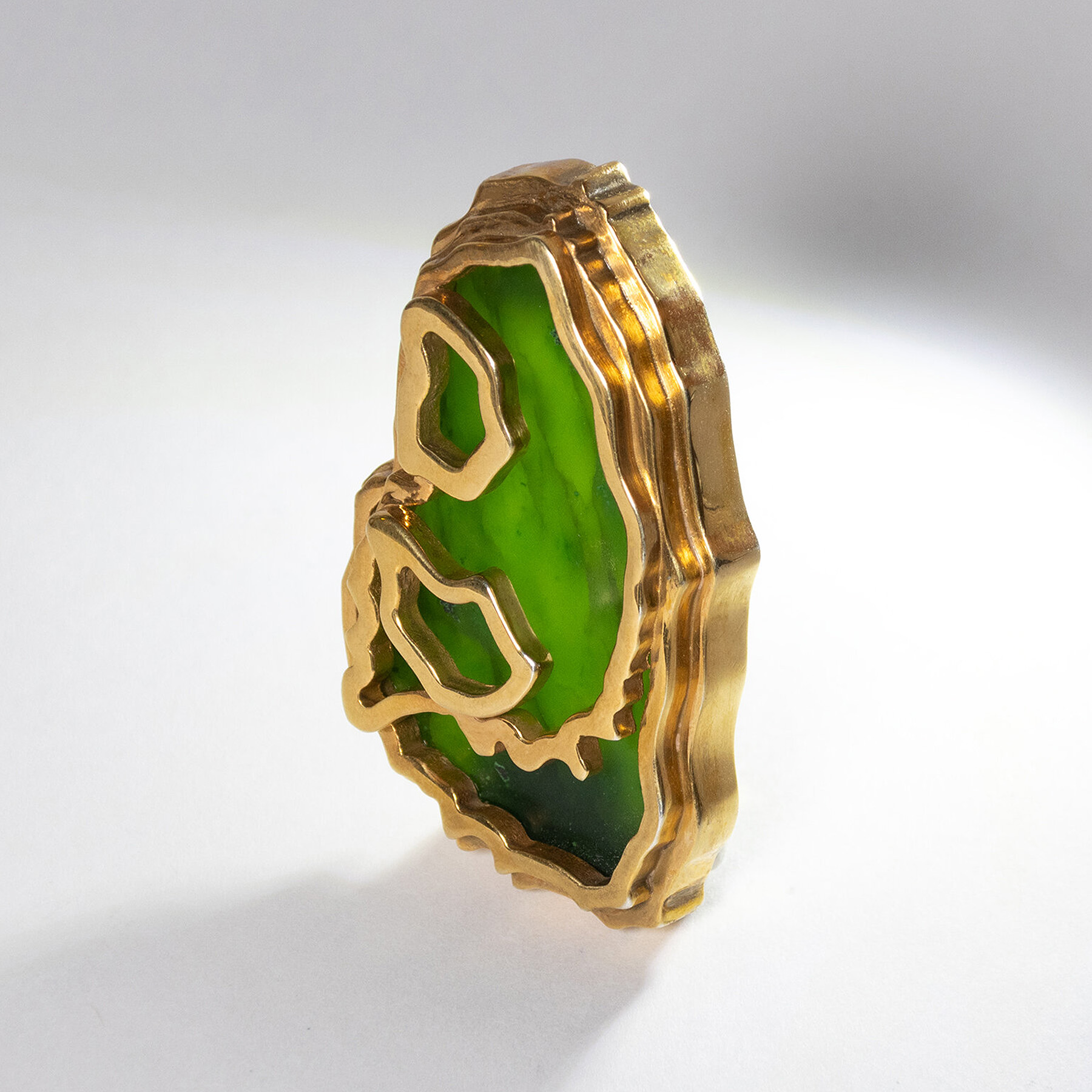
A tangle-shaped bangle made from broken jade bangle fragments; its form shifts with wear and the wearer.

Thinking about materials and process, what non-traditional source of inspiration or material engagement draws you?

I’ve been thinking a lot about what happens when I’m not fully in control of how a piece ends up.

It’s made me more interested in the idea of shared authorship—not in a theoretical way, but in a very practical sense, through use.

I’m drawn to materials or structures that can change over time—through wear, or interaction—so the final form isn’t fixed from the start. I’d like my work to stay a bit open, so the wearer and time itself can become part of the process.

When someone encounters your work, what kind of emotional or reflective experience do you hope it creates for them?

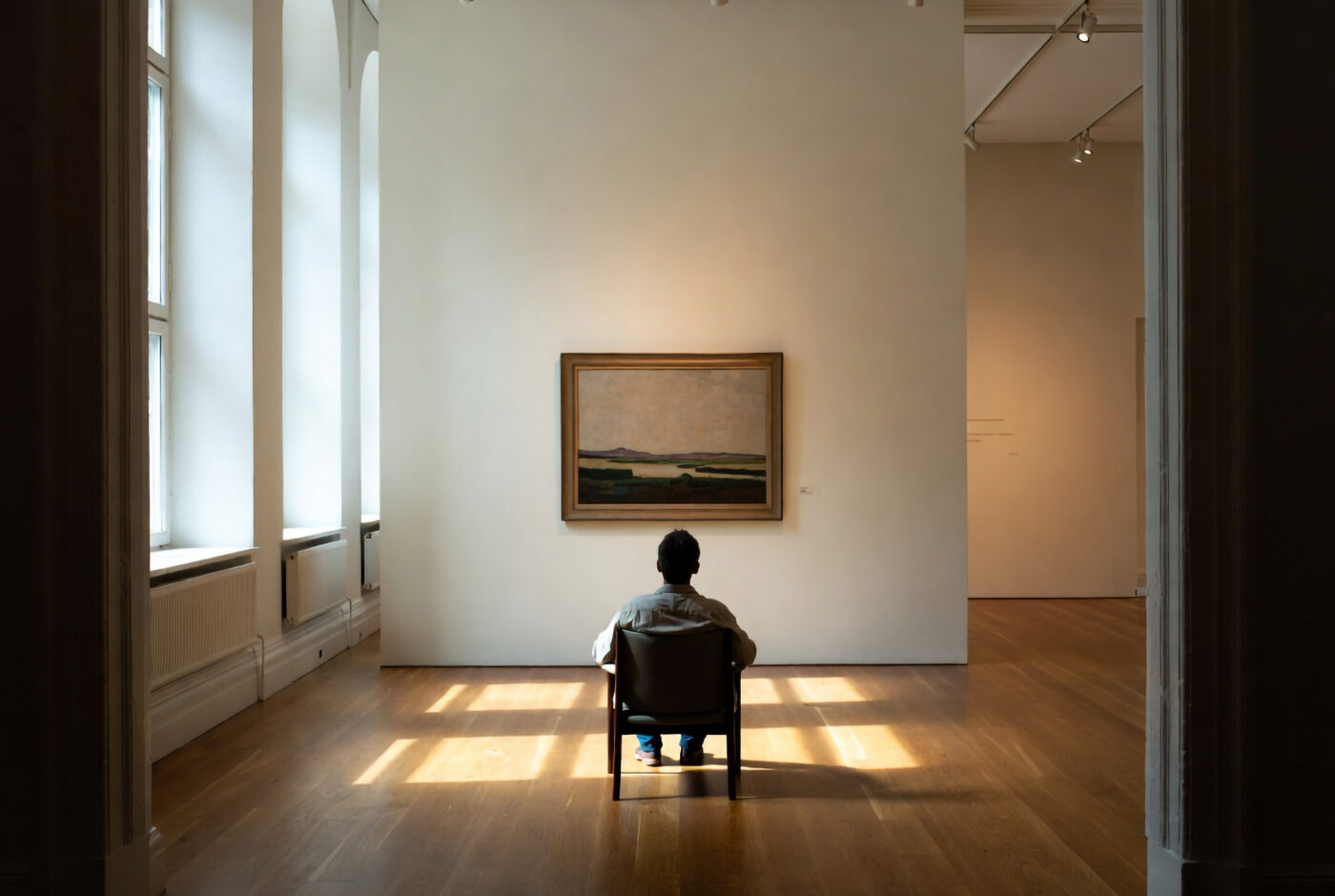
I love works that make me pause and think, “Ah, so that’s what it is.”

I hope my work can create a similar kind of quiet moment—something subtle, but clear enough to stay with you.

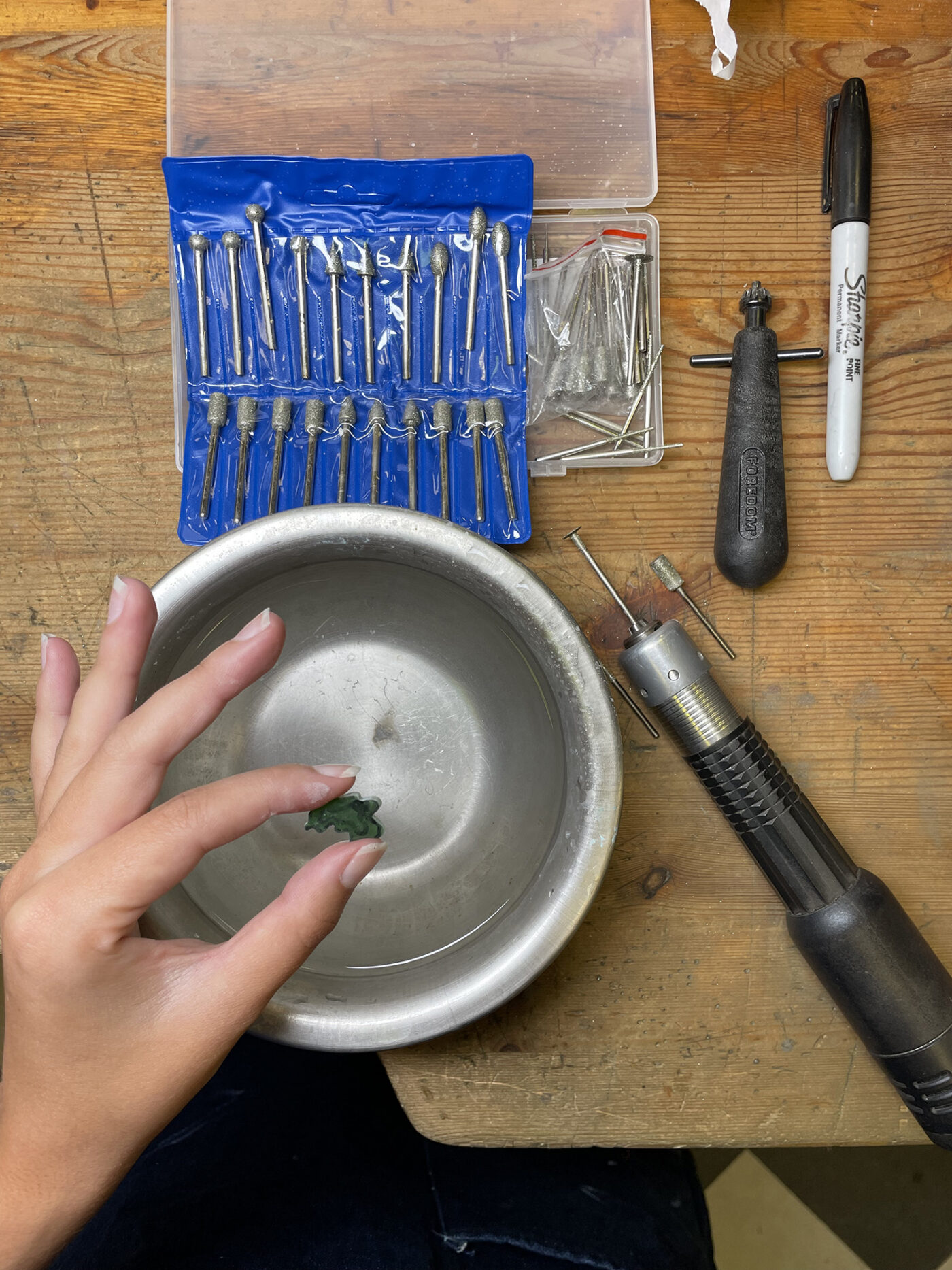
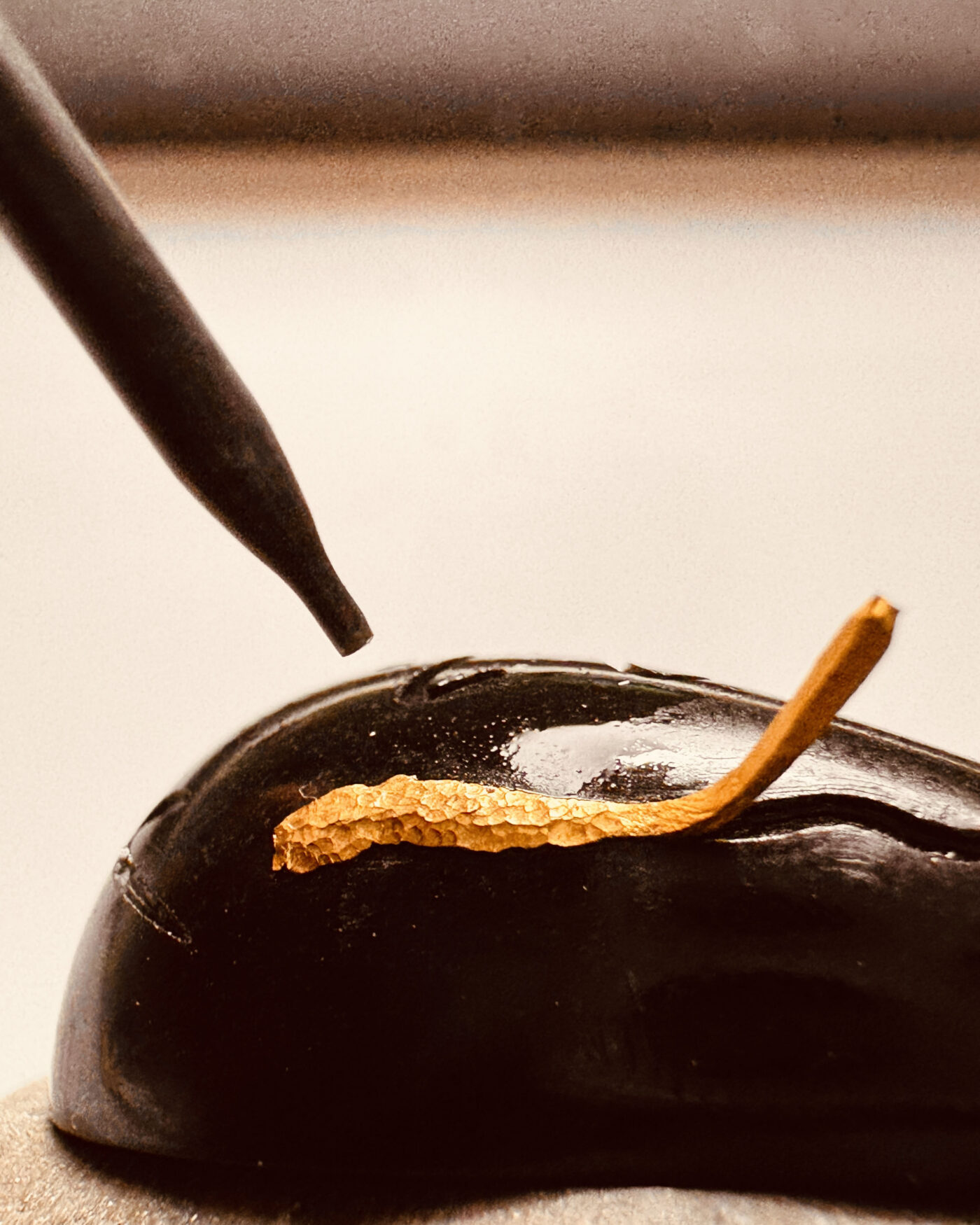
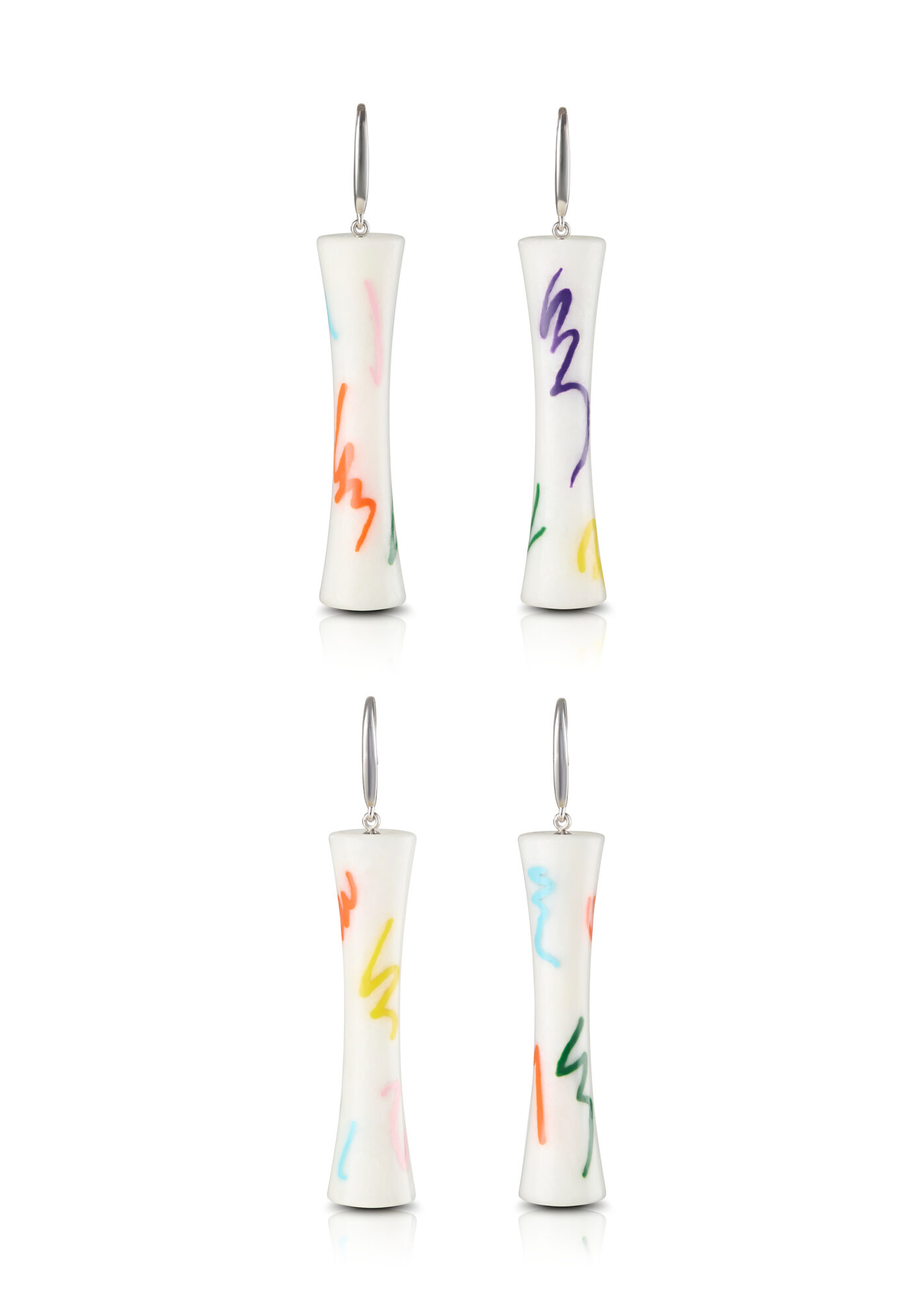
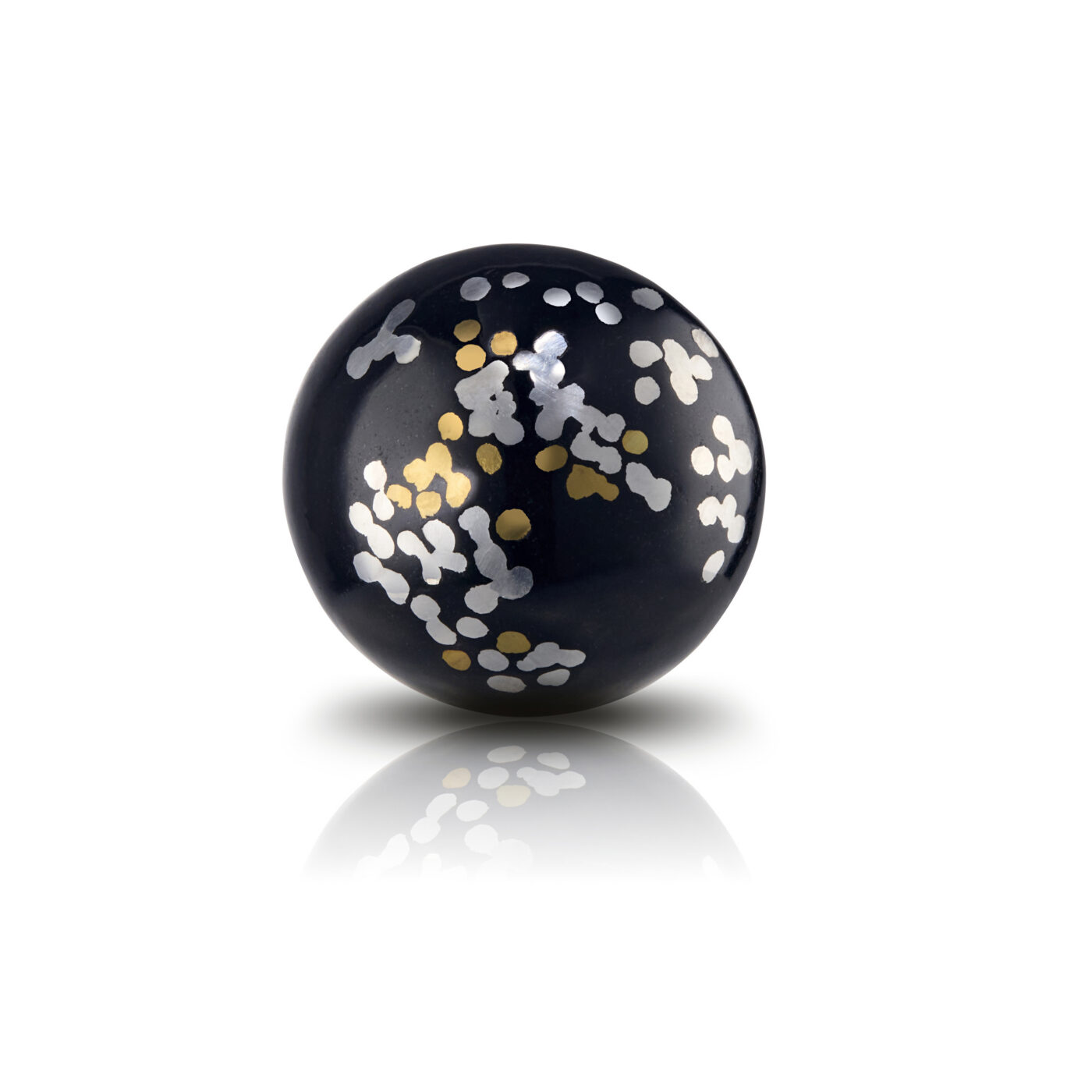
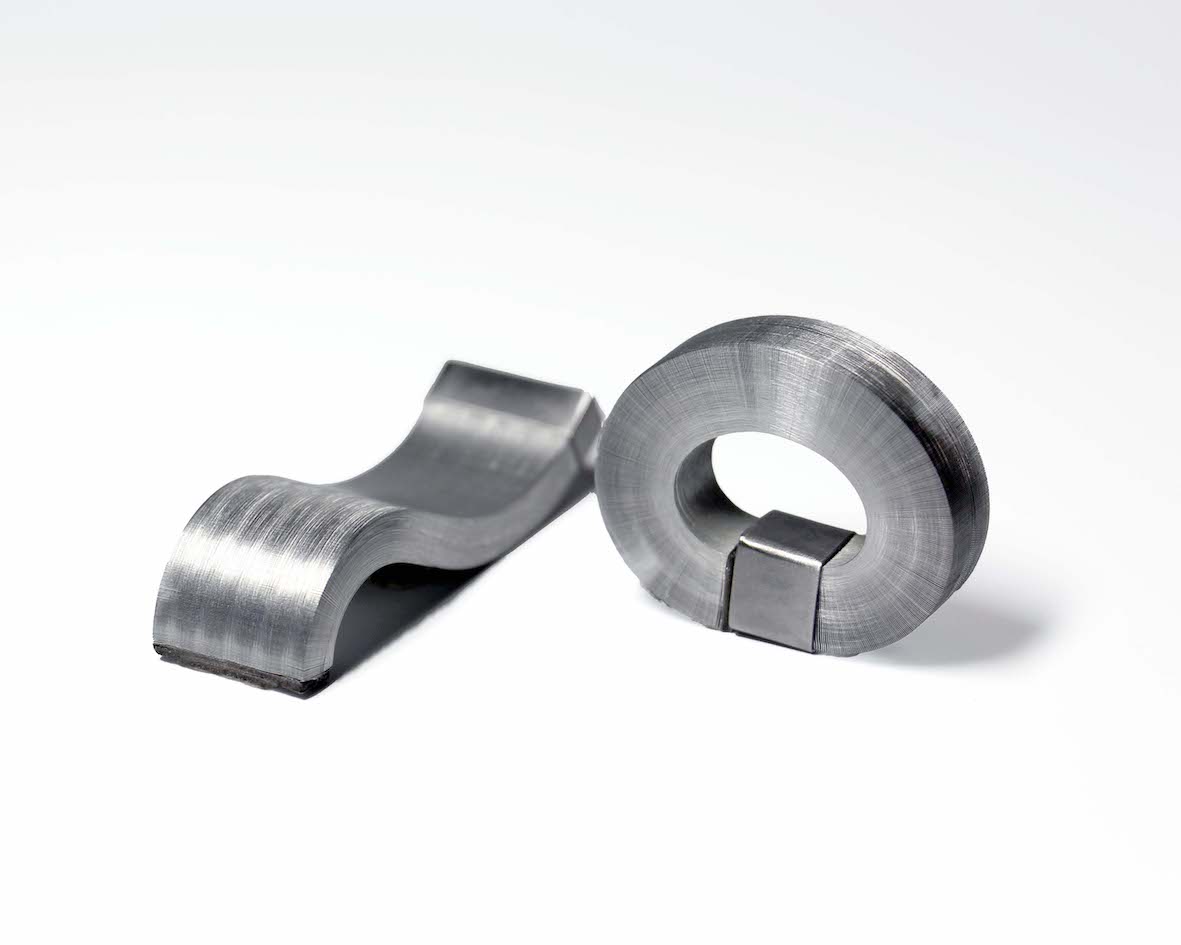
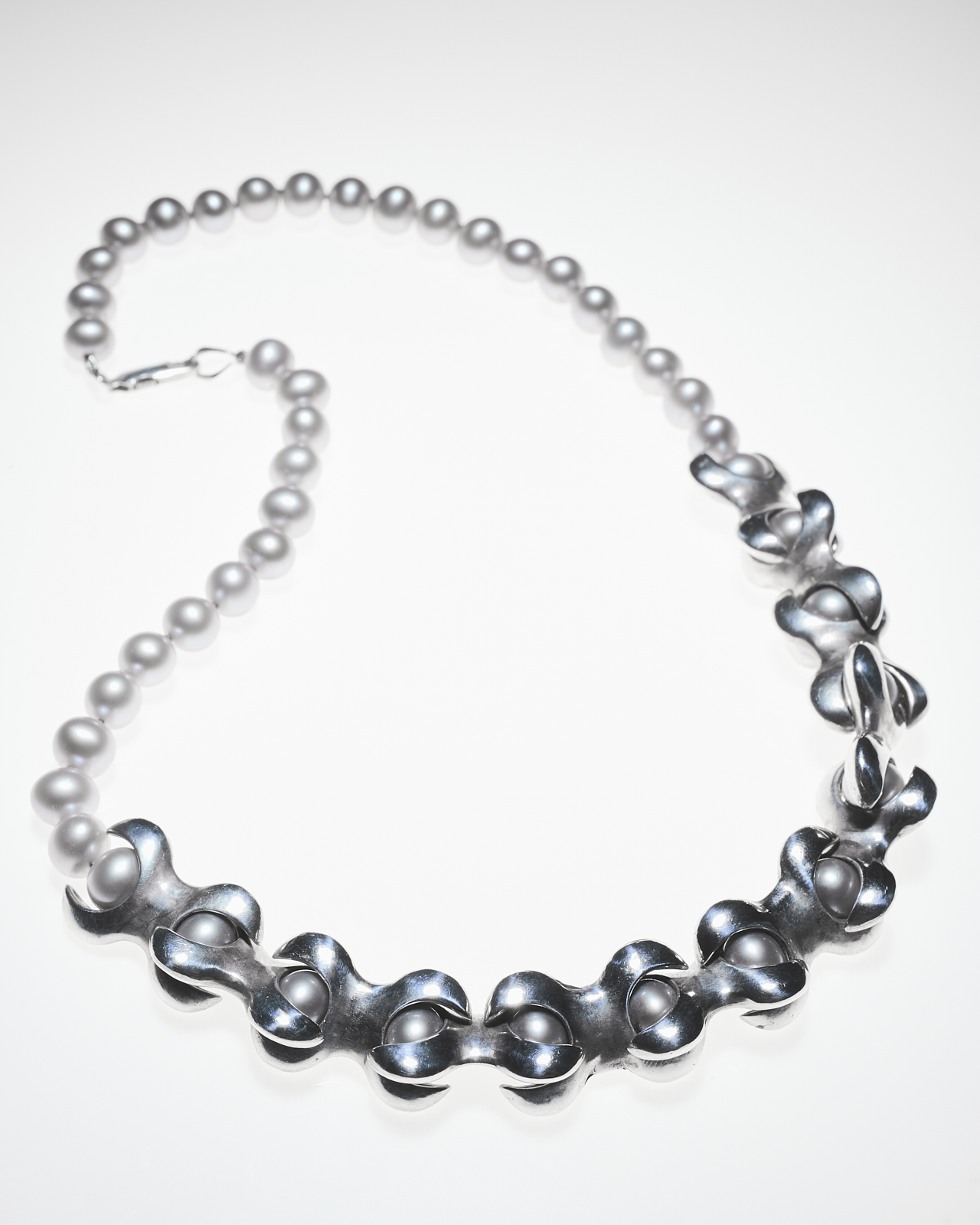
During rolling, variations in the silver’s thickness created irregular edges; what might have been discarded became a defining detail.

Looking back at your process, is there a question you wish people would ask more often about your work?

I wish people would ask: “Which part of this piece did you almost abandon?”

There’s almost always a moment where the work feels awkward or unresolved, and I want to give up on it.

But over time, I’ve noticed that those parts often end up being the most interesting—the slightly off-line, or the imperfect edge.

If someone asked me, I’d probably point to that place and say: “That part almost didn’t make it—but it stayed.”

Finally, across different projects and time, what recurring theme or subtle thread continues to appear in your practice?

I’m someone who easily doubts myself. I might finish a drawing and love it, and then question it the next. But I’ve noticed that simpler gestures—like a line that isn’t trying too hard—can still feel right years later.

So in jewellery, I’m always balancing between expression and restraint. I want my thoughts to be present, but not too strongly.

And yet, no matter how much I try to hide, something personal still comes through. It keeps appearing because I can’t fully conceal it—the most I can do is shape how it shows.


About One for the Future (OFTF)
One for the Future celebrates the next generation of jewelry and creative industry professionals. Each year, the program recognizes honorees for their innovation, craftsmanship, and/or unique perspectives. It also provides them with opportunities for mentorship, exposure, and connections with collectors and industry leaders worldwide.

Enjoyed this piece? Explore more jewelry content from Future Heirloom!
Wearable Archives: Memory and the Politics of Storytelling

Working between Hong Kong and the United States, Ho Oi Ying Valerie approaches jewelry not simply as adornment, but as a living, breathing archive. Her wearable forms hold stories of migration, resilience, and political memory in intimate ways. She trained as both a jeweler and educator and earned an MFA in Jewelry and Metalsmithing from the Rhode Island School of Design. The social and political conditions of Hong Kong, particularly after the 2019 protests, deeply shape her practice. A 2026–2027 One for the Future Honoree, she continues to gain recognition for work which bridges personal narrative and collective history.

Let’s begin! How would you describe your practice right now? What is at the core of your work, and how does it take shape through jewelry?

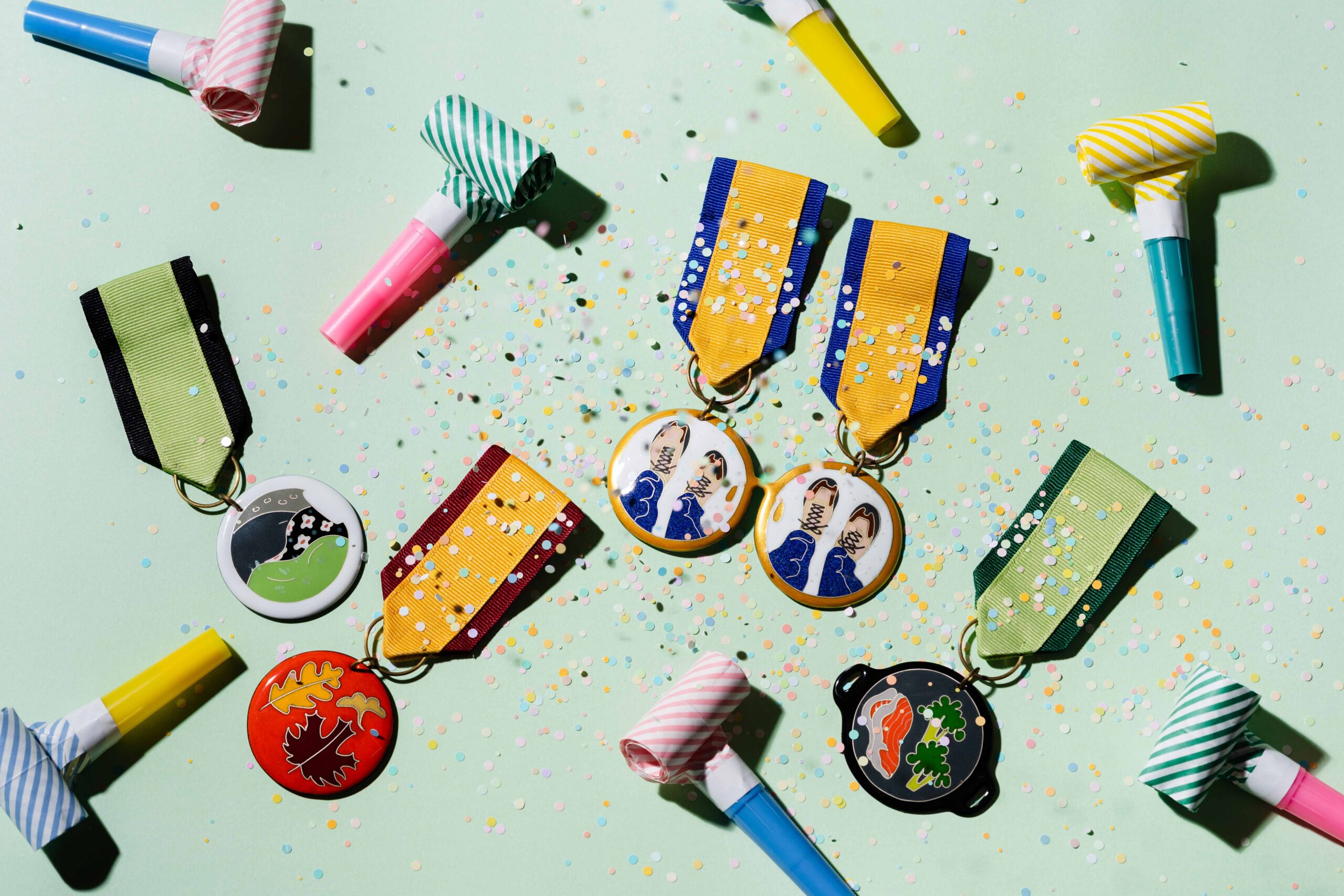
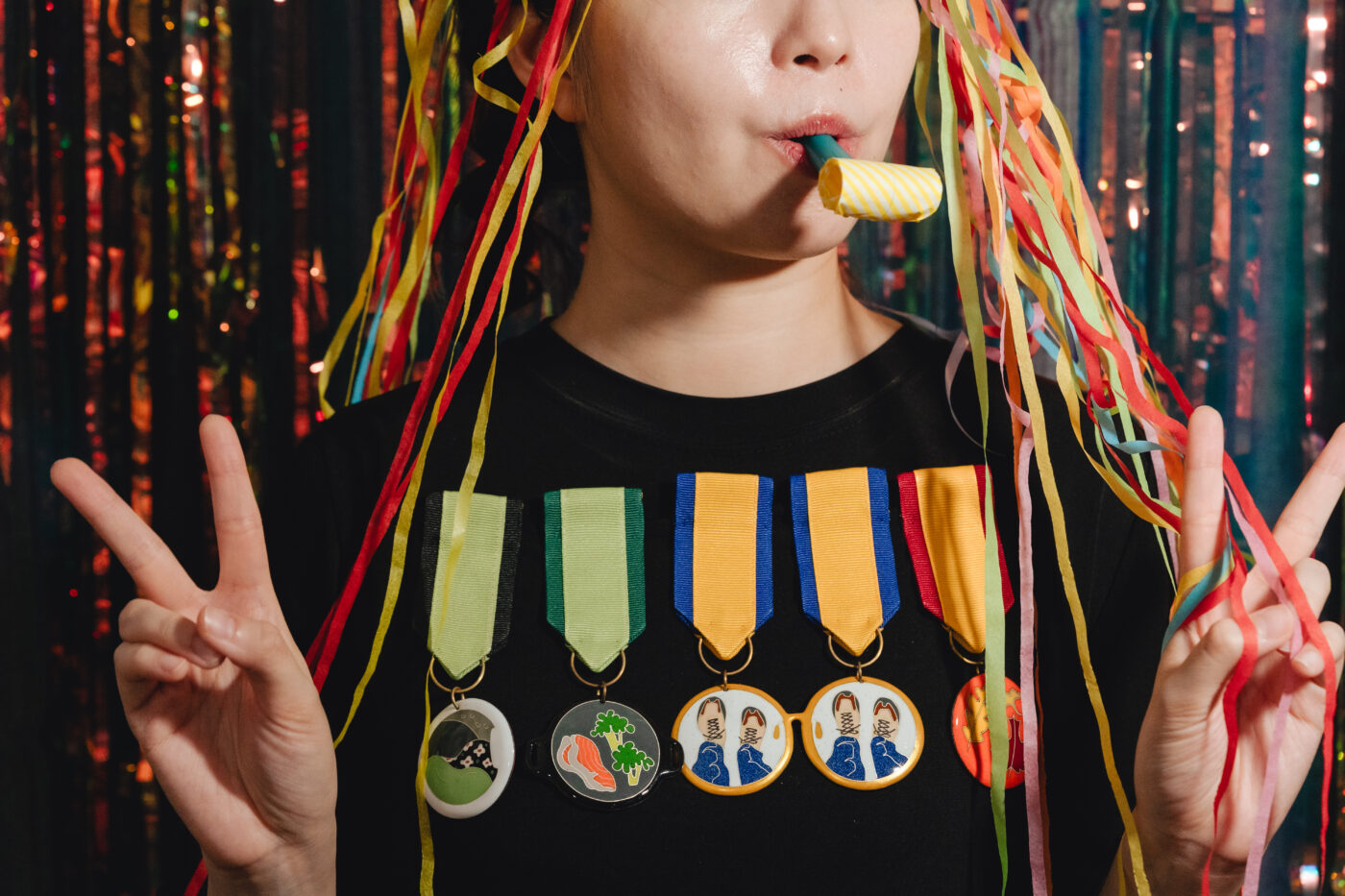
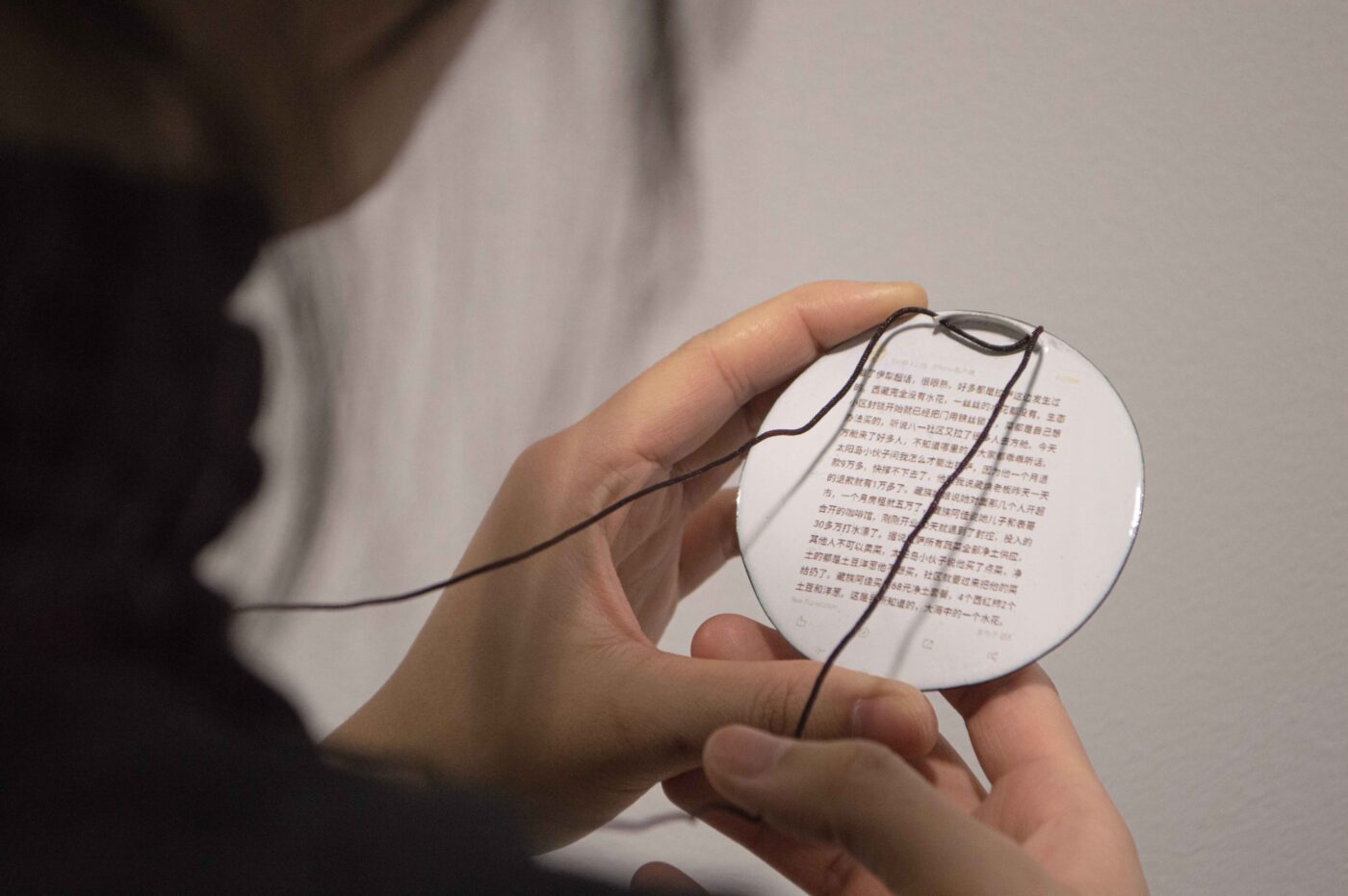
My practice examines jewelry as a mode of storytelling and social archive, translating personal and collective histories into wearable forms. Through projects such as Everyday Triumphs and Achievement Unlocked, I employ cloisonné badges to articulate narratives of migration, identity, and resilience, reframing “achievement” through intimate, everyday experiences. Positioned at the intersection of craft and research, my work treats making as a method of documentation, where material and process become vehicles for preserving lived experience.

Your projects already function as intimate archives of lived experience. Have you imagined expanding this work further?

One direction I have considered but not yet fully realized is the expansion of my cloisonné badge projects into a sustained, large-scale archive. In my current practice, I undertake multiple roles, including conducting interviews, translating narratives, fabricating the work, and overseeing promotion, exhibition, and publication, largely as a single-person operation. Through this process, I have come to recognize both the project’s potential and its limitations in scale.

I envision this work developing into a more expansive platform capable of holding a broader range of stories and participants. I feel prepared to move toward this larger-scale direction, while also recognizing the need to evolve my working model by establishing a more collaborative structure and engaging support across research, production, and organizational capacities.

At this stage, I understand my current work as both a foundation and a point of transition, positioning the project to grow into a more collective and sustainable framework.

As you think about scaling that archival approach, are there other media that feel complementary to what jewelry can hold?

If my work were to exist in a different medium, it would likely take the form of film or moving image. Much of my practice is rooted in oral history, with listening, translating, and interpreting personal narratives, and film offers a way to hold voice, gesture, and temporality in ways that static objects cannot fully capture.

While my cloisonné projects distill these stories into intimate, wearable forms, film would allow the narratives to unfold more expansively, preserving tone, rhythm, and presence. It would also create space for multiple voices to coexist, extending my interest in jewelry as an archive into a time-based and collective medium.

In this sense, I see film as a potential starting point for expanding the project further, particularly if the opportunity arises to explore these narratives through a time-based and collaborative format.

Your work pushes against traditional ideas of what jewelry is or should be. What assumptions or conventions within the field do you find yourself questioning most?

One convention I often question is the tendency to position jewelry primarily as an object of adornment or luxury, rather than as a form of critical and narrative expression. While these associations remain deeply embedded within the field, my interest lies in how jewelry can function as a site for storytelling, documentation, and the preservation of lived experience.

In my practice, I engage with personal and collective histories, particularly those shaped by migration and everyday resilience, translating them into wearable forms. This approach challenges the notion that jewelry must prioritize aesthetic value or material preciousness in order to carry meaning.

Jewelry can serve as a powerful form of artistic expression, distinguished by its intimate relationship with the body. Worn rather than displayed, it enables individuals to embody and communicate what they value, functioning as a personal and mobile manifesto in public space.

I am also interested in expanding what is considered worthy of being recorded or remembered. Small, intimate, and often overlooked experiences can hold significant cultural and emotional weight, and I view jewelry as a powerful medium through which these narratives can be articulated, preserved, and shared.

When you’re working with personal and collective histories in this way, questions of interpretation and responsibility inevitably come up. Can you talk about a recent instance of doubt in your process? How did you work through it?

A recent moment of creative doubt emerged while developing Achievement Unlocked in late 2025, particularly in the process of translating oral histories into cloisonné forms. I found myself questioning whether I was doing justice to the narratives I had collected, how much to interpret, what to simplify, and how to balance aesthetic decisions with the integrity of each story.

The doubt was less about making and more about responsibility. I was working with lived experiences shaped by migration and personal transition, and I became increasingly aware of the weight of representing others’ voices through my own lens.

I moved through this by returning to both the participants and the material. Revisiting interview notes, listening again to recordings, and allowing the cloisonné process, through wire placement, layering, and firing, to function as a form of careful translation helped me regain clarity. I also came to accept that interpretation is an inherent part of the work, and that my role is not to replicate a story, but to hold space for it through form.

That moment ultimately strengthened my approach, reinforcing the importance of attentiveness, ethical consideration, and trust in both the process and the relationships that shape the work.

That sense of responsibility also connects to history more broadly. If you could communicate directly with a historical figure through your work, who would it be?

If I were to create a work for a historical figure, I would consider President Mao of China, informed by my research into political badges held in the archives of the British Museum. I was particularly struck by the presence of cloisonné badges produced in Hong Kong during that period, which revealed a complex relationship between craft, politics, and manufacturing history.

This discovery led me to question what it would mean to create such an object now, from my own contemporary position. Rather than functioning as a symbol of allegiance, the work would explore the shifting meanings embedded in these forms, how an object once used for mass political expression might be reinterpreted through a reflective and critical lens. It would also examine the emotional and historical tension of remaking such an object today.

In this way, the work becomes less about the figure itself and more about the act of revisiting history through material practice, considering what it means to reproduce, reinterpret, and carry these forms in the present.

Alongside these past references, you also draw inspiration from more ephemeral, everyday materials. What kinds of sources are currently shaping your thinking, and how are they entering your work?

I have been increasingly drawn to printed ephemera, such as newsletters, pamphlets, personal letters, and other forms of low-cost, widely circulated materials, as a source of inspiration. These objects are often produced for immediate use rather than long-term preservation, yet they carry significant cultural, social, and political histories.

What interests me is their dual nature: they are both fragile and durable, easily overlooked yet deeply informative. Many of these materials exist at the margins of official archives, holding voices and narratives that are not always formally recognized.

I see this influence entering my work through both content and form. Conceptually, they inform my approach to storytelling and archival practice, particularly in how narratives are collected, translated, and shared. Materially, I am interested in how their visual language, like layout, repetition, and modes of circulation, might be reinterpreted through cloisonné and wearable formats.

By engaging with these sources, I aim to further position jewelry not only as an object of adornment but as a medium capable of carrying and preserving distributed, everyday histories.

You are focusing on everyday experiences and overlooked narratives. How do you hope people feel when they encounter or wear your work?

I hope that when someone engages with my work, they experience a sense of recognition, of seeing their own lives, or fragments of it, reflected back to them. Much of my practice centers on everyday experiences that are often overlooked, and I want to create space for these moments to be acknowledged as meaningful and worthy of attention.

I also hope the work offers a sense of closeness and quiet intimacy. Because jewelry exists on the body, it invites a different kind of relationship, one that is personal, reflective, and sustained over time.

More importantly, I hope it gives permission: permission to value small achievements, to hold onto personal histories, and to recognize one’s own experiences. No matter how ordinary they may seem, they carry significance. In this way, the work becomes not only something to look at, but something to live with and through.

What do you wish audiences would ask more often about your process or the stories embedded in each piece?

One question I wish more people would ask is: Whose story is this, and how was it translated into form?

Much of my work begins with conversations, interviews, and the process of listening. The final object is only one layer of a larger process that involves interpreting lived experiences, navigating what to reveal or withhold, and considering how a story can be carried through material and form.

By asking this question, it shifts the focus from the object alone to the relationships, decisions, and responsibilities embedded in the work. It opens up a deeper understanding of jewelry not just as something to look at or wear, but as a medium that holds and mediates between different voices, experiences, and histories.

Finally, can you share what ideas keep resurfacing across your practice? Why do those ideas remain central to your work?

A recurring theme in my work is the quiet resilience embedded in everyday life, particularly within experiences shaped by migration, adaptation, and personal transition. I am consistently drawn to small, often overlooked moments that reflect how individuals navigate change and reconstruct a sense of belonging in new environments.

This theme continues to surface because I see myself as part of this broader community, individuals from Hong Kong who have relocated to other places in response to recent political shifts. These shared experiences of displacement and adjustment have deeply informed both my perspective and my approach to storytelling.

I am also interested in understanding migration not only as the movement of people, but as a relational process, one that involves how individuals are received, understood, and integrated within new communities. This perspective informs how I approach narrative, paying attention to both personal experiences and the broader social contexts in which they unfold.

Through my work, I return to these narratives as a way of acknowledging and preserving them. The repetition is intentional; it allows me to continually refine how these lived experiences are translated into material form, while creating space for these subtle yet significant aspects of life to be recognized and valued.


About One for the Future (OFTF)
One for the Future celebrates the next generation of jewelry and creative industry professionals. Each year, the program recognizes honorees for their innovation, craftsmanship, and/or unique perspectives. It also provides them with opportunities for mentorship, exposure, and connections with collectors and industry leaders worldwide.

Enjoyed this piece? Explore more jewelry content from Future Heirloom!
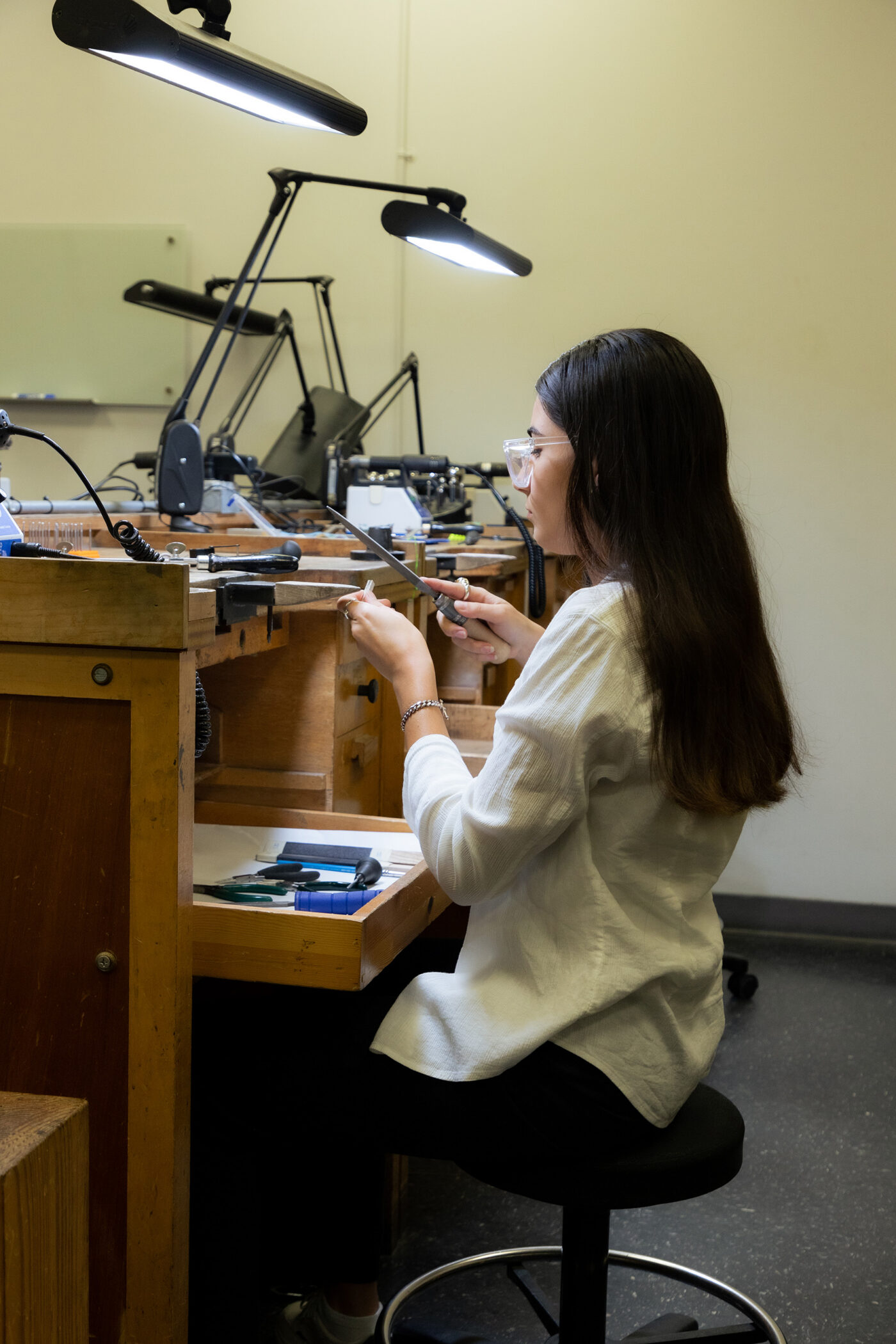
Material as Memory: A Conversation with Yuxin Song

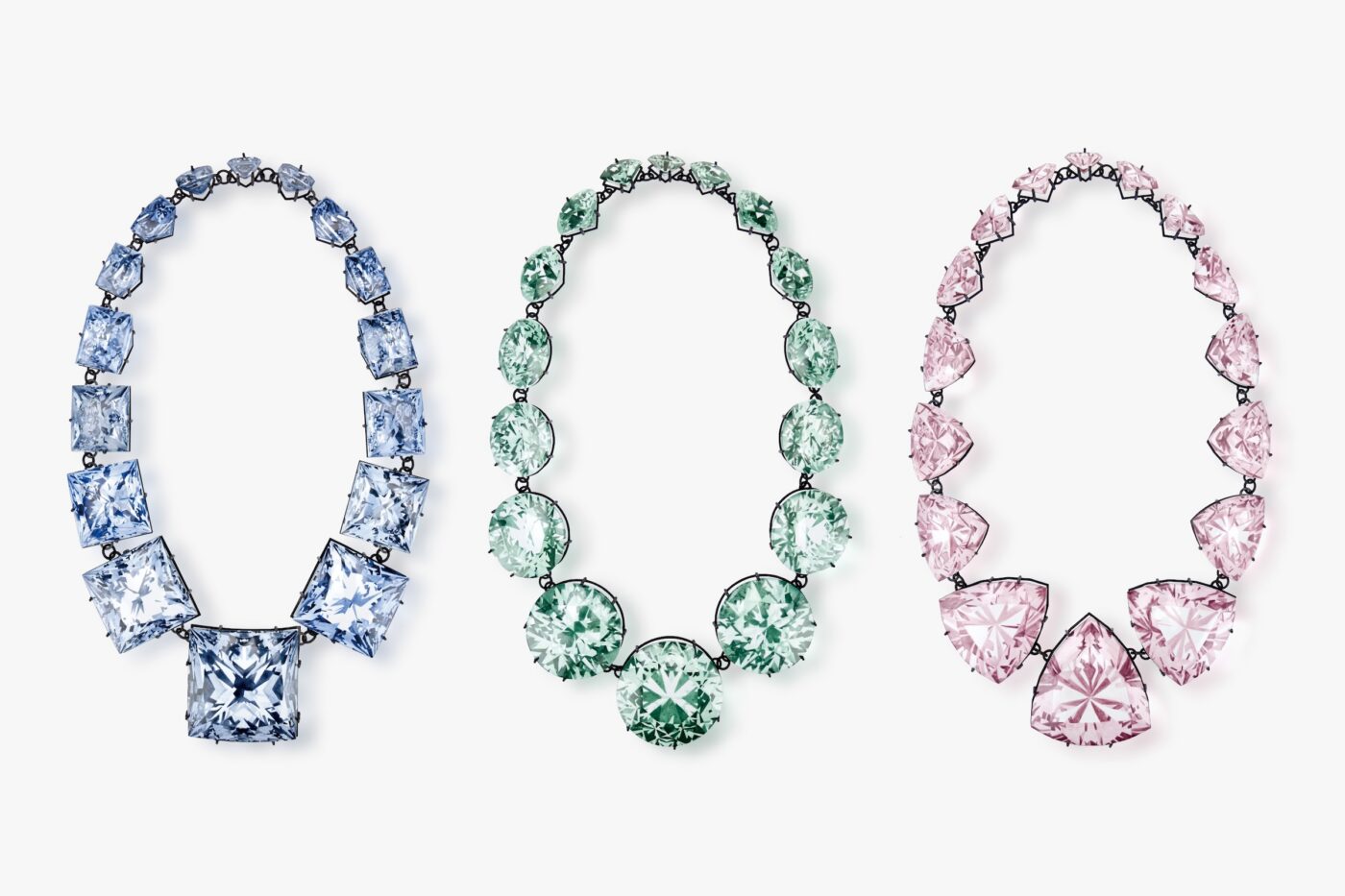
Based in Calgary, Canadian-Chinese artist Yuxin Song is a 2026–2027 One for the Future Honoree whose work sits at the intersection of material history and personal narrative. Trained in both China and Canada, she brings together technical meticulousness and introspective inquiry, particularly through her specialization in enamel. Her practice moves fluidly amid tradition and experimentation, inviting viewers into spaces which feel both tactile and quietly emotional.

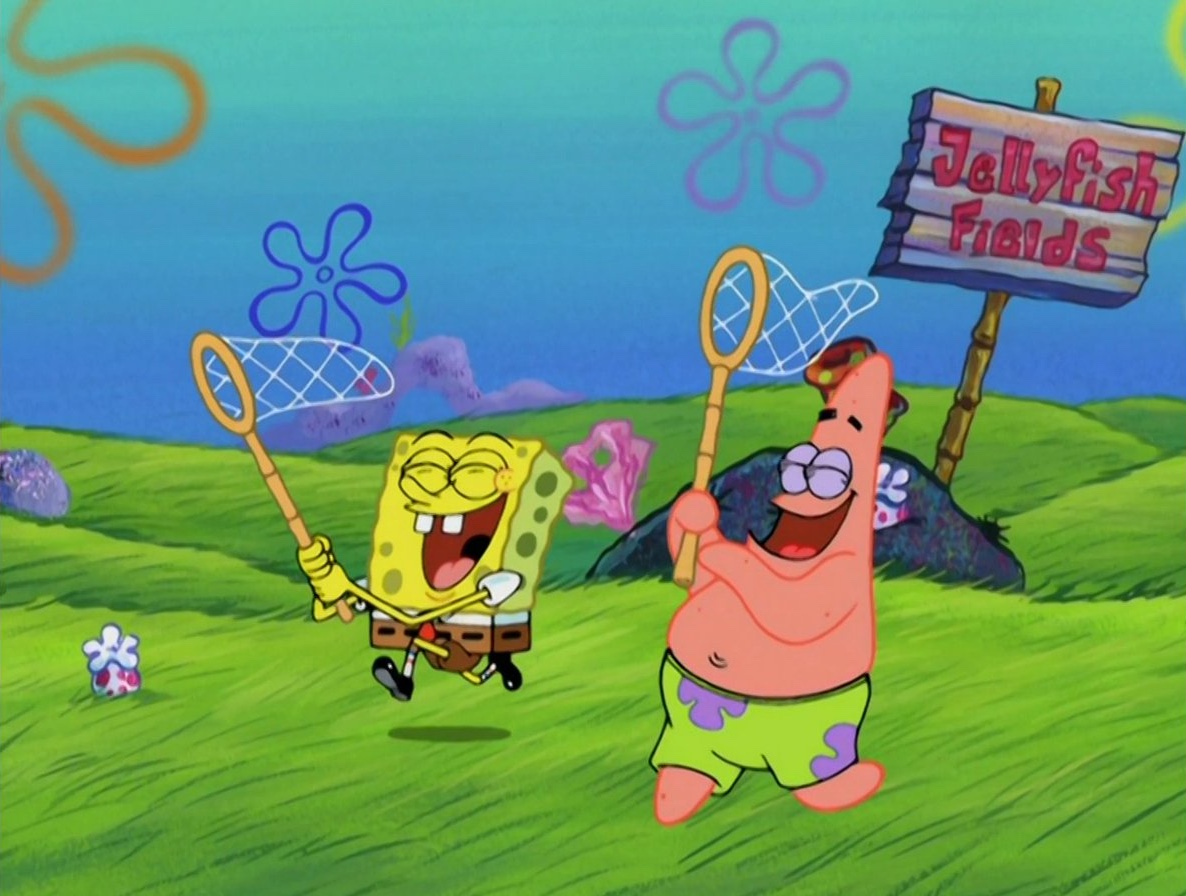
We spoke with Song about meaning, doubt, overlooked moments, and why her work might one day belong to SpongeBob.

Material Meanings and Contemporary Reinterpretation

NYCJW: To start us off, how would you describe the core of your practice? What draws you to the materials and ideas you work with?

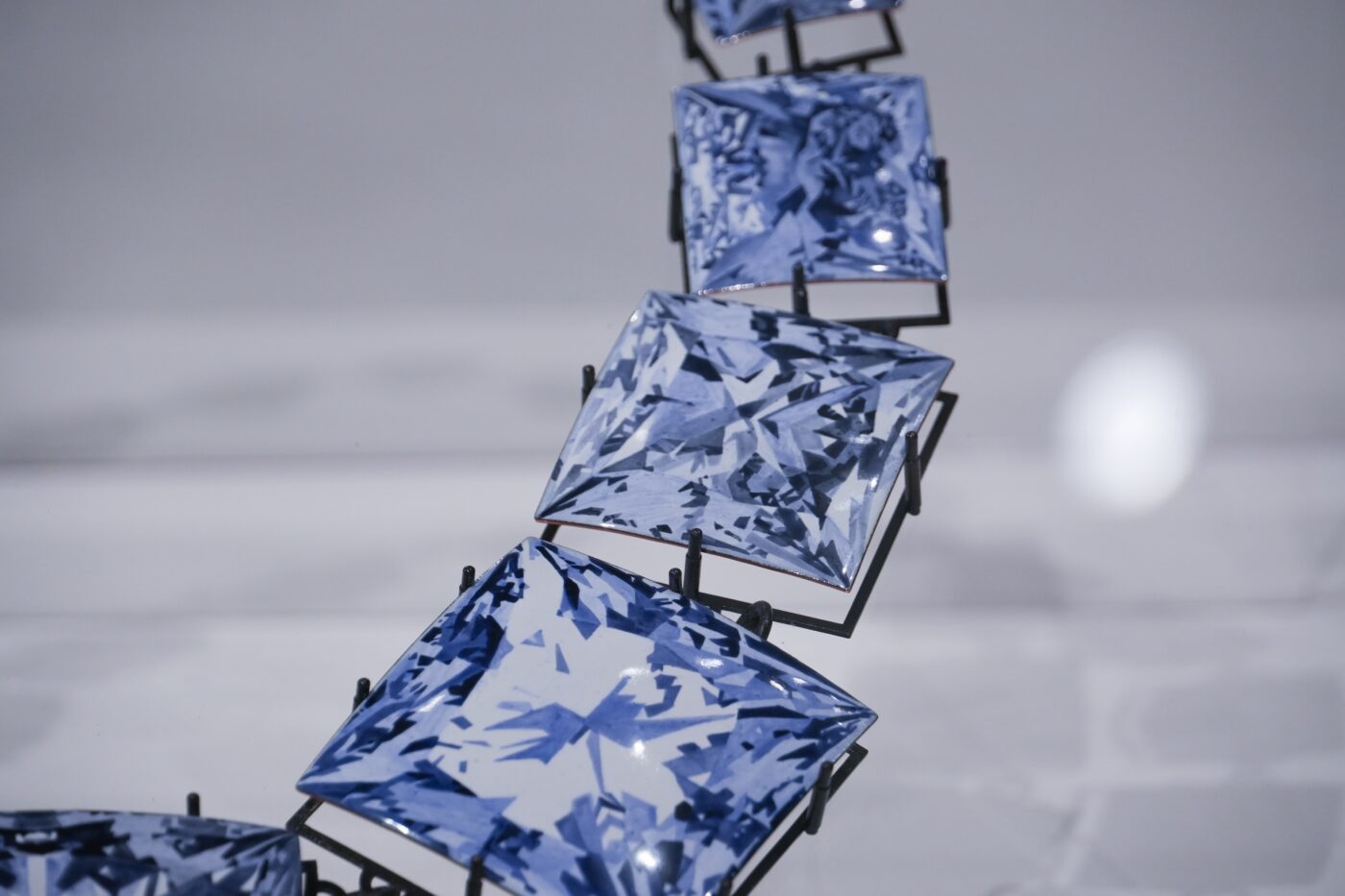
YS: In my artistic practice, I explore how materials carry meaning and how these meanings can be reinterpreted in a contemporary way. I investigate how the physical properties, historical context, and technical processes of materials communicate ideas, which I then connect with my personal reflections and narratives.

NYCJW: You talk about meaning being layered and evolving. Are there ideas you’ve wanted to explore but haven’t quite found the right form for yet?

YS: I have long been interested in creating a series that highlights the small, often overlooked details of daily life, moments we notice but rarely take the time to truly explore. I haven’t fully developed this concept yet, as I am still figuring out the right materials and forms to bring it to life. For now, I am focusing on other directions in my work, but I hope to return to this idea in the future.

Expanding Scale and Shared Authorship in Experience

NYCJW: That attention to presence and detail feels closely tied to experience. If your work could expand beyond the scale of jewelry, how might it change?

YS: If my work could exist in a different medium, I believe it would be a large-scale installation. The size allows the work to occupy space in a way that small pieces cannot, giving it a strong presence. The audience can interact with the work, move around it, and become part of the experience.

NYCJW: Thinking about how viewers move through and interpret your work, how do you feel about authorship? Who ultimately holds the meaning?

YS: I disagree with the assumption that the artist holds authority over the meaning of their work. I view the creation of jewelry as a narrative process similar to writing. The artist uses material, structure, and visual language as tools, much like narrative techniques, to express their intentions. While the overall appearance serves as the ‘hook’ that draws the attention of the audience, the specific choices in form and material establish the context, and the visual language functions as the style.

However, once a work is finished, its meaning is no longer solely the artist’s. Unlike text, visual art has the power to communicate emotions and experiences that go beyond words. This allows the object to exist in a space of shared meaning, shaped in part by the audience’s perception and interpretation.

Creation as a Way Forward

NYCJW: Has that openness to interpretation ever been challenged by moments of doubt in your own practice?

YS: The last moment of major creative doubt I experienced was around 2024, when I questioned myself, my ideas, and the value of my work. I felt stuck and unsure of my direction. However, once I began making again, the act of creation itself became healing. The process allowed me to move through the doubt, and I found that solutions emerged naturally as I engaged with the work, step by step. Even now, I still experience moments of doubt, but I continue to move forward with them.

Playful Imaginations and Unexpected Inspirations

NYCJW: It sounds like play and curiosity are important in moving forward. If you could fully lean into that, is there someone you’d love to create for?

YS: I think I would create a work for SpongeBob and his friend Patrick. I love SpongeBob’s personality, and I think he would be really happy to receive it. Since my nickname in China is “Boluo”, which means pineapple, it feels like we already have a small connection. The work would be a matching, interactive pair that they could wear and use together, something playful that could even help them catch jellyfish.

Transformation and Flexibility in Process

NYCJW: That sense of play also shows up in your materials—what are you experimenting with right now?

YS: I am currently working on several series that feature raw stone and flexible ties.

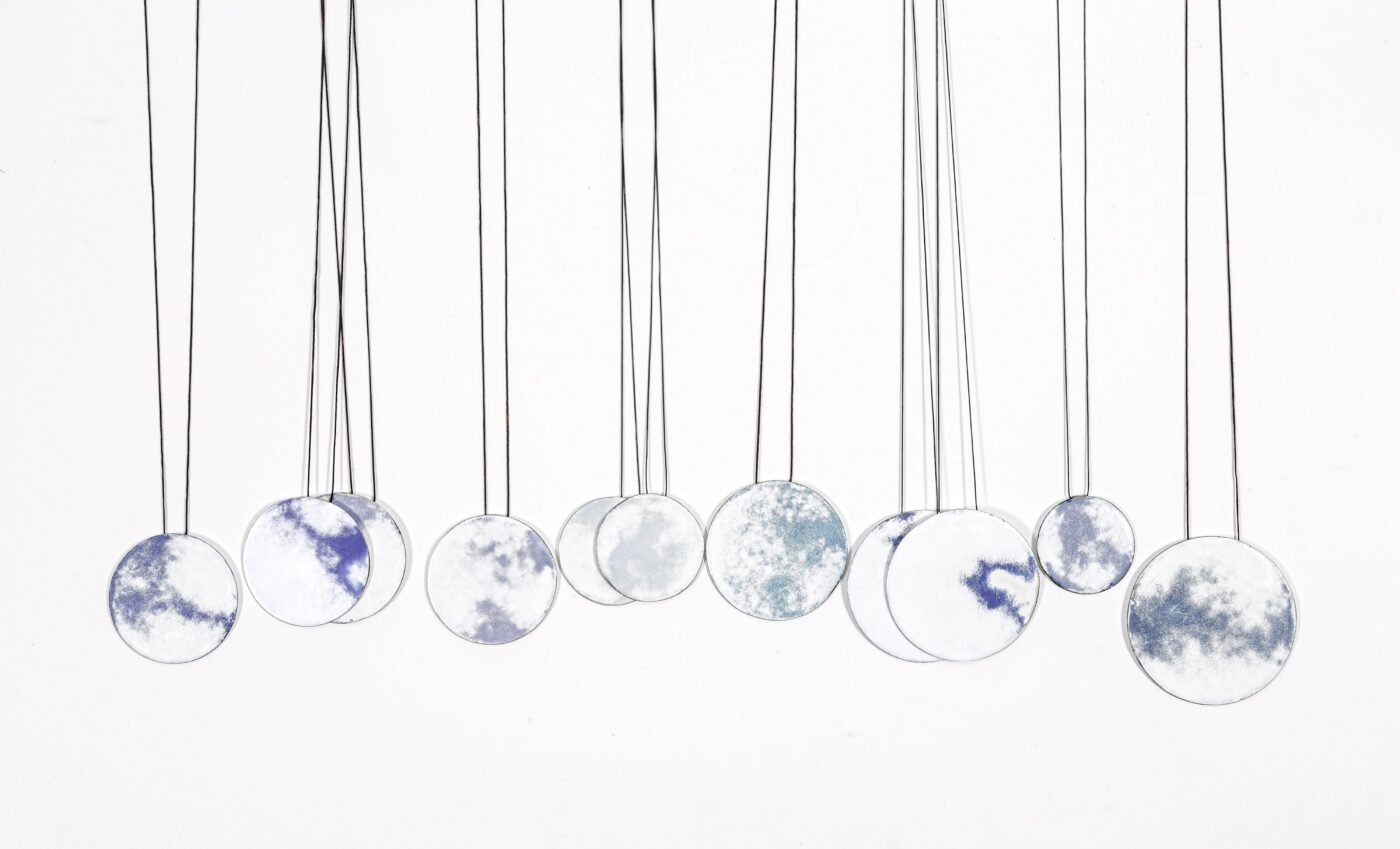
For the raw stone, I am interested in the relationship between raw stone, gemstones, and enamel, and how these materials reflect different states of transformation.

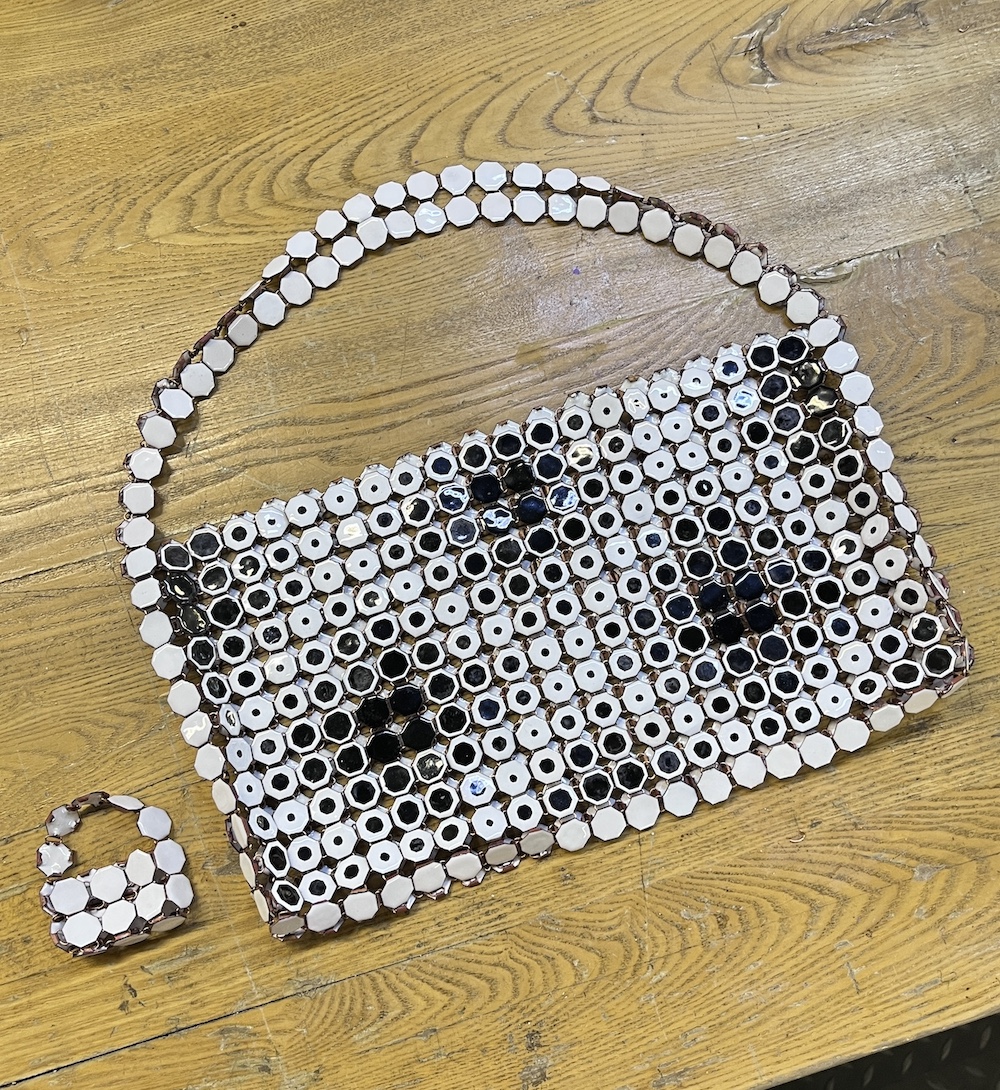
For the flexible ties, I draw inspiration from chainmail. I previously used this structure to create bag-like forms, and now I am pushing it further, strengthening the system to build flexible, fabric-like enamel forms that can move and adapt to different movements.

Reflection, Healing, and Evolving Meaning

NYCJW: With all these material explorations, what kind of experience do you hope people have when they encounter your work?

YS: I see the visual aspect of my work as an entry point. Some people might simply be drawn to how it looks, and I think that is completely valid. Others may spend more time with it and begin to sense where it is coming from.

For me, the work holds space for reflection and a quiet sense of healing, as much of it is rooted in personal experience. If it resonates with someone and allows them to connect with their own thoughts or feelings, that is meaningful to me.

At the same time, I do not see meaning as fixed. I do not have the final say in how the work is understood. Each person brings their own perspective, and I value how the meaning can shift and expand through different interpretations.

Curiosity Behind the Making

NYCJW: When people do engage more deeply, what’s something you wish they were more curious about?

YS: I wish more people would ask about my making process.

For me, the process is not just a technical step; it is where the work really begins to take shape. I often think of it as a conversation with the material. Different materials have their own personalities, and sometimes my ideas come from experimenting with them. Other times, the process itself becomes part of the final concept.

Threads of Acceptance

NYCJW: And finally, when you look across your body of work, what feels like the thread that keeps reappearing?

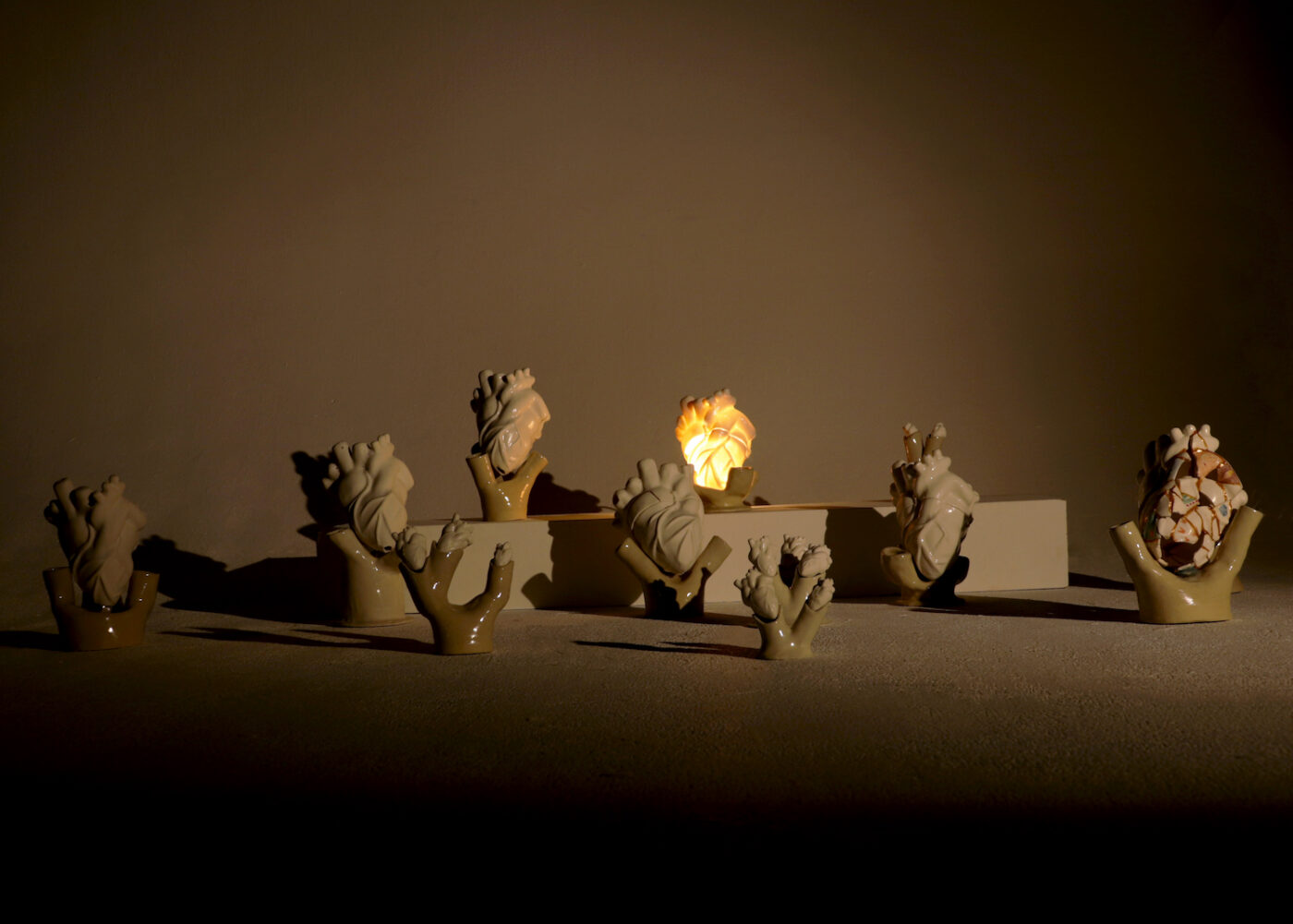
YS: A recurring theme in my work is learning to accept, grow, and love. In my 2022 ceramic installation, this was very obvious, as I focused on highlighting life’s imperfections. In my recent work, it has become more subtle, appearing through the materials I use.

I enjoy using objects to express my feelings, and I hope my work can bring a small sense of healing, even if it resonates with only a few people.

Yuxin Song’s practice resists fixed meaning, instead offering a quiet, material-driven dialogue between artist, object, and audience. Whether working with enamel, stone, or flexible structures, she treats making as both inquiry and conversation—one that continues long after the work leaves her hands.


About One for the Future (OFTF)
One for the Future celebrates the next generation of jewelry and creative industry professionals. Each year, honorees are recognized for their innovation, craftsmanship, and/or unique perspectives, gaining opportunities for mentorship, exposure, and connection with collectors and industry leaders worldwide.

Enjoyed this piece? Explore more jewelry content from Future Heirloom!
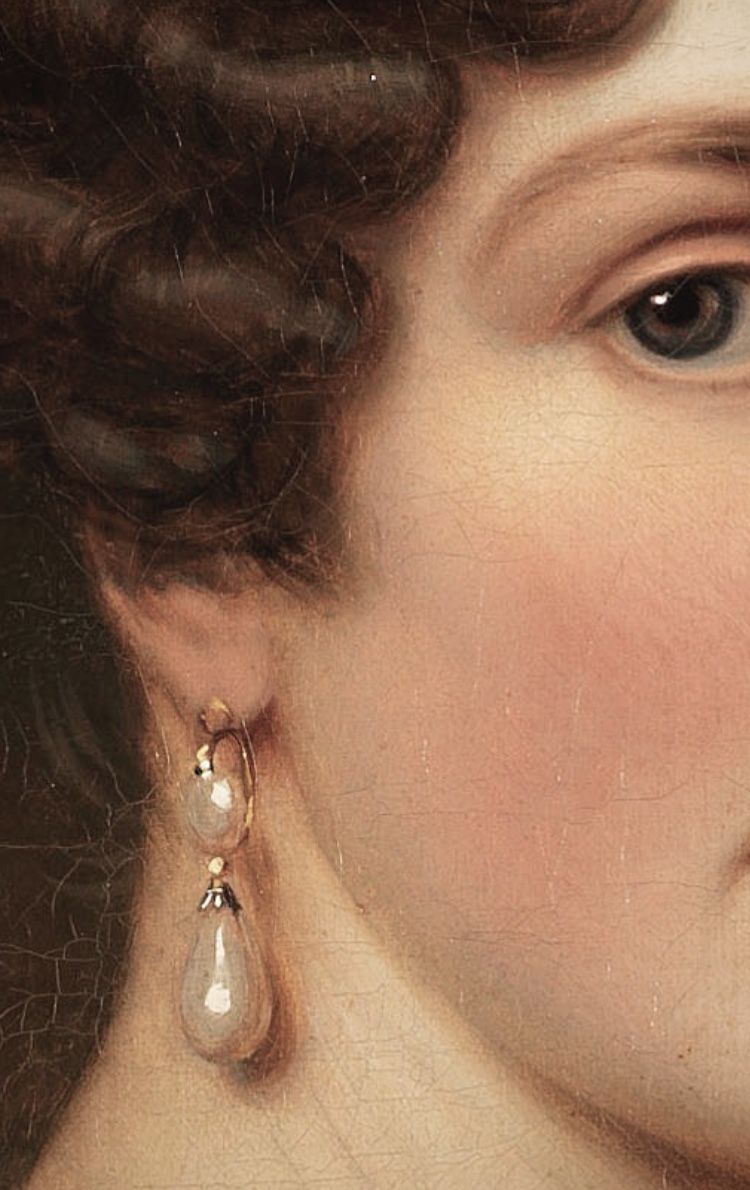
Quiet Strength: One Rapelana of Xita on Jewelry, Identity, and the Art of Self-Discovery

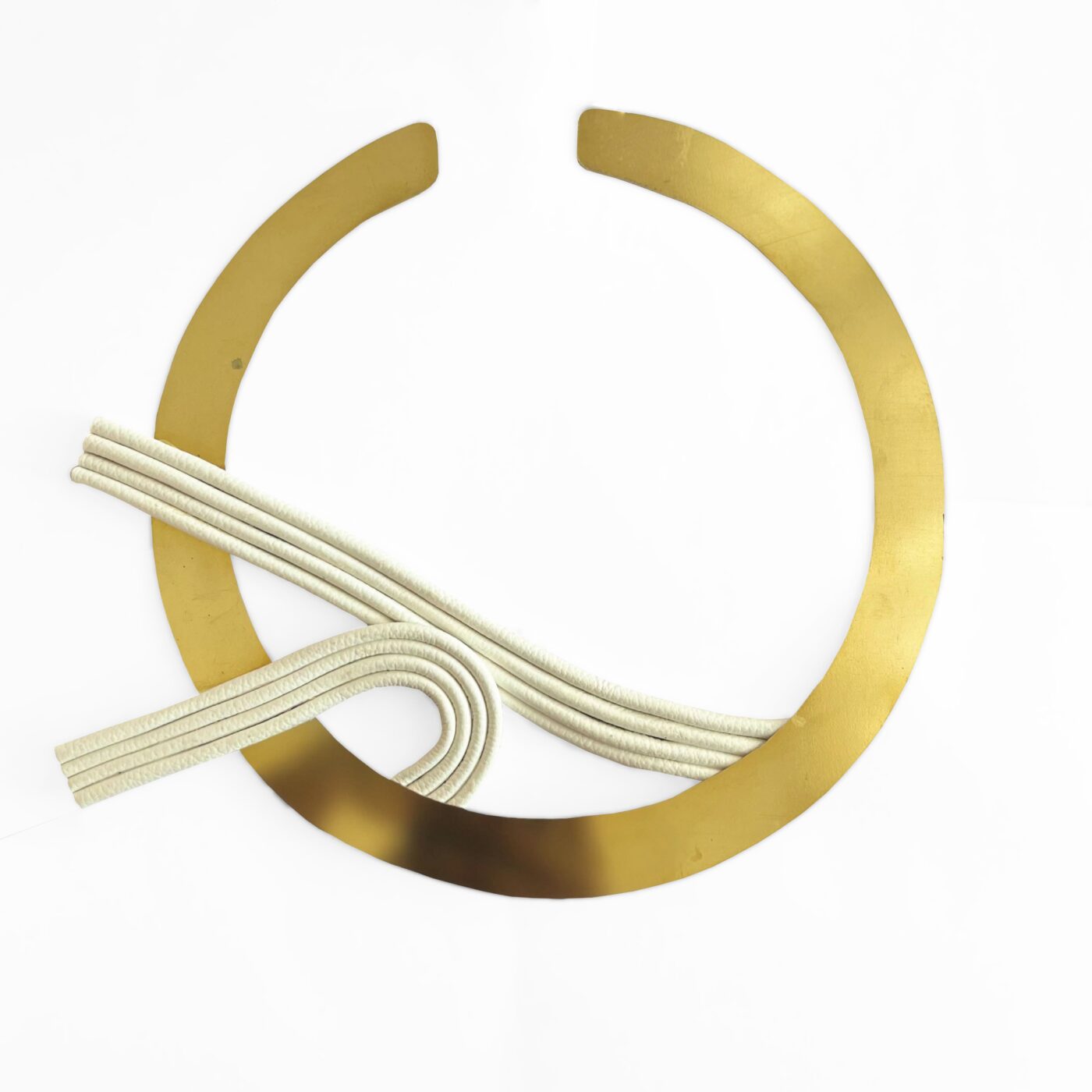
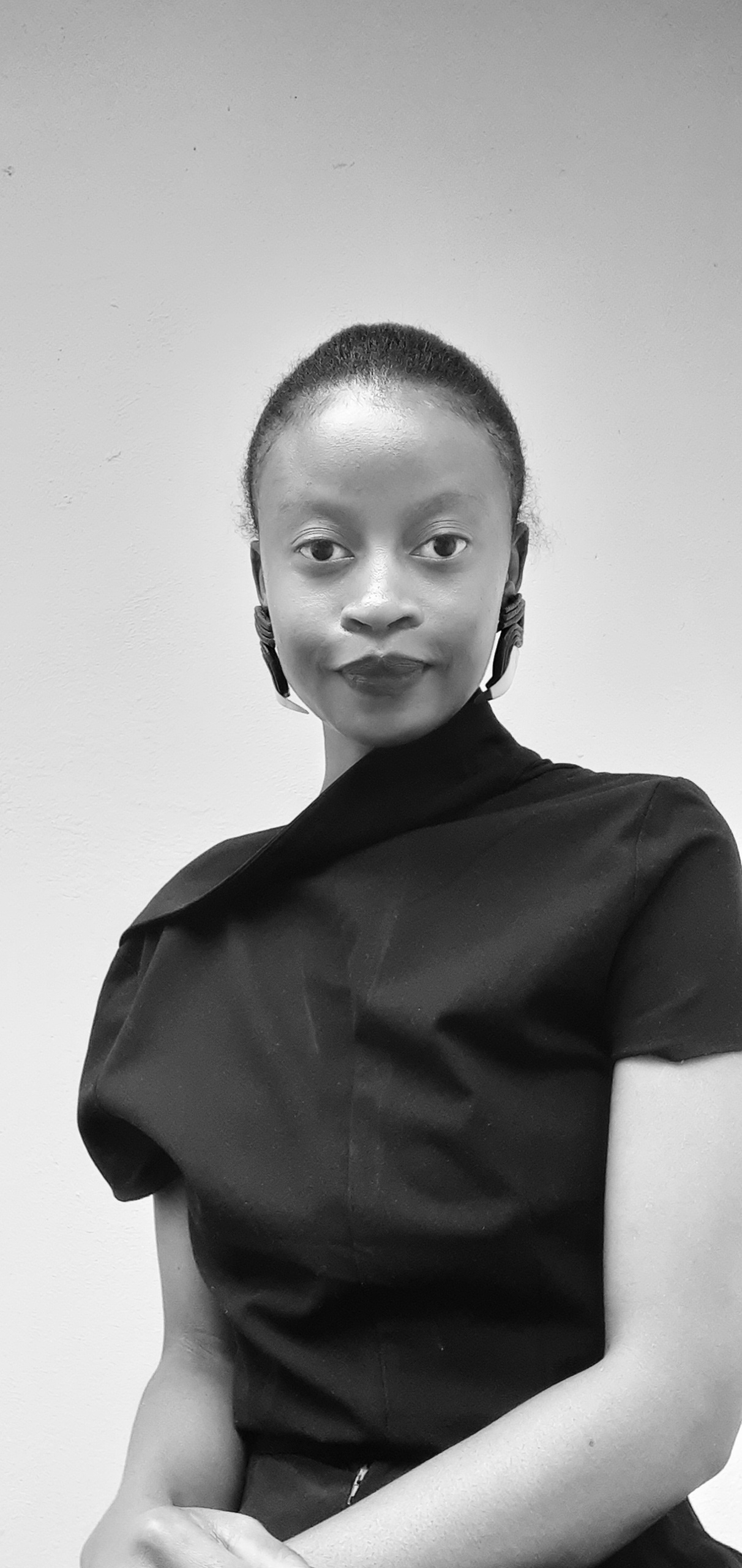
We sat down with One Rapelana, a 2025 OFTF Honoree and award-winning multidisciplinary designer from Botswana, to explore her journey and creative vision. Since beginning her practice in 2015, she has transformed discarded materials into bold, experimental jewellery and accessories. What started as a passion project grew into Xita, officially registered as a full-time company in 2018. Today, Rapelana works with leather remnants and reclaimed brass, crafting pieces that are both minimal and striking, each reflecting a personal narrative of growth, identity, and self-discovery. Rooted in sustainability, craftsmanship, and intuition, her work elevates overlooked materials into wearable art that encourages reflection, celebrates individuality, and challenges conventional notions of adornment.

Introducing Xita: The Journey Begins

NYCJW: Can you introduce us to Xita and the story behind your work?

OR: Xita is a contemporary jewelry and accessories brand rooted in self-discovery and thoughtful design. I create sculptural pieces using materials like brass and leather, exploring the space between art, craft, and identity. Each piece reflects a quiet strength, challenging traditional ideas of African adornment through minimal, expressive forms.

Materials & Inspirations: The Heart of the Work

NYCJW: Your work shows a thoughtful relationship with materials. Are there any projects or materials you’ve held back from exploring?

OR: One idea I’ve intentionally put on hold is working with wood as a secondary material. I’m deeply drawn to its warmth, history, and tactile quality, but I don’t yet feel ready to engage with it in the way it deserves. Working with wood requires a different rhythm, deeper technical understanding, and a sensitivity to its natural behavior that I’m still developing. I see it as a material I want to approach with respect and patience, when I’m ready to fully explore its possibilities, not rush it. For now, I’m allowing my practice to evolve naturally through materials like brass and leather, knowing that when the time is right, wood will become part of the conversation.

NYCJW: Inspiration can come from unexpected sources. What non-traditional influences are shaping your work right now?

OR: Lately, I’ve been deeply drawn to classic bossa nova, its rhythm, subtlety, and effortless elegance. There’s something about the way it balances softness with sophistication, intimacy with movement, that resonates with how I want my work to feel. I imagine this influence entering my pieces through form and material: subtle curves, gentle weight, and a quiet sense of rhythm in how a piece sits on the body or moves. It’s less about literal reference and more about capturing that feeling of ease, warmth, and understated confidence in the jewelry I create.

Expanding the Medium: Beyond Jewelry

NYCJW: If your approach to form and material could translate into a different medium, how would it manifest?

OR: If my work were to exist in another medium, it would be furniture and sculptural objects. Translating those shapes into chairs or large-scale wall pieces feels like a natural extension of that language. Furniture allows the body to interact with form in a slower, more grounded way, while sculpture gives space for the pieces to exist purely as expressions of material, balance, and intention. Both would allow me to explore scale, permanence, and physical dialogue, turning what is worn into something that can be inhabited, rested on, or lived with.

Challenging Expectations: Breaking the Mold

NYCJW: You challenge traditional ideas in African jewelry. Are there beliefs or conventions in your field that you disagree with?

OR: One belief I quietly challenge is the idea that African jewelry must look a certain way bold colors, heavy ornamentation, and instantly recognizable “ethnic” motifs. While those aesthetics are important, they don’t define the full spectrum of African creativity. My work questions the notion that African design has to be visually loud or rooted only in traditional symbolism. I believe it can also be minimal, tactile, and quietly expressive, informed by heritage, but not confined to it. Inspiration can come just as easily from everyday objects, materials, and lived experience as from cultural references. For me, authenticity lies in freedom of expression, not in meeting expectations of what African design should look like.

Doubt & Evolution: Moments of Growth

NYCJW: Evolution often brings doubt. Can you describe a recent moment of creative uncertainty, and how you navigated it?

OR: The last moment of real creative doubt came when my aesthetic began to shift. I started my practice creating bold, statement pieces, work that was loud, expressive, and very visibly “there.” Over time, though, my instinct began moving toward something quieter: subtler forms but still bold, restraint, and a more refined use of materials like brass and leather. I questioned whether this evolution would be understood or accepted, especially because my earlier work had been associated with a more overt, “Afro-futuristic” visual language that people often expect from African jewelry. Moving away from that felt risky. I worried that the subtlety might be mistaken for a loss of identity rather than an evolution of it. I moved through that doubt by trusting my intuition and allowing the work to mature naturally. I realized that boldness doesn’t always need to shout, it can exist in restraint, in material choice, in intention. Once I accepted that my practice could grow quietly, the work began to feel more honest and more aligned with who I am now.

Storytelling Through Design

NYCJW: If you could design a piece for a historical figure or fictional character, who would it be?

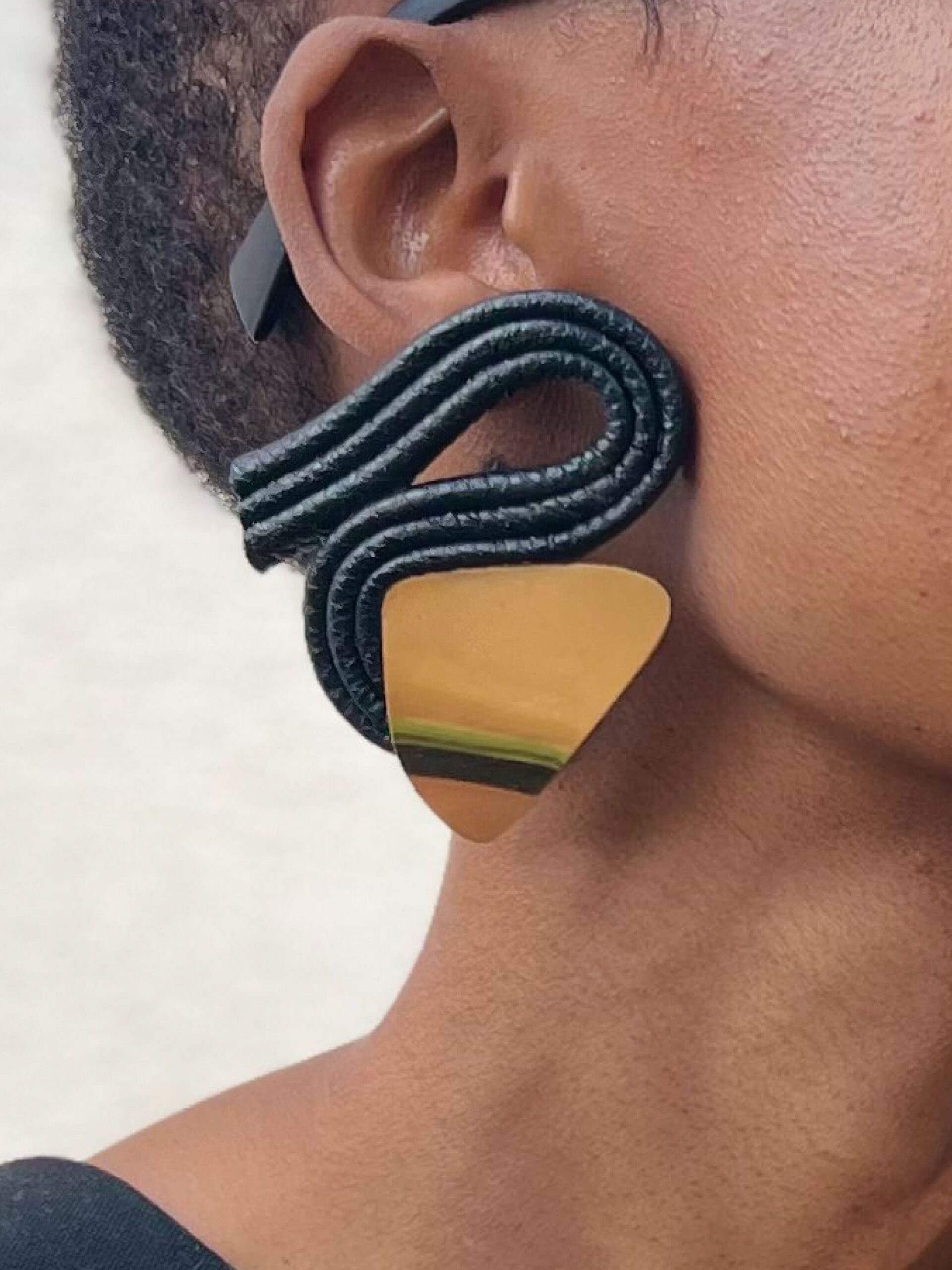
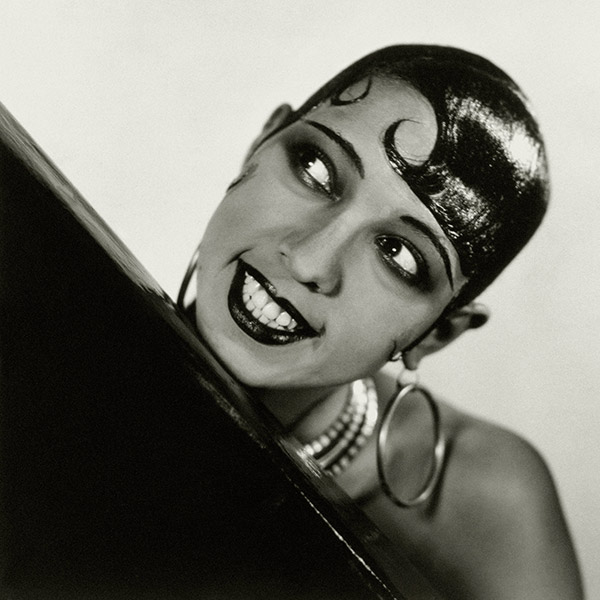
OR: I would create a piece for Josephine Baker, not the version of her that’s often reduced to spectacle, but the layered woman behind it: the artist, the activist, the strategist, the one constantly navigating visibility and power. The work would be a sculptural adornment ,somewhere between jewellery and object made from brass and leather, with subtle movement built into it. Something that speaks to duality: softness and strength, performance and privacy, beauty and resistance. It wouldn’t be loud or decorative for its own sake. Instead, it would hold quiet symbolism ,surfaces worn by touch, forms that feel lived-in, reflecting how she carried both glamour and resilience in equal measure. I imagine it as something worn close to the body, almost like armour disguised as elegance. A piece that honours complexity rather than spectacle, much like her life itself.

Engaging the Wearer: Experience & Emotion

NYCJW: When someone wears or interacts with your work, what feeling or experience do you hope it evokes?

OR: I want someone engaging with my work to feel a sense of presence and intentionality, that each piece was made with care, thought, and purpose. I hope it gives them permission to slow down, reflect, and connect with themselves through what they wear. My jewelry and accessories are meant to be more than adornment; they’re prompts for self-discovery. I hope they inspire people to trust their own instincts, embrace subtlety as strength, and explore their own identity without feeling the need to perform or conform. Ultimately, I want the work to feel like a companion, bold enough to be noticed, but gentle enough to invite personal resonance.

NYCJW: Is there a question you wish people asked more often about your work?

OR: One question I wish more people would ask is: “What collaboration would you love to do, or who would you like to work with?” I would love to collaborate with a museum to explore the translation of my jewelry into larger sculptural pieces, as well as smaller wearable ones. I’m fascinated by how my forms, already sculptural and architectural at a small scale, could inhabit different spaces, from the body to the home or gallery, creating new dialogues between material, form, and experience.

Recurring Gestures: Signatures & Themes

NYCJW: Looking across your collections, are there recurring gestures, themes, or emotions that appear, even subtly?

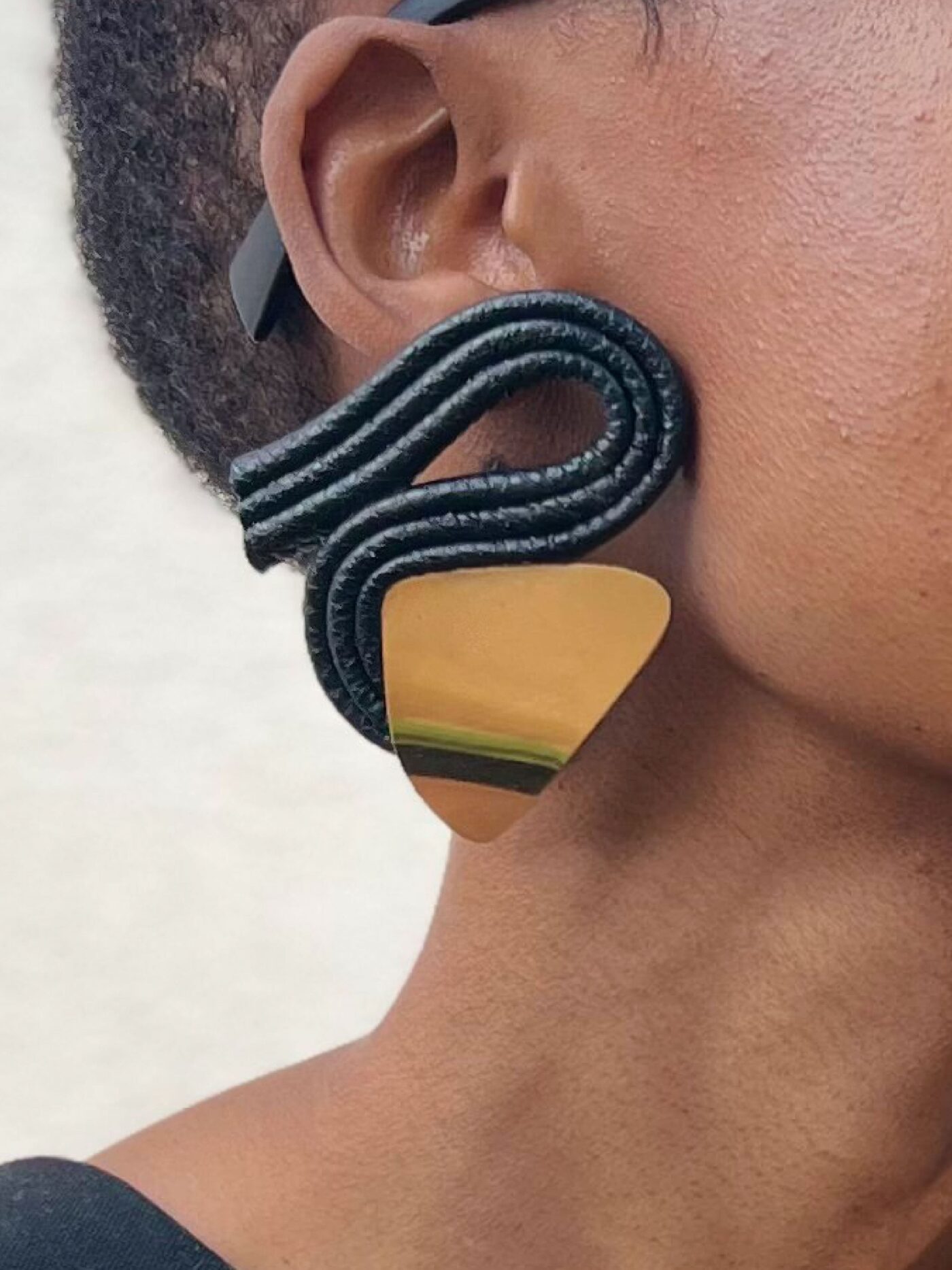
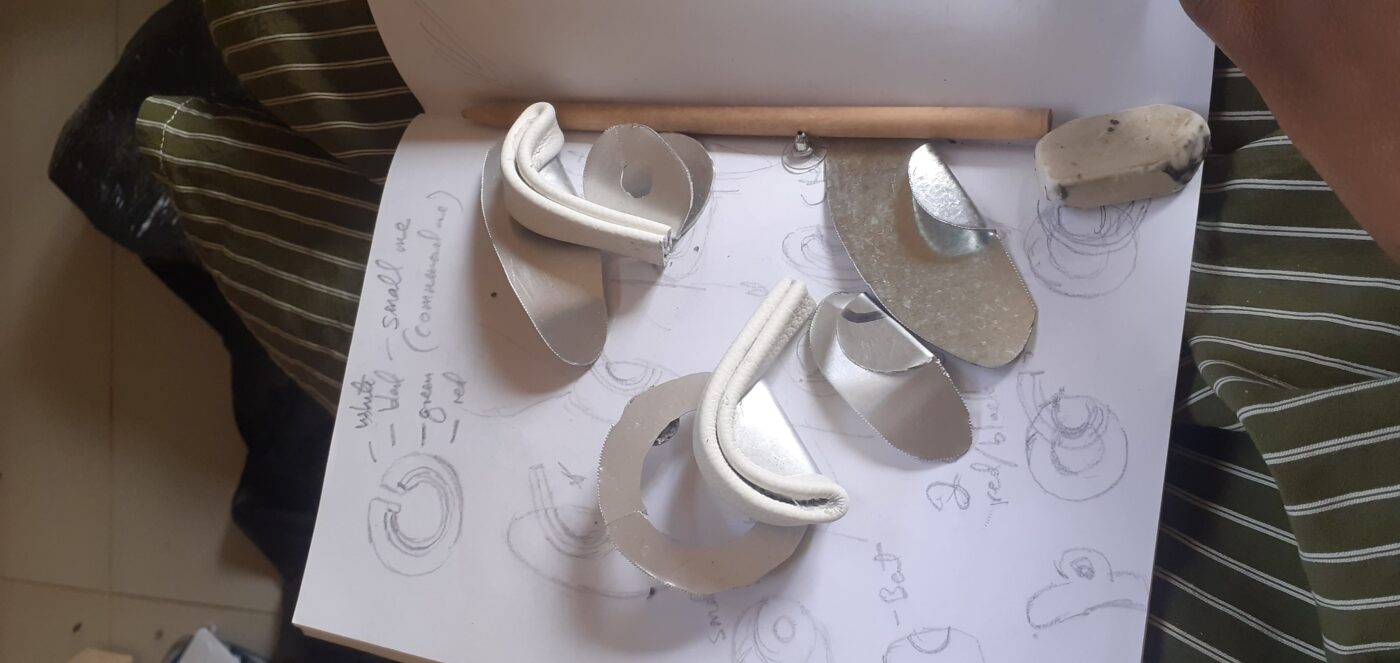
OR: A recurring element in my work is how I fold leather into ropes, usually in twos or threes, wrapping around a focal material like brass or another piece of leather. It’s almost subconscious, I don’t have a conscious reason for it, and that’s why it keeps appearing. It’s just part of my style, a gesture I naturally gravitate toward, and over time it has become a quiet signature. Alongside this, a broader theme in my work is the journey of self-discovery. Collections like Echoes of Transcendence explore self-evolution, Returning Home reflects coming back to yourself, and Seed of Growth is about growing into the woman you were meant to be.

In addition to her work with Xita, One Rapelana recently participated in a virtual panel during NYCJW25, hosted by the Jewellery and Gem Association of Africa (JGAA). The discussion, part of the “It’s All In Our Hands” jewelry competition, brought together African designers to share their experiences at GEM Genève, one of the world’s leading industry exhibitions. Rapelana and her fellow panelists highlighted how JGAA’s support has helped showcase African talent on an international stage, discussing both the opportunities and challenges faced by artisans. The conversation underscored Africa’s growing influence in the global jewelry industry and the transformative power of global exposure, offering insight into how designers like Rapelana are shaping a new narrative of creativity, sustainability, and cultural expression.


About One for the Future (OFTF)
One for the Future celebrates visionary designers shaping the next generation of jewelry and creative industries. Each year, honorees are recognized for their innovation, craftsmanship, and unique perspectives, gaining opportunities for mentorship, exposure, and connection with collectors and industry leaders worldwide.

Enjoyed this piece? Explore more jewelry content from Future Heirloom!
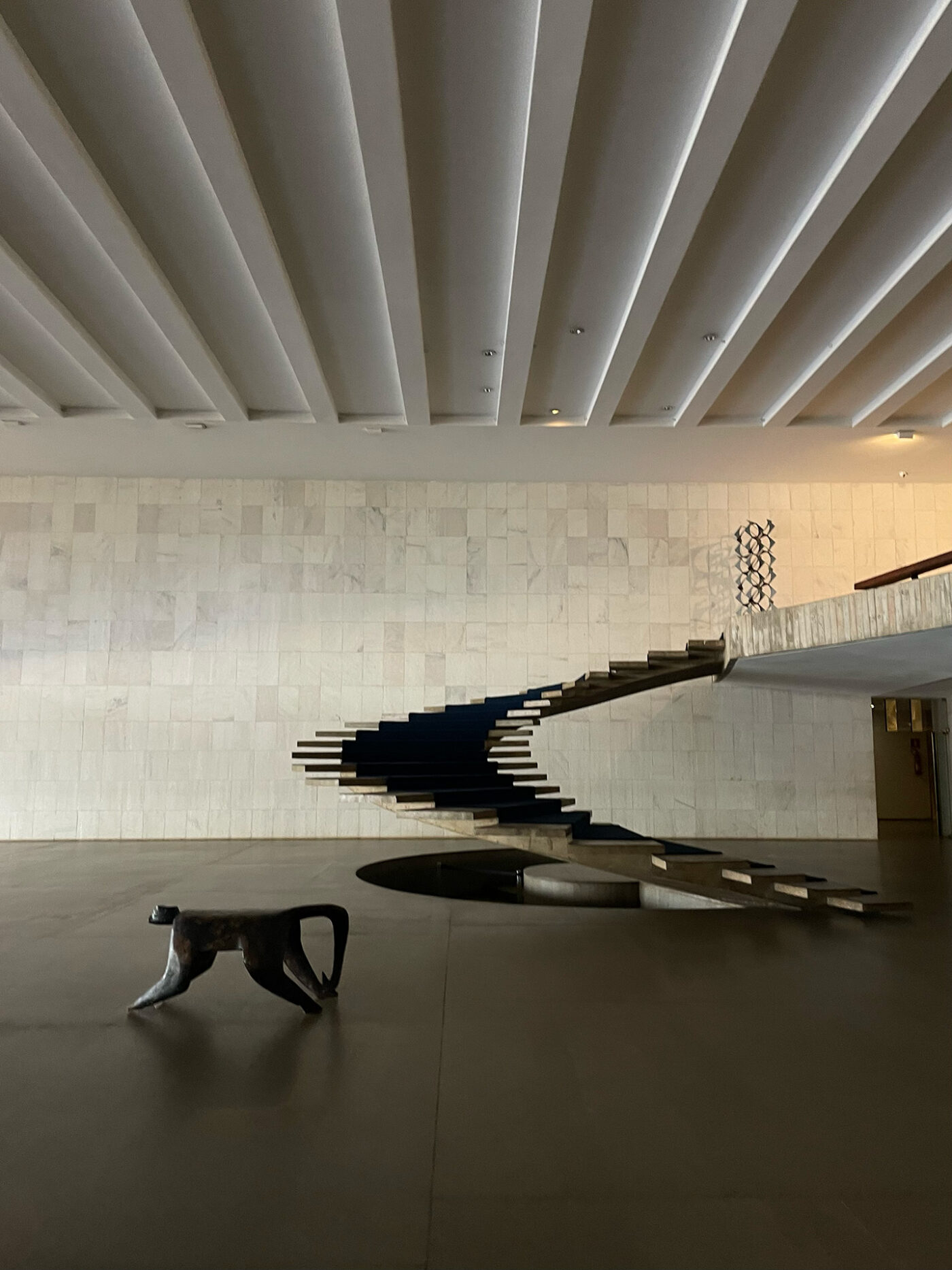
Jewelry as a Device for Becoming: Viola Pineider of ARC

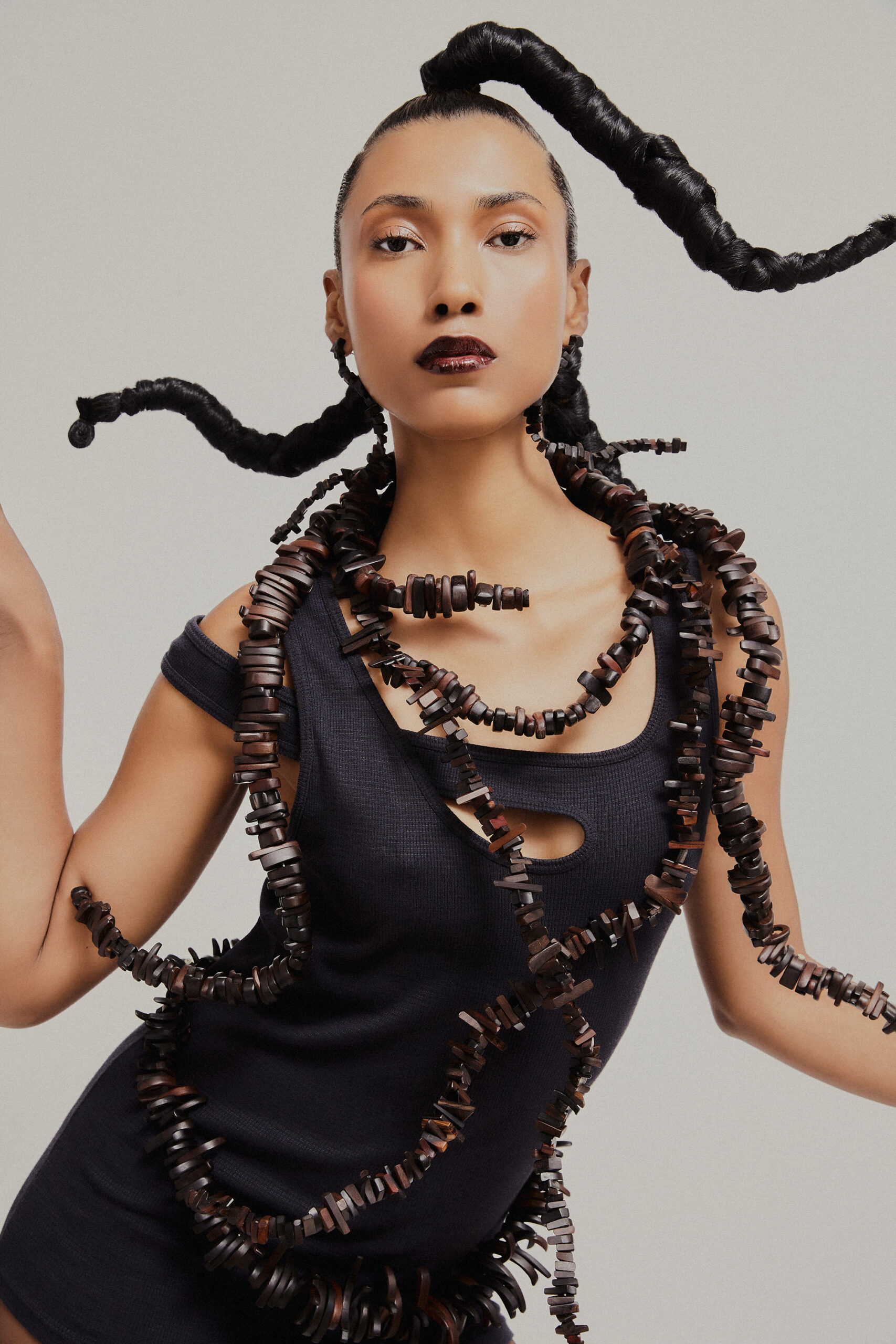
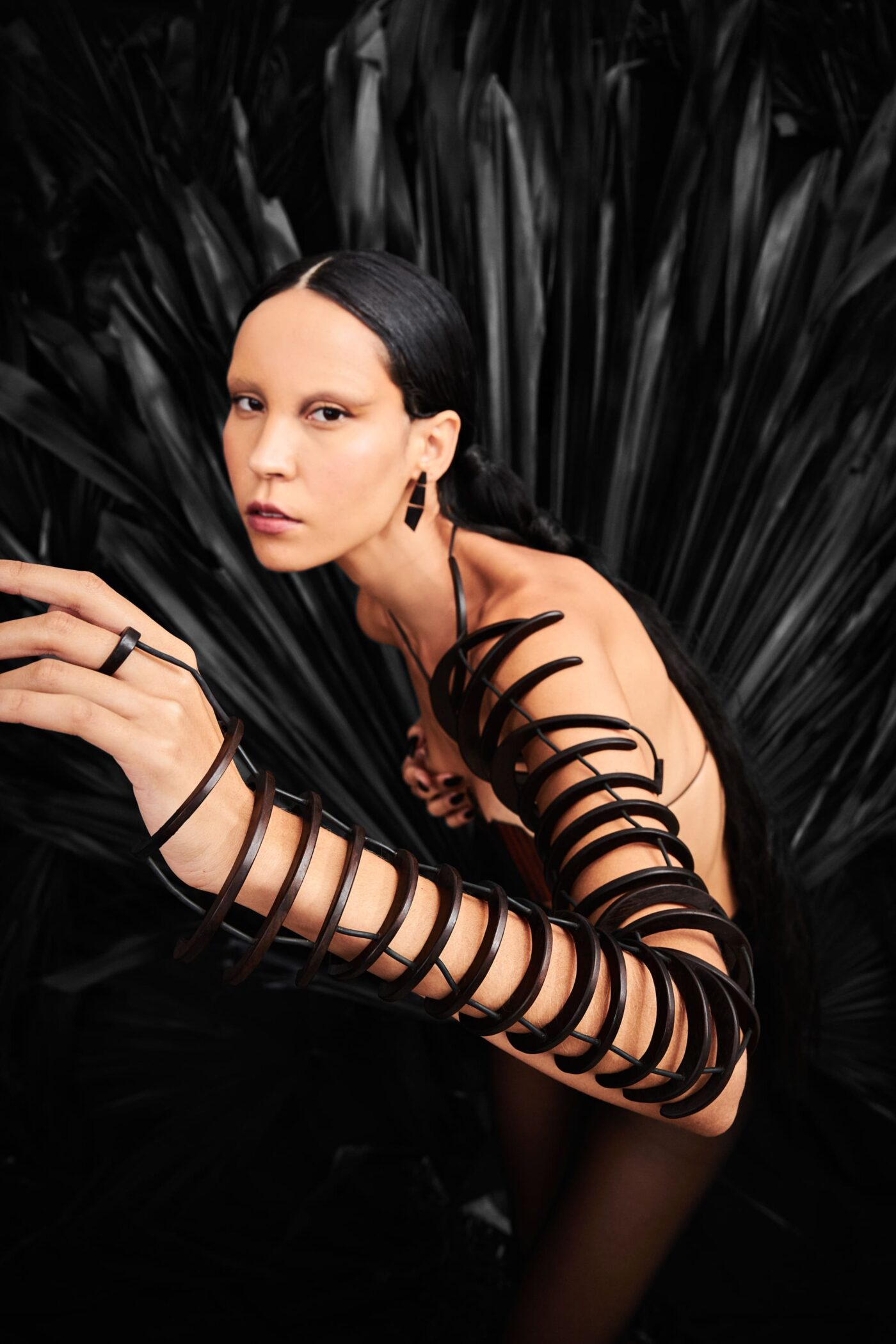
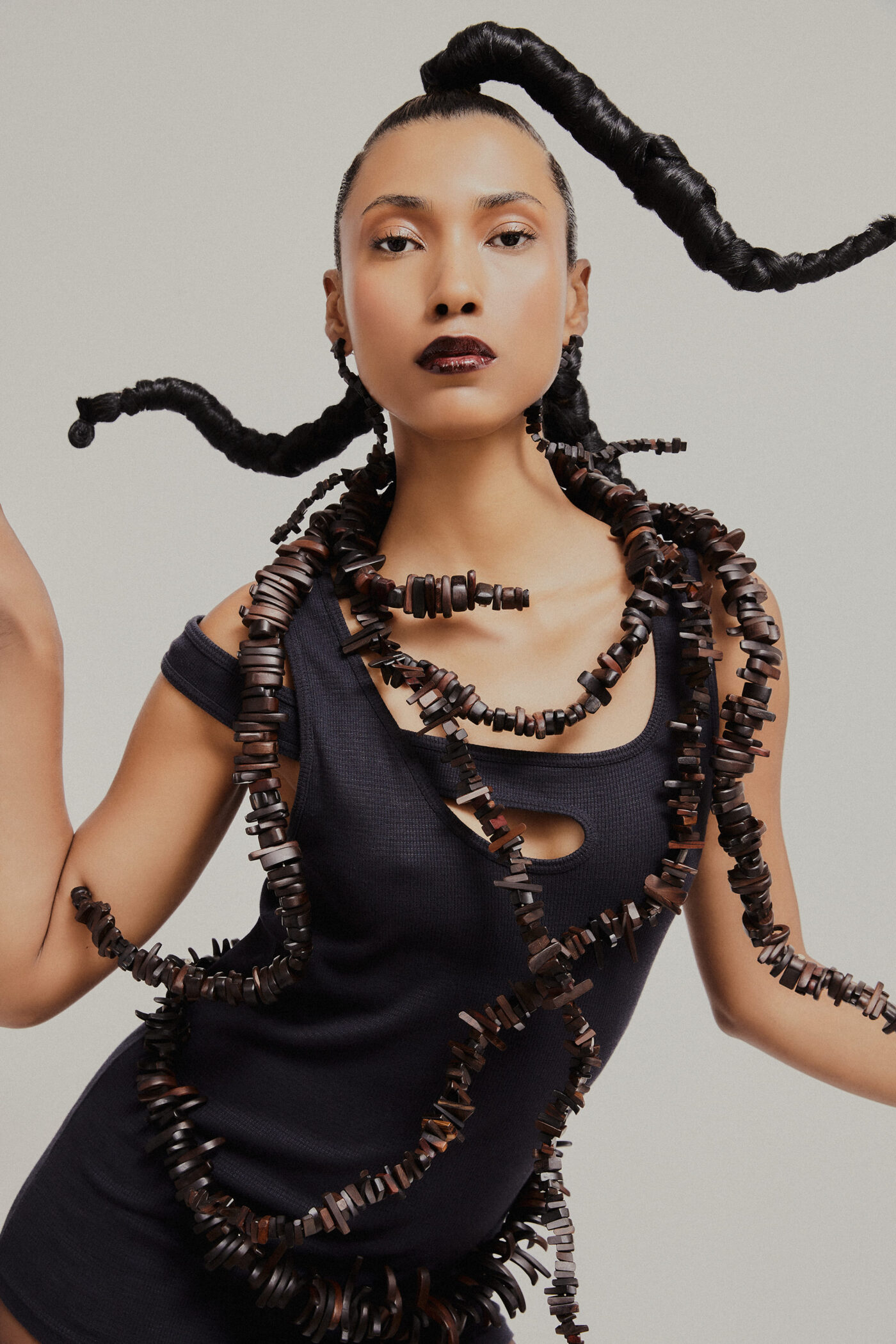
Jewelry, for Viola Pineider, is not just an ornament. It is a proposition—a way of thinking through the body, material, and space as sites of continuous transformation. Born and raised in Florence, she trained for over a decade in traditional Italian carpentry and wood restoration. This background gives her rare material intelligence, grounded in rigor, patience, and deep respect for craft.

As the founder of ARC, she works at the threshold of jewelry and sculpture. She transforms reclaimed wood and silver into bold, architectural pieces that challenge conventional ideas of luxury and permanence. Now based in Rio de Janeiro, her work balances the disciplined lines of Italian design with the fluid, experimental energy of Brazilian culture. A 2025 OFTF Award Honoree, Pineider is part of a new generation redefining contemporary jewelry. We sat down with her to talk about transformation, slow making, material resistance, and jewelry as a device for becoming.

Defining Practice

NYCJW: How would you describe your practice and the world your work inhabits?

VP: My work moves between two complementary worlds: the body and space, where jewelry becomes sculpture and sculpture becomes jewelry. I have a long background in Italian carpentry, so my work is a synthesis of solid technical training and a visionary approach. I transform reclaimed wood into pieces that invite tactile journeys. Each creation balances dynamic shapes with impeccable finishes. For me, jewelry is a powerful escape from societal standardization. It is a way to reimagine the body as ever-changing and full of possibility.

Projects in Waiting

NYCJW: Are there projects or pieces you’ve put on hold? How do you know when the time is right for them to come to life?

VP: Actually I have kept several projects on hold. Sometimes due to lack of time, because they were large-scale works or required travel and significant financial investment. But they are waiting for me. I always return to older projects; they are never forgotten. There is a right time for them to materialize. There is one sculpture in particular that I rushed to finish for a very relevant open call, but due to its fragility it was not possible to submit it to the competition. Still, it exists, and it will find another place in my professional trajectory.

Imagining Beyond Form

NYCJW: If your practice weren’t limited to jewelry or sculpture, what other medium do you imagine your work taking?

VP: My work would be a lyrical piece of music that, out of nowhere, turns into noise-industrial, then glides softly into an R&B atmosphere, ending with the drums of a carnival party. A convergence of opposing sensations: intimacy and repulsion, stillness and rhythm, balance and exuberance.

Challenging the System

NYCJW: Is there a prevailing belief or convention in the jewelry or design world that you challenge?

VP: I disagree with a system that fails to respect the quality of work and instead favors visibility, closed circles, and networks of favoritism over merit and research. I do not believe that one should devalue their own work to sell more. I also reject the logic of constantly launching new collections in a market already saturated with objects. I deeply believe in slow production. It is a way to reclaim time, attention, and quality—not as a marketing strategy, but as an ethical and political stance toward making. Producing less, with greater rigor and awareness, is, for me, a form of resistance.

Creative Doubt as Dialogue

NYCJW: Can you share a recent moment of real creative doubt and how you navigated through it?

VP: As an artist, I experience creative doubt continuously. This does not stem from a lack of creativity, but from having to engage with the problems that matter itself presents, as well as with unforeseen situations. Pieces can break and so can patience. Fatigue is sometimes intense, and doubt often emerges less from the work itself than from questions of purpose and market strategy. For me, creative doubt is not a blockage but a negotiation. I move through it by staying with the process, allowing the material to lead and accepting failure as part of the work. I do not experience a lack of creativity; I am creating all the time. Even moments of uncertainty inevitably take me somewhere else, to another solution, another form, another understanding.

Designing for the Imaginary

NYCJW: If you had the chance to design a piece for a fictional or historical figure, who would it be? How would you imagine it taking shape?

VP: I imagine a female figure who belongs simultaneously to the past and to the future. I see her positioned atop an installation. It is a tall, subtle sculpture that elevates her above everything, granting her a 360-degree view. On her arms and around her neck, she wears jewelry as if it were a shell. A layer of protection and, at the same time, an expansion of the body. From the ends of the bracelets and necklaces extend long filaments, reminiscent of tentacles, sensory extensions that help her float in the air and swim through water.

Material as Narrative

NYCJW: Are there unconventional materials, objects, or ideas that are currently inspiring you?

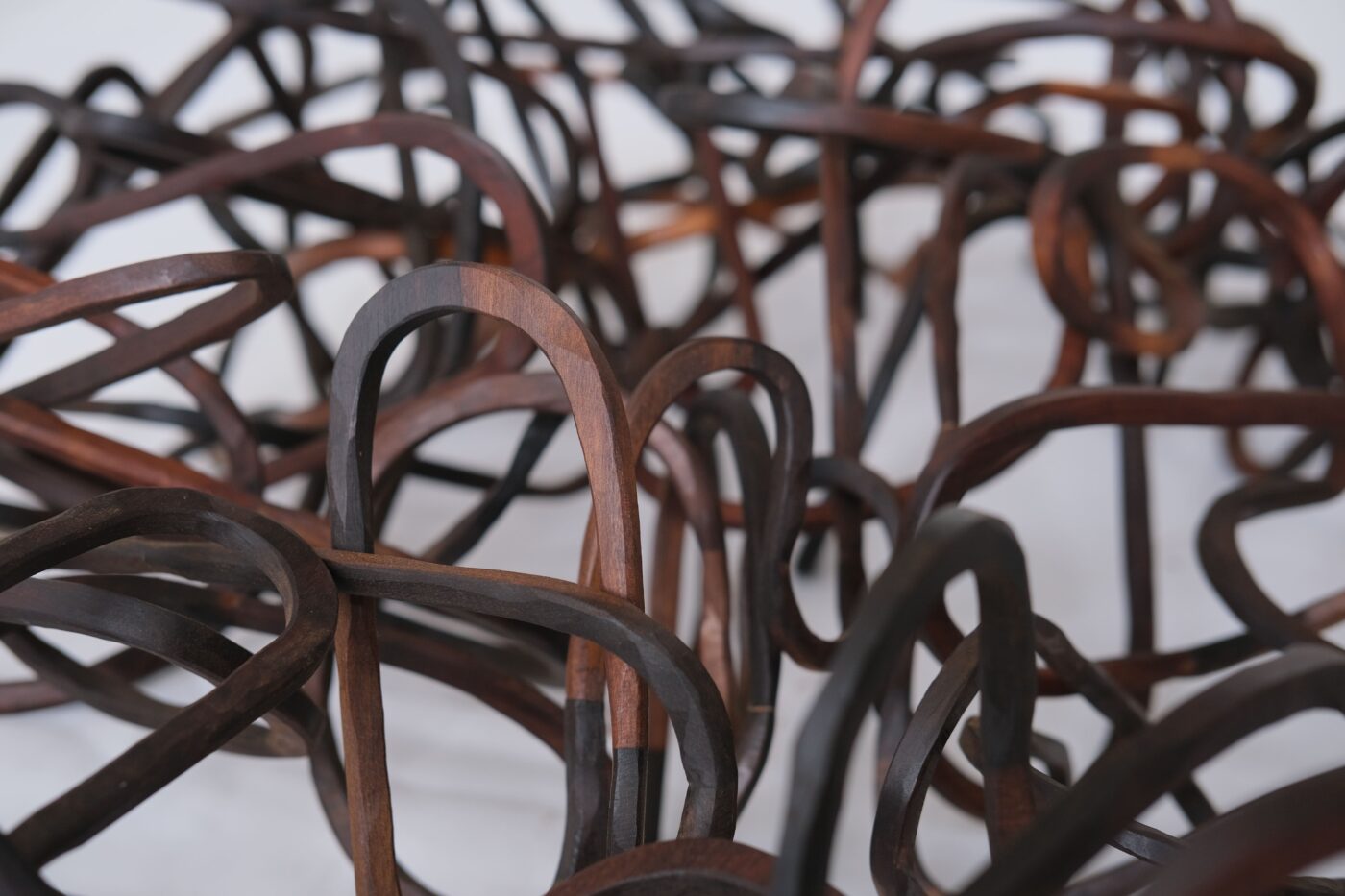
VP: I have always chosen wood as the central material in my work, despite feeling a strong attraction to glass and metal, precisely because of their almost alchemical properties and because they present qualities opposite to those of wood. These materials often remain in the realm of observation and inspiration, without necessarily being incorporated into the process. What happens instead is that I end up pushing the limits of wood, bringing it closer to metal through form, or to glass through fragility. I am interested in exploring how far a material can go when taken to the extreme of its symbolic and structural possibilities.

The texts and readings that permeate my creative universe come from contemporary and modern thinkers who reflect on the construction of other possibilities of existence, on transformation, and on the imagination of alternative worlds. Authors such as Donna Haraway, Ailton Krenak, Rosi Braidotti, and Ursula K. Le Guin are among the references that continuously nourish my work. Science fiction, as well as trans-feminist thought, imagines other bodies: bodies in mutation and, at the same time, bodies that reclaim an ancient wisdom that has largely been replaced or erased. In this tension, I see a key for thinking about a new way of understanding bodily adornment,not as ornament, but as a device for transformation, adaptation, and the re-enchantment of the body.

Provoking Questions

NYCJW: When someone experiences your work, what feelings or reflections do you hope it sparks?

VP: I would like the work to provoke questions and uncertainties. However, when we work with art, it is not possible to control the reactions, interpretations, or sensations it awakens in the audience. The experience of the work is completed precisely within this open, unpredictable field, where each body and each gaze produces its own meanings.

NYCJW: What’s one question you wish more people would ask you about your work?

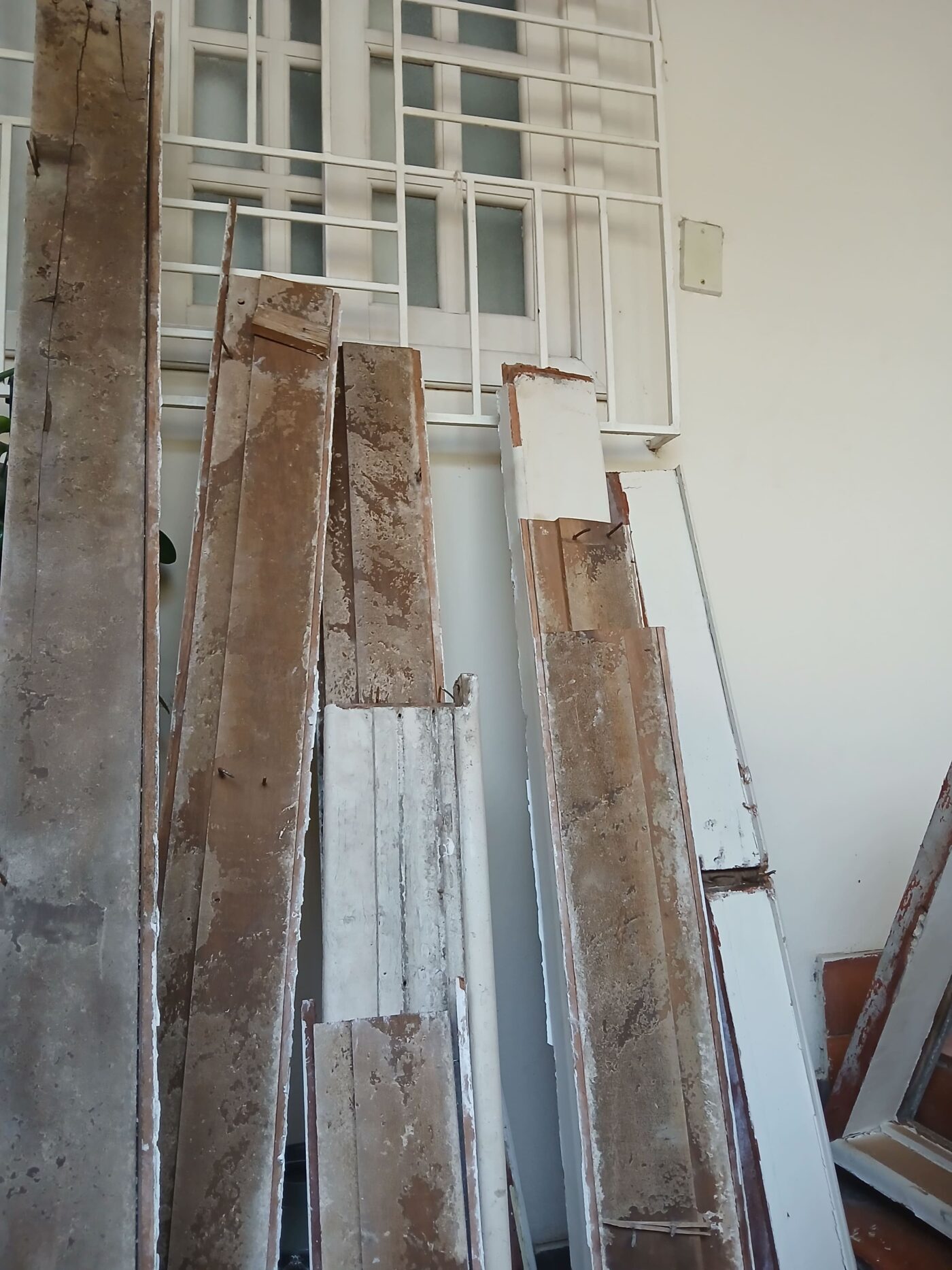
VP: I would like the questions to address the process and how I arrived at a given result. I believe this would help the public understand the complexity of the work. This process is not limited to the stages carried out in the studio. It involves the creative journey as a whole. The collection of the wood, which in most cases comes from dumpsters, urban waste, or demolition materials. If it were possible to follow the origin of the material, one would understand how visionary the work is, beyond its technical execution. To observe the structure of a discarded door, dirty covered in layers of paint, and still imagine another possibility of existence is a central gesture of the work. It is about transformation: imagining solutions, projecting other uses, other bodies, other worlds.

Transformation, Movement, Sensuality

NYCJW: Looking across your body of work, is there a recurring theme, idea, or emotion that continues to surface? What draws you back to it?

VP: The recurring theme in my work revolves around transformation, movement, and sensuality. The forms I create are twisted and hollowed out, sometimes organic, sometimes sharp and geometric. They operate within a field of tension between seduction and repulsion. This contrast reflects an underlying conflict between a rational origin of form, inherited from a Western mode of thinking in which I was raised, and my lived experience in Brazil, where the straight line dissolves and gives way to curves, circles, and spiral structures.

We’re grateful to Viola Pineider for sharing her insights, inspirations, and creative journey. Through ARC, she continues to redefine the boundaries between jewelry and sculpture. She transforms reclaimed materials, form, and perception into pieces that invite exploration, reflection, and transformation. Her thoughtful, visionary approach reminds us that jewelry is not just adornment. It is a device for becoming—a way to reimagine the body, the material, and the world around us.


About One for the Future (OFTF)
One for the Future celebrates visionary designers shaping the next generation of jewelry and creative industries. Each year, honorees are recognized for their innovation, craftsmanship, and unique perspectives, gaining opportunities for mentorship, exposure, and connection with collectors and industry leaders worldwide.

Enjoyed this piece? Explore more jewelry content from Future Heirloom!
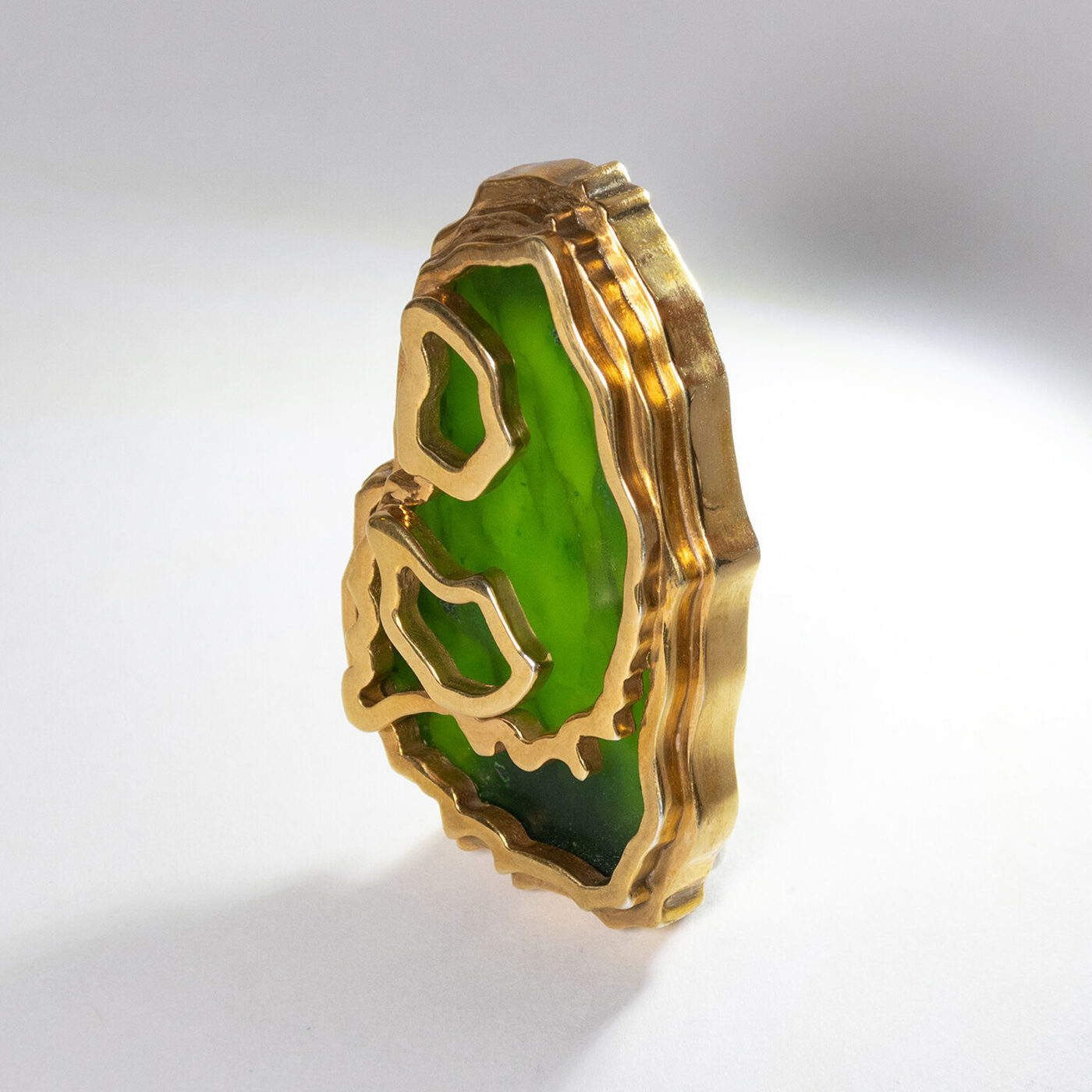
Curves, Clarity, and Creativity: A Conversation with Symoné Currie

Symoné Currie is redefining modern luxury through her fine jewelry studio, Metal x Wire, where contemporary design meets thoughtful craftsmanship. With a foundation in architectural engineering, she approaches jewelry as both form and performance, creating pieces that balance sensual curves with clean structural clarity. Splitting her time between Miami, New York, and Kingston, Currie draws on a global perspective to craft timeless, modular designs that evolve with the wearer. Honored by the Natural Diamond Council, a finalist for the CFDA x Tiffany Design Award, and a 2025 honoree of the One for the Future program, she brings a distinctive, forward-thinking voice to the world of jewelry.

In this conversation, Currie shares insights into her creative process, inspirations, and the philosophy that drives Metal x Wire.

Design Philosophy: Balancing Structure, Play, and Patience

NYCJW: How do you describe the philosophy behind your work, and how has your background shaped the way you design jewelry?

Symoné: With a background in Architectural Engineering, I’ve always been trained to look at how things perform — how materials behave, how form influences movement, how design shapes experience. That perspective guides my jewelry. I named my brand Metal x Wire because I’m drawn to raw, honest materials that can be shaped with intention into something timeless. My work sits in the tension between organic softness and clean structure, with modular designs that invite reinvention. I’m not just making beautiful objects — I’m building ideas that live on the body and evolve with the person who wears them.

NYCJW: How do you decide when an idea is ready to be realized?

Symoné: I’m extremely imaginative, and not being classically trained in jewelry design means I don’t begin with limitations. I follow curiosity, experimentation, and play. There’s a project I’m currently working on and while the concept is ready, I’m giving it time. It deserves thoughtful testing, the right materials, and space to evolve. I don’t believe in rushing ideas to market. When something is meant to last, it should be brought forward with intention.

Jewelry as Canvas: Translating Form into Emotional Art

NYCJW: If you were to translate the spirit of your jewelry into another art form, what medium would it be?

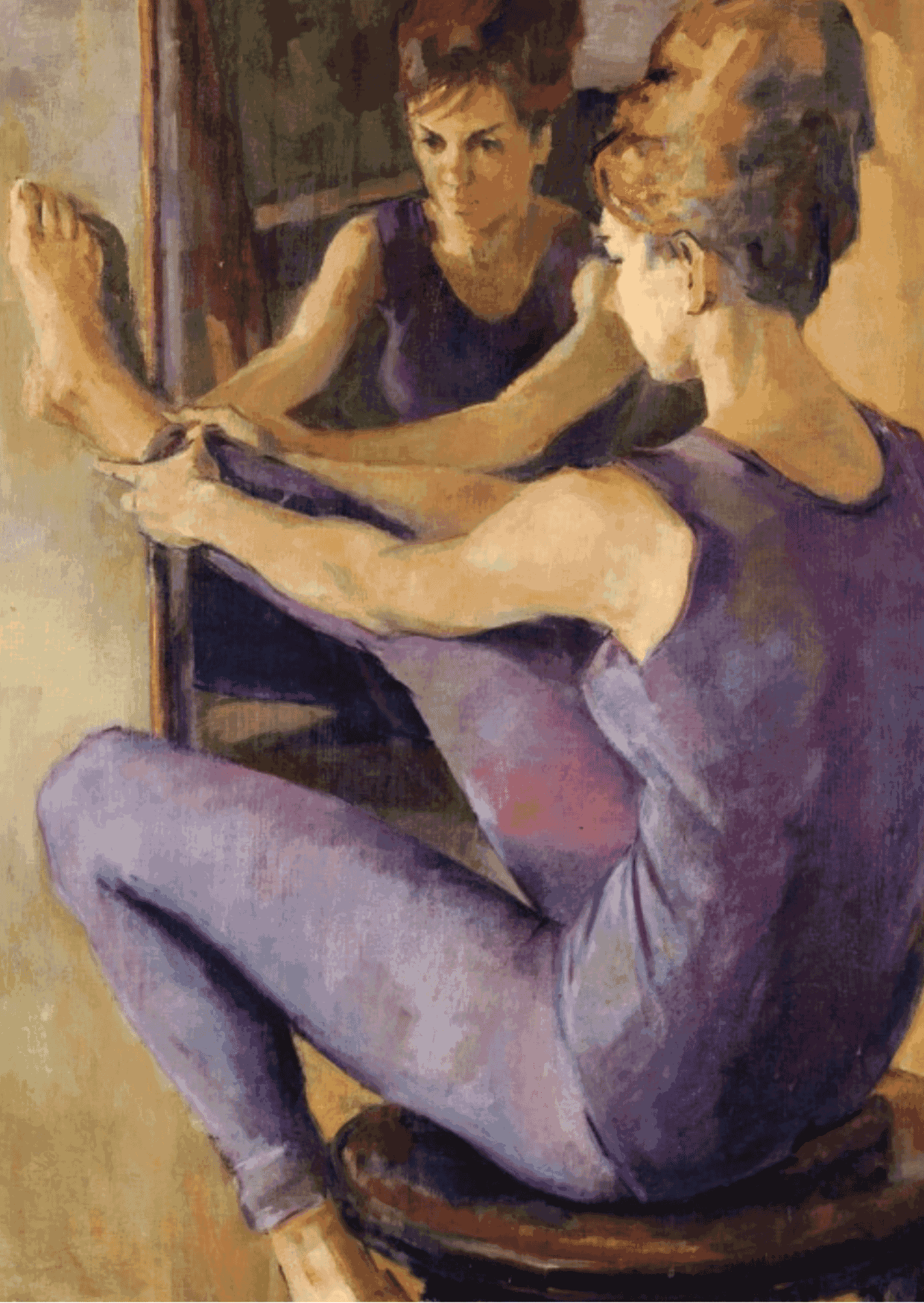
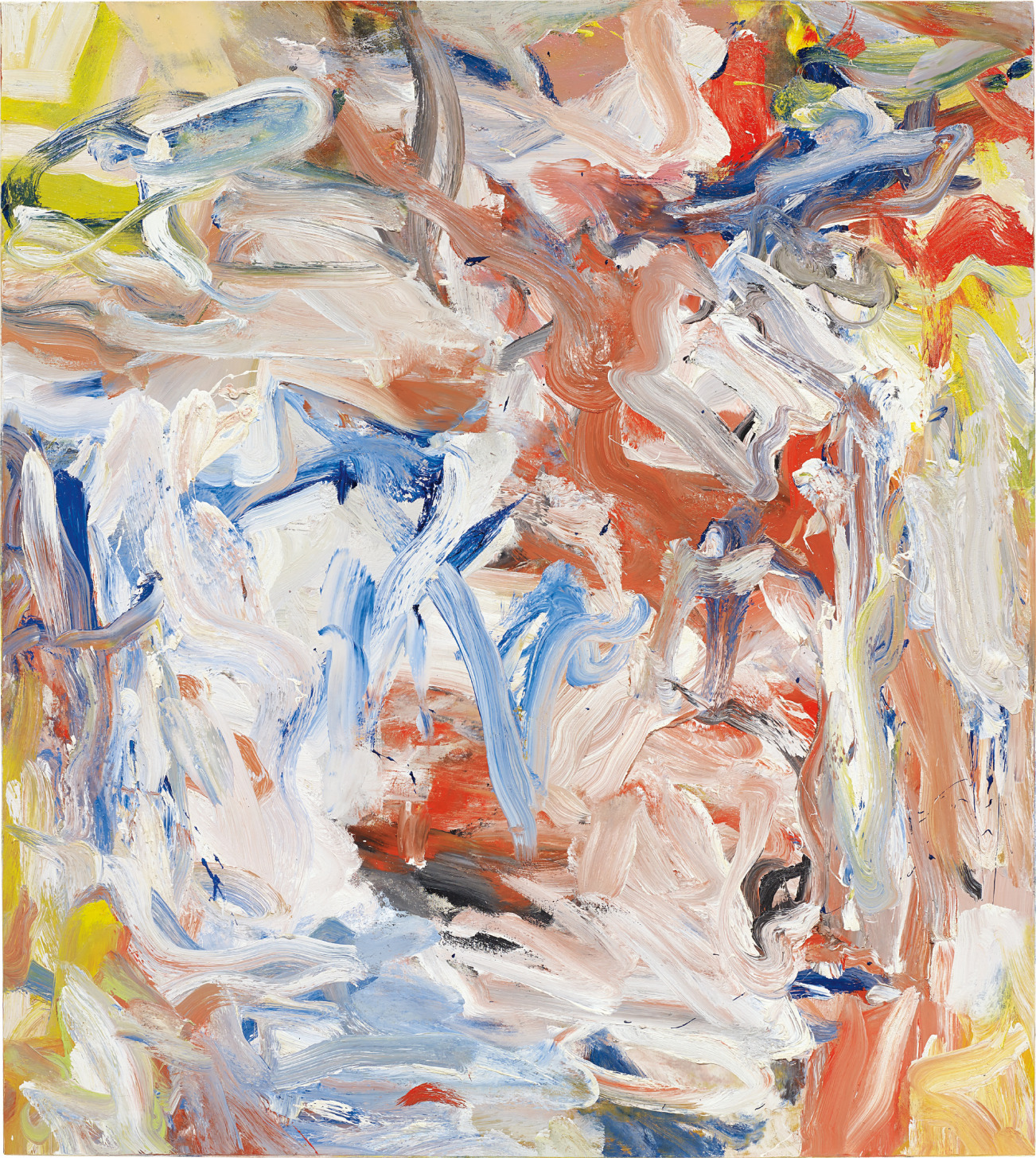
Symoné: It would be oil paint layered with expressive pastels. I love how a single brushstroke can reveal so much about the artist — fluid, urgent, soft, or sharp. My jewelry carries that same rhythm. I imagine it as an abstract canvas, like a de Kooning, where a gesture becomes a world. Or even a Barrington Watson painting — rooted, layered, open to personal interpretation. I like when a piece offers each viewer their own emotional experience.

Beyond Trends: Jewelry That Evolves With Time and Intention

NYCJW: How do you approach trends?

Symoné: There’s a pressure in the industry to chase trends and produce quickly. I don’t believe jewelry should expire with a season. A piece should evolve from genuine inspiration and live beyond the moment. That’s why my designs are modular and versatile — they grow with the wearer. Speed has never been my metric. Longevity, intention, and feeling are.

Barrington Watson Dancer at Rest via National Gallery of Jamaica

Navigating Doubt and Designing with Intention

NYCJW: Do you experience creative doubt? How do you overcome it?

Symoné: Creative doubt never fully disappears. Earlier this year, I questioned everything — my path, my ideas, even whether I should continue. What helped was slowing down. Routine. Patience. Breaking big challenges into manageable parts. And resting when the pressure became too loud. Doubt doesn’t evaporate, but consistency and care create a path through it.

NYCJW: If you could design a piece of jewelry for any historical or fictional figure, who would it be?

Symoné: I would design a convertible diamond collar for Josephine Baker — a sleek choker that transforms into a shoulder piece, hair clips, or cuffs. Modular, expressive, theatrical. A piece that mirrors the way she moved effortlessly between androgynous tailoring and glamorous gowns, always in full command of her presence.

Finding Inspiration in Nature: Jewelry That Moves With You

NYCJW: What unconventional source of inspiration are you currently drawn to, and how is it influencing your creative thinking?

Symoné: Lately, I’ve been obsessed with the quiet choreography of trees — how they bend, sway, and respond to wind without breaking. I’m not sure yet how it will manifest in my work, but the movement has been living in my mind.

NYCJW: When someone wears your jewelry, how do you hope it makes them feel?

Symoné: I want them to feel like they’re wearing something truly niche, not ordinary. My work invites them to embrace their individuality and stand confidently apart from the crowd.

Willem de Kooning Untitled XXVIII via Phillips

Charming Mischief: Transforming Everyday Jewelry Into the Extraordinary

NYCJW: What’s one question you wish more people would ask you about your work? What’s the answer?

Symoné: If your jewelry had a personality, what kind of mischief would it get up to? Oh, it would definitely be the charming troublemaker who’s always ready to surprise you.

NYCJW: Is there a theme or idea that consistently appears in your work, and what draws you to explore it again and again?

Symoné: A recurring thread in my work is transforming everyday wear into the extraordinary. I’m driven to infuse intention, elegance, and a touch of fantasy into pieces people wear daily—turning routine moments into something meaningful.

Thank you Symoné for sharing your vision of a world where play, patience, and thoughtful design transform raw materials into jewelry that is both personal and timeless. Your work inspires us to see jewelry not just as adornment, but as objects that move, adapt, and spark creativity.


About One for the Future (OFTF)
One for the Future celebrates visionary designers shaping the next generation of jewelry and creative industries. Each year, honorees are recognized for their innovation, craftsmanship, and unique perspectives, gaining opportunities for mentorship, exposure, and connection with collectors and industry leaders worldwide.

Enjoyed this piece? Explore more jewelry content from Future Heirloom!
Architecture for the Body: The Sculptural World of Renisis Jewelry

This year, Sardwell, founder of the award-winning jewelry brand Renisis and a 2025 One For The Future Honoree, organized Beyond Gold: Couture Jewels at NYC Jewelry Week, where five visionary artists blur the lines between fine art, haute couture, and craft. Through Renisis, launched in 2021 during a moment of artistic renewal, Sardwell explores jewelry as living sculpture. Her modern, sculptural designs draw from years spent in Buenos Aires, Shanghai, and São Paulo, shaped by a deep love of art, nature, and cultural texture. “The transformational ability that sculpture has to alter space is a revolutionary power,” she says, “now harnessed to be worn.”

We sat down with Sardwell to talk about creative doubt, inspiration, and the superpowers hidden within her jewelry.

The World of Renisis

NYCJW: Sardwell, can you give us your elevator pitch? What’s the story behind your work and Renisis?

Sardwell: Renisis is a world of sculptural wearable art at the intersection of jewelry, performance and art.

NYCJW: Have there been any projects or pieces you’ve put on hold? What made you decide it wasn’t the right time for them?

Sardwell: There are several projects that in the end didn’t make sense, due to the scale, cost of making the piece and likelihood of it being successful. One of those projects was a gold necklace. With gold prices so high, it just didn’t make sense.

Expanding Mediums and Bold Beliefs

NYCJW: If your work could take shape in a different medium (like dance, film, or architecture), what would that look like?

Sardwell: It would be incredible to collaborate with a ballet company, such as the NYC Ballet Company or a Modern Opera. Renisis jewelry is like architecture and sculpture for the body and partnering with dance or opera would further ground these wearable art pieces as adornment in the world of art and performance.

NYCJW: Is there a belief or convention in the jewelry world that you quietly, or not so quietly, disagree with?

Sardwell: At Renisis we do not believe in using Lab grown diamonds. We only use natural diamonds supporting mining communities and artisanal miners.

Creative Doubt and Imagined Superpowers

NYCJW: When do you feel the most creative doubt, and how do you work through it?

Sardwell: At times I have creative doubt when arriving at a new design. I have internal discussions whether the design is “good enough” to complete and produce. I find it always challenging to arrive at a decision. At this point, I allow the design to rest, often for months, and later return to the design with fresh eyes.

NYCJW: If you could create a piece for a fictional character or historical figure, who would it be — and what would it be like?

Sardwell: I would enjoy creating a female superhero figure illustration that a Japanese manga cartoon wearing Renisis jewels are her daily armor of protection. Wearing each jewel she would acquire special superpowers to face her life challenges. The Echo Chamber Ear Cuff would enable her to unscramble foreign languages, the Guardian Temple Pendant would empower her to look within the eye and heart of each soul, and the Reservoir Ice Ring would restore calm and breath for enduring focus. I believe that every woman needs to hold their special powers close to meet daily demands and challenges with greater ease.

Inspiration, Emotion, and the Making of a Jewel

NYCJW: What unusual materials or sources of inspiration are you obsessed with right now, and how do they show up in your work?

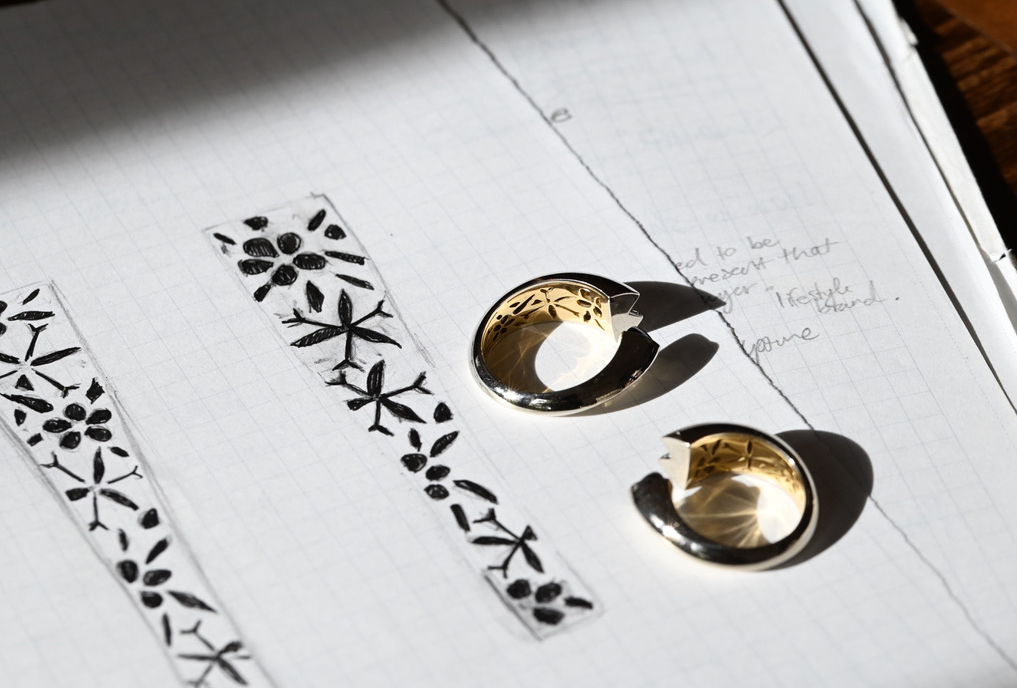
Sardwell: I have collected and am obsessed with Indigo dyed shibori fabrics printed with wood blocks in Japan. I love the graphic compositions of flowers and other symbols of nature. Currently, I like to use these inspiring designs in the inside of rings or the back details of pendants, similar to a beautiful silk fabric lining the inside of a jacket as a gorgeous surprise.

NYCJW: When someone wears your jewelry, how do you want them to feel? What do you hope it gives them permission to do or experience?

Sardwell: I would love the wearer to perceive that they are wearing a piece of art that has been made with the highest level of craftsmanship and care. I hope others feel emotionally transformed, confident, to transcend expectations, and look beyond their current emotional state, arriving at the most awesome version of themselves.

NYCJW People often ask about your process, how do you arrive at a new design?

Sardwell: How do you arrive at a new design? I would work paper, objects, wax, wire, and metal to form and sculpt ideas at my studio bench. With each rendition, I am to arrive at a new form, engaging from every angle. From these maquettes, I create technical drawings and work with artisans to make the final piece of jewelry.

Recurring Forms and the Art of Exploration

NYCJW: Is there a theme, shape, or emotion that keeps showing up in your collections? Why do you keep coming back to it?

Sardwell: Similar to assembling a fashion collection, I often explore one form, geometric pattern or shape, in different ways throughout a collection. It is a method of working that allows me to investigate a shape in a sculptural way and manipulate it to create new patterns, settings, and novel designs.

We’re grateful to Sardwell for sharing her insights, inspirations, and creative journey with us. Through Renisis, she continues to push the boundaries of jewelry as art, transforming materials, form, and perception into wearable sculptures that empower and inspire. Her thoughtful approach reminds us that jewelry is not just adornment, it’s a vehicle for expression, confidence, and transformation.


About One for the Future (OFTF)
One for the Future celebrates visionary designers shaping the next generation of jewelry and creative industries. Each year, honorees are recognized for their innovation, craftsmanship, and unique perspectives, gaining opportunities for mentorship, exposure, and connection with collectors and industry leaders worldwide.

Enjoyed this piece? Explore more jewelry content from Future Heirloom!