
Jewelry as a Device for Becoming: Viola Pineider of ARC

Jewelry, for Viola Pineider, is not just an ornament. It is a proposition—a way of thinking through the body, material, and space as sites of continuous transformation. Born and raised in Florence, she trained for over a decade in traditional Italian carpentry and wood restoration. This background gives her rare material intelligence, grounded in rigor, patience, and deep respect for craft.

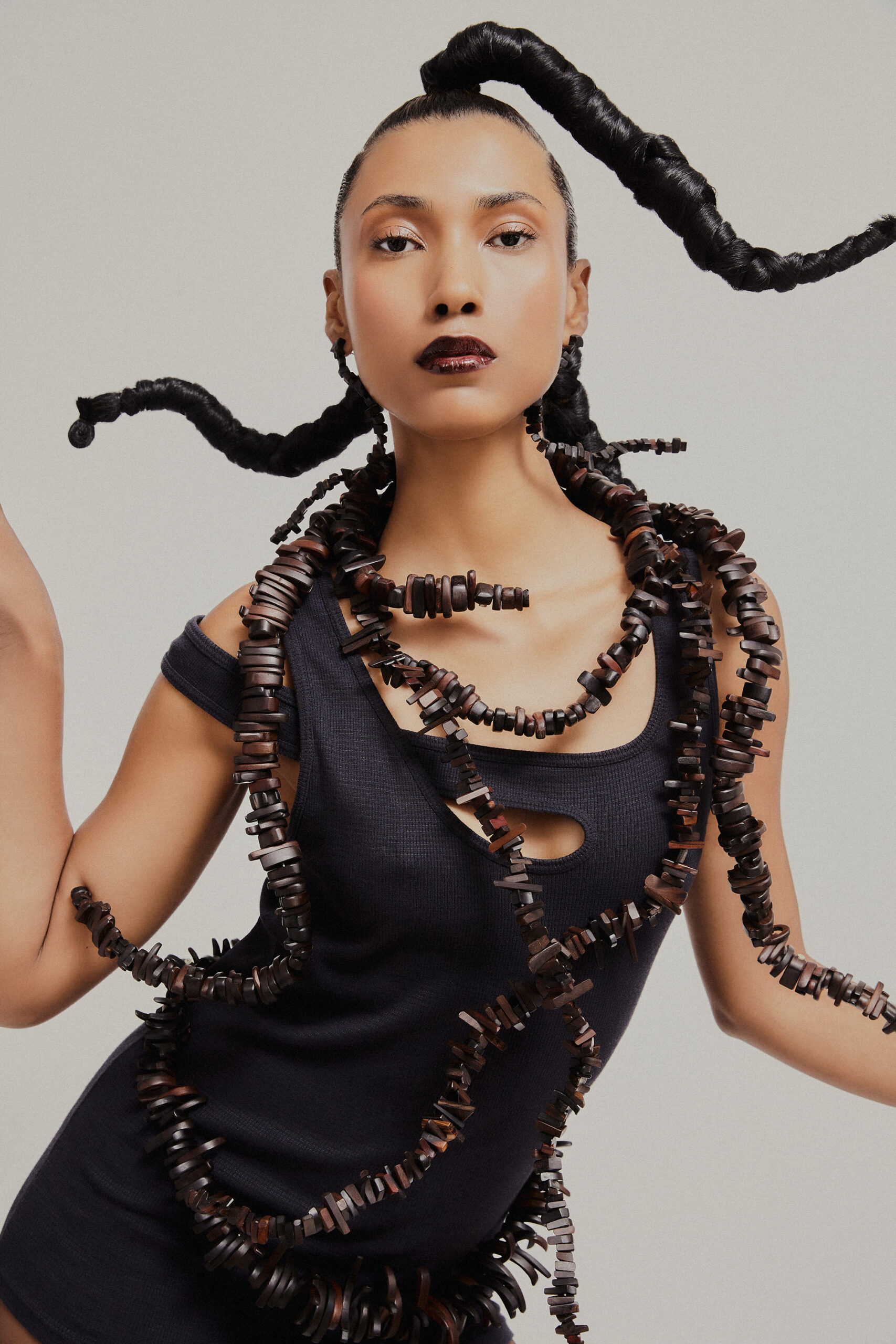
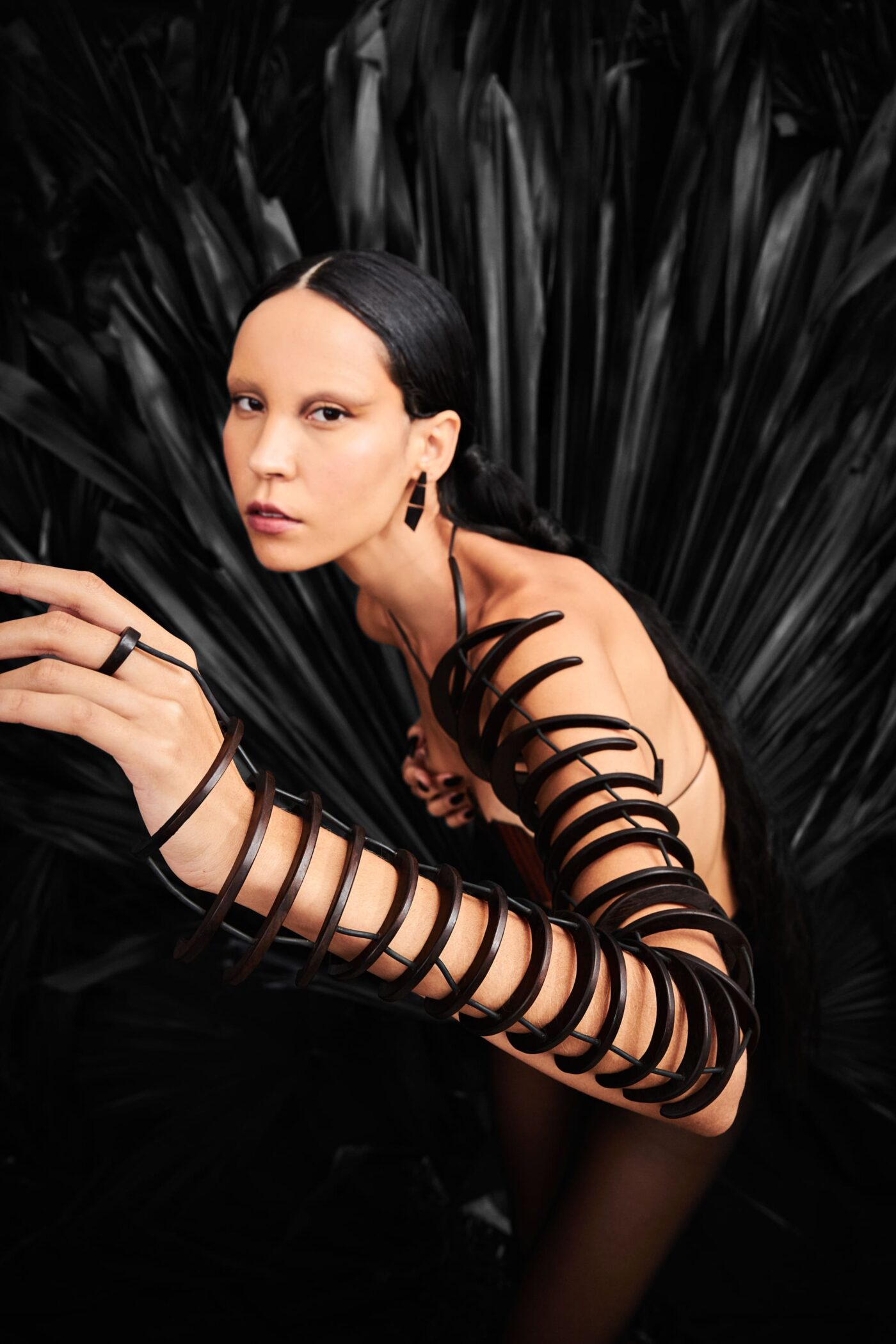
As the founder of ARC, she works at the threshold of jewelry and sculpture. She transforms reclaimed wood and silver into bold, architectural pieces that challenge conventional ideas of luxury and permanence. Now based in Rio de Janeiro, her work balances the disciplined lines of Italian design with the fluid, experimental energy of Brazilian culture. A 2025 OFTF Award Honoree, Pineider is part of a new generation redefining contemporary jewelry. We sat down with her to talk about transformation, slow making, material resistance, and jewelry as a device for becoming.
Defining Practice

NYCJW: How would you describe your practice and the world your work inhabits?

VP: My work moves between two complementary worlds: the body and space, where jewelry becomes sculpture and sculpture becomes jewelry. I have a long background in Italian carpentry, so my work is a synthesis of solid technical training and a visionary approach. I transform reclaimed wood into pieces that invite tactile journeys. Each creation balances dynamic shapes with impeccable finishes. For me, jewelry is a powerful escape from societal standardization. It is a way to reimagine the body as ever-changing and full of possibility.

Projects in Waiting

NYCJW: Are there projects or pieces you’ve put on hold? How do you know when the time is right for them to come to life?

VP: Actually I have kept several projects on hold. Sometimes due to lack of time, because they were large-scale works or required travel and significant financial investment. But they are waiting for me. I always return to older projects; they are never forgotten. There is a right time for them to materialize. There is one sculpture in particular that I rushed to finish for a very relevant open call, but due to its fragility it was not possible to submit it to the competition. Still, it exists, and it will find another place in my professional trajectory.

Imagining Beyond Form

NYCJW: If your practice weren’t limited to jewelry or sculpture, what other medium do you imagine your work taking?

VP: My work would be a lyrical piece of music that, out of nowhere, turns into noise-industrial, then glides softly into an R&B atmosphere, ending with the drums of a carnival party. A convergence of opposing sensations: intimacy and repulsion, stillness and rhythm, balance and exuberance.

Challenging the System

NYCJW: Is there a prevailing belief or convention in the jewelry or design world that you challenge?

VP: I disagree with a system that fails to respect the quality of work and instead favors visibility, closed circles, and networks of favoritism over merit and research. I do not believe that one should devalue their own work to sell more. I also reject the logic of constantly launching new collections in a market already saturated with objects. I deeply believe in slow production. It is a way to reclaim time, attention, and quality—not as a marketing strategy, but as an ethical and political stance toward making. Producing less, with greater rigor and awareness, is, for me, a form of resistance.

Creative Doubt as Dialogue

NYCJW: Can you share a recent moment of real creative doubt and how you navigated through it?

VP: As an artist, I experience creative doubt continuously. This does not stem from a lack of creativity, but from having to engage with the problems that matter itself presents, as well as with unforeseen situations. Pieces can break and so can patience. Fatigue is sometimes intense, and doubt often emerges less from the work itself than from questions of purpose and market strategy. For me, creative doubt is not a blockage but a negotiation. I move through it by staying with the process, allowing the material to lead and accepting failure as part of the work. I do not experience a lack of creativity; I am creating all the time. Even moments of uncertainty inevitably take me somewhere else, to another solution, another form, another understanding.
Designing for the Imaginary

NYCJW: If you had the chance to design a piece for a fictional or historical figure, who would it be? How would you imagine it taking shape?

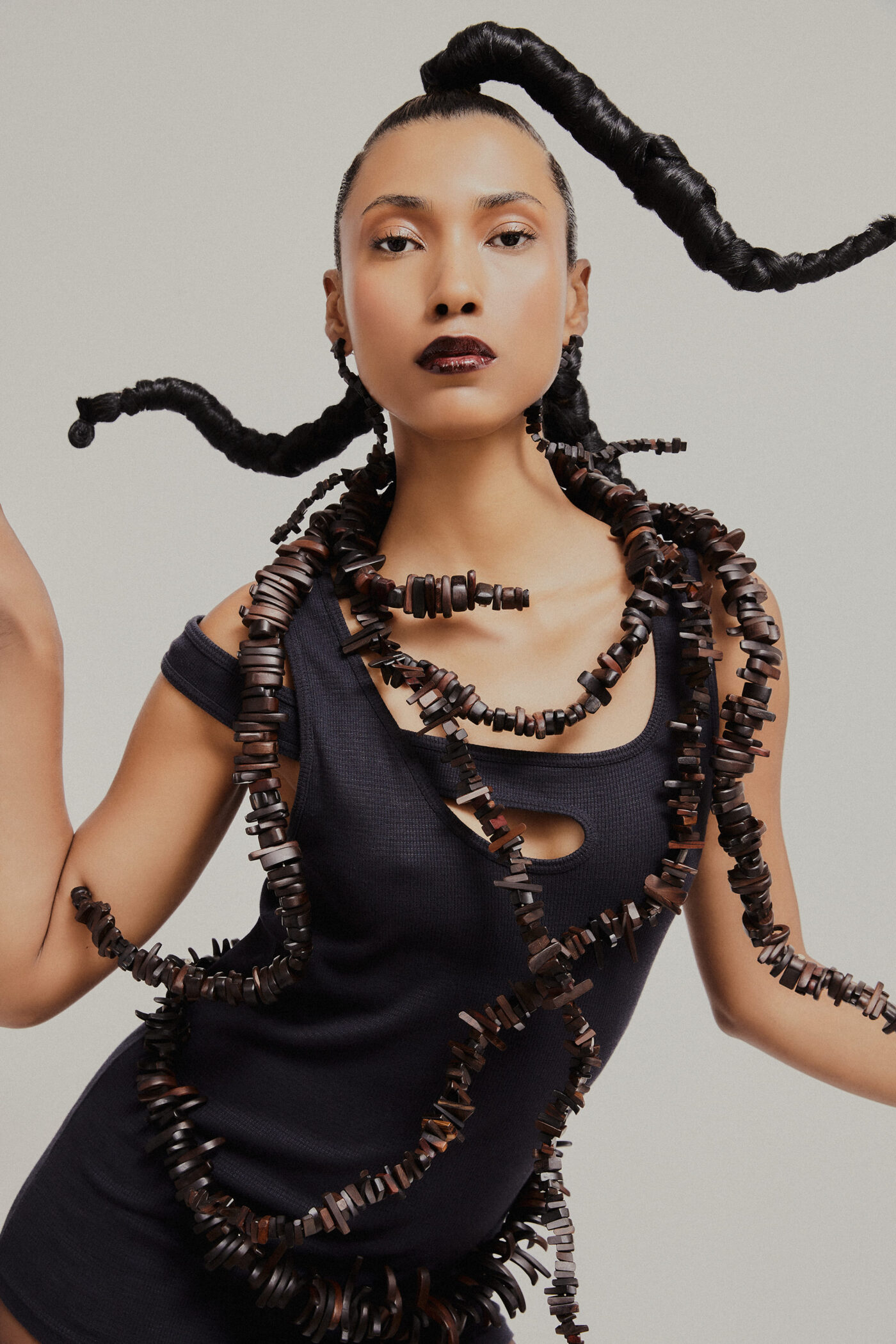
VP: I imagine a female figure who belongs simultaneously to the past and to the future. I see her positioned atop an installation. It is a tall, subtle sculpture that elevates her above everything, granting her a 360-degree view. On her arms and around her neck, she wears jewelry as if it were a shell. A layer of protection and, at the same time, an expansion of the body. From the ends of the bracelets and necklaces extend long filaments, reminiscent of tentacles, sensory extensions that help her float in the air and swim through water.

Material as Narrative

NYCJW: Are there unconventional materials, objects, or ideas that are currently inspiring you?

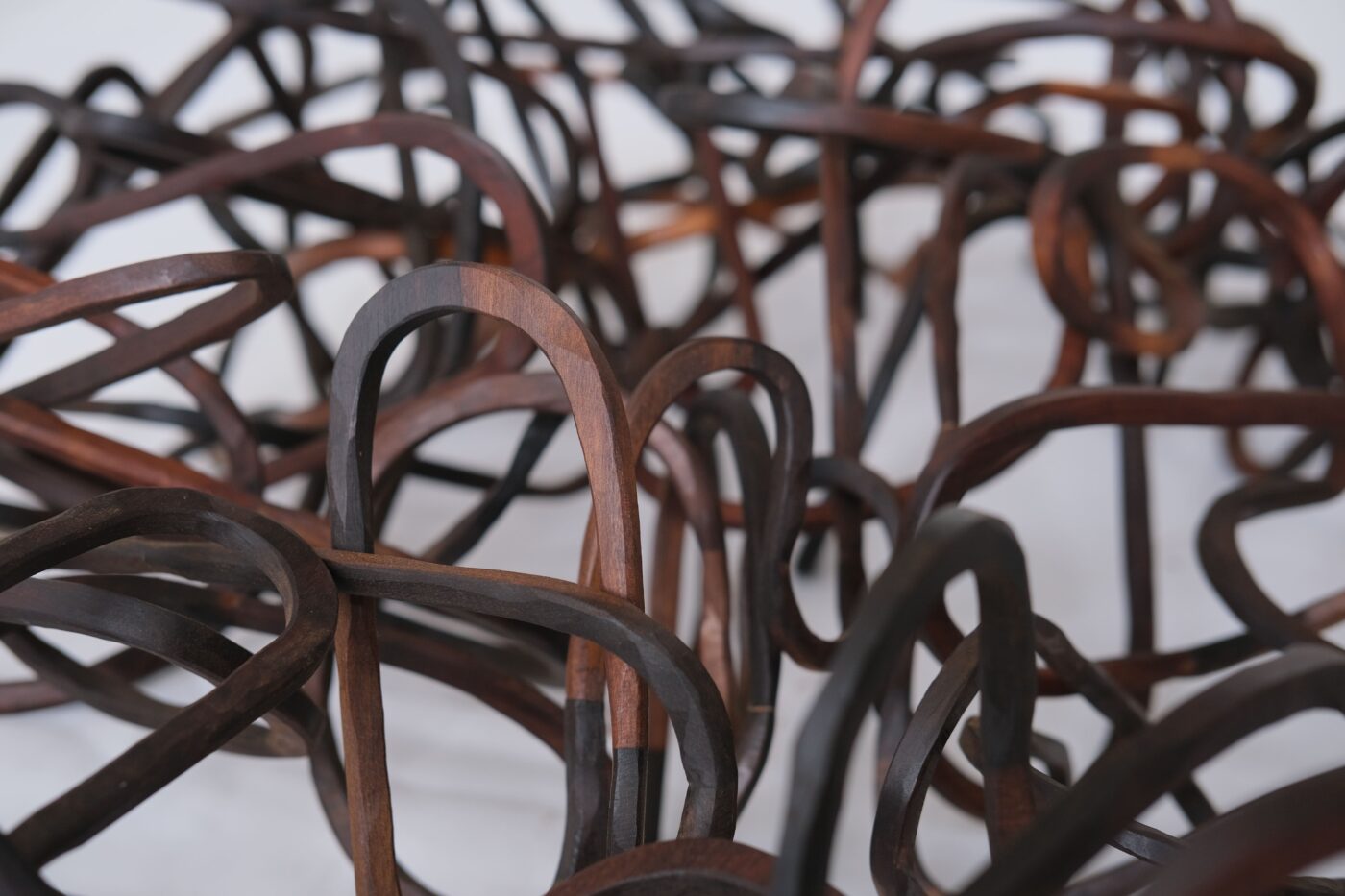
VP: I have always chosen wood as the central material in my work, despite feeling a strong attraction to glass and metal, precisely because of their almost alchemical properties and because they present qualities opposite to those of wood. These materials often remain in the realm of observation and inspiration, without necessarily being incorporated into the process. What happens instead is that I end up pushing the limits of wood, bringing it closer to metal through form, or to glass through fragility. I am interested in exploring how far a material can go when taken to the extreme of its symbolic and structural possibilities.

The texts and readings that permeate my creative universe come from contemporary and modern thinkers who reflect on the construction of other possibilities of existence, on transformation, and on the imagination of alternative worlds. Authors such as Donna Haraway, Ailton Krenak, Rosi Braidotti, and Ursula K. Le Guin are among the references that continuously nourish my work. Science fiction, as well as trans-feminist thought, imagines other bodies: bodies in mutation and, at the same time, bodies that reclaim an ancient wisdom that has largely been replaced or erased. In this tension, I see a key for thinking about a new way of understanding bodily adornment,not as ornament, but as a device for transformation, adaptation, and the re-enchantment of the body.
Provoking Questions

NYCJW: When someone experiences your work, what feelings or reflections do you hope it sparks?

VP: I would like the work to provoke questions and uncertainties. However, when we work with art, it is not possible to control the reactions, interpretations, or sensations it awakens in the audience. The experience of the work is completed precisely within this open, unpredictable field, where each body and each gaze produces its own meanings.

NYCJW: What’s one question you wish more people would ask you about your work?

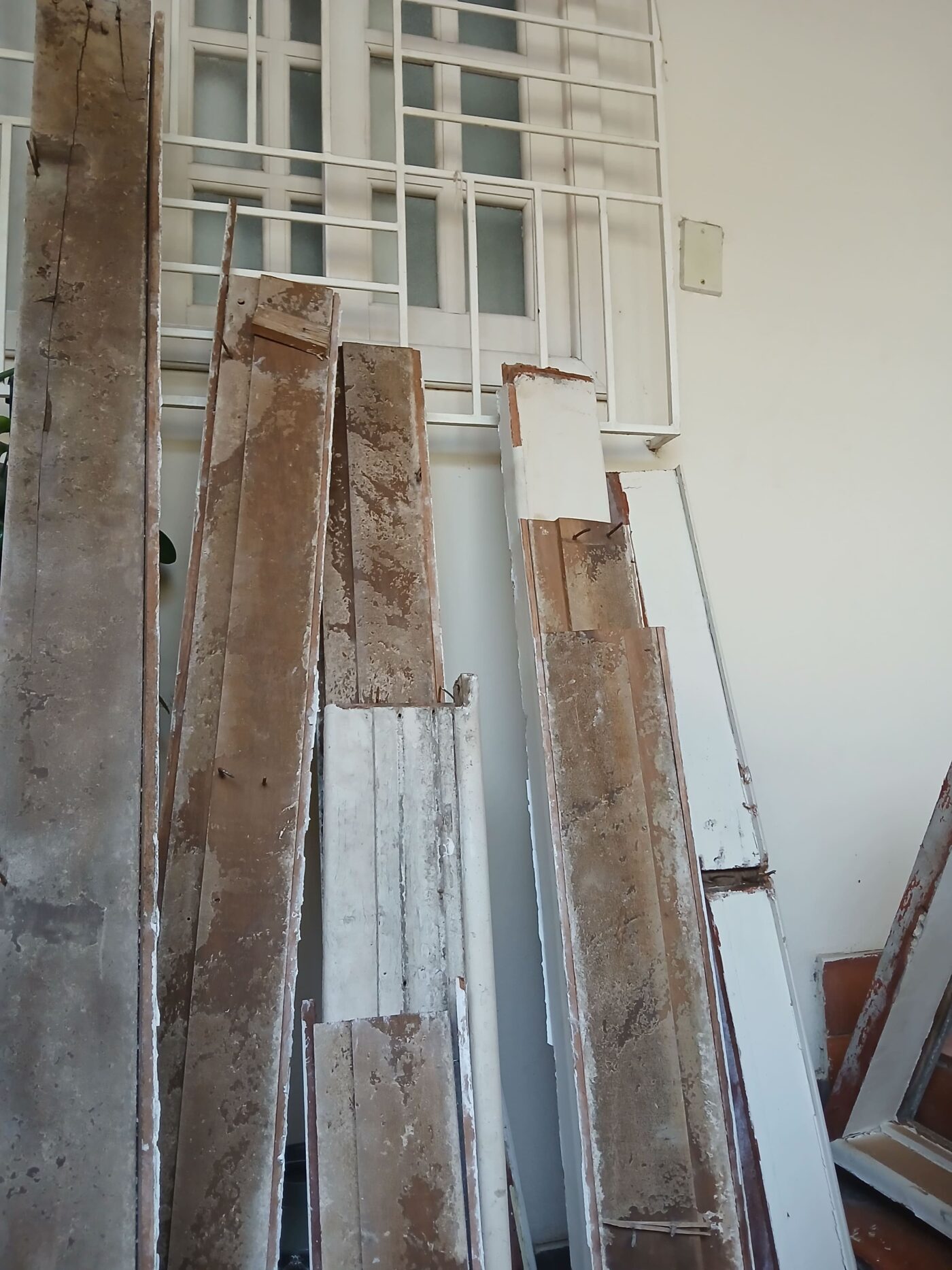
VP: I would like the questions to address the process and how I arrived at a given result. I believe this would help the public understand the complexity of the work. This process is not limited to the stages carried out in the studio. It involves the creative journey as a whole. The collection of the wood, which in most cases comes from dumpsters, urban waste, or demolition materials. If it were possible to follow the origin of the material, one would understand how visionary the work is, beyond its technical execution. To observe the structure of a discarded door, dirty covered in layers of paint, and still imagine another possibility of existence is a central gesture of the work. It is about transformation: imagining solutions, projecting other uses, other bodies, other worlds.
Transformation, Movement, Sensuality

NYCJW: Looking across your body of work, is there a recurring theme, idea, or emotion that continues to surface? What draws you back to it?

VP: The recurring theme in my work revolves around transformation, movement, and sensuality. The forms I create are twisted and hollowed out, sometimes organic, sometimes sharp and geometric. They operate within a field of tension between seduction and repulsion. This contrast reflects an underlying conflict between a rational origin of form, inherited from a Western mode of thinking in which I was raised, and my lived experience in Brazil, where the straight line dissolves and gives way to curves, circles, and spiral structures.

We’re grateful to Viola Pineider for sharing her insights, inspirations, and creative journey. Through ARC, she continues to redefine the boundaries between jewelry and sculpture. She transforms reclaimed materials, form, and perception into pieces that invite exploration, reflection, and transformation. Her thoughtful, visionary approach reminds us that jewelry is not just adornment. It is a device for becoming—a way to reimagine the body, the material, and the world around us.


About One for the Future (OFTF)
One for the Future celebrates visionary designers shaping the next generation of jewelry and creative industries. Each year, honorees are recognized for their innovation, craftsmanship, and unique perspectives, gaining opportunities for mentorship, exposure, and connection with collectors and industry leaders worldwide.

Enjoyed this piece? Explore more jewelry content from Future Heirloom!

Material Matters: In the Studio with Luci Jockel

Welcome to Day 5 of NYC Jewelry Week! Here on Future Heirloom, we’re celebrating by bringing you special behind-the-scenes content on some of our favorite programs, events, and exhibitions every day this week. Check in each day for a new feature on the happenings at NYC Jewelry Week.

Today we’re revisiting the recent launch of our first Future Heirloom column: Material Matters, featuring a behind-the-scenes look into some of our favorite contemporary art jeweler’s studios and interviews about their process. We launched Material Matters with a feature on Luci Jockel, a Baltimore-based contemporary jeweler exploring heirloom, memory, and the natural world through her practice. Read the interview with her on Future Heirloom, and see her exhibition Sisterhood: Bodies in Proximity, with her sister Emily Jockel all week long at The Jewelry Library.

Luci Jockel photographed by Lavala Harris.

Luci Jockel is an artist located in Baltimore, MD and holds the position as Metalsmithing and Jewelry Lecturer/Coordinator at Towson University. Luci received her MFA from Rhode Island School of Design (RISD) in 2016. She has been honored with the 2019 American Craft Council Emerging Voices Award. Her work is in the collections of RISD Museum, ArtYard and Galerie Marzee. She has curated exhibitions including All Decked Out at Towson University, and In-School Suspension with JV Collective. Luci is a member of JV Collective and is represented by Gallery Loupe.

Knotted, necklace, 2019. Snake vertebrae, freshwater pearls, silk thread.

Future Heirloom: Concepts of history, memory, memento mori, and heirloom feel like common threads in your work over the years. Have you always been interested in the history and “memory” of material?
Where did your interest in material arise from for you?

Luci Jockel:
Having parents that are antique dealers has had a deep impact on my interest in the memory held within materials and objects. They were and are always on the hunt for treasures, the value of which is determined by its own system.
As kids, they would take my siblings and I to auctions and antique shows that to a kid were places of accumulated, stinky, old junk. Little did I realize how much value these objects held beyond monetary, or that my parents’ passion for junk was being instilled in me- they were giving us “the bug”, as they call it. With each object that my parents bought or sold– a chair, quilt, painting, ring, for instance, there was a story of its origins and past life to be told.
Conversing with customers at antique shows was less transactional and more like sitting by a bonfire with friends sharing lore. There is power and value in an object that retains a story, even if sometimes it’s fabricated. 

“As my parents collected antiques, I began my own collection of found material in our backyard-
finding what I saw as treasures, creating a different system of value.”

Luci Jockel

FH: What guides your material interests in your work? How have you selected the materials you’ve worked with?
LJ:
I lean in towards objects and materials that speak quietly of fragility, requiring a soft, empathic touch. Perhaps my mother’s passion and artistic career in textiles influenced that gentle quality.
I also choose materials that gain different meaning in relation to another material or within the context of jewelry. For example, the glisten of honey bee wings catch your eye as if they were gold- holding the same preciousness.
Ultimately, I choose what makes me pause and wish for others to take a moment with as well.

FH: Your use of material in your work is always so intricate and thoughtful. Can you speak a bit about your process?
Is your process carefully planned, more improvisational,
or somewhere in between?

LJ: Thank you, that’s so kind! Much of my work is both planned and improvised. When making a piece that has pattern or when carving stone and there is no room for error, it is planned. Depending on the type of stone or material used to make a pattern, however, will determine how I continue to approach that material. It’s a material’s qualities and its past life that guide how to engage and transform.

For instance, I had originally planned to press bee wings into sheet to create a new material, using mixtures of beeswax, glue or honey as binders, which all ended in a complete mess. This then led me to try a more intentional, careful approach to enhance the quality of the wings. I began with small studies of using archival glue and bee wings to create lace. 

Luci at work in her studio.


Being open to failure and to change a design while in the process of making is important.
My latest bee wing piece and largest one to date, Bee Wing Lace Neckpiece, began as a planned design, stemming from these experiments, but morphed as I continued to expand the scale and wore on the body. There’s an adaptability that I’m constantly learning to embrace when working with found materials.

Bee Wing Lace Neckpiece, 2021. Honey bee wings, archival glue.

FH: What does a typical day in the studio look like for you?
LJ:
Lately, I’ve been starting with small exercises like quick drawings with pen, colored pencil, and highlighters, that have zero pressure or expectation attached. They are in no way connected to any project I have in the works. It’s so freeing and inspires the energy needed for other projects.
After the exercises, I move on to problem solving a new piece I’ve started until I’m able to find that delicious meditative, repetitive state of working, put on a podcast and dive in! Afterwards I take a break to do a little yoga or, more likely, relax in front of the windows of my Baltimore apartment- the views of the sky are insane and truly decompressing.
If I’m still feeling fresh later in the day, I’ll play with material combinations or even just browse through my collection. I love rediscovering materials whether it’s through pairings or even a shift in light. Many times, I hesitate to intervene with the materials I’ve collected– they are complete as they are.

Some recent material studies.
Study for Gold Veil III

FH: Where do you find inspiration for your work?
LJ:
Everywhere! As of the past few weeks:
Historic jewelry: Roman micro mosaic jewelry, morpho jewelry; exhibitions: Life of a Neuron at Artechouse; books: Wild Souls by Emma Marris, Braided Sweetgrass by Robin Wall Kimmerer; artists: my sister- Emily Jockel, my students, Julia Künnap, Nils Udo, Helen Britton’s milk plastic series, and JV Collective!

Bee Wing Lace, 2014. Honey bee wings, rubber cement.

FH: What are you currently working on? Do you have any projects in the works that you’re particularly excited about?
LJ: There are so many things on the roster right now, and I’m so excited for them all. In preparation for NYCJW, my sister, a ceramist, and I are collaborating on a few pieces for our exhibition, Sisterhood: Bodies in Proximity, that are outside of the bounds we typically work within, like adding color, and considering the interplay and crossover of our mediums.

I recently went on a cross-country trip to Oregon with photographer, Lavala Harris, and we’re preparing a few additional projects based on that trip. 
I’m working on a piece for the Baltimore Jewelry Center’s (BJC) Community Challenge, inspired by an archer’s ring within the Walter’s Art Museum collection, using the technique of gold kundan- but with honey bee wings.

BJC, Montgomery College and Towson University are working on a collaborative student/artist show together for Spring 2022.
Lastly, I’ll be preparing for a solo exhibition at Gallery Loupe in the near future!

FH: What does The Power of Jewelry mean to you?
LJ:
The Power of Jewelry comes from the memory it carries. It holds the memory not only of its past lives, but of the maker’s energy and care, of the wearer who finds new meaning, and of their kin who inherit the heirloom. Jewelry is a chain linking together generations, continuously given new life.

Works from Sisterhood: Bodies in Proximity, featuring ceramics by Emily Jockel and jewelry by Luci Jockel.

FH: Anything else you’d like to share?
LJ:
Please join my sister, Emily Jockel, and I during NYCJW from November 15-21 at The Jewelry Library, for our exhibition, Sisterhood: Bodies in Proximity!

You can find more of Luci’s work on her website, and keep up with her latest work on her Instagram @lucijockel. Luci is represented by Gallery Loupe.


Our sincere thanks to Luci for giving us a glimpse into her studio and process. Text and images courtesy of Luci Jockel; headshot photograph by Lavala Harris. Interview conducted, edited, and compiled by Future Heirloom Editor Jackie Andrews.

Material Matters: In the Studio with Luci Jockel

Today we’re excited to launch the first of our very own Future Heirloom columns: Material Matters, featuring a behind-the-scenes look into some of our favorite contemporary art jeweler’s studios and interviews about their process. We thought the perfect artist to kick off Material Matters was Luci Jockel, a Baltimore-based contemporary jeweler exploring heirloom, memory, and the natural world through her practice. Before we dive into our conversation with Luci, get to know her a bit more below:

Luci Jockel photographed by Lavala Harris.

Luci Jockel is an artist located in Baltimore, MD and holds the position as Metalsmithing and Jewelry Lecturer/Coordinator at Towson University. Luci received her MFA from Rhode Island School of Design (RISD) in 2016. She has been honored with the 2019 American Craft Council Emerging Voices Award. Her work is in the collections of RISD Museum, ArtYard and Galerie Marzee. She has curated exhibitions including All Decked Out at Towson University, and In-School Suspension with JV Collective. Luci is a member of JV Collective and is represented by Gallery Loupe.

Knotted, necklace, 2019. Snake vertebrae, freshwater pearls, silk thread.

Future Heirloom: Concepts of history, memory, memento mori, and heirloom feel like common threads in your work over the years. Have you always been interested in the history and “memory” of material?
Where did your interest in material arise from for you?

Luci Jockel:
Having parents that are antique dealers has had a deep impact on my interest in the memory held within materials and objects. They were and are always on the hunt for treasures, the value of which is determined by its own system.
As kids, they would take my siblings and I to auctions and antique shows that to a kid were places of accumulated, stinky, old junk. Little did I realize how much value these objects held beyond monetary, or that my parents’ passion for junk was being instilled in me- they were giving us “the bug”, as they call it. With each object that my parents bought or sold– a chair, quilt, painting, ring, for instance, there was a story of its origins and past life to be told.
Conversing with customers at antique shows was less transactional and more like sitting by a bonfire with friends sharing lore. There is power and value in an object that retains a story, even if sometimes it’s fabricated. 

“As my parents collected antiques, I began my own collection of found material in our backyard-
finding what I saw as treasures, creating a different system of value.”

Luci Jockel

FH: What guides your material interests in your work? How have you selected the materials you’ve worked with?
LJ:
I lean in towards objects and materials that speak quietly of fragility, requiring a soft, empathic touch. Perhaps my mother’s passion and artistic career in textiles influenced that gentle quality.
I also choose materials that gain different meaning in relation to another material or within the context of jewelry. For example, the glisten of honey bee wings catch your eye as if they were gold- holding the same preciousness.
Ultimately, I choose what makes me pause and wish for others to take a moment with as well.

FH: Your use of material in your work is always so intricate and thoughtful. Can you speak a bit about your process?
Is your process carefully planned, more improvisational,
or somewhere in between?

LJ: Thank you, that’s so kind! Much of my work is both planned and improvised. When making a piece that has pattern or when carving stone and there is no room for error, it is planned. Depending on the type of stone or material used to make a pattern, however, will determine how I continue to approach that material. It’s a material’s qualities and its past life that guide how to engage and transform.

For instance, I had originally planned to press bee wings into sheet to create a new material, using mixtures of beeswax, glue or honey as binders, which all ended in a complete mess. This then led me to try a more intentional, careful approach to enhance the quality of the wings. I began with small studies of using archival glue and bee wings to create lace. 

Luci at work in her studio.


Being open to failure and to change a design while in the process of making is important.
My latest bee wing piece and largest one to date, Bee Wing Lace Neckpiece, began as a planned design, stemming from these experiments, but morphed as I continued to expand the scale and wore on the body. There’s an adaptability that I’m constantly learning to embrace when working with found materials.

Bee Wing Lace Neckpiece, 2021. Honey bee wings, archival glue.

FH: What does a typical day in the studio look like for you?
LJ:
Lately, I’ve been starting with small exercises like quick drawings with pen, colored pencil, and highlighters, that have zero pressure or expectation attached. They are in no way connected to any project I have in the works. It’s so freeing and inspires the energy needed for other projects.
After the exercises, I move on to problem solving a new piece I’ve started until I’m able to find that delicious meditative, repetitive state of working, put on a podcast and dive in! Afterwards I take a break to do a little yoga or, more likely, relax in front of the windows of my Baltimore apartment- the views of the sky are insane and truly decompressing.
If I’m still feeling fresh later in the day, I’ll play with material combinations or even just browse through my collection. I love rediscovering materials whether it’s through pairings or even a shift in light. Many times, I hesitate to intervene with the materials I’ve collected– they are complete as they are.

Some recent material studies.
Study for Gold Veil III

FH: Where do you find inspiration for your work?
LJ:
Everywhere! As of the past few weeks:
Historic jewelry: Roman micro mosaic jewelry, morpho jewelry; exhibitions: Life of a Neuron at Artechouse; books: Wild Souls by Emma Marris, Braided Sweetgrass by Robin Wall Kimmerer; artists: my sister- Emily Jockel, my students, Julia Künnap, Nils Udo, Helen Britton’s milk plastic series, and JV Collective!

Bee Wing Lace, 2014. Honey bee wings, rubber cement.

FH: What are you currently working on? Do you have any projects in the works that you’re particularly excited about?
LJ: There are so many things on the roster right now, and I’m so excited for them all. In preparation for NYCJW, my sister, a ceramist, and I are collaborating on a few pieces for our exhibition, Sisterhood: Bodies in Proximity, that are outside of the bounds we typically work within, like adding color, and considering the interplay and crossover of our mediums.

I recently went on a cross-country trip to Oregon with photographer, Lavala Harris, and we’re preparing a few additional projects based on that trip. 
I’m working on a piece for the Baltimore Jewelry Center’s (BJC) Community Challenge, inspired by an archer’s ring within the Walter’s Art Museum collection, using the technique of gold kundan- but with honey bee wings.

BJC, Montgomery College and Towson University are working on a collaborative student/artist show together for Spring 2022.
Lastly, I’ll be preparing for a solo exhibition at Gallery Loupe in the near future!

FH: What does The Power of Jewelry mean to you?
LJ:
The Power of Jewelry comes from the memory it carries. It holds the memory not only of its past lives, but of the maker’s energy and care, of the wearer who finds new meaning, and of their kin who inherit the heirloom. Jewelry is a chain linking together generations, continuously given new life.

Works from Sisterhood: Bodies in Proximity, featuring ceramics by Emily Jockel and jewelry by Luci Jockel.

FH: Anything else you’d like to share?
LJ:
Please join my sister, Emily Jockel, and I during NYCJW from November 15-21 at The Jewelry Library, for our exhibition, Sisterhood: Bodies in Proximity!

You can find more of Luci’s work on her website, and keep up with her latest work on her Instagram @lucijockel. Luci is represented by Gallery Loupe.


Our sincere thanks to Luci for giving us a glimpse into her studio and process. Text and images courtesy of Luci Jockel; headshot photograph by Lavala Harris. Interview conducted, edited, and compiled by Future Heirloom Editor Jackie Andrews.