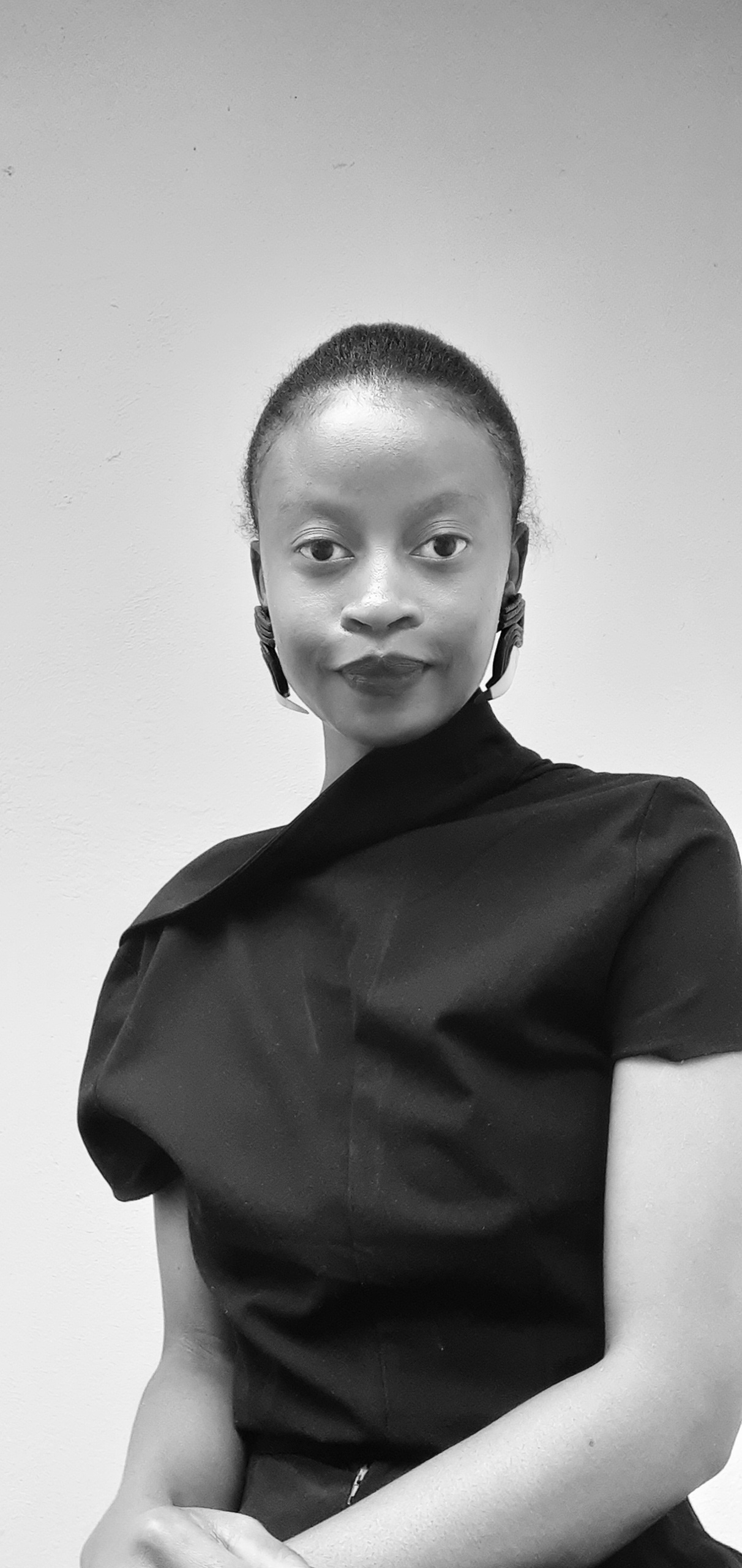
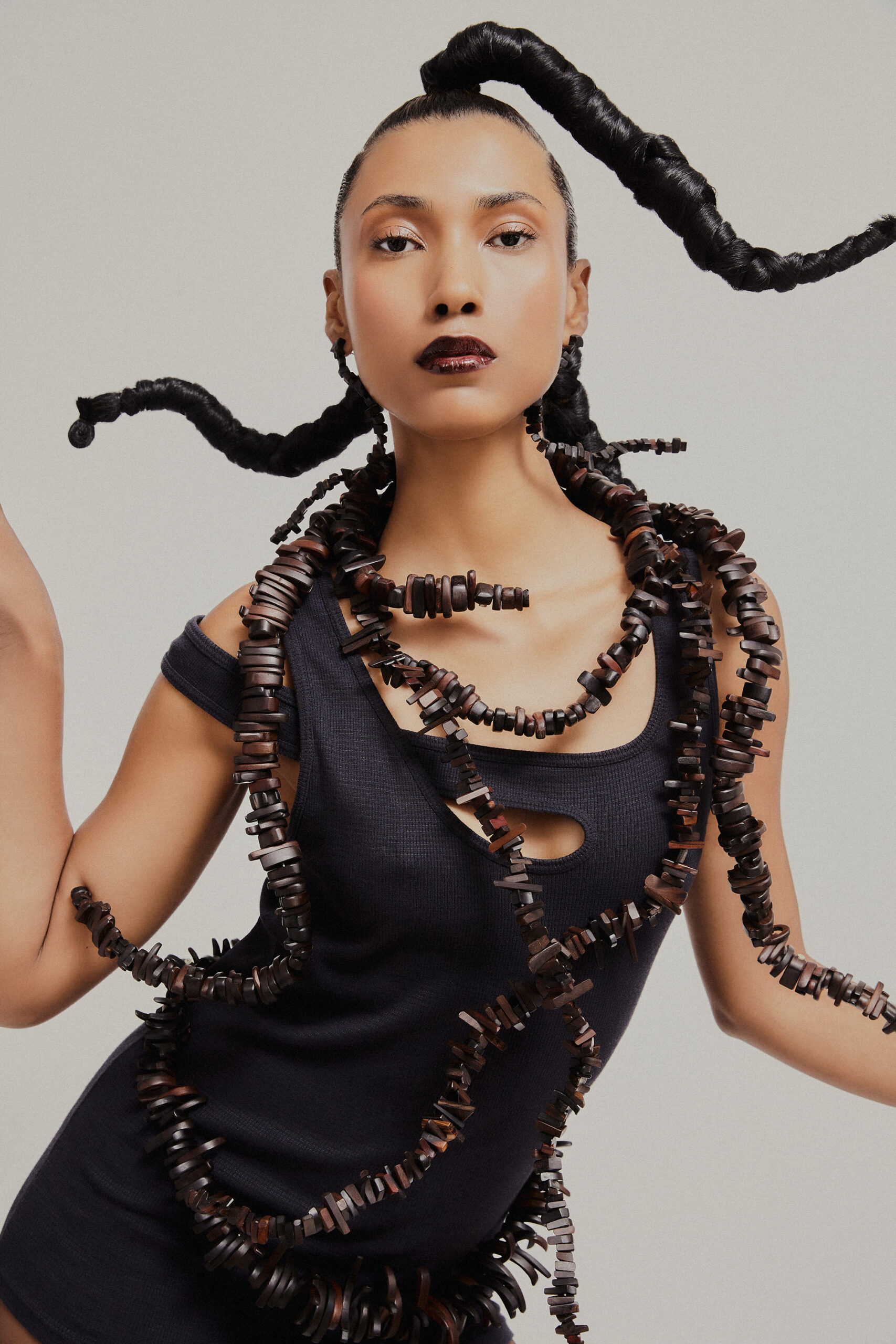
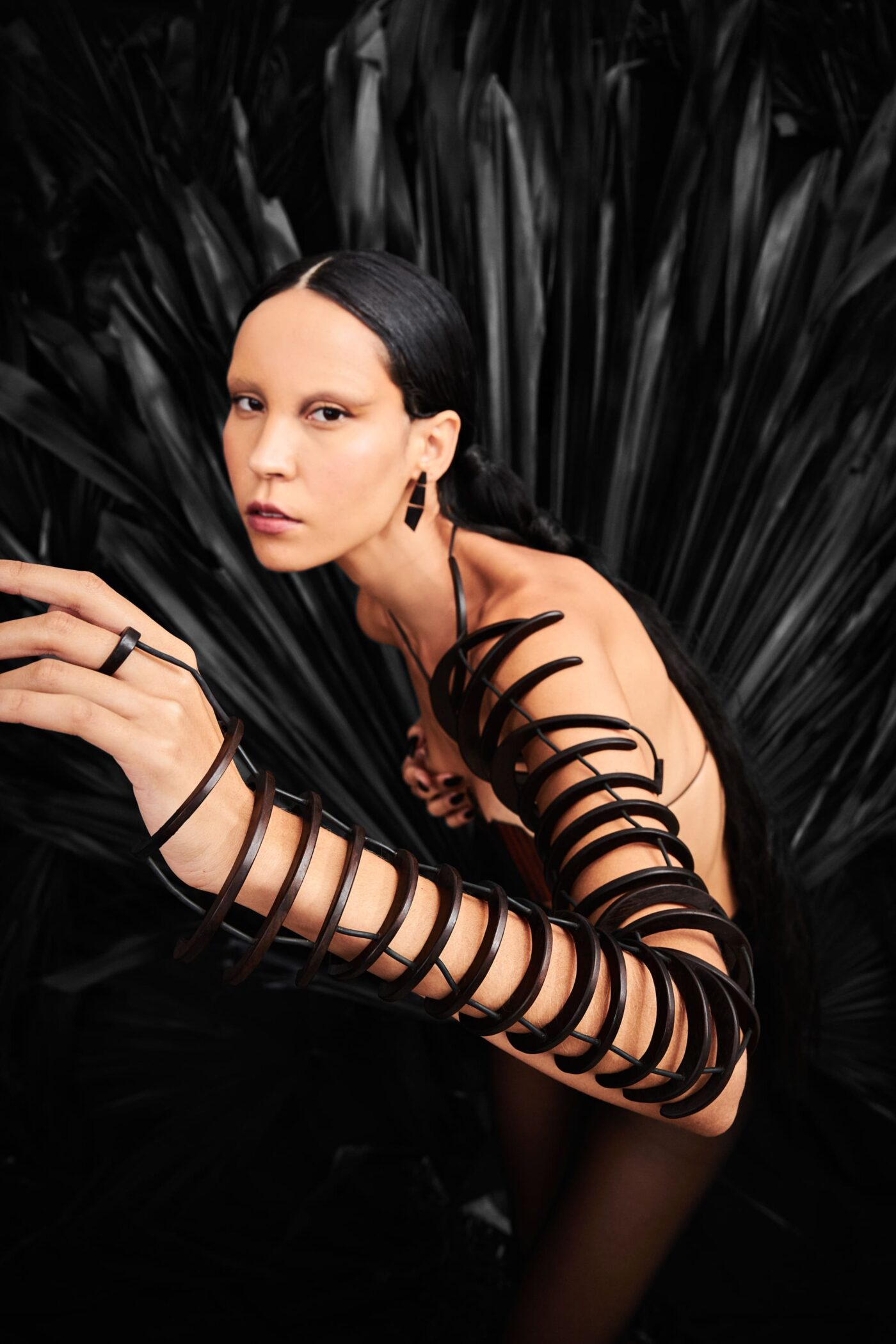
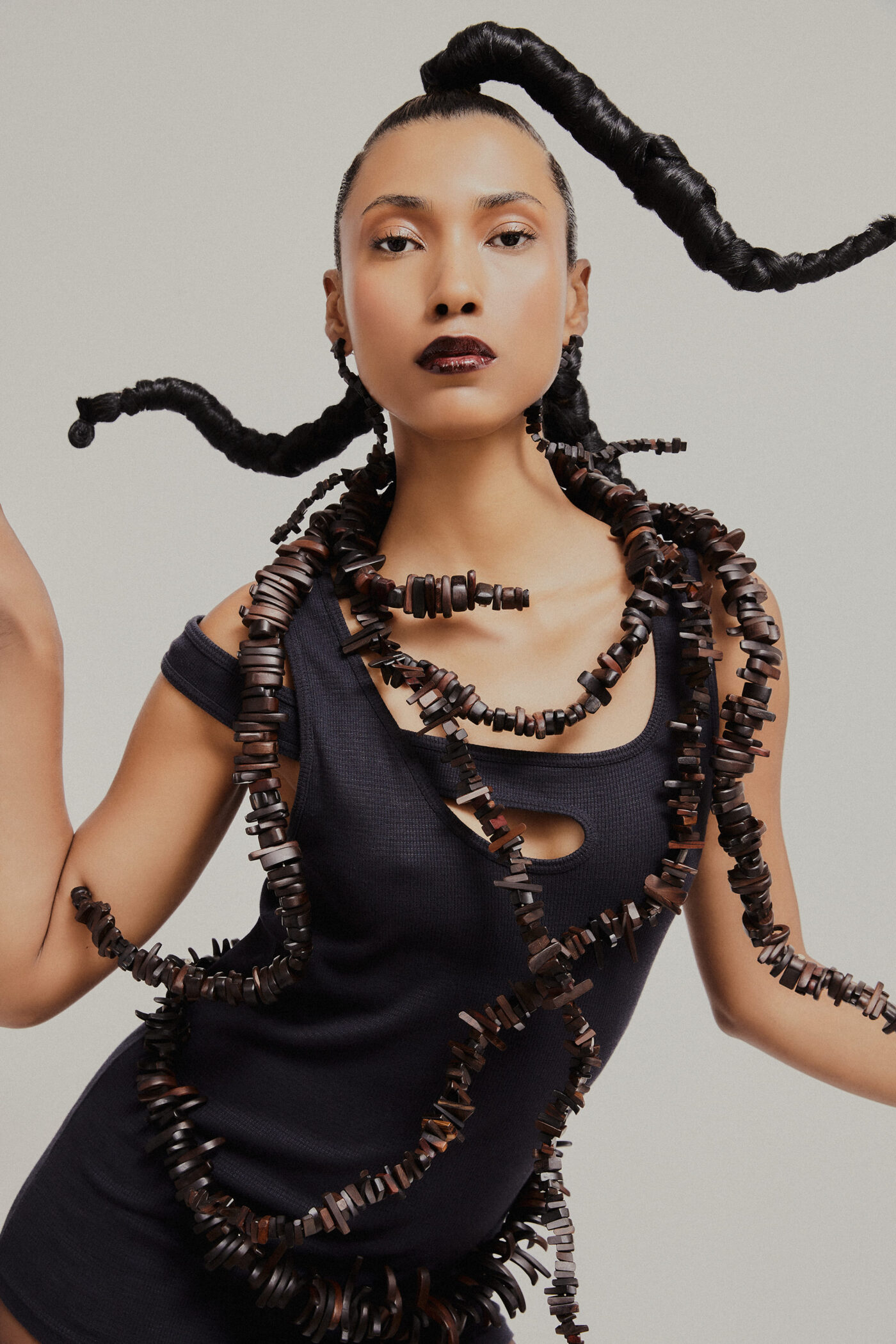
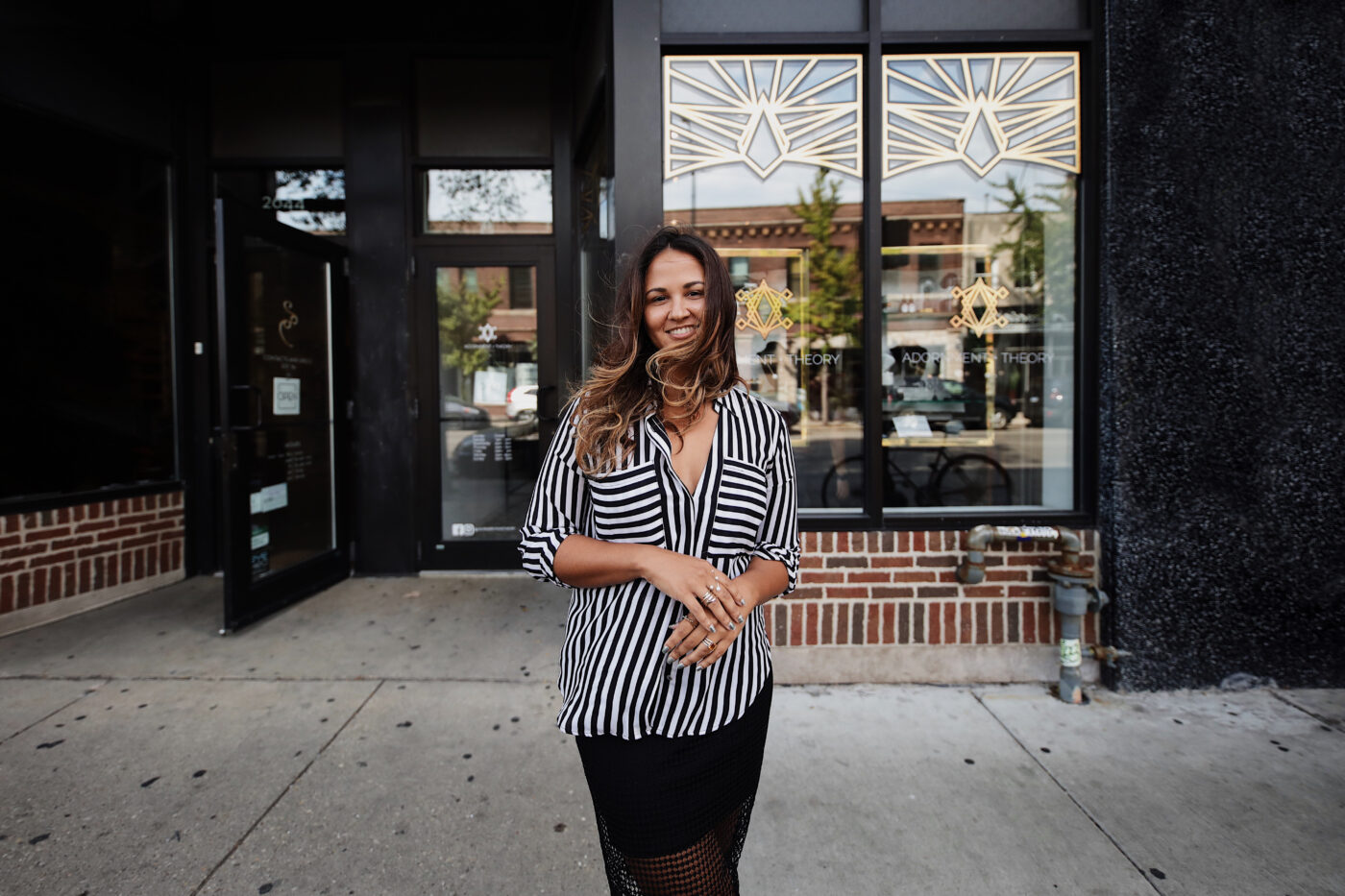
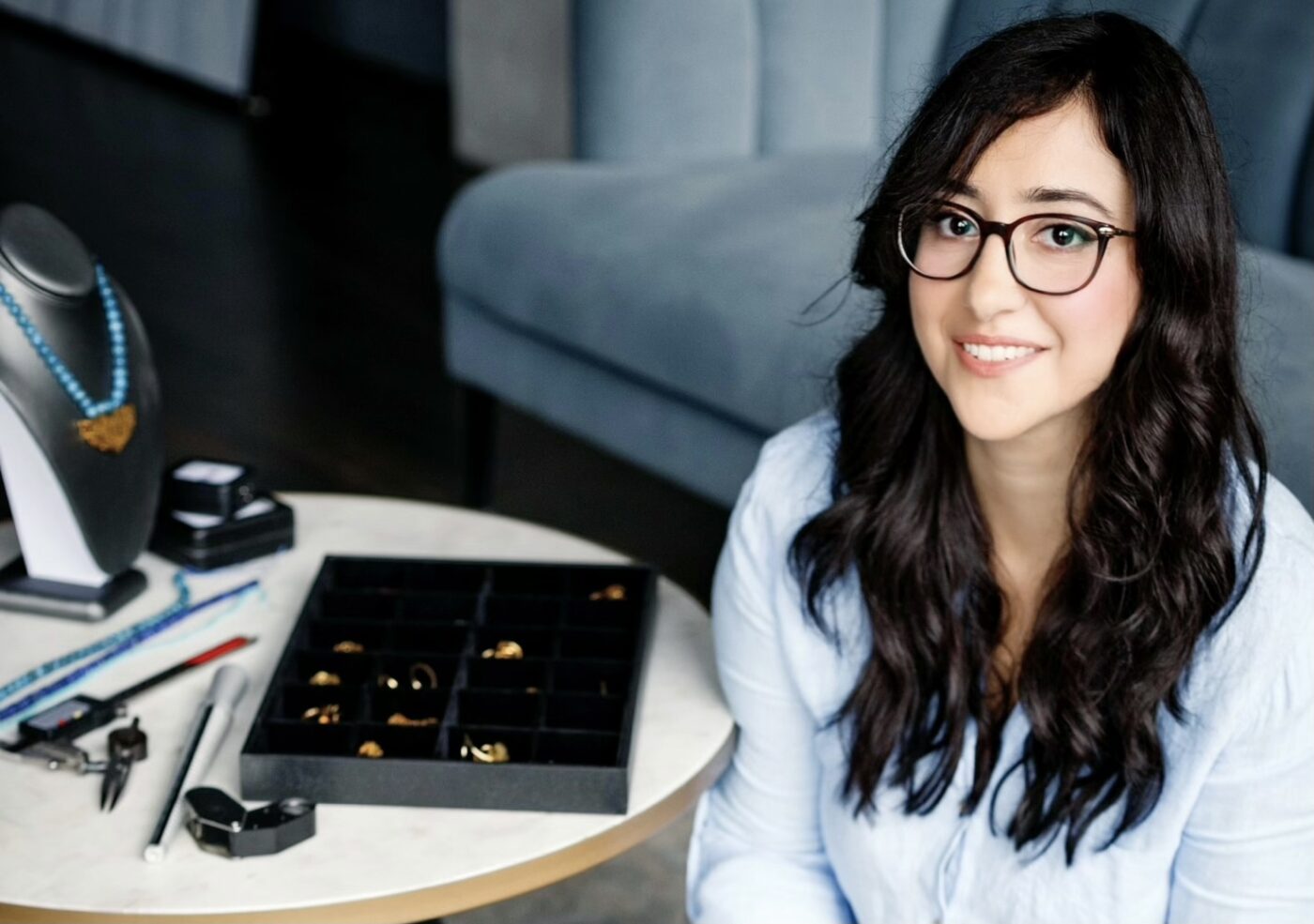
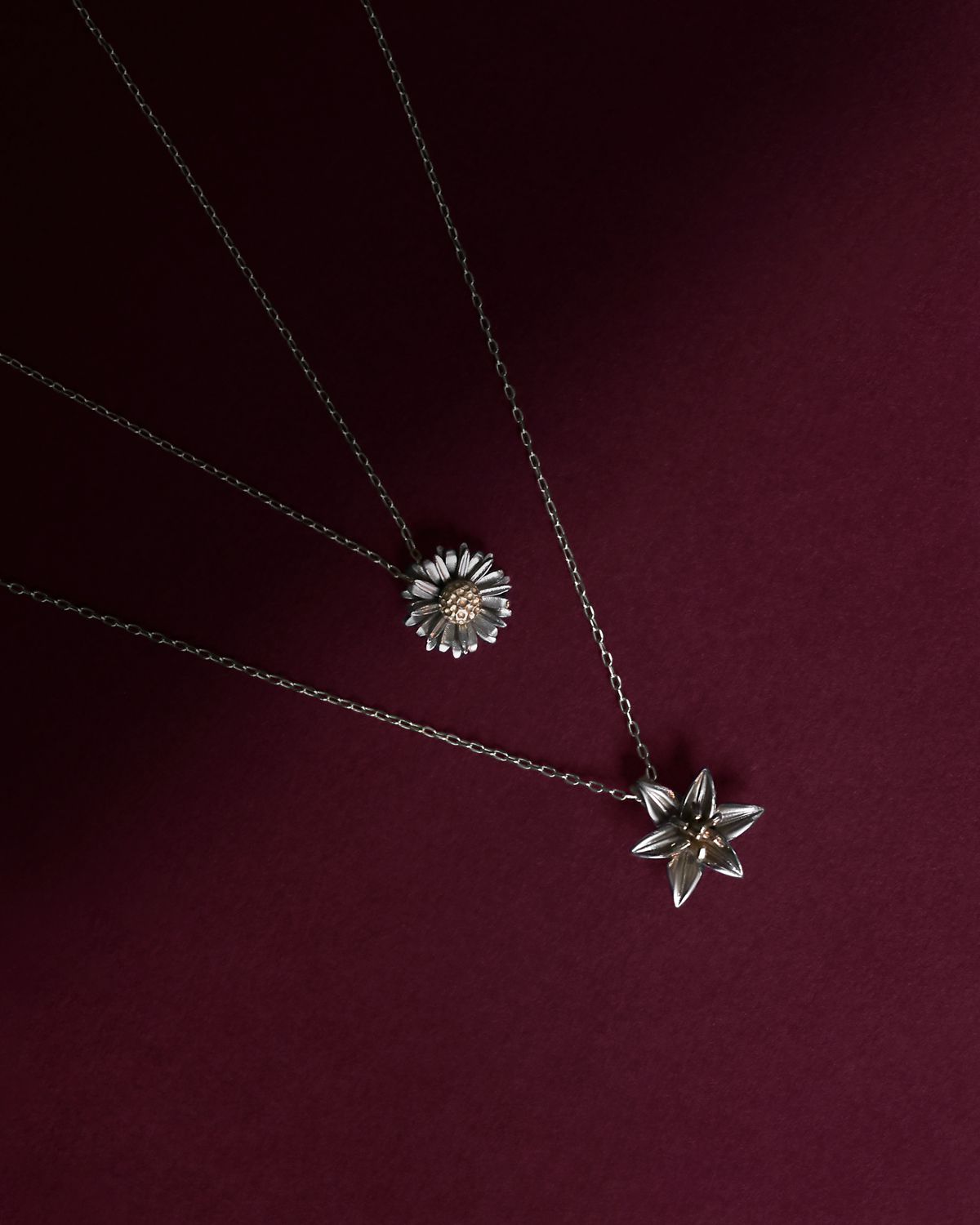
Sarosha Imtiaz is a 2026–2027 One for the Future Honoree, recognized for her work at the intersection of AI, systems design, and craft. Her work sits in a rare space between technical infrastructure and highly human, detail-driven industries, where judgment, intuition, and precision must coexist.
Over the past decade, she has built software for global brands including Shopify, Authentic, and EA, focusing on tools that support complex creative and commercial workflows at scale. She is also the founder of a previously exited AI-powered, no-code marketing platform used by more than 100K eCommerce businesses, designed to simplify how non-technical teams build and operate digital marketing systems.
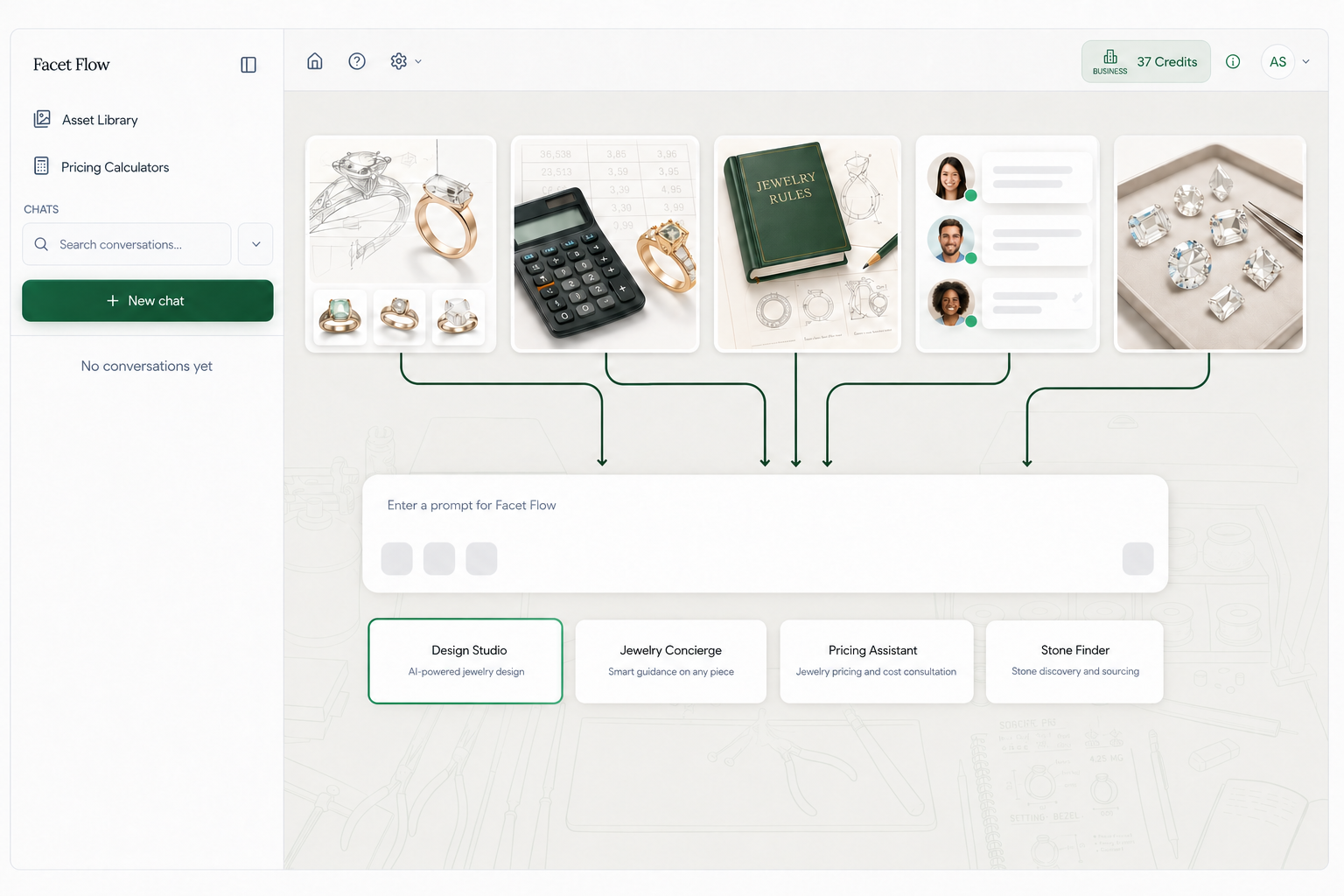
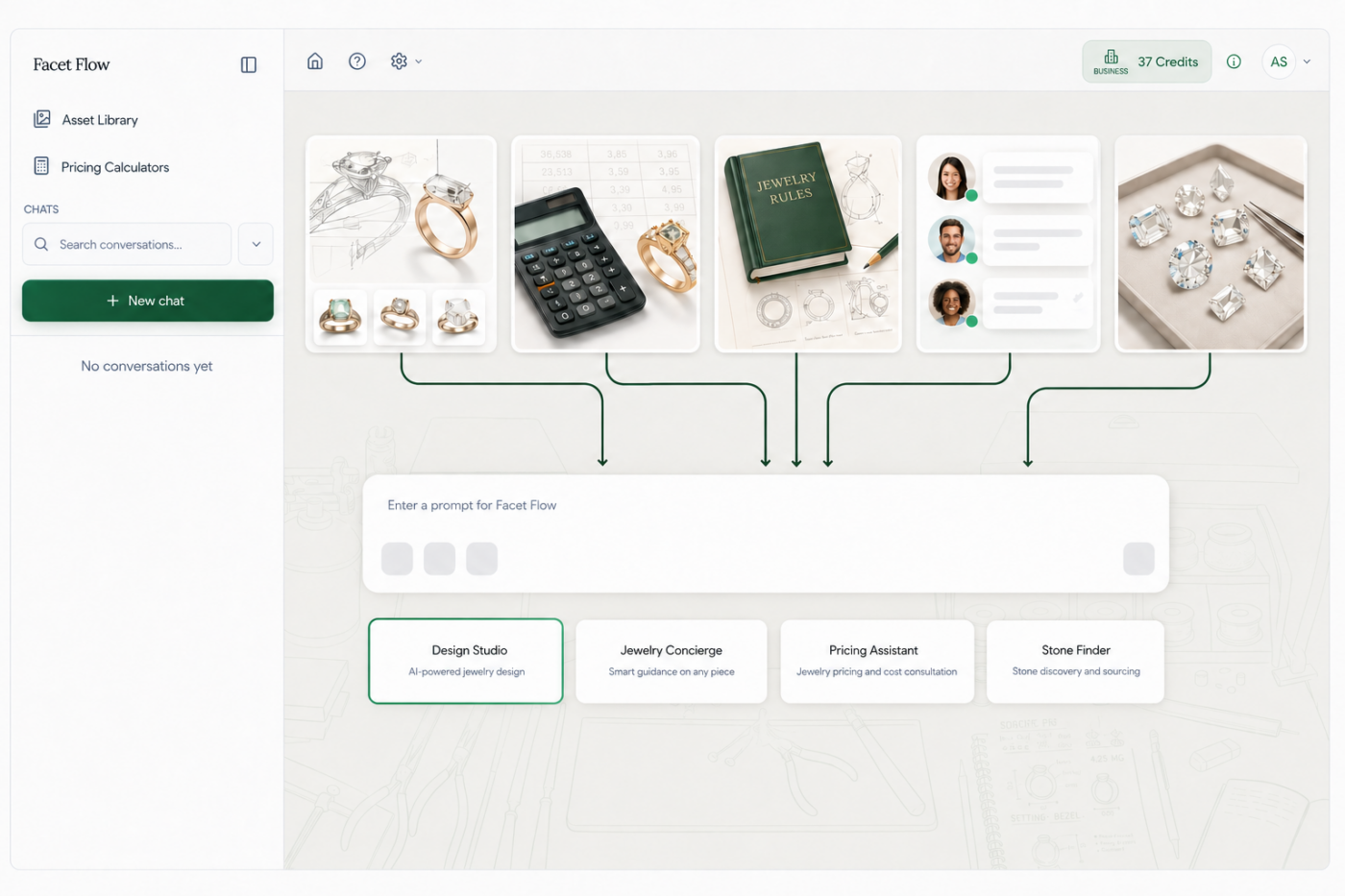
She is currently the founder of Facet Flow, a jewelry technology company rethinking how custom pieces are designed, priced, and produced. The platform captures the often-invisible logic behind jewelry creation—design intent, material constraints, pricing decisions, and production workflows—and turns it into structured systems that preserve context rather than flattening it. Her work explores how AI can support craft without diluting it, enabling teams to move from idea to execution with clarity, consistency, and control while still leaving room for human judgment.
Editing the Invisible
NYCJW: If you had to describe your work in layperson’s terms, what would you say?
SI: I’m building Facet Flow, an operating system for jewelry businesses. We capture the decisions behind a piece – design intent, pricing, and production logic – so teams can move from idea to execution without losing context. Because in jewelry, the hardest part isn’t the idea, it’s getting it made correctly, every time.
NYCJW: Is there a project or idea you’ve put aside for now?
SI: I experimented with video generation for marketing and building repeatable workflows around it, but the results (although promising) weren’t consistent enough across different use cases. I shelved it because it’s a product problem on its own, and not where we’re focused today. I’m less interested in broad video generation, storyboarding and scene creation – there are already strong products there. I’d approach it again through more specific, structured workflows. However, the space is moving fast enough, and it’s one of those ideas that keeps resurfacing.
NYCJW: If your work didn’t exist as software or systems, what other form do you think it would naturally take?
SI: Film editing. Not directing – the edit. Taking raw, messy footage and deciding what stays, what gets cut, and what actually tells the story. It’s less about creating something new and more about shaping what’s already there into something intentional. That’s how I think about jewelry. The surface is emotional. But underneath it’s a sequence of precise decisions. That’s where it either holds or starts to come apart.
Why Iteration Is a Sign of Clarity
NYCJW: What’s a widely accepted belief in your field that you find yourself questioning, even if others don’t?
SI: That iteration signals uncertainty. There’s a culture in parts of the industry, especially custom and high-end, where presenting multiple options signals that you don’t know what you’re doing. The designer is supposed to “just know.” I don’t think that’s right. Iteration isn’t uncertainty – it’s information. The best outcomes usually come from people who are willing to test and adjust, not from those who got it right the first try and couldn’t tell you why.
Building Systems That Adapt to Real-World Practice
NYCJW: Can you recall a recent moment where you weren’t sure how something should work creatively or technically?
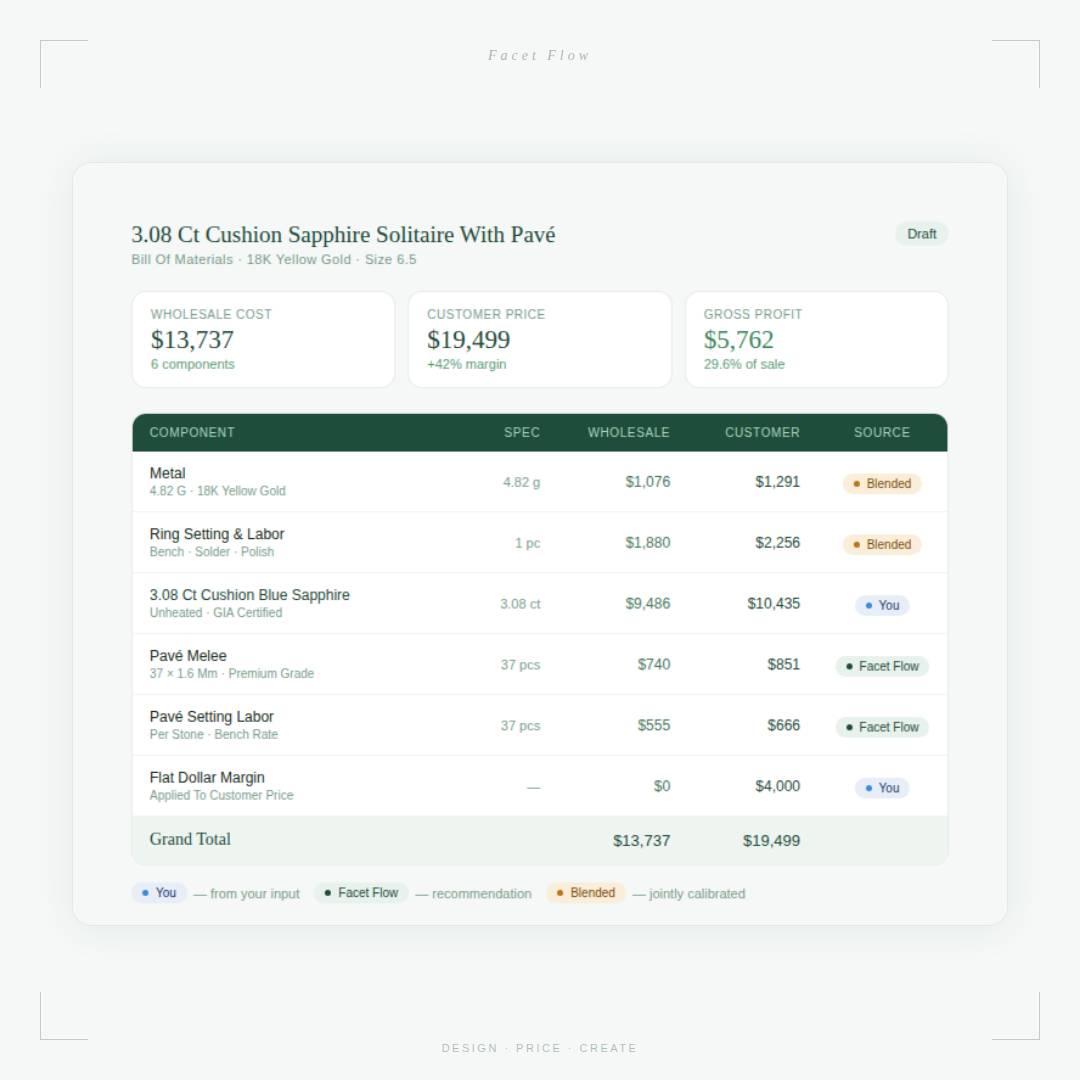
Initially, we built Facet Flow’s pricing logic around industry benchmarks. This gave jewelers a defensible starting point and protected margins from day one, even if their own data was incomplete. Then the feedback came back. Jewelers wanted their own data in the system too – their history, materials, and pricing patterns. Which made sense, but it meant the model had to do more. Not just apply benchmarks, but reconcile them with inputs that don’t always follow the ideal. The doubt wasn’t about direction; it was about balance. How do you build something grounded in expertise without overriding someone’s lived practice? We landed on a hybrid: your data runs the system, and the benchmarks act as a signal, flagging when something looks off. It took time to get the balance right, and it’s still evolving because the system has to adapt to how people actually work.
A Signet for the Observer
NYCJW: If you could design something for a historical figure or fictional character, who would you choose?
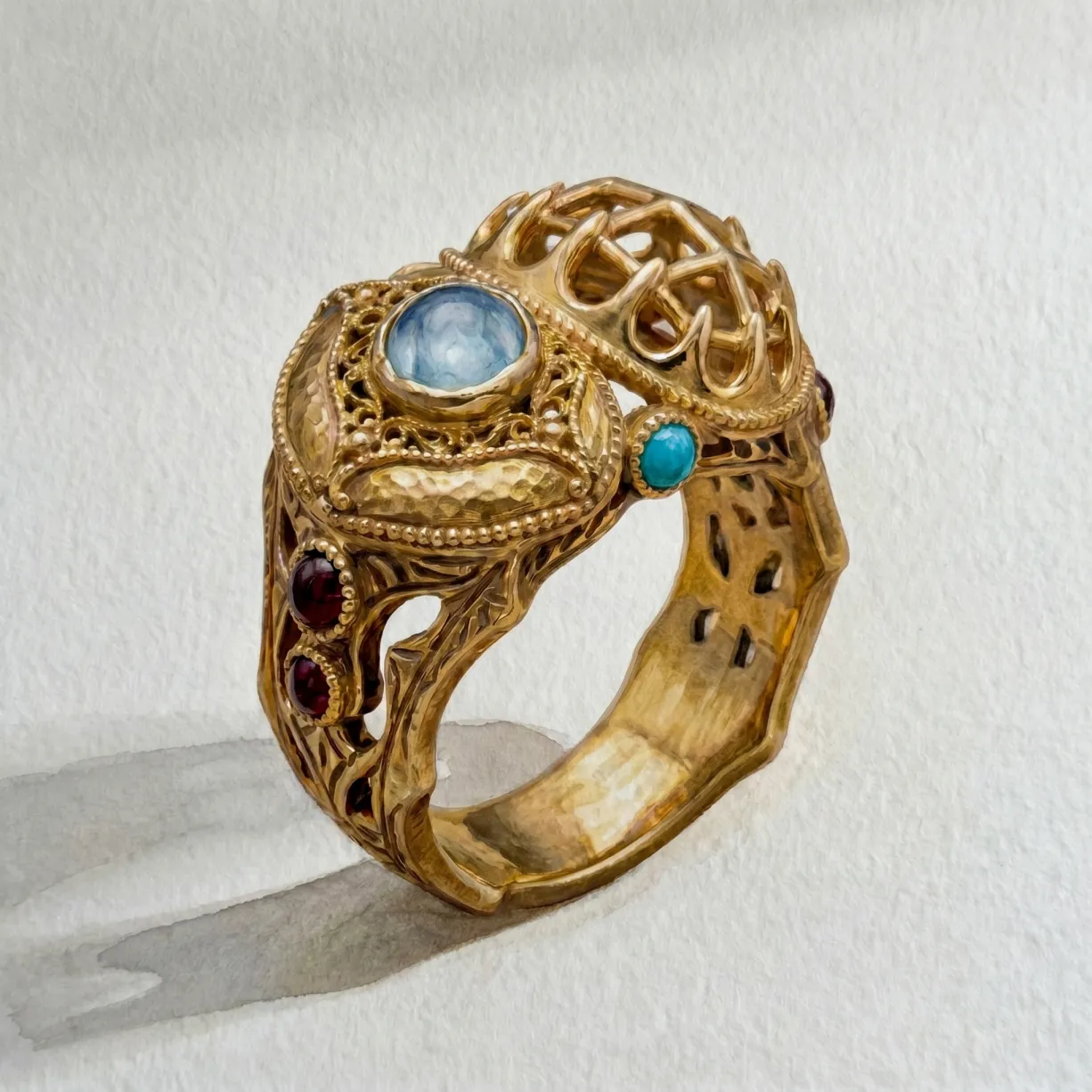
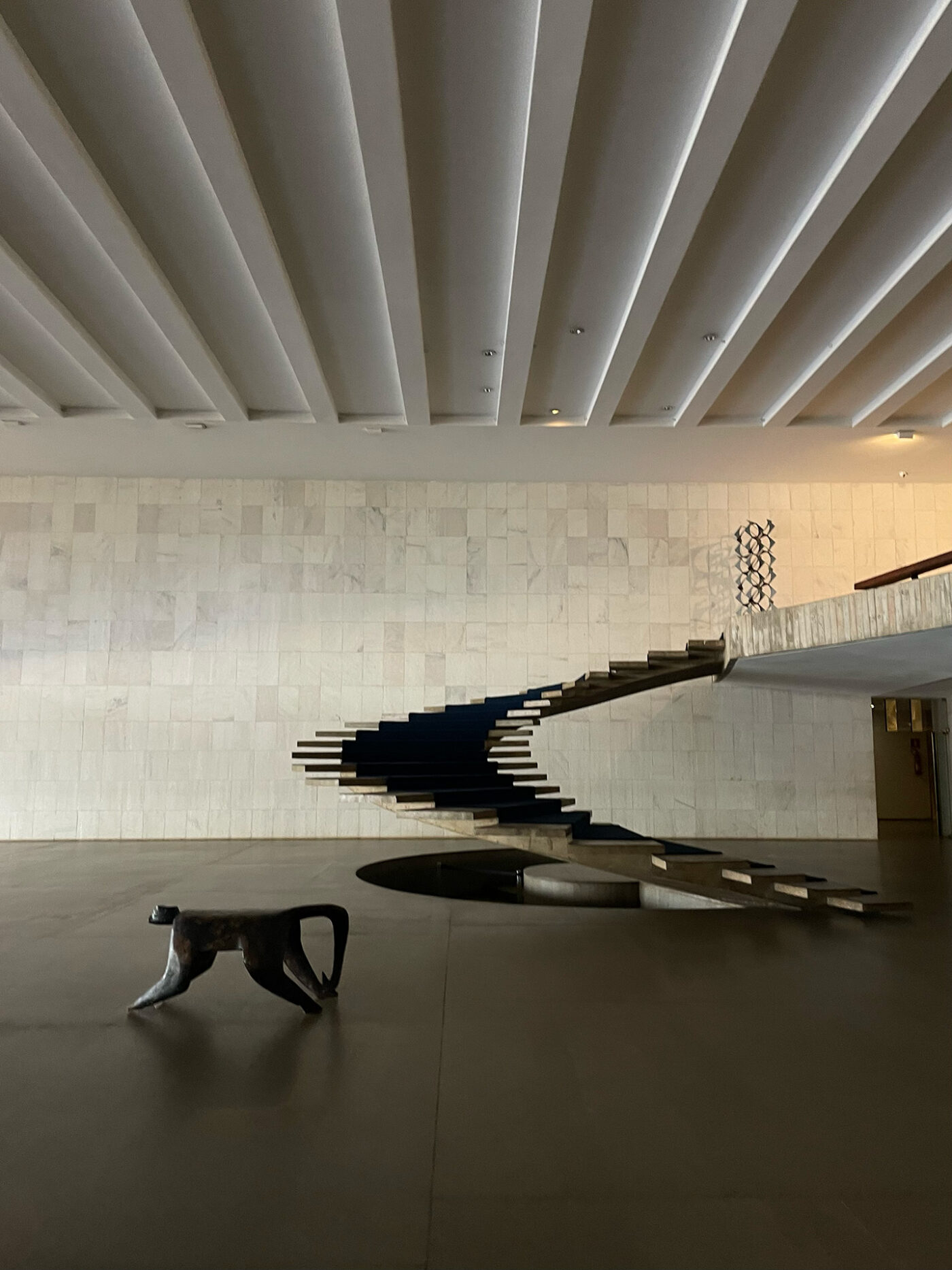
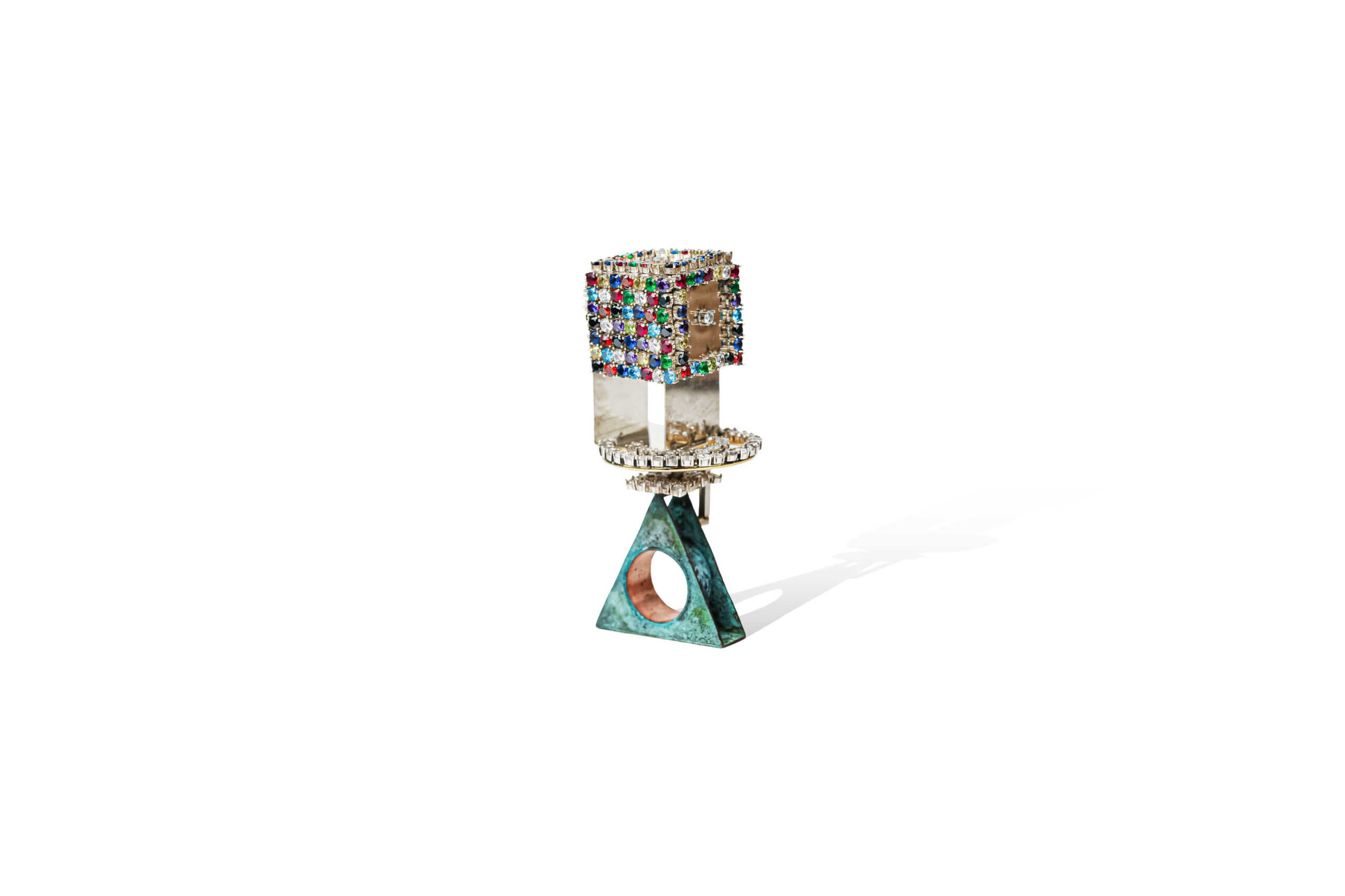
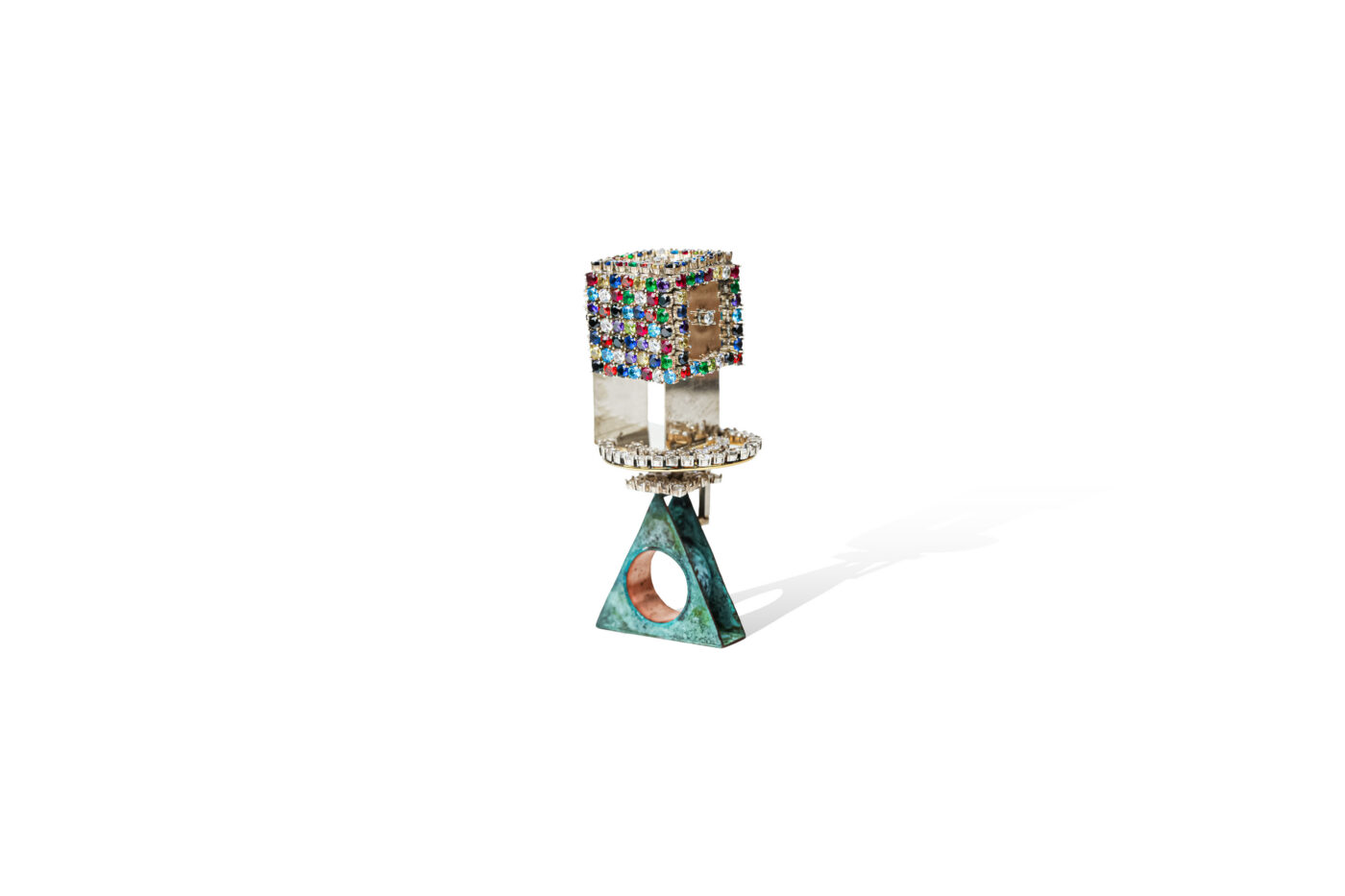
SI: Ibn Battuta, a 14th-century Moroccan explorer who spent 30 years traveling across Africa, the Middle East, and Asia. What’s interesting about him isn’t the distance he covered but that he was obsessed with recording everything: every court, every system, every custom he encountered. He wanted to make sense of what he was seeing, not just experience it. I’d make him a ring. Closer to a signet, something tied to identity and interpretation. Built in layers, where each surface holds a different reference point. The detail isn’t decorative; it’s a record of the places and cultures he moved through. It wouldn’t reveal itself all at once. You’d have to spend time with it to understand how it’s structured.
Finding Signal in Failure
NYCJW: What’s something unconventional—an object, system, or even “broken” thing—that you’ve been paying attention to lately?
SI: Error logs. What breaks is more interesting than what works. Every failed render and misinterpreted prompt shows where the system is guessing instead of knowing. In jewelry, that same gap shows up between design intent and production. That’s what I’m building around.
Control, Friction, and the Space Between Structure and Emergence
NYCJW: When someone interacts with what you’re building, how do you want their relationship with it to feel or shift?
SI: I want people to feel comfortable with AI and in control of the process, not intimidated by it. It should help them move faster, test ideas, and make informed decisions. It gives them more space to explore, because the system handles the parts that usually slow them down.
NYCJW: What’s a question you wish people asked you more often about your work?
SI: “What does this replace?” Because the honest answer is: not much. It doesn’t replace taste, judgment, or experience. But it replaces friction, the back-and-forth, the guesswork, and repeated decisions. That’s where most time gets lost.
NYCJW: Even if it’s subtle, what theme keeps resurfacing in your work? Why do you think it keeps showing up?
SI: Control vs. surrender: how much you define upfront and how much you let emerge. With both jewelry and technology, too much structure kills flexibility. Too little and nothing is reproducible. I keep working in that middle space – systems that are reliable but not rigid. It shows up in building with AI as well. You’re constantly working with something that has its own interpretation of what you mean, so you guide it with constraints and adjust when it doesn’t behave the way you expect.
About One for the Future (OFTF) One for the Future celebrates the next generation of jewelry and creative industry professionals. Each year, the program recognizes honorees for their innovation, craftsmanship, and/or unique perspectives and connects them with mentorship, exposure, and opportunities to engage with collectors and industry leaders worldwide.
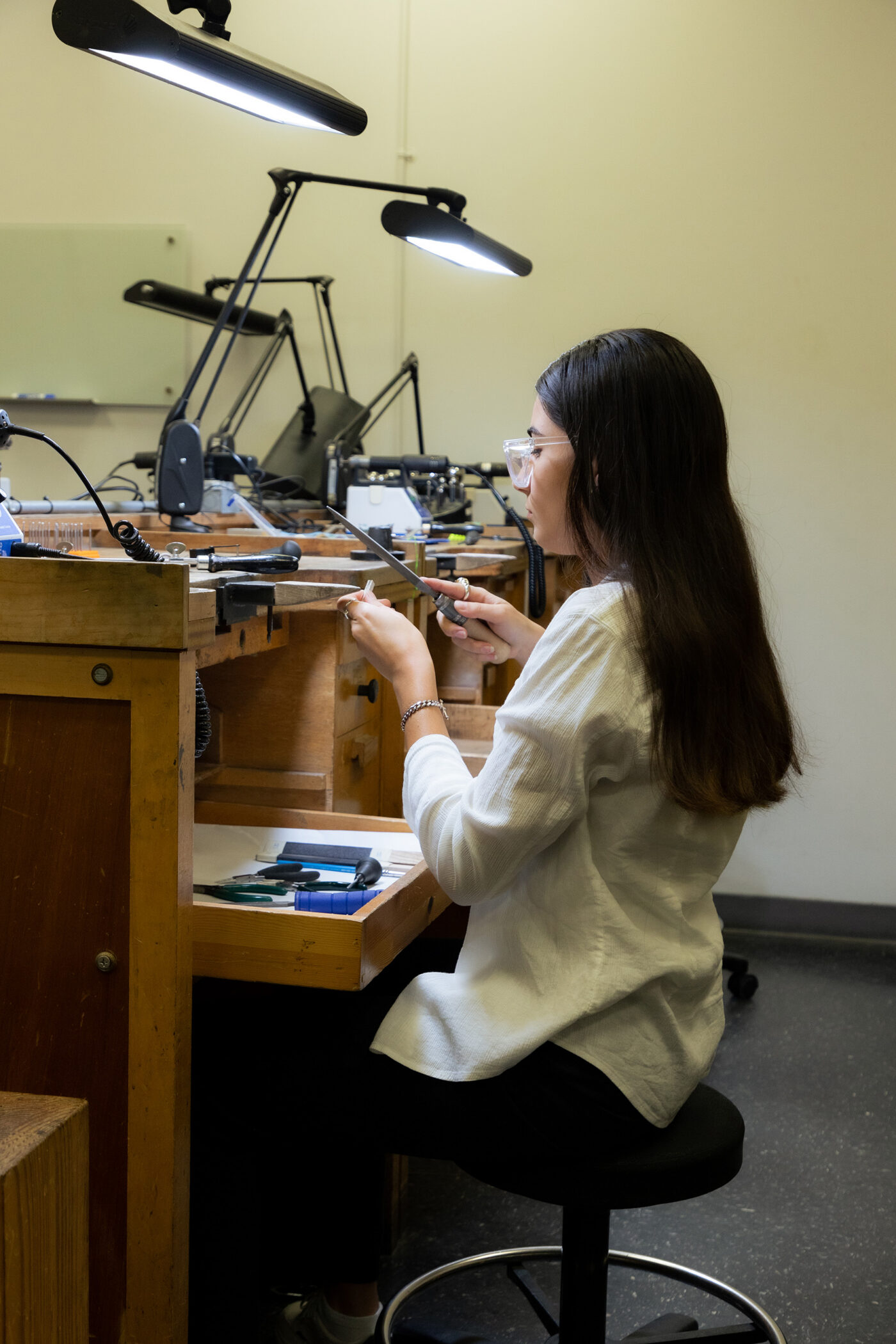
We sat down with Gabriella Botelho, a New York City–based jewelry designer and 2026–2027 One for the Future honoree, whose practice bridges traditional craftsmanship and contemporary design. With a B.F.A. in Jewelry from Savannah College of Art and Design (SCAD), she brings hands-on bench experience alongside digital CAD tools. Her work explores material, form, and cultural influence through a refined and evolving design language. Since graduating, she has worked with established jewelry brands as a designer, continuing to expand her approach through new techniques, materials, and collaborative processes.
The Story Behind the Work
NYCJW: To kick things off, what would you say is the story behind your work?
GB: My work explores jewelry as an emotional object that holds identity and meaning beyond its material value. I approach design through both traditional craftsmanship and contemporary processes, allowing me to move fluidly between hand-making and digital development. Whether I’m working with precious materials or experimenting with form, I’m always thinking about how a piece will live with someone and how it might hold significance far beyond its initial creation.
Work on Hold, Ideas in Progress
NYCJW: Is there something you’ve been interested in making but haven’t gotten around to yet?
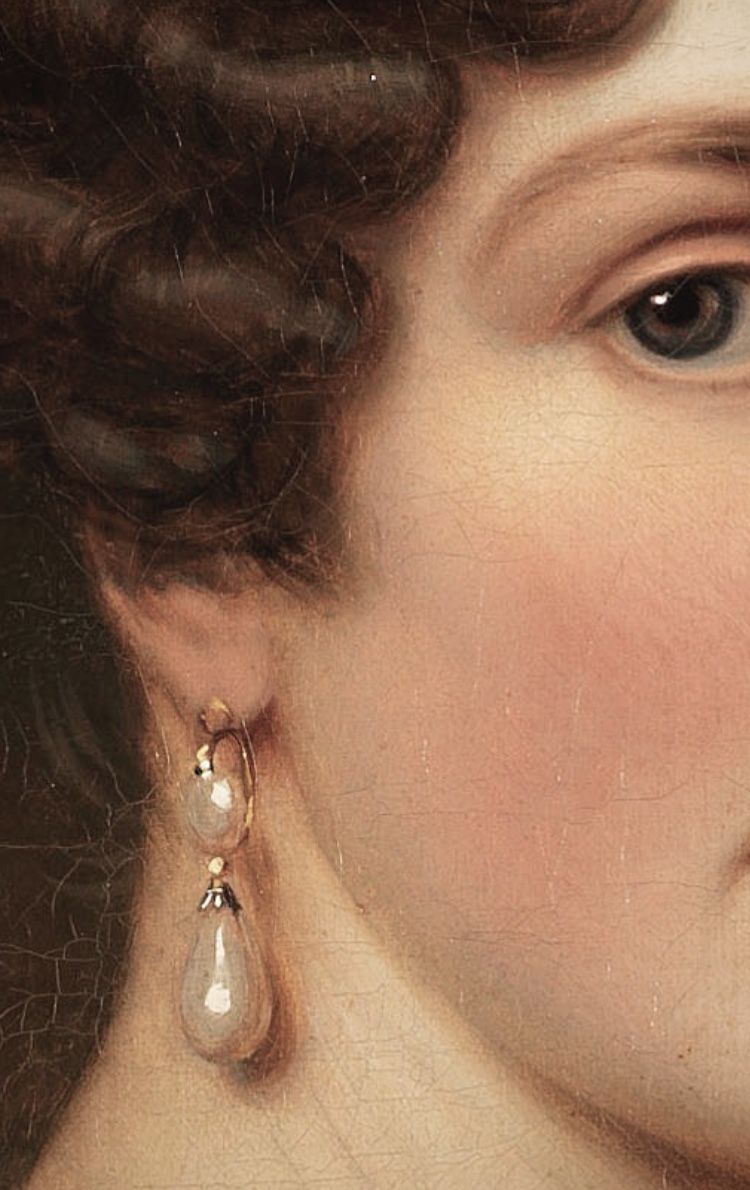
GB: I’ve been drawn to the idea of painting jewelry the way historical portraiture paintings do. I imagine zooming in on a single piece, like an earring or clasp, and rendering it in oil paint with the same care and attention given to classical bust portraits. It’s a shift from gouache jewelry hand rendering into something more personal on the body. I think I wasn’t ready for it because it requires time away from jewelry design and making. It’s something I’d like to return to when I can give it that level of focus.
Rethinking Scale and Meaning
NYCJW: If your work didn’t exist as jewelry at all, what other form do you think it would naturally take
GB: If my work moved into another medium, it would become furniture. I grew up surrounded by architecture through my parents’ practice, and I’ve always been drawn to the way larger forms exist in space and interact with people. Jewelry and furniture both interact with people and the human form. Woodworking, in particular, feels like a natural extension of jewelry-making because there’s still precision, structure, and an attention to detail, just on a different scale. Growing up around architect parents, I would tour many homes and buildings, and I often found myself most captivated by a beautiful chair or dresser in these beautifully designed homes. Those moments spark ideas about how I might translate my design language into larger forms.
NYCJW: Is there something people often assume about jewelry that you don’t really agree with?
GB: I think there’s a tendency to reduce jewelry to fashion or surface-level adornment, when in reality it serves a much deeper purpose. Jewelry often carries emotional weight, representing love, memory, identity, or loss. Whether it’s a gift between people, a cultural object, or something worn daily, it is personal, and its meaning goes far beyond aesthetics. For me, the sentimental value of a piece will always outweigh the value of the materials. A simple object can tell a story and hold history, and that’s what makes jewelry powerful.
Creative Doubt, Perspective, and Designing for Character
NYCJW: Can you think of a recent moment where you felt unsure about your creative direction?
GB: One of the most challenging moments of creative doubt came when I began designing within the structure of a brand. It forced me to rethink how I approach creativity, not just personal expression, but as something that has to resonate with others. Designing for yourself allows complete freedom, but designing for a brand requires listening, observing, and understanding what people are drawn to. This ultimately expanded my perspective and creative bubble. I learned how to balance innovation with consistency, and how to create work that feels new while still staying true to a brand’s core identity.
NYCJW: If you could design something for a real or fictional figure, who comes to mind?
GB: I’ve never thought about designing for a fictional or historical figure. I would maybe design a piece for Princess Diana. There was a quiet strength and emotional depth to her presence, and I would want to create something that reflects both her softness and resilience. I imagine a piece that feels intimate rather than overtly regal, that reveals complexity the longer you look at it. It wouldn’t be about grandeur, but about humanity.
Exploring Stones and Transparency
NYCJW: Is there something unusual you’re currently really interested in—like a material or technique—that you keep coming back to?
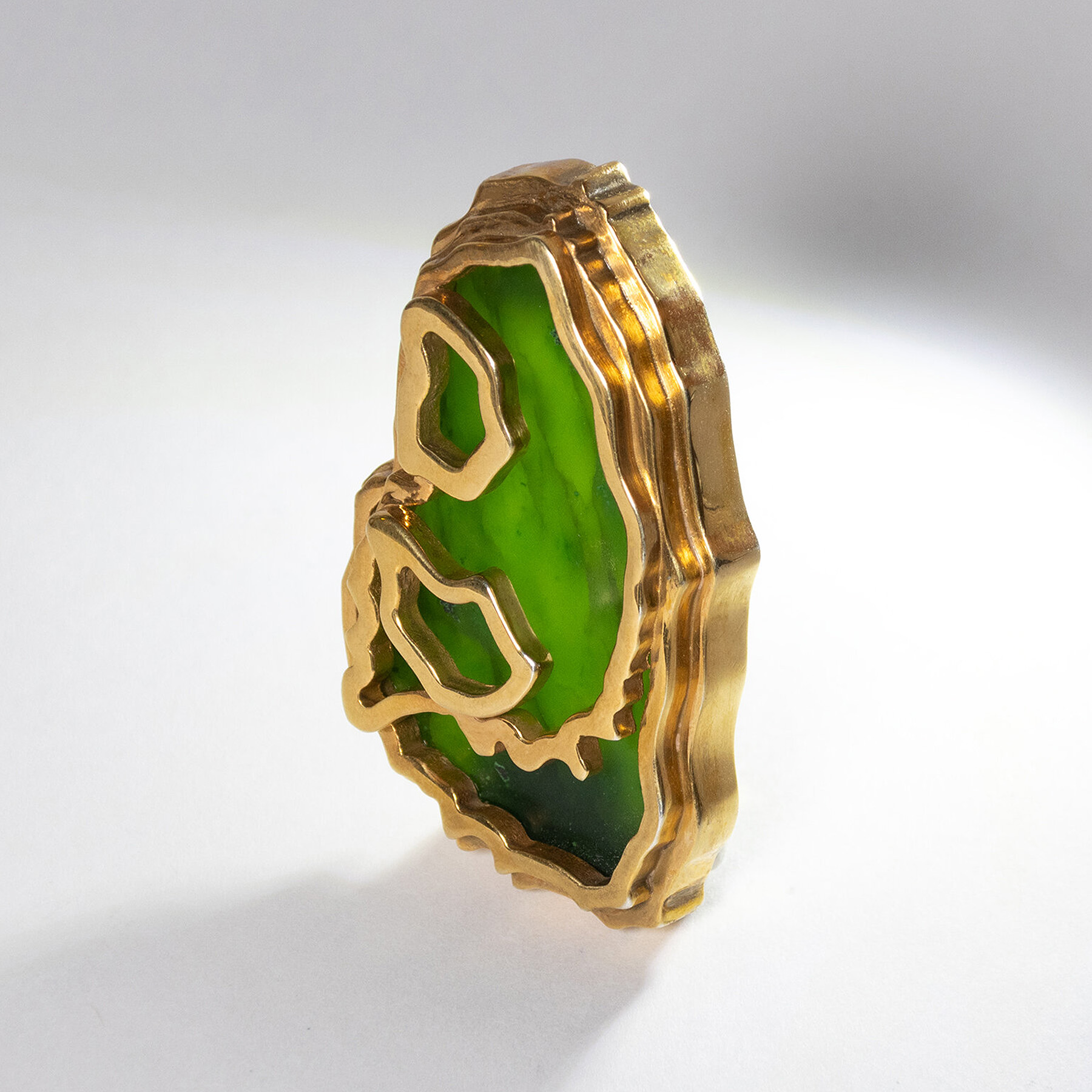
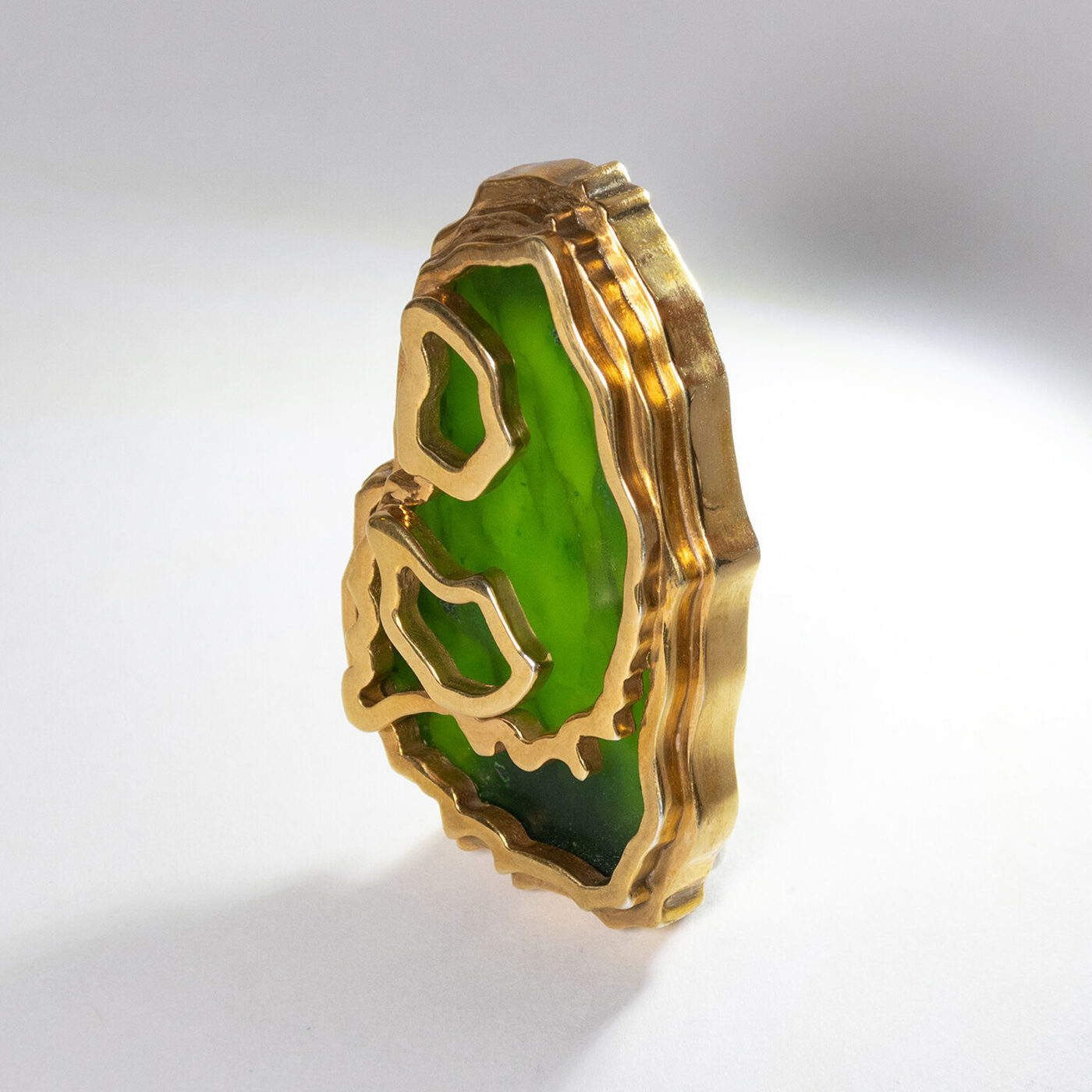
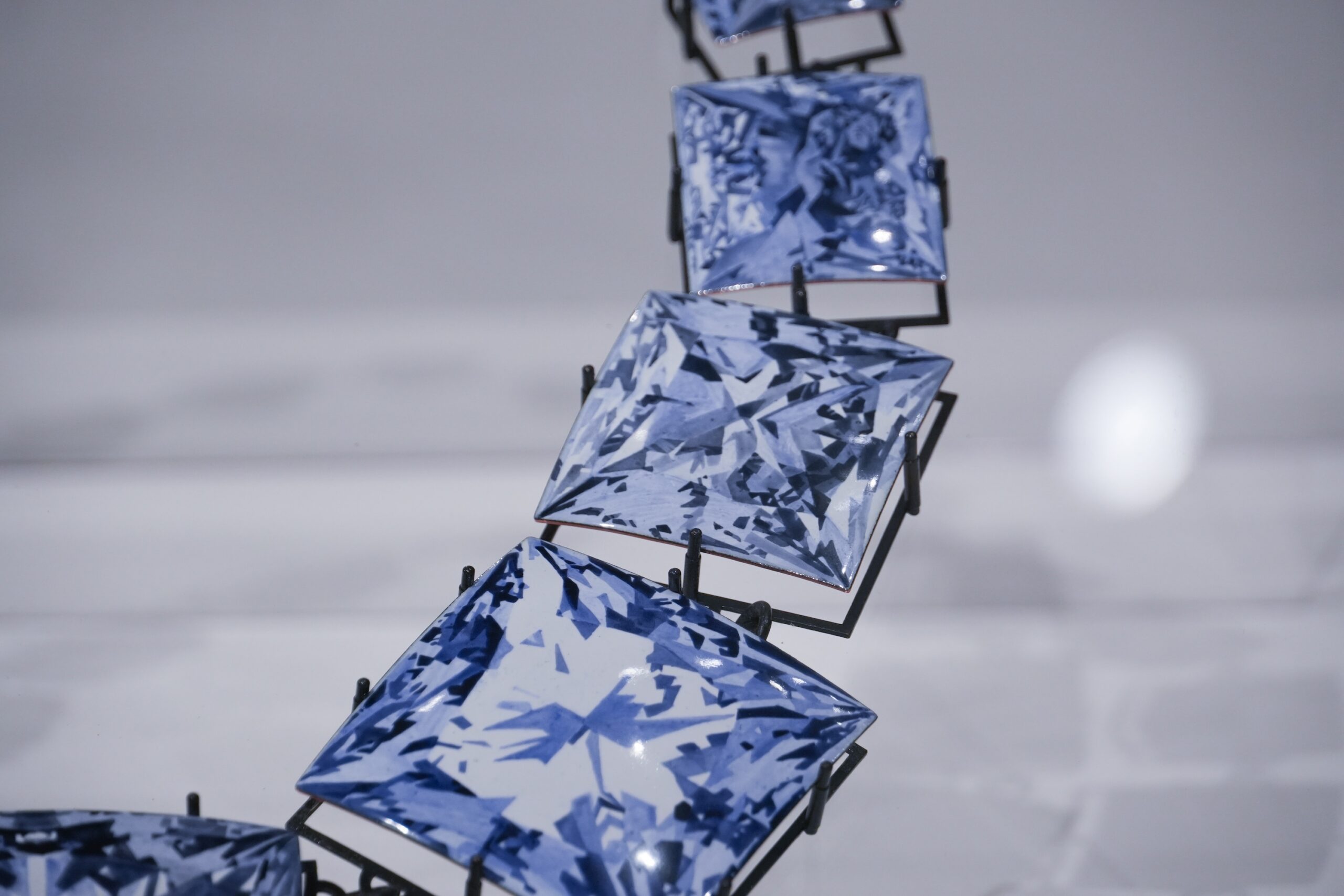
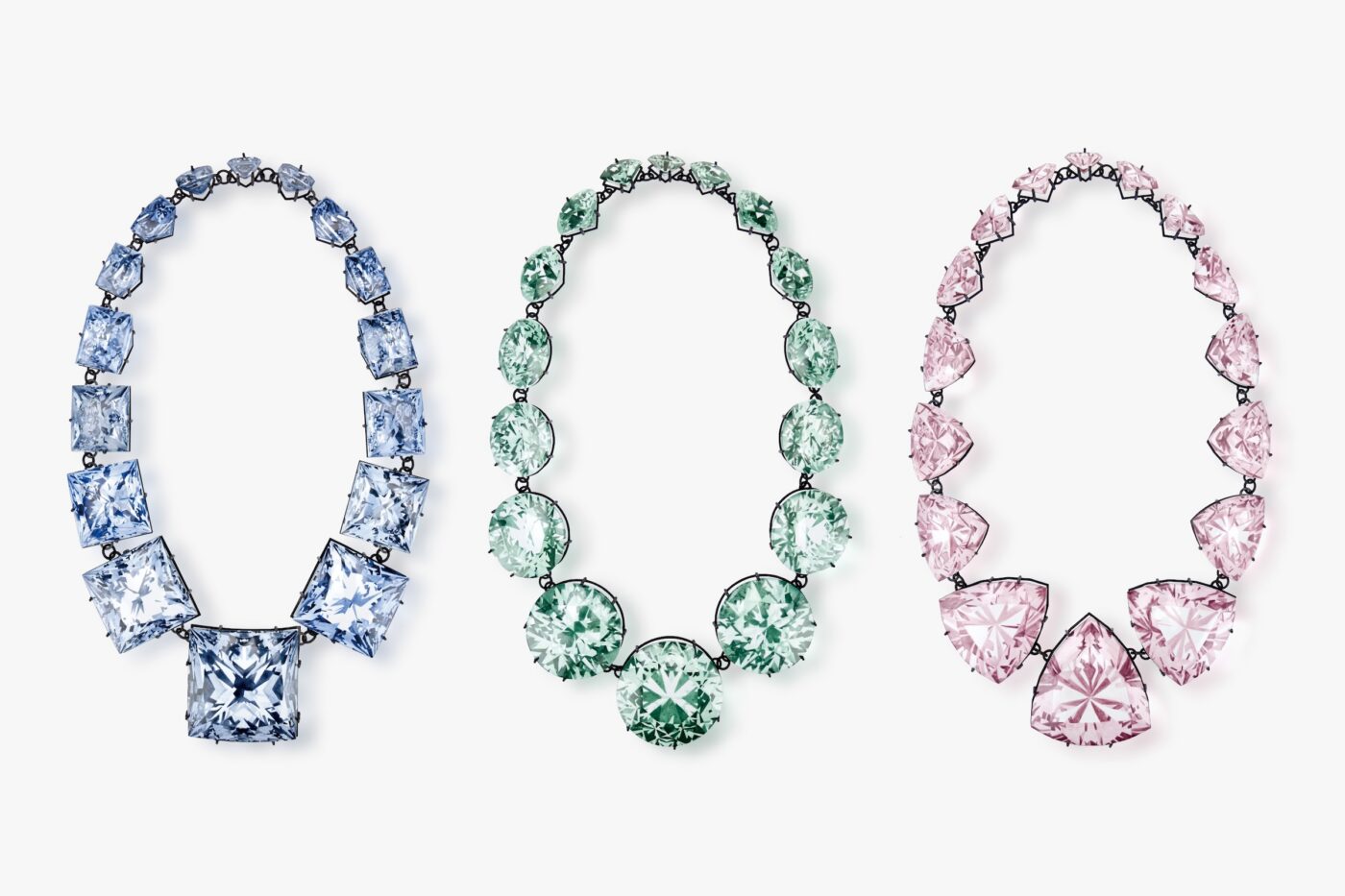
GB: Right now, I’m really interested in playing with layering stones. Setting one within or beneath another so that they interact through transparency, color, and light. I’m drawn to the contrast between opaque and translucent materials, and how different cuts can coexist. I would love to play more with the relationships between gemstones.
Jewelry as Memory and Connection
NYCJW: When someone wears or interacts with your work, how do you hope it lands with them emotionally or personally?
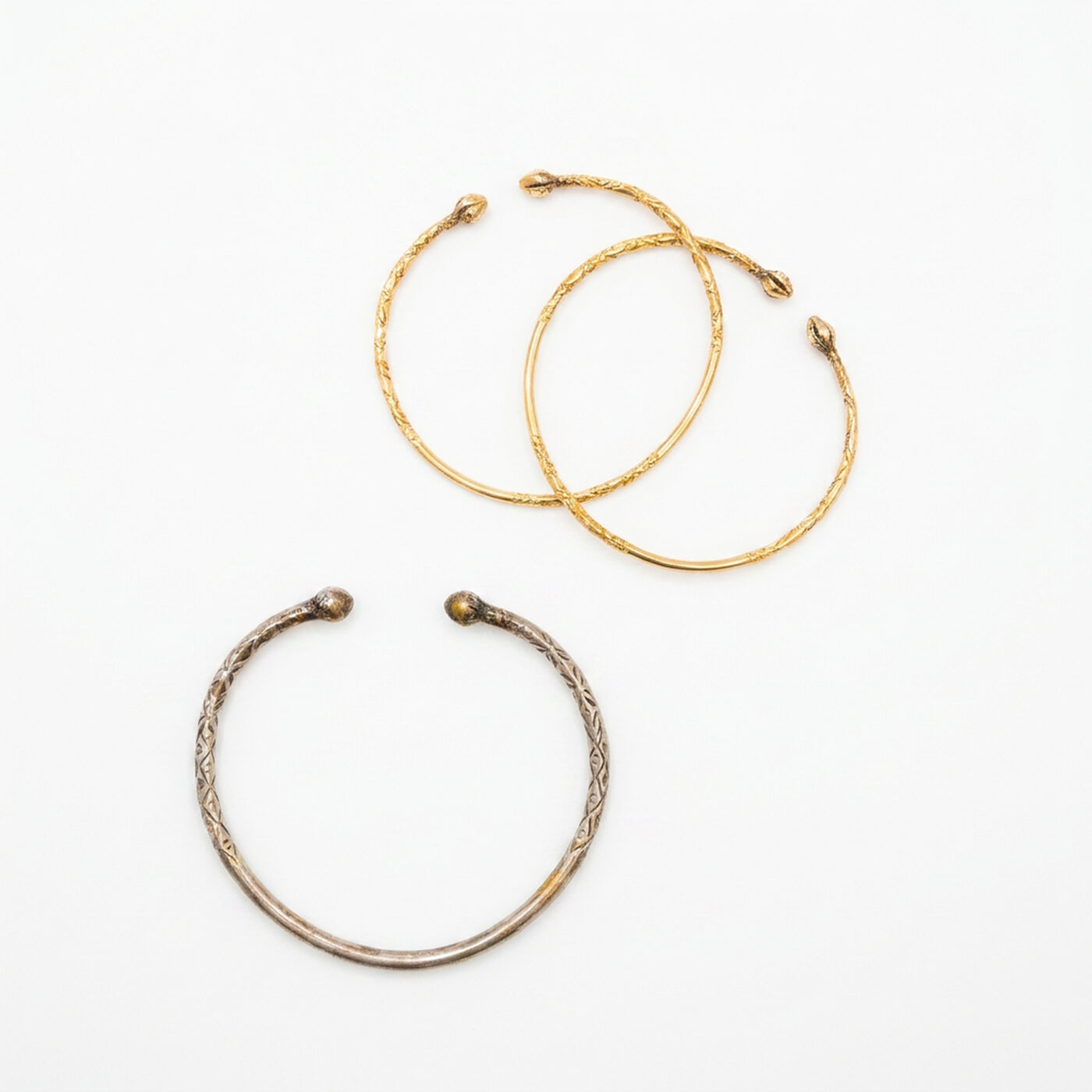
GB: I want people to connect with something personal when they engage with my work. Jewelry has the ability to hold memory in a very intimate way. I think about that through my own experience, like wearing my West Indian bayras every day. These gold bangles represent a blend of African, Indian, and South American traditions rooted in Caribbean tradition. For me, they represent heritage and identity. I hope my work gives people permission to value that kind of connection, to see jewelry not just as something to wear but as something to feel.
Letting Work Speak for Itself
NYCJW: Is there a question you wish people asked you more often about your work?
GB: I hope people don’t feel the need to ask questions about my work, because I want them to connect with it through their own personal and emotional perspectives. I see jewelry similar to other forms of art, which are open to interpretation. You don’t need a technical explanation to connect with a piece. What you see, feel, or associate with it is valid, and often more meaningful than a prescribed narrative.
Heritage, Material, and Continuous Exploration
NYCJW: Are there themes or ideas that keep showing up in your work, even if you’re not consciously trying to repeat them?
GB: A recurring theme in my work is my cultural heritage. I’m deeply influenced by how my environment has shaped me, and I try to capture that through objects that evoke memory and nostalgia. I’m also driven by exploring new materials and techniques through design, CAD, bench work, or stone. This keeps my work evolving and my mind learning.
About One for the Future (OFTF) One for the Future celebrates the next generation of jewelry and creative industry professionals. Each year, the program recognizes honorees for their innovation, craftsmanship, and/or unique perspectives and connects them with mentorship, exposure, and opportunities to engage with collectors and industry leaders worldwide.
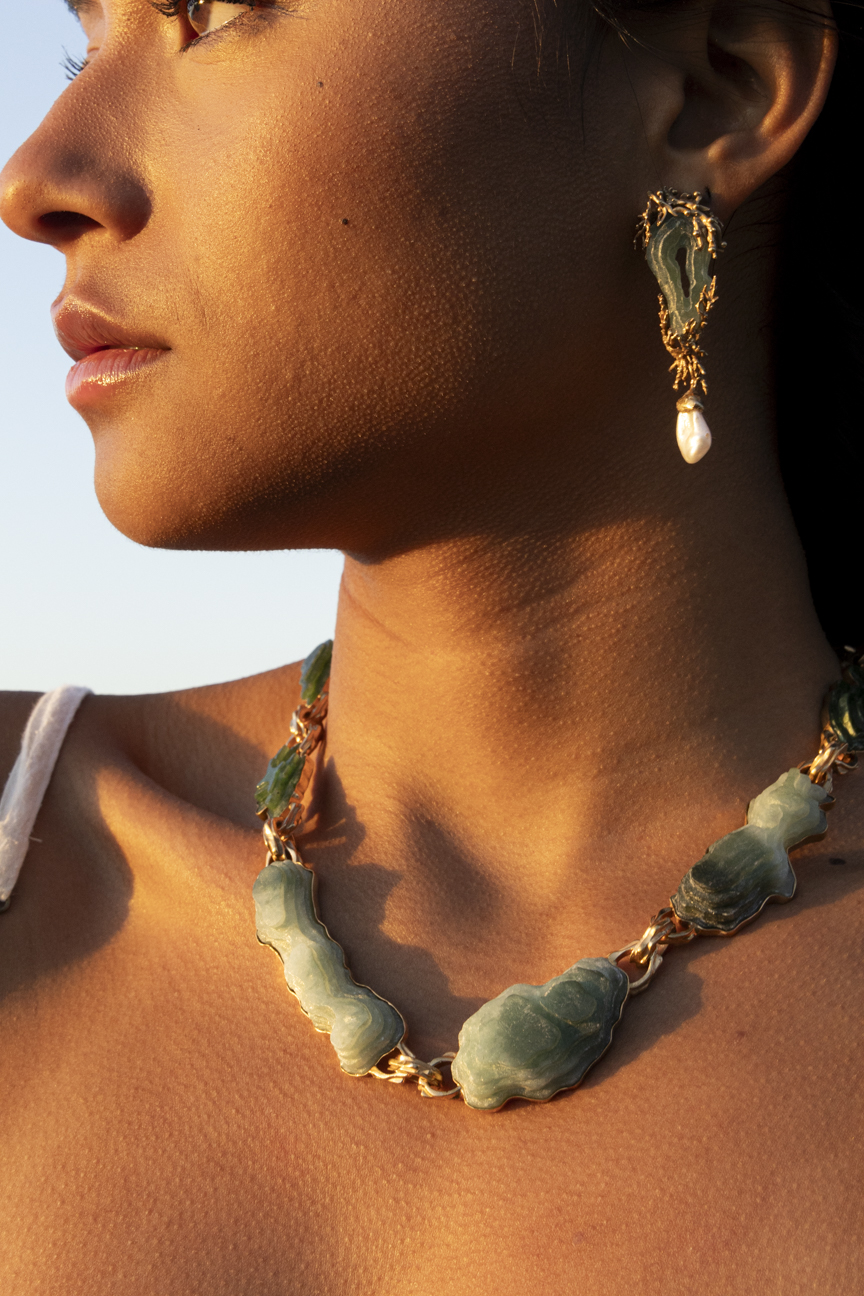
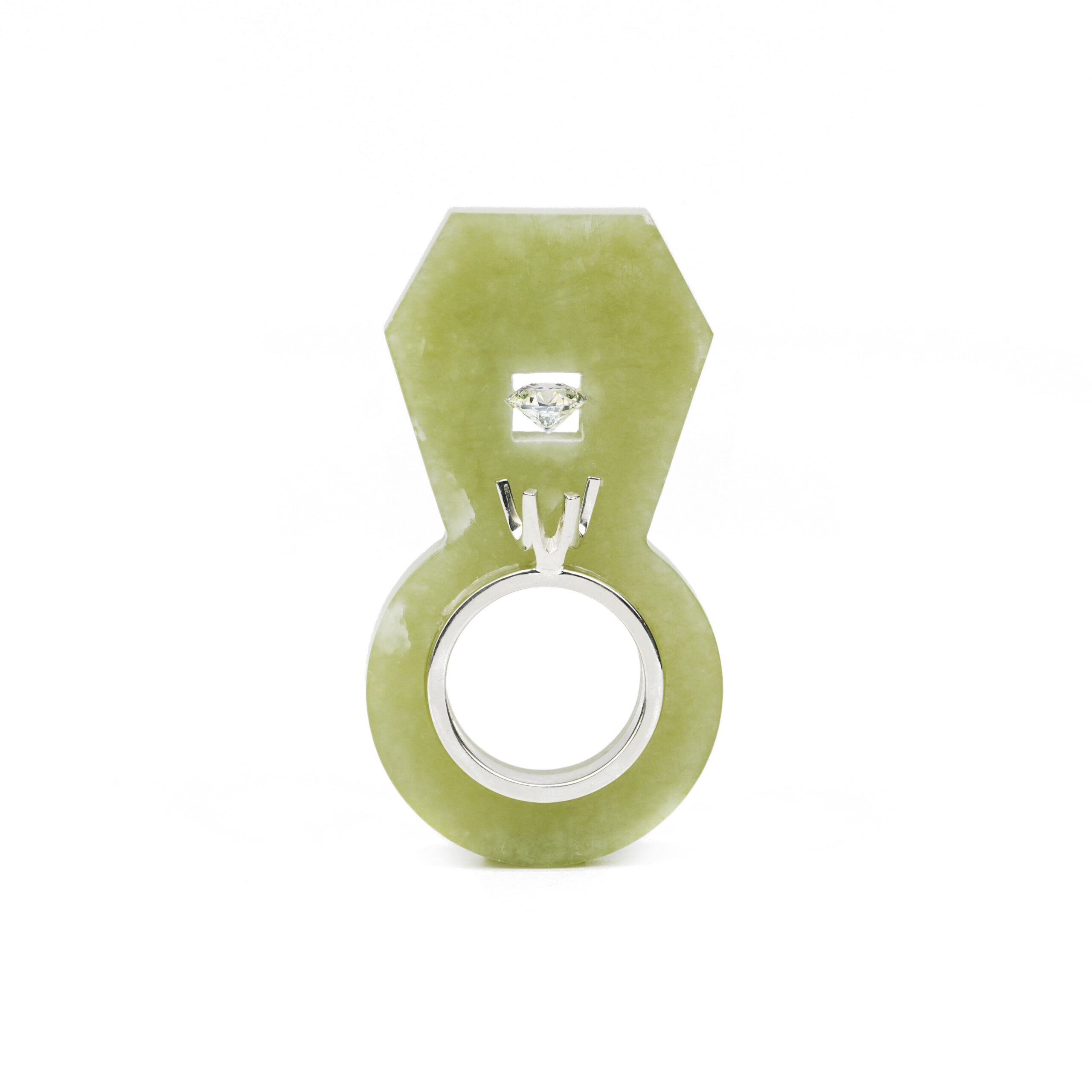
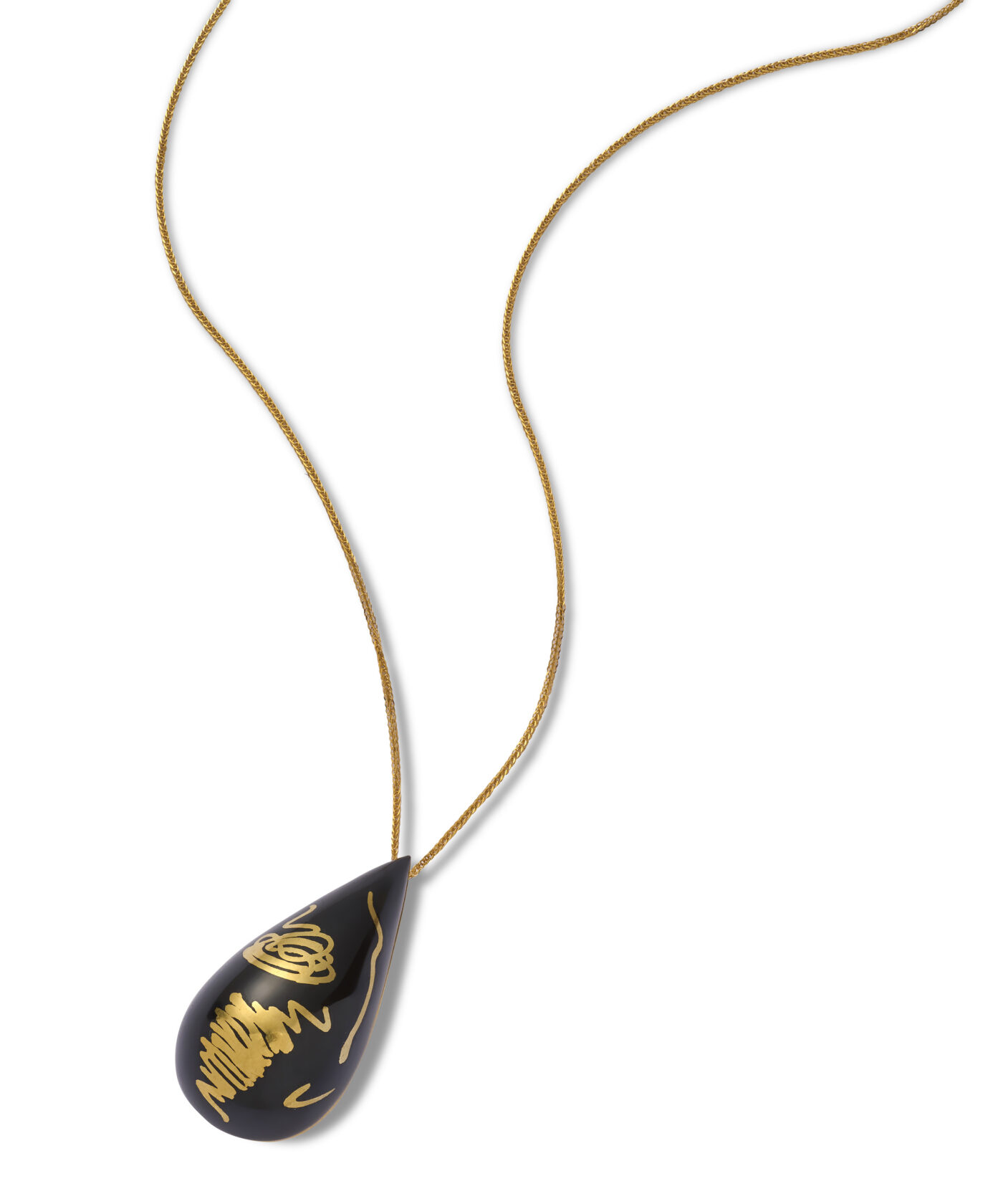
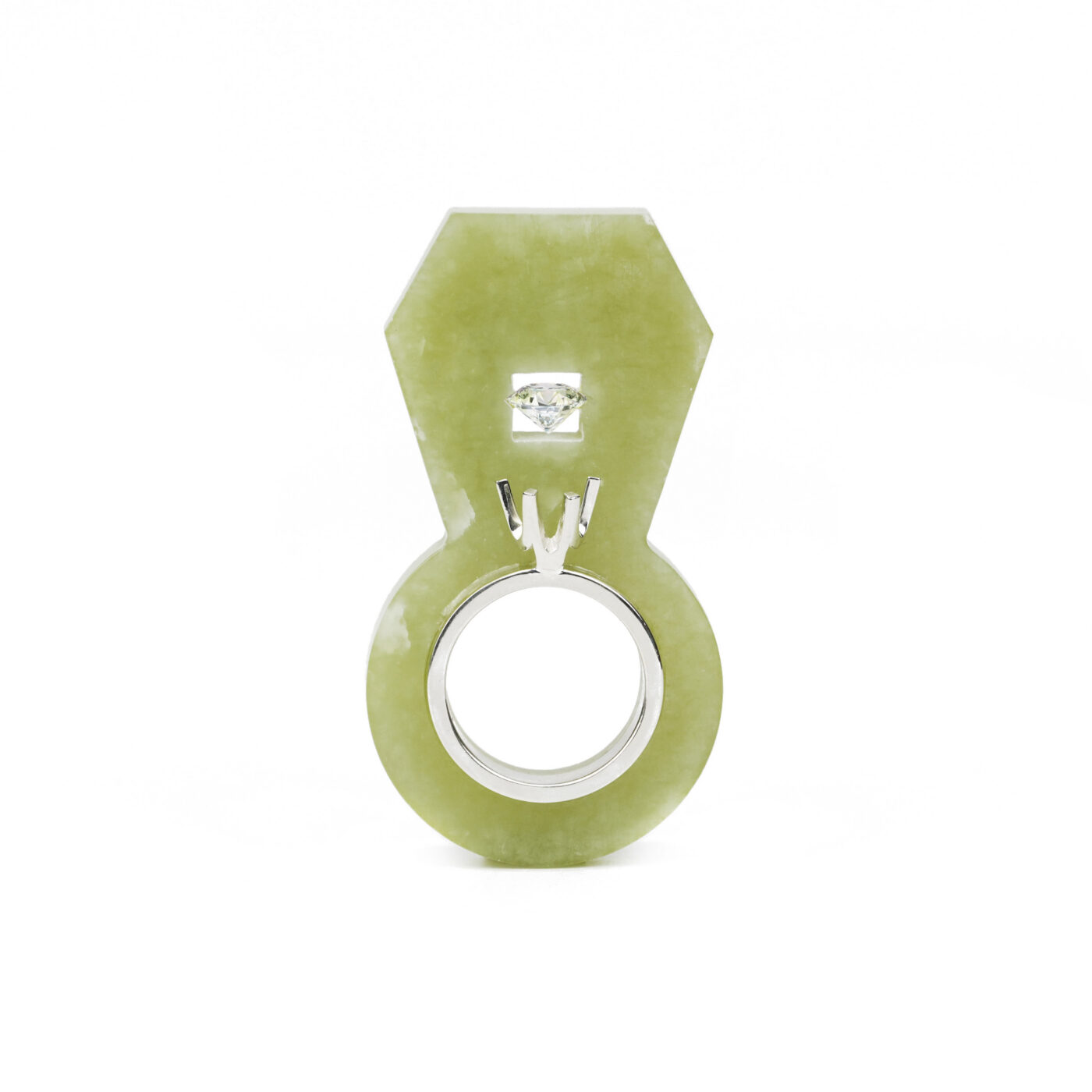
Xiaoyu Li is a contemporary jewellery artist and maker based in London, specialising in stone carving and gold- and silver-inlay. A 2026–2027 One for the Future Honoree, her practice explores how material and technique carry geocultural specificity, treating jewellery as a site where cultural narratives and hybrid identities take form.
With a background in painting and over nine years of jewelry-making experience across China and the UK, Li completed her MA in Jewellery & Metal at the Royal College of Art. She has exhibited her work internationally, including at London Craft Week, Munich Jewellery Week, and London Fashion Week, and has received multiple GC&DC Gold Awards as well as the 2026 Gem-A Award.
We had some questions to ask her about her practice, process, and the ideas shaping her work today.
Practice and Material Origins
NYCJW: To start, how would you describe the story of your work and your practice?
XL: I’m currently based in London, working with stone and metal inlay. My practice spans contemporary art jewellery and craft, and engages with ideas of land as well as more personal narratives. I’m particularly interested in traditional techniques and the stories behind them. It reveals how materials are shaped by the land, as well as what has taken place within it.
Shifting Scale and Practice
NYCJW: Following on from that, is there anything you’ve worked on or thought about that you’ve decided to pause or set aside for now?
XL: I haven’t abandoned a project, but postponed a direction I’ve been interested in, moving my practice from jewellery into sculpture. I began to consider how stone carving might operate at a larger scale, shifting from an intimate relationship with the body towards a more spatial one. I’ve always seen jewellery as a form of small-scale sculpture, so this felt like a natural extension. However, I realised that scale alone wasn’t enough. I hadn’t yet resolved how these traditional crafts could function in a spatial context without losing their conceptual and material integrity.
Returning to Painting as a Parallel Practice
NYCJW: I’m also curious—if your work could exist in a completely different medium, like film, architecture, music, painting, or something else entirely, where do you think it might go?
XL: Painting is a direction I would return to. I trained in painting from a young age, and for many years it was my primary way of engaging with art. During my BA, I moved away from image-based expression towards contemporary art jewellery. That distance has stayed with me, and returning to painting would open up a different way of working. Approaching a familiar medium from a new position could bring a different sensitivity, letting me to engage more directly with the visual, gesture, and thought.
An Open Approach to the Field
NYCJW: Within the field, are there any ideas or assumptions you find yourself gently questioning, or maybe just not fully subscribing to?
XL: I wouldn’t frame it as a disagreement. I’ve always taken an open attitude within the field. Contemporary art jewellery is still a very young discipline, and I’m always looking for different voices to emerge.
Material Memory and Working Through Doubt
NYCJW: Thinking about your process more personally, can you remember a recent moment of real creative doubt?
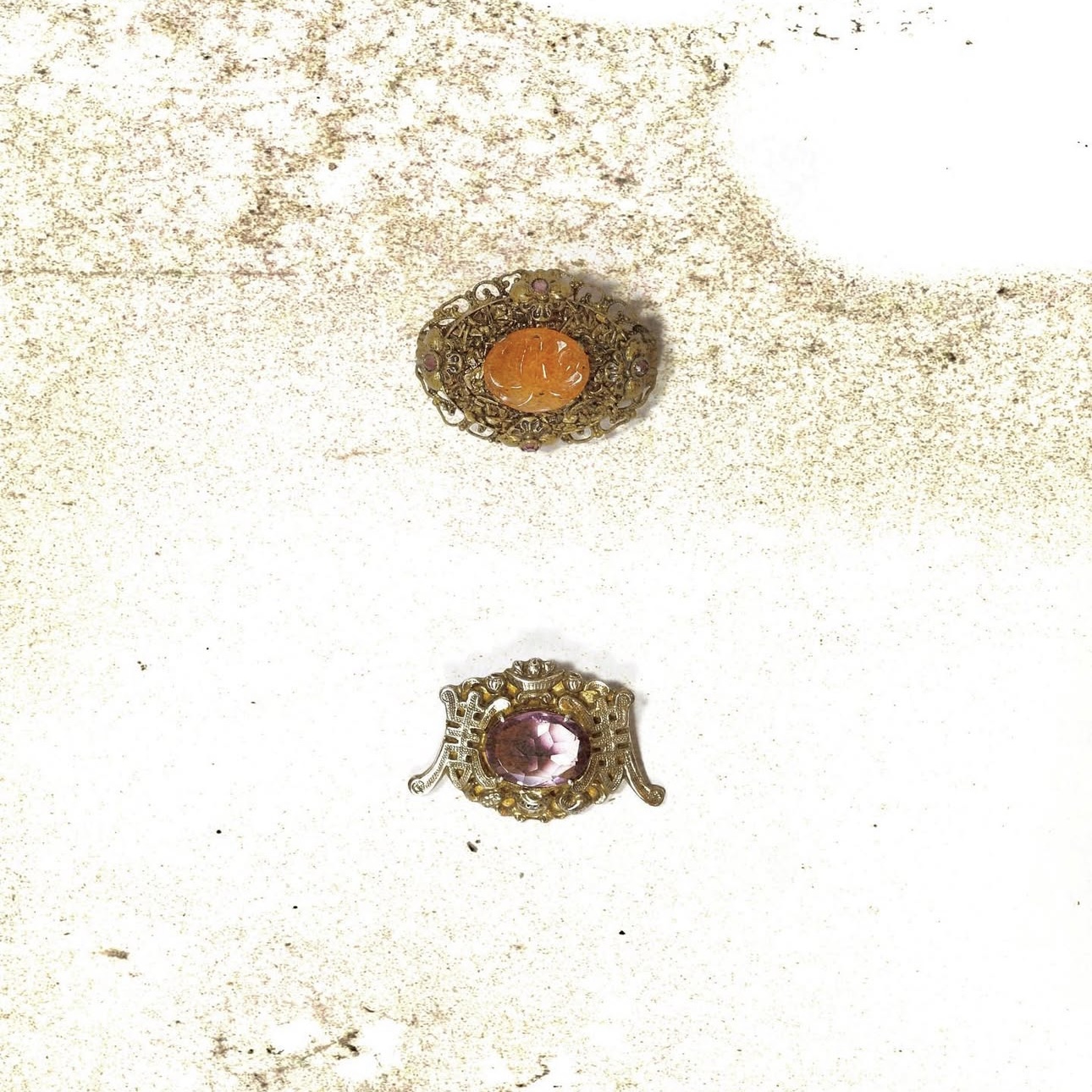
XL: Last year marked a turning point in my practice, when I began to question how the work could continue to develop without becoming too resolved in its form. In those moments of uncertainty, I return to history. I think of jewellery as a medium that writes history through its materials and techniques. Museums become an important place of reference. I spent time studying the jewellery collection and archives at the V&A, looking at how materials have been used and understood across different periods. I also draw on research into ancient Chinese jade carving. Many of these forms and techniques are no longer practiced, but they carry a way of understanding where the craft comes from. This doesn’t resolve the doubt directly, but allows me to reposition the work within a longer continuum and keep moving.
NYCJW: Right now, is there any unusual material, object, text, or source of inspiration that draws you in? And how is that starting to show up in your work?
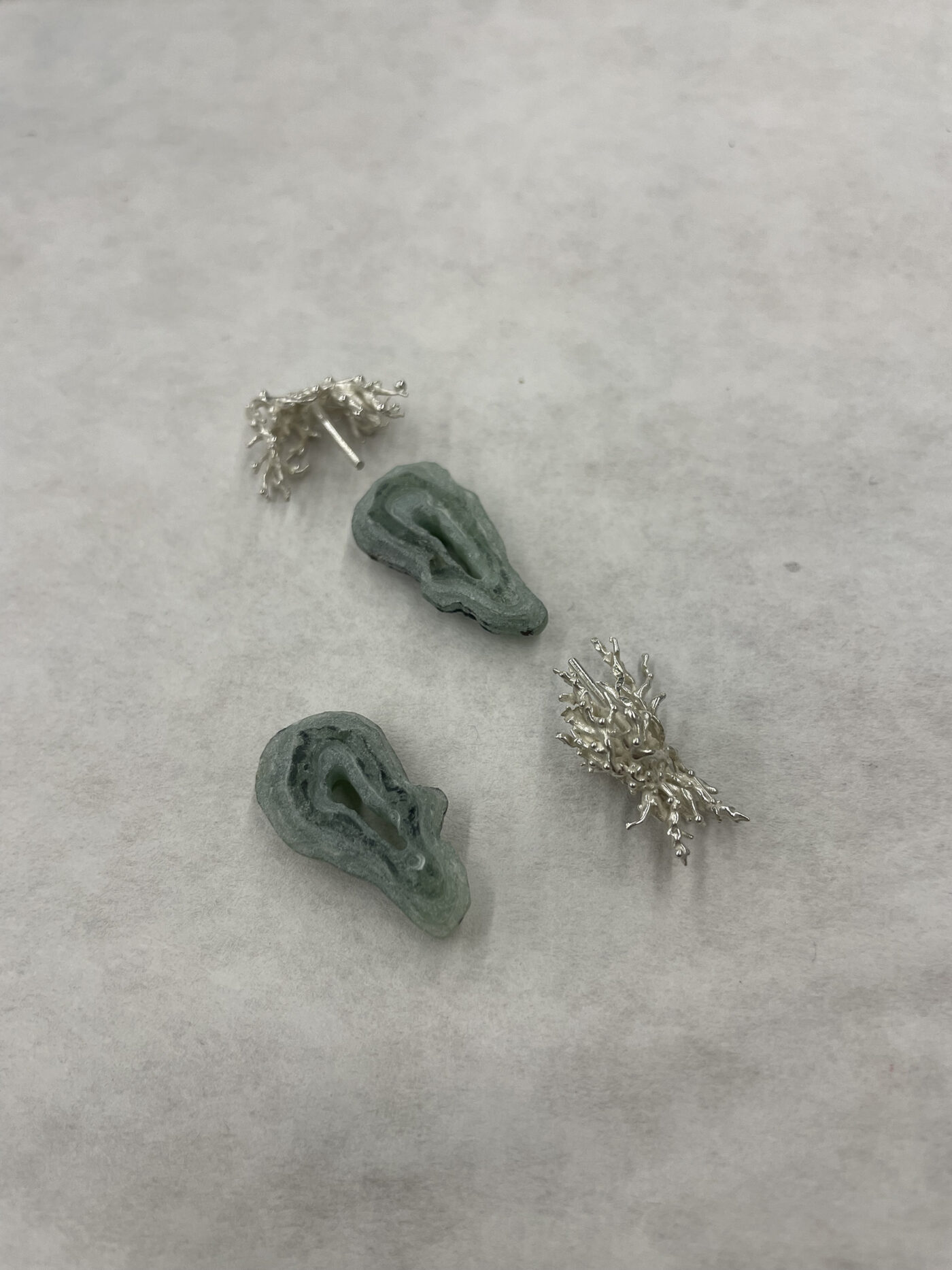
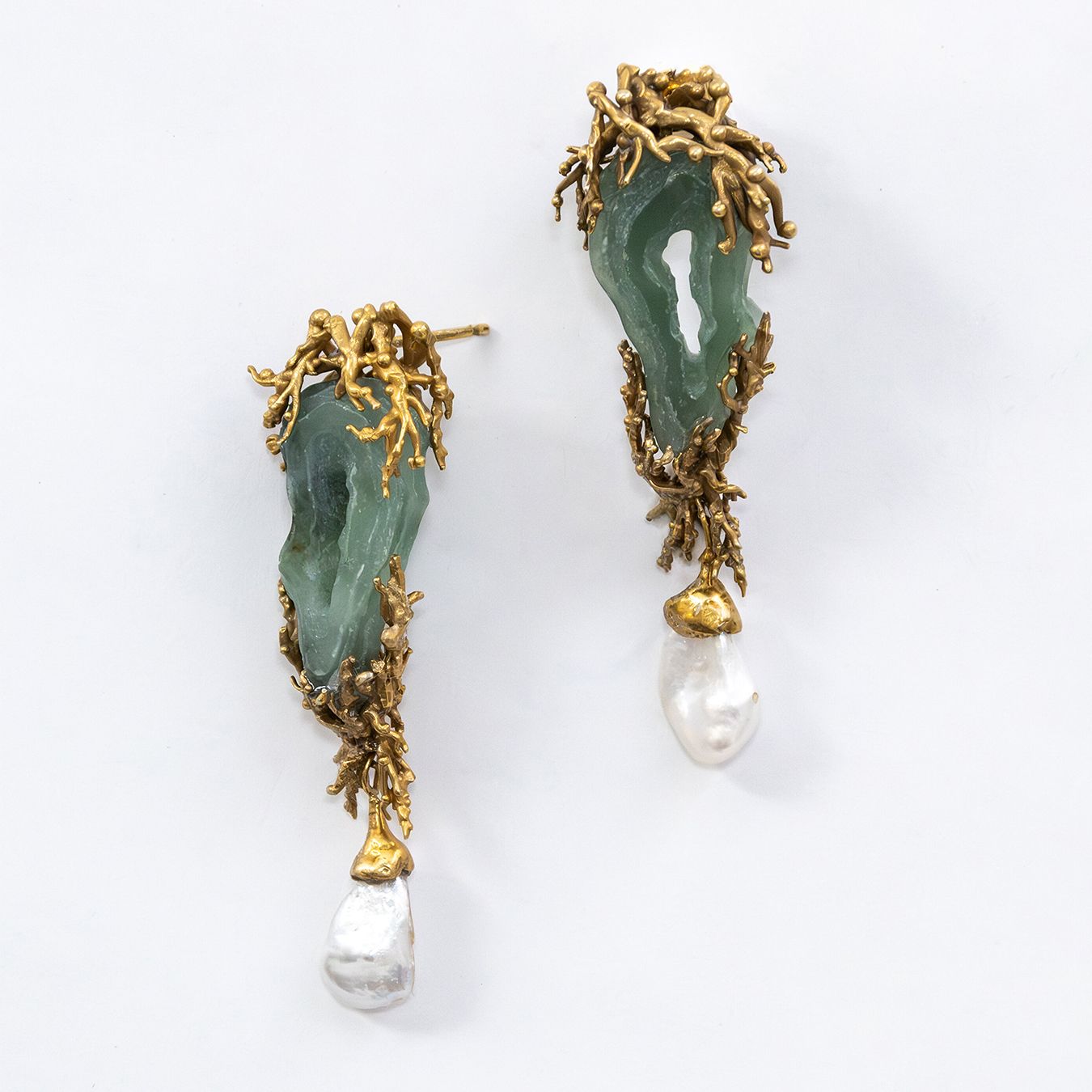
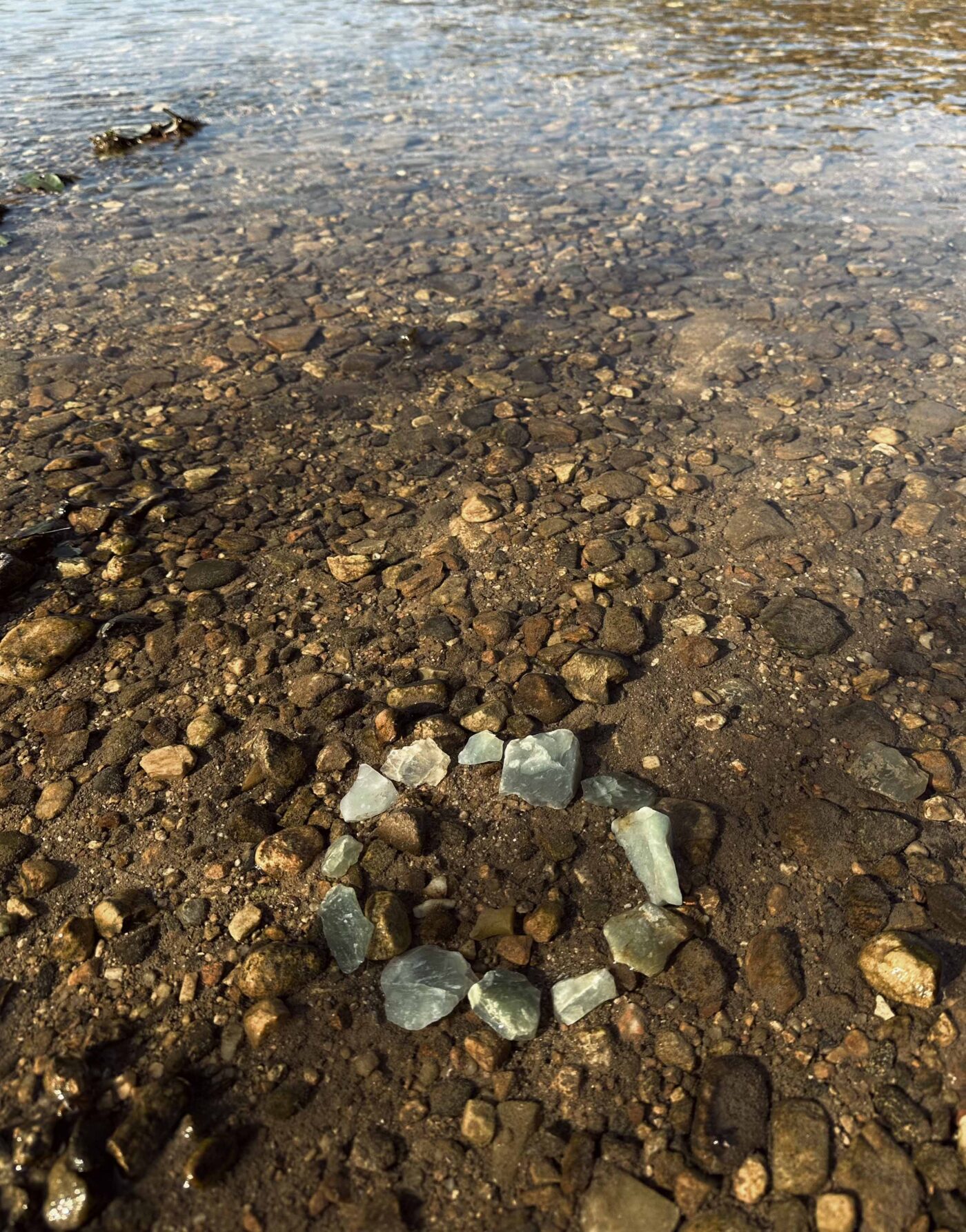
XL: Stone has always been at the core of my practice. By working with stone and examining its cultural histories, I explore how land shapes individual experience and how craft can embody forms of collective memory. This is embedded in the work through the act of carving stone itself. Rather than imposing a fixed form, I respond to the inherent qualities of the stone, allowing its character to emerge through the process. In this sense, each piece is unique.
Craft, Land, and Reflection
NYCJW: Stepping back a bit, when someone experiences your work, how do you hope it makes them feel?
XL: I hope my work allows people to form a connection with the land. My practice involves moving across different places, learning local crafts, and working directly with materials in their place of origin. Through this, I see craft as a way of reading history, shaped by specific cultural and geographical conditions. I hope the work offers a space for reflection, not only on where the craft comes from, but also on where we come from. I’d like viewers to consider their own cultural roots, how identity is formed and continues to shift over time.
Reactivating Traditional Techniques Through Inlay
NYCJW: What question do you wish people would ask you more often about your practice?
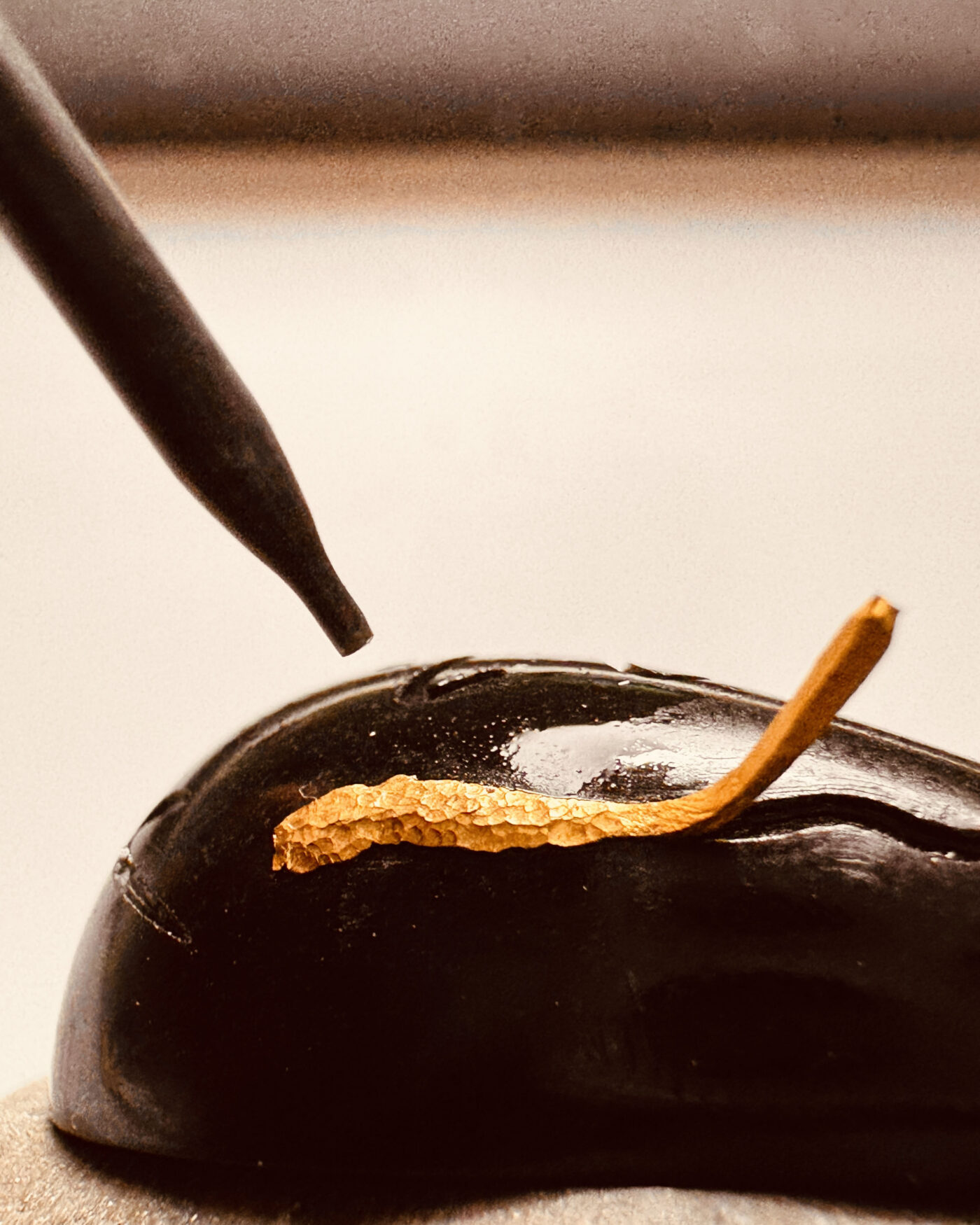
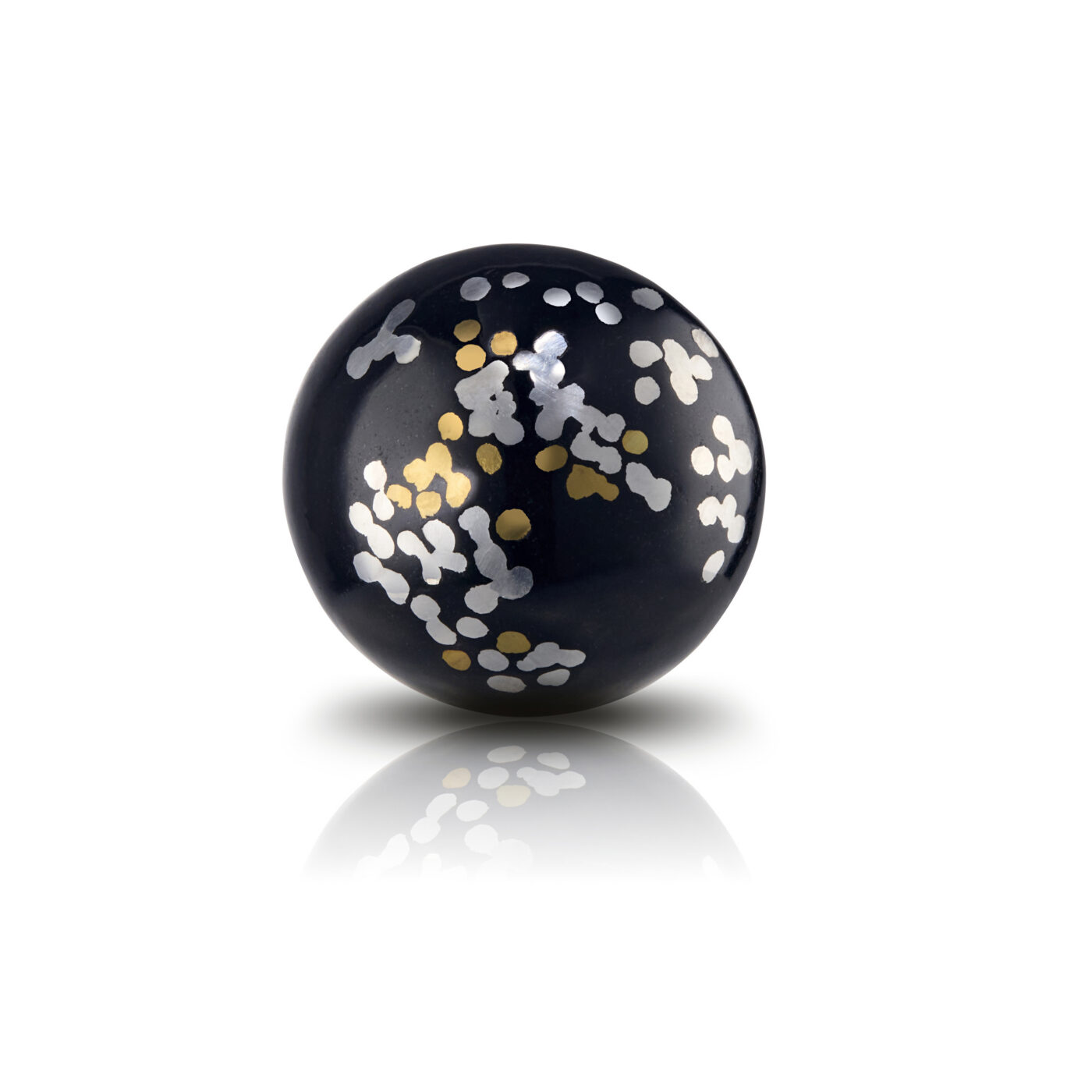
XL: I wish more people would ask about the techniques used in my work and the stories behind them. One of the techniques I use in my work is gold- and silver-inlay on stone. Gold and silver inlay on stone is a historically rich craft shaped through centuries of cultural exchange. The earliest known examples date to the 12th century in eastern Iran, before the technique developed across Timurid Central Asia and Mughal India. Similar approaches later appeared in Chinese jade carving, where they were reinterpreted within local traditions through cross-cultural exchange.
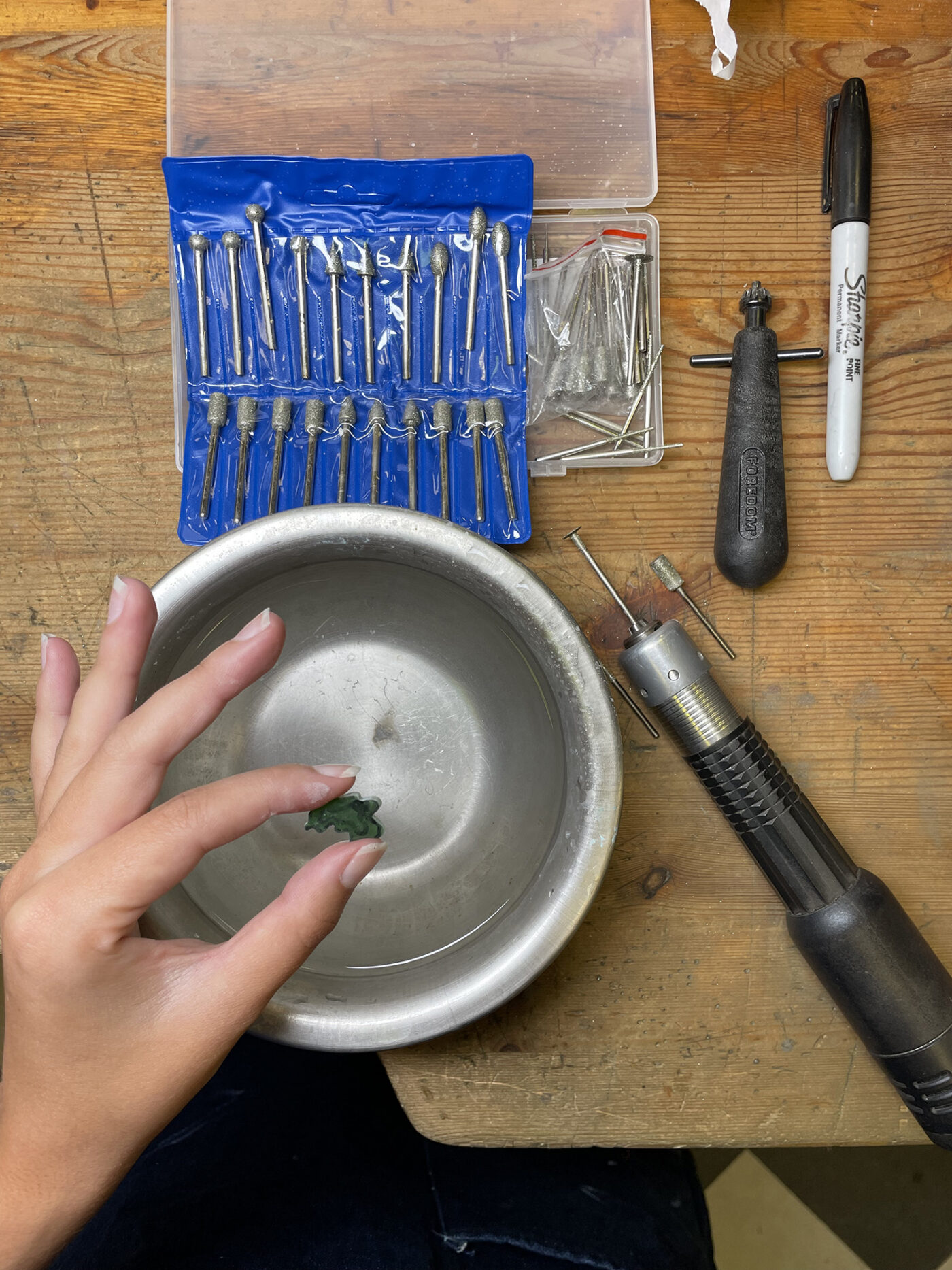
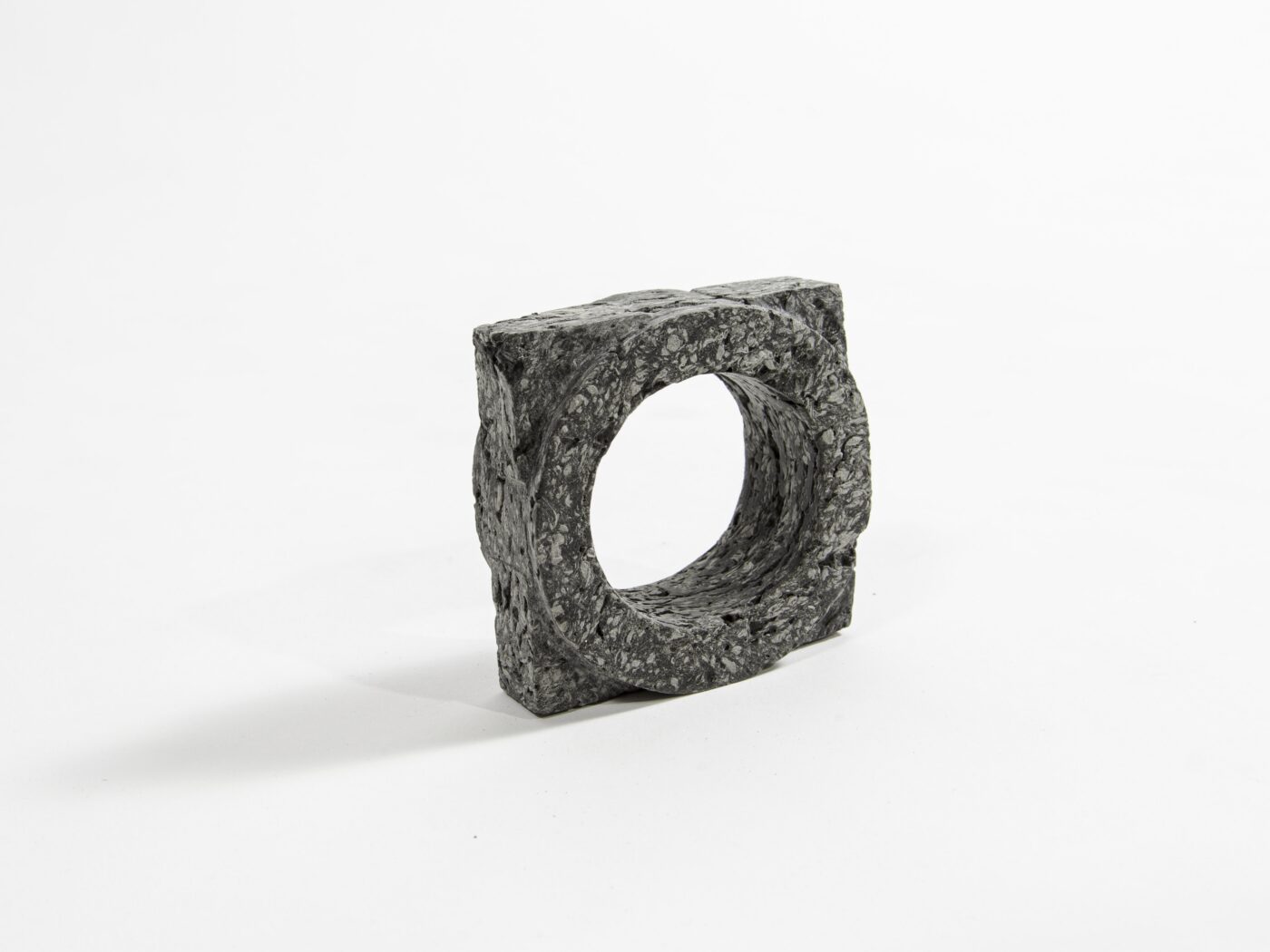
In my work, gold and silver inlay become a way of engaging with the stone. Rather than following its traditional decorative logic, I emphasise the natural markings of the stone. VESSEL brings the gold and silver inlay on stone into a contemporary jewellery context, while remaining rooted in traditional making methods. The process begins by carving fine grooves into the stone, which are then undercut to create a mechanical lock for the precious metal. Where needed, small drilled recesses can be added to strengthen the connection. Gold or silver is gradually pressed into these prepared channels, securing the inlay without the use of adhesives or soldering. The technique demands exceptional precision, as every cut must be carefully controlled to hold the metal while preserving the strength of the stone. It also places strict demands on material selection, requiring high-hardness, tough stones and highly malleable metals. For this reason, only fine silver and 24-carat gold are suitable, as they can be worked into the stone without compromising its integrity.
Returning Motifs and Early Material Memory
NYCJW: I’m curious if there’s a recurring theme, idea, or even emotion in your work that keeps showing up, sometimes quite subtly. Why do you think it keeps coming back?
XL: My work consistently reflects my personal experience, particularly through the objects that shaped my early years. My use of Xiuyan jade goes back to the first piece of jewellery I owned, a jade bracelet made from this material, which continues to inform my focus on stone carving. This extends to projects such as my work on traditional Chinese kite-making. Kite flying was part of my childhood and later became a way of engaging with a craft that is gradually disappearing. I travelled to learn the technique locally and worked with makers to adapt it into a wearable context in response to the decline of the local kite-making industry. These references keep returning because they are closely tied to how I understand making and to the origins of my relationship with material.
About One for the Future (OFTF) One for the Future celebrates the next generation of jewelry and creative industry professionals. Each year, the program recognizes honorees for their innovation, craftsmanship, and/or unique perspectives and connects them with mentorship, exposure, and opportunities to engage with collectors and industry leaders worldwide.
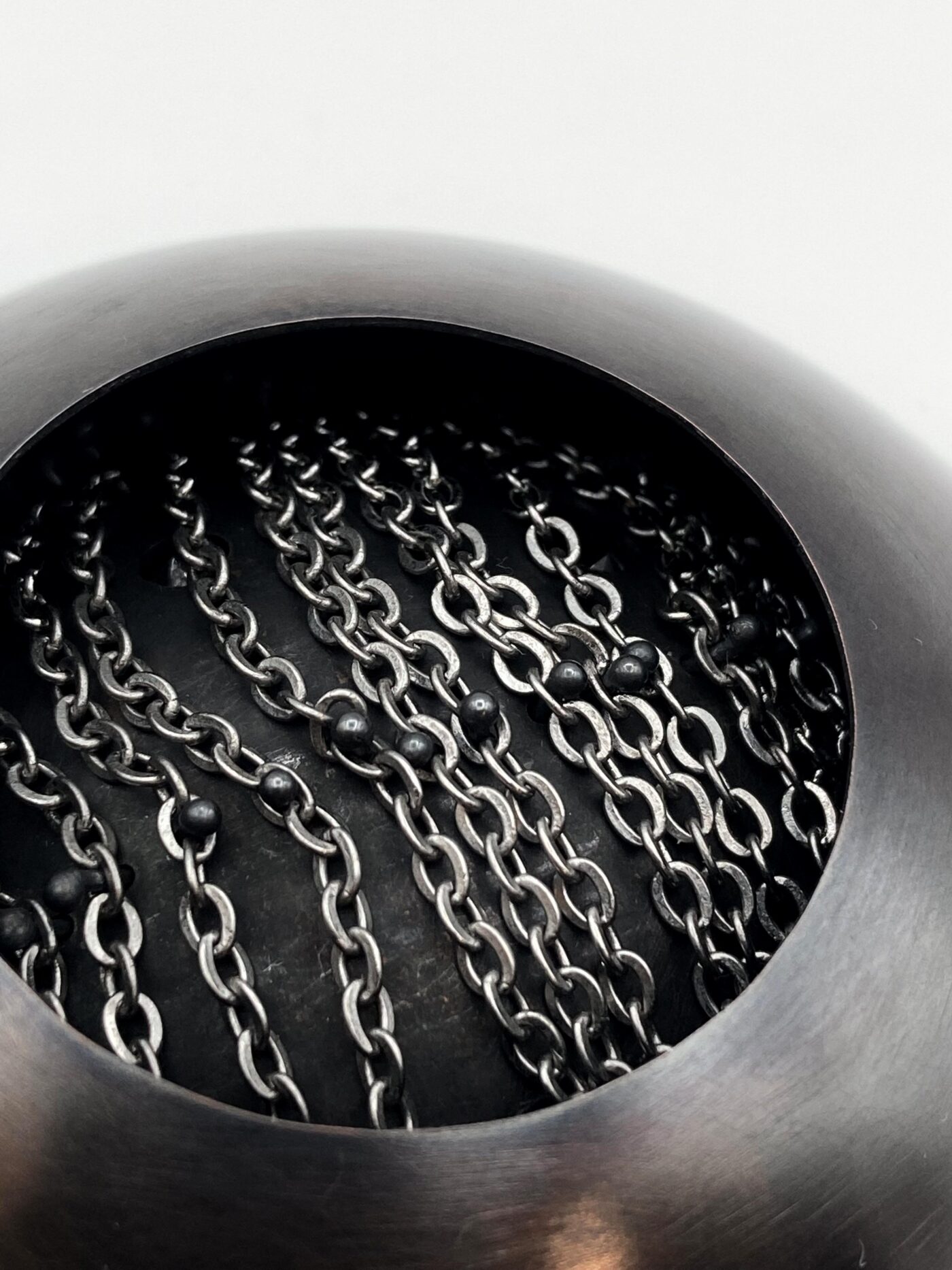
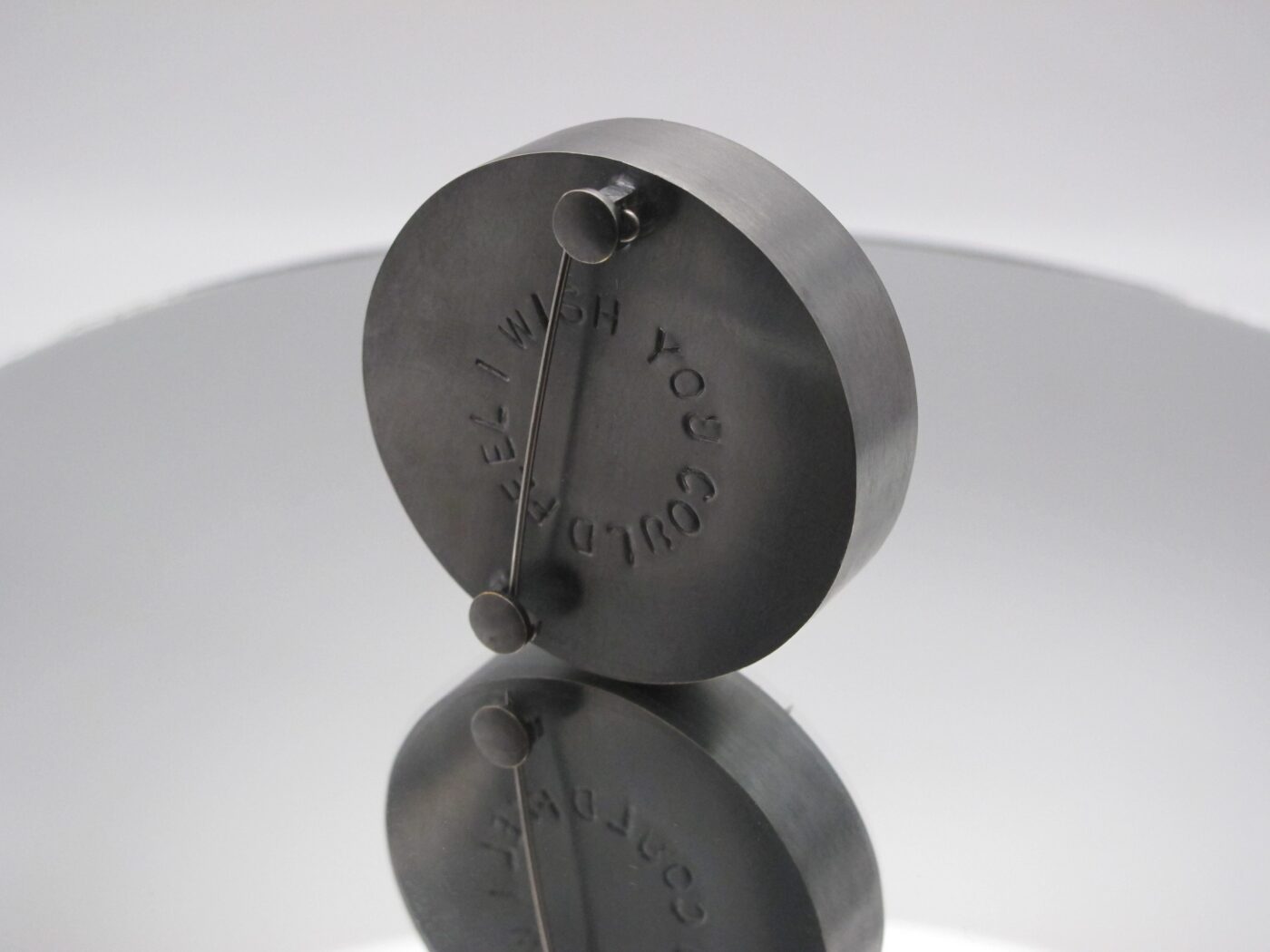
A 2026–2027 One for the Future honoree, Alice Biolo is an Italian artist based in Glasgow whose practice moves between jewelry and sculpture, where body-related objects become sites for storytelling, transformation, and concealment. Working across wearable and standalone forms, she blends traditional craftsmanship with experimental, often kinetic approaches, creating pieces that reveal themselves only through interaction.
In this conversation, she reflects on the shifting boundaries of jewelry, the presence of doubt within her process, and the recurring role of the “hidden” as both a conceptual and formal thread. She also speaks about material obsessions, unrealised ideas, and the ways her practice continues to oscillate between vulnerability, structure, and play.
Between Narrative and Mechanism
NYCJW: To begin, could you introduce your practice and share the story behind your work?
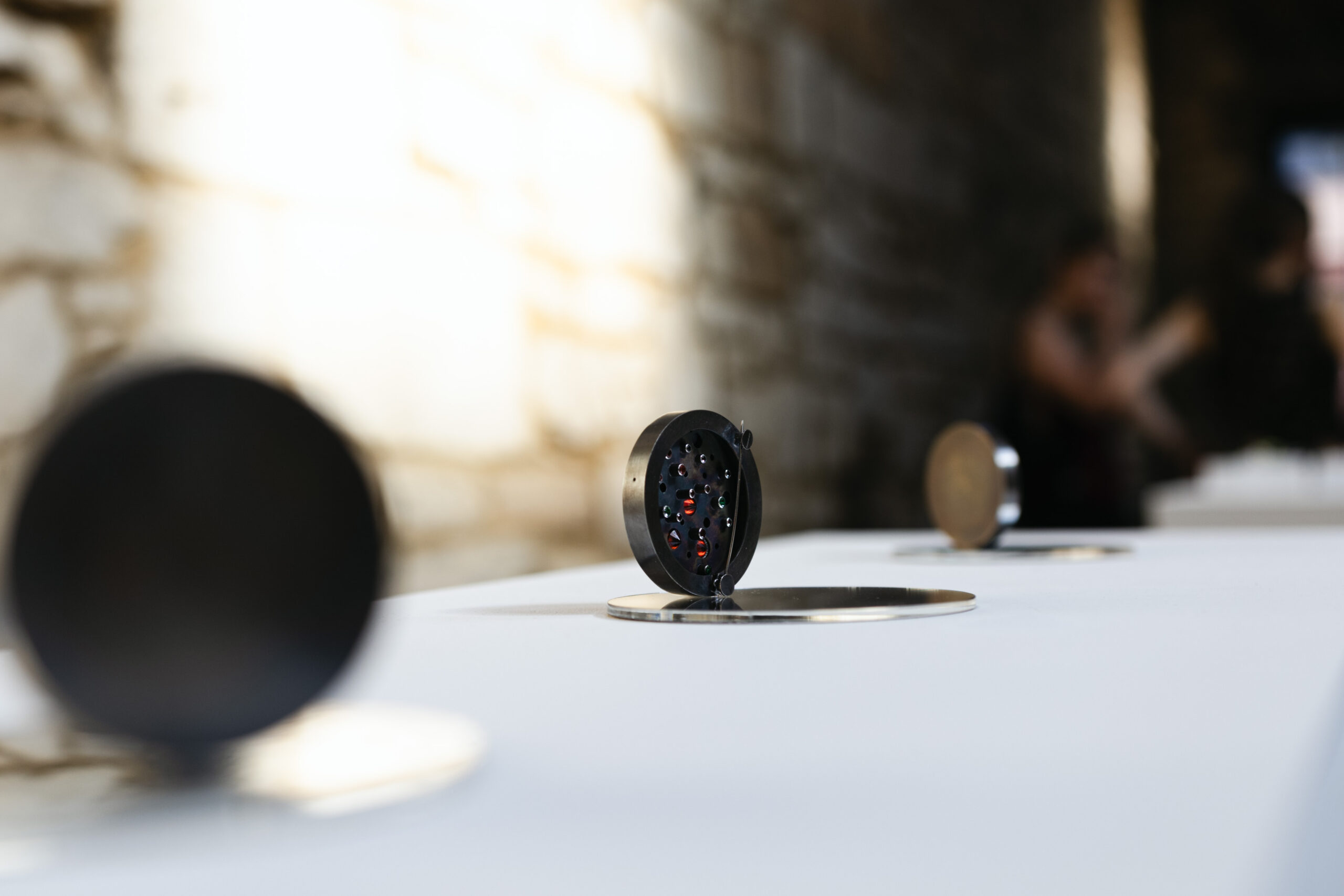
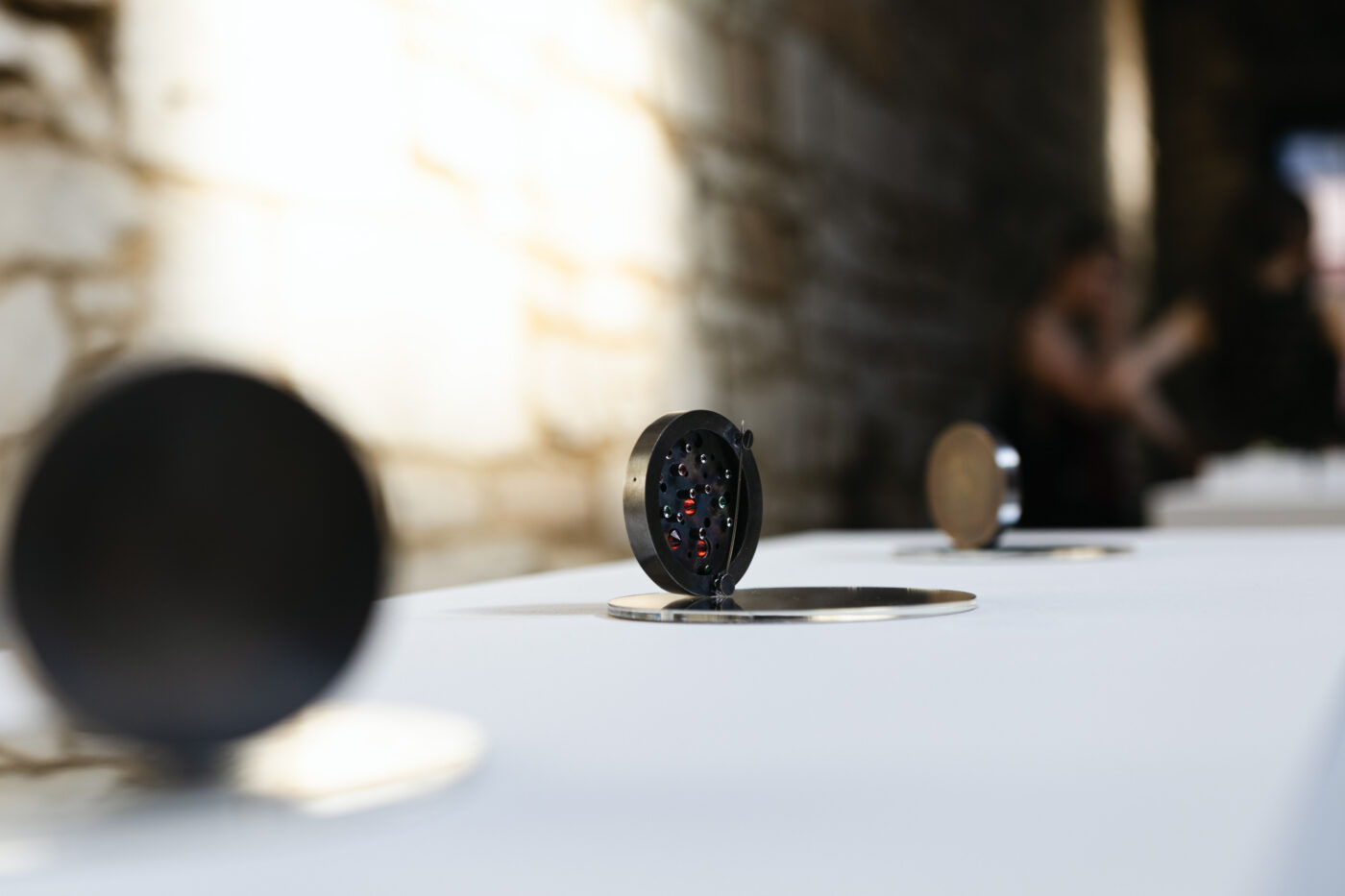
AB: My practice has two distinct but connected sides that are in constant dialogue with one another. The first is my conceptual, narrative-led work, where I mainly create brooches for exhibitions and themed showcases. These pieces explore themes such as mental health, personal narratives, trauma, grief, and insecurity. They are deeply personal works through which I express my inner world and aim to create an emotional connection with the audience. The second side is more light-hearted and wearable, with a stronger focus on technical challenges, materials, movement, and sound rather than direct narrative.
I enjoy creating pieces that surprise the wearer and viewer through kinetic elements and unexpected interactions. Although different in approach, both sides continually influence each other. Ideas often move between them, whether conceptually or technically. My exploration of hidden mechanisms, for example, began in a conceptual piece and later developed into wearable collections, before returning again in later conceptual work. Material exploration is central to everything I do. I enjoy working with both precious and non-precious materials, from silver and gold to stainless steel, found objects such as broken watch parts and letterpress type. Gemstones have also become an increasingly important part of my practice.
Ideas in Suspension
NYCJW:Within that practice, are there ideas or projects you’ve set aside for now? What makes you feel they’re not ready to be realised yet?
AB: I would rather not name one specific shelved project, as once I say it out loud, it feels as though I should immediately commit to making it. There is, however, one idea that has been at the back of my mind since 2024. I have been quietly developing it through mental sketches and fragments of design, but I have not yet fully committed it to paper. I trust that when the time is right, it will come to life. Beyond that, there are probably hundreds of designs I have shelved unconsciously, not because I was not ready for them, but because they were sketched in unusual places and then forgotten. Many live in scattered sketchbooks or phone notes until I rediscover them later. Those moments are always a pleasant surprise, and sometimes a forgotten idea becomes the very next piece I make at the bench.
Between Object and Narrative
NYCJW: Looking beyond your current medium, if your work could exist elsewhere, such as in film, architecture, or writing, what form do you think it would take, and why?
AB: I think my work would exist somewhere between visual art and writing. Many of my pieces are created as standalone objects first and wearable jewelry second. I see my brooches as small sculptures that can exist independently in space, but whose meaning and presence shift once they are worn. When placed on the body, the experience changes: parts of the design may become hidden from the viewer, or kinetic elements begin to move, allowing the object to feel animated and alive. Writing also feels closely connected to my practice. I have written texts and poems to accompany some of my conceptual works, and narrative is central to much of what I create. Whether through written words, spoken explanation, or the object itself, I am often telling a story.
Against Fixed Categories
NYCJW:Are there any conventions or assumptions in the field that you find yourself questioning or resisting?
AB: One convention I quietly disagree with is the need to place jewelry, particularly art jewelry, into a single, clearly defined category. It often occupies an unusual space: not always fully embraced by the fine art world, yet also misunderstood within traditional jewelry contexts, where value may be judged primarily through wearability, craftsmanship, or precious materials. Because of this, many makers can find it difficult to position their work. Pieces may be dismissed as “just jewelry,” rather than recognised as objects capable of carrying conceptual, emotional, or cultural weight.
At the same time, they may challenge conventional expectations of what jewelry should be. I believe art jewelry can exist across multiple disciplines at once: craft, design, sculpture, performance, and visual art. It does not need to fit neatly under one label to be meaningful. I think people should be a little less judgmental and a bit more open-minded when approaching the field. Sometimes the most unexpected piece, made from humble or unconventional materials, can create the strongest emotional connection. A rubber chain necklace, for example, might move someone far more deeply than a diamond ever could.
Working Through Uncertainty
NYCJW: How do you experience creative doubt in your practice, and can you recall a recent moment where you had to work through it?
AB: I think I experience creative doubt almost daily. I can become very excited by a new idea, completely absorbed in it, and convinced I am making my strongest work so far. I will spend hours immersed in the process, only to finish the piece and immediately begin questioning it. Will a gallery or client respond to it? Do I even like it myself? I know I can sometimes look outward for validation, and I am learning to trust my own instincts more. What helps me most is to keep making rather than overthinking.
Doubt can be uncomfortable, but creative paralysis is far more limiting. Continuing to work, even while uncertain, is usually the best way through it. At the same time, I do not think doubt is entirely negative. A certain level of questioning can push you to refine your ideas, notice imperfections, and keep raising your standards. Perfection is impossible, but that leaves room for growth. I try to see insecurity not only as a challenge, but also as something that can motivate me to keep improving.
For Lilith: An Heirloom of Autonomy
NYCJW: If you could create a work for a fictional character or historical figure, who would it be, and what would that piece look or feel like?
AB: I think it would be for Lilith, the first wife of Adam in some traditions, who was created equally from the earth and chose to leave the Garden of Eden rather than be subservient. To me, she represents autonomy, independence, and the strength to reject imposed roles. Although she has often been portrayed as a demon, I see her more as a misunderstood figure shaped by patriarchal narratives. I would create a brooch for her, as it is my favourite medium within jewelry. Rather than designing it from assumptions, I would want to ask her about her deepest secret or something she holds closest to her heart. From that conversation, I would create an heirloom, something intimate, protective, and powerful, carrying both vulnerability and strength.
Material Obsession: Niello
NYCJW: Are there materials, objects, or unexpected sources of inspiration you’re particularly drawn to at the moment?
AB: I have been quite obsessed with niello recently. Niello is a traditional metal alloy, typically made from silver, copper, lead, and sulphur, which creates a rich black or bluish-black surface when applied to metal. I am drawn to both its visual depth and its distinctive texture. I only experimented with it briefly during my time in high school, but over the past few years, I have felt increasingly compelled to return to it and properly learn the process. I am currently planning a trip to visit Gigi Mariani, one of my favourite artists working with niello, and to see his workshop. As for how it will enter my work, I think I need to spend time with the material first. I like to understand a process through making before deciding how it should be used conceptually or formally within my practice.
Permission to Feel
NYCJW: When someone encounters your work, how do you hope it affects them?
AB: I hope people feel invited to share with me what they feel, just as I am sharing something of myself through the work. That exchange has happened a few times during exhibitions, when visitors have come to speak with me and share something deeply personal after hearing the story behind a piece. Those moments affect me profoundly, and at times have moved me to tears. That is, in many ways, the purpose of my conceptual practice. I make work that asks me to be vulnerable, in the hope of opening conversations around subjects people often find difficult to discuss. When someone recognises themselves in a piece and feels able to respond honestly, the work has done what it was meant to do. More than anything, I hope it gives people permission to feel openly, to be sad, joyful, uncertain, reflective, to feel heard, and to feel understood.
On Familiarity and the Brooch
NYCJW: Is there a question about your work that you wish people would ask more often?
AB: I am not entirely sure what question I wish people would ask more often, but I do know the one I could happily hear less: “What are those?” usually while pointing at my brooches. Since brooches fell out of everyday fashion for a time, many people are simply unfamiliar with them as a form of jewelry. They are less commonly seen now than they once were, aside from badges or pins, so for some people the idea of a brooch feels almost unfamiliar. That said, I do think they are beginning to return, and it is exciting to see growing interest in them again. Brooches have so much potential: they can be sculptural, expressive, personal, and worn in countless ways. I look forward to the day when they feel familiar again and no longer need explaining.
The Poetics of the Hidden
NYCJW: More broadly, are there recurring themes or emotions that continue to surface in your practice? Why do you think they return?
AB: The idea of “hidden” is definitely the most recurring theme in my work, both in my conceptual and wearable pieces. I am drawn to constructing pieces where elements are soldered, inserted, set, or fixed in ways that are not immediately obvious. Some parts only reveal themselves when the work is held, moved, or looked at closely; in certain cases, they are not visible at all; sometimes they are only for me to know they exist. I think this keeps appearing because I am interested in the tension between visibility and intimacy, and in the idea that not everything in an object needs to be immediately understood or seen to have meaning.
About One for the Future (OFTF) One for the Future celebrates the next generation of jewelry and creative industry professionals. Each year, the program recognizes honorees for their innovation, craftsmanship, and/or unique perspectives. It also provides them with opportunities for mentorship, exposure, and connections with collectors and industry leaders worldwide.
Jaeseob Shin is a 2026–2027 One for the Future honoree and a contemporary jewelry artist based in South Korea. After completing his Master’s degree in Metal Craft & Design at SeoulTech in 2023, he continued at the same university as a PhD candidate, where his research explores the intersection of contemporary jewelry and philosophical thought.
Shin works primarily with the form of the ring and grounds his practice in what he calls “in-betweenness,” the shifting space between functional objects and non-functional artworks. His work resists fixed categories, using ambiguity to open new ways of seeing, thinking, and experiencing jewelry beyond its traditional definitions.
In-Between Practice
NYCJW: To start, how would you introduce yourself and your work to someone meeting you for the first time?
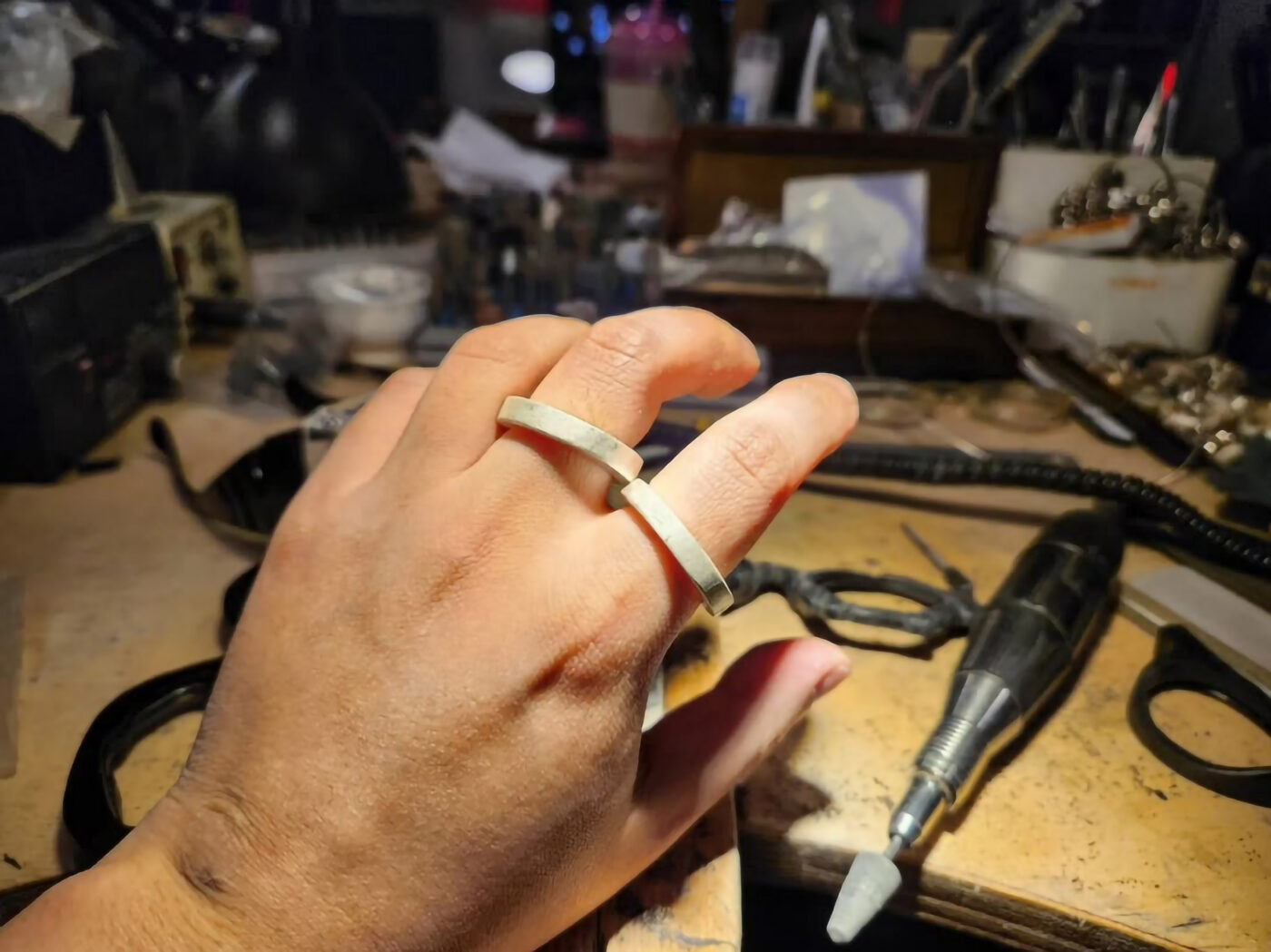
JS: I research the in-between areas of opposing concepts. I prefer to create new perspectives through the possibilities of ambiguity within these in-between areas. As a jewelry designer, I create my rings in a form between use and non-use.
Shelved Idea
NYCJW: Is there an idea or project you’ve had to put aside for now? What was it, and what made it difficult to move forward with at the time?
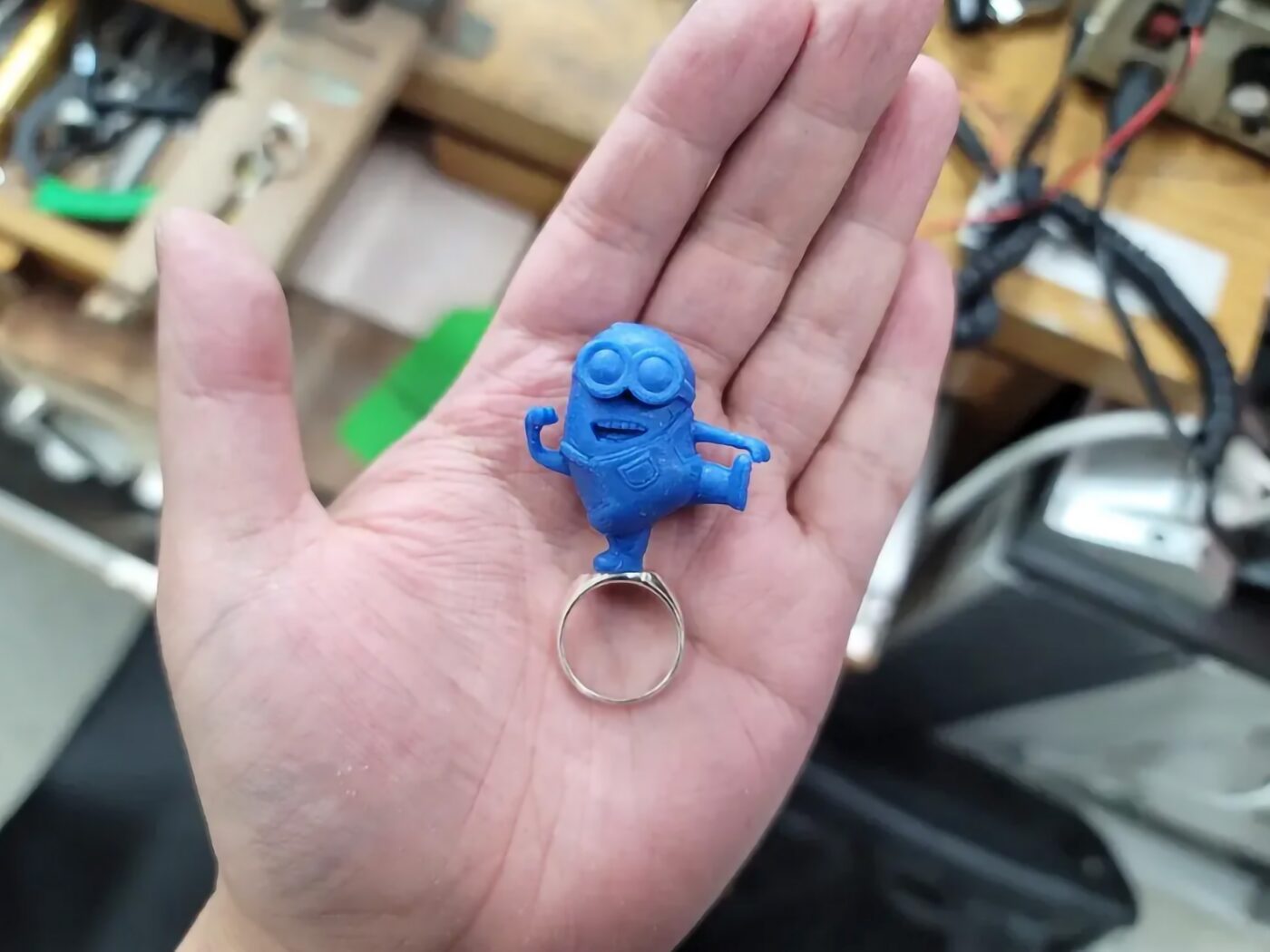
JS: I planned to create ‘figure-style rings’ by placing miniature metal sculptures of famous characters on top of rings. I wanted to visually express the synergy created when the wearability of a ring and the object-like characteristics of a figure are brought into a single domain. I really wanted to pursue this, but I couldn’t overcome the barrier of copyright issues.
A Different Form
NYCJW: If your work had to exist in a completely different form, what would you choose?
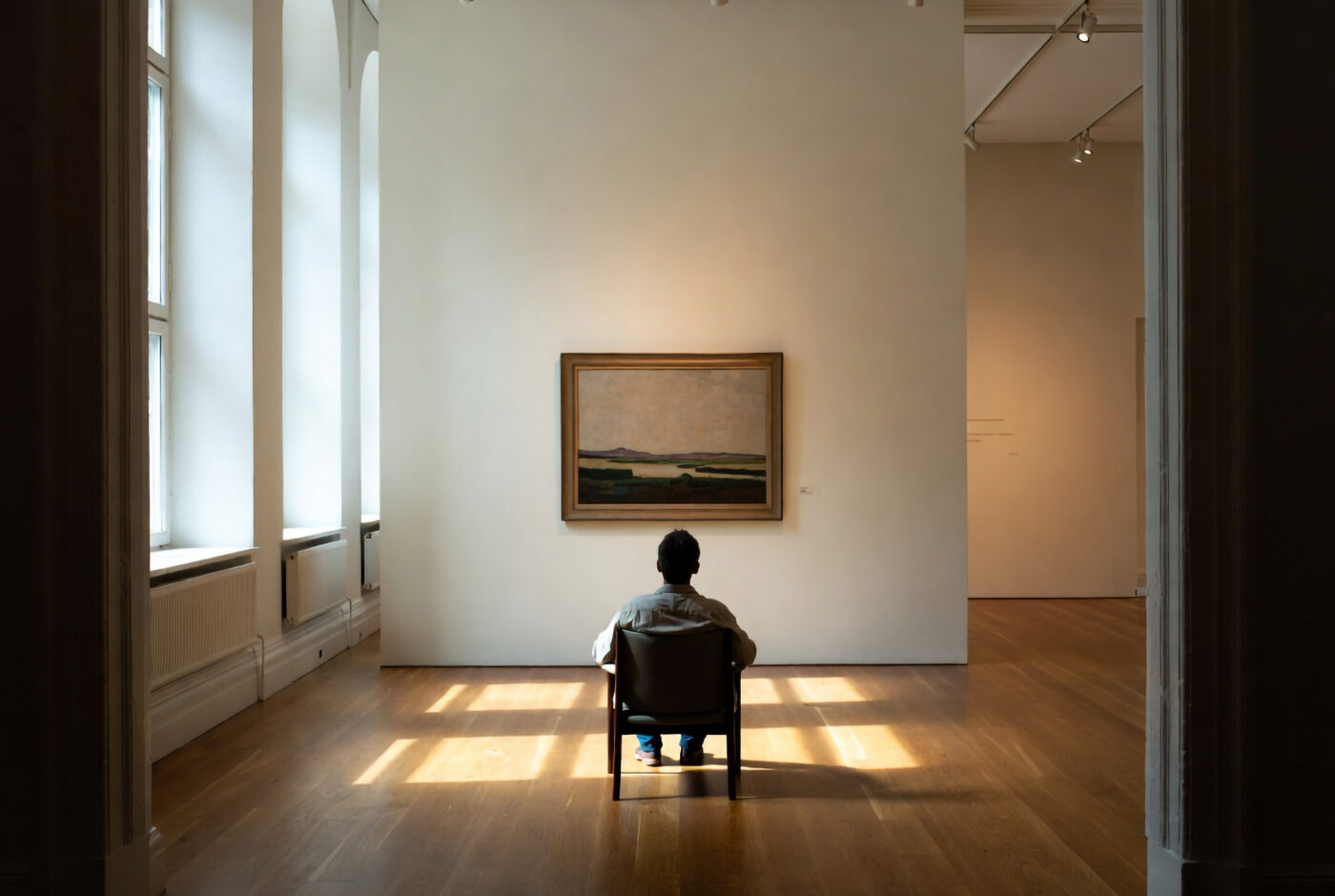
JS: When I look at three-dimensional works, I start thinking about their side views, back views, and information on how they were made three-dimensionally. This habit often gives me quite a bit of fatigue. Therefore, I wish my work existed as a medium-sized flat painting on a white wall in a well-lit exhibition space. Sometimes, I want to gaze at my work peacefully and comfortably.
Beliefs & Doubts
NYCJW:Is there something people in your field tend to believe or say that you don’t fully agree with?
JS: When I try to attempt something, I dislike the pessimistic attitude of bringing up examples of other artists and saying, ‘As an artist, you should do something creative; this person has already done what you are trying to do.’ Even with the same line, the meaning of that sentence can change depending on which actor performs it. I believe in this quite strongly.
NYCJW: Can you think of a recent moment when you felt unsure about your work or direction?
JS: I am sure I had doubts, but now I don’t remember them well. I just kept making, and now only excitement remains.
Character, Action, Encounter
NYCJW: If you could make a piece for a fictional character or a historical figure, who would it be? What kind of work would you imagine for them?
JS: The moment I heard this question, Severus Snape from Harry Potter came to mind. There is a scene where Snape shows Dumbledore his Patronus, a silver doe, and when asked if he still loves Lily, he simply replies, ‘Always.’ That scene drives me crazy; no romance movie or novel can surpass it. This feeling isn’t pity or support for his love; it is pure respect. For Snape, I would create a piece using only a single material to represent the purest and most solid state, completely free from any decoration or hidden intent.
NYCJW: What’s been unexpectedly influencing your thinking or making lately?
JS: Don’t think, just do. This phrase is the very source of my inspiration. I used to be a chronic overthinker, to the point where I would even make plans for making plans. If it weren’t for this mindset, I wouldn’t have been selected for OFTF, and I would probably still be caught in the cycle of planning at this very moment. Ultimately, I draw my inspiration from the act of ‘doing’ itself.
NYCJW: When someone encounters your work, how do you hope they respond?
JS: I hope people enjoy my work with a light heart, simply thinking, ‘Oh, so something like this exists.’ I create my pieces with that same mindset, and I believe that is where the audience and I will truly connect.
Time and Effort
NYCJW: Is there a question you wish people would ask you more often about your work?
JS: To be honest, the question I wish more people would ask is, ‘How long did it take to make this?’ I love hearing this because it makes me feel like my effort is being recognized in its purest form. My answer to that is always the same: “A very long time”.
Recurring Forms
NYCJW: Looking at your work overall, are there any ideas, shapes, or themes that keep coming back again and again?
JS: Basic geometric shapes—circles, squares, and triangles—naturally appear in most of my work. I believe this reflects my personality, as I enjoy building stories by branching out from the most fundamental elements.
About One for the Future (OFTF) One for the Future celebrates the next generation of jewelry and creative industry professionals. Each year, the program recognizes honorees for their innovation, craftsmanship, and/or unique perspectives. It also provides them with opportunities for mentorship, exposure, and connections with collectors and industry leaders worldwide.
As a 2026-2027 One for the Future honoree, Youzhi Bi is a jewellery artist and curator whose practice sits at the intersection of material experimentation, process-led making, and emotional inquiry. She holds an MA in Jewellery Design and Gold & Silversmithing from the Royal Academy of Fine Arts Antwerp (magna cum laude), and a BA in Jewellery Design and Silversmithing from Sheffield Hallam University (First-Class Honours). Her work explores how jewellery evolves through drawing, transformation, and wear, considering not only how objects are made, but how they continue to change over time and through use. Alongside her practice, she is the founder of B-Design Hub, an independent exhibition space in Shenzhen dedicated to contemporary jewellery and object-based practices.
We sat down with Youzhi Bi to discuss her evolving relationship with making, authorship, and the quiet uncertainty that runs through her work.
How does the story of your jewellery unfold when you think about it in its simplest, most essential form?
I see jewellery not as a fixed object, but as something that evolves with time and wear.
For instance, a scratch on a [piece of] jewellery is not damage – it’s a record.
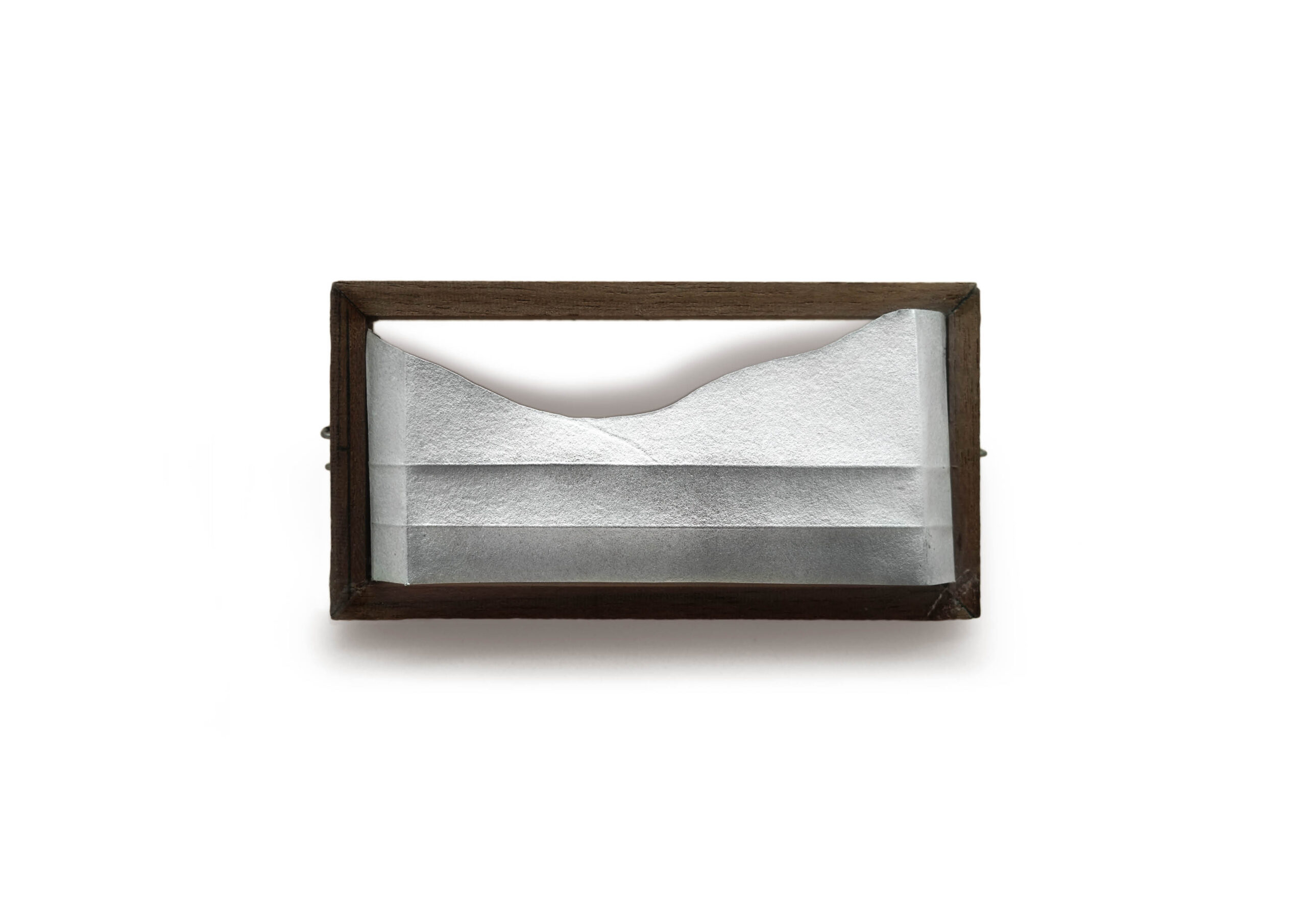
The wooden frame is actually a prototype I made—it’s also the piece people ask about most often.
Building from that sense of evolution in your work, how do you think about pieces that feel unresolved or “not ready”?
Almost all of my work feels “not ready” when I revisit it. I can always see ways it could be more precise or resolved differently.
I tend to be quite perfectionistic and hesitant—but I’ve come to accept that nothing is ever truly finished. I used to shelve almost everything, brewing on a sense of completion. Now, I try to share the work even in its unfinished state—because “not ready” is often where the life is.
If we move from finished work to process and thinking, how would your practice translate into a completely different medium?
It would be a drawing—not a finished one, but a sketch. I’m drawn to structure, yet I try to resist overly defined forms. I’m more interested in what emerges organically—through interaction or small accidents in the process.
A sketch holds that quality; it carries the traces of thinking, hesitation, erasure, and uncertainty.
Staying with ideas and assumptions in your field, is there a convention in jewellery design that you find yourself questioning or responding to differently?
I have a somewhat contradictory relationship with this.
In jewellery design, there’s a common assumption that adding gemstones—especially diamonds—automatically creates value. I’ve never fully agreed with that. During an internship at a fine jewellery brand, I often heard “just add diamonds,” as if that alone could resolve a design. To me, that can feel like a way of masking uncertainty rather than developing the idea itself.
At the same time, when I chose my own wedding ring, I did the opposite. I chose a very classic diamond ring with almost no design to it.
The distinction, for me, is that a wedding ring already functions as a symbol. And symbols are remarkably stable—they don’t need to say much, and they don’t really change over time. I was concerned that if the ring had too much design, my perception of it might shift—I might grow visually tired of it, or begin to question it. A symbol, by contrast, feels more neutral, almost fixed.
So I’m not against gemstones. What I question is how they’re often used in design—as a shortcut to value, or to compensate for an unresolved idea. For me, value should come from how an idea is developed, not from materials that are already culturally agreed to be valuable.
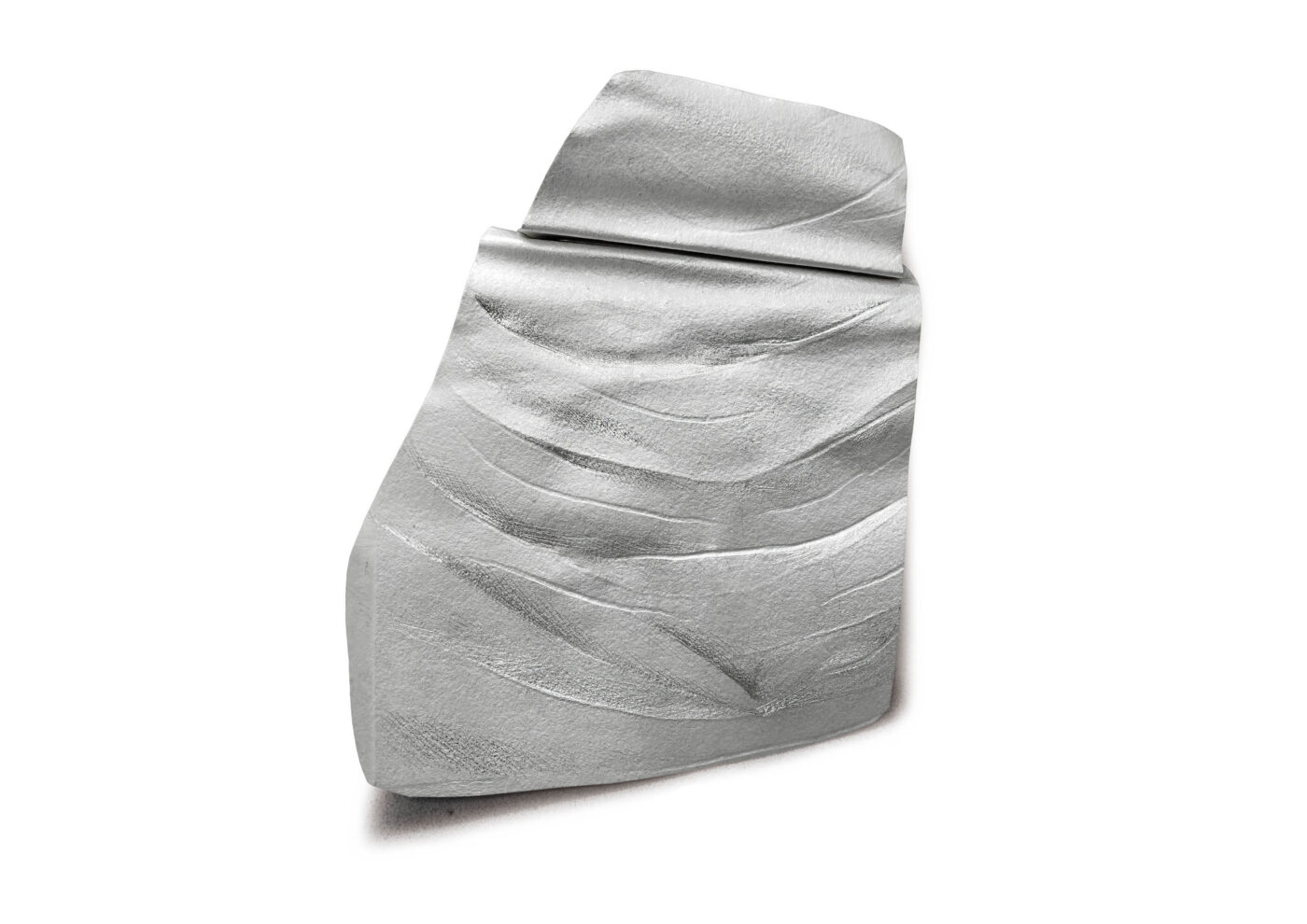
A silver sheet that was accidentally crumpled; I later reinforced the folds by drawing shadows, allowing the material to guide the direction of the piece.
When you are in moments of uncertainty in the making process, how does creative doubt show up in your work?
I often find myself questioning whether I’m intervening too much—whether the concept becomes over-articulated, or the making overly controlled.
In those moments, I try to step back. I shift my focus from directing the outcome to allowing the materials to interact and unfold more freely.
I’ve realized that when everything is fully intentional and authored, the work can start to feel closed. What I’m more interested in is leaving space—for something unexpected to emerge, for the material to speak in ways I couldn’t have planned.
Expanding outward, if you were to create a work for a fictional or historical figure, who would you choose?
I would create something for Ditto from Pokémon.
I’m interested in how Ditto doesn’t transform independently, but in response to what it encounters—its identity is always shaped by the external, by what it sees, touches, or tries to become. The piece wouldn’t transform perfectly. It might lag, or distort, or hold onto traces of what it was before—so different states exist at the same time. In that sense, the work wouldn’t represent Ditto, but operate like it—where identity is not fixed, but continuously negotiated through interaction.
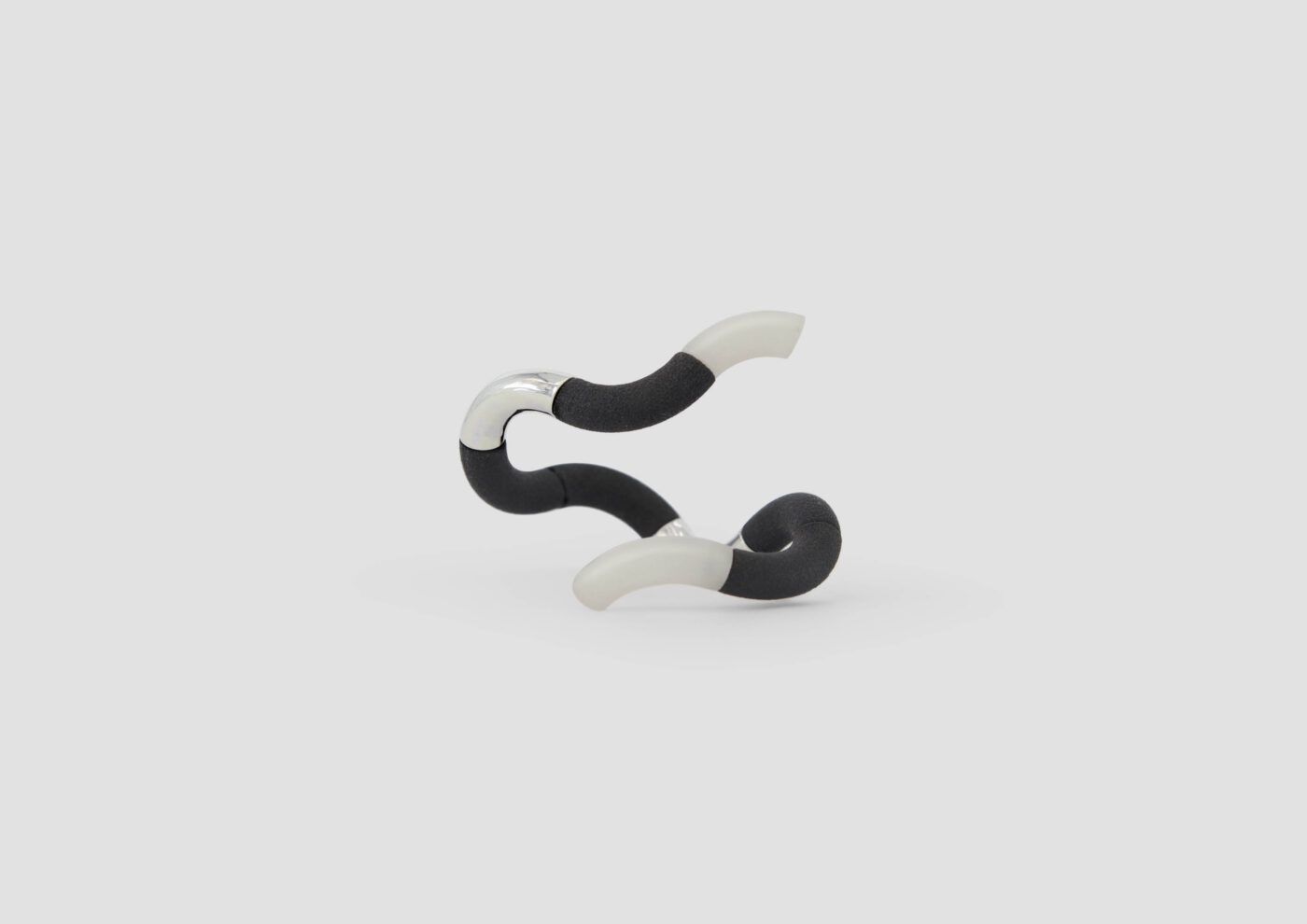
A tangle-shaped bangle made from broken jade bangle fragments; its form shifts with wear and the wearer.
Thinking about materials and process, what non-traditional source of inspiration or material engagement draws you?
I’ve been thinking a lot about what happens when I’m not fully in control of how a piece ends up.
It’s made me more interested in the idea of shared authorship—not in a theoretical way, but in a very practical sense, through use.
I’m drawn to materials or structures that can change over time—through wear, or interaction—so the final form isn’t fixed from the start. I’d like my work to stay a bit open, so the wearer and time itself can become part of the process.
When someone encounters your work, what kind of emotional or reflective experience do you hope it creates for them?
I love works that make me pause and think, “Ah, so that’s what it is.”
I hope my work can create a similar kind of quiet moment—something subtle, but clear enough to stay with you.
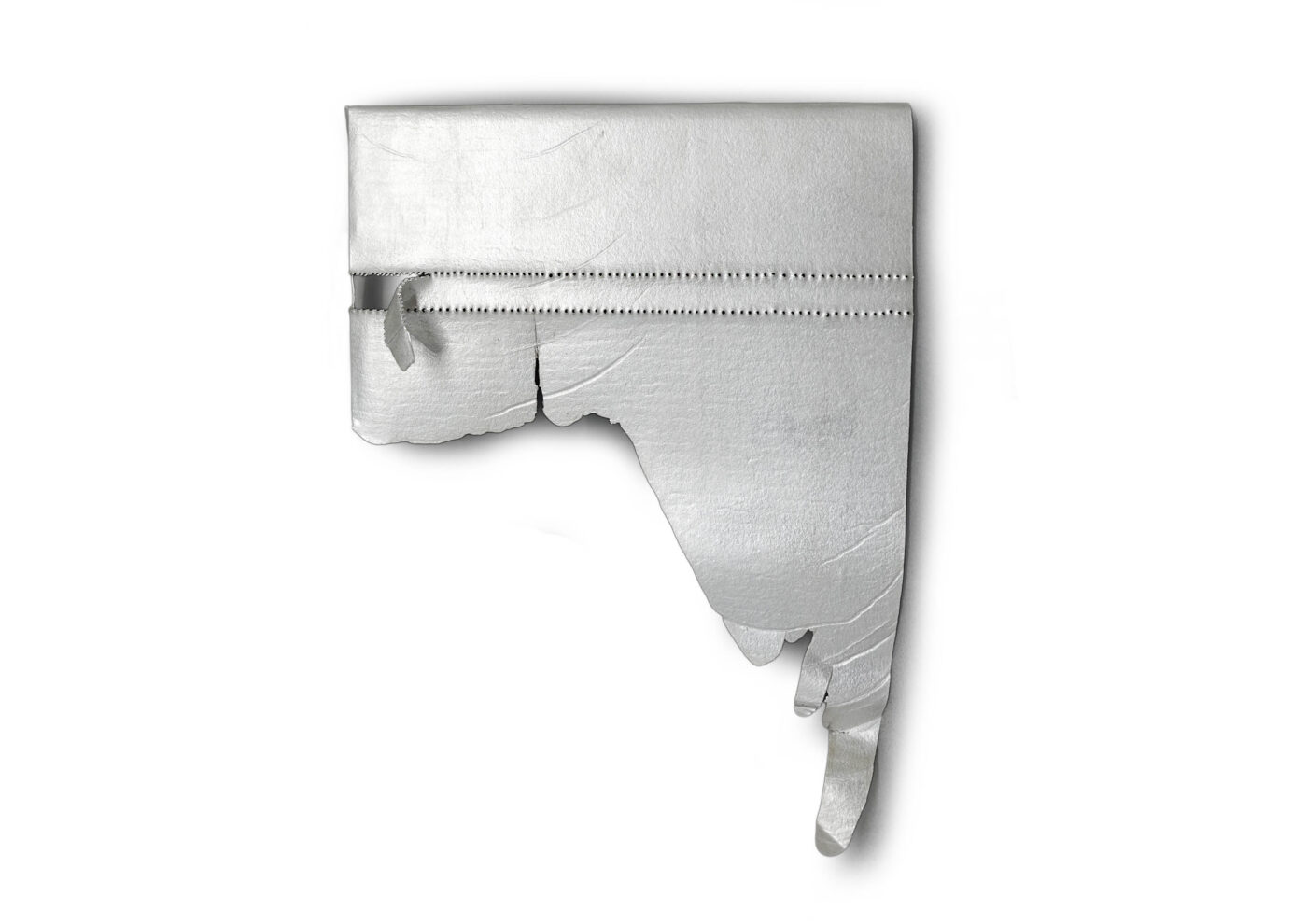
During rolling, variations in the silver’s thickness created irregular edges; what might have been discarded became a defining detail.
Looking back at your process, is there a question you wish people would ask more often about your work?
I wish people would ask: “Which part of this piece did you almost abandon?”
There’s almost always a moment where the work feels awkward or unresolved, and I want to give up on it.
But over time, I’ve noticed that those parts often end up being the most interesting—the slightly off-line, or the imperfect edge.
If someone asked me, I’d probably point to that place and say: “That part almost didn’t make it—but it stayed.”
Finally, across different projects and time, what recurring theme or subtle thread continues to appear in your practice?
I’m someone who easily doubts myself. I might finish a drawing and love it, and then question it the next. But I’ve noticed that simpler gestures—like a line that isn’t trying too hard—can still feel right years later.
So in jewellery, I’m always balancing between expression and restraint. I want my thoughts to be present, but not too strongly.
And yet, no matter how much I try to hide, something personal still comes through. It keeps appearing because I can’t fully conceal it—the most I can do is shape how it shows.
About One for the Future (OFTF) One for the Future celebrates the next generation of jewelry and creative industry professionals. Each year, the program recognizes honorees for their innovation, craftsmanship, and/or unique perspectives. It also provides them with opportunities for mentorship, exposure, and connections with collectors and industry leaders worldwide.
Working between Hong Kong and the United States, Ho Oi Ying Valerie approaches jewelry not simply as adornment, but as a living, breathing archive. Her wearable forms hold stories of migration, resilience, and political memory in intimate ways. She trained as both a jeweler and educator and earned an MFA in Jewelry and Metalsmithing from the Rhode Island School of Design. The social and political conditions of Hong Kong, particularly after the 2019 protests, deeply shape her practice. A 2026–2027 One for the Future Honoree, she continues to gain recognition for work which bridges personal narrative and collective history.
Jewelry as Story and Social Archive
NYCJW: Let’s begin! How would you describe your practice right now? What is at the core of your work, and how does it take shape through jewelry?
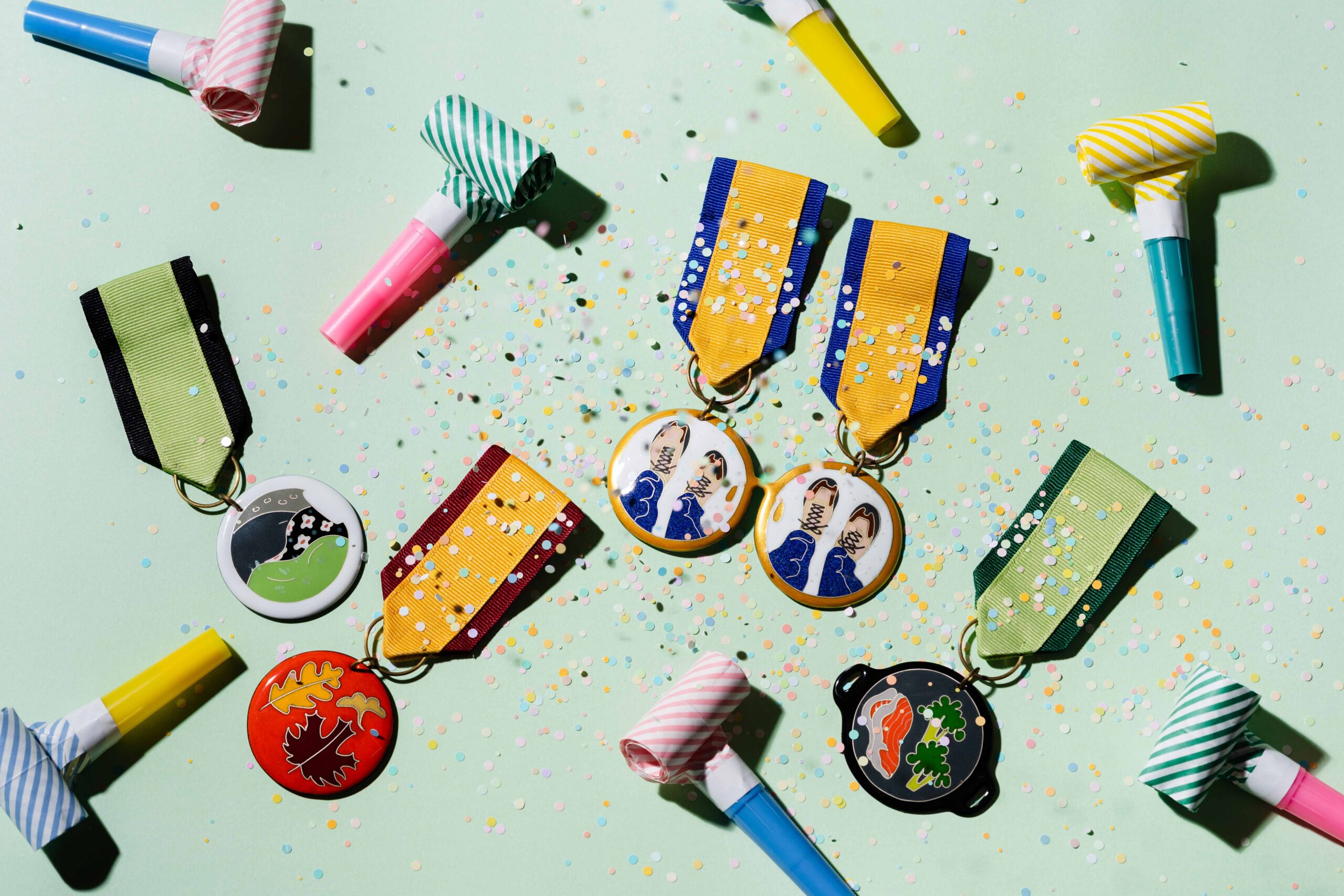
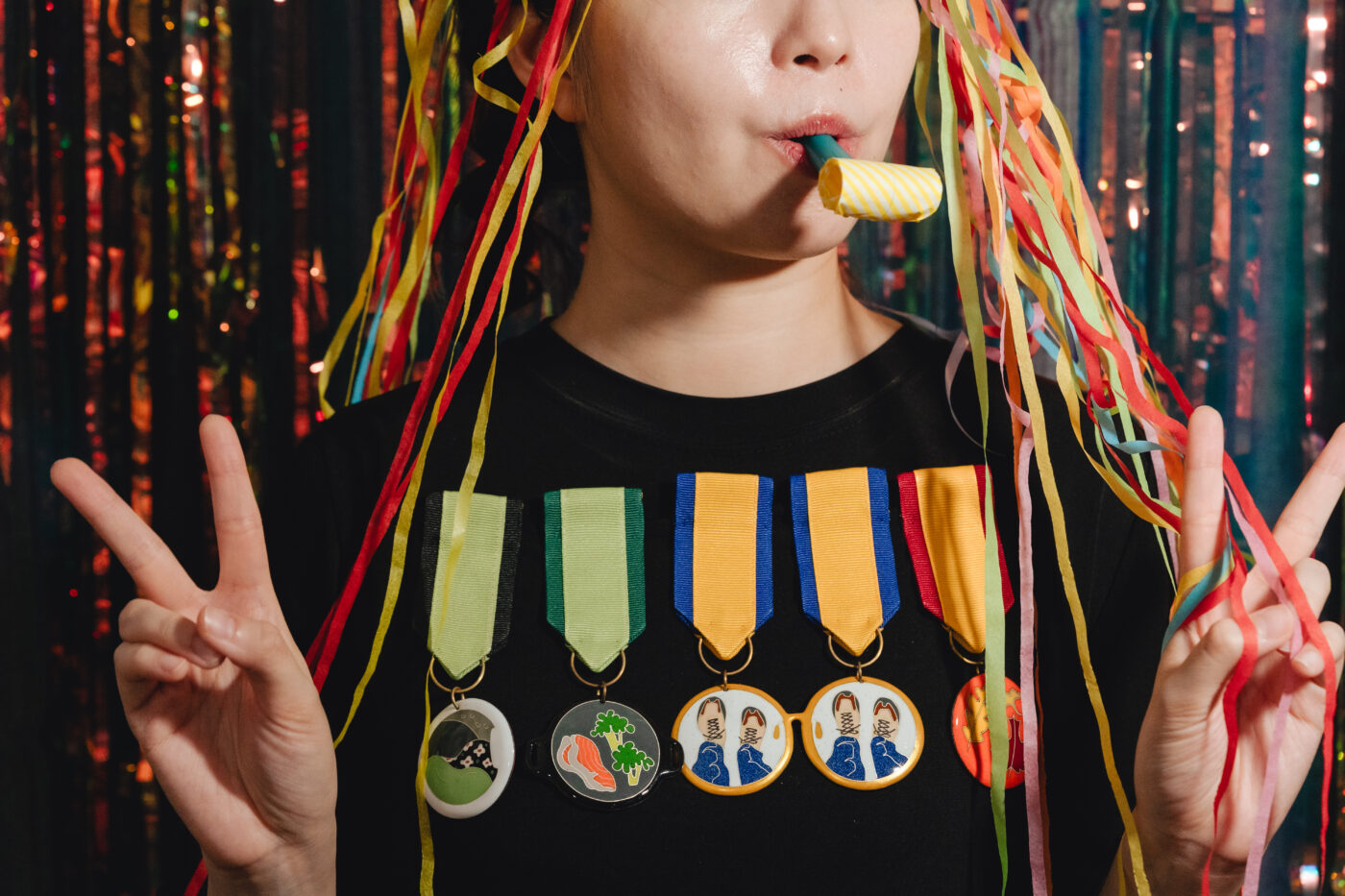
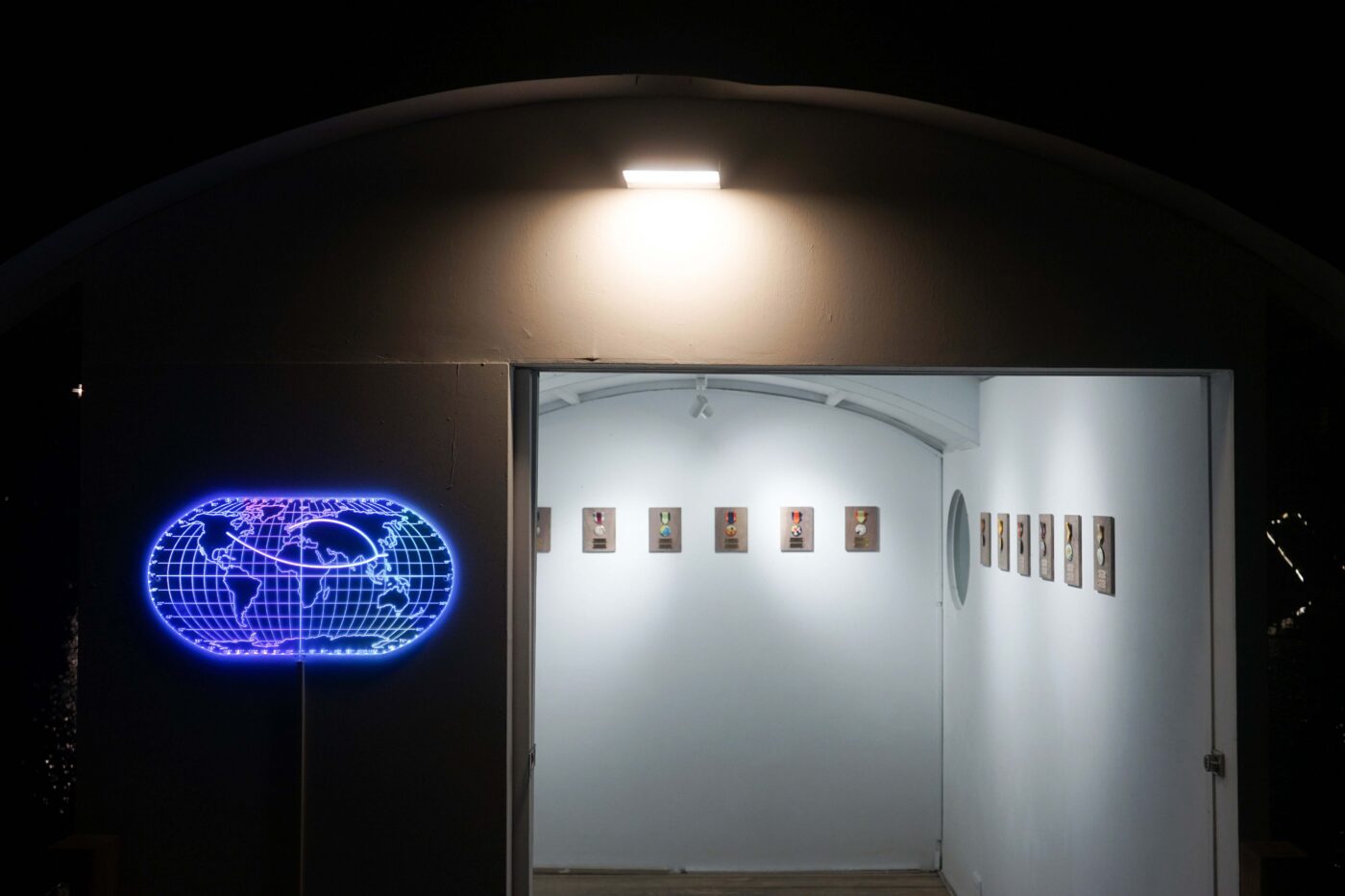
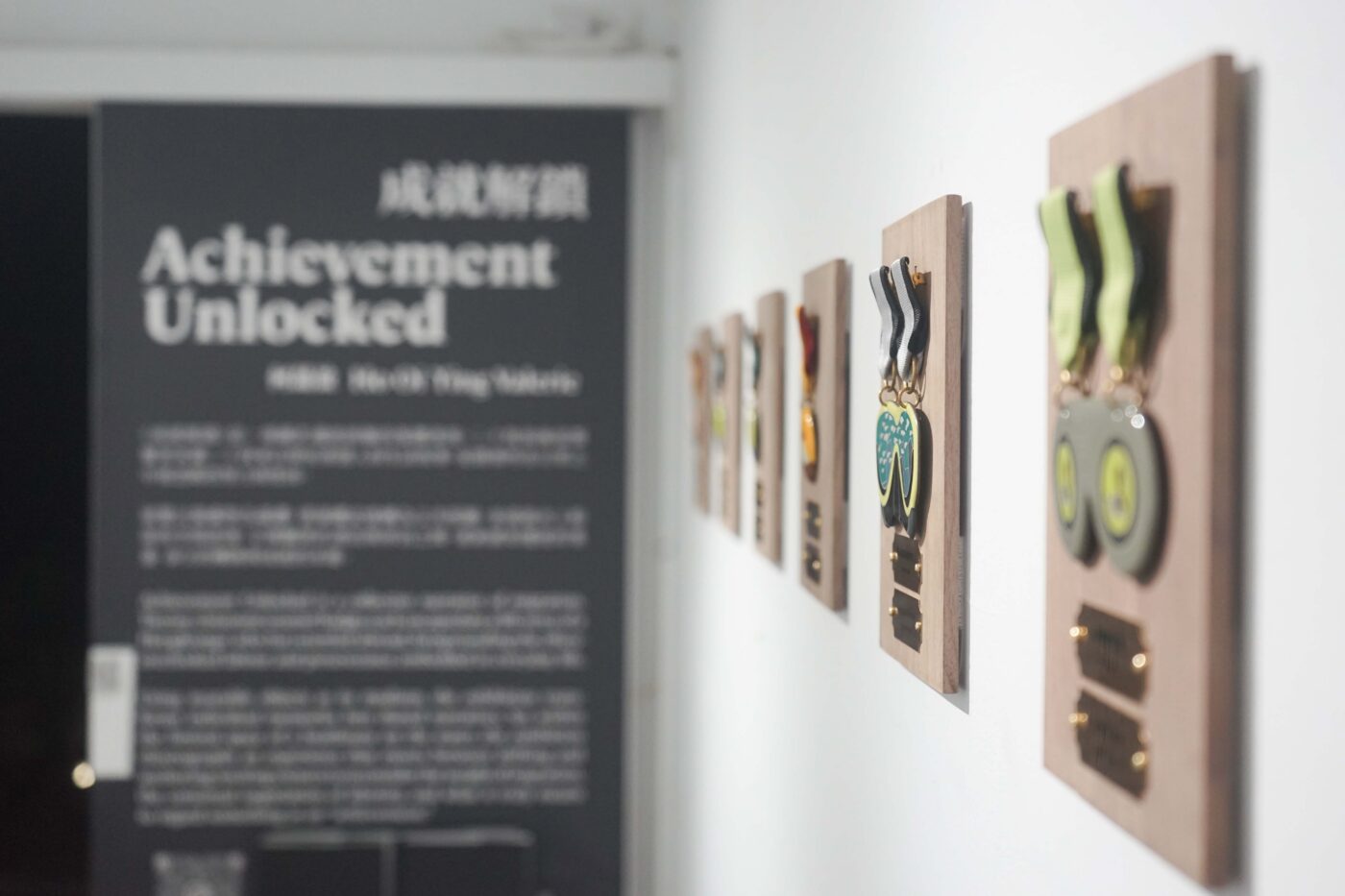
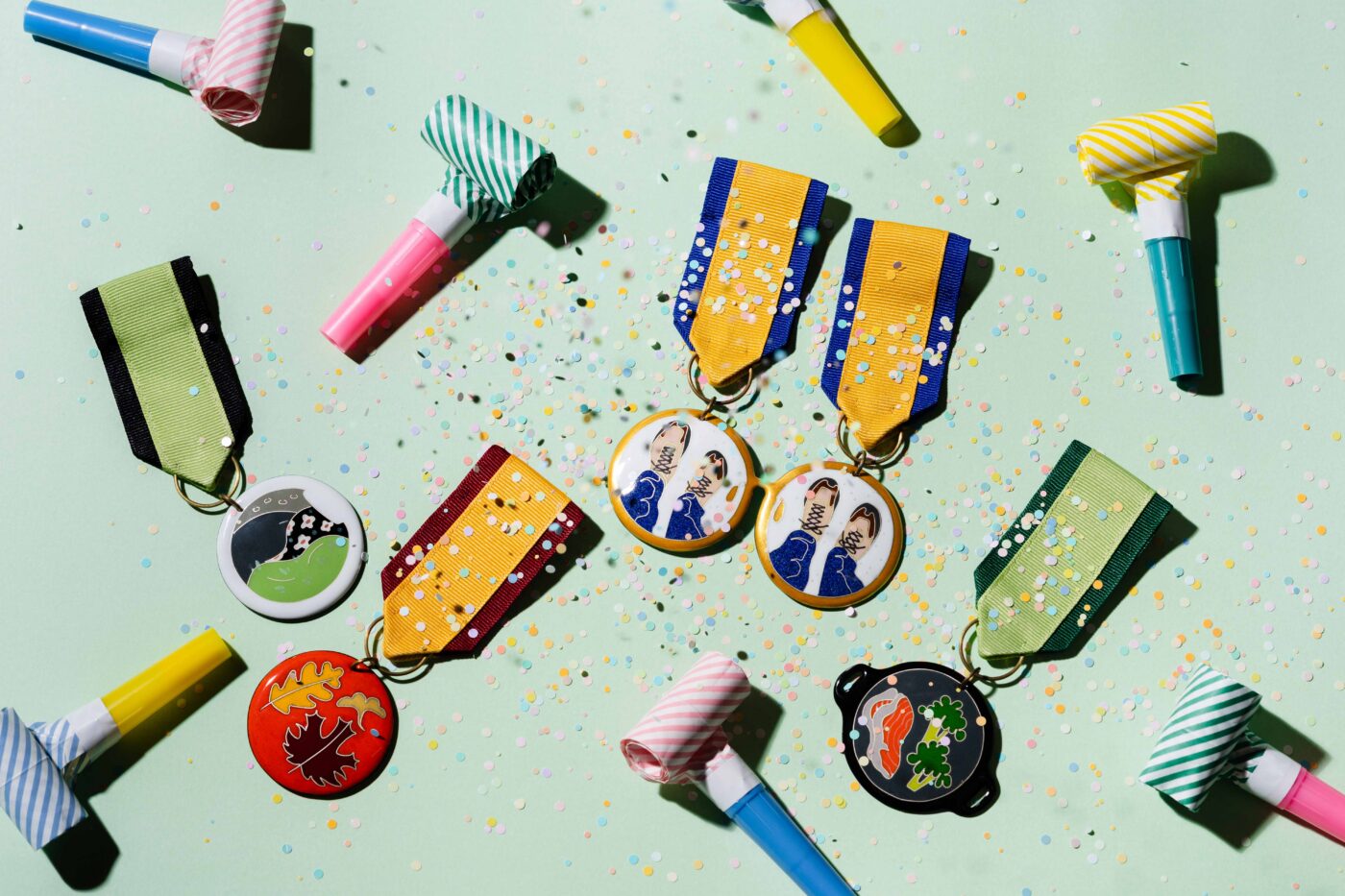
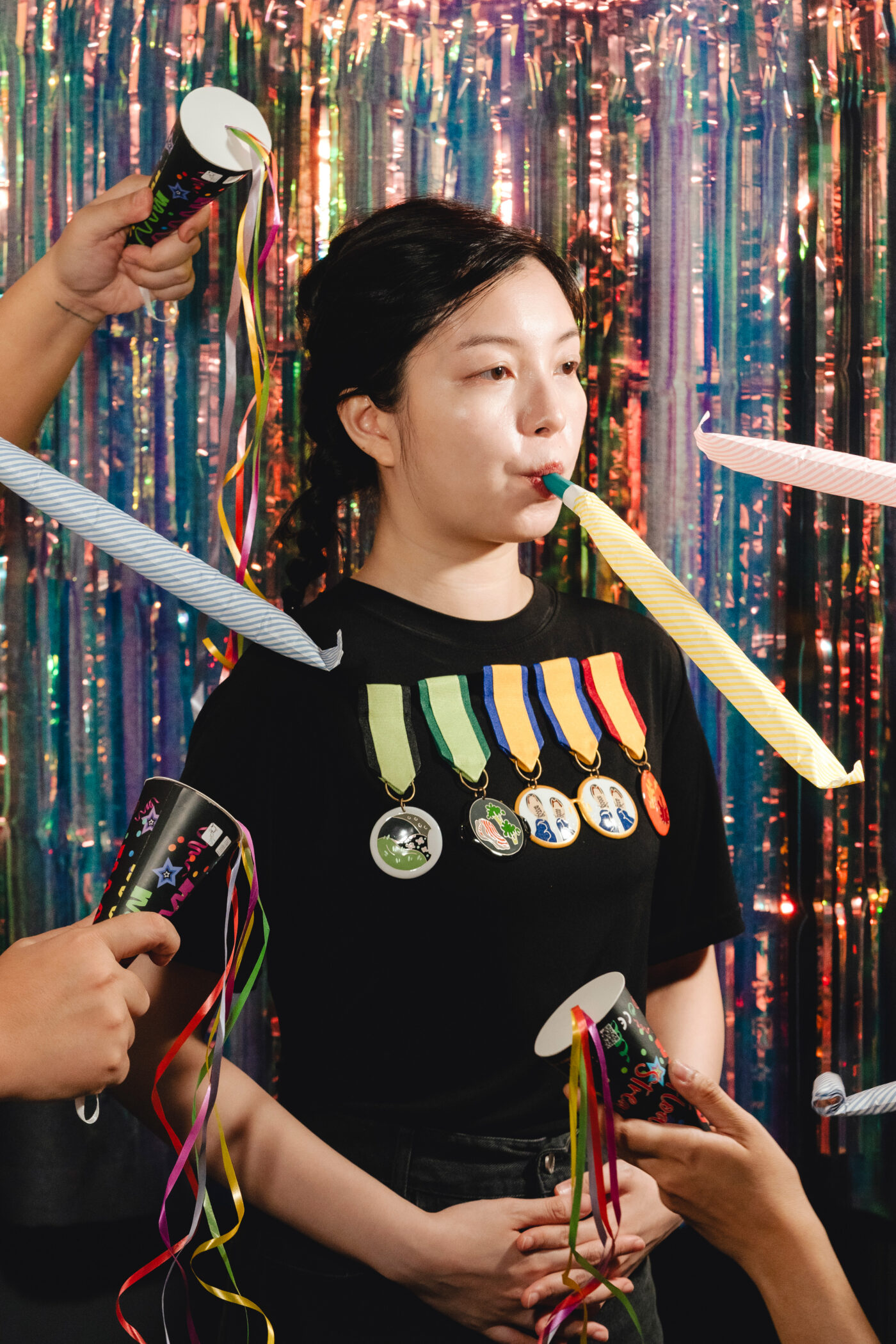
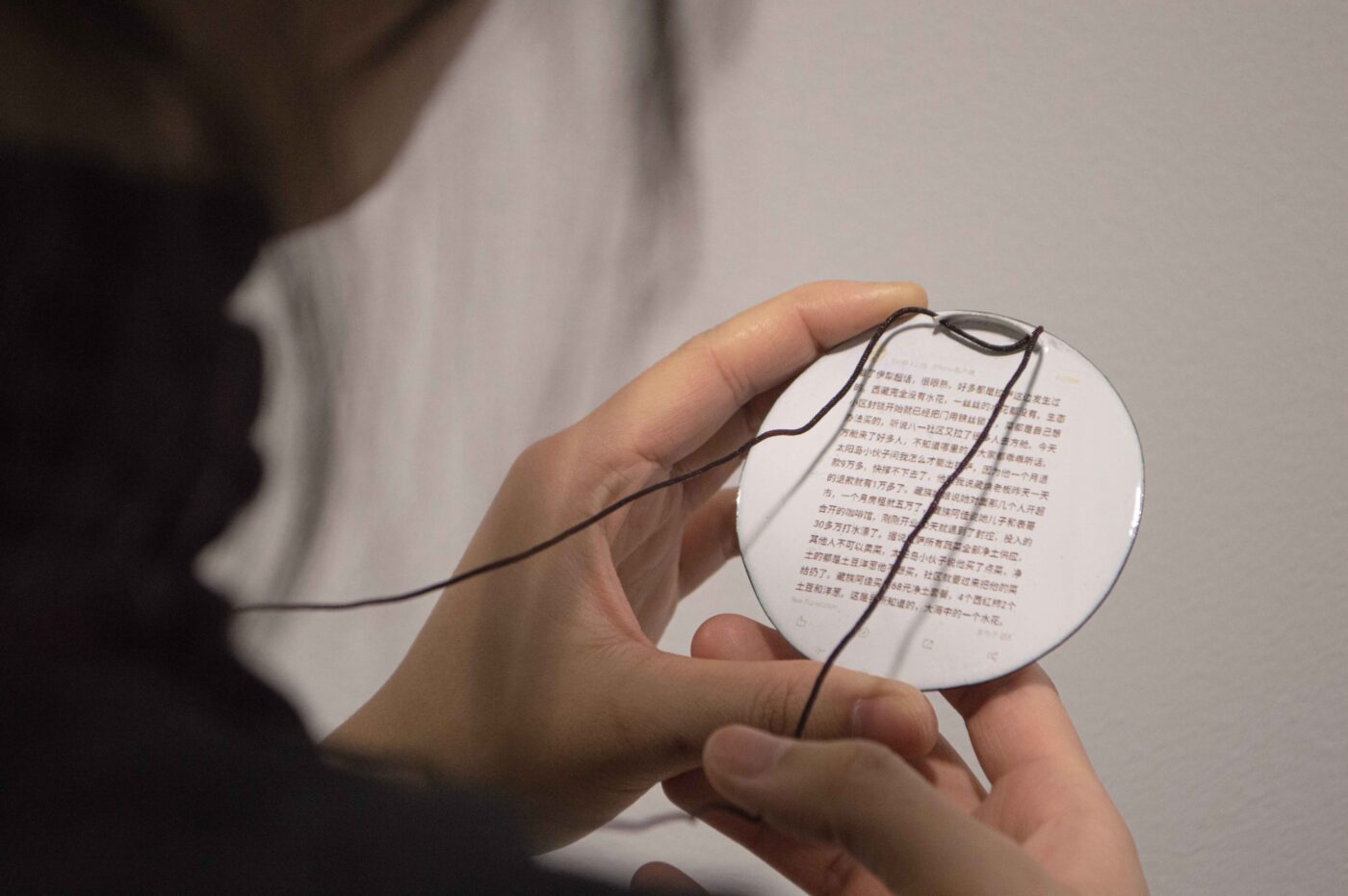
HOYV: My practice examines jewelry as a mode of storytelling and social archive, translating personal and collective histories into wearable forms. Through projects such as Everyday Triumphs and Achievement Unlocked, I employ cloisonné badges to articulate narratives of migration, identity, and resilience, reframing “achievement” through intimate, everyday experiences. Positioned at the intersection of craft and research, my work treats making as a method of documentation, where material and process become vehicles for preserving lived experience.
Expanding the Archive: Toward Scale, Collaboration, and New Media
NYCJW: Your projects already function as intimate archives of lived experience. Have you imagined expanding this work further?
HOYV: One direction I have considered but not yet fully realized is the expansion of my cloisonné badge projects into a sustained, large-scale archive. In my current practice, I undertake multiple roles, including conducting interviews, translating narratives, fabricating the work, and overseeing promotion, exhibition, and publication, largely as a single-person operation. Through this process, I have come to recognize both the project’s potential and its limitations in scale.
I envision this work developing into a more expansive platform capable of holding a broader range of stories and participants. I feel prepared to move toward this larger-scale direction, while also recognizing the need to evolve my working model by establishing a more collaborative structure and engaging support across research, production, and organizational capacities.
At this stage, I understand my current work as both a foundation and a point of transition, positioning the project to grow into a more collective and sustainable framework.
From Wearable Archive to Moving Image
NYCJW: As you think about scaling that archival approach, are there other media that feel complementary to what jewelry can hold?
HOVY: If my work were to exist in a different medium, it would likely take the form of film or moving image. Much of my practice is rooted in oral history, with listening, translating, and interpreting personal narratives, and film offers a way to hold voice, gesture, and temporality in ways that static objects cannot fully capture.
While my cloisonné projects distill these stories into intimate, wearable forms, film would allow the narratives to unfold more expansively, preserving tone, rhythm, and presence. It would also create space for multiple voices to coexist, extending my interest in jewelry as an archive into a time-based and collective medium.
In this sense, I see film as a potential starting point for expanding the project further, particularly if the opportunity arises to explore these narratives through a time-based and collaborative format.
Reframing Jewelry Beyond Adornment
NYCJW: Your work pushes against traditional ideas of what jewelry is or should be. What assumptions or conventions within the field do you find yourself questioning most?
HOYV: One convention I often question is the tendency to position jewelry primarily as an object of adornment or luxury, rather than as a form of critical and narrative expression. While these associations remain deeply embedded within the field, my interest lies in how jewelry can function as a site for storytelling, documentation, and the preservation of lived experience.
In my practice, I engage with personal and collective histories, particularly those shaped by migration and everyday resilience, translating them into wearable forms. This approach challenges the notion that jewelry must prioritize aesthetic value or material preciousness in order to carry meaning.
Jewelry can serve as a powerful form of artistic expression, distinguished by its intimate relationship with the body. Worn rather than displayed, it enables individuals to embody and communicate what they value, functioning as a personal and mobile manifesto in public space.
I am also interested in expanding what is considered worthy of being recorded or remembered. Small, intimate, and often overlooked experiences can hold significant cultural and emotional weight, and I view jewelry as a powerful medium through which these narratives can be articulated, preserved, and shared.
On Responsibility, Interpretation, and Reworking History
NYCJW: When you’re working with personal and collective histories in this way, questions of interpretation and responsibility inevitably come up. Can you talk about a recent instance of doubt in your process? How did you work through it?
HOYV: A recent moment of creative doubt emerged while developing Achievement Unlocked in late 2025, particularly in the process of translating oral histories into cloisonné forms. I found myself questioning whether I was doing justice to the narratives I had collected, how much to interpret, what to simplify, and how to balance aesthetic decisions with the integrity of each story.
The doubt was less about making and more about responsibility. I was working with lived experiences shaped by migration and personal transition, and I became increasingly aware of the weight of representing others’ voices through my own lens.
I moved through this by returning to both the participants and the material. Revisiting interview notes, listening again to recordings, and allowing the cloisonné process, through wire placement, layering, and firing, to function as a form of careful translation helped me regain clarity. I also came to accept that interpretation is an inherent part of the work, and that my role is not to replicate a story, but to hold space for it through form.
That moment ultimately strengthened my approach, reinforcing the importance of attentiveness, ethical consideration, and trust in both the process and the relationships that shape the work.
Revisiting History Through Material Dialogue
NYCJW: That sense of responsibility also connects to history more broadly. If you could communicate directly with a historical figure through your work, who would it be?
HOYV: If I were to create a work for a historical figure, I would consider President Mao of China, informed by my research into political badges held in the archives of the British Museum. I was particularly struck by the presence of cloisonné badges produced in Hong Kong during that period, which revealed a complex relationship between craft, politics, and manufacturing history.
This discovery led me to question what it would mean to create such an object now, from my own contemporary position. Rather than functioning as a symbol of allegiance, the work would explore the shifting meanings embedded in these forms, how an object once used for mass political expression might be reinterpreted through a reflective and critical lens. It would also examine the emotional and historical tension of remaking such an object today.
In this way, the work becomes less about the figure itself and more about the act of revisiting history through material practice, considering what it means to reproduce, reinterpret, and carry these forms in the present.
Ephemera as Living Archive
NYCJW: Alongside these past references, you also draw inspiration from more ephemeral, everyday materials. What kinds of sources are currently shaping your thinking, and how are they entering your work?
HOYV: I have been increasingly drawn to printed ephemera, such as newsletters, pamphlets, personal letters, and other forms of low-cost, widely circulated materials, as a source of inspiration. These objects are often produced for immediate use rather than long-term preservation, yet they carry significant cultural, social, and political histories.
What interests me is their dual nature: they are both fragile and durable, easily overlooked yet deeply informative. Many of these materials exist at the margins of official archives, holding voices and narratives that are not always formally recognized.
I see this influence entering my work through both content and form. Conceptually, they inform my approach to storytelling and archival practice, particularly in how narratives are collected, translated, and shared. Materially, I am interested in how their visual language, like layout, repetition, and modes of circulation, might be reinterpreted through cloisonné and wearable formats.
By engaging with these sources, I aim to further position jewelry not only as an object of adornment but as a medium capable of carrying and preserving distributed, everyday histories.
Recognition and Intimate Listening
NYCJW: You are focusing on everyday experiences and overlooked narratives. How do you hope people feel when they encounter or wear your work?
HOYV: I hope that when someone engages with my work, they experience a sense of recognition, of seeing their own lives, or fragments of it, reflected back to them. Much of my practice centers on everyday experiences that are often overlooked, and I want to create space for these moments to be acknowledged as meaningful and worthy of attention.
I also hope the work offers a sense of closeness and quiet intimacy. Because jewelry exists on the body, it invites a different kind of relationship, one that is personal, reflective, and sustained over time.
More importantly, I hope it gives permission: permission to value small achievements, to hold onto personal histories, and to recognize one’s own experiences. No matter how ordinary they may seem, they carry significance. In this way, the work becomes not only something to look at, but something to live with and through.
Whose Story Is This?
NYCJW:What do you wish audiences would ask more often about your process or the stories embedded in each piece?
HOYV: One question I wish more people would ask is: Whose story is this, and how was it translated into form?
Much of my work begins with conversations, interviews, and the process of listening. The final object is only one layer of a larger process that involves interpreting lived experiences, navigating what to reveal or withhold, and considering how a story can be carried through material and form.
By asking this question, it shifts the focus from the object alone to the relationships, decisions, and responsibilities embedded in the work. It opens up a deeper understanding of jewelry not just as something to look at or wear, but as a medium that holds and mediates between different voices, experiences, and histories.
Quiet Resilience and Migration Narratives
NYCJW: Finally, can you share what ideas keep resurfacing across your practice? Why do those ideas remain central to your work?
HOYV: A recurring theme in my work is the quiet resilience embedded in everyday life, particularly within experiences shaped by migration, adaptation, and personal transition. I am consistently drawn to small, often overlooked moments that reflect how individuals navigate change and reconstruct a sense of belonging in new environments.
This theme continues to surface because I see myself as part of this broader community, individuals from Hong Kong who have relocated to other places in response to recent political shifts. These shared experiences of displacement and adjustment have deeply informed both my perspective and my approach to storytelling.
I am also interested in understanding migration not only as the movement of people, but as a relational process, one that involves how individuals are received, understood, and integrated within new communities. This perspective informs how I approach narrative, paying attention to both personal experiences and the broader social contexts in which they unfold.
Through my work, I return to these narratives as a way of acknowledging and preserving them. The repetition is intentional; it allows me to continually refine how these lived experiences are translated into material form, while creating space for these subtle yet significant aspects of life to be recognized and valued.
About One for the Future (OFTF) One for the Future celebrates the next generation of jewelry and creative industry professionals. Each year, the program recognizes honorees for their innovation, craftsmanship, and/or unique perspectives. It also provides them with opportunities for mentorship, exposure, and connections with collectors and industry leaders worldwide.
Based in Calgary, Canadian-Chinese artist Yuxin Song is a 2026–2027 One for the Future Honoree whose work sits at the intersection of material history and personal narrative. Trained in both China and Canada, she brings together technical meticulousness and introspective inquiry, particularly through her specialization in enamel. Her practice moves fluidly amid tradition and experimentation, inviting viewers into spaces which feel both tactile and quietly emotional.
We spoke with Song about meaning, doubt, overlooked moments, and why her work might one day belong to SpongeBob.
Material Meanings and Contemporary Reinterpretation
NYCJW: To start us off, how would you describe the core of your practice? What draws you to the materials and ideas you work with?
YS: In my artistic practice, I explore how materials carry meaning and how these meanings can be reinterpreted in a contemporary way. I investigate how the physical properties, historical context, and technical processes of materials communicate ideas, which I then connect with my personal reflections and narratives.
NYCJW: You talk about meaning being layered and evolving. Are there ideas you’ve wanted to explore but haven’t quite found the right form for yet?
YS: I have long been interested in creating a series that highlights the small, often overlooked details of daily life, moments we notice but rarely take the time to truly explore. I haven’t fully developed this concept yet, as I am still figuring out the right materials and forms to bring it to life. For now, I am focusing on other directions in my work, but I hope to return to this idea in the future.
Expanding Scale and Shared Authorship in Experience
NYCJW: That attention to presence and detail feels closely tied to experience. If your work could expand beyond the scale of jewelry, how might it change?
YS: If my work could exist in a different medium, I believe it would be a large-scale installation. The size allows the work to occupy space in a way that small pieces cannot, giving it a strong presence. The audience can interact with the work, move around it, and become part of the experience.
NYCJW: Thinking about how viewers move through and interpret your work, how do you feel about authorship? Who ultimately holds the meaning?
YS: I disagree with the assumption that the artist holds authority over the meaning of their work. I view the creation of jewelry as a narrative process similar to writing. The artist uses material, structure, and visual language as tools, much like narrative techniques, to express their intentions. While the overall appearance serves as the ‘hook’ that draws the attention of the audience, the specific choices in form and material establish the context, and the visual language functions as the style.
However, once a work is finished, its meaning is no longer solely the artist’s. Unlike text, visual art has the power to communicate emotions and experiences that go beyond words. This allows the object to exist in a space of shared meaning, shaped in part by the audience’s perception and interpretation.
Creation as a Way Forward
NYCJW: Has that openness to interpretation ever been challenged by moments of doubt in your own practice?
YS: The last moment of major creative doubt I experienced was around 2024, when I questioned myself, my ideas, and the value of my work. I felt stuck and unsure of my direction. However, once I began making again, the act of creation itself became healing. The process allowed me to move through the doubt, and I found that solutions emerged naturally as I engaged with the work, step by step. Even now, I still experience moments of doubt, but I continue to move forward with them.
Playful Imaginations and Unexpected Inspirations
NYCJW: It sounds like play and curiosity are important in moving forward. If you could fully lean into that, is there someone you’d love to create for?
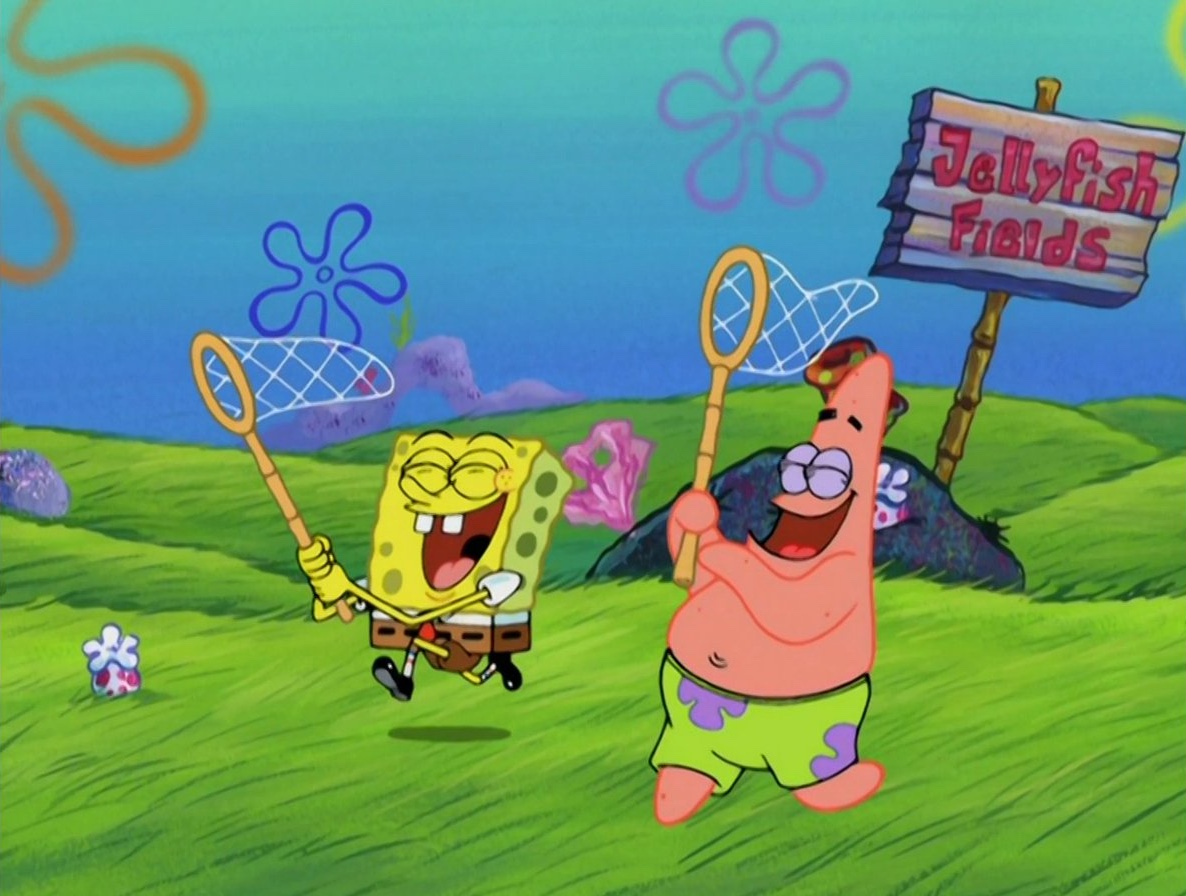
YS: I think I would create a work for SpongeBob and his friend Patrick. I love SpongeBob’s personality, and I think he would be really happy to receive it. Since my nickname in China is “Boluo”, which means pineapple, it feels like we already have a small connection. The work would be a matching, interactive pair that they could wear and use together, something playful that could even help them catch jellyfish.
Transformation and Flexibility in Process
NYCJW: That sense of play also shows up in your materials—what are you experimenting with right now?
YS: I am currently working on several series that feature raw stone and flexible ties.
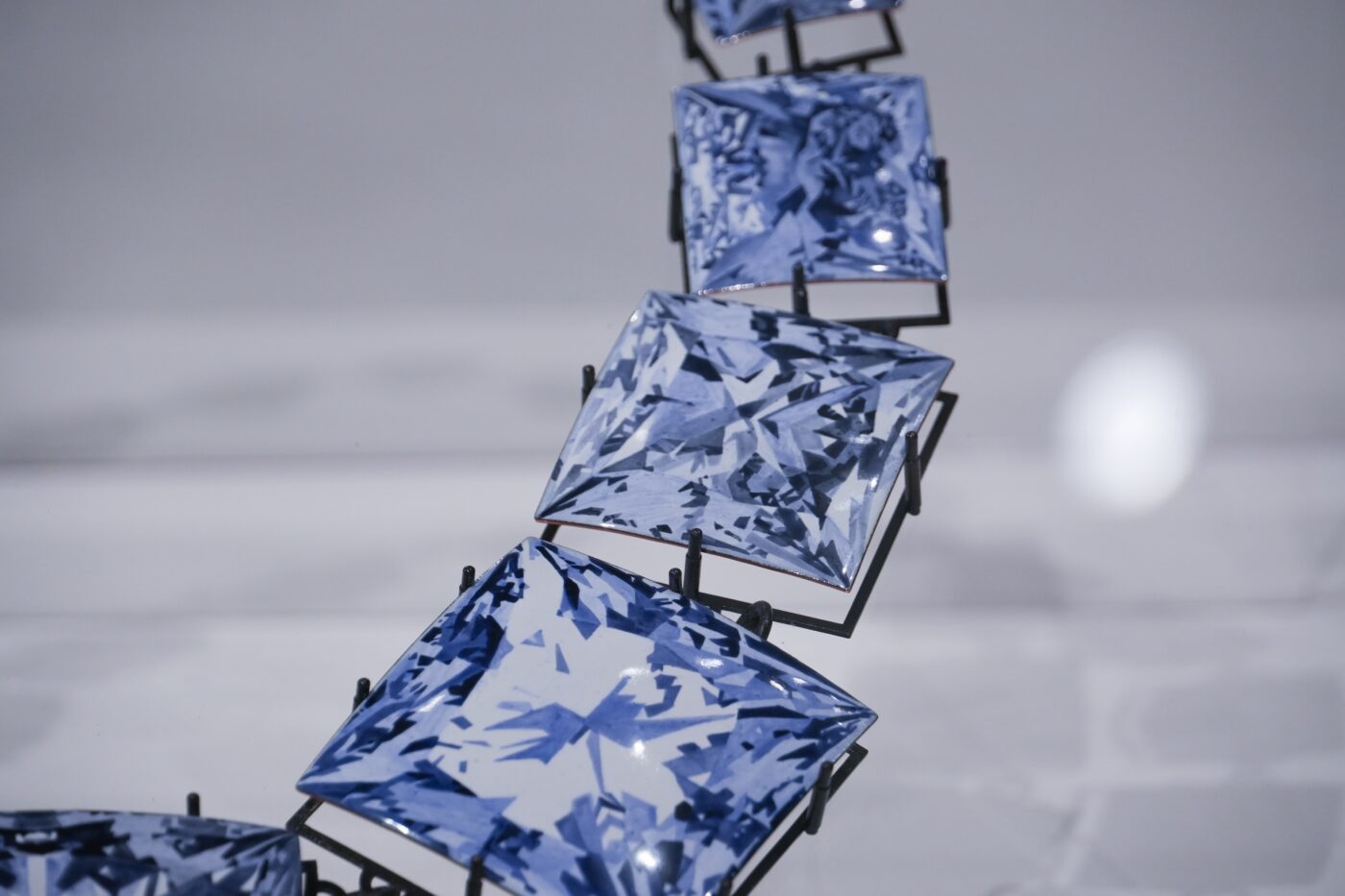
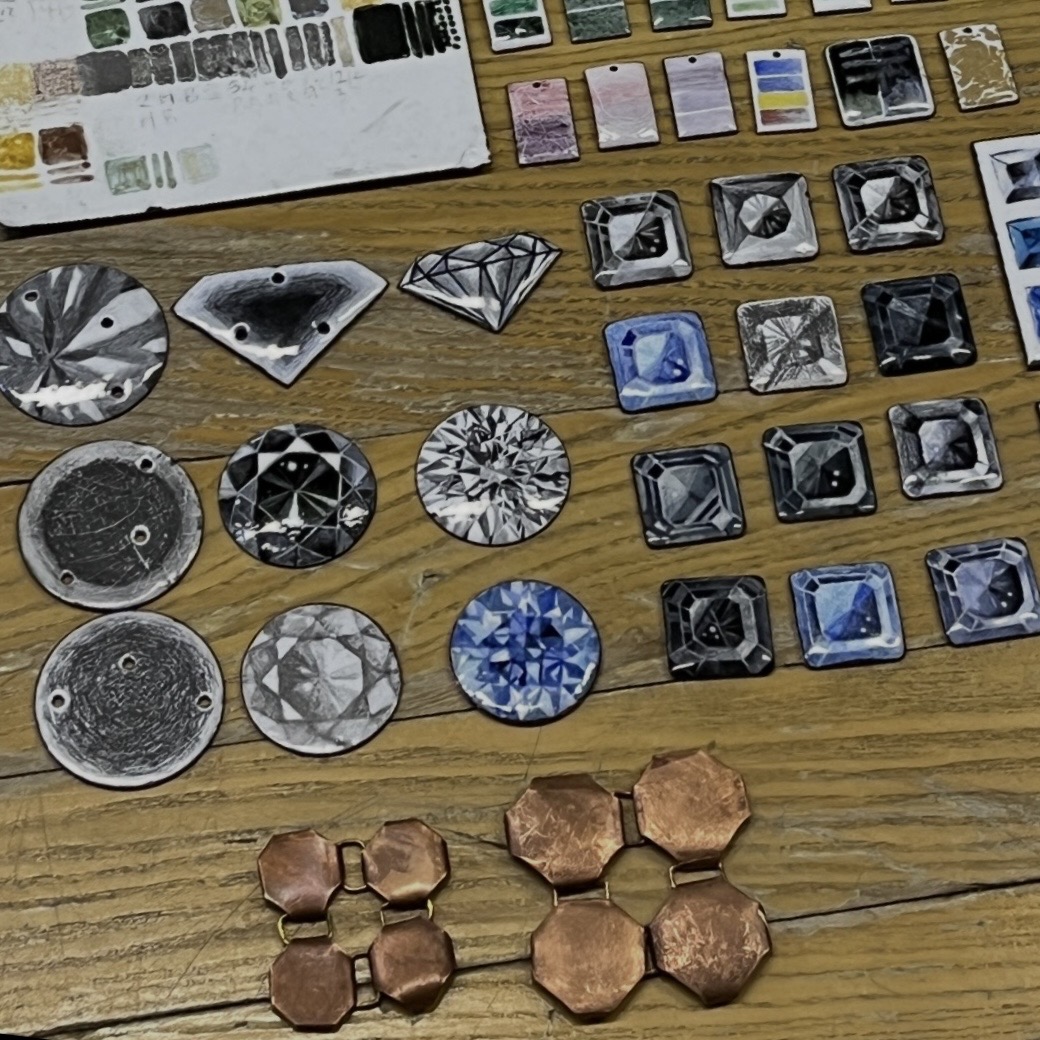
For the raw stone, I am interested in the relationship between raw stone, gemstones, and enamel, and how these materials reflect different states of transformation.
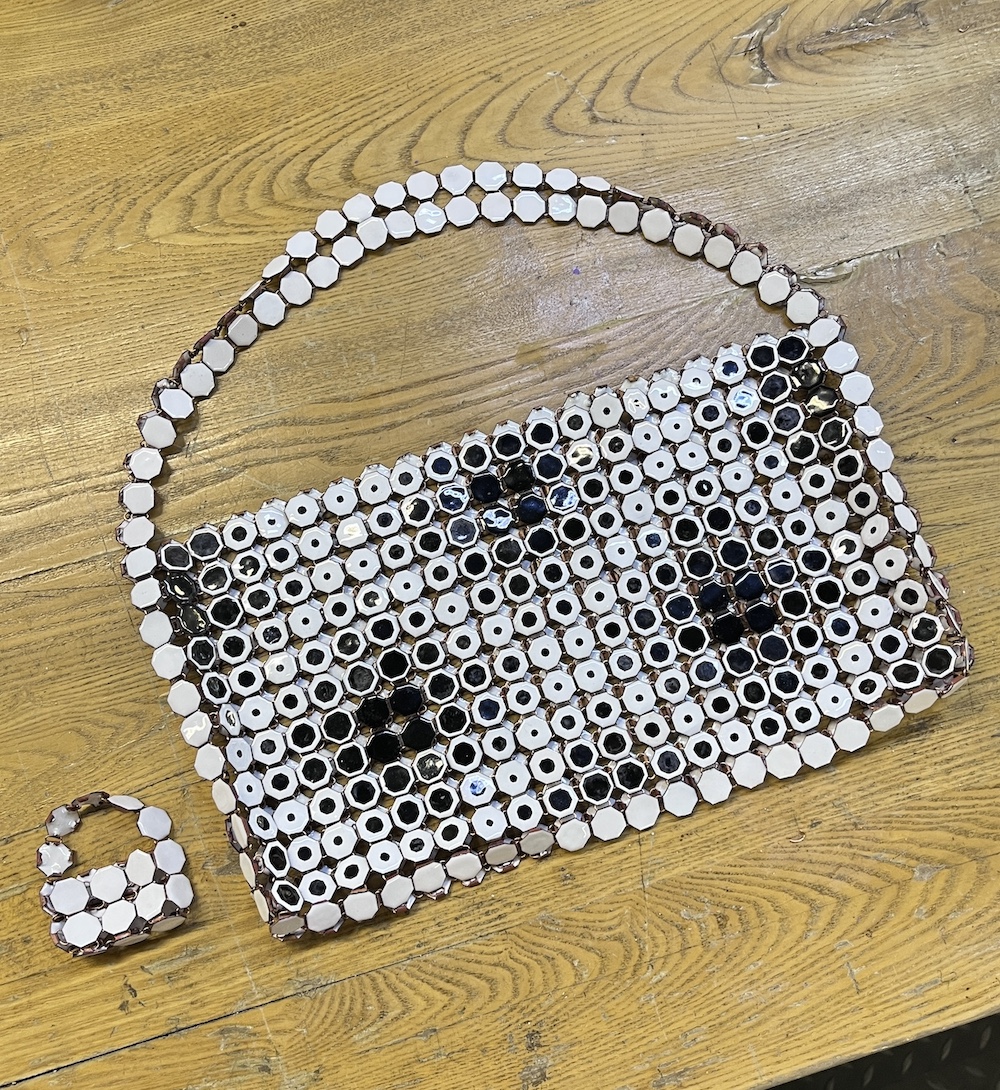
For the flexible ties, I draw inspiration from chainmail. I previously used this structure to create bag-like forms, and now I am pushing it further, strengthening the system to build flexible, fabric-like enamel forms that can move and adapt to different movements.
Reflection, Healing, and Evolving Meaning
NYCJW: With all these material explorations, what kind of experience do you hope people have when they encounter your work?
YS: I see the visual aspect of my work as an entry point. Some people might simply be drawn to how it looks, and I think that is completely valid. Others may spend more time with it and begin to sense where it is coming from.
For me, the work holds space for reflection and a quiet sense of healing, as much of it is rooted in personal experience. If it resonates with someone and allows them to connect with their own thoughts or feelings, that is meaningful to me.
At the same time, I do not see meaning as fixed. I do not have the final say in how the work is understood. Each person brings their own perspective, and I value how the meaning can shift and expand through different interpretations.
Curiosity Behind the Making
NYCJW: When people do engage more deeply, what’s something you wish they were more curious about?
YS: I wish more people would ask about my making process.
For me, the process is not just a technical step; it is where the work really begins to take shape. I often think of it as a conversation with the material. Different materials have their own personalities, and sometimes my ideas come from experimenting with them. Other times, the process itself becomes part of the final concept.
Threads of Acceptance
NYCJW: And finally, when you look across your body of work, what feels like the thread that keeps reappearing?
YS: A recurring theme in my work is learning to accept, grow, and love. In my 2022 ceramic installation, this was very obvious, as I focused on highlighting life’s imperfections. In my recent work, it has become more subtle, appearing through the materials I use.
I enjoy using objects to express my feelings, and I hope my work can bring a small sense of healing, even if it resonates with only a few people.
Yuxin Song’s practice resists fixed meaning, instead offering a quiet, material-driven dialogue between artist, object, and audience. Whether working with enamel, stone, or flexible structures, she treats making as both inquiry and conversation—one that continues long after the work leaves her hands.
About One for the Future (OFTF) One for the Future celebrates the next generation of jewelry and creative industry professionals. Each year, honorees are recognized for their innovation, craftsmanship, and/or unique perspectives, gaining opportunities for mentorship, exposure, and connection with collectors and industry leaders worldwide.
Yuki Yoshioka is a Tokyo-based jewelry artist whose practice explores the relationship between material, body, and perception. Her work explores subtle shifts between visual perception and physical experience, creating forms that appear dense or structured yet feel unexpectedly light. Drawing from both industrial systems and traditional techniques, she translates these tensions into wearable forms. Through this process, her jewelry functions as a perceptual device, inviting a more attentive and embodied way of experiencing. She is a 2026–2027 One for the Future honoree.
We sat down with Yuki to learn more about the thinking behind her work, the questions that guide her process, and how she navigates the delicate balance between material precision and perceptual uncertainty.
An Introduction to the Practice
If you were telling the story of your work or your jewelry practice to someone for the first time, how would you describe it?
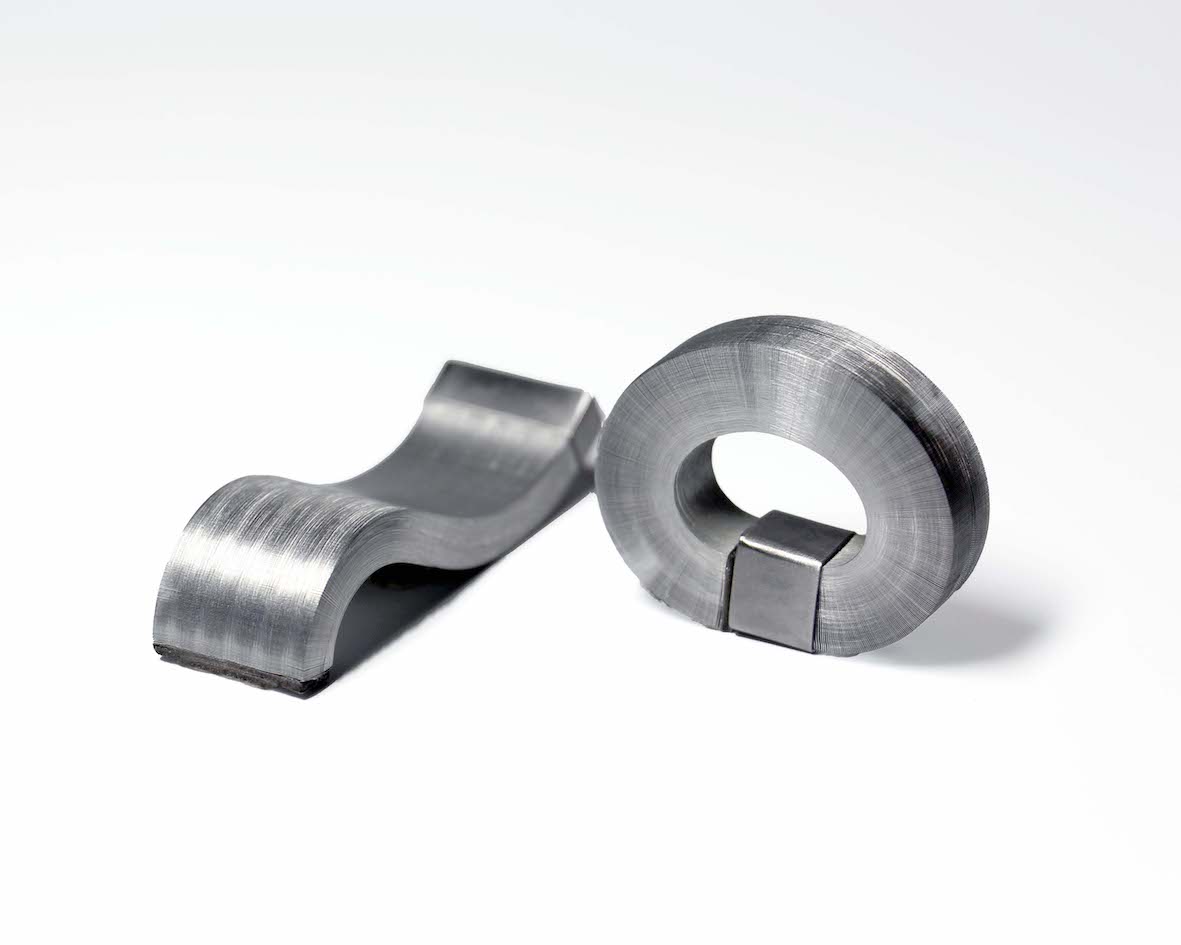
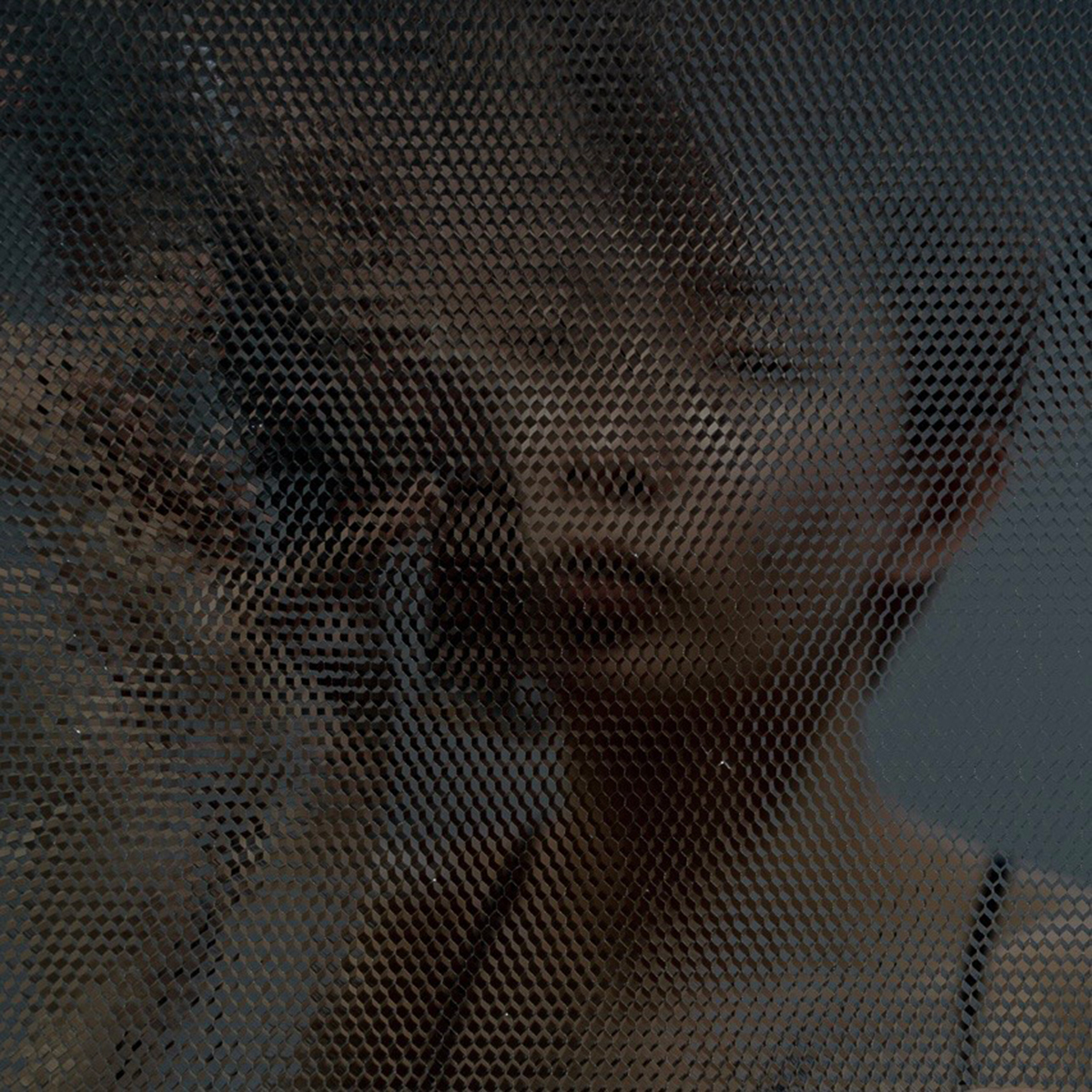
I create jewelry that reveals a dissonance between visual weight and physical lightness. By transforming industrial structures into unexpectedly delicate experiences, my work challenges how we perceive material and value. My practice began with a simple question: how fixed are our assumptions about materials? I was drawn to structures that appear rigid and heavy, yet hold the potential for lightness and flexibility. By working with industrial systems such as aluminum honeycomb, I explore this contradiction—where strength meets fragility, and familiarity shifts into uncertainty. In this process, jewelry becomes more than an object. It becomes a moment of awareness—an encounter that invites curiosity, and gently reawakens a sense of discovery in the everyday.
When Too Much Freedom Becomes a Constraint
Building on that idea of materials and perception, is there a project or concept you once explored but eventually set aside?
I once developed the idea of creating a fully customizable system, where individual parts of a piece could be freely replaced or reconfigured. However, I encountered limitations in the durability of the materials I was working with, which made the idea difficult to realize at the time. More importantly, I began to question the concept itself. The more freedom I introduced, the less clarity the work seemed to hold. I realized that too much openness can actually narrow the possibilities of a piece. As a maker, setting certain constraints is essential—it creates tension, direction, and meaning. Looking back, I see that I wasn’t ready to define those limits yet. Now, I understand that restriction is not a limitation, but a framework that allows the work to exist with intention.
Perception as Environment
If we set jewelry aside for a moment, how do you imagine your work translating into another medium?
If my work were to exist in another medium, it would take the form of a spatial installation that functions as a perceptual experiment. Rather than being worn, the work would be experienced through movement—where perception shifts as one navigates the space. I imagine structures that appear dense and fixed from a distance, yet reveal unexpected lightness, transparency, or instability up close. In this environment, the viewer is not only observing but participating in a subtle test of perception. What is seen and what is physically understood no longer align. Through this shift, the body becomes part of the work itself, encountering a space where certainty is continuously questioned.
Beyond Rarity and Preciousness
Within that focus on perception and material experience, is there a belief or convention in jewelry that you find yourself questioning or resisting?
I question the hierarchy of materials that often defines jewelry through rarity and preciousness. While I respect the historical significance of materials like gold or diamonds, I am more interested in how a material can shape perception. In my work, materials are chosen not for their inherent value, but for the unexpected experiences they can create—particularly the gap between visual density and physical lightness. For me, jewelry is less about owning value and more about encountering a moment of curiosity.
Navigating Creative Doubt
When your work begins to feel unclear or unsettled, what does that moment of creative doubt look like for you?
A recent moment of doubt emerged while I was trying to expand my work in multiple directions at once. As I explored different approaches, I began to feel that the work was losing its clarity. The core tension I usually focus on—the gap between what is seen and what is felt—started to blur. I questioned whether I was moving away from the essence of my practice. To move through this, I opened the process to dialogue, seeking perspectives from others outside my immediate viewpoint. These conversations allowed me to step back and re-encounter the work more objectively. I realized that doubt itself can be a useful distance—one that helps reveal what is essential. Since then, I have become more attentive to maintaining a clear focus, even when exploring new directions.
What the Work Leaves Behind
When someone encounters your work for the first time, what kind of experience or feeling do you hope stays with them afterward?
I want the experience of my work to begin with a subtle shift in perception—where what is seen does not fully align with what is felt. This moment of uncertainty is not an end in itself, but a starting point. It invites closer attention and often leads to a sense of curiosity or surprise. From there, I am interested in what happens next—how this experience is shared, questioned, or spoken about. In this sense, the work becomes a catalyst for communication. I hope it gives permission to engage more actively with perception and to recognize that meaning is not fixed, but something that can emerge through interaction.
Structure, Clarity, and Perception
Thinking about artistic influence and dialogue across time, if you could create a piece in response to a specific figure, who would you choose?
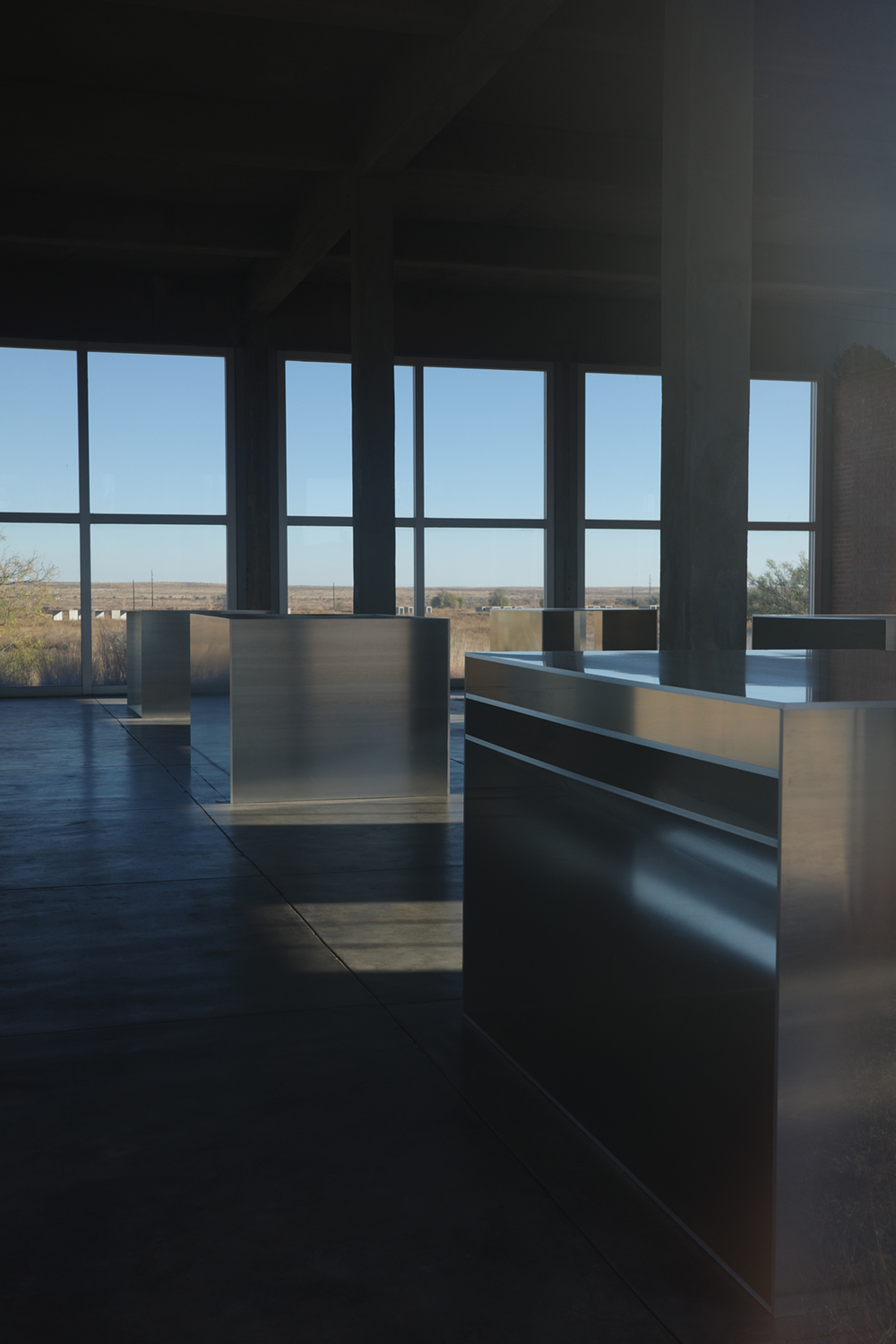
If I could create a work for “Donald Judd”, I would be interested in responding to his precise and material-driven approach to form. His work has a quiet but powerful way of shaping perception—through structure, proportion, and the direct presence of materials. In response, I would create a piece that maintains this clarity, yet introduces a subtle shift in experience: a form that appears dense and structured, but reveals an unexpected lightness when worn. Rather than relying on illusion, the work would allow perception to unfold gradually—through the relationship between the body, the material, and the act of wearing.
Scent, Structure, and the Senses Beyond Vision
Right now, what kinds of non-traditional materials, systems, or sensory references are you most drawn to?
I am currently interested in how different senses shape perception and memory—particularly through scent, industrial materials, and functional objects. Scent, in particular, fascinates me as a form of perception that is invisible, yet deeply connected to memory. At the same time, I am drawn to industrial components and product design, where form is shaped by efficiency, structure, and use rather than appearance. What connects these interests is that they are not fully understood through vision alone. In my work, I am exploring how these elements can enter jewelry in subtle ways—through structures that respond to movement, materials that shift perception when worn, or forms that suggest a function beyond what is immediately visible. Rather than directly incorporating these references, I am interested in translating their underlying logic into an embodied experience, where perception unfolds gradually through use, memory, and the body.
Why Jewelry?
You’ve described your work as something like a perceptual device. Whatquestion do you wish people asked more often about your work?
One question I wish more people would ask is: Why does this work need to exist as jewelry? For me, jewelry creates a unique condition of proximity—where perception is experienced through the body rather than observed at a distance. I think of my work as a kind of perceptual device—something that subtly shifts how we see and feel. It is through this intimate and embodied experience that the work can extend beyond the object itself, opening a space for reflection and communication.
The Space Between Seeing and Feeling
Finally, as we return to the core of your practice, is there a recurring idea or tension that keeps coming up in your work?
A recurring theme in my work is the subtle gap between what is seen and what is physically experienced. I often create forms that appear dense or structured, yet feel unexpectedly light—producing a moment where perception hesitates. I think this continues to appear because I am drawn to the moment when certainty begins to loosen—when something familiar becomes slightly unstable. In this sense, my work functions as a kind of perceptual device, revealing small shifts in how we understand what we see. Within these moments, perception is no longer fixed, but quietly unfolding.
About One for the Future (OFTF) One for the Future celebrates the next generation of jewelry and creative industry professionals. Each year, the program recognizes honorees for their innovation, craftsmanship, and/or unique perspectives and connects them with mentorship, exposure, and opportunities to engage with collectors and industry leaders worldwide.
Chu Winnie Cheung is a Chinese contemporary jewelry artist based in Toronto. Her practice transforms Xuan paper into stone-like forms that explore freedom, language, and our relationship to the natural world.
Through a repetitive process of writing the Chinese character for “cloud,” she then tears, sculpts, sands, and polishes paper into wearable objects. The results appear mineral-like and weighty, yet remain unexpectedly light.
Her work sits at the intersection of calligraphy, ritual, material transformation, and contemporary jewelry. Through this, she explores what she describes as a primordial connection between humans and nature.
Cheung’s work has been exhibited internationally. Notable exhibitions include the Marzee International Graduate Show in the Netherlands and the 33rd Japan Jewellery Competition in Tokyo. She was a 2023 New Talents Award nominee by Klimt02. She also presented her solo exhibition Void at the Craft Ontario Gallery as part of DesignTO 2025. Cheung will participate in the Steinbeisser Project in the Netherlands in June 2026. She is also a 2026–2027 One for the Future honoree.
We spoke with Cheung about paper, freedom, censorship, invisible labor, and the strange beauty of turning clouds into stone.
On Turning Paper into Stone
NYCJW: Your work transforms something as fragile as paper into forms that feel almost geological. How did you arrive at this process, and what story are you telling through it?
CWC: I capture the essence of freedom by transforming fragile paper into objects with the visual weight of stone. My process begins with the written word; I write ‘clouds’ in Chinese calligraphy on Xuan paper, a traditional carrier of thoughts, then tear, smash, sculpt, and carve that language into a dense, mineral-like material. These stone patterns began as a beautiful accident, but now they serve as a permanent contrast to the ephemeral clouds I initially wrote about.
On Leaving a Body of Work Behind
NYCJW: You mentioned this tension between permanence and ephemerality, especially through language and material. Has there been a project or direction you’ve stepped away from because you weren’t ready to fully carry it forward yet?
CWC: I have been working on merging enamel with my paper structures, but I had to put the enamel aside for a while. During the pandemic and the lockdowns, my work was intensely political; I used enamel to create ‘clouds’ on the front of my pieces, while the backs were records of censored posts from Chinese social media. It was a heavy, exhausting process of documenting digital voices before they vanished into the circuit signals.
I’m still not quite ready to fully return to it because of the shift in mindset, as I was moving from recorded censorship to the ‘self-so’ freedom of the natural world. It requires a lot of internal space, and it’s difficult to move between those two worlds. Honestly, when you have a flood of ideas, the fear of not finishing either one properly makes it even more difficult to even start. My process involves building up layers of enamel and then painstakingly grinding them back to uncover the intervals of blue and white, and I need the mental clarity to ensure this technique still translates meaningfully to my current focus.
Rethinking Value and Medium
NYCJW: Your practice already feels incredibly tactile and ritualistic. If those same ideas had to move into another medium entirely, where do you think they would naturally belong?
CWC: It would be a culinary or tea experience. My practice is deeply rooted in the natural world, involving the raw and physical labor of writing, tearing, sculpting, dehydrating and carving. It feels right to translate it into a medium that is literally taken from nature. Just as I transform Xuan paper, the product of trees and bamboo into various shapes, food and tea are the direct ways to consume the essence of the earth.
NYCJW: That focus on transformation and process also seems connected to how you think about value. Is there something within the jewelry or art world that you find yourself pushing against?
CWC: I often struggle with the industry’s obsession with the visible craft, where a piece’s value is somehow closely tied to the obvious complexity, cleanliness, or a ‘decent’ choice of materials. As I transform Xuan paper, which is common and relatively cheap, into smooth, polished stones, my immense labor is often invisible. Since the paper isn’t manipulated to show the workload, a viewer might assume I didn’t do anything to it at all. It’s important for me to find value in the conceptual labor and the transformation of the mundane into the extraordinary.
Finding Freedom in Material Practice
NYCJW: Your work seems to carry both emotional and political weight, even when it moves toward nature and abstraction. Was there a moment when you seriously questioned the direction or purpose of your practice?
CWC: In my previous practice, I worked closely with the reality of social media censorship, creating a large body of work to archive voices before they disappeared. While I was lucky not to have endured the extreme lockdowns seen in Shanghai or Urumqi, the weight of those endless cities stayed with me. My doubt was that, if I am not explicitly recording them, what’s the point of creating? I am not sure if I have moved through this doubt so much as I have accepted it.
One cannot ignore the social incidents happening in one’s own community. My current emphasis towards ‘nature’ and the ‘self-so’ freedom of the material is, in part, born from a sense of surrender, or a realization that the weight of documentation can become too heavy to bear. Seeking freedom within the paper and stone might be my way to continue the dialogue when words feel futile, and my strength runs out.
ScreenshotScreenshot
The Ritual Life of Writing
NYCJW: Even with that seriousness, there’s also a sense of irony and humor in the way you talk about language and meaning. If you could make a piece for anyone, who would it be?
CWC: I would create a piece for Sir Humphrey Appleby from Yes, Minister. While my own work prioritizes visual simplicity, I am often amused by his mastery of using ‘decent’ grammar to build sentences with immense complexity that ultimately reveal nothing. I think it would be very funny to create a piece that is exquisitely complex yet completely unintelligible, an elaborate circle, perhaps, and write an artist statement so brilliantly convoluted that it says absolutely nothing at all.
NYCJW: Language clearly sits at the center of your practice, not just conceptually but physically. Are there any materials, texts, or rituals you keep returning to as ongoing sources of inspiration?
CWC: Chinese calligraphy and the pictographic nature of the language are my permanent obsessions. Each character is evolved from the visual observation of the world, offering endless inspiration in its structure and history. Besides, the repetitive ritual of practicing calligraphy, being a part of my practice, is a meditative performance where every stroke demands absolute focus and time.
In Chinese culture, paper with written words is believed to carry the souls and spirits of characters; it is something to be deeply valued. Therefore, all the used calligraphy paper from my practice sessions enters my work through the physical transformation: I take these souls, keep them, and sculpt them into my artworks. This allows the essence of the characters and the energy of my practice to exist permanently in a new form. The ink and the Chinese characters are no longer just on the surface, but have become the internal geology of the object itself.
The Illusion of Stone
NYCJW: Because your work holds so much history, ritual, and material transformation within it, I’m curious what kind of experience you hope people have when they physically encounter it.
CWC: I want to evoke a sense of ‘selflessness’, a moment where the ego fades, and the viewer is simply present with the object. I hope the audience can handle the work and feel the surprising lightness of the ‘stone.’ In my practice, the closed, solid form acts as a contrast to the concept of freedom; I hope this tactile surprise gives them permission to question what they see. I want them to realize that this seemingly heavy mineral is actually a collection of time and language in the form of paper.
Why Paper
NYCJW: That moment of surprise of realizing the “stone” is actually paper feels central to the work. Is there a question you wish people asked more often once they discover that?
CWC: ‘Why paper?’ Most people see the stone pattern and assume it’s a mineral. I even got questions like ‘where did you source the stone?’ When I tell them it’s paper, the conversation shifts from aesthetics to the history of the material, its social weight, and the process of writing and forming.
To me, paper exists in a state of duality. On one hand, it is a historical vessel for thoughts and language, often carrying a heavy social weight, a theme I previously explored through the lens of censorship. It is a representative medium that records history, yet remains vulnerable to being redacted or erased. On the other hand, the duality lies in the performance of my making. My process begins with the ritual of practicing calligraphy and writing clouds, embedding these fluid, intangible imageries physically onto the paper. By then tearing, sculpting, and carving that pulp into ‘stones,’ I transform this act of ritual into a permanent, wearable form.
The Recurring Question of Freedom
NYCJW: That duality between fragility and permanence, freedom and containment, seems to thread through everything you make. When you look across your practice as a whole, what keeps resurfacing no matter the form?
CWC: Freedom. Whether it is the fluid freedom of a cloud or the internal freedom of thought, it is the recurring theme that connects everything I make. It keeps appearing because I am interested in how we position ourselves in a world where freedom feels increasingly distant, nature as well. To me, freedom is a state of ‘self-so’. It’s the effort to remain as open and untamed as the materials I sculpt, finding a way to exist authentically even when the modern world attempts to fix us in place.
About One for the Future (OFTF) One for the Future celebrates the next generation of jewelry and creative industry professionals. Each year, the program recognizes honorees for their innovation, craftsmanship, and/or unique perspectives and connects them with mentorship, exposure, and opportunities to engage with collectors and industry leaders worldwide.
We sat down with Puerto Rico–born jewelry designer Lucia B. Martí. Her work is rooted in a lifelong fascination with beauty, craftsmanship, and the emotional weight of objects that are meant to be kept. Raised in San Juan, Lucia’s earliest memories of jewelry come from exploring fine pieces alongside her mother. This was an experience that sparked a lasting curiosity about design and the people behind it.
She went on to study Jewelry Design at the Savannah College of Art and Design. Lucia later became Diamond Certified through the GIA in New York City. Today, her practice sits at the intersection of tradition and innovation, where each piece is designed not only to be worn but to be cherished and passed down.
In our conversation, Lucia reflects on storytelling through materials, the evolving language of her work, and the enduring power of jewelry as a form of self-expression and memory.
On Longevity and Becoming a Jeweler
Give us your elevator pitch—how would you define your practice and the world of jewelry you’re building?
Jewelry, to me, is about longevity. It is about what we carry, what we pass down, and how meaning becomes encoded over time. That idea shaped my thesis at SCAD, where I created a collection inspired by genetics and the evolving science that allows us to alter it. My interest began early, watching my mother, a former hand model, try on jewelry. I was captivated by the craftsmanship of each piece. Learning about the designers and seeing their names alongside their work sparked my own path into jewelry.
After SCAD, I did the Graduate Diamonds Program at GIA in New York. Later, I worked in a casting company, gaining hands-on experience in production. Which helped me refine both my technical skills and creative voice. Today, alongside designing and managing my own brand, Lucia B. Marti, I am the Head Bench Jeweler at Fitzgerald Jewelry. There, I design, repair, and create custom pieces from the bench up. Gathering all my knowledge to create pieces like the ones I was once mesmerized by.
Scaling the Language of Jewelry
What’s a project, object, or idea you’ve had to shelve for now—and what made it feel premature?
As a jewelry designer, I am usually focused on creating wearable pieces, mostly on a smaller scale. But I’ve always had the desire to scale them up, expanding my design language not only onto the wearer’s body, but into their surroundings. I began exploring this during my first pop-up in New York at Santos by Monica. With the help of my friend and collaborator, industrial designer Carol Pieters, we created three mirror frames featuring my signature helix. Using acrylic, foam, and fabric, these became early prototypes for what could evolve into a larger body of work in home decor. With my experience in industrial materials and processes still evolving, this collaboration with Carol offered an important glimpse into a direction I want to pursue. Learning as much as possible before I make that leap.
Future Forms and Open Practices
If your work existed outside of jewelry, what form would it take?
Having been inspired by the nuances in science—how medicine has evolved and how the genetic code has been decoded—I have always looked to the future for inspiration. What is the future? What does it look like? This has led me to the works of Zaha Hadid, Santiago Calatrava, and most importantly, Neri Oxman, who has revolutionized architecture as we know it.
They are forward thinkers who use nature as inspiration, simplifying it into its most essential curves to create beautiful structures. Inspired by Neri’s Silk Pavilion II. I would love to explore the opportunity to create a structure based on my signature X bead by using the natural formation of pearls. Finding a way to mimic that process at a larger scale, allowing it to grow or form organically. I can only imagine the luster it would hold. Ultimately, I envision transforming it into what could only be a small LBM shop.
What convention in your field do you find yourself questioning?
One convention I do not subscribe to is the gatekeeping in the jewelry industry. As someone who wants everyone to succeed, I’ve never believed in withholding information. I approach my work with the belief that what you put out comes back to you… So generosity, collaboration, and openness are core values in both my practice and how I move through the industry. Kindness and positivity will always be my north.
On Doubt and Decision-Making
When was the last moment of creative doubt—and how did you move through it?
Unfortunately, as a creative, doubt is part of my everyday life. Without a linear path or a clear ladder to follow, it tends to creep into everything. Most recently, I was doubting whether to restock on the same packaging I’ve been using since launching the brand or design new packaging. One option was more cost-effective, while the other felt like an opportunity for a fresh direction. Part of me was nostalgic, while another part knew it was time for a change. Moments like this often lead to decision paralysis, which I’ve learned to reframe. I recognize that with each doubt, I should pause, allowing me to step back and make more intentional decisions. This mindset has helped me become more decisive and make thoughtful decisions about where I want my brand to go, including new and improved packaging.
Icons, Influence, and Building Legacy
If you could make a piece for a historical or fictional figure, who would it be?
As someone who deeply appreciates art and those who advocate for artists, the person who always comes to mind is Peggy Guggenheim. She was always looking toward the future. Her taste and financial power allowed her to champion emerging artists who are now foundational to art history, even commissioning works from Alexander Calder for her home. She truly saw potential and bet on it. As for what I would create for her, I imagine something like a bib, reminiscent of those worn by Ruth Bader Ginsburg. I would want it to be both bold and elegant, almost like placing a spotlight on her. Using my custom links, I would create a chainmail that wraps around her neck, resembling a modern-day warrior and patron of the arts.
What’s something outside of jewelry currently shaping your thinking?
One text that has been particularly inspiring to me recently is The Cartiers. It explores how, from humble beginnings, the Cartier family built an empire, crafting jewelry for some of the most influential people in the world and creating iconic pieces like the “Love Bracelet”. For me, it’s not just about the history of the house, but the structure behind its longevity: how a brand is built, sustained, and recognized across generations. I hope that by studying the Cartier family’s journey, I can better understand how to shape my own path in this industry and, ultimately, build a brand of my own.
Intention, Individuality, and Connection
What do you want someone to feel when they encounter your work?
I want the wearer to feel as though they are truly wearing something one of a kind. There is a quiet, almost sublime sense of pride that comes with wearing something unique, and that is what I hope anyone who engages with my work experiences. More than that, I hope it gives them permission to feel seen in something intentional and singular—to trust that what they are wearing was made with care and purpose. For me, that response is the measure of success. If someone feels that sense of individuality and connection, it means I’ve done my job as a designer.
On Family, Memory, and What Endures
What question do you wish you were asked more often?
The question I think is not asked of me enough is: Where does my motivation come from? The answer has and will always be my family. I was incredibly lucky to have been born and raised on the island of Puerto Rico. I am first-generation Cuban-Puerto Rican on my father’s side. Both of my grandfathers left Spain and Cuba to build new lives in Puerto Rico, and I carry that history with me. I am proud of where I come from, and of how jewelry has ultimately led me to where I am today, New York City.
What theme continues to surface in your work, even when you’re not looking for it?
I would say jewelry’s longevity. Even before I started creating jewelry, I was always amazed by how it could be passed down through generations. My dream is for each of my pieces to be worn across generations, becoming modern heirlooms that can be passed down and create lives of their own over time. Inevitably, outlasting the wearer, I aim to create pieces that not only endure physically but also in design. Pieces that will be carried and cherished for generations to come.
About One for the Future (OFTF) One for the Future celebrates the next generation of jewelry and creative industry professionals. Each year, the program recognizes honorees for their innovation, craftsmanship, and/or unique perspectives and connects them with mentorship, exposure, and opportunities to engage with collectors and industry leaders worldwide.
Zori Wang doesn’t see jewelry as something that sits still—it’s meant to be worn, lived in, and felt. Born in Shanghai and trained at the Rhode Island School of Design (RISD), she began in sculpture and industrial design before working as a digital product designer in California’s tech and creative industries. In 2024, she relocated to Vancouver to launch her studio, ZORI Design, where she creates sculptural, surreal pieces that blur the line between art and everyday objects. As a 2026–2027 One for the Future honoree, Wang is part of a new generation of artists rethinking what adornment can mean and how it can become part of daily life. The following is a conversation with the artist about her practice, process, and perspective.
Origin Story
NYCJW: To start, can you describe the story behind your jewelry?
ZW: I grew up sculpting, studied industrial design, and worked in tech before eventually choosing jewelry as my medium. I’ve always been drawn to the idea that art should not only sit behind glass, but be worn, lived with, and intimately woven into daily life. Starting a jewelry brand is my way of turning that vision into reality. I use ZORI as a space where I create sculptural, surreal, and slightly absurd pieces for those who like things a bit different.
Between Object and Space
NYCJW: Building on that, is there a project, piece, or idea you’ve put on hold? What made you feel like it wasn’t the right time for it?
ZW: I’ve always been drawn to the space where art, design, and engineering overlap, so one idea I shelved is to create pieces that are interactive, mechanically or otherwise (and they can be any wearable/usable object, not just jewelry). I think that adds an entirely new dimension of possibilities and room for creativity. I haven’t pursued it yet because I know those pieces would require a very different level of investment in R&D. They involve longer market testing, more prototyping, and a more complex production line than where my practice is right now. At this stage, I’m choosing to build a strong foundation for my brand first, so that when I return to those ideas, I can realize them in the way they deserve.
NYCJW: Thinking about your work more broadly, if it could exist in another medium, what would it become?
ZW: Architecture. At the core of my work is the idea that art can be felt more deeply when it is worn and lives in close relationship with the body. Architecture fascinates me because it creates that same relationship at the opposite scale. Instead of wearing the work, a person steps inside it. I’m interested in the idea that a piece could expand from something held against the skin into a surreal space that surrounds the body entirely, where the same emotional language of my jewelry becomes something the observer can physically move through.
Redefining Luxury
NYCJW: Given your perspective, what’s a belief or convention in your field that you find yourself questioning?
ZW: In fashion, the meaning of “luxury” has been reduced to price tag and social status. I loudly challenge this presumption. My vision is to reframe luxury as the marker for something internal, a reflection of the wearer’s curiosity, creativity, and emotional depth. Those qualities are just as valuable, if not more so, than material markers. And I am working to position my brand ZORI where this kind of luxury is accessible to those it resonates with.
Creative Doubt and Rebuilding the Practice
NYCJW: With that in mind, can you share a moment when you experienced real creative doubt?
ZW: For me, creative doubt is part of the process. I’m constantly questioning my ideas as I develop them, which makes creation both exciting and infuriating. The most significant moment of doubt came when I decided to start a jewelry brand. My training is in sculpture and industrial design, which operate on very different techniques and artistic languages from jewelry. This transition forced me to unlearn and rebuild my approach from the ground up. I had to learn the technical constraints of jewelry-making and develop my own visual language that could exist consistently at that scale.
Early on, this created a long period of uncertainty. I spent months sketching, prototyping, rejecting my own work, and starting again, without knowing whether the direction was even viable. What made it especially difficult was the lack of external feedback during the earliest stages of starting a brand. It was just me, and the different voices in my head looping in the same space. I moved through it gradually, through repetition and refinement, but also through unexpected encouragement from strangers who resonated with the work even in its early stages. That combination helped me trust that the direction was not only possible, but meaningful.
A Dialogue with Duchamp
NYCJW: If you could extend your work into a dialogue with someone else, who would you create a piece for?
ZW: I would create a piece for Marcel Duchamp because he humorously challenged how value is assigned to objects. I imagine making something with precious materials that quietly destabilizes the idea of preciousness itself, a piece that feels luxurious while questioning what luxury really means.
Digital Rituals and Personal Meaning
NYCJW: Shifting to your current process, what’s a non-traditional material, object, or source of inspiration that draws you right now?
ZW: Because of my experience in UI/UX design, I’ve become fascinated by the way digital interfaces, buttons, loading icons, and haptic feedback subtly shape how we think and behave. These interactions have become such an instinctive part of daily life, yet they rarely appear in art as a material language. I’m drawn to the idea of creating small wearable objects that transform digital symbols into something tangible, intimate and human. A few ideas I’m currently developing include a ring in which the gemstone appears to be “loading,” earrings that are reset buttons you could press to “reset life” (metaphorically) whenever needed, etc.
NYCJW: When someone encounters your work, how do you hope it resonates with them?
ZW: The goal was never to ‘prescribe’ a specific feeling for everyone. It might evoke curiosity, resonance, reflection, shock, and even amusement. But whatever it is, I want them to feel something that’s uniquely theirs. And that is part of what draws me to jewelry as such an intimate medium—the same piece will be writing a different story for every wearer as time goes on. What I hope it gives people permission to do is trust their own emotional response, and to see adornment as something deeper than decoration.
From Idea to Object
NYCJW: Reflecting on your process, what’s one question you wish people would ask you more often about your work?
ZW: It’s that one. Okay, just kidding. I wish more people would ask how a piece moves from an idea into a finished object. People often imagine it as a straightforward process of sketching, modelling, prototyping, and making, but in reality, it is far less linear than that. Most pieces are built through constant revision. An idea is tested, questioned, abandoned, rebuilt, and sometimes completely transformed before I feel comfortable calling it a finished product. What looks like a single finished piece often carries dozens, sometimes hundreds, of unseen decisions behind it. I think that hidden process is one of the most honest parts of the work, because the final object is really just the visible trace of everything that almost became something else.
Humor as Quiet Resistance
NYCJW: Finally, looking across everything you’ve shared, is there a recurring theme, idea, or emotion that keeps surfacing in your work?
ZW: Humor and satire—especially with everything going on in the world right now, they’ve become a way I move through life. I find that surrealism, when combined with a bit of humor and satire, can sometimes reveal something more truthful than realism itself. A subtle shift into absurdity can make people pause and recognize something familiar from a different angle. In a way, I see humor as a form of idealism. The subtle absurdness in my work is not meant to dismiss the darker parts of the world, but to acknowledge them without surrendering to cynicism.
About One for the Future (OFTF) One for the Future celebrates the next generation of jewelry and creative industry professionals. Each year, the program recognizes honorees for their innovation, craftsmanship, and/or unique perspectives and connects them with mentorship, exposure, and opportunities to engage with collectors and industry leaders worldwide.
We sat down with One Rapelana, a 2025 OFTF Honoree and award-winning multidisciplinary designer from Botswana, to explore her journey and creative vision. Since beginning her practice in 2015, she has transformed discarded materials into bold, experimental jewellery and accessories. What started as a passion project grew into Xita, officially registered as a full-time company in 2018. Today, Rapelana works with leather remnants and reclaimed brass, crafting pieces that are both minimal and striking, each reflecting a personal narrative of growth, identity, and self-discovery. Rooted in sustainability, craftsmanship, and intuition, her work elevates overlooked materials into wearable art that encourages reflection, celebrates individuality, and challenges conventional notions of adornment.
Introducing Xita: The Journey Begins
NYCJW: Can you introduce us to Xita and the story behind your work?
OR: Xita is a contemporary jewelry and accessories brand rooted in self-discovery and thoughtful design. I create sculptural pieces using materials like brass and leather, exploring the space between art, craft, and identity. Each piece reflects a quiet strength, challenging traditional ideas of African adornment through minimal, expressive forms.
Materials & Inspirations: The Heart of the Work
NYCJW: Your work shows a thoughtful relationship with materials. Are there any projects or materials you’ve held back from exploring?
OR: One idea I’ve intentionally put on hold is working with wood as a secondary material. I’m deeply drawn to its warmth, history, and tactile quality, but I don’t yet feel ready to engage with it in the way it deserves. Working with wood requires a different rhythm, deeper technical understanding, and a sensitivity to its natural behavior that I’m still developing. I see it as a material I want to approach with respect and patience, when I’m ready to fully explore its possibilities, not rush it. For now, I’m allowing my practice to evolve naturally through materials like brass and leather, knowing that when the time is right, wood will become part of the conversation.
NYCJW: Inspiration can come from unexpected sources. What non-traditional influences are shaping your work right now?
OR: Lately, I’ve been deeply drawn to classic bossa nova, its rhythm, subtlety, and effortless elegance. There’s something about the way it balances softness with sophistication, intimacy with movement, that resonates with how I want my work to feel. I imagine this influence entering my pieces through form and material: subtle curves, gentle weight, and a quiet sense of rhythm in how a piece sits on the body or moves. It’s less about literal reference and more about capturing that feeling of ease, warmth, and understated confidence in the jewelry I create.
Expanding the Medium: Beyond Jewelry
NYCJW: If your approach to form and material could translate into a different medium, how would it manifest?
OR: If my work were to exist in another medium, it would be furniture and sculptural objects. Translating those shapes into chairs or large-scale wall pieces feels like a natural extension of that language. Furniture allows the body to interact with form in a slower, more grounded way, while sculpture gives space for the pieces to exist purely as expressions of material, balance, and intention. Both would allow me to explore scale, permanence, and physical dialogue, turning what is worn into something that can be inhabited, rested on, or lived with.
Challenging Expectations: Breaking the Mold
NYCJW: You challenge traditional ideas in African jewelry. Are there beliefs or conventions in your field that you disagree with?
OR: One belief I quietly challenge is the idea that African jewelry must look a certain way bold colors, heavy ornamentation, and instantly recognizable “ethnic” motifs. While those aesthetics are important, they don’t define the full spectrum of African creativity. My work questions the notion that African design has to be visually loud or rooted only in traditional symbolism. I believe it can also be minimal, tactile, and quietly expressive, informed by heritage, but not confined to it. Inspiration can come just as easily from everyday objects, materials, and lived experience as from cultural references. For me, authenticity lies in freedom of expression, not in meeting expectations of what African design should look like.
Doubt & Evolution: Moments of Growth
NYCJW: Evolution often brings doubt. Can you describe a recent moment of creative uncertainty, and how you navigated it?
OR: The last moment of real creative doubt came when my aesthetic began to shift. I started my practice creating bold, statement pieces, work that was loud, expressive, and very visibly “there.” Over time, though, my instinct began moving toward something quieter: subtler forms but still bold, restraint, and a more refined use of materials like brass and leather. I questioned whether this evolution would be understood or accepted, especially because my earlier work had been associated with a more overt, “Afro-futuristic” visual language that people often expect from African jewelry. Moving away from that felt risky. I worried that the subtlety might be mistaken for a loss of identity rather than an evolution of it. I moved through that doubt by trusting my intuition and allowing the work to mature naturally. I realized that boldness doesn’t always need to shout, it can exist in restraint, in material choice, in intention. Once I accepted that my practice could grow quietly, the work began to feel more honest and more aligned with who I am now.
Storytelling Through Design
NYCJW: If you could design a piece for a historical figure or fictional character, who would it be?
OR: I would create a piece for Josephine Baker, not the version of her that’s often reduced to spectacle, but the layered woman behind it: the artist, the activist, the strategist, the one constantly navigating visibility and power. The work would be a sculptural adornment ,somewhere between jewellery and object made from brass and leather, with subtle movement built into it. Something that speaks to duality: softness and strength, performance and privacy, beauty and resistance. It wouldn’t be loud or decorative for its own sake. Instead, it would hold quiet symbolism ,surfaces worn by touch, forms that feel lived-in, reflecting how she carried both glamour and resilience in equal measure. I imagine it as something worn close to the body, almost like armour disguised as elegance. A piece that honours complexity rather than spectacle, much like her life itself.
Engaging the Wearer: Experience & Emotion
NYCJW: When someone wears or interacts with your work, what feeling or experience do you hope it evokes?
OR: I want someone engaging with my work to feel a sense of presence and intentionality, that each piece was made with care, thought, and purpose. I hope it gives them permission to slow down, reflect, and connect with themselves through what they wear. My jewelry and accessories are meant to be more than adornment; they’re prompts for self-discovery. I hope they inspire people to trust their own instincts, embrace subtlety as strength, and explore their own identity without feeling the need to perform or conform. Ultimately, I want the work to feel like a companion, bold enough to be noticed, but gentle enough to invite personal resonance.
NYCJW: Is there a question you wish people asked more often about your work?
OR: One question I wish more people would ask is: “What collaboration would you love to do, or who would you like to work with?” I would love to collaborate with a museum to explore the translation of my jewelry into larger sculptural pieces, as well as smaller wearable ones. I’m fascinated by how my forms, already sculptural and architectural at a small scale, could inhabit different spaces, from the body to the home or gallery, creating new dialogues between material, form, and experience.
Recurring Gestures: Signatures & Themes
NYCJW: Looking across your collections, are there recurring gestures, themes, or emotions that appear, even subtly?
OR: A recurring element in my work is how I fold leather into ropes, usually in twos or threes, wrapping around a focal material like brass or another piece of leather. It’s almost subconscious, I don’t have a conscious reason for it, and that’s why it keeps appearing. It’s just part of my style, a gesture I naturally gravitate toward, and over time it has become a quiet signature. Alongside this, a broader theme in my work is the journey of self-discovery. Collections like Echoes of Transcendence explore self-evolution, Returning Home reflects coming back to yourself, and Seed of Growth is about growing into the woman you were meant to be.
In addition to her work with Xita, One Rapelana recently participated in a virtual panel during NYCJW25, hosted by the Jewellery and Gem Association of Africa (JGAA). The discussion, part of the “It’s All In Our Hands” jewelry competition, brought together African designers to share their experiences at GEM Genève, one of the world’s leading industry exhibitions. Rapelana and her fellow panelists highlighted how JGAA’s support has helped showcase African talent on an international stage, discussing both the opportunities and challenges faced by artisans. The conversation underscored Africa’s growing influence in the global jewelry industry and the transformative power of global exposure, offering insight into how designers like Rapelana are shaping a new narrative of creativity, sustainability, and cultural expression.
About One for the Future (OFTF) One for the Future celebrates visionary designers shaping the next generation of jewelry and creative industries. Each year, honorees are recognized for their innovation, craftsmanship, and unique perspectives, gaining opportunities for mentorship, exposure, and connection with collectors and industry leaders worldwide.
Jewelry, for Viola Pineider, is not just an ornament. It is a proposition—a way of thinking through the body, material, and space as sites of continuous transformation. Born and raised in Florence, she trained for over a decade in traditional Italian carpentry and wood restoration. This background gives her rare material intelligence, grounded in rigor, patience, and deep respect for craft.
As the founder of ARC, she works at the threshold of jewelry and sculpture. She transforms reclaimed wood and silver into bold, architectural pieces that challenge conventional ideas of luxury and permanence. Now based in Rio de Janeiro, her work balances the disciplined lines of Italian design with the fluid, experimental energy of Brazilian culture. A 2025 OFTF Award Honoree, Pineider is part of a new generation redefining contemporary jewelry. We sat down with her to talk about transformation, slow making, material resistance, and jewelry as a device for becoming.
Defining Practice
NYCJW: How would you describe your practice and the world your work inhabits?
VP: My work moves between two complementary worlds: the body and space, where jewelry becomes sculpture and sculpture becomes jewelry. I have a long background in Italian carpentry, so my work is a synthesis of solid technical training and a visionary approach. I transform reclaimed wood into pieces that invite tactile journeys. Each creation balances dynamic shapes with impeccable finishes. For me, jewelry is a powerful escape from societal standardization. It is a way to reimagine the body as ever-changing and full of possibility.
Projects in Waiting
NYCJW: Are there projects or pieces you’ve put on hold? How do you know when the time is right for them to come to life?
VP: Actually I have kept several projects on hold. Sometimes due to lack of time, because they were large-scale works or required travel and significant financial investment. But they are waiting for me. I always return to older projects; they are never forgotten. There is a right time for them to materialize. There is one sculpture in particular that I rushed to finish for a very relevant open call, but due to its fragility it was not possible to submit it to the competition. Still, it exists, and it will find another place in my professional trajectory.
Imagining Beyond Form
NYCJW: If your practice weren’t limited to jewelry or sculpture, what other medium do you imagine your work taking?
VP: My work would be a lyrical piece of music that, out of nowhere, turns into noise-industrial, then glides softly into an R&B atmosphere, ending with the drums of a carnival party. A convergence of opposing sensations: intimacy and repulsion, stillness and rhythm, balance and exuberance.
Challenging the System
NYCJW: Is there a prevailing belief or convention in the jewelry or design world that you challenge?
VP: I disagree with a system that fails to respect the quality of work and instead favors visibility, closed circles, and networks of favoritism over merit and research. I do not believe that one should devalue their own work to sell more. I also reject the logic of constantly launching new collections in a market already saturated with objects. I deeply believe in slow production. It is a way to reclaim time, attention, and quality—not as a marketing strategy, but as an ethical and political stance toward making. Producing less, with greater rigor and awareness, is, for me, a form of resistance.
Creative Doubt as Dialogue
NYCJW: Can you share a recent moment of real creative doubt and how you navigated through it?
VP: As an artist, I experience creative doubt continuously. This does not stem from a lack of creativity, but from having to engage with the problems that matter itself presents, as well as with unforeseen situations. Pieces can break and so can patience. Fatigue is sometimes intense, and doubt often emerges less from the work itself than from questions of purpose and market strategy. For me, creative doubt is not a blockage but a negotiation. I move through it by staying with the process, allowing the material to lead and accepting failure as part of the work. I do not experience a lack of creativity; I am creating all the time. Even moments of uncertainty inevitably take me somewhere else, to another solution, another form, another understanding.
Designing for the Imaginary
NYCJW: If you had the chance to design a piece for a fictional or historical figure, who would it be? How would you imagine it taking shape?
VP: I imagine a female figure who belongs simultaneously to the past and to the future. I see her positioned atop an installation. It is a tall, subtle sculpture that elevates her above everything, granting her a 360-degree view. On her arms and around her neck, she wears jewelry as if it were a shell. A layer of protection and, at the same time, an expansion of the body. From the ends of the bracelets and necklaces extend long filaments, reminiscent of tentacles, sensory extensions that help her float in the air and swim through water.
Material as Narrative
NYCJW: Are there unconventional materials, objects, or ideas that are currently inspiring you?
VP: I have always chosen wood as the central material in my work, despite feeling a strong attraction to glass and metal, precisely because of their almost alchemical properties and because they present qualities opposite to those of wood. These materials often remain in the realm of observation and inspiration, without necessarily being incorporated into the process. What happens instead is that I end up pushing the limits of wood, bringing it closer to metal through form, or to glass through fragility. I am interested in exploring how far a material can go when taken to the extreme of its symbolic and structural possibilities.
The texts and readings that permeate my creative universe come from contemporary and modern thinkers who reflect on the construction of other possibilities of existence, on transformation, and on the imagination of alternative worlds. Authors such as Donna Haraway, Ailton Krenak, Rosi Braidotti, and Ursula K. Le Guin are among the references that continuously nourish my work. Science fiction, as well as trans-feminist thought, imagines other bodies: bodies in mutation and, at the same time, bodies that reclaim an ancient wisdom that has largely been replaced or erased. In this tension, I see a key for thinking about a new way of understanding bodily adornment,not as ornament, but as a device for transformation, adaptation, and the re-enchantment of the body.
Provoking Questions
NYCJW: When someone experiences your work, what feelings or reflections do you hope it sparks?
VP: I would like the work to provoke questions and uncertainties. However, when we work with art, it is not possible to control the reactions, interpretations, or sensations it awakens in the audience. The experience of the work is completed precisely within this open, unpredictable field, where each body and each gaze produces its own meanings.
NYCJW: What’s one question you wish more people would ask you about your work?
VP: I would like the questions to address the process and how I arrived at a given result. I believe this would help the public understand the complexity of the work. This process is not limited to the stages carried out in the studio. It involves the creative journey as a whole. The collection of the wood, which in most cases comes from dumpsters, urban waste, or demolition materials. If it were possible to follow the origin of the material, one would understand how visionary the work is, beyond its technical execution. To observe the structure of a discarded door, dirty covered in layers of paint, and still imagine another possibility of existence is a central gesture of the work. It is about transformation: imagining solutions, projecting other uses, other bodies, other worlds.
Transformation, Movement, Sensuality
NYCJW: Looking across your body of work, is there a recurring theme, idea, or emotion that continues to surface? What draws you back to it?
VP: The recurring theme in my work revolves around transformation, movement, and sensuality. The forms I create are twisted and hollowed out, sometimes organic, sometimes sharp and geometric. They operate within a field of tension between seduction and repulsion. This contrast reflects an underlying conflict between a rational origin of form, inherited from a Western mode of thinking in which I was raised, and my lived experience in Brazil, where the straight line dissolves and gives way to curves, circles, and spiral structures.
We’re grateful to Viola Pineider for sharing her insights, inspirations, and creative journey. Through ARC, she continues to redefine the boundaries between jewelry and sculpture. She transforms reclaimed materials, form, and perception into pieces that invite exploration, reflection, and transformation. Her thoughtful, visionary approach reminds us that jewelry is not just adornment. It is a device for becoming—a way to reimagine the body, the material, and the world around us.
About One for the Future (OFTF) One for the Future celebrates visionary designers shaping the next generation of jewelry and creative industries. Each year, honorees are recognized for their innovation, craftsmanship, and unique perspectives, gaining opportunities for mentorship, exposure, and connection with collectors and industry leaders worldwide.
Symoné Currie is redefining modern luxury through her fine jewelry studio, Metal x Wire, where contemporary design meets thoughtful craftsmanship. With a foundation in architectural engineering, she approaches jewelry as both form and performance, creating pieces that balance sensual curves with clean structural clarity. Splitting her time between Miami, New York, and Kingston, Currie draws on a global perspective to craft timeless, modular designs that evolve with the wearer. Honored by the Natural Diamond Council, a finalist for the CFDA x Tiffany Design Award, and a 2025 honoree of the One for the Future program, she brings a distinctive, forward-thinking voice to the world of jewelry.
In this conversation, Currie shares insights into her creative process, inspirations, and the philosophy that drives Metal x Wire.
Design Philosophy: Balancing Structure, Play, and Patience
NYCJW: How do you describe the philosophy behind your work, and how has your background shaped the way you design jewelry?
Symoné: With a background in Architectural Engineering, I’ve always been trained to look at how things perform — how materials behave, how form influences movement, how design shapes experience. That perspective guides my jewelry. I named my brand Metal x Wire because I’m drawn to raw, honest materials that can be shaped with intention into something timeless. My work sits in the tension between organic softness and clean structure, with modular designs that invite reinvention. I’m not just making beautiful objects — I’m building ideas that live on the body and evolve with the person who wears them.
NYCJW: How do you decide when an idea is ready to be realized?
Symoné: I’m extremely imaginative, and not being classically trained in jewelry design means I don’t begin with limitations. I follow curiosity, experimentation, and play. There’s a project I’m currently working on and while the concept is ready, I’m giving it time. It deserves thoughtful testing, the right materials, and space to evolve. I don’t believe in rushing ideas to market. When something is meant to last, it should be brought forward with intention.
Jewelry as Canvas: Translating Form into Emotional Art
NYCJW: If you were to translate the spirit of your jewelry into another art form, what medium would it be?
Symoné: It would be oil paint layered with expressive pastels. I love how a single brushstroke can reveal so much about the artist — fluid, urgent, soft, or sharp. My jewelry carries that same rhythm. I imagine it as an abstract canvas, like a de Kooning, where a gesture becomes a world. Or even a Barrington Watson painting — rooted, layered, open to personal interpretation. I like when a piece offers each viewer their own emotional experience.
Beyond Trends: Jewelry That Evolves With Time and Intention
NYCJW: How do you approach trends?
Symoné: There’s a pressure in the industry to chase trends and produce quickly. I don’t believe jewelry should expire with a season. A piece should evolve from genuine inspiration and live beyond the moment. That’s why my designs are modular and versatile — they grow with the wearer. Speed has never been my metric. Longevity, intention, and feeling are.
NYCJW: Do you experience creative doubt? How do you overcome it?
Symoné: Creative doubt never fully disappears. Earlier this year, I questioned everything — my path, my ideas, even whether I should continue. What helped was slowing down. Routine. Patience. Breaking big challenges into manageable parts. And resting when the pressure became too loud. Doubt doesn’t evaporate, but consistency and care create a path through it.
NYCJW: If you could design a piece of jewelry for any historical or fictional figure, who would it be?
Symoné: I would design a convertible diamond collar for Josephine Baker — a sleek choker that transforms into a shoulder piece, hair clips, or cuffs. Modular, expressive, theatrical. A piece that mirrors the way she moved effortlessly between androgynous tailoring and glamorous gowns, always in full command of her presence.
Finding Inspiration in Nature: Jewelry That Moves With You
NYCJW: What unconventional source of inspiration are you currently drawn to, and how is it influencing your creative thinking?
Symoné: Lately, I’ve been obsessed with the quiet choreography of trees — how they bend, sway, and respond to wind without breaking. I’m not sure yet how it will manifest in my work, but the movement has been living in my mind.
NYCJW: When someone wears your jewelry, how do you hope it makes them feel?
Symoné: I want them to feel like they’re wearing something truly niche, not ordinary. My work invites them to embrace their individuality and stand confidently apart from the crowd.
Charming Mischief: Transforming Everyday Jewelry Into the Extraordinary
NYCJW: What’s one question you wish more people would ask you about your work? What’s the answer?
Symoné: If your jewelry had a personality, what kind of mischief would it get up to? Oh, it would definitely be the charming troublemaker who’s always ready to surprise you.
NYCJW: Is there a theme or idea that consistently appears in your work, and what draws you to explore it again and again?
Symoné: A recurring thread in my work is transforming everyday wear into the extraordinary. I’m driven to infuse intention, elegance, and a touch of fantasy into pieces people wear daily—turning routine moments into something meaningful.
Thank you Symoné for sharing your vision of a world where play, patience, and thoughtful design transform raw materials into jewelry that is both personal and timeless. Your work inspires us to see jewelry not just as adornment, but as objects that move, adapt, and spark creativity.
About One for the Future (OFTF) One for the Future celebrates visionary designers shaping the next generation of jewelry and creative industries. Each year, honorees are recognized for their innovation, craftsmanship, and unique perspectives, gaining opportunities for mentorship, exposure, and connection with collectors and industry leaders worldwide.
This year, Sardwell, founder of the award-winning jewelry brand Renisis and a 2025 One For The Future Honoree, organized Beyond Gold: Couture Jewels at NYC Jewelry Week, where five visionary artists blur the lines between fine art, haute couture, and craft. Through Renisis, launched in 2021 during a moment of artistic renewal, Sardwell explores jewelry as living sculpture. Her modern, sculptural designs draw from years spent in Buenos Aires, Shanghai, and São Paulo, shaped by a deep love of art, nature, and cultural texture. “The transformational ability that sculpture has to alter space is a revolutionary power,” she says, “now harnessed to be worn.”
We sat down with Sardwell to talk about creative doubt, inspiration, and the superpowers hidden within her jewelry.
The World of Renisis
NYCJW: Sardwell, can you give us your elevator pitch? What’s the story behind your work and Renisis?
Sardwell: Renisis is a world of sculptural wearable art at the intersection of jewelry, performance and art.
NYCJW: Have there been any projects or pieces you’ve put on hold? What made you decide it wasn’t the right time for them?
Sardwell: There are several projects that in the end didn’t make sense, due to the scale, cost of making the piece and likelihood of it being successful. One of those projects was a gold necklace. With gold prices so high, it just didn’t make sense.
Expanding Mediums and Bold Beliefs
NYCJW: If your work could take shape in a different medium (like dance, film, or architecture), what would that look like?
Sardwell: It would be incredible to collaborate with a ballet company, such as the NYC Ballet Company or a Modern Opera. Renisis jewelry is like architecture and sculpture for the body and partnering with dance or opera would further ground these wearable art pieces as adornment in the world of art and performance.
NYCJW: Is there a belief or convention in the jewelry world that you quietly, or not so quietly, disagree with?
Sardwell: At Renisis we do not believe in using Lab grown diamonds. We only use natural diamonds supporting mining communities and artisanal miners.
Creative Doubt and Imagined Superpowers
NYCJW: When do you feel the most creative doubt, and how do you work through it?
Sardwell: At times I have creative doubt when arriving at a new design. I have internal discussions whether the design is “good enough” to complete and produce. I find it always challenging to arrive at a decision. At this point, I allow the design to rest, often for months, and later return to the design with fresh eyes.
NYCJW: If you could create a piece for a fictional character or historical figure, who would it be — and what would it be like?
Sardwell: I would enjoy creating a female superhero figure illustration that a Japanese manga cartoon wearing Renisis jewels are her daily armor of protection. Wearing each jewel she would acquire special superpowers to face her life challenges. The Echo Chamber Ear Cuff would enable her to unscramble foreign languages, the Guardian Temple Pendant would empower her to look within the eye and heart of each soul, and the Reservoir Ice Ring would restore calm and breath for enduring focus. I believe that every woman needs to hold their special powers close to meet daily demands and challenges with greater ease.
Inspiration, Emotion, and the Making of a Jewel
NYCJW: What unusual materials or sources of inspiration are you obsessed with right now, and how do they show up in your work?
Sardwell: I have collected and am obsessed with Indigo dyed shibori fabrics printed with wood blocks in Japan. I love the graphic compositions of flowers and other symbols of nature. Currently, I like to use these inspiring designs in the inside of rings or the back details of pendants, similar to a beautiful silk fabric lining the inside of a jacket as a gorgeous surprise.
NYCJW: When someone wears your jewelry, how do you want them to feel? What do you hope it gives them permission to do or experience?
Sardwell: I would love the wearer to perceive that they are wearing a piece of art that has been made with the highest level of craftsmanship and care. I hope others feel emotionally transformed, confident, to transcend expectations, and look beyond their current emotional state, arriving at the most awesome version of themselves.
NYCJW People often ask about your process, how do you arrive at a new design?
Sardwell: How do you arrive at a new design? I would work paper, objects, wax, wire, and metal to form and sculpt ideas at my studio bench. With each rendition, I am to arrive at a new form, engaging from every angle. From these maquettes, I create technical drawings and work with artisans to make the final piece of jewelry.
Recurring Forms and the Art of Exploration
NYCJW: Is there a theme, shape, or emotion that keeps showing up in your collections? Why do you keep coming back to it?
Sardwell: Similar to assembling a fashion collection, I often explore one form, geometric pattern or shape, in different ways throughout a collection. It is a method of working that allows me to investigate a shape in a sculptural way and manipulate it to create new patterns, settings, and novel designs.
We’re grateful to Sardwell for sharing her insights, inspirations, and creative journey with us. Through Renisis, she continues to push the boundaries of jewelry as art, transforming materials, form, and perception into wearable sculptures that empower and inspire. Her thoughtful approach reminds us that jewelry is not just adornment, it’s a vehicle for expression, confidence, and transformation.
About One for the Future (OFTF) One for the Future celebrates visionary designers shaping the next generation of jewelry and creative industries. Each year, honorees are recognized for their innovation, craftsmanship, and unique perspectives, gaining opportunities for mentorship, exposure, and connection with collectors and industry leaders worldwide.
Recorded live at Pratt Institute as part of NYC Jewelry Week 2024, this panel discussion, sponsored by Jewelers Mutual, brings together four dynamic voices from across the jewelry industry for a candid, insightful conversation about opportunity, access, and growth. Hosted by Mark Smelzer and moderated by Emili Vesilind, the panel features professionals representing key sectors including retail, manufacturing, gemology, design, journalism, and digital innovation. Together, they explore the challenges and possibilities shaping jewelry opportunities in the industry today, offering valuable guidance for both emerging and established jewelry professionals.
Kickoff to the Conversation
Mark Smelzer: Good morning, everyone. My name is Mark Smelzer. I have the title of Vice President of Content at a jewelry insurance company so I’m sort of an oddball there. I’m not really in insurance, but it’s my job. Along with Emili [Vesilind], who’s going to be our moderator today – we are the content team. It’s our job to come up with different and interesting ways to create content opportunities like this one to further the jewelry industry.
Jeweler’s Mutual Group is 111 years old. It started as a company to insure jewelry stores because no one would as they always had open flames and fires. So, they had to create their own insurance company. It’s now a huge, massive organization, but it’s an organization that gives back in many, many ways. It really gives back to the industry. We sponsored this event today because our North Star, which is business speak for the goal that you all aspire to at a company, is elevating the love of jewelry. And in any way that we can be present to help further the jewelry industry along, Jeweler’s Mutual loves to do that.
We have an incredible panel here today. Emili and I shot high to get this panel here so we’re thrilled at the panelists that are participating. If I were to give one piece of advice, it’s just to keep an open mind. All of us have experienced, and I’m sure all of you will as well, twists and turns in your careers that you never saw coming. You never know where you may end up with this as your background. So, we have folks from four different aspects of the industry to talk to you about what they do and we hope it’s really helpful for you.
Panelist Introductions: Leaders Across the Jewelry Industry
Emili Vesilind: We’re so excited that you chose to spend this time with us, we really do have an incredible panel here, one shy but she’ll be coming. We did really aim high with these folks. These are some really bedrock incredible people working for some incredible companies. On that note, I will have them please introduce themselves. Let’s start with Brecken.
Brecken Branstrator: Good morning, I’m Brecken Branstrator and I’m the Editor-in-Chief of the Gem Guide which is a bimonthly market pricing and trends publication.
Emili: The Workshop Manager for Van Cleef and Arpels. Just want to say that again. David.
David Berdugo: I’m David [Berdugo]. I have one job and it is paid. I am the Chief Operating Officer of James Allen and Blue Nile. Both of those are retailers mainly in the bridal industry, so engagement rings and wedding bands, but we would be able to make any type of jewelry for you. I run the operations which also means manufacturing, designs, merchandising, good stuff.
How We Got Here: Journeys into the Jewelry Industry
Emili: Blue Nile and James Allen. So, these are some incredible people up here. Thank you so much for joining us. Let’s start with the basics, which I think are not so basic when it comes to the three of you. Brecken, can we start with you? Can you please share how you came to jewelry as a career and why you’ve stayed?
Brecken: I came by a kind of roundabout. I studied journalism in college obviously, but when I graduated in 2010 there were not many journalism jobs to be had. What I found was that trade writing was an incredible opportunity that nobody had told me about. My first full-time job out of college was actually writing about alcohol.
Emili: The alcohol trade
Brecken: The alcohol trade and I don’t need to tell this room; it was so much fun. I spent two years going to all the events I could, gathering all the free samples I could. But it was creatively just not what I was looking for. So, I spent some time there.
Choosing Gems as a Career
When I was ready to make this switch, it just happened that on a journalism job board, a trade publication called National Jeweler was looking for a Colored Stone Editor. It may not make sense but really when it comes to journalism, as you know Emili, it’s much more about your writing skill than what you’re writing about. You know how to write and then you learn the rest of it. Because I had been a trade writer before, they hired me for those skills, print and digital. Then it was birth by fire for the rest.
I spent nine years at National Jeweler as their Colored Stone Editor and then in 2020, I made the choice right before the pandemic (before I knew what the world was going to be) to start my Graduate Gemology diploma at GIA. And had you know years to do nothing but study. And then I you know from there, I just decided that gems were it, that’s what I wanted to do.
Behind the Scenes at Gem Guide
Two years ago, I also started a new job at the Gem Guide and I’m farther into that. I consider Gem Guide to be somewhere between a gemology journal and a trade publication we’re sort of right in that niche. They hired me to sort of expand the content they have. If you aren’t familiar with it, we have about 60 pages of wholesale pricing for stones, about 10 of those are for diamonds. We don’t really focus on that, Rapnet does that as we probably all know. We do about 50 pages of colored stone pricing for wholesale per carat, so that’s really what we’re known for, and they hired me to expand on the editorial content as well. That’s what I’ve been working for the past two years.
Emili: Fantastic, thank you so much. I ran into you at a party after COVID and you were like I’m a gemologist now!
Brecken: Surprise!
Emili: Which was incredible and I love the journey. Shout out to trade journalism! If anybody’s interested in writing, trade journalism it’s a great starting point and haven for journalists these days, in a topsy turvy time.
Brecken: I went to school thinking I’m going to work at Elle one day. I’m going to be in the towers in New York and then they barely have full-time staffers now. I go back to my school all the time and say “let’s talk about trade writing” because it’s a wonderful opportunity. A little bit of job security in a way you wouldn’t expect because now I have this knowledge. I can never leave the industry because what am I going to do with whatever’s in [my head] right now.
Second Careers in Jewelry
Emili: Exactly. Thank you so much for sharing your story. Mary, your story starts in Ireland.
Mary: Yes, also this is my second career. So, in Ireland, in the ’90s when I was in high school, I went to a convent and we were given very limited career options. There were three: teaching, hairdressing, or nursing. I chose teaching because teachers got three months paid vacation so it seemed like the most attractive.
When I was studying, I did a year abroad and I studied in Colorado and part of one of the elective subjects I took was sculpture. I started working with copper and I was just absolutely hooked. But I had to come home and finish my degree and I taught for a couple of years. I would say that I’ve probably taken three big leaps of faith in changing my career path.
From Security to Passion
The first one was walking away from a very secure career. I went back to college to train as a goldsmith and the stars all really aligned. I got into an apprenticeship program. In Ireland we have one program and they take 12 students every two years so I do feel very blessed that I had that opportunity. After a few years I opened up my own retail store and workshop and I thought this was it. I was going to be happy in my little cottage by the sea which all sounds very romantic.
For most of the time, 99% of the time, I will try and lure everyone I can into the jewelry industry because I love it. It is one of the most rewarding careers, I feel, in the entire planet because it’s so varied. But remind me at some point to say that it’s not all positive, but the positives certainly outweigh the negatives. If anyone wants to talk about being in business for yourself, I can go into that during Q&A because it’s very romanticized but it can also be difficult.
The Challenge of Change
Emili: Challenging.
Mary: Challenging. This is about persistence and look I never give up hope on anything. I had always wanted to live in New York so I spent 19 years applying for a green card lottery and as soon as I won it, I packed my bags and closed my store. It was a big leap of faith to move. Even opening my store was probably my second leap of faith because the entire economic crisis happened in 2008 and that’s when I decided it was the perfect time to go into business, when nobody had any money. But I was in a really good position to haggle for a really good rent deal on a store, so I figured if I don’t try it, I’ll always regret not doing it.
Then the third one was moving to the United States. I arrived here with two suitcases and a pocket full of hopes and dreams and I landed. My first job was working in the Jewelry Design and Innovation workshop at Tiffany’s. They primarily focused on product development and it was where I got exposed to new types of manufacturing and technologies and it really ignited my curiosity about the industry because it’s so vast here. I had a three-year contract with them and as that was coming to an end, a friend of mine lectures at GIA, and she reached out to me to say they were looking for someone to teach jewelry design and CAD and I had a background in CAD engineering so I took that.
Staying Curious in the Industry
Mary: And then my current role, Van Cleef and Arpels never open up workshop jobs because once people start working there, they tend not to leave, but the company started growing. One thing I would encourage everyone is to remain curious about the industry and while I wasn’t job hunting, I was still actively on LinkedIn and receiving job notifications just because I want to know what’s happening in the industry. A job popped up and it was Senior Manager of the jewelry workshop.
Emili: Can you talk a little bit Mary, you and I talked before and you said kind of the first few days there you walked in and it was an all-male workshop…
Mary: Nobody said that the person coming in to oversee the technicians was a woman so I think when I walked in… Not when I had my own store, but when I moved here, I lived in Doc Martens for about 20 years in my career. I don’t know what it is about New York but I been in high heel since I arrived. So, I walked in in a pair of stilettos, like a really trendy blazer and I had all these older jewelers looking going, oh, no.
Emili: She knows nothing.
Mary: We’re not sure we like this. But my technical knowledge of my bench skills reinforced the concept that yes, a woman can do this. I did get pushed back in the beginning and I think that’s normal in any work environment because people want to have that reassurance that you can support them. But now I think they’d cry if I left.
Emili: You’ve won them over, that’s great.
Mary: I won them. The Irish charm helps, having an accent goes a long way sometimes, too, I think.
The Best Mistake: My Unexpected Path into the Jewelry Industry
Emili: David, your background is also International. Tell us a little bit about your background.
David: Yeah, so having an accent is a thing. If you don’t understand what I say, I’ll blame the accent, I was completely clear, you’re to blame because you don’t understand people with accents. I completely stumbled into the industry, I like to joke that I’m by mistake in the industry, but it’s the best mistake I’ve ever made, maybe. I came to New York; I went to NYU to study economics because I had no clue what I wanted to study and…
Emili: Seems safe.
David: Yeah, you’re like let’s do something safe and then by the time you finish you’re supposed to know what you want to do and I still had no clue. I loved school and I loved NYU and I love studying but I had no clue what I wanted to for work. So just like someone with an economics degree that doesn’t know what they want to do, I went in finance. I was in New York, I went into finance and I worked. I worked for a fund, a hedge fund and whatever money they gave me to manage, which wasn’t much, I was able to lose very quickly.
From Wall Street to Jewelry
I was just the worst trader in the history of Wall Street. So, I had a very short-lived career in finance and I schlepped myself around. Needing a Visa is kind of a scary thing when you’re in New York and you’re a foreigner. There was this company called James Allen that was growing faster than it could ever imagine. They were taking over the world where customers were more and more willing to purchase the most important jewelry piece of their life at that moment, which is an engagement ring.
At that moment in life that’s probably the most important thing you purchased, maybe even more than your car. You didn’t buy a house yet, probably. So, it’s a super significant moment in your life. It’s a scary moment and James Allen had this approach like, we’re online and we’re cool and we’re chill and we’re funny, and you can see our marketing is really much about that and we brought it online. They were growing really well and really fast but like many companies growing too fast, there was no control. It was great, it was amazing, right? I’m going to be in my 10th year next year in our company.
Diving Into the Numbers
When I came in, “David there’s too many numbers and we don’t know how to crunch them. You supposedly know numbers”, and I say, “well I don’t know any more. I just lost quite a lot of money” but supposedly I know numbers. This is how I got in and I started looking at manufacturing and supply chain and pricing and costing and I started learning about everything.
That was because there were no structures, I was able to touch so many subjects within the company. The company kept growing, despite me joining, incredible. And that’s it. Today we sell around $600 million a year of jewelry and engagement rings and wedding bands. It’s a huge and massive thing. I’m super proud and it is the best mistake I’ve ever made because this industry is truly incredible.
Yes, I could have stumbled into selling Diet Cokes, right? I would have been just fine, but there’s something super special about knowing that every time we ship a box to someone there’s an emotion on the other side. It’s a big emotion.
The Emotional Power of Jewelry
There are few industries that can say that the product that they sell to you, that they ship to you, is guaranteed, if you’re doing it well, to provide an incredible emotion on the other side. That’s a big responsibility, by the way. As a retailer, you should never lose track of that.
I can find myself faulting in that a little bit from time to time. You want to get to your numbers and you want to get there and you need to. You get the pressure of an industry. I think this is what’s great about this panel today, because I think a lot of you [students] didn’t taste yet the industry and you’re very much in the deep emotional, bound to the product itself, to design, to craftsmanship. This is tremendous and never lose track of it.
But you’re going to see that some of my advice today is to learn the other side of that industry. Because industry means that there’s money, and there’s sales, and there’s customers, and there’s marketing, and there’s storytelling. This is great and you need to learn about that but don’t lose track of who you are today in this room as you’re about to graduate. I understand you’re Juniors and Seniors. There’s an emotion in our industry and it’s very important not to forget that the product that we sell is different than other industries, right? In that sense.
Emili: Absolutely, thank you so much, that was wonderful. I want to stick with you for a minute, David. First of all, did they give you a plaque for worst stock broker? Do you have that plaque in your office?
David: My wife reminds me every day.
More Than Creativity: Why the Business Side Matters
Emili: Secondly, let’s dive right into the heart of the matter which is career opportunities within this industry. You work for such a huge, innovative company. You said to me when we did the pre-call, it’s incredible [design students] are getting this incredible sort of baseline education. The one thing that you said you would say, and I would love for you to expand on this after I say it, is they have to learn to at least tolerate the business side. Tell me a little bit more about that. Tell the students a little more about tolerating that business side and then maybe even embracing it and growing to like it. It can be incredibly satisfying and obviously can set you up financially, more solidly. Tell us.
David: Sure. I had to do the exact opposite direction of that track, by the way. I was completely in the world of economics and finance and then I’m coming into a jewelry company and I had to learn what it means to be part of a jewelry industry. To be part of that emotion that I that I mentioned before. But I’m guessing that this is a track that goes both ways.
Bridging Creativity and Industry Realities
We need to meet in the middle and your background is the exact opposite of mine, probably. You’re coming from design and craftsmanship and you want to have your say and your personality in what you make and that’s tremendous. But if you’re not willing to learn about what’s going on on the other side of that track, you’ll have a hard time sticking, because this is an industry.
Don’t ignore it, embrace it. It can be actually really fun also. You may not think that today but if you talk to a marketing team, they’re supposed to bring your story. The jewelry that you make is part of your story, you as a person is a part of that story as well, right? They will help you bring it out. If you understand that [with] the production team and the workshop team, there are deadlines.
The Importance of Accountability
So, it’s inevitable, whether you are the head of the workshop at Van Cleef or you’re the head of the workshop of James Allen-Blue Nile, who’s by the way is also in the room today, you need to meet deadlines, right? You need to understand that there’s a manager above you that you need to understand their expectations out of you.
That’s something that is tremendously important. Your education is not done when you get out of Pratt, just to be clear. You can learn a lot at Pratt. Just like my education wasn’t done when I got out of NYU. You need to learn [from] the people around you because they can help you. Because together you can get much further than you can get on your own.
That’s the beauty of our industry. Just like in every industry, but specifically I’ve seen it myself, this is an industry where you can find tremendous partners. Tremendous partners that will be willing to tolerate you as a designer who wants to only be about their pieces and be at their bench and work with copper and jewelry and gold and diamonds but will also be willing to teach you some of the things, as long as you show the willingness to do that. That’s why I use the word tolerating…
Emili: I think it’s perfect
The People Behind the Company
David: I think the unknown… You know, you can hear about a lot of things about big companies, etc… I work in a big company but every company is made of people. You can find, 100%, big companies, smaller companies, content creators, that will be just amazing and you’ll find the worst, as well. So be smart about what you choose, trust your guts about people because eventually whether it’s big or small or medium, people will make your career alongside you. People will connect you to others. People will force you to come to Pratt Institute on the rainy day in November when Black Friday is literally next week [laughter] and that’s okay.
Emili: Yes
David: Right? Mark owes me one. But my point is that, I implore you, for your own career, to find a little bit of passion for the people around you that you will need to compliment you and to compliment your work.
Emili: Jennifer Gandia is here. Thank you so much for being in an Uber for three hours or whatever it was. I mean oh my gosh.
Jennifer Gandia: I’ll tell you it was much easier to slip into class late when I was in college.
Emili: So true.
Jennifer: I never went to the front of the room.
Where Are the People? The Roles That Are Hard to Hire For
Emili: And I’m like come on up, come on up. Before we leave you David, what are the positions you have trouble finding people for at James Allen. What are the most uncompetitive positions?
David: Okay, so there’s the obvious one. Finding experienced jewelers and when we say experienced, you can be experienced at 16 years old. Experienced means good. That’s what we mean when we say experienced. We don’t mean age, we just mean good. You can be five years in the industry and you’re a tremendous setter because you just have an amazing talent for it, right.
I can give you an example of a nail technician that never touched a piece of jewelry in her life. When she joined us, within a year, she was one of the best setters in our workshop because she just had the hands for that. I just imagine if you were to get your nails done by her before that [laughter]. Experience doesn’t necessarily mean time, but being an amazing craftsman is hard to come by.
Most of the time, there will be a correlation between the time that you spent or the amount of items that you touched, the amount of jewelry that you fixed. Being a repair jeweler, by the way, is the most difficult thing because being a repair jeweler just means that you fix the – I’m going to stay polite today – problems that other created. That others before you in the workshop created, but you have the ability.
Finding the Right Fit in the Workshop
So those are the most difficult things, craftsmen, jewelers, setters. An amazing polisher is not the same as an entry-level polisher, definitely not, so those are the objectives in the workshop environment. But the truth is that every job is hard to come by, because every company will have a personality. Maybe even a team within the company will have a certain personality and you need to find people that fit you and you fit them and you’ll complement each other. It’s people meeting people at the end of the day. So, every job is hard to come by because you’ll need to find a team and someone that will be willing to tolerate your personality also.
Revitalizing Craftsmanship in Jewelry
Emili: Totally, also thank you. Mary, where do you see the white spaces in your workshop environment? What are you looking for and what is it kind of hard for you to find?
Mary: I feel like I could just go home because David is covering everything that I would like to share. I feel like we might have different sizes of workshops but I think the pain points are probably the same. Definitely jewelers, setters and polishers.
I think there’s been a really nice shift in the recent past to encourage people into trades and back into craft. Because it is it’s going to become a dying craft if we don’t bring new energy and new hands and new ideas and new innovations into it. I would also like to reiterate that it’s not necessarily the length of time you’ve been at the bench. I’ve met bench jewelers who’ve been on the bench for 40 years and I have jewelers who, even when I had my own store, who walked in right out of college and immediately they just had this innate ability to understand what they were doing at the bench. It’s like art/science/engineering/architecture, you have to have such a really broad understanding, but definitely, and I think industrywide, craftspeople.
Societal Shifts and Career Paths
Emili: Why do you think Mary, that that’s been flagging, as something that people study?
Mary: I feel…
Emili: Technology?
Mary: I think in terms of craftspeople… When society changes, and certainly when I left school in Ireland and it’s similar in a lot of cultures in around the same timeline, [they] push the opportunity for education, college and more traditional pursuits because there was security. A lot of countries were going through recessions.
My dad is a carpenter and in Ireland, in his generation, nobody went to college. [My parents] really pushed for me to go because I had the opportunity. Job security is a big thing. As a craftsperson, and especially in Ireland, your only real option if you wanted to create your own work was to have your own store or workshop. It’s the insecurity of income that can be difficult to navigate. To David’s point, you have to have an understanding of how business operates as well. Even if it’s not your jam, but you have to learn it, you have to understand it. I think here in the States as well, the big push was towards academia outside of the creative part of academics.
The Next Generation
Emili: [Audience], how many of you all work on the bench and are training to be bench jewelers? Just a couple. What does everybody else study within jewelry? More like theory?
Patricia Medeja: We are a design and making program. All of our students should raise their hands.
Emili: I was hoping everybody would raise their hand and I’d go “well here’s the next generation” but it didn’t work out.
Mary: We need you.
Emili: You’re very needed! I think that’s what all the panelists are saying. Is that fabricators, people who know how to stone set. This is a needed skill and it can equal a really satisfying and incredible career, right?
The Type of Person for the Bench
But then David you said on the phone with me, not everyone can sit at the bench for 40 years, it takes certain type of professional, a certain type of person.
David: I think there’s no one in this room that is thinking that they could do that. I can guarantee you that there are a few of you that will love that. Statistically, this will happen. Some of you will just love that work, love that job. However, there is so much you can learn just by doing it for two years.
Emili: Yeah.
David: Being in an environment with deadlines, an environment where you need to learn. I’m assuming some of you don’t even know the difference between marketing and merchandising and advertising. I didn’t know, I didn’t know, it’s not clear if I know today! But my point is, joining a company, joining the industry before you start making strides on your own, if this is your calling.
If you don’t know anything and you make strides on your own, you didn’t choose to make the strides on your own. You just went for it because you knew nothing else or you thought there was nothing else out there. If you join a company even for a year, two, three years, doesn’t matter, whatever you feel like. First of all, you may discover that what you wanted all along was to be in the industry, but not necessarily designing.
Finding Your Path in Jewelry
Maybe you wanted to be in the industry but not necessarily at the bench, not necessarily doing CAD design. If you do CAD design for 3 years, maybe you’re like, I don’t like this anymore but I do love the industry and I love the storytelling of jewelry and this is what actually matters to me is how do we tell a story around jewelry. Allow yourself to choose where you want to go. Don’t be like me when you stumble onto something. I was lucky to stumble into this industry as I said before but you don’t have to stumble into your career.
Emili: You can choose.
David: You can choose it, but to choose you need to have education and education is more than, I know we’re within Pratt, but it’s more than just school. Education is throughout your entire life. I learn every day from the people around me. From the people on this panel today, I will learn something. I think that’s the case. The more you know, the more you learn, the more you choose your path. That’s something that I encourage. Go in the places that you believe will be uncomfortable for you. They don’t have to be, because it’s people that make you uncomfortable, not places.
Emili: That’s a good point. Thank you so much.
Insights from Trade Reporters
Emili: Brecken, you and I have a very unique view of the industry as trade reporters. I’m not a trade reporter anymore but I was and you were too. You still are. You are also a gemologist. What do you hear and what do you understand about the jewelry industry and kind of what it’s lacking career-wise or sub-question where do you see people being really satisfied and happy? What roles?
Brecken: Oh, that’s a great question. From what I hear, sorry to jump on you guys, but it is in the maker space. I’ll be curious though if that’s trending in a different direction. For the past two years, I’ve been at a summer conference here in New York where there were people talking about jewelry making classes. They had seen an increase in people signing up for them. As well as an increase in like making tools from one of the biggest suppliers for the schools and not even college level. There are more high schoolers that are getting into it and high schoolers that are trying to focus on that. I’m hoping that we’re seeing a trend in the other direction but we’ll see.
As for the greatest satisfaction, that’s really interesting. I want to throw some love to my gem people because I think that one of the reasons I was so attracted when I was at my first publication National Jeweler was it was a more all-encompassing look. So, I got a lot of exposure to a lot of different levels of the supply chain which was is excellent.
Passion for Colored Stones
One of the reasons I loved colored stones so much was because – I mean this in the best way – but the people are so nerdy. They can talk about colored stone treatments for hours and there are whole conferences just about a stone treatment or the research that’s being done on the ground. I find that that sector is just – I mean you have to be passionate to study a handful of stones for months on end and then turning out these research papers in GIA’s G&G. I just love that sector so much, so love those people.
Emili: I mean, I feel like gemology careers can be incredibly satisfying, right? It is that merging of science and beauty that I think is not present in most careers on the planet.
Brecken: Yeah, 100%. You can sit around and talk about “you know this stone should be priced more than this stone because it has these factors” so specifically. Then sometimes a stone just speaks to a person and it’s just beautiful and there’s that magic that comes with it too. Combined with when you get farther into the supply chain and you start understanding what it takes for these stones to be mined and how many hands it has to go through, you really start to appreciate it in a such a different way, I think. Even beyond seeing it set in a beautiful piece of jewelry. Totally.
Career Paths with a Gemology Diploma
Emili: Brecken, what can you do with a gemology diploma?
Brecken: Oh my gosh, so much. Our biggest readership is for jewelry appraisers, independent appraisers, which I think is so interesting. You can also work at a gem lab of course, you can be a wholesaler, you can work at an auction house, there’s lots beyond even just the big ones. Consider a smaller house, they tend to get a lot of really interesting pieces still that don’t have the historical provenance but they do a lot of really cool sales, really often. I get the impression that you would get a lot more hands-on with the pieces themselves because the auction market is fascinating when it comes to the gem and jewelry world. There really so much to do.
Emili: Thank you so much.
Spotting Gaps in the Market
Jennifer, thank you so much for being here. Before you came, everyone introduced themselves and said what they did. Can you do that for me?
Jennifer: Thank you all for having me. I’m very sorry that I was late. My name is Jennifer Gandia and I am a co-owner of Greenwich St. Jewelers. We are a second-generation fine jewelry retailer. We have a store located in Tribeca and we also have a website and e-com business.
Emili: Incredibly influential store, Greenwich St. Jewelers.
Jennifer: Thank you, so that’s who I am and what I do.
Emili: Yeah, and then tell us tell us where you’re seeing sort of the white spaces in the market for people looking for jobs within the industry. Retail is obviously your specialty but I know that you are knowledgeable about all facets.
Jennifer: Yeah, our store is interesting. Our company is interesting because we have a full shop in our store where we do employ jewelers and manufacture right in our space. As well as work with exterior manufacturers for some of our pieces. We also do service work which not a lot of jewelers do on premise any longer. So, repairs, restorations of antique pieces, restyling, full custom. Then we have the store itself where we sell wedding jewelry, as well as somewhere between, it’s always changing, but maybe 30 to 35 independent designer brands as well of as five of our own collections.
Roles for Gemologists Across Departments
There’s a lot happening in the in the building and we do employ gemologists. Some of our salespeople are gemologists, our Production Director is a gemologist. We have all these different departments. We have production which encompasses a team that is tasked with – we’ve got our director, obviously, that sits on top and guides everything – we do gem sourcing, there’s a Production Coordinator for example who’s coordinating all the work that’s coming in and out.
We’ve got our two jewelers, one is a Master Jeweler, one’s a bench jeweler. I concur with everything that was already said about working on the bench and having that innate talent can really get you far. Also working on the bench for a little while and then deciding to do something else. We’ve had people do that as well, go from the bench into production. Then we’ve got a full marketing department.
Finding Your Path Through Serendipity
I came from a marketing background. I went to FIT for marketing, did not plan to go into the family business at all. [The store] was started by our parents and kind of fell into it as well and I think there’s something to be said for those moments of serendipity where you do find yourself someplace that maybe you might not have chosen for yourself. I don’t think I would have chosen, I had no plans to.
I was not interested to go into jewelry, I wanted to be in a fashion career, I wanted the big New York fashion life. Then I did that and realized, oh wow, this actually isn’t that fulfilling and went to work with for my parents for a time during a difficult time. It was during 9/11 and really fell in love with all of the things that I didn’t understand about jewelry that I didn’t know yet.
Balancing Planning with Opportunity
So, I think that there’s an argument for both. For knowing what you want to do or at least having a plan. I certainly had a plan about getting into a certain industry and then here I am 20 years later. I really lead up the marketing and web departments so there’s work in social media in my company, there’s work in marketing, in digital, then we have a full robust sales team.
My sales team come from so many different walks of life and have gotten to sales different ways. Some of them started out as independent designers and realized how much they love working with people. Got their GG and now work with us where they can do custom at the counter with people. That’s also another job that doesn’t sound as sexy to some people but you know my sales people make really good money and they get to work with people and they get to work with beautiful jewelry.
Diverse Roles and Meaningful Impact in Jewelry
[They] have work on very many different aspects of jewelry within their role, like I said, from custom to restyling, taking heirloom pieces and working with things have a lot of sentiment. There’s nothing like making a client happy about an older piece of jewelry or something. It could be so simple that you’ve repaired something that they couldn’t wear that was their grandmothers or grandfathers. They’re just so grateful. That is just the best feeling in the world. Just to say that there’s so many roles within our industry that can touch a lot of different interests that you all might have and that might change. Your interests might change as you go along in life.
Emili: Thank you so much, that was a great answer, Jennifer. I feel like your team in particular is so tight. I know some of the people who work for you and they’ve worked for you for years, you and your sister Christina. What qualities, personal qualities do you look for when you’re hiring? I think that’s really important.
Jennifer: One of our internal tenets is that we embody luxury without pretention. We want people to feel very comfortable when they come into our store. The only way to really do that is for us to have a team that feels really comfortable with each other. Often times, and I think this was already mentioned, it’s a person-to-person connection. We’re looking for people who are enthusiastic and passionate about what they do; that are open and curious and willing to learn. People that enjoy working with others that are interested in working on a team. Our jewelers are a little more solitary and that’s okay. They can do that.
Emili: They chose that.
Culture Fit: Building the Right Team
Jennifer: It comes down to culture. There has to be a what we perceive as a culture fit and then matching that with skill. I think most companies, at least at our size, I don’t know how it is once you get to mid- and large-scale companies, but bringing someone in is almost like bringing someone into your home, into your family. That’s the team that’s going to help create that feeling when the client walks through the door. You can’t fake that. You can’t put that on. It really has to be built and nurtured from within.
Emili: Great answer, thank you so much. Mary, what’s something important that you could tell students planning to enter the industry, about the industry.
Stay Curious and Embrace Opportunities
Mary: I think you can all hear from everyone’s answers that it’s so vast and so broad. I went into it thinking that I’m going to be a designer goldsmith and that’s me, I’m done. The more you learn about it and I would say don’t go into it blinkered, always remain open to opportunities because then nothing passes you by. It mightn’t be something that you’ve planned for but at least if you remain curious about the industry, you will continue to learn and grow and develop, even if it is as a designer. Right now, I think it’s a really exciting time to be in the industry because of new technologies. I’ve almost – I think I’ve forgotten the question because now I’m going, oh my God, I need them all to enter the industry! What do I need to impart on them?
David: Your answer was still good.
Emili: No, that was a great answer and that’s part of it, that’s a huge part of it. We had talked earlier about something that maybe you wouldn’t know about the jewelry industry unless you were in it.
Family Ties and Reputation in the Jewelry Industry
We talked about the example that it’s still kind of one of the last commerce categories that is very family-driven and that is peopled with so many family businesses. Jennifer’s in a family business. That as somebody moving around within the industry, you should know this. Mary, you and I talked about how your reputation travels, especially in the New York industry. And how important that is. Can you talk about that?
Mary: Yes, the industry, even globally, it is a huge industry, but it’s also very tight and very interconnected. Throughout your career, the best advice I can give is to always lead with integrity and respect because the industry is really founded on trust. Trust is a huge part of our industry and your reputation will follow you. I would say always be mindful, always treat people with respect and integrity. You’re extremely lucky in New York in that you have choice so if you end up doing business with people you don’t like, there are other options. In Ireland, there was one casting company and they were lovely to deal with
Emili: But if you messed it up…
Joining Industry Organizations and Building Community
Mary: There were no alternatives. And build on community. There are so many organizations that you can join and they’re there to support people in the industry. I’ll do a quick plug for WJA because we do –
Emili: Women’s Jewelry Association
Mary: Women’s Jewelry Association. It started as a women’s organization
Jennifer: Not only for women, though
Mary: Yeah, but it started as a women’s organization because we were not allowed join other clubs so we made our own. But we welcome everybody to become a member and students get free membership so if it’s something that you would like to try. I’m a big believer in anything you can get for free, but you will learn so much, you will meet so many interesting people and a lot of the events are free to attend. I know a lot of other organizations have like mix and mingle events and you’ll find your own tribe. You’ll find that community that fuels your desire and you’re aligned in your core values and beliefs and when you do that, the industry is just the most magical place to be in.
Emili: I think that’s so great and I know we all know, all of us, and Mark and I, that the sort of webs of interconnectivity, relationships that are built within this industry are personally so valuable and professionally valuable, as well. So, great, great point.
Advice for Newcomers to the Jewelry Industry
Emili: Brecken, what is something that’s important for newbies in the industry to know about the industry?
Brecken: I think I’m going to get a little inside baseball with this one. I think that something people don’t realize until they get in the industry and maybe even then is sort of the differences in supply chains between diamonds and colored stones. I promise this is coming to a point but when we talk about diamonds as we know you’ve got a handful of really big miners that can trace their diamonds from mine to market, so to speak.
But when we talk about colored stones, in reality 80 to 90% of color gemstones are mined by ASM miners. That is literally one person who is maybe in the middle of nowhere in Tanzania or Kenya with a pickaxe mining these stones. The reason I bring this up is because I assume that as you guys really get into the industry you will find that at most parts of the supply chain I would guess responsible sourcing is part of the conversation.
Following Trade News and Staying Informed
For whatever that means to people, I think it’s really important as you’re getting going, I’m a very big proponent and I’m biased, but I’m a very big proponent of staying in touch with the trade news and the trade publications. There are two free ones that are daily: National Jeweler and JCK. Sign up for them but follow along because I think the more you understand how it works from the earliest steps of the supply chain and where those stones are going, the easier it is for you to figure out what it means to you when you say responsible sourcing. Like what you want to be looking for, what you want to ask people about, and what you really want to fight for when it comes to what you’re including in your work later.
Practical First Steps: Building Your Professional Presence
Emili: Such a good answer, thank you. David, one epic piece of advice for this audience.
David: Okay, so everyone was allowed to give a regular piece of advice but mine needs to be epic.
Emili: Yours, from what you’ve laid down here today, I expect epic.
David: I’m actually going to be super practical because I think the panel is amazing, but sometimes you can walk out of a panel like “okay, but what do I do now”. I want to give you something practical that I think summarizes quite a lot of what we said. The industry is super vast but at the end of the day there’s jobs in each location of that vastness. What I’m telling you is like go to LinkedIn, get yourself a nice picture and a nice profile and write about yourself. Have a little story about yourself. You already have a great story because you’re in this room and you went to Pratt.
Exploring Opportunities: Follow, Learn, and Apply
I don’t need to know much more to know that you have a great story to tell. Follow some of the companies in our industry from the biggest one to the smallest ones to the institutions. I call them the three letters. WJA is one of those amazing three letters and there’re great other three letters in our industry. Follow all of them. Apply to any job that they post unless you have a real reason to know that this is not a job for you. It could be something that is out of what you think is your path, because what I’m telling you is that the path that you have in your mind right now is a path you didn’t choose yet. You chose it because you don’t know more than what you have right now.
Learn more and if this is still your path, amazing! You’ll know how to thread it even better after you’ve learned something else. Go and learn something else. You can go into a supply chain department in our industry for any retailer big or small. We all need to take care of responsible sourcing. We need to understand industry players.
Hands-On Learning: The Value of Industry Travel
I just came back from India and Thailand and I learned so much in five days in India that I couldn’t learn in 5 years in New York. Go and be part of that trip. There was someone that was an entry-level merchant with us. Just imagine how much she learned during those 5 days in India. I had to wait 9 years to be able to get the budget to go to India, she was able to come with us.
Go in merchandising and learn how jewelry is priced and how it’s costed and how do we sell it. Which customer is targeted with what because this is it at the end of the day, not everyone buys the same things, in the same demographics, the same areas, the same geographies, the same context. Go and learn merchandising. Go and learn marketing. You all have a story within you. You may not know yet how to package that story. Working for a marketing department at a retailer will teach you how storytelling is done. Either in a way, if you’re in a good marketing department but also maybe in a bad way and you’ll learn from that as well if you join a not-so-great retailer. I don’t know where we stand by the way, just to be clear.
[Laughing]
My point is that there’s a lot of opportunities out there and there will be also opportunities out there. I’m going to share about an opportunity that will happen next year at James Allen. We intend to choose one designer that knows nothing but design next year. Someone local and we we’re going to give them all of the support from –
Hands-On Opportunities for Young Designers
Emili: Oh wait, slow down. This is a really, really cool thing. Okay, start at the beginning for this because this is something that people in this room might be really interested in applying for.
David: The opportunity I’m going to give you is not necessarily better than the other opportunities I just told you. This is something that in my opinion is probably already in your path, like if I get something like this, I feel great about it. It’s great, but everything else that I just said about LinkedIn, don’t dismiss it. This is just as important, could be just as important in the long run of your career. But next year, we’re going to choose a young designer that knows nothing but design. We’re going to support them with storytelling and marketing and manufacturing and sourcing and we’ll put the money behind the manufacturing and the sourcing and the diamonds and the jewelry.
Emili: One designer.
David: We’re going to try one designer and we’re going to make a capsule collection in partnership with James Allen with the manufacturing of James Allen, etc… We’re going to send it out to all of our customers in email and social media and that’s a great opportunity. I wish I was 21 years old right now to be able to apply for it. I would probably not get it; I wouldn’t be chosen for it because I’m not great at design.
When we make the decision of who is that designer that we intend to choose, that designer needs to understand who I am and who the people on the panel to select the designer will be. If you don’t know how to tell your story, you don’t know how to package it, you don’t know how to market yourself, which can be a scary word, you won’t be selected probably. Not because you’re not good or you’re not a good designer, it’s just because we won’t know that you’re a good designer and we won’t know that you’re not good, that you’re good.
Building Skills and Crafting Your Story
No matter what, skill sets are important. Besides craftsmanship, besides being who you are and being a wonderful designer, as I’m assuming some of you believe you are. You need to be able to tell your story and build your story. This can come from more and more experiences all around. If you worked in any of our companies or institutions here, then you would know more how to do it better. That’s the practical advice. Go to LinkedIn, look for opportunities that are outside of the path and do the best to understand what to do when the opportunities that are within your path. There’s not so many of them but there are a few of those as well.
Emili: If you make jewelry, please do not have a private Instagram account or no Instagram account. Walking around NYC Jewelry Week, occasionally I will chance upon a lovely, incredible collection that I can’t tag on social media and it doesn’t make sense in this day and age. That’s my one little tiny piece of advice. Mary, you’re going to have a more epic piece of advice for everybody.
The Importance of Asking Questions
Mary: Well, I kind of now want to apply for the James Allen design thing. That’s a tough one to follow. I would say again to the LinkedIn point, if you see a role, that’s really an employer’s wish list. If you’re not meeting all of the criteria, don’t dismiss it because you could be the perfect person for them. They can always teach you the skills on the job.
The other piece of advice I would say is immerse yourself in the industry whether if that’s through organizations. A lot of organizations are nonprofits and they’re always looking for people to volunteer on committees or to help out at events. They’re great ways to network and it is like an old business adage, network to get work, but it’s really how our industry operates. And just to your previous point about the industry seems very closed and it does. If you don’t have family in the industry, it can be a little harder to navigate but just don’t ever be afraid to knock on a door.
Lifelong Learning and Mentorship in Jewelry
Emili: Just ask questions.
Mary: It is the one industry where people, I have found anyway here, are so willing to help. They’re so willing to guide. They want to pass on their skills and their knowledge. Never stop learning. You have an amazing foundation here at Pratt, be a lifelong learner, stay curious about the industry, stay on top of trends. You have the most amazing resources; you have an encyclopedia in your pocket now which is
Emili: It’s amazing.
Mary: It’s great. Reach out to people. I’ve had people reach out to me on LinkedIn and I’ve met them for coffee because they’re earlier in their career and anyone in the industry is exceptionally supportive so don’t –
Emili: It’s a kind industry
Mary: It is. It can be exceptionally kind, exactly.
Emili: I agree, unlike maybe fashion, like I feel having covered both. Would you agree?
Jennifer: Yes.
Get to Know Yourself
Emili: Yeah, tell me Jennifer, what is your one piece of advice for this young audience.
Jennifer: There’s been so much good stuff covered. I think that spending time getting to know yourself is also really important. Knowing how you learn, how you work, do you like working with others, are you good in a group project. Are you a leader? Do you know that you’re a leader? Are you a follower? That’s a great thing to know about oneself, it’s not a negative.
Really having a sense of who you are is going to help you to also find environments that work for you. Because it’s not all about the employer and what they’re able to get from you. You have to know if that’s going to be a good match for you as well. To that end, if you do have the opportunity to interview for a role, my favorite interviews are when someone is like “yeah, I have a couple of questions” and either pull out their phone or pull out a pad and I see, oh yeah, they’ve got questions. I really love to see someone who is also qualifying us.
Connecting Through Industry Organizations
That’s one thing that I would say. I also just wanted to, I kind of missed my opportunity earlier, but I also want to put in a plug for Black in Jewelry Coalition, which is another incredible organization. It is a newer organization. Everyone is welcome. I sit on the Board of Advisers and they do have, I believe, a student membership which is quite affordable. It’s a broad reaching organization that really aims to help promote Black professionals in the jewelry, watch and gem industry. It’s just good to know that there are other organizations out there for you as well. Are there any other trade organizations that we can mention that people can join at this stage in their career?
Mary: A lot of them are exceptionally exclusive like the 24 Karat Club, you have to be nominated.
Jennifer: Yeah, no
Mary: I’ve never been inside the door, still waiting for that nomination. But BIJC are an amazing organization and they have just opened a school. That jewelry program out in Long Island, which is what we really need to have new talent from a young age be exposed to the industry and know that it’s an option.
Building Connections That Last
Jennifer: And don’t forget you’re actually very qualified to talk to younger people in your life or that you may be in community with about careers, studies in the Arts. I don’t know exactly what each one of you is studying or where you’ll end up but we all are responsible for sharing the message of what a next step could look like for someone younger in our lives.
Emili: Great point, thank you. Brecken, last question: what is your big piece of advice?
Brecken: Well, I hate to group too much with what they were saying but when I think back to what made the biggest difference to me at the start was the networking. That was maybe because it’s not my natural inclination to go to an event alone. I’m not a naturally extroverted person. But it did make the biggest difference to me in terms of putting my face in front of people and telling them about what I did and sort of building that trust for them to come to me with stories.
Discovering Stories Beyond the Press Release
I think when you talk about finding the stories, like what we should be writing about in the industry, it’s rarely the press releases that are sent out. Those are maybe a little bit more obvious or that other trade publications are going to be covering it. But the amount of stories that have come out of just conversations at a bar after a trade show are monumental. Just forcing myself into these things from an early start and I always think back to my first Tucson Gem Show.
I went to the first Tucson Gem Show three months into being in the industry and it was that situation of not knowing what I didn’t know so I didn’t even know what to talk to people about. I got one invite to an event with a cutter and I don’t know how he got my name, I went and we were having a conversation about a gemstone and I wrote an article about it during that interview. Two months later he said we’re going to Tanzania and Kenya in two months, I think you should come. I was like “yeah, okay” and that was such a pivotal moment for me in terms of growing myself as a journalist. To build on what they said, it really is an industry of relationships and building a trust and having your face out there. Go to as many events as you can.
The Intangible Magic of Jewelry
Emili: You want to add something Jennifer?
Jennifer: Go to stores, touch jewelry, put it on, look at the stones, go to Mejuri, go to Bloomingdale‘s, come to our store, walk into a Tiffany, look at the jewelry, touch it, feel it. Get a sense of what lights you up because that is the intangible thing about jewelry, is that there are going to be things that make your heart flutter and your stomach drop. Whether it’s for just being so rare or unique, or just because you are really fucking into it. Go learn what that is. There’re little stores on the Lower East Side you can go visit or in Chinatown. But if you think you want to get into jewelry, go out and play with jewelry. You’re certainly welcome to come into our store anytime.
The Timeless Value of Jewelry
Emili: One more little thing.
David: I’m gonna add exactly to that. I mentioned before that it can be sometimes easy, especially for someone like me but anyone working in in a company, to sometime lose track of the emotion that is embedded within the product we sell. One of the places I go to besides retailers, actually, I go to the museum. I live in the Upper East Side. My daughter loves to go to the MET, there’s the Egyptian section there. When you walk around, you see jewelry from 3,000 years ago. It gives me a sense of job security; jewelry’s been here for 3,000 years.
Emili: It’s not going away.
David: It’s not going away. You chose a great industry in that sense. There’s something about it; there’s a reason that what we find from people 3,000 years ago is their jewelry pieces.
Emili: Such a good point.
David: There’s a reason in Titanic the old lady is all about her necklace. I’m only half joking. So yes, go to stores, but there’s 3,000 years of jewelry that you can connect with that as well.
Emili: Awesome. Thank you so much for your smarts and for your passion for this industry and for sharing it with us and with these students. So appreciate it, thank you.
Key Takeaways and Final Insights
Mark: Thank you so much. We told you that we shot high with this panel and we’re so thrilled that they showed up. You guys were all fantastic and hopefully take what you learned today and go run with it.
You all touched on so many great points. The whole time I’m nodding, I’m nodding, I’m nodding because I too was bumped into this industry not by choice and thought I’d be out in a week. I was like “I’m out of here” then I went to my first industry event and everybody wanted to know me and everybody cared and I was like “oh, I like this world.” That was 20 years ago.
I love that we touched on emotion. That’s the secret sauce of this industry. Nobody cried when they inherited their grandmother’s cell phone. There’s something about a physical object with an emotional connection that’s just completely unique to jewelry, so that’s wonderful.
Networking is also like this. This industry is so kind, it’s so warm, it’s so welcoming and there’s endless opportunities for networking. Whether it’s through the Black in Jewelry Coalition or Women’s Jewelry Association or even the American Gem Society or American Gem Trade Association for colored stones. You’ll learn about these organizations as you go along. Doors are open, enthusiasm is welcomed. Thank you all so much and thank you all for joining us.
Canvassing Jewelry History with Melise Ozkardesler
For the occasion of NYC Jewelry Week, I’ve employed the theme of Wonder and Wander as an excuse to investigate one of my own recent fascinations, Ancient History Jewelry Stories. First an Instagram account created by New York-based jeweler, Melise Ozkardesler, this playful romp through history crosses time and space, seemingly according to no plan, using examples of jewelry masterpieces as a guide. Alongside her historically inspired brand Moon Honey Jewelry, Melise has quickly conjured her own fascination for jewelry, archaeology and the narrative twist into a podcast and video series offering some of the most informative and entertaining anecdotes on jewelry you can find in pop culture today. Nothing is off the table as she covers colonial misdeeds, looted grave goods and misplaced provenance, as well the mind boggling wealth required to own the pieces popular in antiquity– all in a stunning collection of vintage dresses that are completely unrelated but punctuate the series with her own humor and style.
What follows is an excerpt of our conversation in Summer 2024.
Margaret Munchheimer: Melise, I’m very curious about your own media influences: the things that you like, consume, and other formats you find interesting.But first, maybe you could tell me a little bit about how you came to jewelry and where you see yourself in the jewelry landscape?
MO: Well, Turkish culture is a culture of adornment. So things start off fairly ornamented; baby girls get their ears pierced in the hospital before they go home. That’s a point of contention for some people, but I think it’s true of a lot of Mediterranean cultures. You start your life with gold already, wearing earrings and bracelets and maybe even a little ring if there’s a family member who adores you enough. Jewelry, I think, is just an integral part of not just a Turkish woman, but a Turkish person’s life.
I come from a family that has always encouraged craftiness in every capacity. My grandmother taught me how to sew, very young. My mother was a wardrobe stylist for the majority of my life; my dad’s a photographer. I was always encouraged to get weird with it and explore whatever medium made sense to me at the time. I really pivoted into goldsmithing in 2016.
I got into a terrible accident the day before my wedding, in Costa Rica, where my parents live. I broke my leg in a major way, got airlifted to a hospital and underwent major surgery. So I chose to use the time that I needed to spend recovering to learn metalsmithing. I went to school here in Manhattan to get my basic metalsmithing education, to a really cool school called Studio Jewelers. They’re fantastic; a lot of what I would consider well known boutique jewelers have come out of that school.
Therefore I spent a year doing that curriculum piece by piece, since I couldn’t be on my feet for too long, and that’s eight years ago now. I continued my education by learning ancient goldsmithing techniques, and that is what really dovetails with the whole media series. I got a minor gemology degree from GIA because during lockdown, they were giving people access to the courses for free. I did a lot of courses online.
And honestly, I feel like if you understand the basics of safe bench work, you can really learn a lot on YouTube. It really is a lot of people sharing info that you wouldn’t have had access to even 15 years ago. So the continuing stuff was a lot of older books that I pulled out of my local library. Google has an online archive of books that are in the public domain, and the Internet Archive does too, so you can actually find a lot of really interesting material out there, if you’re willing to dig for it. Self study is awesome, I think.
MM: So it was just a personal interest that led you down the path?
MO: I have always wanted to be just completely covered in gold, just wear as much jewelry as humanly possible. And in my 20s, it became clear to me that the best way to have access to the jewelry I really wanted was to make it myself. I worked in jewelry retail for two years, at a beautiful five story department store in Soho called ABC carpet. They were known as the place for celebrities to go and buy interesting things, and the ground floor had a jewelry department. And I was consistently disappointed with the price point versus the quality of what you buy in marketable jewelry– there really isn’t a lot to back up the price tag. So I realized it’s either going to be antique and vintage jewelry for me, which I do love and collect, or I’m going to have to make it myself.
MM: As a jeweler myself, I think a lot about the tension between working completely by yourself, and finding whatever else you can do to break out of your studio. Are you finding that the making and your media channel help to complement each other in that way?
MO: Well, first and foremost, I have a really hard time talking about my own work. So the videos have been really interesting, because I have no issue communicating the splendor, the beauty, the joy of a piece of jewelry that someone else has made. And I have a very hard time communicating that about my own work, even if I feel it to be true. I think plenty of creatives feel a sense of shame or guilt, or that maybe we’re being too egotistical when we talk highly about our own work, although I always find it very compelling when someone who creates is able to confidently say, ‘Hey, you should like what I do. I like what I do.’
The videos came about January 1, completely by chance.
I would say I was doing pretty well on Instagram in 2019, 2020, 2021, and then something shifted, and I was no longer getting any engagement for my actual jewelry work. I decided to quit a retail job last year, it’s been one year now, and say goodbye to my retail life forever, which was slowly killing me on the inside. I’d spent six months kind of mired in my own feelings about why things weren’t working, and it got to a point where I thought, ‘I’m going to stop treating social media like it’s a requirement for my business. I’m going to stop treating social media like there’s even anyone on the other side of this who gives a shit about it, besides myself.’
I sat down on January 1 after having a very frustrating day; I just set my camera up on my bench, and while I was working on something, I decided to recount my favorite jewelry story about the cultural connection between an ancient Egyptian queen (Nefertari) and an Anatolian Princess, (Puduheba), which fascinates me as someone who comes from Turkey…I hadn’t really considered that there must be this cultural dialogue between Egypt and Turkey, because they’re separated by just a small body of water. So I just decided to tell this neat little story that I really like about how a princess from Anatolia sent some silver earrings to an Egyptian queen, and they had a lovely pen pal relationship, and if you look at frescoes from [the tomb of] this queen, Nefertari, she’s wearing the earrings that were gifted to her by Puduheba from the Hittite. You know, it gives me goosebumps, and to me, really illustrates what adornment is; what it even means. It’s a cultural statement. It’s a symbol of affection. It’s so many things, and it’s just a simple pair of earrings, but she treasured them enough to wear them so often that she was featured in frescoes in her funerary tomb wearing the things. And that video got, I don’t know, maybe like, 400-500 likes, and that was way more than I’d been getting on my posts.
I thought, ‘Oh, okay, that’s cool. So let me go back and tell another story.’ And the second day, I posted something about how the Hope Diamond was just sent through the regular mail when it was sent to The Smithsonian. And that one got a little traction, too. And then the next day I decided, ‘well, I’m gonna do this for a week and see what happens.’ And that third video blew up in a way that I hadn’t anticipated, and I was suddenly starting to get 500-600 followers a day. I knew something had really happened when I woke up and the top of my notifications was that Patricia Arquette, (one of my favorite actresses of all time) had started following the videos.
Then I decided to really have fun with it, because I wasn’t doing enough jewelry work to keep me super busy at the bench, I was disillusioned with social media, and I hadn’t seen anyone making content like this.
MM: Do you feel that there are spaces out there in the digital landscape that are under serviced or underutilized?
MO: Even though [jewelry] is a very visual field, it’s history. There’s so much behind it that needs to be discussed to really understand the context. I think it warrants a longer discussion, because it’s not just about the piece in front of you.
And I intend to cover as many cultures as I can find information for, so that it’s outside of the scope of what I know best, because I have a very Greco Roman bent. So when I’m going outside of my comfort zone, which can be things like Mesoamerican and Andean cultures, I get reamed by the internet for using the term ‘Aztec’, which I did not know was the incorrect way to refer to that group of people. They are ‘the Mexica’.
So some people gave me very nice feedback. Some people chewed me up. That video is my most viewed video of all time, and I’m unfortunately not capable of creating that outrage on purpose. If I were, I think I’d have a more robust following.
MM: But you know, if you weren’t doing that research, it might take years to learn that.
MO: Yeah. It’s an educational process. I’m always trying to acquire info, and it’s good for me to have this tighter focus. And it’s essentially building a community, which is not something that I expected to come out of this. I don’t think anyone expected that they would be so into the ancient jewelry or ancient history aspect unless they already had a foundation in that.
I’ve got a lot of people watching my stuff who told me that they previously did not care in either direction, a lot of men watching my stuff too, which I think is wonderful.
And I have a lot of really wonderful feedback from people. I’ve got people asking me if I’d ever consider doing jewelry consultations to find jewelry of their culture or their heritage for special occasions or weddings, which is something that I think would be tremendously interesting.
I am not formally educated in history, archeology, art history. I don’t have a college degree. I think that’s a uniquely American roadblock to come up against, where people take you seriously, and then when they ask for credentials and you don’t have them, all of a sudden they don’t believe a word you say anymore. So I’ve thought about what this can become in the future, and honestly, I would ideally just love to continue doing what I’m doing, which is a combination of making the jewelry that I want to make, which is inspired very much by ancient history, and working one on one with clients to make custom pieces that are in that wheelhouse. I have someone right now who’s requested a ring in a Georgian style, (because it’s not really great to wear an 1830’s ring every day). So I like having a dialogue with someone who has an idea, and I wouldn’t want to cut that out of my life, the making part.
But I have also started doing podcast episodes, and I really like it.
MM: Do you consume a lot of podcasts? Do you have favorites?
MO: I consume a lot of podcasts, because when I’m on the bench, I love having things on in the background. You know, I just, I’m an information person; I like to intellectualize things. I love learning, and I have people who I really respect and look up to as podcasters, who I see as my benchmark for what good factual podcasting is in a world where there is a lot of fluff..
There was a period where I was getting dozens of messages every day of ‘cover this, cover that. I need you to do this, I want to show my students a video on that.’ So there’s been a few times where I’ve had to post videos saying, like, ‘Hey, I have no access to special resources. I’m using the same internet that everyone else is using. Also, don’t rely on me to filter all information for you. Remember, there are biases working.
You know, it’s my effort to make people more conscious of the information they’re consuming, but also to get them off my back and not treat me like I’m an AI who can answer their questions on a whim.
MM: I did see one of those videos, and I thought it was great that you openly set a boundary.
MO: Yeah, I have really grown a backbone. I’m a recovering people pleaser, and getting out of retail, that was a big thing for me. So I started blocking people for a few things: You’re gonna get blocked for insisting I’m pronouncing jewelry wrong. You’re gonna get blocked if you’re a Conquistador apologist, because they always come out of the woodwork when I talk about Spain. (I have never seen such a staunch refusal to accept that what happened is not okay. I’ve even started printing tote bags in my merch that say ‘that asshole Christopher Columbus’. This isn’t even us judging him by our modern standards, even the Spanish crown arrested Columbus when he came back because he was so out of pocket.)
That’s one of the weird side effects of this, it was not intentional. This decolonization of our understanding of jewelry history, that’s not something I intended to do – I think I was just raised right.
MM: That’s something I find really compelling, because jewelry is kind of its own world, and it can occasionally bring you into conversations with people who have mindsets that feel 100 years old as well..
MO: So much patriarchal thinking about it too! Jewelry: historically, kind of a realm of women’s life, but very patriarchal mindsets around a form of adornment that in many cultures, has been the bastion of women.
I’m also not scared to address the fact that a lot of this stuff comes from looted tombs or was sold privately under dubious circumstances. I think that’s an intriguing part of the conversation, actually. I’m going to the Louvre soon, and I can’t wait to cover everything Napoleon stole – because it is part of the conversation. We can condemn it, we can talk about it, but it’s part of it. And I think it’s an interesting part of it.
I prefer to see pieces in person when I can, and I am so fortunate to have two cultural institutions essentially in my backyard, The Brooklyn Museum and the Metropolitan Museum of Art. We also have the Museum of Natural History here, which has a sensational gemstone collection… But I think the Met Museum has one of the top collections of ancient Greek and Roman jewelry in the world, which opens up the conversation of, why are they there? They don’t belong there. How did they acquire that?
MM: I think it’s really exciting that you are finding some space here to reopen some of the old questions and old assumptions about jewelry. Any other ideas for the podcast, if it could go wherever you wanted it to go?
MO: Hopefully in the future I will have other people to talk to about these things. I think once there’s enough episodes under my belt, I have a little more legitimacy to reach out to people and say, ‘Hey, you’re really knowledgeable in this field. Would you like to have a chat with me?’
I’m getting a little braver about who I can reach out to in order to involve them in the conversation, because my perspective is just my perspective.
There are so many other people out there.
Margaret Munchheimer is an American writer and jeweler based in Lisbon, a frequent contributor to Current Obsession Magazine and editor of the Munich Jewellery Week Paper. She holds a BA from Alchimia in Florence, and an MA from the Sandberg Institute in Amsterdam.
A personal interview with Norwegian artist Sigurd Bronger, as introduced by Petra Hölscher, Senior Curator, Die Neue Sammlung, in anticipation of his monographic exhibition at Pinakothek der Moderne, March 2 – June 2, 2024.
Hollowed out goose eggs and smiley-face balloons, scientific instruments and his mother’s gallstones – the repertoire of things that have been elevated to becoming jewellery objects knows no bounds for the Norwegian artist Sigurd Bronger (1957). Made portable thanks to artistic suspension mechanisms made of brass, with precision reminiscent of the mechanics of scientific equipment, Bronger himself therefore no longer speaks of his works as jewellery, but rather ‘Wearables‘. In their meticulous precision, the brass and gold mechanisms provide an objectified reception of Bronger’s material world, allowing an aesthetic observation and a discovery of the beauty possible in an object.
In this way, he showcases constant companions in our daily lives, everyday things such as a simple drain strainer, or natural waste products such as camel dung from the Gobi Desert. The question, and one that Bronger also asks, is whether we would even look at such an item without its carrying mechanisms. Or wear it as a brooch? Hardly likely.
Under the patronage of Queen Sonja of Norway, this globally unique artistic language will now reach a broad international public for the first time in a monographic exhibition outside Norway. Spanning all points in his career from early student work to recent years, Sigurd Bronger will be presented by Die Neue Sammlung – The Design Museum, the only German museum in possession of Bronger’s work, alongside those in the Netherlands, Scandinavia and America. Die Neue Sammlung are delighted to be able to show an overview of the work of this extraordinary jewellery artist in the Pinakothek der Moderne in 2024.
Sustainable construction No 0923, 2023. Cardboard box, silver, steel, brass. Private collection. Photo: Sigurd Bronger
CO: The phrase, ‘engineering artist’ seems to recur in reference to your work. How did you come to goldsmithing, and at which point did you begin to see limitations within jewellery, that caused you to emphasise the engineering aspect rather than the decorative aspect?
SB: I had this very traditional education focused on technique rather than the artistic approach. In a way, it is very boring to start with, because you are so enclosed in the system- and if you’re going to be in the goldsmith world, which is very traditional, you have to focus on a different approach than the normal art education. So then I went to the Netherlands, to further my education at a technical school. The education was more or less free, but I came to a point where I realised, Is this really what I want to do? I was asking myself, Who are you actually making the stuff for? I experienced that the jewellery field was very commercialised and it was for people who had money. I mean, jewellery is a very luxury thing. Right? So, at that point I was asking myself, Is this actually necessary?
I think there was a turning point when I first came to Gallery Ra, in Amsterdam. By coincidence I attended an opening there. When I came into this gallery and saw the pieces laying there, I was so struck by; Oh!… Jewellery doesn’t need to be gold and silver. You know, at that time- it was early in the seventies- it was plastics and aluminium and all kinds of different materials. That really triggered my mind to see that there is a possibility in this world to do something else than traditional goldsmithing.
At the same time, living in Amsterdam, I went regularly to the Modern Art Museum, the Stedelijk. For me it was sort of self-educating. I was fascinated by all the fine art and the sculptures in the museum. And I said to myself, I wish I could do this.
Brooch “Carrying device for a Nautilus shell”, 2015. Nautilus shell, steel, gold-plated brass. Nationalmuseum Oslo.
But then I realised that I could do this by making jewellery despite the small scale. I mean, it’s about dimensions, right? For me, on a small scale, I can control the whole aspect of making. That is very important to me.
Crafting at a Thoughtful Pace
CO: Is there a piece of advice that someone gave you earlier in your career that has stuck with you?
SB: To be patient. This is really something I’ve learned myself, to be patient in the process of working. Because it’s about the feelings- the control of your fingers and the feeling of the material- When you use machines, you are lost, at least that’s my personal view, I feel I’ve lost something- I cannot control it. Therefore everything is done by hand.
CO: Did I read that you only strive to make four pieces a year because there just isn’t enough time for more?
SB: I make finished pieces, about four, maybe six pieces in a year. Because you know how it is, my process is not economic at all. I make a piece and then I look at it and I realise it’s not good enough. So I demolish it and start anew.
So this is my own, how do you say, critic. For one piece, I can make three of a kind. So that’s how I work and I enjoy the process, because I learn from my mistakes in the process.
I`m not so concerned about the public when I’m making pieces. It is not that important for me to sell. I’m lucky to have another job to finance my artistic practice. I’m making it mostly for myself because I have all these ideas in my head, which I want to realise.
The Art of Intuition
CO: So you make a piece, maybe you even destroy it and do it again.. In that process, how do you know when it’s working- when you see that it comes close enough to what you were imagining, and then you allow yourself to go further?
SB: That’s an interesting question you’re asking. And actually, to be honest, I cannot really tell you when. It’s a certain kind of satisfying feeling that, ‘Okay, now this works better. I mean, after doing three or four tryouts, and then suddenly, I can see that the idea I had in my head has come to a realisation, to a point where I could be satisfied. I don’t know exactly how that happens.
And this is very interesting: these days, when I get all the pieces I’ve made 30 years ago and I look at them… These pieces, I could not make today. It’s about what happened there in that time and space. Sometimes I’m really impressed. Wow. How did I do that? And I cannot remember how.
Turning Point
CO: What was a project that was really a significant challenge for you, or something that you know you really, really learned a lot from?
SB: I think a turning point in my career was the first solo exhibition I had at Gallery Ra in Amsterdam, at Paul Derrez’ Gallery. Because they were really professional, how they communicated with the people about my work and how they promoted me. And over the years I think this has been significant for me to continue working, because all the pieces I wanted to sell, I did it through that gallery. Paul had a sort of, not ownership, but he was invested. This gave me freedom. The gallery took care of the business, so when people came into my studio and said, ‘See that, can I buy it? I told them to contact gallery RA. In that way we established a very good relationship. We trusted each other. And this was a very good experience for me.
Necklace ‘Camay’, 2005. Camay soap (hotel size), chrome-plated silver, cotton cord. Photo — Courtesy of Die Neue Sammlung – The Design Museum
CO: It’s sad, after it’s closed to hear how much of an impact it made for so many artists, and what a huge difference it made for their careers. But it’s interesting to hear how your relationship with them was so essential and important for you, because gallery representation is for a lot of makers almost irrelevant now. They sell their work themselves, online, and many feel they’ve benefited from this kind of transition away from the gallery. But they also spend a significant amount of their time working on that, doing what you were freed from because someone else was dealing with it professionally. And you were able to just do your work.
The Role of Galleries and the Intimacy Dilemma
CO: Do you have any burning questions for the field of jewellery? Is there anything that kind of keeps you awake at night about what the future of jewellery looks like?
SB: Yeah, I’ve been thinking a lot about the role of galleries. We are talking about how important they are. And you mentioned that young people are selling stuff online. But the buyers and the collectors- do they go to buy the stuff online or do they buy it in the gallery? Some of my collectors say they never buy stuff online. They have to try it out and feel it in their hand and look at it, you know. So how does this younger generation convince the collector that this is a good piece?
Of course, you can buy it and when you get it home, you see that Oh, no, it doesn’t work. So you have to send it back again. I mean, there’s a lot of costs and logistics included in this. I’m just wondering how we are going to deal with this if you don’t have a gallery?
CO: What’s interesting is that it raises the question of intimacy, because when you experience the jewel in the space, actually having that moment of intimacy with the piece, you know you want to buy it. And that intimacy is erased in the digital experience, so that when you get it, what you get is a stranger. Instead of a moment of recognition, it’s some kind of strange confrontation.
NYC Jewelry Week is proud to partner with The RealReal to celebrate the launch of Presley Oldham’s newest collection this November. For their second collection together, Presley Oldham, known for his bespoke, genderless designs, and The RealReal focused on remaking jewelry classics. Using materials from The RealReal that were unfit for sale, Oldham created his take on iconic jewelry styles such as the station necklace and a graduated pearl strand.
In keeping with the theme of this year’s NYCJW, (ICON)ography: Past, Present, and Future, we’re excited to share an interview with the future icon. Presley has been on NYCJW’s radar since launching his line in May of 2020 and last year participated in a panel discussion at NYCJW22 on the intersection of fashion and jewelry. Future Heirloom sat down with the designer, the day after launching his Winter 2023 collection, to get the inside scoop on where he’s coming from and where he’s going.
Portrait of the designer wearing his work on left.
NYCJW:You launched your jewelry brand in May of 2020- a precarious time- how and why did you decide to do this? Did you always want to be a jewelry designer?
Presley Oldham: My childhood informed my path towards jewelry, so I always find it helpful to share some about my upbringing. My grandma, Linda Oldham, is a large mentor in my life. She is a fine artist, but made jewelry as well when I was a kid. I spent my childhood summers in Santa Fe with her and my grandpa, and every summer felt like an artist retreat. She taught me early on about wire wrapping and different jewelry techniques, among many other things. Beads, wire, and pliers were always around me as a kid, and jewelry making seemed as normal of an after school activity as soccer to me. One of the first pieces I remember making was an emerald pendant necklace for their dog when I was about 8 years old.
The rest of my family were also mentors in their own ways — my dad is a sculptor, my mom is in marketing and my uncle is a fashion designer. I feel really lucky to have grown up in such an artistic family because they all showed me how to run a creative business through their unique lenses. I’ve tried to distill all of that knowledge while building my business and finding my own perspective.
I started making jewelry more frequently about five years ago, as something to do in the evenings after work. I was working in film at the time, and making jewelry was a great tactile alternative to the more ephemeral, drawn-out art form. It was nice to create objects with my hands, and have a project with a distinct start and finish. I launched my brand two months into the pandemic because I was feeling creatively starved. The first collection was made using pearls I’d collected at flea markets over the previous few years, and there were only two or three of each style. It felt more like a one-off project when I launched, but all very natural at the same time. We didn’t know where the world was going in early 2020, and making jewelry gave me an outlet to creatively fuel and focus myself. Thankfully it took off and has now become my main art form, as well as a proper business.
NYCJW: Take us on your design journey… What is your process?
PO: My design process is pretty tactile I’d say. A lot of my inspiration comes from my materials, and I always let them inform the pieces I end up making. Sourcing quality, natural materials is very important to me, and I find a lot of my inspiration on my sourcing trips. Once I have the materials in my hands, I can usually feel what I am going to make with them. I enjoy sketching, but I prefer to just make the piece and let the materials flow through me. That tends to be more of my way of sketching. I find that you have to move with the materials and not force anything. Since I’m wire wrapping and moving bead by bead, sometimes a pearl won’t look the way you imagined and you have to change your plan in the middle of a necklace. I always try to adapt as I create and listen to my instincts.
NYCJW: What does your workspace look like?
PO: My workspace is a balance between minimalism and maximalism — there are a few natural bamboo work tables in the studio that I try to keep as clear workspace. I need an organized and clean space in order to feel creative and work. I have lot of gems, paintings and various collectables across the space that serve as inspiration and pops of color to brighten the day. There are also cork boards that I pin inspiration too, but these are constantly rotating. At the moment, I have all of these antique beaded flowers pinned to the boards as references for some one-of-a-kind pieces that I’m working on. Then of course there are drawers and drawers full of pearls, gems, and beads. These stay pretty organized, except when I’m working on a new collection and they seem to explode and spread across the room.
NYCJW: Your moodboard is filled with ________________ (fill in the blank)
PO: Pictures of beetles and bugs! They are endlessly fascinating and entomology definitely informed my last campaign shoot for the new Winter 2023 Collection.
NYCJW: I recall reading about your launch in Vogue magazine in the spring of 2020. What was that experience like for you? What did it mean to have your story in Vogue?
PO: Having the launch covered by Vogue was very gratifying, and a big step for the business. I definitely never expected that to happen, and it was all very quick — I launched the first week of May 2020 and they covered the collection a couple of weeks later. By the end of the month, my first 30-piece collection had sold out and suddenly I had demand for more.
As I mentioned, that first collection felt very much like a one-off project at the time. I definitely wanted to create a second collection, but it was the very beginning of the pandemic and nothing felt certain at that time. After the Vogue interview, I realized that this was very much a viable business that I could continue to grow and sculpt. Having the backing of an institution like Vogue also gave me a boost of confidence, and reminded me to trust my gut and follow my design instincts. After the interview, I quickly got to work on the second collection that later debuted at NYFW’s first digital season in 2020.
NYCJW: As a designer, you have a zero-waste mindset, so where are the materials for your jewels coming from?
PO: My first two collections in 2020 were much more limited quantities — only two or three of each style of necklace. This was because I sourced the materials from flea markets across the country, and took apart long opera strands of pearls to create new pearl necklaces.
As my company grew, I had to learn how to adjust and expand my quantities. This meant being conscious of how I was sourcing materials and what I was using in my work. Since I can’t always control where the pearl is actually being made, I decided to only work with smaller, local retailers across the Southwest to source my gems. That way, at least I was putting money back into the communities I grew up in. I don’t use any plastics/acrylics in my work (or packaging). I’m also not interested in using uniform/mass produced supplies. I think there is something nice about creating objects in limited quantities, and embracing the irregularity of materials.
The Compost belt is one of my favorite pieces I’ve made, and I think a perfect representation of my brand — opulent, organic, and a touch off-kilter. I set aside the pearls that were too beautiful to use in a simple necklace for a long while, so I had this large bowl of stunning multicolored pearls collecting on my desk. This is where the Compost style was born from — it was about using the supplies I had around me to create something beautiful, utilizing the leftovers in a way. It’s a beautiful necklace, but was also born from a zero-waste mindset.
The Compost Necklace
NYCJW: A pearl necklace is always the centerpiece of your collections – your most iconic piece! Why did you select such a traditional piece of jewelry for that role?
PO: I’ve been drawn to pearls since I started my brand. I love how they’re naturally unique, and the only gem created by another organism. I love the biology behind them — how the pearl forms inside the mollusk as a defense mechanism from a virus invading its shell (this is a research rabbit hole I constantly go down). On a visual level, they’re so striking and come in so many irregular shapes and sizes that I’m endlessly fascinated with what I can find. They’re also the first gems to be worn by humans, and I think their symbolic weight throughout history of being protective and powerful gems adds an interesting texture to using them. Further, it’s fun to rewrite the script around pearls being a ‘feminine’ jewel. This idea only came about in the last 100 years, prior to that they were worn by everyone and seen as a symbol of status. I’m trying to democratize the pearl, and show them on a wide range of people.
Since starting the brand, my goal has been to create beautiful, timeless jewelry that has universal appeal. Genderlessness is a factor in my design process simply because it places the importance on creating a beautiful object. When I launched, I genuinely didn’t think about gender. I shot the first collection on myself (because it was the start of the pandemic), and then I was labeled as making pearls for men. Which is great, don’t get me wrong, but I think that kind of headline reinforces the walls around gendered, traditional jewelry.
I personally don’t think it’s beneficial to gender jewelry or clothing. If you like it and want to wear it, why shouldn’t you? We all have bodies worthy of decoration. Jewelry should be fun, and make you feel more like yourself no matter how you identify.
NYCJW: Your ethos is about bringing handcrafting back to fashion and jewelry, something that we very much endorse at NYCJW… why is this something that you want to see happen?
PO: By bringing handcraft back to the center of fashion and jewelry, we can loosen the industry’s grip on mass production. For me, this begins by thoughtfully engaging with your materials and hand tailoring each step of the production process to best enhance these materials. Brands founded with sustainable practices in mind can utilize thoughtful materials without contributing more waste to the world. By focusing on handcraft as well, we can train a new group of younger people to work with their hands and not machine automate every part of creation. Obviously to reach a larger demographic, one has to automate certain parts of the production process. If this automation is focused on craft though, we can sustainably grow and scale fashion companies to have a larger positive impact on the industry.
NYCJW: Can you tell us about this collection with The RealReal? How is it different from what you have done with the company before?
PO: The inspiration for my second collab with The RealReal was iconic jewelry styles, like a simple pearl strand or chain station necklace. I tried to reinterpret these styles through my lens, while still using more classic materials. Though I worked with a lot of white pearls for this collection, each piece has a slight twist to it — there’s a pop of color from other gemstones or an edge brought to each piece through my wire wrapping work. I mixed a range of gemstones with the pearls, which helped create more contrast and bring color to an otherwise neutral palette. Being a holiday collection, I also thought about the types of jewelry that I would want to receive from a loved one and how to create these in a unique way.
This collection differs from the first TRR collab mostly because I embraced more classic materials for this second collection. Since it was a larger collection of 55 pieces, I was also able to create more sets of jewelry that could be mixed and matched together. For the previous collection, a lot of the pieces were bolder one of a kind jewelry pieces. Though this collection is also entirely one of a kind pieces, I tried to create pieces that could be easily paired together so you could buy the matching necklace, earring and bracelet set if you wanted. There are still bold pieces, but I think they can be paired with a more classic, simple earring to create a nice contrast in the styling.
NYCJW: Where do you see your career headed in ten years?
PO: I’d like to grow my company and expand my team, while still being able to make things with my hands every day. The act of making is so important to me, and I never want to lose that in my day to day. I also want to branch into cast jewelry and begin working with more precious metals and gemstones. I think pearls will always be a large part of my company, but I want to further diversify my product offerings to include fine jewelry and basic pieces like simple metal chains and hoops.
I’d love to work with a fashion house and make jewelry and accessories in collaboration with a larger design team. I’ve enjoyed the collaborations I’ve done so far, and think it’s an amazing way to expand the language of your work.
For now I’m focused on creating work that makes me smile, and I’m excited to see where that leads me.
NYC Jewelry Week is proud to partner with Viviana Langhoff on the release of her latest fine jewelry collection Dia. Following NYCJW, the collection will be available online at Viviana’s shop Adornment & Theory, so stay tuned for that! We sat down with the multi-hyphenate to learn more how she gets it all done!
NYCJW: We all know you as an accomplished jewelry designer, entrepreneur, and a respected voice on behalf of the BIPOC jewelry industry. Can you share with us how and when your path in the jewelry world began?
Viviana Langhoff: It started when I was in college at The School of the Art Institute of Chicago. I was studying fashion and contemporary art. I took a small metals class and I ended up loving it. I preferred the meticulous work with metal over fabric. The exploration of jewelry also married my love of archaeology with design.
NYCJW: What is your design process? Do you have time to sit down at your bench?
VL: After scaling my business I am no longer a bench jeweler. My main focus now is being a designer and vision caster for the business. Nowadays my custom design process looks like me carving out an hour or two and reviewing my client brief. I ideate for some time by sketching and then once I’ve narrowed down my top designs I hand render several designs based off of our consultation.
My full collections are a bit different. By the time I am sitting down to build a collection I’ve been squirreling away inspo for months. Inspiration for me comes in the form of poetry, architecture when I travel, contemporary art, etc.
My collections are a combination of visual and philosophical ideas I’ve been playing with along with functionality. I always ask myself basic questions such as: Is this stunning? And would I want to wear this everyday? Would I stop someone on the street and ask about this? Is it dope? And the most important question of all : Am I proud?
Viviana in front of her store Adornment & Theory. Chicago,IL. Photo: @Danny.cantu
NYCJW: As a designer when did you decide to make the leap to business owner?
VL: I’ve wanted to own my own store since I was a teenager. At that time I thought I was going to be a fashion designer and start a small atelier, as I grew artistically and spiritually so did my creative practice. By the time I graduated college my life passion had morphed into jewelry.
I never wanted to own a traditional jewelry store. I wanted to curate a space that treated the work like the art form that it is, but also create a stunning studio where everyday people felt welcomed.
NYCJW: How does wearing both hats – designers and retailers- inform your decisions?
VL: It informs all of my decisions daily. I can’t extrapolate my jewelry designs from commerce. When designing I need to consider functionality, design, my resources and the customer. It’s all entwined. I give myself a margin of play with designs as an artist, but not without the consideration of commerce and client.
As an artist I have other mediums that I freely play in that are not tied to commerce (i.e. painting, drawing, interior design). I think every creative needs a little of both. A medium that challenges you with parameters and another that is not bound by anything but joy.
NYCJW: Tell us about the Chicago jewelry scene. What’s trending and what’s next?
VL: Chicago is freaking AMAZING! The jewelry talent and businesses here are wide ranging; from fine luxury, alternative bridal to experimental art jewelry. When it comes to high luxury jewelry, clients in the midwest still lean towards more conservative brands with clients opting for more traditional legacy brands such as Roberto Coin and Bulgari.
In regards to art jewelry and indie fine jewelry clients want to purchase pieces that are one of a kind. I see a lot of designers playing with alternative gemstones with a clean girl aesthetic. The midwest prides itself for being hard working, understated but quite progressive. People here are conscious consumers. They do their research, they shop small and select causes to support that are important to them and stay loyal to brands.
NYCJW: Can you tell us about your work in the BIPOC space- what changes do you see happening or what else needs to be done?
VL: In the last 16 years of being in the industry I have witnessed a lot of progress in the BIPOC space. The real steroid shot of opportunity for most of us came in 2020. The jewelry industry had to do some morality triage to respond “correctly” to the lack of diversity in every aspect of the industry from wholesalers, gemologist, designers, to corporate executives. Many BIPOC initiatives were created in 2020 in a rush to respond. Some were more successful than others.
Three years later much of the energy behind these initiatives have died down.
I believe some people in positions of power have become comfortable again. Not wanting to do proper audits of their organizations to see where their biases still sway the future of their companies.As a business owner I believe that future growth is in embracing more diversity within organizations. Not just ethnic diversity, but diversity of thought, politics, gender, age. There’s such a richness and growth opportunity to bring others to the table. The key is to know how to manage it and coach those under you to be the best they can be.
The reality is our industry is expensive and has many financial barriers of entry. I still believe we have a ways to go in regards to equity work. Getting financial resources into the hands of future BIPOC coming into this industry. Whether they are seeking education by becoming GG, wholesale buyers/seller, access to the latest technology, and business capital.
NYCJW: Tell me more about the BIPOC Seed Grants that you offer?
VL: Three years ago we started the Artist Seed Grants. Small grants with no strings attached, given to working artists and jewelers. The title of the grants came from the Mexican proverb, “They tried to bury us but they didn’t know we were seeds”. The first year I took my paycheck to fund three $500 grants. By year two we had done some collaborations that created passive income so we could offer more. Now in our third year we were able to offer four $1,000 grants.
NYCJW: You are a mentor to many in the industry- do you have any mentors and what was the most solid advice imparted on you and, flipping the switch, what’s some of the advice that you give your mentees?
VL: I have had the blessing of several mentors in my life including several family members who are also in business. Most of my mentors are not in the jewelry industry, they come from varied backgrounds but have all scaled their business to 7 figure companies with employees. This is important to me because I truly respect wisdom and real world experience.
I also have other “non official” mentors, LOL. Meaning I listen to podcasts from Tim Ferriss, Marcus Limones, and other thought leaders who I respect not only their work but their personal ethics. Money isn’t everything and if you don’t have a proper perspective on morality and humanity then this is all for nothing.
I have tons of advice for my mentees. Some of the general things I say: “If you don’t know your numbers you don’t know your business”. You need to be financially literate. This is important so you can make wise decisions and hit your goals.
Define success for yourself. I see a lot of people trying to follow others’ footsteps without taking into account what they want for their lives. What lifestyle do you want to live? Do you actually want to manage people? Running a store 7 days a week? Do you actually want to travel for work all the time, etc? You need to ask yourself brutally honest questions of yourself so you don’t get lost in the comparison game.
NYCJW: You are one of the hardest working individuals in the business, often hopping on planes for appearances and rarely saying no. How do you maintain a balance and take time for yourself?
VL: Hahaha it’s funny to be perceived that way. I actually did say “no” a fair amount this past year to protect my personal time. Relationships are of the utmost importance to me, so I keep a margin in my life to show up for those people who I love and deeply value.
In regards to work life balance I am still figuring it out. Ambition and contentment are a tightrope I walk daily. I am very grateful to have been riding a wave of growth the last 6 years. What helps me is that I am extremely clear about my goals. I have a vision on how I want to see Adornment and Theory and my personal brand Viviana Langhoff Designs grow.
In order to realize these goals I try to be discerning about what projects to take on and what appearances I need to be at. I try to work smart and not hard but the truth is I have an amazing team. I have the privilege of managing 5 extraordinary women, and with their help we are able to pull our talents together to make it happen. Don’t be fooled by socials, it takes a village honey.
NYCJW: What is your jewelry style? And how do you choose whose work to stock at Adornment & Theory?
VL: At Adornment and Theory we seek out designers who are creating work that clients can easily style but still has its own unique voice. We purposefully take on designers who are aesthetically different from each other so as to not cannibalize the work.
My personal jewelry style is a little sexy and edgy, I enjoy mixing high and low. I have a collection of chunky ethnic adornments from my travels, as well as door knockers from hair supply stores. I mix all of it with my diamonds and fine jewelry and I find it works for my style.
NYCJW: What is your favorite piece from the Dia collection?
VL: My favorite pieces are the Rayo wrap ring and matching statement cuff. The designs are bold, edgy with fine meticulous details that are signature to my designs.
Below, Viviana shares more info about Dia, the latest collection by Viviana Langhoff launching at NYC Jewelry Week 2023.
I wish I could show you when you are lonely or in darkness the astonishing light of your own being. – Hafiz
“There are few greater needs right now in this world than hope. My desire was to bring beauty, light, and hope into the world through my designs. ‘Let there be light’ was God’s first creative utterance. It is an invocation of hope, new beginnings, and the subjugation of darkness. This simple phrase calls for the eradication of ignorance and invites spiritual enlightenment. I sought to embody these words in my work, while intentionally using the phrase as a channel to produce my latest collection…Dia.”
Dia is comprised of 12 luminous pieces made out of luxe 14k yellow gold, warm citrines, champagne diamonds, and a radiant shimmer of white diamonds. Each piece was meticulously finished with fine milgrain details that tell the story of the dawning of a new day.
The main visual inspiration for the collection was derived from the Art Deco futurism of Fritz Lang’s film Metropolis and Latin American pre-Columbian art.
“Imagine strolling down the cobbled streets of London or the bustling avenues of the US, and stumbling upon a brick-and-mortar store adorned with the essence of my creations. It’s a space where jewelry doesn’t just sparkle; it tells a story. Every piece, a masterpiece; every gem, a memory; and every design, a journey.“
For NYCJW23 the British-Jamaican multi-disciplinary artist Kassandra Lauren Gordon makes her NYC debut with “Adorned Resonance: A British Jamaican Odyssey”. Bella Neyman, co-founder of NYCJW, sat down with Gordon to get to know her better.
Bella Neyman: When did you know you wanted to design jewelry?
Kassandra Lauren Gordon: To be honest I don’t have a set date or a defining moment. I knew I always wanted to do something creative. After a job redundancy over 10 years ago, I wanted to take my mind off things and I did a part- time silversmithing course. I fell in love with the process of making a ring. After that the rest is history.
BN: You are a multi-disciplinary artist- how much does your work in the area of film, fashion, and audio play into your creative process?
KLG: As a multi-disciplinary artist in the realm of fine jewelry, the fusion of film, fashion, and audio is integral to my creative journey. My work isn’t confined within the boundaries of a single medium; it’s an intricate dance between them.
Jewelry serves as the compass, the North Star that guides the narratives I wish to unravel across various mediums. It’s the cornerstone, the genesis of each creative endeavor. Every gem, every design, every piece of jewelry becomes a vessel for storytelling, sparking a cascade of inspiration that extends beyond the confines of metal and stone.
Film is my time capsule, a tool for documenting and preserving the heritage and legacy of each creation. It captures the essence, the emotion, and the intricacies of every piece, ensuring they endure the test of time.
Audio, with its ability to transport the senses to a single point of focus, becomes the heartbeat of my artistic expression. It unites the visual and the auditory, weaving a rich tapestry of sensory experiences that envelop the observer in a world of adornment.
Fashion and jewelry, in my perspective, are not separate entities; they are kindred spirits, both facets of the same elegant narrative. They share the common thread of adornment, and through this unity, they breathe life into the stories I wish to tell.
BN: Tell us about your process when designing jewelry?
KLG: The journey of designing jewelry is a mesmerizing odyssey, one that begins with the spark of conception and ignites the fires of creativity. For me, it all starts with an idea, a whisper of inspiration drawn from my lived experiences, the cultures surrounding me, and the rich heritage I carry within.
Then comes the quest for the perfect gemstones, each one a unique, exquisite soul waiting to be discovered. I dive deep into research, exploring the history, meanings, and characteristics of these precious gems. They are more than just stones; they are the heartbeats of my creations.
As the vision crystallizes, I turn to my moodboard, a collage of imagery and emotion. It’s a kaleidoscope of colors, textures, and themes that encapsulate the essence of the jewelry piece I intend to create.The sketches flow from my mind to paper, a dance of lines and curves that capture the soul of the design. It’s not unusual for a single piece to occupy my thoughts and my workbench for up to a year. It’s a labor of love, an evolution of the initial idea into a tangible form.
But the journey doesn’t end with the final piece; it extends to the Kassandra Gordon community. I eagerly share my creations, seeking feedback, opinions, and the emotions they evoke. Their responses are a vital mirror, helping me fine-tune my work, making tweaks where needed, and ensuring that the jewelry resonates with the souls it adorns.
BN: What is your favorite piece that you’ve designed?
KLG: I feel my favorite piece so far is The Queen Legacy Ring. There is something unique and majestic about it. I feel so powerful when I wear it. I’m starting to create more variations of the ring.
The Queen’s Legacy Ring is a stunning 18ct gold diamond ring with an intersection crossing design and an inverted set oval diamond. The ring is both elegant and versatile, making it perfect for everyday wear or special occasions.
The ring’s unique design is inspired by the strength and resilience of human beings . The intersection crossing design represents the many different roles and identities that women play in their lives. The inverted set oval diamond is a symbol of the resilience of the human spirit, even in the face of challenges.
BN: Where do you want to see your career going?
In the heart of my creative vision lies a dream that stretches far and wide, across oceans and continents. I yearn for my jewelry and art to transcend borders, to be celebrated internationally as more than just adornments but as symbols of creativity and passion.
Imagine strolling down the cobbled streets of London or the bustling avenues of the US, and stumbling upon a brick-and-mortar store adorned with the essence of my creations. It’s a space where jewelry doesn’t just sparkle; it tells a story. Every piece, a masterpiece; every gem, a memory; and every design, a journey.
But this dream goes beyond mere commerce. It’s a desire to influence, to shape, to mold the jewelry culture across the world. I want my work to be a muse for artists, a conversation starter for strangers, and a legacy that echoes through generations.
BN: How much does your Jamaican heritage play into your work?
KLG: Absolutely, my Jamaican heritage and the Rastafarian influence, nurtured by my parents and our visits to Jamaica, have become an intrinsic part of my creative work. It’s not just a facet; it’s the very essence of who I am, and it breathes life into everything I create.
The vibrant rhythms, the kaleidoscope of colors, the melodies of reggae, the wisdom of Rastafarianism – all of these are deeply ingrained in me. There’s no separation between my heritage and my work; they seamlessly blend, forming a unique and powerful fusion that resonates with authenticity.
My art is a beautiful reflection of the harmony between my roots and my present, telling compelling and profound stories.
BN: Your work is infused with symbolism and narratives that reflect the diverse identities and struggles faced by migrants and it serves as a visual representation of the resilience, strength, and interconnectedness of these communities. Can you take us through that? How is this reflected in your work and why is that important to you?
My artistic journey is an exploration of the three fundamental pillars that define my jewelry work DNA: concepts, culture, and connections. These elements converge to create a tapestry of symbolism and narratives that resonate with the diverse identities and struggles faced by migrants, serving as a visual representation of resilience, strength, and interconnectedness within these communities.
Concepts: My work delves into abstract concepts such as identity, heritage, and legacy. I see jewelry as a tangible medium to give form to these intangible ideas. It’s about transforming thoughts and emotions into exquisite pieces that can be worn and cherished. Through my creations, I aim to spark conversations about what it means to belong, to carry one’s history, and to leave a lasting mark.
Culture: Rooted in British Jamaican culture, my work draws deeply from the rich heritage and symbolism of this culture. Each piece is an authentic reflection of the narratives, traditions, and artistry that define this cultural tapestry. The jewelry becomes a bridge that connects the past to the present, carrying with it the stories and symbols that resonate with so many.
Connections: At the heart of my work lies a celebration of connections. I believe that jewelry is a powerful means to connect with loved ones, commemorate special moments, and express one’s individuality. It’s more than just adornment; it’s a tangible link to our personal narratives. Many of my creations tell stories about family, home, and identity, and they become a way for wearers to connect with their own histories and with others who share similar experiences.
This exploration is not just a creative journey; it’s a heartfelt commitment to giving voice to the silent struggles and triumphs of migrant communities. It’s important to me because I believe that art should be a reflection of the world we live in, a catalyst for understanding and empathy. Through my work, I aspire to contribute to a more inclusive and interconnected world, one piece of jewelry at a time.
BN: Who is your style icon (or who would you want to see wear your pieces)?
KLG: Solange and Tyler The Creator- I just love them!
BN: I’d love to know more about your podcast, Black Creative Podcast. How did it come about? Has there been one interview that has been the most defining?
KLG: The Black Creative Handbook emerged from a place of profound inspiration and purpose. In the tumultuous year of 2020, I found myself compelled to forge a unique space where the voices of working creatives could shine brilliantly. The world was facing unprecedented challenges, but within those struggles, I saw the unfaltering spirit of creativity.
My vision for this podcast was crystal clear: to provide a stage for Black creatives, those whose talents and narratives deserved a spotlight like no other. It was about breaking down the barriers that often seem insurmountable and offering a hand to navigate through the intricacies of the creative world.
This platform is a celebration of resilience, a testament to the indomitable human spirit, and a resounding chorus of excellence. It’s a journey through the artistic process, the heart and soul of what it means to be creative, and a testament to the boundless potential that lies within every artist, regardless of the challenges they face. The Black Creative Handbook is a tribute to the unstoppable force of creativity within the Black community, and a beacon of hope and inspiration for all who tune in.
I really enjoyed episode 30 with US luxury eyewear brand Vontelle. They were inspirational. They wanted to create quality eyewear and something to last a lifetime and it is stylish! Love how they work hard and how they represent their brand.
BN: What are you looking forward to the most about participating in NYCJW?
KLG: Connecting with creative people and jewelry enthusiasts overseas. The US has given me and my jewelry so much love over the years, I just want to give the love back. I’m very excited to embrace the US jewelry scene.
For NYCJW23, curator and art historian Nichka Marobin will present two lectures, one of which will focus on the exhibition RED, ignite the fire, curated by gallerist Charon Kransen of Charon Kransen Arts, on the occasion of his 30th anniversary and the other on her much respected blog, Les Métissages, which looks at fashion and contemporary jewelry. In meeting Nichka I discovered an individual with a deep passion for her craft, love of wonder, and attention to detail which has made her a champion for contemporary art jewelry, an art form that is full of wonder and detail.
Joo Hyung Park, S. Korea, Brooch
Who is Nichka Marobin and how was The Morning Bark born?
I was born as a historian of Dutch and Flemish art and therefore I always have a great attention to detail. The study of the Flemish informed my taste and refined my gaze. During my stay in Holland, I dedicated myself to the study of fantastic creatures, the hybrids that inhabit the Renaissance ornament prints. By their nature, these entities stand only and exclusively on the margins of the main part of the print. I think that mine is really a life in the margins, let me explain better: contemporary jewelry is also a margin of a wider field that lies in the margins of contemporary arts. It is interesting because it is precisely there that life flourishes; is in that territory so intimate and indeterminate but of much ferment in which a multitude of dialogues are born, of encounters that give rise to new and unexpected perspectives. After all what I always say is that I belong to many worlds like everyone else, because we have all lived a life forged by the novels we read, by the films we have seen, from the experiences we have lived and that is something that cements and determines the present of each of us. In 2011 I started my blog The Morning Bark because I thought it was the ideal vehicle to make my worlds talk: the Northern Sixteenth Century, the painting of the Flemish primitives, contemporary jewelry and finally that of fashion studies, which has always fascinated me as an artistic language. So, everything happened as a natural evolution.
Where does the passion for contemporary jewelry come from?
When I was in Holland, I studied sixteenth-century prints that were full of hybrid creatures and ornament. Jewelry was always a part of this. Then in 2008 I met Maria Rosa Franzin, the Paduan goldsmith, and became familiar with her jewelry and activism and from there I started collecting jewels. I later joined the AGC, the Italian Association for contemporary jewelry, in order to broaden my knowledge and this suited me as it corresponded to what I have always loved: the reward of details. The jewel conceals in detail something that corresponds to something much bigger, hence, the closeness with the world of contemporary art. The contemporary jewel is part of my life, that I wear every day even thoughI dress very casually. When someone wears a contemporary jewel, it brings with it its non-replicability. Uniqueness becomes the ability to convey a multitude of messages that are as much personal as collective, of identity and universal. Jewelry gives you the opportunity to express yourself; hence the affinity with fashion. The user never chooses his jewel at random.
Images from the Les Métissages project
Tell us about your research project Les Métissages, you’ll talk about it in NYC, what does it mean to you?
The Les Métissages project was born in 2014 and will turn ten next year. It was born, first of all, from the studies I did in art history, on the life and migration of forms because this is my field of study. It is a project that springs from the aesthetic responses that artists give to a specific request of their time. The goal is to reason on the objective evidence that some forms have and that are substantially managed by artists with different expressive means. The Métissage is never simply about a combination of the best jewel for the best dress. Even if you looked at them, you’d find strong inconsistencies. The only congruence is the objective idea that pertains to a different answer, but starts from the same idea. Almost a thousand examples have been published so far.
Images from the Les Métissages project
You have curated several exhibitions over the past few years. What are your main sources of inspiration? Is there a common thread that links the various activities?
There are several red threads in my curatorial path. First of all, there is a constant dialogue with the world from which I come, that of the Sixteenth Century. Then, there is the need to alternate and create new dialogues and windows. Other red threads are those capable of intersecting disciplines. First there was painting, in 2016 with the exhibition on Ramón Casas, then literature with Italo Calvino. And then there will be music, an embryonic project that I will propose later on. The interesting thing is that everything could be a source of trigger: a particular reading that I did, a specific reflection or simply a thing that settles and that makes itself ready after time, in a certain period of your life. I am very grateful to both Maria Rosa Franzin, Klimt02 and Hannah Gallery because with them I was able to realize the last three big projects. With them I found a structure, a gallery made of people with whom we always create new dialogues. As curator I think I have the privilege of this time, I have the opportunity to talk with artists, work with them and be at the same time a trait d’union, a sounding board, a link. These are basically the things that I consider very important. Imagine what I could have done if Rubens had been alive! Sometimes we forget this great privilege often swallowed by the anxiety of recovering as many images as possible with the mobile phone. Instead, we should give time to time and have the ability to let the stimuli settle. This is one of the reasons why my projects are always planned two, three, even five years ahead. In all the exhibitions I always feel I must give instruments to the artists to give them the freedom to create and about them I then write. That’s why it’s mutual.
This year for NYCJW were invited by the gallerist Charon Kransen to give a talk about the show curated by Charon. How did this collaboration come about?
Yes, Charon invited me to write the text that would inspire the artists to make their work. The text had to be very concise for this exhibition that would focus on his favourite colour: red. I wrote an article and only after a third draft I came up with the text that Charon asked from me. The resulting idea is that red is like a reading, a round of tarot cards because in them, all colours are ambivalent. Every time you catch one that has a religious value, you also know that it has another exactly contrary value. This fascinated us both and from there we decided that the text I had written for the artists would have been the basis for the exhibition concept. The lecture that I will hold on the exhibition will be a historical journey on the different values that the colour red has had in history and millennia: from the prints of hands present in the quarries of the Palaeolithic to the politics of today. Another lecture will be added as a compliment to this talk. Charon always held my Métissages project in high esteem, he recognized it as very new research in the field. The works on display are the visual answer to a spiritual question. Given the relevance, Charon and I thought we could add a lecture on Les Métissages and it would be appropriate.
Image from the Les Métissages project
The exhibition RED ignite the fire will see the participation of 45 international artists. Can you give us a preview? Is there anything in particular that you would like to highlight about the selected works?
Charon hadn’t told me which and how many artists were involved. I just discovered that there are so many! This is a really great number but I have not previewed the work. I like to be surprised and I know it will be a surprise. I can’t wait to see all their artistic languages. It will be great to find out which artists will be there to ask them: “Why did you do this? What did you like?”. It’s highly likely that the answer is in the initial text. I am very happy to have contributed to this exhibition, it has been a great honor for me.
Is there a specific message or emotion that you hope the audience will receive through this exhibition?
Not in general. I just hope they get hit. I wish the audience has the ability to marvel; unfortunately, we’ve lost it a little lately. If only for the fact that we live in truly sad and barbaric times. The ability to be amazed and like me to find salvation in art, it’s not trivial. I hope Charon also puts out the artists’ statements. Because that too is always very important; it is like a spy, a light in a wider path ever.
Vicki Mason, Australia, Necklace
Which trends or recent developments in the world of contemporary jewellery do you think are worthy of note?
I have to tell you the truth, I tend to pursue a very personal language of mine, which is that of dialogue. I am very convinced that the arts dialogue and I dream of a total work of art. In my future projects I hope to have the ability to connect, to act as a sounding board, as I said earlier. Resonance is a word that I really like because it determines a new threshold. One of the constants of my work is to correlate worlds. Why? Maybe because I’m basically curious and there’s also a voyeuristic side to this. I am very curious about what is the creative process of each and how each comes to a certain final solution. I often ask artists to send me photos of their creative process, I like to know their rituals. The creative process is like a scientific process, an alchemical process. You are in constant experimentation, step by step. That’s why I also like the word threshold. Think of Picasso. Every time he came to the definition of an artistic language he was already beyond. He had already said everything. He was a continuous experimenter.
Any plans for the future?
The future will be on music and it will be on other dialogues. We all belong to different worlds and I hope with my practice to make them collide.
Nichka Marobin is an Italian art historian specializing in Dutch and Flemish art history. She graduated from the Faculty of Arts of the University of Padua with a particular thesis on Renaissance ornament prints from 1500 to 1550 in Germany and the Netherlands. In 2011 she founded “The Morning Bark”: a blo(g)azette on the arts and literary disciplines, in which she publishes her articles through a multidisciplinary path on fine arts, books, fashion and contemporary jewelry. In 2014 she began her project called “Les Métissages” aimed at developing the concepts of migration of shapes and ideas by combining jewelry research with fashion creations.
Eleonora Varotto is an art historian and independent curator specializing in contemporary art and jewelry design. She trained in Padua, Venice, Madrid and Milan. Eleonora has been working in the jewelry field since 2017 and she hasn’t stopped since. She has collaborated in the organization of many events dedicated to the world of jewelry in the city of Milan and London, specializing in contemporary jewelry as a main focus. She founded HOOROON, a project committed to making the uniqueness of contemporary jewelry understandable and accessible to all, not only as an original ornament but as an integral part of the identity of each.
Today we share an interview between Angely Martinez and Lorraine West. We asked the iconic New York duo to sit down together to discuss Angely’s achievements, including her recent NYC Jewelry Week HERE WE ARE Exhibition Award, and her preparations for the upcoming 5th-anniversary exhibition at NYCJW 2023, celebrating five years in design.
Left: Angely Martinez, Right: Lorraine West, both portraits by Circe Hamilton
The Exhibition
Lorraine West: It’s always a pleasure to speak with you. Congratulations on your 2023 NYCJW Exhibition Award. I had the honor of receiving the 2020 Inaugural Exhibition Award in which my team and I showcased a virtual online retrospective called Glimpse inspired by 20 years of my work. You’re celebrating 5 years as a professional jewelry designer. What’s your design ethos? What inspired you to put this show together?
Angely Martinez: Thank you so much, Lorraine! I’ve been thinking about creating an exhibition for several years now. The inspiration to create the show came to me after attending the NYCJW presentation from Third Crown, the 2022 Exhibition Award Recipients.
Jewelry by Angely Martinez, Top Photos by Erica Genece, Bottom photo by Alain Simic
I started my career using alternative materials and found objects, and I have slowly progressed into fine jewelry. Now I utilize gold, diamonds and precious colored gemstones. I wanted to celebrate and share the evolution of my work to inspire the next generation to think outside the box. I create what I want about what speaks to me.
Jewelry by Angely Martinez, Left photo by Erica Genece, Right photo by Gabriella Lincoln
The Process
LW: You go…love that. I’ve seen your robust and enchanting archive of work. What was the process of selecting the final pieces for your upcoming exhibition?
AM: I chose the pieces that showcased my foundation and my range as a designer. People are familiar with my recent work, fine jewelry, however I’ve worked in a multitude of materials. I started my career working with glass, vinyl, resin, wood, acrylic and sterling silver. The process of selecting the final pieces consisted of laying out the entire archive and grouping them into themes. Through that process, I realized how strong the themes of nature and fantasy were in my work, both in past and present work. That realization helped me recognize a consistent vision and design ethos throughout my body of work, regardless of the materials I use, whether they are considered low or high.
Object and jewelry by Angely Martinez, Left photo by Erica Genece
The Path
LW: Fantastic!In the last four years I’ve known you, I’ve witnessed your growth as a designer and business owner. Since you’re celebrating five years, give us five of your biggest takeaways since you’ve been in business?
AM: My five biggest takeaways are: always take care of your health first. A burnt-out artist life is not a life you want to live. Take your time to develop your work. Pace yourself, nothing happens overnight. Operations, planning and budgeting is important to keep your business moving forward. Enjoy the journey!
The Future
LW: What’s on the horizon for you next?
AM: Expand my fine jewelry collections and object collections. Surprises are in store…stay tuned.
LW: It’s been an honor to support you in your process of developing your upcoming show. I’m excited to see it in person on November 14th. I wish you continued success and breakthroughs.
AM: Thank you, Lorraine. You’re the best!
We invite you to join us at NYC Jewelry Week 2023 for Angely Martinez, An Exhibition of Five Years of Jewelry Design, A One-Day Exhibition & Celebration celebrating the rising star of jeweler Angely Martinez as we look back on her five years in the business. More info and RSVP here.
Single Stone is renowned for its vintage-inspired, fine jewelry made from repurposed antique diamonds. Based in Los Angeles, their unique creations are sold in fine jewelry boutiques across the United States and London.
Corina Madilian, one of the co-founders and designers at Single Stone, embarked on her journey in 1989 when her partner entered the realm of antique diamonds and jewelry restoration. This experience laid the foundation for Single Stone’s distinctive jewelry collection. In this interview, we’ll explore Corina’s creative process, her perspective on industry challenges, and her dedication to crafting timeless pieces.
Who are you?
I am Corina. I’m one of the founders/designers of Single Stone.
What do you make/sell?
We make vintage inspired, fine jewelry. Our collection is made using repurposed, antique diamonds. Single Stone is sold in fine jewelry and independent boutiques across the United States and in London.
Where do you make/sell it?
Our collection is made in Los Angeles where we employ a team of artisans who help us achieve our creations.
When/why did you start?
Our company was originally started by my partner back in 1989 as a supplier of loose old cut diamonds and restoring antique jewelry. Our experience in that world opened the door for us to develop our collection.
Where do you get your best ideas?
We love creating jewelry for our clients who ultimately provide us with the best inspiration. Travel, history and an appreciation for style and aesthetics help guide us to create jewelry that is timeless and that our clients love to wear.
Do you ever feel bored? What do you do about it?
Of course! Boredom is actually a good thing. It allows us to ruminate on something and decide what we’d like to do to get out of our rut. Boredom can be very inspiring and lead to great things!
What’s the next big jewelry trend?
I’m not so guided by trends. Instead, love to create jewelry that has been inspired by the past and works with our lifestyle today. I’m more interested in timeless designs that help define a style or aesthetic.
What’s our industry’s biggest challenge?
For us, our biggest challenge is the limited availability of old cut diamonds, especially today when so many designers are dabbling in them as a trend. Also, the introduction of lab grown diamonds.
How do we fix it?
I think its important for us to provide consumers with clear information about what is happening in the jewelry world. Misrepresented information and lack of facts are influencing the consumers perception of ethics and sustainability as it relates to jewelry.
Where do you want to see yourself creatively in five years?
I’d like to be doing more of the same…working with unique, antique stones and creating jewelry for clients that appreciate the individuality of old cuts.
If you could ask an industry peer one question, what would you ask and to whom would you ask it?
I’d love to ask the new owners of Tiffany what they think about the jewelry landscape. Are there designers and trends they are watching and do they feel inspired or at all threatened by what is happening.
Questions written by Nicholas Hyatt. Answers are written by Corina Madilian. Find Single Stone online and on Instagram.
As we gear up for NYC Jewelry Week 2023, we’re excited to shine a spotlight on this year’s theme: [ICON]ography: Past, Present, Future. Join us for a dive into the legacies of the brilliant icons and trailblazers from the past five years of NYCJW. We’re celebrating their contributions to the world of jewelry!
Stay tuned as we navigate five years of NYC Jewelry Week, uncovering stories, inspirations, and jaw-dropping narratives. Let the bling-filled adventures begin! Now, let’s talk about our first throw-back conversation! In May 2021, Jill Newman, the esteemed editor and jewelry guru, sat down for a chat with the renowned British jeweler, Glenn Spiro.
This post offers you a sneak peek into the highlights of their discussion. For the full conversation, head over to our YouTube channel. You can immerse yourself in the glamour of the jewelry world with Jill and Glenn. It’s here that you’ll get a front-row seat to Glenn’s audacious career and his knack for conjuring one-of-a-kind creations. You’ll also hear his thoughts on how the high-end jewelry landscape keeps evolving. It’s a jewelry lover’s dream come true!
Glenn Spiro’s Unconventional Path
Glenn Spiro’s journey in the jewelry industry began on the bustling streets of London. He embarked on an apprenticeship, honing his skills under the guidance of skilled craftsmen. At the age of 21, he took a bold step by establishing his own jewelry workshop, where his unconventional and distinctive approach to jewelry design began to gain recognition.
A Transformative Opportunity
In 1992, Glenn Spiro’s career took an unexpected turn when he was entrusted with the task of launching Christie’s auction house in Los Angeles. Under his leadership, Christie’s not only found success in LA but also hosted groundbreaking jewelry auctions, previously unheard of in California.
International Recognition
Spiro’s growing reputation led to the establishment of private offices in London and Geneva, attracting collectors and clients from around the world. His audacious move to acquire a historic building, once owned by the Hartnell family, further solidified his place in the industry. This stylish space now serves as a showcase for his enchanting creations.
Captivating Stories of Gems
The conversation also delved into captivating stories of remarkable stones and diamonds. One particularly enchanting tale involved the acquisition of a 27-carat fancy color pink diamond known as the Skylar Rose. This stone found its way into the hands of Glenn Spiro’s best friend, adding an extra layer of joy to the jewelry business.
The Enchanting Zebra Agate Ring
Jill Newman’s favorite ring, an exquisite zebra agate creation, took center stage during the interview. Crafted with old zebra agate stones, this unique piece has a fascinating origin story. It features two intricately cut old zebra agates totaling about five carats and is set in rose gold, radiating an elegant and chic aura.
Spiro’s Unique Creations
Despite some technical hiccups during the discussion, the interview showcased Spiro’s remarkable jewelry creations. From a bronze and red gold ring with a brown kite-cut diamond to leaf brooches set in titanium, the pieces by Glenn Spiro exemplify his daring and innovative approach to jewelry design.
A Lesson in Boldness
Throughout the conversation, Glenn Spiro’s approach to jewelry design was characterized by a sense of boldness and unpredictability. Unlike jewelers who follow regimented styles, Spiro’s creations vary widely, reflecting his ever-changing mood and inspiration. He emphasized the importance of creating pieces that feel right in the moment.
The Future of High Jewelry
The interview also touched upon the evolving taste in high jewelry. Spiro believes that larger stones and bolder jewelry are currently on the rise. Perhaps as people seek joy and a sense of collecting in their jewelry choices. He highlighted the importance of celebrating exceptional gemstones in contemporary and wearable styles.
Glenn Spiro’s journey in high jewelry is a testament to audacity, creativity, and a deep appreciation for unique stones. In this insightful conversation with Jill Newman, Glenn Spiro’s unique jewelry design approach continues to inspire the high-end jewelry world. You can explore more by watching the full interview on YouTube and discovering ore Glenn Spiro.
Are you ready to embark on a journey through the enchanting world of gemstones, artistry, and replicas that bring history to life? In this throw-back interview from NYCJW21, Bella Neyman sits down with the extraordinary gem cutter and artist, John Hatleberg. Together, they explore John’s deep passion for creating stunning gems and the enchanting (and sometimes hilarious) tales concealed within them.
Malachite Vagina and Amethyst Stalagmite Penis. Photo c/o John Bigelow Taylor and Dianne Dubler
The Spark of Passion Ignites: Early Beginnings
John’s story takes us to his earlier days, where his fascination with gems and minerals first began. His parents played a pivotal role in nurturing his interest, allowing him to explore the world of gem cutting, starting with cabochons and eventually mastering the art of faceting. The support of his parents and family provided the foundation for his extraordinary journey.
From Stones to Legends: Creating Iconic Replicas
The conversation soon delves into John’s incredible journey to recreate iconic diamonds like The Hope Diamond, The Tavernier, and The French Blue. These replicas are more than just gems – they are painstakingly crafted works of art. John’s process involves creating molds, resin casts, and meticulously matching the colors to the originals, ensuring that each replica captures the essence of its iconic counterpart.
Tavernier Diamond, French Blue Diamond and Hope Diamond replicas. Photo c/o John Bigelow Taylor and Dianne Dubler
A Symphony of Beauty and Significance
John’s passion lies not only in the visual beauty of these gems but also in their ability to carry profound meaning. He articulates that gems are perfectly designed containers of significance, capable of embodying emotions and stories. His desire to touch and recreate these gems is a testament to his dedication and admiration for their allure.
Unlocking the Power of Adornment: Jewelry as Expression
The conversation takes an intriguing turn as Bella and John discuss the allure of jewelry. Adorning oneself with jewels has historically been a way to enhance attractiveness and elevate social status. Images of individuals adorned with elaborate jewelry further highlight the enchanting power of these precious stones.
Kryptonite Ring. Photo c/o John Bigelow Taylor and Dianne Dubler
The Heart of Creativity: John’s Studio Cutting Table
A fascinating glimpse into John’s creative space reveals his epicenter of artistry – a 350-year-old baldacchino featuring an Egyptian head. This studio cutting table serves as the birthplace of his masterpieces, where gems come to life under his skillful hands.
An Invitation to Dive Deeper: Watch the Interview
Are you intrigued by the world of gem cutting and the stories held within these exquisite stones? To fully experience the magic of this conversation, we invite you to watch the recorded interview on our YouTube channel.
Join us as we explore the boundless world of gems, art, and history in this captivating conversation with John Hatleberg. Discover the secrets behind crafting replicas that echo the past while embodying the present. From family portraits embedded in gemstones to the legacy of iconic diamonds, this interview promises to be a feast for the eyes and the imagination. Don’t miss out, watch the program now!
Historically, grotesques have played an important part in architecture. These mythical beasts have been carved into stone for millennia, manifesting a power of protection to ward off evil spirits and protect those inside. While German Kabirski’s work is not so much literal as it is expressive in this sense, for me, it harkens back to these sometimes often peculiar and creepy figures. Dark, steely, oxidized silver combined with brilliant-coloured gemstones and intricate latticework adorn German’s creations resulting in a masterful balance of dark and light, a true embodiment of the art of the grotesque.
German Kabirski, Photo c/o: Maxim Balliol
Who are you?
When I was born, my parents named me German. Ever since then, two questions have occupied my thoughts: why German and who am I exactly? There is still no answer. The obvious one would be that I am a jeweler or a designer, but I am neither. Maybe I am just an artist, but it is also plausible that I am simply an anarchist, living by my own rules and doing things that I enjoy.
What do you make/sell?
The pieces I design are difficult to label as jewelry, so I simply call them freaks. Freaks can be accessories, but alternatively, they can also be seen as amulets that safeguard the wearer and help express their individuality.
In nature, there is no line between beautiful and ugly, it’s an exclusively human trend. I guess you can say that freaks are beauty in anticipation.
Where do you make/sell it?
I’ve been living and working in Bangkok for quite some time now. It’s a place where I feel at ease and truly appreciate the tranquil Buddhist way of life embraced by the Thai people. I have my own studio, and we’re preparing to launch a factory in the near future. When it comes to marketing my products, the majority of our sales occur through our online store, primarily targeting customers in the United States.
Photo c/o: German Kabirski
When/why did you start?
I started working in the jewelry business a long time ago. At first, like many others, I attempted to create conventional jewelry. However, I quickly discovered that it wasn’t my true passion. So I began breaking the established norms of jewelry design and production and doing things contrary to expectations. This act of rebellion continues to inspire and motivate me.
Photo c/o: German Kabirski
Where do you get your best ideas?
To be completely honest, I don’t seek inspiration from any particular source. Being a dedicated workaholic with a choleric disposition, I find myself working almost every night, channeling my daily reflections into my craft. It’s more like labor psychotherapy, and many of my creations embody completely different moods and emotions.
Photo c/o: German Kabirski
Do you ever feel bored? What do you do about it?
I only remember feeling bored during my early years when I was put to bed but couldn’t fall asleep. I came up with a game of sprinkling sugar on my head and then picking it out, amusing myself and challenging my own records for finding the sugar particles. Since then, I rarely feel bored.
What’s the next big jewelry trend?
It’s hard to say, but in my view, with AI and 4D printers rendering the work of human jewellers obsolete, there will be a growing trend towards jewelry with hidden meanings and handmade imperfection. Contemporary art jewelry will gain popularity, and accessories will become more personalized, serving as a means of self-expression. People will gravitate towards raw natural unprocessed gemstones and other unconventional materials. The qualities that are currently admired in jewelry, such as flawless perfection and meticulous craftsmanship, will be effortlessly replicated by machines at a fraction of the cost, ultimately losing their allure.
What’s our industry’s biggest challenge?
The jewelry industry has long faced a challenge; it is far too inert and significantly lags behind the rest of the fashion industry. I think the major players will find it increasingly difficult to compete with AI. The future belongs to individual artists or small creative teams that bring forth something fresh and unconventional.
Photo c/o: German Kabirski
How do we fix it?
It’s both simple and challenging. The jewelry industry needs to focus on individual creativity and artistry. The value of a piece should not rely on precious metals and gemstones but rather be derived from its artistic and aesthetic significance.
Where do you want to see yourself creatively in five years?
I find it hard to predict and plan. But it doesn’t really matter. The most important thing is to not fall in love with your own creations and to always feel a hunger for exploration.
Photo c/o: German Kabirski
If you could ask an industry peer one question, what would you ask and to whom would you ask it?
I’ve got a question, but instead of asking a fellow jewelry designer, I’d love to direct it to a true artist like Banksy. I would be curious to know, if he were to start creating jewelry, what kind of idea he would bring to life first. As an artist known for his thought-provoking works, I can only imagine the incredible creativity and unconventional approach he would bring to the realm of jewelry design.
Questions and introduction written and laid out by Nicholas Hyatt. Answers are written by German Kabirski. Find German Kabirski online and on Instagram.
Sanaz Doost’s creations are unique as they are dramatic. From bold statement rings to colourful beaded necklaces and exquisitely curved bangles, Doosts’ work pays homage to her Iranian heritage while pushing the limits of modern jewelry design.
A nomad, she left Iran in 2006, travelling the globe and working in Industrial Design after completing her Bachelor’s Degree in Industrial Design and Master’s in Philosophy of Art. With a curiosity about the intersection of art and design, she went to study jewellery manufacturing alongside master goldsmiths in the ancient gold bazaars of the Middle East, eventually moving to Canada to set up her studio in downtown Toronto.
It’s rare to find a jewelry designer who thinks as much about the transmission of light as Doost. Her Moshabak ring takes its inspiration from ancient Moshabak sunscreens, a staple in Iranian Architecture, her creations cast breathtaking, fleeting shadows onto the naked skin as the windows would a Persian rug. Pushing even further, Doost’s work draws direct inspiration from the city of Yazd with her dramatic gold domed rings – miniature buildings for the hands that are as clean-lined and modern as they are ancient.
Undoubtedly one of the most influential Canadian designers working today, Doost is a contemporary to be reckoned with.
Photo c/o: Sanaz Doost
Who are you?
A former Industrial designer & a global nomad. I abandoned my favourite lifestyle after 10 years of solo travelling around the world to launch my Toronto-based jewelry studio and to fulfil my dreams of creating sustainable, eye-catching fine jewelry with quality that can pass through generations.
What do you make/sell?
Bold, timeless and eye-catching 18K gold pieces that are designed & made locally and ethically in Toronto.
Where do you make/sell it?
I make all my designs locally and sustainably here in Toronto and I’m so passionate about sourcing everything locally. I sell my designs online on my website and in selected retailers and marketplaces like The Hudson’s Bay, Aga Khan Museum, The Fashion Art Toronto, 1stDibs etc.
Photo c/o: Sanaz Doost
When/why did you start?
I began my career as an industrial/product designer, having received Bachelor of Arts in Industrial Design in 2011. Later I pursued my passion for Art by studying Master of Philosophy of Eastern Art. While studying Design and Art I began taking courses in ancient metal smithing around the world at historical jewelry Bazars and trained by masters, then I got my Advanced Diploma of Jewelry Arts in 2020 at George brown college of Toronto and finally launched my jewelry atelier/showroom in the heart of downtown Toronto, Canada.
Photo c/o: Sanaz Doost
Where do you get your best ideas?
I left my motherland Iran when I was 19 in 2006 all alone by myself and solo travelled around the world since then till 2017 when I decided to settle down in Toronto. So basically, I get most of my ideas from my middle eastern roots, my experiences while travelling and from art, architecture, heritage, and different cultures.
Photo c/o: Sanaz Doost
Do you ever feel bored? What do you do about it?
Board no, disappointed yes! Lol, to be honest, I don’t feel bored because while I’m awake I’m designing something in my mind, on paper or on a computer. I can’t live without designing and I believe I was born to create. Even when I sit in a restaurant or a meeting, unconsciously I change the look, outfit, shoes and jewellery of people in my mind, and I design a new look for them and imagine them with it.
What’s the next big jewelry trend?
Hopefully geometric, clean designs like 1900 or loud, bold designs in 80s
What’s our industry’s biggest challenge?
Oh, believe me it’s a super challenging industry! From struggling with Copycats to being sustainable. For example, lots of people say that they prefer and support unique, original and sustainable jewelry but when it comes to action it’s totally different, I mean when they want to buy a jewelry, they don’t ask or research about where and how it’s made etc.
But as a designer with academic background in Arts and design the biggest challenge for me is to be a designer and a businesswoman at the same time, which is too difficult because in my opinion a designer and a businessman/woman doesn’t have anything in common! As a designer the idea comes first to my mind not the market & trends, as a designer designing a piece of jewelry is expressing my thoughts, feelings and emotions, but what should come to a businesswomen mind is market, trends and make something to sell fast and gain profit!
The truth is in our industry like any other industries we have businessman/woman who follow trends and end of famous & wealthy while I believe if an artist follows the trends ends of empty in her/his heart! To me being an artist with business goals is super challenging, I believe thinking about the market, weight and profit in order to make trendy and affordable and fast selling pieces kills the creativity and freedom of Art. But on the other hand, I know that if I want to be able to create the art that I’m capable of, somehow, I need to think as a businesswoman to make money to continue my dream. To me designing a jewelry is a way to express myself and feelings through art, and gold is my medium. To cut it short, the most challenging part for me is the contradiction between art and money, between being an artist and a businesswoman at the same time!
Photo c/o: Sanaz Doost
How do we fix it?
Unfortunately, I’m not sure, it’s complicated. For example, in Canada, lots of consumers don’t know the difference between made-in-Canada and Canadian brands. They don’t have enough information about sustainable jewelry, and they even don’t know the difference between gold-filled, gold plated and solid gold. Also, Canadian retailers don’t support Made in Canada brands as they should. Maybe we need more educational articles or a support system, and about the contradiction between art & money to be honest I have no Idea how to fix it.
Where do you want to see yourself creatively in five years?
As a former Industrial/Product designer I have lots of ideas about designing decorative objects which I would like to mix with fine metals, jewelry and gems. I hope I can work on it and launch my decorative objects line very soon.
Photo c/o: Sanaz Doost
If you could ask an industry peer one question, what would you ask and to whom would you ask it?
Bella Neyman, I would like to ask what does she think about the future of jewelry and AI (artificial intelligence)?
Questions and introduction written and laid out by Future Heirloom Editor Nicholas Hyatt. Answers are written by Sanaz Doost. Find Sanaz Doost online and on Instagram.
My mother always told me, “Remember to stop and smell life’s roses.” Such a simple concept; take a moment to appreciate the detail and beauty surrounding us. However, we often get caught up in the hustle and bustle and forget these precious details matter in our increasingly hectic and minimalistic world. Enter Bernard James.
Bernard’s work walks a tightrope of clean design and considered detail; it acts as a reminder that beauty surrounds us daily. Classic signet rings, chains and stackable bands are accented with curious florals and unique textures while showcasing a distinct perspective of scale and proportion. Hot off the heels of showcasing his collection at JCK 2023, as part of the Natural Diamond Council’s Emerging Diamond Designer’s Initiative, we took a moment to get to know this masterful artist a bit better.
Photo c/o: Bernard James
Who are you?
My name is Bernard James, and I am a designer, an artist, and a lover of all things beautiful. Growing up in Brooklyn, the spirit of New York has always been a source of inspiration for my work.
What do you make/sell?
I strive to create exquisite pieces of jewelry that are truly unique – pieces that are not only beautiful and timeless but also represent the person wearing them. I specialize in using the highest quality materials, such as diamonds, gold, and other precious stones, to craft elegant and long-lasting pieces that will be treasured for lifetimes. All of the jewelry I’ve created is a source of great pride for me, as each piece embodies my life experiences and community. For me, jewelry is more than just an accessory – it is a work of art that can be passed down from generation to generation.
Where do you make/sell it?
All of our jewelry is handcrafted right here in the heart of New York City. I am passionate about creating exquisite, one-of-a-kind pieces that are inspired by the beauty of the city around me and take great pride in the craftsmanship that goes into every piece. Currently, our jewelry is available for purchase on our website, in our private Williamsburg studio, and through select retailers such as Saks and Moda Operandi.
Photo c/o: Bernard James
When/why did you start?
I began designing jewelry right after my first year of college. I knew I always wanted to design fashion or luxury goods but didn’t try my hand in jewelry specifically until I decided I needed something more manageable at such a young age. Of course, I was wrong about it being manageable, but I became obsessed with the intricate designs and details of fine jewelry – and also the endless possibilities. After connecting with a family friend who had been in the industry for over 40 years, I wanted to dive deeper and learn how to make my own pieces that were both unique and awe-inspiring. Jewelry has always allowed me to express my voice and share my love of beauty with others.
I started designing men’s jewelry specifically, because I felt what was being offered in the market was so monotonous and uninspiring. Today, I am proud to offer a wide range of unisex jewelry to all clients, including custom pieces that are designed specifically to suit their unique tastes and preferences. Each piece is meticulously crafted with the utmost attention to detail, and I am constantly inspired by the joy that my creations bring to others.
Photo c/o: Bernard James
Where do you get your best ideas?
As a designer, I find inspiration in a variety of places, but the two main driving factors are emotion and experience. Being born in NYC and having fortunately been able to travel a fair amount abroad, I am constantly surrounded by an eclectic and diverse array of people and places that fuel my creativity.
In addition to my surroundings, I also look to my clients for inspiration. Each piece of jewelry I create is a collaboration between myself and the person who will be wearing it. I listen closely to their stories and preferences and use their unique style as a guide for creating something that is both meaningful and beautiful.
Ultimately, my best ideas come from a combination of these sources – my environment, my community, and the people who wear my jewelry. By staying open to new experiences and perspectives, I am able to create pieces that are truly one-of-a-kind and reflect the spirit of the world around me.
Photo c/o: Bernard James
Do you ever feel bored? What do you do about it?
I wouldn’t say I ever feel bored, but I definitely feel stuck creatively sometimes. I know, for me, that just means it’s time to go explore and see something new.
What’s the next big jewelry trend?
At the risk of sounding contrived, I’m not big on following and studying trends. I feel jewelry is so personal and should allow the wearer to express themselves unapologetically and however, they choose. I do appreciate how much men’s jewelry has grown to be more expressive, as that is what I originally sought out to do earlier in my design journey.
What’s our industry’s biggest challenge?
Our industry’s biggest challenge is authentic inclusivity and representation that isn’t performative or based on archetypes.
Photo c/o: Bernard James
How do we fix it?
To truly affect change, having a continuous pursuit of knowledge and adopting new perspectives are crucial components.
Where do you want to see yourself creatively in five years?
Within five years, I would love to solidify my permanent fine jewelry collections and experiment in high jewelry, further exploring the application of significant adornment in our everyday lives. I would love to also address how jewelry, art, music and interiors all converge in a person’s overall lifestyle.
Photo c/o: Bernard James
If you could ask an industry peer one question, what would you ask and to whom would you ask it?
I would ask Walter Bolognino if he would like a new creative collaborator for the US market.
Questions and introduction written and laid out by Future Heirloom Editor Nicholas Hyatt. Answers are written by Bernard James. Find Bernard James online and on Instagram.
New to the jewelry scene, designer, Lia Lam, is already making waves with her minimalist creations. Venturing to Gem Geneve this week as part of the Designer Vivarium by Vivienne Becker, she is one of the most promising young jewelers to come out of 2023.
From strikingly balanced belcher rings crafted of fused platinum and 18-karat gold to harmonious necklaces inspired by music notes on sheet paper, Lia’s work is defined by her poetic use of geometric forms and symmetry. We sat down with Lia to learn her story and understand her thoughtful approach to minimalist jewelry.
Photo c/o: Lia Lam
Who are you?
I’m a designer who creates wearable stories and architecture.
What do you make/sell?
Memories, attitudes and emotions. They are translated into my designs via the symbolic juxtaposition of simple forms; simple forms have the power to tell evocative stories.
Where do you make/sell it?
London, United Kingdom. I have a by-appointment space only in central London. I’m not working with any galleries or stores currently, so the best way to find me is by email.
Photo c/o: Lia Lam
When/why did you start?
In pursuit of my lifelong dream, I started designing in 2016, self-taught, and began prototyping ideas during the pandemic, in paper, play-dough and finally, metal.
I am attracted to fine jewelry’s ‘permanent’ and three-dimensional nature – it lives on. We all use different themes to interpret the world. Jewelry and photography are the two that speak to me the most. Both of them are portable; they tell stories and are a witness of time.
Photo c/o: Lia Lam
When/why did you start?
Listening to people with a different point of view, lifestyle or from a different culture. This makes me reflect on the way I do things and stimulates me to challenge the status quo. Apart from that, doing origami, and sitting on a train.
Origami is nostalgic; it helps me think in a three-dimensional way and has that spatial awareness when designing. For me, jewelry shouldn’t only look interesting from one angle. ‘Every angle considered and offers a point of interest’ is one of my key design philosophies; this was inspired by my past experience as a dancer.
I was never the best dancer, but learning to enjoy something one’s not good at helped me understand a side of myself that I’ve never been in touch with and a world I have not been part of. One evening when I was performing in Sadler’s Wells in London, I observed that not everyone looked at the main dancer at the centre of the stage. Depending on where the audience is sitting in the theatre, their focus is on a different dancer. Each dancer entertains; each move is a three-dimensional consideration.
Photo c/o: Lia Lam
Do you ever feel bored? What do you do about it?
I have endless ideas and less time to keep my mind and hands busy.
What’s the next big jewelry trend?
I don’t believe in trends; they come and go, while jewelry doesn’t. Minimalist jewelry is about practicing the art of subtraction, not addition. More is always more, while less is not always more. To ensure less is always more – making sure each subtraction adds a point of interest and value to the design is what I really enjoy doing. It’s problem-solving, my kind of puzzle!
But I hope to see more men expressing themselves through jewelry.
What’s our industry’s biggest challenge?
As a new designer, I find intellectual property protection particularly challenging. The process, as well as the cost. In a very much globalized world, especially when it comes to trade and commerce, IP protection is still very much regional. Intellectual property is probably the most valuable asset a new designer could have, yet the financial barrier to obtaining it makes IP protection intangible for most new designers.
Photo c/o: Lia Lam
How do we fix it?
I wish I had a solution. Similar to hallmarking and to some degree copyrights, wouldn’t it be nice if design patents/rights can be recognized globally, via some sort of an agreement/convention?
If you could ask an industry peer one question, what would you ask and to whom would you ask it?
I’d ask diamond cutters, if they were to invent a new cut that would be named after them, how would it look?
The luminous colors of Beppe Kessler’s jewelry are often paired with ordinary materials — such as elm seeds or pieces of wood — to form pieces that have an ethereal quality. A student of textile design, Kessler, who was born in Amsterdam, began her career more than 40 years ago in the visual arts. She also creates paintings and sculpture, which are often in dialogue with her brooches and necklaces. She has no formal training in jewelry, which she regards as a strength of her work.
Kessler is internationally known, with her jewelry in numerous museum collections, including the Rijksmuseum in Amsterdam, the Musée des Arts Décoratifs in Montreal, the Cooper-Hewitt in New York and the Museum of Fine Arts in Boston. In September, Kessler donated 17 of her works — spanning four decades — to the Museum of Arts and Design in New York. “We are thrilled to have Kessler as a collection artist as she is not only exemplar in the field, as evidenced by the number of awards and collections in which her work is included,” said associate curator Barbara Paris Gifford. “Her work also allows the chance to present a cross-disciplinary narrative about a designer who traverses many mediums.”
Kessler has described her work as “miniature sculptures composed of age-old and contemporary materials, brazenly combined and not bound to the traditions of jewelry making. They express my feelings and thoughts about life. They invite touching, and they tell a story.”
Jennifer Altmann: I am fascinated by the fact that you keep careful records of every piece you have created, and who owns each one. You must be very organized and disciplined! Can you describe your system, and why you take the time to maintain those records.
Beppe Kessler: Maybe it looks very well organized — it actually is — but it is also necessary to deal with the chaos in my head of working on different projects at the same time: the constant stream of thoughts about my work and preparing for exhibitions. At the start of my career, I kept all those things in my head and I perfectly knew where the work was going to be exhibited, who bought a piece, and in which gallery it stayed in consignment. And then one day you realize it occupies too much room in your head.
In the early nineties, I start to give my work an artist number — for example, 1995 — and that was the beginning of making the books. Every work has a number, a photograph, dimensions and weight, where it is, who bought it. The books are precious to me: the work can go into the world at the moment when it is recorded and the image is in the book. It costs some effort to do this, but it also gives me rest and concentration. I always can look things up. And recently I saw the fruits of my efforts when I had to choose works for my retrospective exhibition at the CODA Museum in 2019 and asked collectors to loan pieces.
JA: Many of your pieces are named. Some of my favorite titles are “Everything will be all right,” “Playboy” and “Silence.” Talk about your process of coming up with titles and how they express your vision for an individual work.
BK: Sometimes the title is first, and then I start to work. Sometimes when I am working, the title suddenly pops up. The working process is partly unconscious and intuitive. There is an intelligence in the hands. It is a constant dialogue between hands, eyes and thoughts. Material evokes thoughts you were not aware of before. The material speaks a language, and I have to listen. Material matters, such as when I found out that connecting a light material with a heavy material caused — due to gravity — a movement. The title everything will be all right was logical.
Works by Beppe Kessler. Images courtesy of the artist.
JA: Your jewelry is often in dialogue with your other main practice, which is painting. Can you give me an example of the back-and-forth that happens between the two?
BK: A year before I made the collection ocean of time I was painting, using three kinds of fabrics stitched to each other. It gave the painting a landscape-like look, a horizon, a distance. The paint makes a different structure on linen or wool, an interesting “gift” of the material. I was daydreaming about time, and the idea came to literally make time that rests in your hands.I translated the three fabrics of the painting into three materials glued together for the brooch ocean of time.
Left: zee van tijd brooch, 2018 – silver, red ceder wood, soapstone, acrylic; Right: the painting cold, 2006, acrylic paint on linen, jute and wool; Images courtesy of Beppe Kessler.
JA:You’ve said you want the technique of how a piece was made to have some mystery. Can you expand on that?
BK: I do not want to make a piece that is too easy to be read, that you immediately see how it is made or from what kind of material it is made. It is not interesting at first sight. It even can be distracting. The work doesn’t deal with mere techniques or materials. Thoughts behind the work are more important.
I want people to look carefully, to be surprised, to wonder, What do I see? A technique is a way to tell something, not an end goal on its own. To master a technique is necessary, but you have to transcend the technique to write a poem with it, and that is difficult and takes time. Moreover, I want to surprise myself, to extend my abilities, to find new ways. That keeps you going as an artist.
Beppe Kessler’s studio and sketchbook. Images courtesy of Jennifer Altmann.
JA:Your training is in textiles. You have no formal jewelry training. How has that affected your work?
BK: In the beginning I was unsure about that fact and thought it was a disability, something I missed. But I turned it the other way. It became my strength not to master traditional soldering, for example, or in general not to know about do’s and don’t’s.
I have to find out myself if it is possible in another way, to make my own rules, be inventive.
It surely has affected my work. It leads to another path in many different ways — for example, by using a textile technique such as embroidery on an unusual material, balsa wood. Every time you stick a needle into the wood, the wood is destroyed, but at the same time it gets stronger because of the criss-cross threads.
Keerpunt Turning Point, 2001; balsa wood, textile, glass, gold leaf. Image courtesy of Beppe Kessler
JA:Talk about why you choose some of the non-traditional materials you use.
BK: It started with the rubber band bracelet that I first made in 1980. You have to look twice to realize it is made from ordinary rubber bands. Years later I changed the rubber bands into O-rings because they have a longer life. But still people prefer to wear the ordinary rubber bands.
I like to make something out of nothing. It is a challenge to work with worthless materials, humble materials found or picked up anywhere, to give them significance. In fact, the collection of brooches Signs of Life (2017-18) is also built on nothingness.
The materials I use for my compositions are often plain and of no value. It can be anything: frays, thread, slate, pieces of textile, pieces of wood. In short, that which remains. In the process of re-arranging them, I am giving them new life and meaning.
Materials carry a wealth of meanings. They are often connected to personal memories, but in my work I am looking for a more universal kind of poetry. There is beauty in those daily things you think are worthless. Covered with acrylic, shaped as a magnifying glass, you see them with different eyes and they even get a kind of eternity. More important than beauty is that materials tell a story. It is my philosophy. Listen to the material. Material is the vehicle of my thoughts.
Another example is the necklace cycle of life. It is made of leaves, rotten leaves, elm-seeds, elm-wood, a feather and, yes, I used a gold chain, I admit, to celebrate the humble things even more.
Left: cycle of life necklace, 2019; gold, elmseeds, leaves, grass, elm wood, photo, acrylic; Right: encounters, 2018; alpaca, wood, balsa wood, cd, vinyl, acrylic, pigment, resin, textile, lava. Images courtesy of Beppe Kessler.
JA:Your use of color in your recent work with brooches is very distinct. Can you talk about what you are trying to capture with those pieces?
BK: The encounter brooches, from the collection Signs of Life, are composed from three or more elements, each with different materials. Colors are very important in my work, in the paintings as well as in the jewelry. There must be a balance in the work, a balance of form, material/structure and color,but not too predictable. Sometimes I have to use clashing colors, or combine natural and artificial materials. Color always is connected by the material. Sometimes the basic color of the material is enough without adding color. Sometimes I add semi-precious stones with a clear color in the composition.
JA: Your themes often come from elements that are invisible: wind, time, warmth, nothing. What draws you to those themes, and how do you wrestle with the challenge of expressing such abstract ideas in jewelry?
BK: I am a philosophical person. Both jewelry and painting means questioning and always raising new questions. They mark my development, an ongoing process of looking for new possibilities and inventing my own language.
Elm seed brooches, 2018. Image courtesy of Beppe Kessler.
It is fascinating to focus on the invisible forces, like wind, time, nothingness. In a very modest way, I try to answer questions about them, try to come closer to an understanding, and also try to make the work universal in a way that other people recognize something. It is not that I pretend to have a message, but it is the reason why I am an artist.
Left: Beppe with MAD Museum curator Elissa Auther; Right: Beppe and her husband, Gijs van der Ham; Both images are in Kessler’s Amsterdam studio. Images courtesy of Jennifer Altmann.
Jennifer Altmann is a freelance journalist who has written for The New York Times, The Washington Post and Art Jewelry Forum. Connect with her at jenniferaltmann.com.
Our thanks to Beppe Kessler + Jennifer Altmann for bringing this dynamic conversation to Future Heirloom. Interview written and conducted by Jennifer Altmann; Image credits as noted, provided by Jennifer Altmann. Feature edited, compiled, and formatted by Jackie Andrews.
In anticipation of the upcoming Rago|Wright Fall Jewelry Auction on October 26, 2022, we sat down with Dianne Batista, Director of Jewelry and Watches and Sr. Specialist at Rago|Wright. Since joining the department, Dianne has been including studio and contemporary jewelry in the auctions which are typically reserved for fine jewelry. Interested in this new direction for the department, we wanted to learn more and help her spread the word!
Clockwise from left to right: ‘Diminishing Spirals’ copper necklace by Art Smith, Brooch by Bettina Speckner, Ring by Marion Herbst
Q: Tell us about yourself, what is your jewelry story? A: That’s a big question! I have always had a career in jewelry after studying Art History. From the very beginning, what has attracted me to jewelry was the artistry and its miniature nature. When I looked at jewelry as art, I was hooked! My career started with 10 years at Christie’s. As Sr. Specialist, I was fortunate to work with many important collections and handled a tremendous amount of jewelry. My inquisitive nature took me to manage a Madison Avenue boutique, Janet Mavec. It was Janet, who inspired me to look at contemporary artists more closely. Gabriella Kiss and Otto Jakob were two designers she handled back in the 1990s. I was Director of Dior Fine Jewelry in NYC and then at John Hardy for their fine jewelry line, Cinta. I took time away from work with my three young children. When it was time to return, it was natural to begin consulting at Christie’s, this time cataloguing the Elizabeth Taylor online jewelry auction. I also consulted as Director of David Webb archives for several years before joining Rago/Wright auction house.
Left: ‘Diminishing Spirals’ copper necklace by Art Smith, Right: Silver brooch by Iris Eichenberg
Q. What is your vision for the jewelry sales and how is it different from your predecessors? A: My vision for Rago / Wright jewelry auctions is to present a breadth of jewelry focused on quality and design. Each sale is divided into chapters to tell a story and offer fine pieces to all levels of collectors. As a design house, we believe it is important to represent new designers and delve into artist and studio jewelry. Each sale also includes strong examples of silver jewelry.
Q. Why have you decided to include contemporary jewelry or studio jewelry in the sales? There seems to be an interest in artist jewelry at the moment but your focus has been slightly different, can you tell us about this? A: I believe in selling art jewelry alongside what many refer to as “Fine Jewelry and Gems”. In my opinion, separating the two marginalizes artist jewelry and hurts collecting fine jewelry as an art form. There is nothing to say that the collector can’t appreciate both.
Q. What do you think is the biggest challenge for this type of jewelry on the secondary market? A: The biggest challenge for studio art jewelry and contemporary jewelry artists is that they have not established a strong secondary market to determine value. Creating auction records and establishing strong resale values promotes the entire industry.
‘Munster Da Vinci’ brooch by Gijs Bakker
Q. What has been the most interesting piece you have come across while building the sales? A: I fall in love with a few select pieces each auction and love to see them find new owners, who love them as much as I do. In our last auction I connected with Robert Smit’s ‘Letter to Madonna Dolomiti’ brooch. It spoke to me. I loved selling an important Tone Vigeland coral, silver and gold necklace, a Roger Lucas lapis lazuli and gold ring for Cartier, and more recently an Art Smith ‘Modern’ cuff bracelet.
Q. Have you discovered any new names? A: I wouldn’t say discover, but with each auction, I learn about artists and try to educate others about their work. The work of the accomplished artist Zuzana Rudavska is new to me in this auction.
Left: Gold and niello brooch by Giampaolo Babetto, Right: Silver and gold earrings by Margaret De Patta
Q. If we are thinking about buying from an investment POV, over the course of the last year, have you seen any designers/artists really jump in the market? A: I believe in buying jewelry to wear, but when looking at investment, I recommend jewelers who have had a long career in the field, have exhibition history and create jewelry that is distinctly theirs. Currently, there is a lot of interest in Art Smith, and I love it! I also really appreciate that with that interest, the field is expanding and other jewelry artists are having their work sought after and considered.
Q. What would you like to see happen in the market? A: I would like to see more exhibitions of art jewelry and more art galleries handling the category. It’s a very exciting time for the field. For sure, NYC Jewelry Week is doing their share and I love it!
Q. Can you share with us what you have coming up in the next sale that you are particularly excited about? A: In our auction next week, I am really excited to be selling works by master art jewelers, Giampaolo Babetto, Robert Smit, and Gijs Bakker next to jewelry by important female artists Margaret de Patta, Iris Eichenberg and Bettina Speckner.
‘Madonna Dolomiti XI’ necklace by Robert Smit
Learn more about the pieces featured here and all the items in the the upcoming Rago|Wright Fall Jewelry Auction here.
Written by Bella Neyman; Images courtesy of Rago|Wright. Special thank you to Dianne Batista of Rago|Wright.
Bianca Abreu’s approach to jewelry making is simultaneously that of an engineer, a scientist and an artist. Composed of candy-colored color-shifting glass elements often set in kinetic and engaging architecture, Bianca’s brand, Aur Jewelry, is simply irresistible.
Instinctively curious, Bianca’s exploration of materials, form and function exude a genuine and contagious sense of playfulness. If there ever was a collection of jewelry made for the inner child in us all, this is it. But the work is serious stuff – the process is both research and labor intensive. A graduate from Pratt Institute, with a BFA in Sculpture and a concentration in Installation, her art practice evolved from large scale structures to the wearable works her audience knows today.
The unique story of Aur Jewelry centers around the material. Inspired by optics, light and color play, Bianca uses color-shifting glass in the same manner that many jewelers use gemstones – setting them into hand-fabricated bezels (a traditional “casing” for a stone or other material in jewelry). Due to the inclusion of metals in the glass, the “stones” shift their color display when exposed to fluorescent light, creating a whole new experience when one visually encounters the piece. The color shift is a reaction of By way of lamp working, she shapes and hand-cuts glass rods over a 2000 degree flame. The glass pieces are then annealed, cut, carved and polished into the shapes she desires. Those pieces are set into the other unique brand defying element: hand-crafted silver jewelry settings that, more often than not, consist of movable elements that engage while wearing. The fascination-inducing material and lure of the completed piece’s interaction are what define the brand’s one-of-a-kind appeal.
Today, we welcome Bianca to Future Heirloom in anticipation of the opening of MAD About Jewelry at the Museum of Arts and Design. An annual curated show and sale of one-of-a-kind contemporary jewelry, MAD About Jewelry benefits the museum and features more than 40 US-based jewelry artists who will be on-site to present their collections. More information on the event, opening to the public tomorrow, March 7th, is available here. Read on as NYCJW Co-founder, JB Jones, interviews Bianca Abreu of Aur Jewelry.
JB Jones: Your work reflects a fascination with color and material that extends beyond simply creating beautiful, wearable jewelry, and we know your background is sculpture, so tell us, why jewelry?
Bianca Abreu: To be honest my response to that question has always been pretty fluid! I think the short answer is that I love the process just as much as I love the end result and I love making an object that someone has the deliberate intention of interacting with, on a physical level. Also, I love making things that make people feel good!
JB: And it does! There is an irresistible joy that is derived from seeing the glass you use in your work change color. It’s one of those things that make you stop in your tracks and say, “Wow, this is so cool – I can WEAR this?!” Tell us how working with the color changing glass came to be and why glass is your material of choice?
BA: I started working with color changing glass because I thought it was cool! Before Aur Jewelry I had been making flameworked beads and I would go to a location in Brooklyn to purchase more glass rods so I could see the color in person. I accidentally picked up some glass one day and it changed right in front me! Of course I audibly squealed and asked the attendant how this was possible. I fell in love with the material right there and knew I had to figure out how to incorporate it into my practice. What’s amazing is that I remember that feeling so vividly because it was my first time being excited about making jewelry in years. I was working three jobs at the time and all I wanted to do was find a way to work for myself. I would wake up thinking about what I thought was popular, what I think would sell well, how I could get the most ROI from my one woman production assembly line…. What I didn’t realize was that I was blocking all my “risk taking creativity” which ultimately made me feel disconnected to my work. When I discovered this glass it was like someone turned on a light! I finally began making work I wanted to wear again.
JB: I love that. It’s exciting to hear that the material excited you as the maker as much as it does your audience. Let’s talk a bit more about your obvious passion for what you do – what, beyond material, fuels your desire to create jewelry?
BA: My passion for making jewelry is deeply connected to how my work makes people feel. It’s amazing watching someone as they watch my pieces change color or fall in love with a design. It fuels my drive to make more!
JB: And what about your creative process, what does it entail? Your work is highly complicated, from the colored glass – which you cut yourself for each piece, to the metalsmithing – you often bezel set each glass piece, and then to the mechanics of it all – making the work kinetic!
BA: The actual process of making my work is a bit lengthy but ideas for new designs can come from some unexpected places. It’s great studying simple machines and then testing out new forms when making kinetic work but lately I’ve been getting so much inspiration from food! Looking at people who make gorgeous food makes me want to make jewelry…maybe there’s a connection?
JB: Oh that’s fascinating – I do think there is a connection…in the joy you want people to feel and the joy that many of us get from eating delicious food. That makes perfect sense!
BA: I’ve always felt that if someone feels anything from my work at all, then my work is successful. One thing I don’t want to be is boring!
JB: No worries there, I think we’d be hard-pressed to find anyone who was unimpressed by your work. Certainly though, because of the unique materials you use, you must encounter hurdles that many other jewelers do not?
BA: Yes! The biggest hurdle is at any time the production of the glass rods I use to make my work, can just stop. It’s not easy, but I guess that’s part of what makes my work special.
BA: Yes, this did happen recently. One of the most popular color shifts, Shift III which changes from lavender to pale blue, hasn’t been in production since March. It is a direct result from Covid so there isn’t much I can do about it in the meantime. But I figured I might as well take this opportunity to scout out a new color shift to add to the family! Shift V will officially be available to the public during MAD About Jewelry.
JB: That’s so exciting, I know I can’t wait to see it…I’ve been waiting patiently as an avid Instagram follower of yours to see what the new color shift is. Speaking of the finished pieces, and what we’ll see at MAD this week, do you have any favorite pieces?
BA: One of my favorite pieces from this collection are the Stacked Bi-Color Earrings. It was a personal goal of mine to figure out how to push myself to take the glass beyond just manipulating shapes over a torch. I wanted to find a way to play with more light and color and I think the “bi-color” pieces have started that conversation for me.
JB: What are the “bi-color” pieces? Can you describe them for us?
BA: The Bi-Color earrings consist of two different pieces of color changing glass that have been joined within a single bezel. In other words I have created glass “doublets” so that the audience can view more than one color change while wearing them. They are bold and juicy and I’m so excited that my design came out the way I envisioned! It took some troubleshooting to get the desired effect of the glass pieces being seamlessly joined and I’m pretty happy with the end result.
JB: I love that you referred to the pieces as “juicy.” That’s such a perfect description, but also very much in contrast to the names of your pieces, which are, however, also perfect descriptions but in a more “scientific” way. Like “Orb Shift Ring IV” or “Pendulum Shift Earrings III.” Is it intentional on your part to name them in a way that helps engage your audience in the concept of the work?
BA: Absolutely. I also knew I didn’t want to influence the clients experience of my work by telling them how I felt about the pieces in my description. People see the stars or the ocean or even candy when they see a new collection from me and I love that. I feel like the best way to allow room for interpretation of my work, is to describe it by how it moves, it’s shape or it’s color.
JB: Let’s shift gears to talk about MAD About Jewelry, which only happens once a year and is always a highly anticipated event for the contemporary jewelry community.
BA: MAD About Jewelry is such a beautiful collection of talent across different mediums! This is my first time doing the show and I feel honored to have my pieces alongside such amazing work.
JB: Are there any pieces of note that you are excited to be bringing to the show?
BA: Yes! The kinetic and pendulum shift earrings will be making an appearance along with a few one of a kind pieces. Also, along with Shift V making its debut I have a couple more surprises. I can’t wait!
JB: We can’t wait to see the collection and YOU! Congratulations, Bianca and thanks for taking the time to chat with us.
MAD About Jewelry opens to the public on Tuesday, December 7th and runs through Saturday, December 11th with a Benefit Preview tonight at Museum of Arts and Design. For more information click here.
Our sincere thanks to Bianca Abreu for speaking with us. Interview conducted, edited, and compiled by NYCJW Co-Founder JB Jones. Museum of Arts and Design (MAD) is the Official Museum Partner of NYCJW21. Special thanks to Rebekka Grossman, Director, Special Events at MAD.
Welcome to Day 4 of NYC Jewelry Week! Here on Future Heirloom, we’re celebrating by bringing you special behind-the-scenes content on some of our favorite programs, events, and exhibitions every day this week. Check in each day for a new feature on the happenings at NYC Jewelry Week.
Today, we’re going behind-the-scenes of NYCJW Educational Partner Commence Jewelry, with Commence co-founder Ariella Har-Even. We asked Ariella to give us the inside scoop on the features of the Commence platform, the curatorial process, and how Commence got started. Read our interview below, and keep reading to find out how to see this year’s Commence Graduate showcase.
More About Commence Jewelry:
“Jewelry is not solely ornament or accessory, but lives as elements communicating our most intimate selves. This virtual, educational initiative serves to partner with graduating jewelers and metalsmiths to create a unified culture of discourse, empathy, and community.
A hub for graduating students, educators, curators, historians and collectors, this webpage dedicates itself to archiving BFA, MFA, and Collective jewelry and metalwork. Commence Jewelry supports rising jewelers and metalsmiths directly from within our maker community. Our focus is the minimizing of vulnerable reflexes that develop after leaving physical educational spaces. Programming posted on this site draws open the curtains to expand the view of our field, broadening its current scope.
We amplify the work of graduating students and emerging jewelers by organizing virtual and physical exhibitions, promoting the production of independent artist publications, posting articles that support the advancement of metalsmithing processes, and sharing a yearly documentation of talent. Through generating and sharing a diverse range of opportunities online, this platform serves as a compass to establish new points of connection that advocate for this generation’s radical and holistic spirit.”
Commence Jewelry
Future Heirloom: Before we jump into discussing the Commence platform, can you tell us briefly about your background in jewelry?
Ariella Har-Even of Commence Jewelry:Before deciding to pursue art as a career, I worked as a teacher’s aide, working with children with severe disabilities. It was one of the most incredible jobs I’ve ever had, but could also be very physically and emotionally demanding.
After a few years I was looking for something creative to do once a week, even for an hour or two, that would help me regroup and connect with myself. A friend suggested I take some classes with a jeweler, and even though I’ve spent my life immersed in creativity, whether writing or drawing or playing instruments, up until that point I honestly had never really stopped to consider that people actually made jewelry – stepping into a metalsmithing studio for the first time was like stepping into an alien land. I told the instructor I might try it out for a few classes. She gave me a saw, a torch, and some brass, and I fell in love with the process, head over heels. When I eventually decided to pursue a formal education and career in metalsmithing, I got my BFA at the Cleveland Institute of Art, graduating in 2019.
FH: What led you to start Commence? Why did it feel important to create this platform? AHE:When the pandemic began to shut down college programs, cancel thesis shows, and lock students out of their campus studios, I was absolutely heartbroken for seniors. To think about all the blood, sweat, and tears spent during four years to then see your thesis show slip through your fingertips at the finish line, was crushing. As a recent grad myself I wasn’t sure what I could do, but I messaged Bella Neyman and asked what NYC Jewelry Week was planning on doing to support 2020 jewelry graduates and how I could help. She put me in touch with Aaron who had been wanting to make a Yearbook, and then with Betsy who has experience with exhibition programming, and together we’ve built Commence into a platform that really supports emerging jewelers from within the craft community. The Yearbook and annual Jewelry Week exhibition present an uncurated, current snapshot of talent entering the jewelry field. Through our other various programming and opportunities, we support and highlight recent graduates and facilitate further connection between collectors, journalists, and gallerists to artists and work they might not have been exposed to.
FH: Commence is such a robust platform; can you walk us through the features of the site, and the different opportunities and resources you offer? AHE:Of course! We do have a lot, and are continuously thinking of more ways to offer meaningful support to emerging artists in all the different forms that might take. We have our annual NYC Jewelry Week exhibition viewable online, as well as the Yearbook, which is where participating grads each have their own page featuring their statement, bio, and additional images of their thesis works. These are grouped by institution and year, making it easier to browse. We publish interviews with both emerging artists and professionals that have been part of the metals field for a longer time, as well as articles written by artists about topics ranging from technical “how-to”s to life after graduation, or applying to residencies. We have some video content as well, a growing list of recommended reading, and a shop where the Yearbook is available for digital download or physical purchase.
FH: Tell us a bit about the dynamics of your collaborative work on Commence: how did you begin working together? What strengths do each of you bring, and how do you feel your curatorial vision has been strengthened as a team? AHE:Bella Neyman was the Commence team matchmaker, and I am eternally grateful to her because I’ve gained two incredible friends who happen to be amazing coworkers on this project. We each have our own creative practices, our own 9-5 jobs, and are located in different states, but we balance each other out and really try to be there to support not only the featured grads but also each other. It’s sort of like Captain Planet but instead of our powers combining to make a bodybuilder with a green mullet, we make a jewelry focused platform for emerging artists.
FH: What has been the most rewarding part of starting the platform? Has anything about the curatorial process or platform surprised you? AHE:The most rewarding part of Commence has been getting messages from featured grads and artists telling me how excited they are to be included and how much it’s meant to them!
FH: What is your vision for the future of Commence? How do you hope to expand and/or shift the platform in the coming years? AHE:My hope is to continue to connect with artists as they are leaving their colleges and educational institutions, as that is such a vulnerable time in which feeling creatively isolated is so overwhelming. While we do highlight and feature selected artists on social media and our site in various ways, The Yearbook and Jewelry Week exhibitions are a really important balance to that because they are open to all institutions and all graduating students within each class. I really believe that connection over curation is what this field is lacking at the moment, and Commence will always have that at the core of our mission. I’d like to see us continue to partner with other organizations as well, and include even more emerging artists that don’t have a traditional academic background.
FH: How can readers best support Commence? AHE: This only being our second year, we are in an “all support is good support” stage! Following us on social media and sharing our content is a really great way to help us continue to grow, and we are always thrilled to hear from grads, schools, and artists who have ideas of their own on how to be involved or collaborate. We are also currently working with a few organizations on creating some small awards/scholarships for select featured artists, so if anyone reading this is interested in setting something like this up with us, please reach out!
FH: What does The Power of Jewelry mean to you? How do you think Commence represents The Power of Jewelry? AHE:To me, the power of jewelry is its inseparability from the body. Adornment relies on the body to exist, and the body relies on adornment as a tool and aid, a way to bring the inside out. This relationship between our Self, our body, and our connection to others is activated by jewelry in a truly special and powerful way.
“I think Commence is focused above all on the importance of connection – connecting emerging artists with professionals in the field, connecting recent grads with each other, connecting us all to a more holistic view of what the metalsmithing community really is, and connecting ourselves to our own creative endeavors, passions, and curiosities.”
Ariella Har-Even
The 2021 Commence Graduate showcase is on view November 17, 2021 – November 21, 2021 at Industry City, Makers Guild: Industry City, 36th Street, Brooklyn, NY, USA. Learn more about how to visit the show here. You can see more from Commence Jewelry on their website, and follow them on Instagram @commencejewelry. Stay tuned for more from Commence on Future Heirloom in the coming weeks.
Images, quotes and interview courtesy of Ariella Har-Even and Commence Jewelry. Feature edited and compiled by Future Heirloom Editor Jackie Andrews.
One of our primary goals on Future Heirloom is to uplift emerging makers and brands who are transforming the jewelry world and making lasting impacts on our community. This week, we’re back with another exclusive peek into a new collection by another of our favorite brands and makers: the incomparable Dominique Reneé (she/her). Get a look at Dominique’s new collection, Love Jones, and read our interview with her below.
Before we dive in, Dominique introduces herself below:
Dominique Reneé
“Born and raised in Connecticut, but now based in LA, I grew up in an environment where creativity and individuality were strongly encouraged. At a young age I discovered that I had a love for music and art, and that I wanted to create. After high school I decided to go to college for Graphic Design, but soon after concluded that my heart wasn’t in it. My dreams of being a designer were stifled only by the feeling that I might not have what it took. When my nails started to turn heads everywhere I went, I realized it was time to go for it. What did I have to lose? I started designing my own nails because I couldn’t find salons that were able to do what I wanted done. It is not exactly how I thought I would get started, I just kind of fell into it, but I am passionate about it. Nails, for me, had become my most important accessory when putting an outfit together. We ALL know how important accessories are. With that in mind I decided to acquire my certification in Nail Technology, and to develop my own line of hand painted nails. After premiering my first couple nail collections, I expanded my line to offer other handmade accessories. Although I have chosen a career in design, music still plays a huge part in my life. I carefully curate a playlist for each collection that helps to set the mood, and to communicate my feelings and the message behind each piece. Dominique Reneé is a sassy exploration of life, love and loss; that is produced from a playlist of emotions.”
Dominique Reneé
Dominique in the Fantasy Love Earrings from the Love Jones Collection.
Future Heirloom: Tell us, why jewelry? Dominique Reneé: I choose to design jewelry because it offers me the chance to explore and express myself, while encouraging others to do the same. Creating jewelry allows me to impact fashion and people positively and offers opportunities that are endless. You can wear it with any and everything. Wear it as individual pieces, multiple, or layered. Jewelry is also a great medium for storytelling, something that I have always been into. My pieces tell a story while allowing my imagination the freedom to run wild!
FH: What does the Power of Jewelry mean to you and your practice? DR: Both the wearer and the observer embody the power of jewelry. Whether it is empowerment one feels by wearing it or the camaraderie of life experiences one feels upon observing it, the power of jewelry is undeniable.
Dominique in the Dum Dum for Love series from the Love Jones Collection.
FH: What’s the most important part of your creative process? DR: The most important part of my creative process is being in touch and in tune with my own thoughts and feelings and being able to transfer those emotions into 3D. This process includes: Creating a playlist that speaks to the messages I am trying to communicate, Listening to the music repeatedly, Sketching the pictures that develop in my mind, and then Producing the digital files necessary to move those images from my sketchpad to 3D without losing their intended meaning. This process allows me to create pieces that are as authentic and real as possible.
Dominique in the Dying 4 Your Love Earrings from the Love Jones Collection.
FH: What stories are you telling in your work? DR: I tell stories of love, heartbreak, loss, fear, triumph and everything in between. My latest collection, titled “Love Jones” explores my own experience with love. It is the first installment of a trilogy that begins by exploring an obsessive need to be loved. That is followed by fixating on someone who seems to be perfect in almost every way possible, (despite many red flags.) And then, as time goes on, realizing they are emotionally unavailable, and that I should just move on. But, will I? (dun da dun dunnnn…)
Promotional video for Love Jones by Dominique Reneé.
FH: Describe a favorite piece of jewelry from your collection. DR: To describe a favorite piece of my jewelry is hard because I’m obsessed with ALL the pieces from Love Jones! If I could only choose ONE I would say my Sucka 4 Love Earrings. They were brought to life by the Danity Kane song (Sucka for Love) and are blow pops that read “”LOVE””. Essentially, they speak to being a person who just loves, “”LOVE,”” at times even to a fault.”
Dominique in the Sucka 4 Love Earrings from the Love Jones Collection.
FH: What do you want your wearer or viewer to “feel”? DR: While Love Jones, and every other collection I’ve ever designed, has been inspired by my own story, each wearer has a story it relates to. I want my wearer or viewer to feel empowered, to feel strong and to connect with how the pieces relate to their individual story! That unique connection to Dominique Reneé should make each wearer feel as if the jewelry was designed just for them and while wearing it, feel like their best self.
Shop the full Love Jones Collection and see more of Dominique’s work on her website. You can follow Dominique Reneé on Instagram @dominiquerenee.
Thanks to Dominique Reneé for talking with us about her brand and practice, and for sharing a first look at her new collection, Love Jones with us. Images, video and text provided by Dominique Reneé. Interview edited and compiled by Future Heirloom Editor Jackie Andrews.