Jewelry Jaunts Paris – A Magical Week of Luxury, Culture and Art with NYCJW

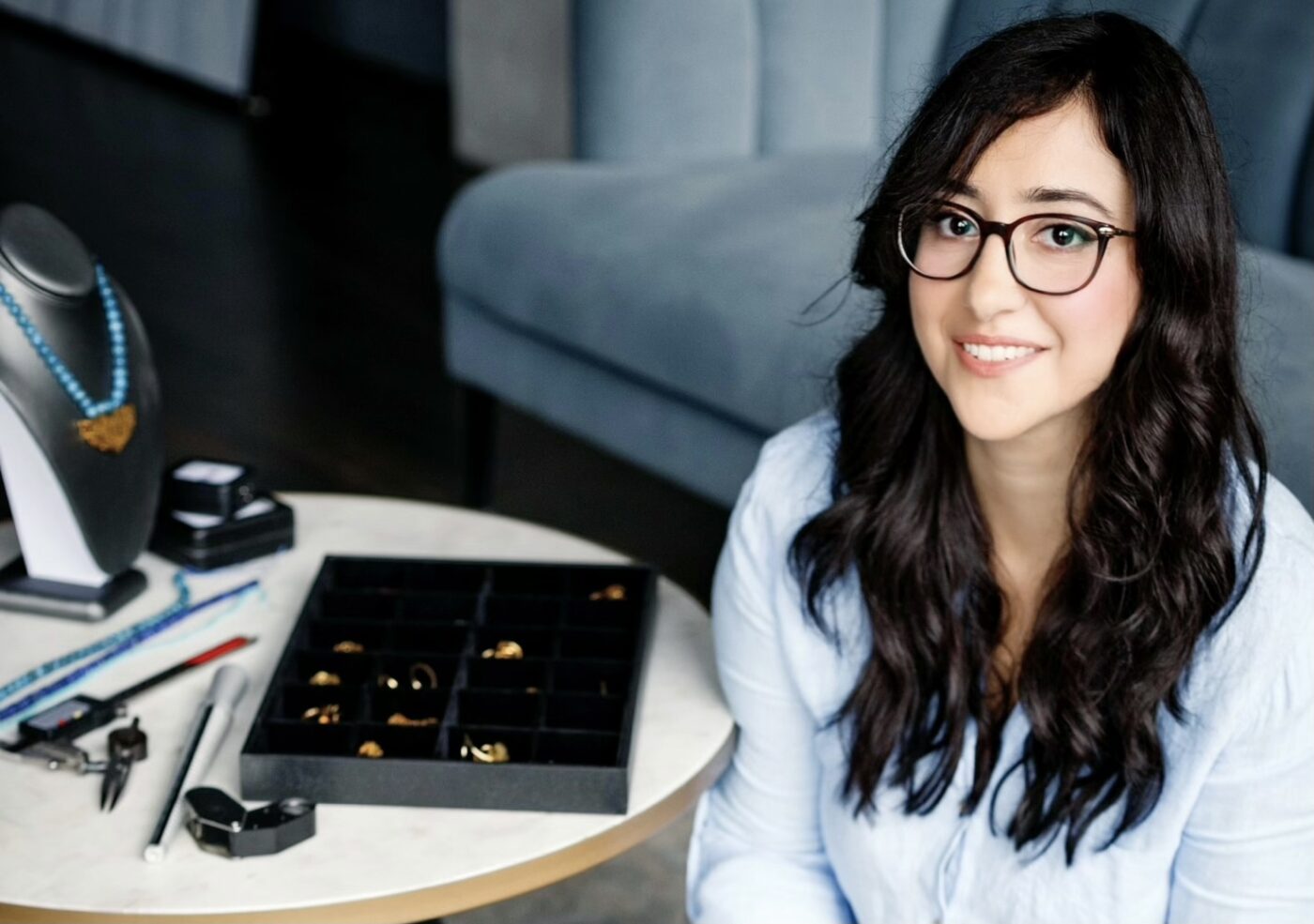
This past May, NYC Jewelry Week embarked on a new adventure with Jewelry Jaunts; our first-ever jewelry trip to Paris organized by Bella Neyman. In case you are wondering where we went, we decided to share our Travel Diary with you.

Our home away from home was the chic Hôtel des Grands Boulevards. Merci for taking such great care of us!

Monday, May 12th 

Our Parisian adventure started at the Louvre with a visit to the museum’s first-ever fashion exhibition, LOUVRE Couture: Art and Fashion Statement Pieces. It felt like even the three hours we spent wandering the galleries of the Louvre were not enough to see the insanely gorgeous 99 garments on view. Spread out across the Decorative Arts galleries of the Richelieu and Sully wings of the museum, the exhibition – one of the most beautiful that I have ever seen – featured garments from the leading couturiers past and present, paired with the museum’s rich collection of antiquities and decorative objects. It truly felt like you were on a treasure hunt to find the next ensemble.  

Chaumet

After traipsing through the galleries and picking our jaws off the floor, it was time to leave the museum for our first jewelry visit of the week. We walked to Chaumet located at 12 Place Vendôme. Established in 1780 by Marie-Étienne Nitot, Chaumet holds the distinction of being one the most venerable jewelry houses in France – and the first to call Place Vendôme home.

A private tour of their archives with the Directrice du Patrimoine gave us a glimpse into a small selection of their 66,000 jewelry drawings! We were also presented with an incredible array of historically significant jewels – from diamond-encrusted bird wing brooch (1908) owned by Gertrude Whitney to 1970s Arcade Chaumet textured gold ear cuffs, to medals from the Paris 2024 Olympics. We also enjoyed a visit to their Tiara gallery, where everyone felt like a princess.

Our last visit of the day was to the jewel-box boutique owned by renowned jeweler Lydia Courteille at 231 Rue Saint-Honoré. I was particularly excited to see the famous Topkapi ring and earrings on view side by side.  Courteille spoke to us about starting her business as a collector of vintage jewelry and how it has influenced her modern day creations. She even signed some books for us!

Tuesday, May 13th 

Tuesday morning started off bright and early at Mellerio, located at 9 rue de la Paix. Since 1613, Mellerio has been the world’s oldest family-owned and independent jewelry house in France. Today, it is operated by owner and creative director Laure-Isabelle Mellerio. Outside of Paris, you can find their jewels only at Bergdorf Goodman—but you can only visit their archives and see their museum masterpieces in Paris.

We were truly blown away by their gorgeous record books, which date back to the 19th century and feature not just the names of their clients but also select designs. The most surprising and historically significant item on view was the marmotte—the case that the Mellerio family used to carry their jewels and stones when they were traveling merchants in the 16th century.

Another interesting fact: Mellerio jewelry was so in demand that, in the 19th century, they worked with over 100 workshops in Paris to produce their pieces.

Boucheron

From one historic jewelry house, we went to visit another. At 26 Place Vendôme resides Boucheron Heritage House. It is not everyday that one gets a masterclass with Boucheron’s Heritage Director. The House, founded in 1858 by Frédéric Boucheron, has called Place Vendôme home since 1892. Today, led by two women, Hélène Poulit-Duquesne, CEO, and Claire Choisne, Creative Director, the house is a recognized global leader in High Jewelry.

One of the most valuable lessons we learned here was how to look at jewelry: always look at the back—it must be as beautiful as the front. Then, close your eyes and feel the jewel. Make sure the light is right by facing away from the sun, as too much natural light can alter the color of the stones. Did we try on a question mark necklace? Oui!

From 26, we walked down Place Vendôme to 19 and “shook the hand” (his door handle is a cast hand) of Lorenz Bäumer. The only independent jeweler on Place Vendôme, Lorenz Bäumer has been designing jewelry for over thirty years. Prior to launching his own brand, he was the Artistic Director at Chanel for 20 years and later launched the fine jewelry collection at Louis Vuitton. Lorenz, a wonderful storyteller, was as charming and fascinating as the jewels were gorgeous.

Our last stop of the day was at the Petit Palais to see their Jewelry Drawings (Dessins de bijoux) exhibition. For the first time, the Petit Palais opened up its collection of drawings from the second half of the 19th century to the mid-20th century. Through a remarkable selection of designs from a collection comprising over 5,500 works, this exhibition showcases the richness of a body of work amassed since the late 1990s. I especially loved seeing the drawings that had matching jewels on view. Great attention was paid to the work of René Lalique, Boucheron, Pierre-Georges Deraisme, and Charles Jacqueau at Cartier.

Wednesday, May 14th

What can be said about a day that starts with a private, curator-led visit to the jewelry galleries of the Musée des Arts Décoratifs? Just glorious. We were welcomed to the museum before it opened to the public and had the chance to flip the switch and see the jewels come alive before our eyes.

Currently, 1,000 of the 6,000-piece collection (owned by the State and founded to inspire other craftsmen) are on view—and while the two galleries are arranged in somewhat chronological order, we couldn’t help but zigzag through periods, styles, and makers, asking questions and pointing excitedly along the way. I was glued to the Art Nouveau section—the museum has more than 200 pieces representative of the style.

Leaving the museum made us want to touch and try on jewelry, so it was a good thing that Élie Top was waiting to meet us in his atelier, located at 217 rue Saint-Honoré. Previously the jewelry designer at Yves Saint Laurent, Top has been designing jewelry under his own name since 2015. Inspired by Gothic architecture and armor, celestial symbolism, and nature, Top’s creations are sculptural and bold. We had the pleasure of being regaled by his stories in the “Living Room” of his salon and trying on pieces from his newest collection, Dangerous Liaisons, which took him ten years to develop.

Messika

Following this intimate salon visit, we were whisked away to the grand apartments of Messika on the avenue des Champs-Élysées. In just 20 years, Valérie Messika has built an empire alongside her famous diamond-dealer father, André Messika. 

Revolutionizing how women wear diamonds – every day, of course – she has broken the code of classical jewelry and designed some of the coolest jewels around. We had the honor of visiting the workshops and design studio, followed by a private visit to her rue de la Paix boutique. But the highlight was the balcony of the pied-à-terre, which offered us a view of the Grand Palais to our right, the Eiffel Tower straight ahead, and the Arc de Triomphe to the left. We were living our best lives yet (and feeling like Emily in Paris!).

While our main activities were over, we still had a party to go to! It was a lovely night to host a dinner with Marion Delarue and Alix Dumas back at our hotel. The two artists shared their very different, but equally artistic, approaches to jewelry.

Thursday, May 15th

Today, our day was dedicated to artist jewelry. We started off on the Right Bank, where we visited the studio-gallery of Thierry Vendome at 39 rue François Miron. Thierry’s space is small, but it contains a gallery showcasing the work of Jean Vendome (1930–2017), as well as his own. Just a few feet away from the finished pieces is Thierry’s bench and tools, where he makes everything by hand. The Vendome name is synonymous with sculptural jewelry that utilizes unusually carved and rough-cut stones in high karat gold settings.

After a delicious lunch at L’As du Fallafel, we made our way to the Left Bank and visited some of Paris’s most illustrious vintage and contemporary art jewelry galleries, including Galerie Mazlo, La Galerie Parisienne, and Galerie Subra Woolworth. However, the highlight was visiting Galerie MiniMasterpiece and meeting with proprietor Esther de Beaucé to learn all about her gallery, which specializes in jewelry by artists and sculptors. After our tour, collector Diane Venet was present to sign catalogues from her most recent exhibition at the Norton Museum in Palm Beach.

Although not officially on our itinerary, we hurried over to the Musée du quai Branly – Jacques Chirac to see the encyclopedic exhibition Golden Thread: The Art of Dressing from North Africa to the Far East. Dinner at their restaurant, Les Ombres, with the magnificent views of the twinkling lights of the Eiffel Tower, was the absolute best way to conclude a fabulous day.

Friday, May 16th

Our final day in Paris was spent enjoying the quiet of the typically bustling Saint Ouen Flea Market. ​​The market is at its busiest on on the weekends, but our guide, Sandrine Merle of THE FRENCH JEWELRY POST arranged some fabulous private tours for us. This included the ultra-chic Les merveilles de Babellou, one of the finest vintage clothing stores in Paris, a visit with the vintage jewelry dealer Marie-Laure Chermezon, and a few other surprises. Exploring the stalls when they were less crowded allowed us to take our time and SHOP!

Visiting the flea market also set us up for our visit to the Hôtel Drouot. This block-long auction venue hosts some of France’s premier independent auction houses. While it’s glory days may be a thing of the past, it was still very cool to observe auctions in progress.

However the highlight of Friday was certainly visiting Olivier Baroin at his gallery, La Golconde. Baroin is considered the world’s leading Suzanne Belperron expert and antique jewelry dealer. He co-authored the publication on Belperron with Sylvie Raulet and is often the expert called upon to authenticate her jewels. Throughout our trip, we encountered Belperron jewels at the auctions (we also went to Geneva for the Sotheby’s and Christie’s sale prior to Paris) and in the galleries. Being able to meet with Olivier, ask him questions, and see Belperron’s digitized books and drawings was an incredibly special experience.

L’ÉCOLE

Our last official jewelry stop was to see Paris, City of Pearls at L’ÉCOLE, School of Jewelry Arts. The beautiful exhibition focused on Paris as the epicenter of the pearl trade at the beginning of the 20th century. Paris, City of Pearls featured exceptional jewels from the likes of Cartier, Lalique, JAR, and Boivin. It also featured fashion illustrations by Barbier to contextualize the popularity of pearls as part of the modern women’s wardrobe.

While we were sad to say goodbye, our farewell dinner at Bouillon Julien, with its gorgeously restored Art Nouveau interiors, was the perfect setting to toast to a fabulous week and make plans for next year’s trip.


Written by Bella Neyman. Learn more about our next Jewelry Jaunt or read more from Future Heirloom.

Sanaz Doost: Fleeting Shadows

Past and Future

Sanaz Doost’s creations are unique as they are dramatic. From bold statement rings to colourful beaded necklaces and exquisitely curved bangles, Doosts’ work pays homage to her Iranian heritage while pushing the limits of modern jewelry design.

A nomad, she left Iran in 2006, travelling the globe and working in Industrial Design after completing her Bachelor’s Degree in Industrial Design and Master’s in Philosophy of Art. With a curiosity about the intersection of art and design, she went to study jewellery manufacturing alongside master goldsmiths in the ancient gold bazaars of the Middle East, eventually moving to Canada to set up her studio in downtown Toronto.

It’s rare to find a jewelry designer who thinks as much about the transmission of light as Doost. Her Moshabak ring takes its inspiration from ancient Moshabak sunscreens, a staple in Iranian Architecture, her creations cast breathtaking, fleeting shadows onto the naked skin as the windows would a Persian rug. Pushing even further, Doost’s work draws direct inspiration from the city of Yazd with her dramatic gold domed rings – miniature buildings for the hands that are as clean-lined and modern as they are ancient.

Undoubtedly one of the most influential Canadian designers working today, Doost is a contemporary to be reckoned with.

Photo c/o: Sanaz Doost

Who are you?

A former Industrial designer & a global nomad. I abandoned my favourite lifestyle after 10 years of solo travelling around the world to launch my Toronto-based jewelry studio and to fulfil my dreams of creating sustainable, eye-catching fine jewelry with quality that can pass through generations.

What do you make/sell?

Bold, timeless and eye-catching 18K gold pieces that are designed & made locally and ethically in Toronto.

Where do you make/sell it?

I make all my designs locally and sustainably here in Toronto and I’m so passionate about sourcing everything locally. I sell my designs online on my website and in selected retailers and marketplaces like The Hudson’s Bay, Aga Khan Museum, The Fashion Art Toronto, 1stDibs etc.

Photo c/o: Sanaz Doost

When/why did you start?

I began my career as an industrial/product designer, having received Bachelor of Arts in Industrial Design in 2011. Later I pursued my passion for Art by studying Master of Philosophy of Eastern Art. While studying Design and Art I began taking courses in ancient metal smithing around the world at historical jewelry Bazars and trained by masters, then I got my Advanced Diploma of Jewelry Arts in 2020 at George brown college of Toronto and finally launched my jewelry atelier/showroom in the heart of downtown Toronto, Canada.

Photo c/o: Sanaz Doost

Where do you get your best ideas?

I left my motherland Iran when I was 19 in 2006 all alone by myself and solo travelled around the world since then till 2017 when I decided to settle down in Toronto. So basically, I get most of my ideas from my middle eastern roots, my experiences while travelling and from art, architecture, heritage, and different cultures.

Photo c/o: Sanaz Doost

Do you ever feel bored? What do you do about it?

Board no, disappointed yes! Lol, to be honest, I don’t feel bored because while I’m awake I’m designing something in my mind, on paper or on a computer. I can’t live without designing and I believe I was born to create. Even when I sit in a restaurant or a meeting, unconsciously I change the look, outfit, shoes and jewellery of people in my mind, and I design a new look for them and imagine them with it.

What’s the next big jewelry trend?

Hopefully geometric, clean designs like 1900 or loud, bold designs in 80s

What’s our industry’s biggest challenge?

Oh, believe me it’s a super challenging industry! From struggling with Copycats to being sustainable. For example, lots of people say that they prefer and support unique, original and sustainable jewelry but when it comes to action it’s totally different, I mean when they want to buy a jewelry, they don’t ask or research about where and how it’s made etc.

But as a designer with academic background in Arts and design the biggest challenge for me is to be a designer and a businesswoman at the same time, which is too difficult because in my opinion a designer and a businessman/woman doesn’t have anything in common! As a designer the idea comes first to my mind not the market & trends, as a designer designing a piece of jewelry is expressing my thoughts, feelings and emotions, but what should come to a businesswomen mind is market, trends and make something to sell fast and gain profit! 

The truth is in our industry like any other industries we have businessman/woman who follow trends and end of famous & wealthy while I believe if an artist follows the trends ends of empty in her/his heart! To me being an artist with business goals is super challenging, I believe thinking about the market, weight and profit in order to make trendy and affordable and fast selling pieces kills the creativity and freedom of Art. But on the other hand, I know that if I want to be able to create the art that I’m capable of, somehow, I need to think as a businesswoman to make money to continue my dream. To me designing a jewelry is a way to express myself and feelings through art, and gold is my medium. To cut it short, the most challenging part for me is the contradiction between art and money, between being an artist and a businesswoman at the same time!

Photo c/o: Sanaz Doost

How do we fix it?

Unfortunately, I’m not sure, it’s complicated. For example, in Canada, lots of consumers don’t know the difference between made-in-Canada and Canadian brands. They don’t have enough information about sustainable jewelry, and they even don’t know the difference between gold-filled, gold plated and solid gold. Also, Canadian retailers don’t support Made in Canada brands as they should. Maybe we need more educational articles or a support system, and about the contradiction between art & money to be honest I have no Idea how to fix it.

Where do you want to see yourself creatively in five years?

As a former Industrial/Product designer I have lots of ideas about designing decorative objects which I would like to mix with fine metals, jewelry and gems. I hope I can work on it and launch my decorative objects line very soon.

Photo c/o: Sanaz Doost

If you could ask an industry peer one question, what would you ask and to whom would you ask it?

Bella Neyman, I would like to ask what does she think about the future of jewelry and AI (artificial intelligence)?


Questions and introduction written and laid out by Future Heirloom Editor Nicholas Hyatt. Answers are written by Sanaz Doost. Find Sanaz Doost online and on Instagram.

Bernard James: Natural Moments

Smell the Flowers

My mother always told me, “Remember to stop and smell life’s roses.” Such a simple concept; take a moment to appreciate the detail and beauty surrounding us. However, we often get caught up in the hustle and bustle and forget these precious details matter in our increasingly hectic and minimalistic world. Enter Bernard James.

Bernard’s work walks a tightrope of clean design and considered detail; it acts as a reminder that beauty surrounds us daily. Classic signet rings, chains and stackable bands are accented with curious florals and unique textures while showcasing a distinct perspective of scale and proportion. Hot off the heels of showcasing his collection at JCK 2023, as part of the Natural Diamond Council’s Emerging Diamond Designer’s Initiative, we took a moment to get to know this masterful artist a bit better.

Bernard James, jeweller from New York portrait
Photo c/o: Bernard James

Who are you?

My name is Bernard James, and I am a designer, an artist, and a lover of all things beautiful. Growing up in Brooklyn, the spirit of New York has always been a source of inspiration for my work.

What do you make/sell?

I strive to create exquisite pieces of jewelry that are truly unique – pieces that are not only beautiful and timeless but also represent the person wearing them. I specialize in using the highest quality materials, such as diamonds, gold, and other precious stones, to craft elegant and long-lasting pieces that will be treasured for lifetimes. All of the jewelry I’ve created is a source of great pride for me, as each piece embodies my life experiences and community. For me, jewelry is more than just an accessory – it is a work of art that can be passed down from generation to generation.

Where do you make/sell it?

All of our jewelry is handcrafted right here in the heart of New York City.  I am passionate about creating exquisite, one-of-a-kind pieces that are inspired by the beauty of the city around me and take great pride in the craftsmanship that goes into every piece. Currently, our jewelry is available for purchase on our website, in our private Williamsburg studio, and through select retailers such as Saks and Moda Operandi.

Bernard James fine jewelry collection made in New York.
Photo c/o: Bernard James

When/why did you start?

I began designing jewelry right after my first year of college. I knew I always wanted to design fashion or luxury goods but didn’t try my hand in jewelry specifically until I decided I needed something more manageable at such a young age. Of course, I was wrong about it being manageable, but I became obsessed with the intricate designs and details of fine jewelry – and also the endless possibilities. After connecting with a family friend who had been in the industry for over 40 years, I wanted to dive deeper and learn how to make my own pieces that were both unique and awe-inspiring. Jewelry has always allowed me to express my voice and share my love of beauty with others.

I started designing men’s jewelry specifically, because I felt what was being offered in the market was so monotonous and uninspiring. Today, I am proud to offer a wide range of unisex jewelry to all clients, including custom pieces that are designed specifically to suit their unique tastes and preferences. Each piece is meticulously crafted with the utmost attention to detail, and I am constantly inspired by the joy that my creations bring to others.

Bernard James floral pendant fine jewelry collection made in New York.
Photo c/o: Bernard James

Where do you get your best ideas?

As a designer, I find inspiration in a variety of places, but the two main driving factors are emotion and experience. Being born in NYC and having fortunately been able to travel a fair amount abroad, I am constantly surrounded by an eclectic and diverse array of people and places that fuel my creativity.

In addition to my surroundings, I also look to my clients for inspiration. Each piece of jewelry I create is a collaboration between myself and the person who will be wearing it. I listen closely to their stories and preferences and use their unique style as a guide for creating something that is both meaningful and beautiful.

Ultimately, my best ideas come from a combination of these sources – my environment, my community, and the people who wear my jewelry. By staying open to new experiences and perspectives, I am able to create pieces that are truly one-of-a-kind and reflect the spirit of the world around me.

Bernard James funghi fine jewelry collection made in New York.
Photo c/o: Bernard James

Do you ever feel bored? What do you do about it?

I wouldn’t say I ever feel bored, but I definitely feel stuck creatively sometimes. I know, for me, that just means it’s time to go explore and see something new. 

What’s the next big jewelry trend?

At the risk of sounding contrived, I’m not big on following and studying trends. I feel jewelry is so personal and should allow the wearer to express themselves unapologetically and however, they choose. I do appreciate how much men’s jewelry has grown to be more expressive, as that is what I originally sought out to do earlier in my design journey.

What’s our industry’s biggest challenge?

Our industry’s biggest challenge is authentic inclusivity and representation that isn’t performative or based on archetypes.

Bernard James black diamond necklace fine jewelry collection made in New York.
Photo c/o: Bernard James

How do we fix it?

To truly affect change, having a continuous pursuit of knowledge and adopting new perspectives are crucial components.

Where do you want to see yourself creatively in five years?

Within five years, I would love to solidify my permanent fine jewelry collections and experiment in high jewelry, further exploring the application of significant adornment in our everyday lives. I would love to also address how jewelry, art, music and interiors all converge in a person’s overall lifestyle.

Bernard James funghi earrings and diamond pave ring fine jewelry collection made in New York.
Photo c/o: Bernard James

If you could ask an industry peer one question, what would you ask and to whom would you ask it?

I would ask Walter Bolognino if he would like a new creative collaborator for the US market.


Questions and introduction written and laid out by Future Heirloom Editor Nicholas Hyatt. Answers are written by Bernard James. Find Bernard James online and on Instagram.

Lia Lam: Balance & Harmony

Studied Minimalism

New to the jewelry scene, designer, Lia Lam, is already making waves with her minimalist creations. Venturing to Gem Geneve this week as part of the Designer Vivarium by Vivienne Becker, she is one of the most promising young jewelers to come out of 2023.

From strikingly balanced belcher rings crafted of fused platinum and 18-karat gold to harmonious necklaces inspired by music notes on sheet paper, Lia’s work is defined by her poetic use of geometric forms and symmetry. We sat down with Lia to learn her story and understand her thoughtful approach to minimalist jewelry.

Jewelry designer, Lia Lam, sitting at her desk hand painting a rind design from her Passepartout Collection.
Photo c/o: Lia Lam

Who are you?

I’m a designer who creates wearable stories and architecture.

What do you make/sell?

Memories, attitudes and emotions. They are translated into my designs via the symbolic juxtaposition of simple forms; simple forms have the power to tell evocative stories.

Where do you make/sell it?

London, United Kingdom. I have a by-appointment space only in central London. I’m not working with any galleries or stores currently, so the best way to find me is by email.

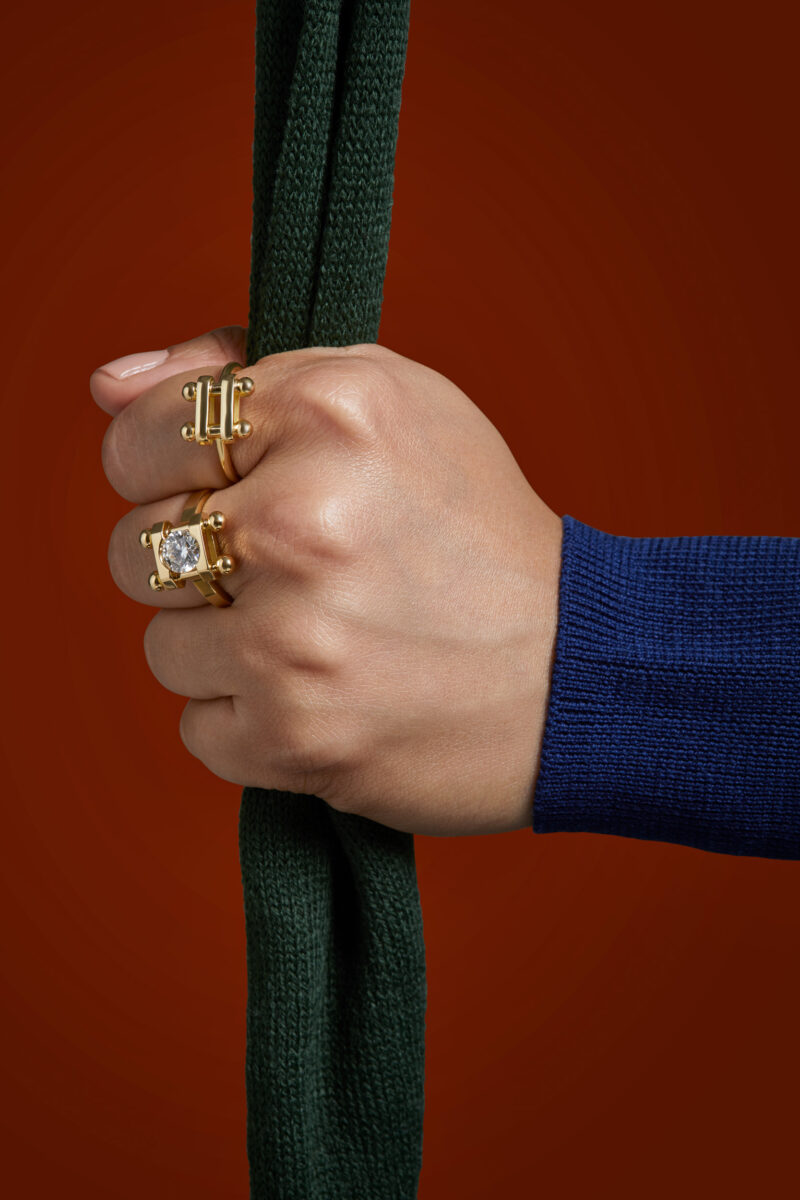
A hand gripping a green piece of cloth wearing two of Lia Lam's Passepartout Collection fine jewelry rings made of 18-karat yellow and gold diamonds.
Photo c/o: Lia Lam

When/why did you start?

In pursuit of my lifelong dream, I started designing in 2016, self-taught, and began prototyping ideas during the pandemic, in paper, play-dough and finally, metal.

I am attracted to fine jewelry’s ‘permanent’ and three-dimensional nature – it lives on. We all use different themes to interpret the world. Jewelry and photography are the two that speak to me the most. Both of them are portable; they tell stories and are a witness of time.

A hand caressing a green squash wearing two ring by jewelry designer Lia Lam. The left ring is made of 18-karat yellow gold and from the Passepartout Collection. The right ring is made of 18-karat yellow gold and features two toi et moi, bezel set diamonds, from her 100% ring collection.
Photo c/o: Lia Lam

When/why did you start?

Listening to people with a different point of view, lifestyle or from a different culture. This makes me reflect on the way I do things and stimulates me to challenge the status quo. Apart from that, doing origami, and sitting on a train.

Origami is nostalgic; it helps me think in a three-dimensional way and has that spatial awareness when designing. For me, jewelry shouldn’t only look interesting from one angle. ‘Every angle considered and offers a point of interest’ is one of my key design philosophies; this was inspired by my past experience as a dancer.

I was never the best dancer, but learning to enjoy something one’s not good at helped me understand a side of myself that I’ve never been in touch with and a world I have not been part of. One evening when I was performing in Sadler’s Wells in London, I observed that not everyone looked at the main dancer at the centre of the stage. Depending on where the audience is sitting in the theatre, their focus is on a different dancer. Each dancer entertains; each move is a three-dimensional consideration.

Two hands embracing one another, on the right is a two-tone belcher style ring. The ring is made of 50% 18-karat yellow gold and 50% platinum, split directly down the middle.
Photo c/o: Lia Lam

Do you ever feel bored? What do you do about it?

I have endless ideas and less time to keep my mind and hands busy.

What’s the next big jewelry trend?

I don’t believe in trends; they come and go, while jewelry doesn’t. Minimalist jewelry is about practicing the art of subtraction, not addition. More is always more, while less is not always more. To ensure less is always more – making sure each subtraction adds a point of interest and value to the design is what I really enjoy doing. It’s problem-solving, my kind of puzzle!

But I hope to see more men expressing themselves through jewelry.

What’s our industry’s biggest challenge?

As a new designer, I find intellectual property protection particularly challenging. The process, as well as the cost. In a very much globalized world, especially when it comes to trade and commerce, IP protection is still very much regional. Intellectual property is probably the most valuable asset a new designer could have, yet the financial barrier to obtaining it makes IP protection intangible for most new designers.

A hand resting against an orange blazer, the middle finger features a 100% ring from Lia Lam's fine jewelry collection. The right ring is made of 18-karat yellow gold and features two toi et moi, bezel set diamonds.
Photo c/o: Lia Lam

How do we fix it?

I wish I had a solution. Similar to hallmarking and to some degree copyrights, wouldn’t it be nice if design patents/rights can be recognized globally, via some sort of an agreement/convention?

If you could ask an industry peer one question, what would you ask and to whom would you ask it?

I’d ask diamond cutters, if they were to invent a new cut that would be named after them, how would it look?

A portrait of jewelry designer Lia Lam (in profile) sitting on a chair in a wood-panelled modern room.
Photo c/o: Lia Lam

From the desk of: Caroline Ervin

In From The Desk Of we’ll get the inside scoop on what’s inspiring some of our favorite jewelry personalities, influencers, historians, and experts. We’re kicking things off with Caroline Ervin, gemologist, consultant, educator, and jewelry media personality extraordinaire. With a foundation in Art History and a background in the auction industry, Caroline’s expertise and perspective on jewelry and business is multifaceted to say the least. Today, we’ll talk with Caroline about a little something that’s on her jewelry wishlist.

But first, here’s a bit more about Caroline: 

Growing up in New England, Caroline Ervin formed an early appreciation for art and antiques, while attending local auctions with her grandparents. After studying Art History Colorado College, Caroline worked at various auction houses, always fascinated by the excitement and intensity of this transparent form of selling. She realized that jewelry was the specialty area where she belonged after witnessing the historic auction of Elizabeth Taylor’s jewelry while working in a support department at Christie’s. Caroline then began working toward her Graduate Gemologist degree at the GIA, and landed a job in the renowned Christie’s Jewelry Department. Rising the ranks from a cataloguer to a Specialist and Associate Vice President at Christie’s, Caroline also became an auctioneer for the company, selling everything from multi-million dollar contemporary paintings to space memorabilia, and presiding over such landmark auctions as The Collection of Lee Bouvier Radziwill and The David Gilmour Guitar Auction. Caroline left Christie’s in June 2021 to focus on developing her own business. She is a jewelry media personality, gemologist, consultant, and educator and shares her favorite jewels, from the antique to the contemporary, via her Instagram page.

And now from Caroline’s Desk:

Want to know one thing on my jewelry collection wishlist?! A ‘Ludo’ jewel by Van Cleef & Arpels!

Van Cleef & Arpels first introduced their signature ‘Ludo’ bracelet in 1934, under the supervision of Renee Puissant, Alfred Van Cleef’s daughter. Artistic director of the company from 1926 – 1942, she collaborated closely with the talented designer René-Sim Lacaze, and together this team was to exercise a great influence over the style of creations made between the two World Wars. Successful since its inception, the ‘Ludo’ model went on to become one of the quintessential hallmarks of post-war production. The best-known and iconic version consisted of a mosaic arrangement of articulated hexagons in polished metal, referred to as the ‘à ruche’ or ‘beehive’ pattern, with a precious stone at the center of each plaque in a ‘serti etoile’ or ‘star’ setting.

Shown above: retro sapphire and diamond “Ludo Hexagone” bracelet. Circa 1936, it features old and calibré-cut sapphires, old and single-cut diamonds.

This sweet Van Cleef & Arpels ‘Ludo’ jewel, a clip-brooch, shown above and below, features over 90 diamonds, approximately 4 carats, set in 18k yellow gold. Circa 1935.


Thanks to Caroline Ervin for sharing items from her jewelry wishlist with us. Want more? Join our mailing list to be alerted when new content drops and find Caroline on the daily @thecarolineervin.

Text by Caroline Ervin. Photos and image details courtesy of Christie’s. Video courtesy of Caroline Ervin. Introduced and edited by Jackie Andrews.